




Juju is a job search engine, so employers usually do not create a standard listing on the site itself. Publish the role on an eligible career page, job board, or ATS, then check that Juju sends candidates to the correct, active application page. If you need guaranteed promotion, use Juju’s paid advertising option and measure the applications it produces.
This guide explains the two routes, what to check before a listing is indexed, and how to decide whether paid clicks are worth testing. Your upstream job record remains the source of truth for the title, salary, location, application path, and closing date.

Key takeaways
- Juju’s current homepage describes it as a job search engine, not a job board. Employers do not create a normal hosted job post on Juju; listings are discovered from employer career pages, staffing sites, job boards, and partner sources.
- Juju currently says it has more than 5.3 million active listings, 50,000+ partner sites and boards, and updates listings every 15 minutes. These are platform-reported live figures and can change.
- The reliable way to appear organically is to publish a complete, current job on an upstream source that Juju indexes. The paid route is recruitment advertising: automatic targeting, direct clicks to the employer’s site, a price per click set by the advertiser, and a monthly budget.
- Recruitment software is useful because Juju is an aggregation layer. The ATS or career site should own the title, salary, location, application path, source attribution, and closure status.
- Measure completed applications, qualified applicants, and hires from Juju, not just clicks. A fast refresh is valuable only when the destination page is accurate and the application process works.
Recruitment software and Juju: control the upstream job record
The current search results still use “post a job on Juju” as if Juju were a conventional job board. The live Juju homepage says its results link to jobs found on employer career portals, recruiter websites, job boards, and other employment sites. The employer’s practical task is therefore to control the source page and decide whether organic indexing is enough or paid promotion is justified.
| Hiring objective | Upstream action | Juju outcome | What recruitment software should track |
|---|---|---|---|
| Get organic discovery | Publish on a compatible job board, careers page, or ATS feed | Juju may index and link to the source | Canonical URL, source, title, status, and feed freshness |
| Guarantee added visibility | Use Juju Recruitment Advertising | Sponsored placement and clicks to the employer site | PPC budget, CPC, qualified applications, and hire outcome |
| Hire across many channels | Publish from one ATS | Juju may receive an eligible copy through a partner | Duplicate control and source-level reporting |
| Keep candidates safe | Use a real company page and working application route | Candidate lands on the employer or approved ATS page | Redirect chain, page status, salary, and closure date |
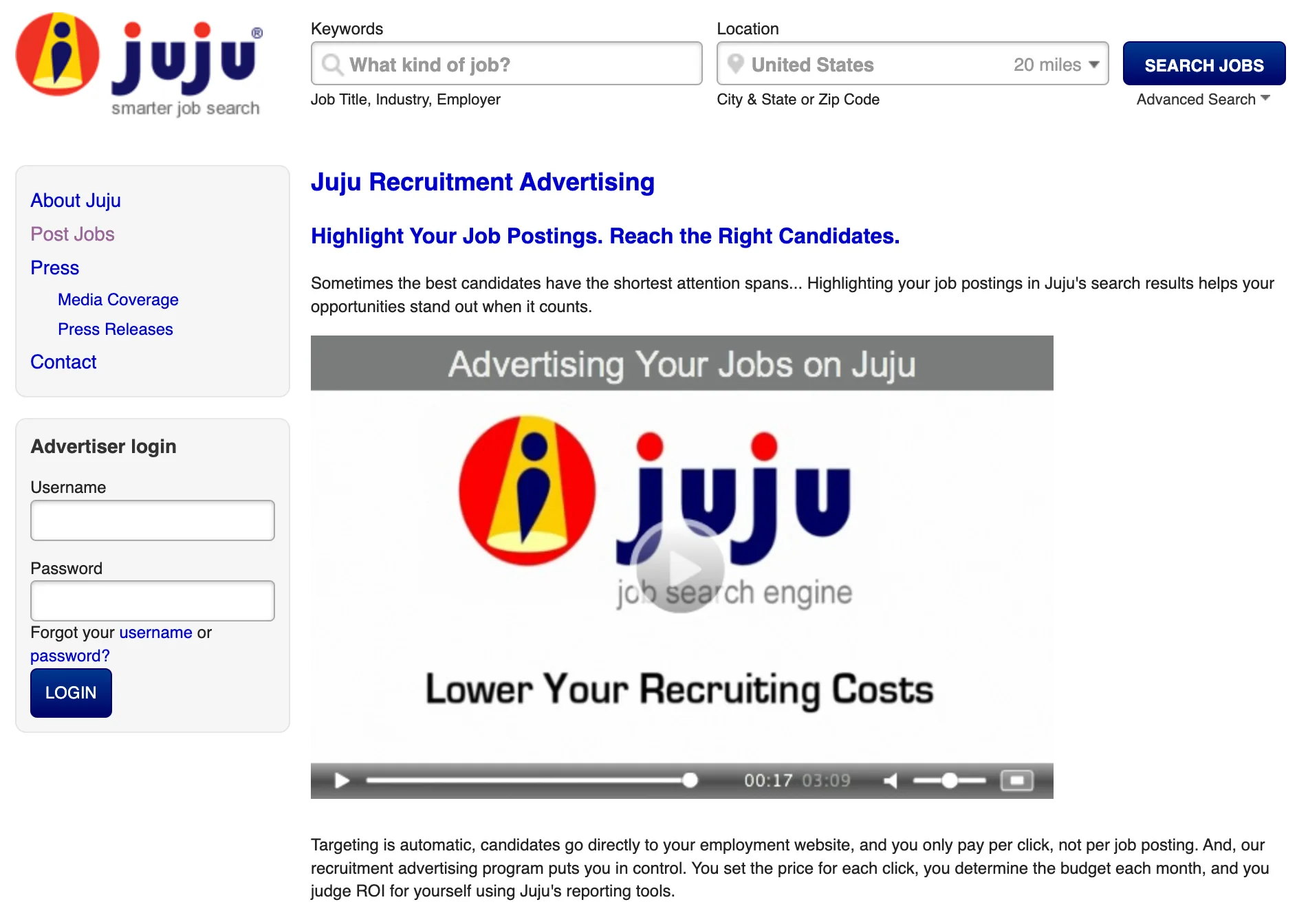
Juju’s current advertising page says targeting is automatic, candidates go directly to the employment website, employers set the price for each click and monthly budget, and reporting tools help judge ROI. The country-specific URL can change by market, so confirm the local advertiser route before treating this as a universal rate card.
The Recooty editorial view
Treat Juju as an incremental reach and referral channel. If clicks are cheap but qualified applications are weak, change the upstream job page before increasing the bid. A recruiter should be able to update the role once, see Juju as a source in the ATS, and close the role everywhere when it is filled.
Juju listing freshness and candidate-experience checklist
- Use one canonical job page. The page should contain the complete role and the actual application route.
- Keep the title standard. Use the title candidates search for and avoid internal codes, promotional claims, and keyword repetition.
- Show salary and location. State the amount, currency, pay period, city or eligible remote countries, and work arrangement.
- Describe the role clearly. Add responsibilities, must-have skills, preferred skills, benefits, schedule, and start date.
A job description generator can turn responsibilities and requirements into a clear first draft. 5. Use a real employer identity. Include the company name, domain, profile, and a trustworthy contact or application path. 6. Test the click path. Open the Juju result on mobile and confirm that the destination does not loop, require an unexpected login, or show a different role. 7. Track the source. Preserve Juju in UTM parameters or ATS source fields where the upstream system supports it. 8. Close the job promptly. Update the career page and feed as soon as the role is paused or filled, then verify that the old listing no longer accepts applications.
Juju PPC and ATS measurement plan
| Metric | What it answers | Action |
|---|---|---|
| Clicks and CPC | Is paid Juju traffic within budget? | Adjust bid, targeting, title, or source |
| Application starts | Does the destination page match the listing? | Improve the first step and mobile flow |
| Completed applications | Does the handoff work? | Fix form errors, redirects, or required fields |
| Qualified-application rate | Is Juju finding relevant candidates? | Refine the upstream job and screening |
| Interview and offer rate | Does the source produce viable candidates? | Compare with other channels |
| Cost per qualified applicant and hire | Is promotion worth keeping? | Continue, reduce, or stop the campaign |
For the process layer, use Recooty’s applicant tracking system and compare the requirements with how to choose the right recruitment software. If the source is a careers page, use how to create a career page that converts to improve the destination rather than relying on more clicks.
What is Juju.com?
Juju.com is a job search engine for the US market. It collects job postings from employer career pages, recruiter websites, job boards, and other employment sources, then sends searchers to the source page.
Candidates can compare jobs from many sources in one place, but employers still control the accuracy of the source listing. An old salary, closed role, or broken application link can create a poor experience even when Juju indexes the listing quickly.
How to Post Jobs on Juju.com?
It is not possible to post jobs directly on Juju.com, it is a job aggregator platform. If you want your job to get listed on it, there are two options.
1. List your job on another job board
If your jobs are listed on other free and paid job boards then there are chances that it will get listed on Juju as well for free.
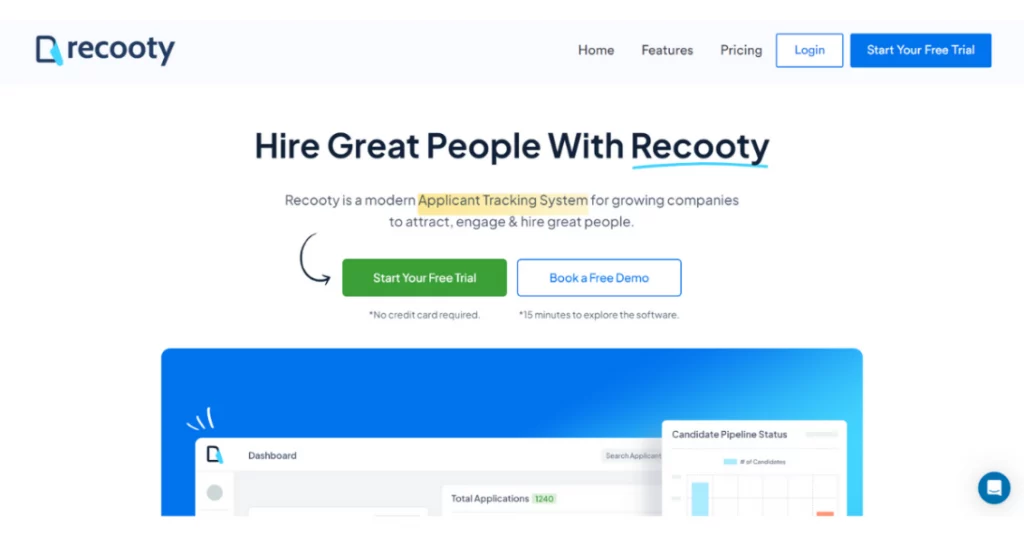
With Recooty you can post jobs on 250+ free and premium job boards in simple steps. It is an AI-powered ATS with AI candidate matching and summaries, candidate scorecards, interview scheduling, email templates, and a branded career page.
2. Pay to advertise your jobs on Juju.com
If you want a guaranteed listing of your job ads on Juju.com, you can advertise your jobs on Juju. The pay-per-click sponsored posts send candidates directly to the company’s career site.
How much does it cost to post a job on Juju.com?
You will not have to pay anything to get the job listed on it. The job ads get pulled by various free and paid job boards across the web.
In case you want to be sure of the job listing on the platform, you can choose to pay to advertise your jobs on Juju. Sponsored posts on Juju send candidates directly to your company’s career site, and they offer advertisements on a pay-per-click basis.
Additional resources on job posting
- How to post a job on Monster
- How to post a job on CareerBuilder
- How to Post a Job on Google for Jobs Search Engine
- How to Post a Job on LinkedIn
- How to Post a Job On Craigslist
- How to Post a Job on ZipRecruiter
- How to Post a Job on Dice
- How to Post a Job on Indeed
- How to Post a Job on Snagajob
- How to Post a Job on Dribbble
- How to Post a Job on Seek
- How to Post a Job on JobServe
- How to post a job on Glassdoor
- How to Post a Job on Trovit
- How to post a job on Jooble
- How to Post a Job on TotalJobs
- How to post a job on Behance
- How to Post A Job on AngelList Talent (now Wellfound)
- How to Post a Job on JobSquare
Keep ownership of the job record
Juju can refresh a listing quickly, but only the employer or ATS can correct an inaccurate salary, expired role, broken link, or misleading work arrangement. Check the source page after publishing and close it promptly when the role is paused or filled. That ownership keeps aggregator traffic useful for candidates and measurable for your team.
Choose the route that fits your hiring goal
Use organic indexing when the role already lives on a reliable career page, job board, or ATS feed. Test paid advertising when the listing is accurate and the role needs more reach. In either case, judge Juju by completed and qualified applications, not clicks alone.
Frequently Asked Questions
No. Juju’s current homepage describes it as a job search engine rather than a job board. Publish the role on an eligible job board, your careers page, or a recruitment software platform that supplies an indexed source.
Publish the role on an upstream source that Juju indexes, such as a compatible job board or employer career page. Organic inclusion is not the same as a guaranteed paid placement, so confirm that the listing appears and that the click leads to the correct active job.
Juju’s current advertising information describes pay-per-click promotion. The advertiser sets a price per click and a monthly budget, so there is no universal rate to quote. Check the local advertising page and compare CPC with qualified-application and hire outcomes.
Juju’s advertising page says candidates go directly to the employment website. If that site is your ATS or career page, the application can enter your pipeline. Test the URL, source attribution, and mobile form before promoting the listing.
The current Juju homepage says listings are updated every 15 minutes. That does not remove the employer’s responsibility to close or update the upstream role, because the source page and feed still determine what candidates see after the click.
Test paid advertising when the role is relevant but underexposed, especially if the employer page converts well. Do not increase the bid to compensate for missing salary, weak location details, a stale job, or a broken application flow.
Jump To Section
Author's Profile

Hardik Vishwakarma


Hardik Vishwakarma – AI Recruitment Strategist | HR Automation Expert | Applicant Tracking Software Specialist Hardik Vishwakarma is a recognized leader in HR automation and...
View Full Profile →