
AI Will Change Recruitment, But Humans Still Matter
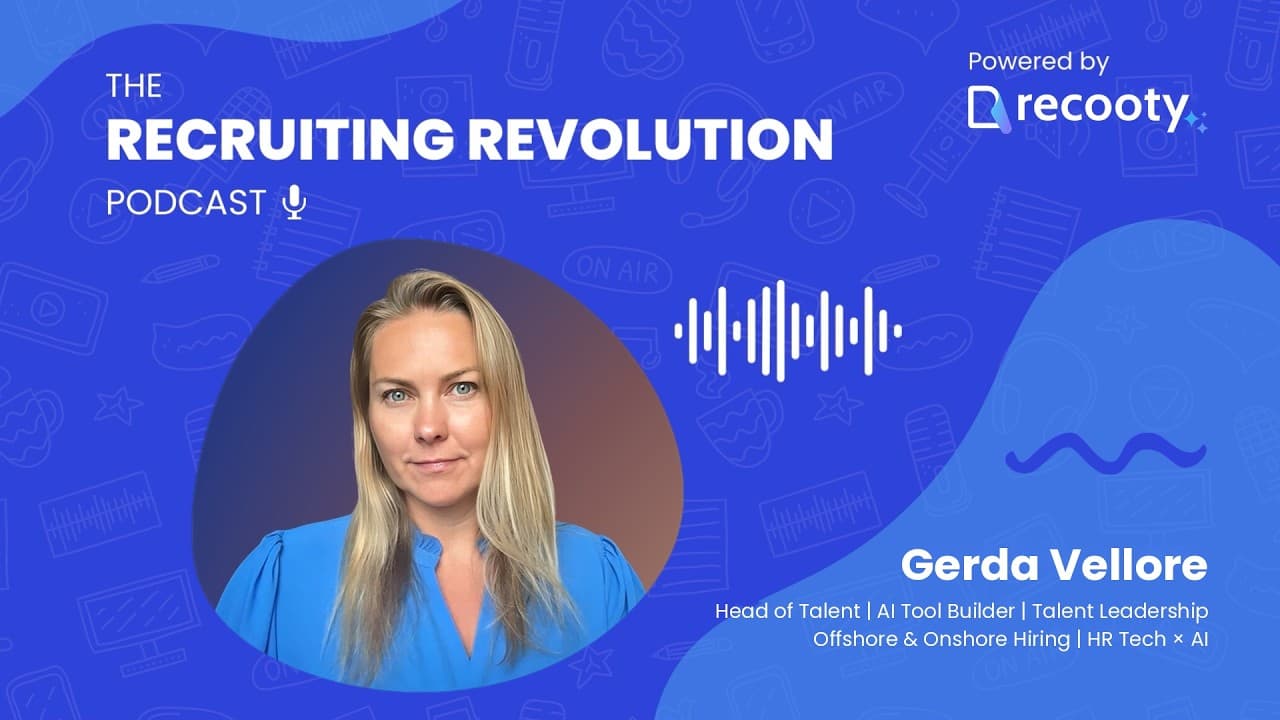
Gerda Vellore is a talent acquisition leader in New York with around 15 years in recruitment, hiring across the US, Europe, Africa and India.

CONTENTS
- 00Introduction
- 01Key takeaways
- 02Where AI actually helps
- 03Where people are still essential
- 04The most common hiring mistake
- 05How to scale without losing quality
- 06Candidate experience at high volume
- 07Looking past the resume
- 08Fairness and consistency
- 09The metrics worth tracking
- 10What the recruiter's job becomes
- 11Questions to discuss with your team
- Where should we let AI make the first pass?
- Are we telling candidates when automated tools are used?
- What is our offer acceptance rate this quarter?
AI handles the speed, but humans are still needed to close the hire. That is the short version of this conversation with Gerda Vellore, a talent acquisition leader in New York with about 15 years in recruitment.
Key takeaways
AI is best at the top of the funnel: screening resumes, summarising interviews, scheduling, and building metrics.
People do not accept offers from software, so the relationship still decides the outcome.
The most common hiring mistake is rushing, or skipping steps in a process you already agreed on.
Scaling across regions works when the process is strong: intake meetings, scorecards, and steady follow-ups.
Two metrics matter more than time to hire: offer acceptance rate and quality of hire.
Disclosure rules for automated hiring tools are now live in places like New York and the EU.
Where AI actually helps
Gerda's rule is work smarter, not harder. AI earns its place on the repeatable work. Scanning resumes. Summarising interviews. Scheduling. Pulling the numbers a recruiter has to report upwards.
Her view on the current market is blunt: a recruiter not using AI or technology today is behind.
One caution came with it. Regulation has caught up. In New York, and across the EU, candidates have to be told when automated tools are part of the decision.
Where people are still essential
There are often many strong candidates for one role. Which one accepts depends on the relationship the recruiter built, not on the tooling. As Gerda put it, people don't accept offers from software.
The same applies to screening. Keyword matching finds applicants fast. It also misses the borderline candidate who is clearly capable but worded their resume differently. That call needs a human.
The most common hiring mistake
Hiring too fast.
Most companies have already designed a decent process. The failure is not following it: skipping steps, rushing interviews, running them unstructured. The talent is available. The process loses it.
How to scale without losing quality
Gerda sourced and hired 20% of a company's workforce in a single year, across five regions in the US, Europe, Africa and India. She credits the structure, not the volume of effort.
The parts that made it work:
Intake meetings with the hiring manager before the search starts.
Clear scorecards so everyone judges the same things.
Constant follow-ups so nobody waits on an unclear next step.
AI at the top of the funnel to handle volume.
Local market knowledge, because compliance and sourcing channels differ by country.
That last point produced the most practical tip in the episode. In India, her team found strong candidates in WhatsApp groups. Local talent communities beat generic channels.
Candidate experience at high volume
Hundreds of applicants for one role is normal now. Most of them will be rejected.
The fix is automation used for communication, not just filtering. Send the clear no. A candidate who hears nothing writes the review; a candidate who gets a straight answer usually does not. The rejection email protects the employer brand as much as the offer letter does.
Looking past the resume
Resumes undersell people. Gerda has seen it repeatedly, where a resume said one thing and the conversation said another.
Two ways she works around it:
Add targeted questions on the application itself.
Give candidates space to show work: a LinkedIn profile, a GitHub link, a portfolio site. For technical roles, the work is more useful than the summary of it.
Fairness and consistency
The tools here are familiar, and they work when used together:
Predefined scorecards and structured interviews.
Sourcing from channels you do not usually use.
Bias training for hiring managers.
Anonymising resumes, by removing names and photos, so the review starts with the work.
The metrics worth tracking
Time to hire and cost per hire are not enough.
Offer acceptance rate tells you whether you are closing. Gerda described a firm that put out four offers and had all four declined. After four, the problem is not the candidates. It is the pitch, the process, or the offer.
Quality of hire tells you whether the decision was right. Check at 90 days and at one year: did the person stay, and are they performing?
What the recruiter's job becomes
Gerda expects the recruiter and the strategic talent partner roles to merge over the next three to five years.
Today they are different. A recruiter builds relationships with candidates and knows their situation in detail, down to who else is interviewing them and who influences the decision at home. A talent partner works with hiring managers on workforce planning and the skills the business will need in six months.
As AI absorbs the process work, recruiters get more room for the human half of the job. The role moves towards advising both sides.
Questions to discuss with your team
Where should we let AI make the first pass?
Start with volume work that has a clear check behind it: resume screening, scheduling, interview summaries, reporting.
Are we telling candidates when automated tools are used?
If you hire in New York or the EU, this is a compliance question, not a preference.
What is our offer acceptance rate this quarter?
If offers are being declined repeatedly, review the pitch, the process, and the offer before blaming the market.
Hardik Vishwakarma is a recruitment technology consultant with over 10 years of experience in HR automation and AI-driven hiring. He has worked hands-on with more than 27 applicant tracking systems (ATS) and recruitment CRM platforms.