.webp)
.webp)
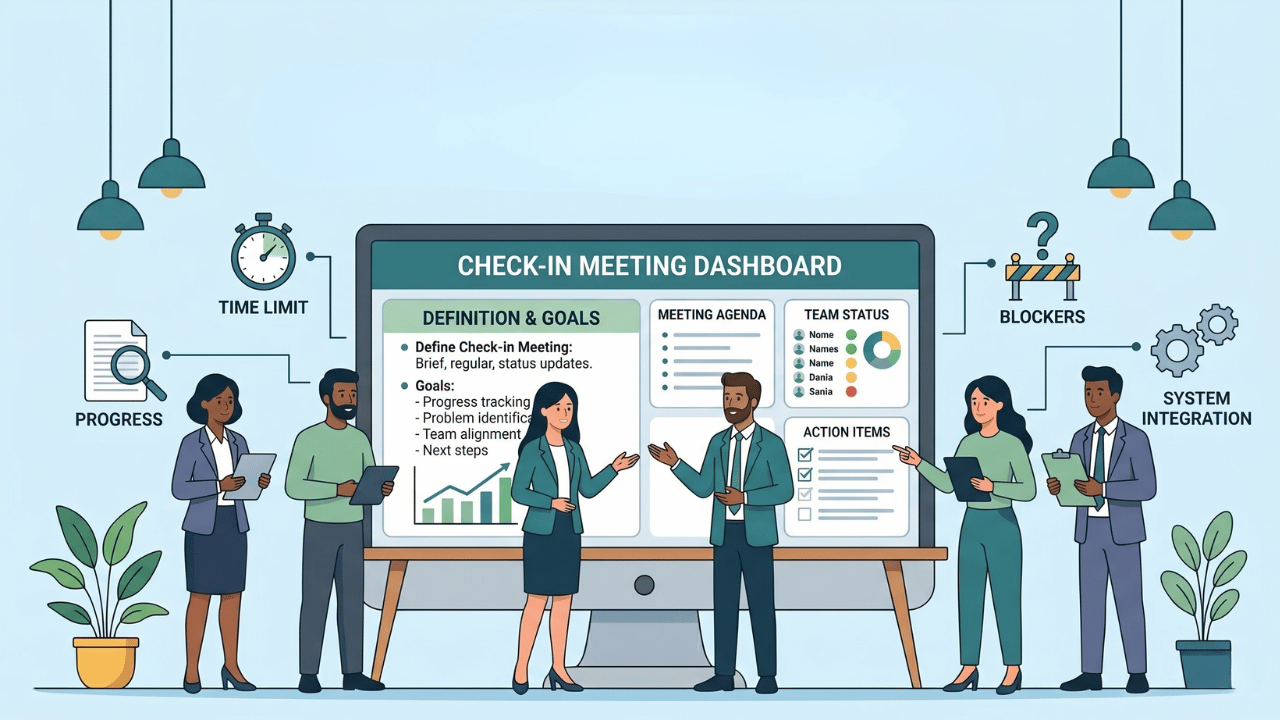
A check-in meeting is a short, regularly scheduled conversation between a manager and an employee or team. It exists to discuss progress, clear roadblocks, and align on current goals. Unlike a formal annual review, a check-in is frequent, informal, and highly tactical.
Managers often feel disconnected from their teams. Employees frequently feel micromanaged or unsupported. A poorly planned meeting schedule usually causes both of these problems.
Remote work makes intentional communication mandatory in 2026. Without regular syncs, small issues easily become massive roadblocks. Effective check-in meetings fix this communication gap completely.
In our experience working with HR teams, regular check-ins reduce employee turnover significantly. They build trust and keep everyone focused on the right tasks. You will achieve higher productivity and better team morale by mastering this simple habit.
Why Do Check-in Meetings Matter: Expert Perspective
Business leaders often underestimate the cost of bad communication. Unproductive meetings waste time and drain company resources daily. According to a Harvard Business Review study in 2022, 71% of senior managers view most meetings as unproductive and inefficient.
Check-in meetings solve this exact issue. They replace long, rambling discussions with highly focused, actionable conversations. This shift saves hours of wasted time each week.
First, they boost operational efficiency. Teams identify blocked tasks early and fix them before deadlines pass. Second, they drive massive cost-savings.
Fewer long meetings mean more time spent on actual, profitable work. Finally, they improve employee retention. People stay at companies where they feel heard and supported by their managers.
What is the Real Purpose of a Check-in Meeting?
Are your current meetings actually helping your team succeed? The primary purpose of a check-in meeting is alignment. You want to ensure everyone understands their priorities for the day or week.
These sessions are the perfect time for project status updates. Managers can quickly see what is on track and what is falling behind. This visibility is crucial for effective performance management.
They also create a safe space for employee feedback. Workers can voice concerns before they become major frustrations. It is a two-way street for communication.
Goal setting is another core function of these quick chats. You can use an AI Job Description Generator to set clear initial expectations. Then, use check-ins to make sure daily tasks actually align with those core responsibilities.
What Are the Different Types of Check-in Meetings?
Not all check-ins serve the same purpose. You must choose the right format for your specific team needs. Here is a breakdown of the most common types.
How Do Daily Check-in Meetings Work?
A daily check-in meeting is usually a quick stand-up. It keeps the team moving fast without wasting time. Every person answers three simple questions.
What did you do yesterday? What will you do today? Is anything blocking your progress right now?
This format is highly effective for remote work. It gives everyone a clear focus for the day ahead. Keep it under fifteen minutes to respect everyone's time.
When Should You Hold Weekly Check-in Meetings?
A weekly check-in meeting goes deeper than a daily stand-up. These are usually one-on-one meetings between a manager and an employee. They focus on the bigger picture.
You should discuss weekly goals and review recent performance. It is also the time to address any personal roadblocks or frustrations. This builds a strong, trusting relationship over time.
What Are Project-Specific Check-in Meetings?
Projects have their own unique timelines and challenges. A project-specific check-in gathers everyone working on a shared initiative. The focus is strictly on that single project.
You review the upcoming deadlines and assign new tasks. Cross-functional teams rely on these syncs to stay coordinated. They prevent duplicated work and keep the project moving forward.
The Check-in Meeting Process: How Do You Run One Effectively?
Running a great meeting requires discipline and a clear process. You cannot just show up and hope for the best. Follow these five steps to run an effective check-in meeting.
Step 1: Set a Clear Check-in Meeting Agenda
Never walk into a meeting without a plan. A check-in meeting agenda keeps the conversation focused and productive. Send the agenda to your employee at least a day in advance.
This gives them time to prepare their own thoughts. A basic agenda should include progress updates, roadblocks, and next steps. Stick to the agenda strictly to respect the scheduled time.
Step 2: Ask the Right Check-in Meeting Questions
The quality of your meeting depends on the questions you ask. Avoid basic "yes or no" questions that kill the conversation. Ask open-ended questions that require detailed, thoughtful answers.
"What was your biggest win this week?" is a great start. "Where do you need more support from me?" is another powerful question. If you need inspiration, try using an AI Interview Questions Generator to find creative behavioral questions to adapt for your team.
Step 3: Encourage Open and Honest Communication
A check-in is useless if employees hide their true feelings. You must create an environment of psychological safety. Listen actively and do not interrupt them when they speak.
Experts agree that clear, direct communication builds the best teams. For excellent insights on this, read about Radical Candor, a management philosophy by communication expert Kim Scott. It teaches you how to care personally while challenging directly.
Step 4: Focus on Solutions, Not Just Problems
It is easy for a check-in to turn into a complaint session. Acknowledge the frustrations, but quickly pivot the conversation toward action. Ask the employee how they think the problem should be solved.
This empowers them to take ownership of their work. Guide them toward a practical solution instead of just fixing it for them. This approach builds confident, independent workers.
Step 5: Follow Up with Clear Action Items
Every meeting must end with clear next steps. Who is doing what, and by when? Write these action items down immediately.
Send a quick summary message after the meeting ends. This creates a written record of what you agreed upon. Review these action items at the start of your next check-in.
Advanced Insights: What Are the Best Practices for Check-in Meetings?
Do you want to take your management skills to the next level? Standard meetings are fine, but great managers use advanced tactics. Here are several pro-tips for better team syncs.
Pro-Tip 1: Let the employee lead the conversation. The best one-on-one meetings are driven by the employee's needs. Give them the floor first.
Pro-Tip 2: Discuss career growth regularly. Do not wait for annual reviews to talk about the future. Check-ins are a great time to discuss compensation and growth. You can even reference an AI Salary Estimator to align on market rates and future earning potential.
Pro-Tip 3: Keep it consistent. Never cancel a check-in unless it is an absolute emergency. Reschedule it immediately if you must. Consistency shows your team that you value their time.
Think of a check-in meeting like a pit stop in a Formula 1 race. The goal is not to stop the race completely. The goal is to make fast, precise adjustments so the car can get back on the track and drive even faster.
Common Issues & Troubleshooting: What Mistakes Should You Avoid?
Even experienced managers run into trouble during check-ins. Recognizing these issues early helps you fix them quickly. Here are common problems and how to solve them.
Employees hate reading a list of tasks they already completed.
You spend thirty minutes talking about weekend plans instead of work.
They say "fine" to every question you ask.
Nothing actually changes between your meetings.
How Does Technology Shape Check-in Meetings?
Modern teams rely heavily on technology to communicate. You cannot run a successful remote team without the right digital tools. Video conferencing software is just the basic starting point.
Project management tools like Asana or Trello keep tasks organized visually. You can look at the project board together during your check-in. This keeps the conversation grounded in actual data and deadlines.
HR technology also plays a massive role in building these teams initially. Using the Best Recruiting Software ensures you hire people who communicate well. Great hires make running check-ins much easier.
Furthermore, integrating your workflows with the Best AI-Powered Applicant Tracking Systems helps you track initial goals set during the hiring phase. You can revisit those exact goals during their first 90 days of check-in meetings. Tech bridges the gap between hiring and daily management.
Frequently Asked Questions (FAQs)
It is a brief, routine meeting between a manager and an employee. It focuses on progress, feedback, and clearing immediate roadblocks.
Daily stand-ups should be 10 to 15 minutes. Weekly one-on-one meetings usually last 30 to 45 minutes.
Ideally, the employee should own the agenda. The manager can add items, but the employee should drive the primary discussion.
Yes, they are very different. Performance reviews are formal, backward-looking evaluations. Check-ins are informal, forward-looking coaching sessions.
You should rely heavily on asynchronous check-ins. Use Slack or Microsoft Teams for written daily updates. Schedule live video meetings bi-weekly at a time that works for everyone.
Ready to Improve Your Team Communication?
We have seen firsthand how simple communication habits transform struggling companies. A great check-in meeting builds trust, clears confusion, and drives real results. Start implementing these steps with your team this week.
Are you looking to build a team that actually values clear communication? Hiring the right people is the first step to better management.
Start hiring top talent effortlessly with Recooty's top-rated ATS. Try Recooty today and build the highly productive team you have always wanted.

.jpg)
.png)