.webp)
.avif)

According to internet research, recruiting top talent involves a strategic combination of building a strong employer brand, optimizing the entire candidate experience, using data to inform decisions, and employing various sourcing methods, such as employee referrals, social media, and industry events, to attract and engage highly skilled individuals.
Key strategies include crafting clear job descriptions, prioritizing both cultural fit and skills, offering competitive compensation, and creating a positive and welcoming environment where talented individuals can thrive and find meaningful work.
In my years in talent acquisition, I've seen the hiring landscape shift dramatically. Finding the right person for a role is no longer about posting on a local job board and waiting.
Today, it’s about proactively engaging in Global Talent Recruiting, a complex but incredibly rewarding process.
This guide is built from hands-on experience and will walk you through exactly how to recruit top talent from anywhere in the world and, most importantly, how to find the Perfect Candidate using AI.
Unlocking Global Talent: A Modern Guide to Recruiting Top Talent and Finding the Perfect Candidate
Defining the New Era of Global Talent Acquisition: Beyond Local Borders
The game has changed. Companies are no longer limited by geography; we're all in a global race for the best minds.
The primary driver for this shift is the intense competition for specialized roles, especially in tech.
If you’re only looking in your own city for a machine learning expert or a senior cybersecurity analyst, you're fishing in a puddle while an entire ocean of talent is waiting.
Expanding your search globally opens up a massive, diverse talent pool that can bring new perspectives and skills to your team.
The Challenge: Why Traditional Recruiting Fails in the War for Global and Tech Talent
I've seen many companies struggle when they try to apply old-school methods to this new global reality.
The pitfalls are predictable: outdated sourcing techniques miss 90% of the best candidates (who are often passive), and rigid assessment methods fail to account for different cultural and educational backgrounds.
Furthermore, companies hit a wall with international barriers like visa sponsorship guidance, time zone management, and cross-border compliance, making the entire process feel impossible.
The Solution: Integrating a Powerful Talent Acquisition Strategy with AI
The secret to success is a two-part solution: a powerful talent acquisition strategy combined with the intelligent automation of AI.
It starts with building a compelling employer branding strategy that resonates with global audiences and showcases what makes your company a great place to work, no matter where an employee is located.
Then, you leverage AI-powered tools to automate passive candidate sourcing worldwide and deliver a seamless, positive candidate experience across all touchpoints.
Before we dive deeper, here are quick answers to some common questions:
How do you attract top talent?
Develop a strong employer brand, optimize your job descriptions to highlight growth, and offer competitive compensation and benefits that meet modern expectations.
Why is attracting and retaining talent important?
Because top performers are the engine of business growth, they drive innovation, improve productivity, and build a winning company culture.
How is AI transforming recruitment?
AI automates high-volume tasks like resume screening and interview scheduling, freeing up recruiters to focus on building human connections and making strategic hiring decisions.
Introducing Recooty: Your AI Co-pilot for Efficient Global Hiring
Putting this modern strategy into action requires a modern toolkit. This is where a platform like Recooty becomes your most valuable asset.
As an AI-powered recruiting software, Recooty is designed specifically to tackle the challenges of global and tech hiring.
It streamlines every step, from AI-driven sourcing that finds candidates across platforms to intelligent evaluation that helps you identify the perfect fit faster.
Its features for remote and multinational teams simplify collaboration, scheduling across time zones, and maintaining a consistent, high-quality hiring process, no matter where your candidates are.
The AI Advantage: Top Tools for Hiring Global Talent Recruitment
To truly succeed in Global Talent Recruiting, you need more than just a strategy; you need a powerful tech stack. Relying on spreadsheets and email is a recipe for falling behind.
In my experience, leveraging the right AI-powered tools is what separates good recruiting teams from great ones. It's how you scale your efforts, eliminate bias, and ultimately find the Perfect Candidate using AI.
Here’s a breakdown of the essential tools I’ve used and reviewed, each tackling a critical piece of the modern recruiting puzzle.
Recooty: Best AI Recruiting Software for Fast, Global, and Tech Hiring
Overview
Recooty is a comprehensive Applicant Tracking System (ATS) and recruiting software designed to be the central hub for your entire hiring process.
I see it as the perfect command center for startups and growing businesses that need to organize their global talent hiring efforts without the enterprise-level price tag.
It combines job distribution, candidate management, and AI-powered screening into one user-friendly platform.
Key Features
- One-Click Job Posting: Distribute your job openings to over 200+ job boards like Indeed, LinkedIn, and ZipRecruiter with a single click.
- Branded Career Pages: Easily create a professional, mobile-friendly career page to showcase your employer value proposition and attract candidates directly.
- AI-Powered Candidate Screening: The system uses AI to automatically screen and rank candidates based on their relevance to the job description, saving hours of manual review.
- Collaborative Hiring: It allows you to create hiring teams, assign roles, share notes, and collect feedback on candidates in a centralized location.
- Simple Candidate Pipeline: A visual, drag-and-drop pipeline makes it easy to track every candidate's journey from application to offer.
Pros & Cons
- Pros: Extremely affordable and offers a free plan**, incredibly easy to set up and use, excellent for consolidating applications from multiple sources.
- Cons: The AI features are great for initial screening, but less advanced than specialized sourcing tools; reporting capabilities are basic and may not satisfy data-heavy teams.
Our Experience
When I first helped a startup build its hiring process from scratch, Recooty was a lifesaver.
We went from a chaotic system of emails and spreadsheets to a streamlined pipeline in less than a day.
The ability to post a job everywhere at once and see all applicants in one dashboard immediately improved our time-to-fill. It’s the ideal first step into organized, AI-assisted recruiting.
Pricing Plans
Recooty offers a very accessible pricing model, including a Free tri.al. Paid plans like the Starter Plan (around $79/month) and Standard Plan (around $149/month) add more job postings, users, and features.
Best For
Startups, small to mid-sized businesses, and any company looking for its first ATS to organize its recruitment process without a large budget.
Final Verdict
Recooty is an outstanding value proposition. It provides the essential tools needed to professionalize your hiring and is the perfect, budget-friendly platform to build your talent acquisition strategy on.
Manatal: Find the Perfect Candidate using AI Resume Parsing
Overview
Manatal is a recruitment software that shines in its ability to use AI for deep resume parsing and candidate matching.
Think of it as a super-intelligent assistant that reads, understands, and categorizes every resume that comes your way, instantly showing you the most qualified people.
It’s built to handle high-volume applications and is a favorite among staffing agencies.
Key Features
- Advanced Resume Parsing: Automatically extracts over 80 data points from resumes and LinkedIn profiles, from skills to work history.
- AI Recommendations: Suggests the best candidates for a job from your existing talent pool, including past applicants or "silver medalists."
- Social Media Enrichment: Automatically enriches candidate profiles with data and links from social media platforms to give you a more holistic view.
- Recruiting CRM: Includes a built-in candidate relationship management system to nurture your talent pipeline.
Pros & Cons
- Pros: Saves an incredible amount of time on manual screening, highly accurate data extraction, and is excellent for rediscovering past candidates.
- Cons: The interface can feel a bit busy, and its extensive features might be overwhelming for teams with simpler needs.
Our Experience
I tested Manatal with a batch of over 200 applications for a Senior Developer role. Manually, this would have taken a full day to review.
Manatal parsed, scored, and ranked every single one in under 15 minutes, and its top five recommendations were spot-on. This is a clear example of how to find the Perfect Candidate using AI efficiently.
Pricing Plans
Manatal offers a 14-day free trial. Its paid plans are priced per user, starting with the Professional plan at $15/user/month and the Enterprise plan at $35/user/month, making it very scalable.
Best For
Recruitment agencies, headhunters, and corporate TA teams that handle a high volume of applicants and need to quickly identify the best fits.
Final Verdict
If your biggest bottleneck is the mountain of resumes you have to sift through, Manatal is a must-have. Its AI parsing and matching capabilities are top-notch and deliver a clear ROI by freeing up your team's time.
hireEZ: Mastering Global Sourcing Automation
Overview
hireEZ (formerly Hiretual) isn't just an ATS; it's a talent intelligence platform designed for proactive, outbound sourcing.
This is the tool I turn to when I need to find passive candidates, the top-tier talent that isn't actively applying for jobs.
It scours the open web, social platforms, and professional networks to help you find and engage with anyone, anywhere.
Key Features
- AI-Powered Sourcing: Searches across 45+ platforms, including LinkedIn, GitHub, and Kaggle, to find qualified candidates.
- Contact Finder: Uncovers verified email addresses and phone numbers to ensure your outreach messages get delivered.
- Diversity Sourcing Filters: Includes powerful filters to help you build a more diverse and inclusive talent pipeline.
- Market Insights: Provides data on talent availability, salary benchmarks, and competitor hiring trends.
- Automated Nurture Sequences: Allows you to set up automated email campaigns to engage and warm up potential candidates over time.
Pros & Cons
Pros: Unparalleled reach for finding passive candidates, fantastic for DEI hiring frameworks, and provides valuable market data to inform strategy.
Cons: It's a premium tool with a higher price point; it requires a dedicated, proactive sourcing effort to maximize its value.
Our Experience
We had a critical, hard-to-fill role for a specialist in cybersecurity and clearance hiring. After two months, our job postings had yielded zero qualified leads.
I used hireEZ to build a targeted search and, within a week, had identified and engaged with 30 highly qualified professionals. We made a hire from that list a month later.
It's the ultimate tool to recruit top talent for niche positions.
Pricing Plans
hireEZ pricing is typically customized based on team size and needs, requiring a demo for a quote. It is positioned as a premium, enterprise-grade solution.
Best For
Corporate recruiting teams at mid-to-large companies, executive search firms, and anyone hiring for highly competitive or specialized technical roles.
Final Verdict
For serious outbound Global Talent Recruiting, hireEZ is the industry standard. It’s an investment, but for filling mission-critical roles where top talent is scarce, the ROI is undeniable.
How to Find and Recruit Top Talent: A Step-by-Step Global Playbook
Executing a successful Global Talent Recruiting strategy can feel overwhelming, but I’ve learned that breaking it down into a clear, repeatable process makes all the difference. This isn't about luck; it's about following a proven playbook. Here’s the three-step method I’ve used time and again to recruit top talent for competitive roles and Find the Perfect Candidate using AI and strategic outreach.
Step 1: Define Your Ideal Candidate and Optimize Job Descriptions for a Global Audience
Before you even think about searching for candidates, you must know exactly who you're looking for.
I can't stress this enough: a vague target leads to a weak talent pipeline. This foundational step ensures every subsequent action is precise and effective.
Move to a skills-based hiring framework to widen your talent pool
For years, recruiters relied on proxies for talent, like a specific university degree or years of experience at a certain company. I've found this approach is outdated and severely limits your talent pool, especially in a global market. Instead, I champion a skills-based hiring framework.
Why it matters: This approach focuses on what a candidate “can do”, not where they went to school. It opens your doors to exceptional, self-taught talent from anywhere in the world, which is crucial for diversity recruiting strategies.
How to do it: Collaborate with your hiring managers to define the core competencies and skills needed for success in the role. Ditch the "must-have" degree requirements unless necessary.
For example, instead of "Bachelor's in Computer Science," list "Proficiency in Python, Django, and building RESTful APIs."
Write inclusive job descriptions to attract diverse, top talent
The job description is your first, and most important, piece of marketing content. I’ve seen countless companies alienate great candidates with poorly written or biased language.
Your goal is to excite and include, not intimidate and exclude.
Why it matters: Research shows that gendered language (like "rockstar" or "ninja") and long lists of "requirements" can discourage women and other underrepresented groups from applying.
How to do it: Use gender-neutral language and clearly separate "must-have" skills from "nice-to-have" skills. Focus on the impact the role will have and the problems the candidate will get to solve.
Pro-Tip: Use an inclusive language checker to scan your text for biased words. Better yet, leverage tools designed for this.
When I need to create an effective and inclusive job post quickly, I use Recooty’s AI Job Description Generator.
It helps craft compelling, bias-free descriptions that are also optimized for search engines.
Optimize postings for programmatic job advertising and SEO
To get your job in front of the right people, you need to think like a marketer. Simply posting and praying doesn’t work for global talent hiring.
Why it matters: Top candidates search for jobs on Google just like they search for anything else. If your job description isn't optimized with the right keywords, it won't be seen.
How to do it: Include relevant keywords for the role, technology stack, and location (or "Remote") in the job title and body.
Ensure your career page is mobile-friendly and loads quickly. Using an ATS like Recooty helps automatically distribute your optimized posting to hundreds of job boards, including Google for Jobs, maximizing visibility without extra effort.
Step 2: Execute Advanced Sourcing & Outreach to Find Passive Candidates
The harsh reality of recruiting is that the very best talent is often not actively looking for a new job.
To recruit top talent, you must become a talent hunter. This means going out and finding them where they are.
Utilize Boolean and X-ray search techniques for targeted sourcing
This is a recruiter's secret weapon. Instead of just searching on LinkedIn, I use advanced search commands to scan the entire public web for profiles on sites like GitHub, Stack Overflow, or personal portfolios.
Why it matters: It allows you to find talent that other recruiters miss, giving you a competitive edge.
How to do it: Boolean search uses operators like AND, OR, and NOT to refine your search.
Build and nurture a global talent pipeline with a Recruitment CRM
Finding a great candidate who isn't ready to move right now is not a failure, it's an opportunity. I make sure to save every promising profile in a centralized system.
Why it matters: A nurtured talent pipeline is your most valuable recruiting asset. When a new role opens, your first stop should be this pre-vetted pool, dramatically reducing your time-to-hire.
How to do it: Use a recruiting CRM or an ATS with CRM functionality to tag candidates with their skills and interests.
Send them a check-in email every few months with a valuable article or company update to keep the relationship warm. This is a core feature of many modern recruiting platforms.
Personalize outreach at scale for higher response rates
I get hundreds of generic recruiting messages a week, and I ignore them all. Top talent does the same. Your outreach must stand out by being personal and relevant.
Why it matters: A personalized message shows you've done your homework and genuinely believe they are a good fit, increasing your chances of getting a reply from 2% to over 20% in my experience.
How to do it: Reference a specific project on their GitHub, a talk they gave, or an article they wrote.
Explain *why* their specific experience is relevant to the role you're hiring for. Use outreach automation tools that allow for custom fields to personalize templates without writing every message from scratch.
Step 3: Conduct Structured Interviews and Assessments to Identify the Perfect Candidate
Once you have a pipeline of interested candidates, the goal is to run a fair, effective, and consistent evaluation process.
This is where you move from finding talent to truly identifying the perfect fit.
Implement structured interviews with scorecards to reduce bias
I am a huge advocate for structured interviews. This means asking every candidate for the same role the same set of core questions and evaluating their answers against a pre-defined rubric or scorecard.
Why it matters: It forces interviewers to assess candidates on job-relevant criteria rather than "gut feel," which is a major source of unconscious bias. This leads to fairer and more accurate hiring decisions.
How to do it: Before the first interview, have the hiring panel agree on the key competencies to assess. Develop specific behavioral questions for each competency (e.g., "Tell me about a time you had to manage a conflicting priority").
Rate each answer on a 1-5 scale using a shared scorecard in your ATS.
Use skills assessment tools and work sample tests for tech roles
For technical positions, talking about skills is not enough. I always insist on seeing them in action.
Why it matters: A practical test is the single best predictor of on-the-job performance for technical roles. It allows candidates to demonstrate their actual abilities.
How to do it: Use platforms like HackerRank or Codility for automated coding challenges for initial screening. For later stages, I prefer a work sample test, a small, real-world project that mimics the actual work they would be doing.
For example, give a data analyst a small dataset and ask them to find and present three key insights.
Leverage interview intelligence platforms for deeper insights
A newer but incredibly powerful addition to my toolkit is an interview intelligence platform. These tools record, transcribe, and analyze interview conversations.
Why it matters: They help you ensure consistency in questioning, identify areas where interviewers might be introducing bias, and make it easier for hiring managers who missed an interview to catch up.
Tools like Metaview AI provide a level of data and objectivity that was previously impossible.
How to do it: Integrate the platform with your video conferencing and scheduling tools. Use the transcripts and analytics to coach your interviewers and to facilitate more objective debrief meetings, ensuring you truly find the Perfect Candidate using AI-driven insights.
Pro-Tips: Adapting Your Strategy for High-Demand Tech Positions
The playbook I've shared so far is a powerful foundation for any Global Talent Recruiting effort. However, when you're trying to recruit top talent for hyper-competitive tech roles, like software engineers, data scientists, or cybersecurity experts, you need to refine your approach.
In my experience, a generic strategy won't cut it. Here are the pro-tips I use to adapt my playbook and successfully find the Perfect Candidate using AI and a more specialized, tech-focused methodology.
How to Effectively Source Software Engineers, Data Scientists, and Cybersecurity Experts
Top tech talent rarely hangs out on traditional job boards. I’ve learned you have to meet them where they are: the platforms where they build, collaborate, and share their work.
Sourcing for these roles is less about resumes and more about evidence of skill.
Use platforms like GitHub, Stack Overflow, Kaggle, and niche tech job boards
Why it matters: These platforms are the digital workshops of the tech world. A developer's GitHub profile is a far better resume than a PDF.
It shows their coding style, their passion projects, and how they collaborate with others. This is the heart of passive candidate sourcing for tech.
How to do it:
- For Software Engineers: Search GitHub for users who contribute to technologies in your stack (e.g., React, Python, Go). Look at their commit history and the quality of their code.
For Data Scientists: Explore Kaggle, a platform for data science competitions. I've found incredible talent by looking at the winners of relevant competitions; their public notebooks showcase their analytical skills in a way no interview can.
For All Tech Roles: Don't forget Stack Overflow. A high reputation score and well-articulated answers to complex problems are strong indicators of deep technical expertise and communication skills.
Analyze skills, portfolio, and open-source contributions
Why it matters: This is the core of skills-based hiring in the tech world. You're not just looking for keywords on a resume; you're evaluating tangible proof of a candidate's abilities.
An engineer who actively contributes to a major open-source project has already passed a rigorous, real-world peer review.
How to do it: When I find a promising profile, I spend time looking through their portfolio.
For a front-end developer, I'll check out their live websites. For a back-end engineer, I’ll read through their code on GitHub. I mention a specific project I found impressive in my outreach email; this personalization shows I've done my research and dramatically increases my response rate.
Assessing Technical Skills: Coding Challenges vs. Case Interviews
How you assess technical talent sends a strong message about your company culture. A poorly designed technical screen can alienate the very people you’re trying to hire.
I’ve found that the best approach is a balanced one that respects the candidate's time and accurately reflects the job's demands.
Select the right assessment format for each technical role
Why it matters: Not all technical roles are the same. Asking a data scientist to solve a complex algorithmic puzzle designed for a software engineer is a mismatch. The assessment must mirror the actual work they will be doing.
How to do it:
- For algorithm-heavy roles (e.g., backend, systems): An initial automated coding challenge can work well for screening.
- For product-focused roles (e.g., front-end, mobile): I prefer a small, take-home project that mimics a real feature they would build.
- For strategic roles (e.g., data science, machine learning): A case interview where they walk you through how they would solve a business problem with data is often most effective.
Combine automated coding tests with live problem-solving interviews
Why it matters: While automated tests are efficient for screening, they don't show you “how” a candidate thinks or collaborates. The best signal comes from a live, interactive session.
How to do it: I use a short, automated coding test as the first technical step to screen for a baseline competency. For candidates who pass, the next step is a live pairing session with one of our engineers.
They work together on a problem, which allows us to assess their communication, collaboration, and problem-solving approach in real-time.
This combination gives us both efficiency and deep insight.
Leveraging Your AI ATS for Niche Roles
Your Applicant Tracking System should be more than just a passive database; it should be an active sourcing partner. When configured correctly, it can become your secret weapon to find the Perfect Candidate using AI.
Use AI to rediscover qualified past candidates for new openings
Why it matters: You already have a goldmine of talent in your ATS, your "silver medalists" and past applicants. Manually searching this database is impossible, but AI can do it instantly. This is one of the highest-ROI activities in recruiting.
How to do it: Many modern ATS platforms, like Recooty, have AI-powered candidate rediscovery. When I open a new "Senior Python Developer" role, the system automatically scans my entire database and surfaces past applicants with the right skills.
I’ve made some of my best hires this way, often in a fraction of the time it would take to source from scratch.
Build specialized talent pools and use custom screening templates
Why it matters: Organization is key to long-term success in global talent hiring. By creating specific talent pools, you are proactively building a pipeline for future needs.
How to do it: Within my ATS, I create tagged talent pools like "Go Developers - EMEA" or "Cybersecurity Analysts - Remote."
Whenever I find a great candidate who isn't a fit for a current role, I add them to the appropriate pool and make a note.
I also create custom screening templates with knockout questions specific to a role (e.g., "Do you have active CISSP certification?").
This automates the initial screening within the ATS, ensuring that only the most qualified candidates for these niche roles make it to my review queue.
Common Challenges in Global Talent Recruiting (And How to Solve Them)
Even with the best strategy, Global Talent Recruiting is filled with potential pitfalls. Over the years, I’ve run into my fair share of challenges that can derail the entire process.
The good news is that these problems are common, and with the right approach and tools, they are entirely solvable.
Here’s a look at the most frequent issues I've encountered and my playbook for troubleshooting them to successfully recruit top talent.
High candidate drop-off rates due to lengthy application processes
I’ve seen it happen time and again: a company invests heavily in employer branding and sourcing, attracts fantastic candidates to their career page, and then loses them because the application process is a nightmare.
If it takes 20 minutes and requires a candidate to re-enter their entire resume manually, you’re losing top talent, guaranteed.
Why it happens: Many older systems aren't mobile-friendly, and application forms are often designed for the company's convenience, not the candidate's. Research shows that a complicated application is one of the top reasons candidates abandon the process.
How to fix it:
1. Keep it under 5 minutes. Time your application process. If it takes longer than five minutes, it's too long.
2. Optimize for mobile. The majority of job seekers now search for roles on their phones. Your application must be seamless on a small screen.
3. Allow for one-click apply. Enable candidates to apply using their LinkedIn profile or by simply uploading a resume. Don't make them manually re-enter data.
4. Use a modern ATS. A platform like Recooty is built with the candidate in mind, offering simple, mobile-optimized application forms that drastically reduce drop-off rates.
Inconsistent candidate evaluation from distributed hiring teams
One of the biggest headaches I've faced with global talent hiring is ensuring that a candidate in Singapore is evaluated with the same rigor and criteria as a candidate in San Francisco.
When you have a distributed team of interviewers, it's easy for standards to drift and for bias to creep in.
Why it happens: Without a centralized process and clear guidelines, interviewers fall back on their own individual styles and "gut feelings." This leads to an inconsistent and unfair candidate experience.
How to fix it:
1. Implement a structured interview process. As I mentioned before, this is non-negotiable. Every candidate for a role gets asked the same core questions.
2. Use shared interview scorecards. A centralized scorecard within your ATS is the single source of truth. It forces interviewers to evaluate candidates against the same pre-defined competencies.
3. Conduct calibration meetings. Before interviews begin, get all the interviewers on a call to discuss the role, the ideal candidate profile, and what a "good" answer looks like for each question. This is a critical step for hiring manager enablement.
Low offer acceptance rates from international top-tier talent
It’s heartbreaking to spend weeks or even months engaging with a perfect candidate, only to have them reject your offer. When this happens, especially with international candidates, it's rarely just about the money.
Why it happens: Often, there’s a mismatch in expectations regarding total compensation, benefits, or company culture.
Companies sometimes fail to create a compelling offer that accounts for local market standards and the candidate's personal motivations.
How to fix it:
1. Discuss compensation early. Have a transparent conversation about salary expectations during the very first call to avoid surprises later.
2. Benchmark your offers. Use salary benchmarking tools to ensure your offer is competitive for the candidate's specific region.
3. Sell the whole package. Highlight your company culture, career growth opportunities, flexible work policies, and any unique benefits. For international candidates, global mobility and relocation support can be a huge deciding factor.
4. Maintain a great candidate experience. A slow, impersonal, or disorganized process makes candidates doubt your company's ability to execute. A positive experience builds trust and makes them more likely to accept.
Mitigating unconscious bias during screening and interviews
Unconscious bias is the silent killer of diversity and meritocracy in hiring. It's the natural, unconscious shortcuts our brains take that can lead us to favor candidates who are similar to us.
I believe that actively mitigating bias in screening is an ethical and business imperative.
Why it happens: It’s a natural human tendency. We are drawn to familiar names, schools, or backgrounds. This can lead to overlooking highly qualified candidates from non-traditional backgrounds.
How to fix it:
1. Use AI for initial screening. AI-powered resume parsing tools focus on skills and experience, ignoring demographic information that can trigger bias.
2. Implement blind resume reviews. Some ATS platforms can hide names, photos, and other identifying information from resumes, so the initial screen is based purely on qualifications.
3. Use structured interviews and scorecards. This is your best defense against bias during the interview stage, as it forces an objective, data-driven evaluation.
4. Ensure diverse interview panels. Having interviewers from different backgrounds and departments provides a more balanced perspective and reduces the risk of any single person's bias dominating the decision.
Solution: How centralized AI recruiting platforms like Recooty ensure consistency and a seamless candidate journey
As you can see, these challenges, from candidate drop-off to inconsistent evaluations, all stem from a lack of a centralized, streamlined, and fair process.
This is precisely the problem that a modern AI recruiting platform like Recooty is designed to solve.
By using a single platform, you ensure every candidate gets the same great experience, every interviewer is working from the same playbook, and every hiring decision is tracked and based on data.
Recooty's simple application forms solve drop-off, its collaborative scorecards and feedback tools solve inconsistency, and its AI-powered screening helps you mitigate bias from day one.
It creates the operational backbone you need to find the Perfect Candidate using AI and build a truly world-class global team.
The Future of Work: Key Trends Shaping Global Talent Acquisition
As someone who lives and breathes this industry, I can tell you that the world of Global Talent Recruiting is changing faster than ever. The strategies that worked just a few years ago are already becoming obsolete.
To continue to recruit top talent effectively, we have to look ahead. The future belongs to those who understand and adapt to the major shifts in technology, culture, and strategy.
Here are the key trends that I believe are shaping how we will find the Perfect Candidate using AI and build the companies of tomorrow.
The Rise of Skills-Based Hiring and AI in Recruitment
For decades, we used proxies for talent: a degree from a specific university, a certain number of years of experience, a title at a well-known company. I’m happy to say that era is ending.
The future is about one simple question: Can you do the job?
What It Is: Skills-based hiring is a movement to prioritize a candidate's demonstrable skills and competencies over their formal education or background.
Why It Matters: This is the single most powerful way to widen your talent pool. It opens your doors to exceptional candidates from non-traditional backgrounds, which is a massive win for building diverse, high-performing teams. It's a more equitable and accurate way to hire.
How AI Is the Engine: AI is what makes skills-based hiring possible at scale. AI-powered tools can scan a resume or a professional profile and instantly identify core skills, ignoring biased information like names or schools.
Platforms like Recooty use AI to match candidates to your job based on a skills-first framework, ensuring you're evaluating people on what truly matters.
Hyper-Automation: How AI and Prompt Engineering are Changing Recruitment
We've moved beyond simple automation like scheduling. The next wave is hyper-automation, where AI takes on more complex and even creative tasks, fundamentally changing a recruiter's job.
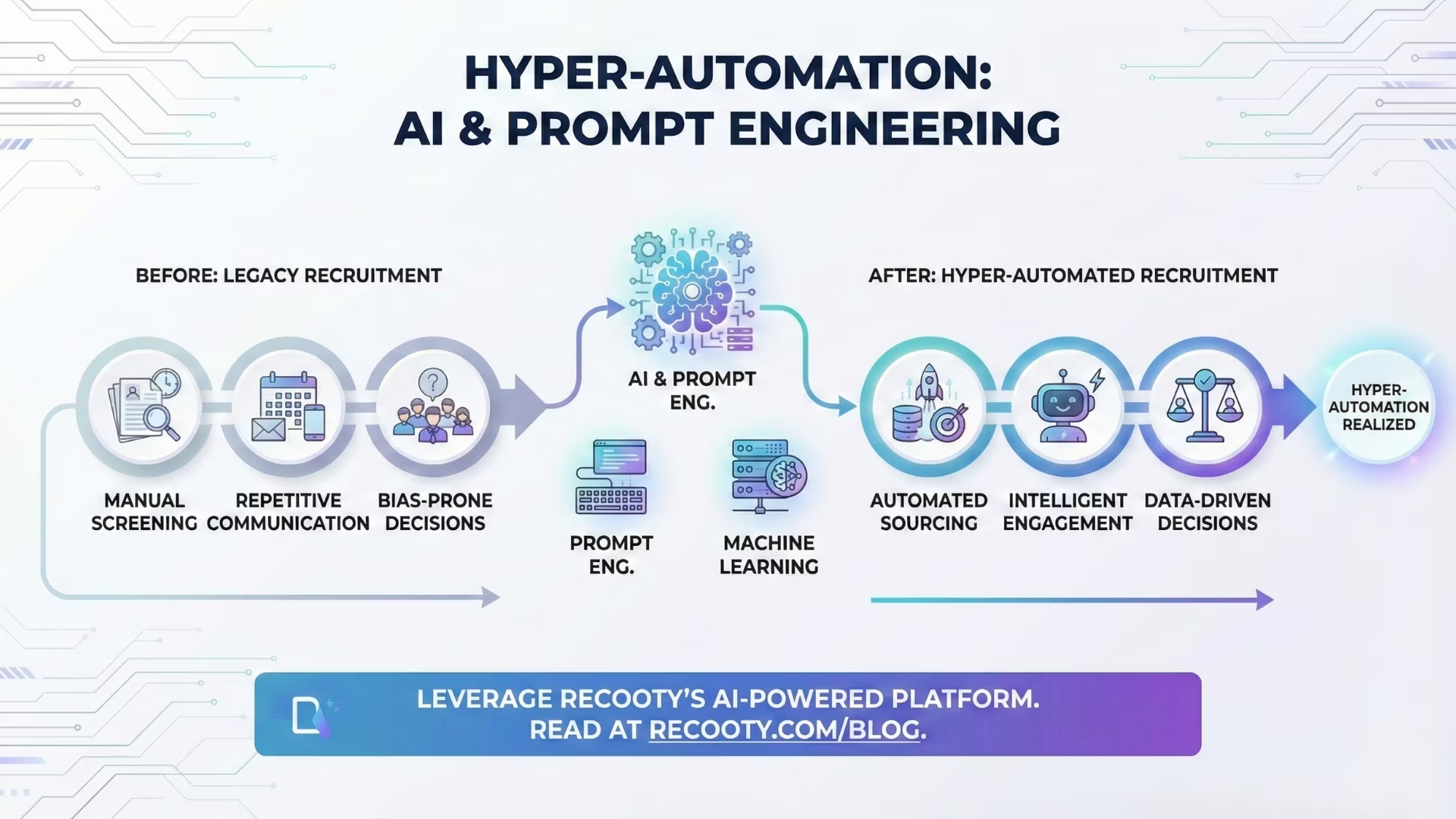
What It Is: This involves using advanced AI, like Generative AI and Large Language Models (LLMs), to automate workflows that once required significant human effort.
Why It Matters: It frees up recruiters from almost all administrative burdens, allowing them to become 100% strategic partners. Their time is better spent building relationships with candidates, advising hiring managers, and shaping talent acquisition strategy.
Examples in Action:
- AI-Generated Content: I regularly use AI to create first drafts of job descriptions and personalized outreach emails.
Tools like Recooty's AI Job Description Generator create SEO-optimized and inclusive posts in seconds. - AI Sourcing: The rise of AI prompt libraries for recruiters is a game-changer. Instead of complex Boolean strings, I can now ask an AI model, "Find me data scientists in the UK with experience in the healthcare industry and proficiency in Python and SQL," and get a targeted list instantly.
The Critical Importance of DEI Hiring Frameworks and Pay Transparency
The conversation around Diversity, Equity, and Inclusion (DEI) has rightfully moved from a "nice-to-have" to a core business imperative.
Top talent today doesn't just want a job; they want to work for a company that is fair, equitable, and transparent.
What It Is: A DEI hiring framework is a systematic approach to embedding fairness and inclusion into every step of the recruiting process. This is closely linked to pay transparency, the practice of openly communicating compensation ranges.
Why It Matters: Companies that lead on DEI and transparency will win the war for talent. It builds trust, attracts a wider range of candidates, and is proven to lead to more innovative and successful teams.
Furthermore, pay transparency laws are becoming the norm globally, making this a compliance issue as well.
How to Take Action:
1. Use AI to reduce bias: Implement tools that can anonymize resumes during the initial screening.
2. Standardize your process: Use structured interviews and scorecards for every role.
3. Post salary ranges: Be upfront about compensation in your job descriptions. This simple act builds immense trust.
Predictive Analytics: Moving from Reactive to Proactive Talent Strategy
For too long, recruiting has been a reactive function: a manager has a need, and we scramble to fill it.
The future is proactive, using data to anticipate needs before they even become urgent.
What It Is: Predictive hiring analytics involves using historical data and AI models to forecast future hiring needs, identify which candidates are most likely to succeed, and optimize your overall talent strategy.
Why It Matters: It allows your talent acquisition team to align directly with business goals. Instead of just filling seats, you are strategically building the workforce the company will need in six months or a year.
This transforms recruiting from a cost center into a strategic driver of growth.
The Future Vision: Imagine your ATS telling you, "Based on current sales growth and project roadmaps, you will likely need to hire three senior software engineers in Q4.
We recommend you start sourcing for these skills now." That's the power of predictive analytics. While this is still an emerging field, the data you collect in a centralized system like Recooty today is the fuel for the predictive insights of tomorrow.
The Strategic Pillars of Recruiting Top Talent Globally
Before diving into the tools, it's crucial to understand the foundational strategies for successful Global Talent Recruiting.
I've learned over the years that technology is only as good as the framework it supports. These four pillars are non-negotiable for anyone serious about attracting and retaining top talent on a worldwide scale.
- Pillar 1: Building a Magnetic Employer Brand for a Global Audience: Your company's reputation precedes you. You must craft an employer value proposition that resonates across different cultures, showcasing your mission, values, and the unique opportunities you offer.
- Pillar 2: Mastering Multi-Channel Sourcing to Reach Talent Anywhere: The best candidates aren't just on one platform. A robust talent acquisition strategy involves a mix of channels, from LinkedIn and niche job boards to online communities and employee referral programs.
- Pillar 3: Creating an Unforgettable Candidate Experience Across Borders: From the first outreach to the final offer, every interaction matters. Your process must be respectful of different time zones, languages, and cultural norms, ensuring a positive and seamless journey for every applicant.
- Pillar 4: Developing a Robust Diversity, Equity, and Inclusion (DEI) Framework: Global hiring is the ultimate opportunity to build a diverse team. This requires a conscious effort to implement inclusive hiring practices, use unbiased screening tools, and create an environment where everyone feels they belong.
Final Thoughts: Your Blueprint for Winning the Global War for Talent
We've covered a lot of ground, and if there’s one thing I hope you take away, it’s this: success in Global Talent Recruiting is no longer a matter of chance.
It’s the direct result of a deliberate, modern strategy. The days of simply posting a job and hoping for the best are long gone. To recruit top talent in today's competitive landscape, you need a blueprint.
This guide has provided that blueprint. We've walked through the core pillars of a strong talent acquisition strategy, from building an irresistible employer brand to mastering proactive sourcing and ensuring a fair, structured interview process.
We’ve explored how to adapt these strategies for the unique challenges of hiring in tech and how to troubleshoot the common pitfalls that can derail your efforts.
At the heart of this modern approach is the intelligent use of technology. The goal is to find the Perfect Candidate using AI, not to replace the human element of recruiting, but to enhance it.
By automating the high-volume, repetitive tasks, you free up your team to focus on what truly matters: building relationships, understanding candidate motivations, and making strategic, data-driven decisions.
Winning the war for talent isn't about having the biggest budget; it's about having the smartest strategy.
By implementing the steps and leveraging the tools we've discussed, you now have the framework you need to build a world-class team, no matter where in the world you find them.
Frequently Asked Questions About Global and AI-Powered Recruiting
What is the best way to recruit top talent from other countries?
From my experience, the best approach to Global Talent Recruiting is multi-faceted. It’s not just about posting a job on an international board.
First, you need a strong global employer brand that clearly communicates your company culture, values, and commitment to remote or flexible work.
Second, your sourcing strategy must be diverse; this means looking beyond LinkedIn to include niche job boards, online communities, and professional networks relevant to the candidate's country or industry.
Finally, you must provide a seamless candidate experience that respects different time zones and cultural norms.
To handle the complex legal and payroll side of global talent hiring, I strongly recommend partnering with an Employer of Record (EOR) service, which allows you to hire compliantly in countries where you don't have a legal entity.
How can AI recruitment tools like Recooty help reduce bias in hiring?
This is one of the most powerful applications of AI in our field. AI recruitment tools like Recooty can significantly reduce unconscious bias in the hiring process in several key ways.
The primary way is through AI-powered resume parsing. The software is programmed to focus exclusively on a candidate's skills, experience, and qualifications.
It ignores demographic information like a person's name, gender, age, or background, which are often the triggers for unconscious human bias. This ensures that your initial shortlist is based purely on merit.
Additionally, these platforms help standardize the evaluation process. By using features like AI-generated job descriptions, they can help you write more inclusive job posts that attract a wider, more diverse pool of applicants from the very start.
The result is a fairer, more equitable process that helps you find the Perfect Candidate using AI, regardless of their background.
How do you find the perfect candidate for a highly specialized tech position?
Finding the perfect candidate for a niche tech role requires a proactive, evidence-based approach. You have to become a talent detective.
First, you must source where top tech talent lives online. This means going beyond LinkedIn and actively searching on platforms like GitHub (to see their code), Stack Overflow (to see their problem-solving skills), and Kaggle (for data scientists).
In my experience, a developer's portfolio of work is far more telling than their resume.
Second, your outreach must be highly personalized. I never send a generic template. I always reference a specific project they built or an insightful answer they gave online.
This shows you've done your research and dramatically increases the chance of a reply.
Finally, use skills-based assessments like a take-home project or a live coding session that mimics the actual work they would be doing.
What's the difference between a standard ATS and an AI recruiting platform?
This is a great question, as the terms are often used interchangeably, but they are fundamentally different.
A standard Applicant Tracking System (ATS) is primarily a passive system of record. Think of it as a digital filing cabinet. Its main job is to collect, store, and help you organize applications.
It allows you to move candidates through a pipeline, but most of the heavy lifting, like screening resumes and identifying top candidates, still falls on the recruiter.
An AI recruiting platform, on the other hand, is an active system of intelligence. It uses artificial intelligence to automate and enhance the recruiting process. It doesn't just store applications; it analyzes them.
It can automatically parse resumes, rank candidates by their relevance, generate job descriptions, and even rediscover past applicants in your database who are a great fit for a new role.
A platform like Recooty transforms the ATS from a simple database into a proactive, intelligent partner to help you recruit top talent faster.
How do I measure the ROI of my global talent acquisition strategy?
Measuring the Return on Investment (ROI) is crucial to showing the value of your recruiting efforts. I focus on a few key performance indicators (KPIs):
- Time-to-Fill: This is the number of days from when a job is opened to when the offer is accepted. A shorter time-to-fill, especially for critical roles, shows your strategy is becoming more efficient.
- Cost-per-Hire: This is the total cost of your recruiting efforts (including software, advertising, and recruiter time) divided by the number of hires. AI tools and a strong talent pipeline should lower this cost over time.
- Quality of Hire: This is the most important but hardest metric. I measure it by looking at the new hire's performance review scores, their time to productivity, and manager satisfaction surveys after their first six to twelve months.
- Offer Acceptance Rate: A high acceptance rate indicates that your offers are competitive and your candidate experience is strong. Tracking these metrics in a centralized system gives you the data you need to prove ROI and make smarter decisions.
What are the first steps to building a strong global employer brand?
Building a global employer brand starts from the inside out and requires a clear, authentic message. Here are the first steps I always recommend:
1. Define your Employer Value Proposition (EVP). Before you can market your brand, you must know what it is. Work with your leadership and team to clearly articulate what makes your company a unique and compelling place to work. Focus on your mission, culture, and the growth opportunities you offer.
2. Optimize your career page. Your career page is the front door to your brand. It needs to be modern, mobile-friendly, and do more than just list jobs. Showcase your culture with employee testimonials, photos, and videos. An easy-to-use platform like Recooty can help you create a professional, branded career page in minutes without any coding.
3. Encourage employee advocacy. Your current employees are your most powerful brand ambassadors. Encourage them to share their experiences on professional networks like LinkedIn and provide them with content and stories to share about life at your company.
Start Using Recooty to Simplify Your Global Talent Recruiting Strategy
With Recooty, you can:
- Automate your hiring process
- Reach global candidates with one-click job posting
- Find the Perfect Candidate using AI-driven resume matching
- Build branded career pages and manage pipelines effortlessly
Get started today with a free trial of Recooty and see how it can help you recruit top talent, faster, smarter, and without the hassle.
Let’s build your dream Global Talent team together.
.png)
.png)

.webp)