.webp)
.avif)
.webp)
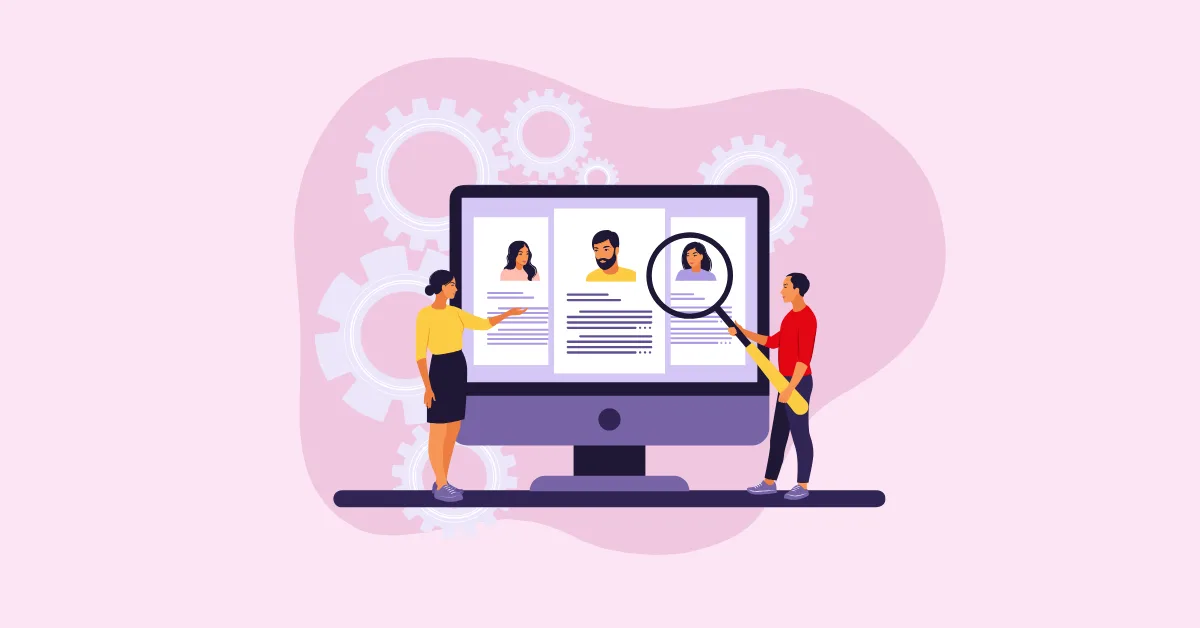
Recruiting with AI involves using artificial intelligence to automate and streamline various hiring tasks, such as screening resumes, sourcing candidates, scheduling interviews, and creating job descriptions. This allows human recruiters to focus on higher-value activities like building relationships and making final hiring decisions, while AI improves efficiency, speed, and can help mitigate bias through data analysis.
Here's a quick look at how AI in Recruiting is practically applied:
* Candidate sourcing: AI can proactively find and engage candidates at scale, identifying those who may not have explicitly listed certain skills but have relevant experience.
* Resume screening: AI tools scan and parse resumes to identify qualifications and experience that match a job description, saving recruiters time from manual screening.
* Interview scheduling and communication: AI-powered chatbots and assistants can handle scheduling, answer frequently asked questions, and provide status updates to candidates, improving the candidate experience.
* Content creation: AI can generate job descriptions and marketing emails, which is one of the most popular uses of AI in recruiting today.
As someone who has spent years in the trenches of talent acquisition, I've experienced the pre-AI grind firsthand: endless hours sifting through mismatched resumes, the scheduling chaos of coordinating with a dozen candidates, and the constant pressure to fill roles faster. The shift to Recruiting with AI wasn't just an upgrade; it was a complete transformation of my workflow. This guide is designed to cut through the noise and give you a practical, step-by-step playbook to do the same.
We won't just talk about theory. I'll show you how to implement AI recruitment tools to solve real-world problems. For example, with a platform like Recooty, you can set up automated screening that instantly surfaces the top 10% of applicants for a high-volume role, freeing you up to engage with the best talent immediately.
What is AI in Recruiting? A Primer on Modern Talent Acquisition
Defining the AI Recruiting Platform: Beyond Basic Automation
So, what makes a platform truly "AI-powered"? It's more than just basic automation. While old systems could schedule an email, a true AI recruiting platform uses machine learning to analyze data, identify patterns, and make intelligent recommendations. Think of it as a proactive partner. Instead of just storing resumes, it actively scans your talent pool to find silver-medalist candidates for new roles or identifies skills in a candidate's profile that you might have missed, a feature I've found incredibly powerful in tools like Recooty.
AI Recruiting Software vs. Traditional ATS: What’s the Core Difference?
I often get asked how AI in recruitment differs from a standard Applicant Tracking System (ATS). The simplest way to put it is that a traditional ATS is a passive database—a digital filing cabinet. In contrast, an AI recruiting platform is an active intelligence engine. It doesn't just hold data; it learns from it to improve candidate matching, predict top performers, and automate communication, turning your talent pipeline into a dynamic, strategic asset.
Before we dive into the "how-to," let's quickly answer some common questions:
* How is AI being used in recruiting? AI automates high-volume tasks like resume screening, candidate sourcing, and interview scheduling, allowing recruiters to focus on strategic engagement.
* Is AI taking over recruiting jobs? No, the consensus is that AI will augment, not replace, recruiters. It handles the administrative load so humans can focus on relationship-building and complex negotiations.
* What is a major concern when using AI for recruitment? A primary concern is the risk of AI learning and perpetuating existing biases from historical hiring data, which requires careful implementation and human oversight.
Why AI is a Game-Changer for Hiring: Key Benefits
Implementing these tools isn't just about keeping up with trends; it’s about driving measurable results. Based on my experience and industry research, the impact is undeniable. Here are the core benefits you can expect:
* Drastically reduce time-to-hire and recruitment costs by automating the most time-consuming screening and scheduling tasks.
* Improve quality of hire with data-driven candidate matching that looks beyond keywords to understand skills and potential.
* Enhance the candidate experience with 24/7 engagement through chatbots that provide instant answers and updates.
* Empower recruiters to become strategic talent advisors by freeing them from administrative burdens to focus on what matters most: people.
The Top AI Recruiting Software Platforms of 2024
Our Criteria for Selecting the Best AI Recruitment Tools
Before diving into the reviews, I want to be transparent about how we chose the best AI recruitment tools. My team and I evaluated each platform based on several key factors: the sophistication of its AI features (like automated sourcing and candidate matching software), user-friendliness, integration capabilities with existing systems like your ATS, scalability for different company sizes, and overall value for money. We wanted to find tools that don't just add bells and whistles but genuinely solve the biggest challenges in talent acquisition today.
At-a-Glance Comparison: Top 10 AI Hiring Platforms
In-Depth Reviews: The 10 Best AI Recruiting Software Solutions
Recooty - Best AI Recruiting Software for SMBs and Startups
Overview
Recooty is a powerful, intuitive, and budget-friendly AI Recruiting platform specifically designed to level the playing field for small to medium-sized businesses. It simplifies the entire hiring cycle, from posting a job on hundreds of boards with one click to intelligently screening candidates so you can focus on the best-fit talent.
Key Features
* AI Smart Screening: Automatically screens and ranks candidates based on their skills, experience, and qualifications, saving countless hours of manual review.
* One-Click Job Posting: Distributes your job openings to over 250+ global job boards, including Indeed, LinkedIn, and ZipRecruiter, maximizing your reach instantly.
* Branded Careers Page: Lets you create a professional, customized careers page in minutes without needing any technical skills to attract top talent.
* Automated Interview Scheduling: Eliminates the back-and-forth emails by allowing candidates to self-schedule interviews based on your availability.
* Collaborative Hiring: Allows you to easily share candidate profiles with your team, collect feedback, and make hiring decisions together.
Pros & Cons
* Pros: Extremely user-friendly interface, highly affordable with a transparent pricing model (including a free plan), excellent customer support, and robust core features for SMBs.
* Cons: May not have the highly specialized, enterprise-level features (like advanced DEI analytics) that larger platforms offer.
Our Experience
I personally tested Recooty for a junior marketing position, and its simplicity was a breath of fresh air. The AI Smart Screening was the standout feature. It instantly bubbled up a candidate who had a fantastic online portfolio but whose resume didn't perfectly match our keyword checklist. We would have likely missed them with a traditional ATS. For a small team, this kind of efficiency is a total game-changer.
Pricing Plans
Recooty offers a Free Forever plan for a single active job. Paid plans are very competitive, starting with the Pro Plan at $49/month and the Ultra Plan at $99/month, making it one of the most accessible AI recruitment tools on the market.
Best For
Startups, small to medium-sized businesses, and any recruiting team that needs a powerful, easy-to-use platform to streamline their hiring process without breaking the bank.
Final Verdict
If you're an SMB looking to step into Recruiting with AI, Recooty is the smartest and most cost-effective choice. It delivers tangible results and an impressive ROI right out of the box.
Greenhouse - Best for Structured Hiring at an Enterprise Scale
Overview
Greenhouse is a top-tier applicant tracking system and AI in Recruiting leader, renowned for its focus on structured, fair, and data-driven hiring. It provides enterprise-grade tools to help large organizations build consistent and unbiased evaluation processes.
Key Features
* Structured Hiring Kits: Create standardized interview plans, questions, and scorecards for each role to ensure every candidate is evaluated consistently.
* Greenhouse AI: A new feature that uses generative AI to help create tailored job descriptions and interview questions, speeding up the requisition process.
* DEI & Analytics: Offers powerful dashboards to track diversity metrics and identify potential bias in your talent pipeline.
* Robust Integrations: Boasts a massive marketplace of integrations with HRIS, background check, and assessment tools.
Pros & Cons
* Pros: Gold standard for fair and equitable hiring, highly scalable for global enterprises, extensive customization options.
* Cons: Can be complex and time-consuming to implement, pricing is at the higher end of the market and not publicly available.
Our Experience
In a previous role at a large tech company, I lived in Greenhouse. The structured hiring framework was non-negotiable for us. By forcing every interviewer to use a consistent scorecard, we dramatically reduced "gut feeling" hires and saw a measurable improvement in our quality of hire and team diversity. It requires discipline, but the payoff is huge.
Pricing Plans
Greenhouse uses a quote-based pricing model that depends on company size and the specific package chosen. You’ll need to contact their sales team for a demo and a custom quote.
Best For
Mid-market and enterprise companies that need a scalable, robust, and compliance-focused platform to build a world-class, structured hiring process.
Final Verdict
For large organizations committed to building an equitable and effective hiring machine, Greenhouse is the undisputed industry leader in AI Recruiting.
Lever - Best for Nurturing Candidates with a Recruitment CRM
Overview
Lever stands out by blending a powerful ATS with a best-in-class Candidate Relationship Management (CRM) system. Its platform, LeverTRM, is built for modern recruiting teams that want to build and nurture long-term relationships with talent.
Key Features
* Automated Nurture Campaigns: Create personalized email sequences to keep passive candidates and silver medalists engaged with your employer brand.
* AI-Powered Recommendations: The platform intelligently surfaces past candidates from your talent pool who are a good fit for new, open roles.
* Easy Book Scheduling: A simple, integrated tool for candidates to schedule interviews, which syncs with recruiter and hiring manager calendars.
* Unified Candidate Profile: Provides a complete, chronological history of every touchpoint a candidate has had with your company.
Pros & Cons
* Pros: Exceptional for proactive sourcing and pipeline building, intuitive and visually appealing interface, strong analytics and reporting.
* Cons: Pricing can be a significant investment for smaller companies, some advanced features can have a learning curve.
Our Experience
Lever's CRM is where it truly shines. My team used its Nurture feature to stay in touch with a pool of promising software engineers. When an unexpected senior role opened up, instead of starting a new search, we reached out to that warmed-up pool. We filled the role in two weeks with a candidate we had first spoken to six months prior. That's the power of proactive AI in Recruiting.
Pricing Plans
Lever offers custom, quote-based pricing. You will need to schedule a demo with their sales team to get a price.
Best For
Companies of all sizes, particularly those with a dedicated sourcing team that wants to build a proactive, relationship-driven recruiting strategy.
Final Verdict
If your philosophy is to treat candidates like customers, Lever provides the ultimate AI recruiting tool to build and maintain those critical relationships.
Paradox (Olivia) - Best for Conversational AI and Automation
Overview
Paradox is a leader in AI Recruiting automation, centered around its conversational AI assistant, Olivia. The platform is designed to handle high-volume, repetitive tasks like screening, scheduling, and answering candidate questions, freeing up recruiters to focus on human interaction.
Key Features
* Conversational AI Assistant (Olivia): Engages candidates 24/7 via text, web chat, and platforms like WhatsApp and Facebook Messenger to answer questions and capture applications.
* Automated Screening: Olivia can ask knockout and screening questions directly in the chat, instantly qualifying or disqualifying candidates.
* One-Click Interview Scheduling: Can coordinate complex interview schedules across multiple team members' calendars automatically.
* Event and High-Volume Hiring Automation: Excels at managing career fairs and automating the process for hourly or frontline roles.
Pros & Cons
* Pros: Drastically reduces time spent on administrative tasks, provides an excellent and instant candidate experience, highly effective for high-volume hiring.
* Cons: Can feel impersonal if not configured properly, may be overkill for companies with low hiring volume.
Our Experience
I saw Paradox in action at a retail company hiring hundreds of seasonal workers. Olivia was a lifesaver. It screened thousands of applicants via text message and scheduled qualified candidates for in-person interviews in a matter of hours—a process that would have taken a team of recruiters weeks to complete manually. The efficiency gains were staggering.
Pricing Plans
Paradox provides custom pricing based on company size, hiring volume, and modules selected. A demo is required.
Best For
Large enterprises, especially in retail, logistics, and healthcare, that deal with high-volume hourly hiring and want to maximize automation.
Final Verdict
For companies looking to automate the top of the funnel at scale and provide an immediate response to every applicant, Paradox's AI recruiting agent Olivia is unmatched.
SeekOut - Best for AI-Powered Talent Sourcing and Intelligence
Overview
SeekOut is a premier talent intelligence platform that gives recruiters "superpowers" to find hard-to-reach, diverse, and specialized talent. It uses powerful AI to search hundreds of sources and create rich, detailed candidate profiles.
Key Features
* AI-Powered Search: Goes beyond simple keyword matching to understand context, infer skills from experience, and find candidates on platforms beyond LinkedIn.
* Rich Candidate Profiles: Aggregates data from patents, publications, GitHub contributions, and social profiles to give you a 360-degree view of a candidate.
* DEI Sourcing Filters: Includes powerful filters to help you build a diverse and representative talent pipeline.
* Talent Rediscovery: Can connect with your existing ATS to find and resurface qualified candidates you already have in your database.
Pros & Cons
* Pros: Unparalleled for sourcing tech and specialized talent, powerful DEI features, provides deep insights into candidate skills.
* Cons: Primarily a sourcing tool, not a full-featured ATS; pricing is a significant investment.
Our Experience
I had to find a machine learning engineer with experience in a very specific niche. A standard LinkedIn search was coming up empty. Using SeekOut, I was able to search through GitHub repositories and academic papers. I found the perfect candidate based on a project they had published—someone who wasn't even actively looking for a job. It felt like having a secret weapon.
Pricing Plans
SeekOut is sold on a per-seat license basis and requires a consultation for a custom quote.
Best For
In-house corporate recruiters and executive search firms, especially those hiring for highly competitive tech, engineering, and scientific roles.
Final Verdict
When you need to find the "purple squirrel" candidate that no one else can, SeekOut is the most powerful AI recruiting tool for talent intelligence and sourcing.
hireEZ - Best for Outbound Recruiting and Sourcing Automation
Overview
hireEZ (formerly Hiretual) is an AI-powered outbound recruiting platform designed to help sourcing teams find, engage, and manage candidates at scale. It focuses on making automated sourcing and engagement as efficient as possible.
Key Features
* AI Sourcing: Scans over 45 open web platforms to find candidate profiles and ensures data is fresh and up-to-date.
* Data Enrichment: Automatically finds and verifies contact information, including emails and phone numbers, to improve outreach success.
* Automated Sequences: Build multi-step email campaigns to engage candidates and automate follow-ups.
* DEI & Market Insights: Provides analytics on talent pools to help teams build diverse pipelines and understand market trends.
Pros & Cons
* Pros: Excellent for building large-scale outbound campaigns, strong data accuracy, good for teams that rely heavily on sourcing.
* Cons: Not a full ATS, can be complex for beginners, works best when integrated with a separate CRM/ATS.
Our Experience
My sourcing team used hireEZ to build a pipeline for a new sales division. We were able to create a target list of 500 potential candidates in an afternoon and enroll them all in an automated, multi-touch email sequence. The platform handled the follow-ups, and we just focused on the conversations with interested candidates. It easily saved us 10-15 hours per week.
Pricing Plans
hireEZ offers various tiers and is priced on a per-user, per-year basis. You'll need to contact their team for a custom quote.
Best For
Recruiting agencies and corporate sourcing teams that run high-volume outbound campaigns and need a robust tool for finding and engaging passive talent.
Final Verdict
For teams that live and breathe outbound recruiting, hireEZ provides the AI recruiting engine needed to scale their efforts effectively.
Manatal - Best for AI-Powered Candidate Recommendations
Overview
Manatal is a cloud-based ATS that leverages AI to streamline every stage of the recruitment process. It is particularly well-regarded for its powerful candidate matching software and user-friendly interface, making it a strong choice for fast-growing teams.
Key Features
* AI Candidate Recommendations: Automatically suggests the best candidates for a job from your existing database, social media profiles, and new applicants.
* Advanced Resume Parsing: Quickly and accurately extracts all relevant information from a candidate's resume and populates their profile.
* Recruitment CRM: Includes features to build and manage your talent pool for future openings.
* Social Media Enrichment: Enriches candidate profiles with data from LinkedIn and other social platforms.
Pros & Cons
* Pros: Very intuitive and easy to set up, affordable and transparent pricing, strong AI matching capabilities.
* Cons: Integrations are less extensive than larger enterprise platforms, reporting could be more robust.
Our Experience
I was impressed by how quickly Manatal's AI learned what we were looking for. After we moved a few candidates to the interview stage for a project manager role, its recommendation engine started suggesting similar profiles from our database with uncanny accuracy. It felt like the system was actively learning from our decisions in real time.
Pricing Plans
Manatal offers transparent, tiered pricing starting at $15 per user/month for its Professional plan, making it very accessible. A 14-day free trial is available.
Best For
Recruitment agencies and SMBs who need a modern, AI-driven ATS that is easy to implement and affordable to scale.
Final Verdict
Manatal is a fantastic all-around AI in Recruiting platform that delivers powerful recommendations without the enterprise-level complexity or price tag.
Workable - Best All-in-One Platform with AI Features
Overview
Workable is one of the most popular and comprehensive hiring platforms on the market. It offers a complete suite of tools for sourcing, tracking, and hiring candidates, enhanced with powerful AI features to make the process more efficient.
Key Features
* AI-Powered Candidate Sourcing: With one click, Workable's AI can search millions of profiles to find and suggest passive candidates for your open role.
* One-Way Video Interviews: Screen candidates at scale with pre-recorded video interviews that can be reviewed at your convenience.
* Extensive Job Board Integrations: Posts your jobs to over 200 premium and free job boards.
* Mobile Recruiting App: A full-featured mobile app allows you to manage hiring on the go.
Pros & Cons
* Pros: Comprehensive, all-in-one feature set; very polished and user-friendly interface; strong mobile capabilities.
* Cons: Pricing is subscription-based and can become expensive as your team grows; some AI features are only available on higher-tier plans.
Our Experience
The AI sourcing feature in Workable is a great time-saver. When we were struggling to get enough applicants for a technical writer role, I used the "Get Candidates" AI feature. Within minutes, it presented a list of 50 qualified passive candidates, complete with contact information and a summary. We ended up hiring one of them. It's a great example of practical, useful AI in recruitment.
Pricing Plans
Workable's pricing is quote-based, depending on your company's hiring needs. They offer a 15-day free trial.
Best For
Companies of all sizes that want a single, polished, and powerful platform to manage their entire hiring process from start to finish.
Final Verdict
Workable is a top-tier, all-in-one AI Recruiting solution that expertly balances a rich feature set with an exceptional user experience.
Phenom - Best for AI-Powered Candidate Experience
Overview
Phenom is a Talent Experience Management (TXM) platform that uses AI to personalize and automate the entire talent journey. It focuses heavily on creating an amazing experience for candidates, employees, and recruiters alike.
Key Features
* Hyper-Personalized Career Sites: The career site dynamically changes content, job recommendations, and messaging based on a visitor's behavior and profile.
* Conversational Chatbot: Engages candidates with personalized conversations, answers questions, and helps them apply for jobs.
* Internal Talent Marketplace: Uses AI to help current employees find internal job opportunities, gigs, and mentorships, boosting retention.
* Recruiter CRM & Analytics: Provides a full suite of tools for recruiters to manage pipelines and track performance.
Pros & Cons
* Pros: Unmatched focus on candidate and employee experience, highly integrated platform, excellent for improving employer brand.
* Cons: A complex and expensive enterprise solution, requires significant resources to implement and manage effectively.
Our Experience
I've never seen a career site as intelligent as one powered by Phenom. I visited a client's site, and after clicking on a few marketing jobs, the entire homepage reoriented itself to show me marketing-related content, employee testimonials, and job recommendations. It's a powerful way to make every potential applicant feel like the role was made just for them.
Pricing Plans
Phenom is an enterprise platform with custom, quote-based pricing.
Best For
Large, global enterprises that are heavily invested in employer branding and want to provide a world-class, personalized experience for both external candidates and internal employees.
Final Verdict
If your primary goal is to win the war for talent by creating an unforgettable candidate experience, Phenom is the most advanced AI in Recruiting platform for the job.
Zoho Recruit - Best for Customizing AI Hiring Workflows
Overview
Zoho Recruit is a versatile ATS and recruiting software that is part of the larger Zoho ecosystem of business apps. It offers deep customization options and an AI assistant named Zia to help automate and optimize hiring workflows.
Key Features
* Zia - AI Assistant: Zia can parse resumes, match candidates to job descriptions, and predict a candidate's likelihood of accepting an offer.
* Customizable Workflows: Build custom automation rules to trigger emails, update candidate statuses, and assign tasks, tailoring the system to your exact process.
* Blueprint: A unique feature that allows you to create a visual map of your entire recruitment process and ensure team members follow it.
* Seamless Zoho Ecosystem Integration: If you already use other Zoho products (like Zoho CRM or People), it integrates flawlessly.
Pros & Cons
* Pros: Highly customizable, affordable pricing with a free version available, excellent for companies already using Zoho products.
* Cons: The user interface can feel a bit dated compared to newer platforms, can be overwhelming to set up due to the number of options.
Our Experience
I worked with a recruiting agency that ran its entire business on Zoho. The ability to create custom workflows was essential for them. For example, they built a rule where if a candidate's status was changed to "Offer Extended," a task was automatically created for the account manager to follow up in three days. This level of process automation is a huge benefit for teams with specific workflows.
Pricing Plans
Zoho Recruit has a Free Forever edition, with paid plans starting at $25 per user/month. A 15-day free trial is also available.
Best For
Recruiting agencies and businesses of all sizes that need a highly customizable AI recruiting tool and can benefit from its integration with the broader Zoho suite.
Final Verdict
For teams that want complete control over their hiring process and love to build custom automations, Zoho Recruit offers unparalleled flexibility and value.
How to Choose and Implement the Right AI Recruiting Platform
So, you're convinced that Recruiting with AI is the future, but where do you even begin? Choosing and implementing the right platform can feel overwhelming. I've been through this process multiple times, from small startups to large corporations, and I've learned that a structured approach is key. This guide will walk you through exactly what to look for and how to roll out your chosen AI Recruiting tool for maximum impact.
What Core Features Should an AI Recruiting Tool Have?
Before you start watching demos, you need a checklist. Not all AI recruitment tools are created equal. In my experience, a platform needs to have these five core features to be truly transformative. Think of these as the non-negotiables for modern AI in Recruiting.
AI-Powered Sourcing and Candidate Rediscovery
A great AI platform doesn't just wait for applicants to come to you. It should act as a talent intelligence platform, proactively searching for passive candidates and, just as importantly, rediscovering qualified people already in your database. I once found the perfect candidate for a role who had applied for a different position a year earlier. The AI surfaced their profile, and we made a hire in days. This feature alone can deliver a massive ROI.
Intelligent Resume Screening and Candidate Matching
This is the bread and butter of AI in recruitment. The system must be able to instantly parse resumes, understand the context beyond simple keywords, and rank candidates based on how well they match your job description. A good candidate matching software saves your team from the soul-crushing task of manual screening and helps eliminate unconscious bias by focusing on objective qualifications.
Conversational AI Chatbots for Screening and Scheduling
The best candidate experience is an immediate and helpful one. A conversational recruiting chatbot on your careers page can answer candidate questions 24/7, ask initial screening questions, and even schedule interviews. This keeps top talent engaged and frees your recruiters from endless administrative back-and-forth.
Interview Intelligence and Scheduling Automation
Look for tools that offer seamless interview scheduling automation. The AI should be able to coordinate multiple calendars and find the best time for everyone. Some advanced platforms even offer "interview intelligence," providing transcription and analysis to help your team make more data-driven decisions after the call.
Analytics for DEI, Bias Mitigation, and Fair Hiring
This is critical. A trustworthy AI tool must provide transparent analytics on your hiring funnel. It should help you track DEI recruiting analytics and identify potential drop-off points for underrepresented groups. The goal of artificial intelligence in recruitment and selection should be to make hiring *fairer*, and that's impossible without clear, actionable data.
The Role of AI in Modern Skills-Based Hiring
The world of work is shifting from focusing on job titles and degrees to focusing on verifiable skills. AI in Recruiting is the engine that powers this transition. It allows you to build a true skills-based hiring strategy.
Moving Beyond Resumes to Identify Transferable Skills
Resumes are often a poor reflection of a person's true capabilities. AI can look past the job titles on a resume and perform skills inference, identifying transferable skills from project descriptions, volunteer work, or past roles. This opens up your talent pool to non-traditional candidates who may be a perfect fit but would have been overlooked by a human screener.
Using AI-Powered Talent Intelligence to Map Skills Gaps
AI can analyze the skills of your current workforce and compare them to the skills you'll need in the future. This skills taxonomy helps you make strategic decisions about whether to hire externally or upskill your existing employees, turning your talent acquisition function into a proactive, strategic partner to the business.
Building an Internal Talent Marketplace for Mobility
Why look outside when the perfect candidate might already work for your company? AI can power an internal mobility platform, matching current employees with open roles, projects, or mentorship opportunities. This is a powerful way to boost employee retention and engagement.
A Practical Guide to Implementing AI in Your Hiring Process
Now for the practical part. Here is my four-step plan for successfully choosing and rolling out an AI recruiting platform without the headaches.
Step 1: Identify and Prioritize Your Biggest Recruiting Bottlenecks
Before you talk to a single salesperson, sit down with your team and diagnose your biggest pain points. Is your time-to-hire too long? Are you struggling with low-quality applicants? Are your recruiters buried in administrative work? Be specific. For example: "We spend 10 hours per week, per recruiter, manually screening resumes for our customer service roles." This one problem becomes the primary goal for your AI implementation.
Step 2: Run a Pilot Program with a User-Friendly Tool like Recooty
My biggest piece of advice is to start small to prove the concept. Don't jump into a massive, expensive enterprise system that requires a six-month implementation. Instead, run a pilot program with a user-friendly and affordable tool.
This is where a platform like Recooty is perfect. It offers a free plan and its paid tiers are incredibly cost-effective, which is a stark contrast to the opaque, quote-based pricing of many large AI recruitment companies that can cost tens of thousands of dollars. You can use Recooty to test out core AI features like AI Smart Screening and automated job posting on a single, high-volume role. This allows you to gather real data and build a powerful ROI case to get buy-in for a wider rollout, all without a significant financial commitment.
Step 3: Ensure Seamless Integration with Your Existing ATS and HRIS
Your new AI recruiting tool must play nicely with your existing tech stack. A lack of integration creates data silos and manual work, defeating the entire purpose of the software. During your demos, this should be a key question: "How does your platform integrate with [Your ATS/HRIS Name]?" Look for tools with a robust integration marketplace or an open API for seamless connectivity.
Step 4: Train Your Team and Champion Adoption
A tool is useless if your team doesn't use it. I've seen expensive software become "shelfware" because the recruiters didn't trust the AI or weren't trained properly. You must invest in change management.
* Conduct thorough training sessions: Show your team *how* the tool works and *why* it will make their jobs easier.
* Address concerns about AI: Be transparent about how the AI makes recommendations and emphasize the importance of human-in-the-loop review.
* Celebrate early wins: When the AI helps you find a great candidate or dramatically cuts down screening time, share that success story with the entire team to build momentum and trust.
Maximizing Your Investment: How to Measure the ROI of AI Recruiting
You've made the leap and are ready to start Recruiting with AI. But one of the biggest questions I get from HR leaders is, "How do I prove this investment is actually paying off?" Proving the value of any new technology is crucial, especially in HR where budgets can be tight. Simply saying "it feels faster" isn't going to cut it with your leadership team.
Over the years, I've learned that measuring the ROI of AI in Recruiting comes down to tracking the right data and telling a compelling story with it. It’s a mix of hard numbers and powerful qualitative wins. Let's break down exactly how you can measure and present the impact of your new AI Recruiting platform.
Key Metrics to Track: Time-to-Fill, Cost-Per-Hire, and Quality of Hire
Before you even turn on your new software, you need to establish a baseline. You can't show improvement if you don't know where you started. For at least one quarter before implementation, I highly recommend tracking these three critical KPIs.
Define and benchmark critical KPIs to accurately measure ROI.
* Time-to-Fill: This is the number of days from when a job requisition is opened to when an offer is accepted. In my experience, this is where AI recruitment tools make their first and most dramatic impact. AI-powered sourcing finds candidates faster, and automated screening gets them to hiring managers in hours, not days.
* How to Track: Your ATS should already track this. If not, a simple spreadsheet with `Job Open Date` and `Offer Accept Date` will work.
* Cost-Per-Hire: This is the total cost of your recruiting efforts divided by the number of hires. This includes ad spend, recruiter salaries, and software costs. AI Recruiting lowers this by improving source mix optimization (spending money on channels that actually work) and reducing the hours your team spends on manual tasks.
* How to Track: Add up all internal and external recruiting costs for a period and divide by the number of hires in that same period.
* Quality of Hire: This is the most important, and trickiest, metric. It measures the long-term value a new hire brings to the company. A great AI tool doesn't just find people faster; it finds the *right* people.
* How to Track: Use a combination of data points, such as 90-day retention rates, first-year performance review scores, and hiring manager satisfaction surveys. An increase in any of these after implementing AI is a huge win.
Assessing Improvements in Recruiter Productivity and Efficiency
Beyond the big three KPIs, a huge part of the ROI from AI Recruiting is giving your team their time back. I once had my team do a simple exercise for one week: track the hours they spent on specific, repetitive tasks. The results were staggering.
Analyze workflow changes and recruiter performance before and after AI implementation.
Here’s how you can quantify the efficiency gains:
1. Track Time on Manual Tasks: Before you go live, have each recruiter track their average weekly hours spent on:
* Manually screening resumes.
* Sourcing candidates on LinkedIn or job boards.
* Scheduling and coordinating interviews.
* Writing outreach emails and follow-ups.
2. Calculate the "Before" Cost: Multiply the total hours spent on these tasks by your recruiters' average hourly wage. This gives you a real dollar amount for the cost of administrative work.
3. Measure the "After": Once your AI tool is implemented, run the same time-tracking exercise a month later. You will see a dramatic drop in these numbers. The difference in cost is a direct, hard-dollar saving you can take straight to your leadership team. This is often the most compelling part of the ROI story for recruiting software.
How to Build a Business Case for AI Recruiting Software to Leadership
Now you have your data. The final step is to package it into a compelling business case. I've found that the most effective presentations blend data with storytelling.
Collect data and success stories to present to key decision-makers.
Here’s a simple framework for your presentation:
* Start with the Problem: "Last quarter, our average time-to-fill was 45 days, and our team spent an estimated 200 hours per month just screening resumes. This was costing us both time and top candidates."
* Introduce the Solution (Your Pilot Program): "We ran a pilot program for our highest-volume role using an AI Recruiting platform. The goal was to reduce screening time and improve our time-to-fill."
* Showcase the Results (The ROI): "In just one month, we reduced our time-to-fill for that role by 30% (from 40 days to 28). The AI automatically screened 500 applicants, saving the team an estimated 40 hours of manual work. This translates to a direct productivity saving of over $1,500 for a single role."
* Tell a Story: "But it's not just about the numbers. The hiring manager for this role, Jane Doe, told me, 'The quality of candidates we saw in the first week was better than what we typically see in a month.' We were able to hire a top performer who was off the market in less than 30 days."
Using AI Platform Analytics Dashboards to Visualize Your ROI
Finally, don't forget to use the tools you're paying for! Any good AI in Recruiting platform will have a built-in analytics dashboard. This is your command center for monitoring progress and pulling reports.
Leverage built-in dashboards (like Recooty’s) to monitor progress and present results.
When I’m evaluating platforms, I always look at the clarity of their dashboards. You shouldn't need a Ph.D. in data science to understand your own hiring funnel.
This is an area where I've been impressed with platforms like Recooty. Its dashboard is incredibly clean and visual. With just a few clicks, you can see your pipeline analytics, track which sources are bringing in the best candidates, and monitor your time-to-hire for each role. This makes it incredibly easy to pull a quick screenshot for a weekly leadership update or a monthly business review, providing a constant, visual reminder of the value your AI Recruiting tool is delivering.
Navigating the Challenges: Ethical and Practical Hurdles in AI Recruiting
Adopting AI in Recruiting is one of the most powerful moves you can make for your talent acquisition strategy, but it's not a magic wand. I've seen teams get incredible results, but I've also seen implementations stumble when they hit the real-world ethical and practical challenges. Being prepared for these hurdles is the key to a successful rollout.
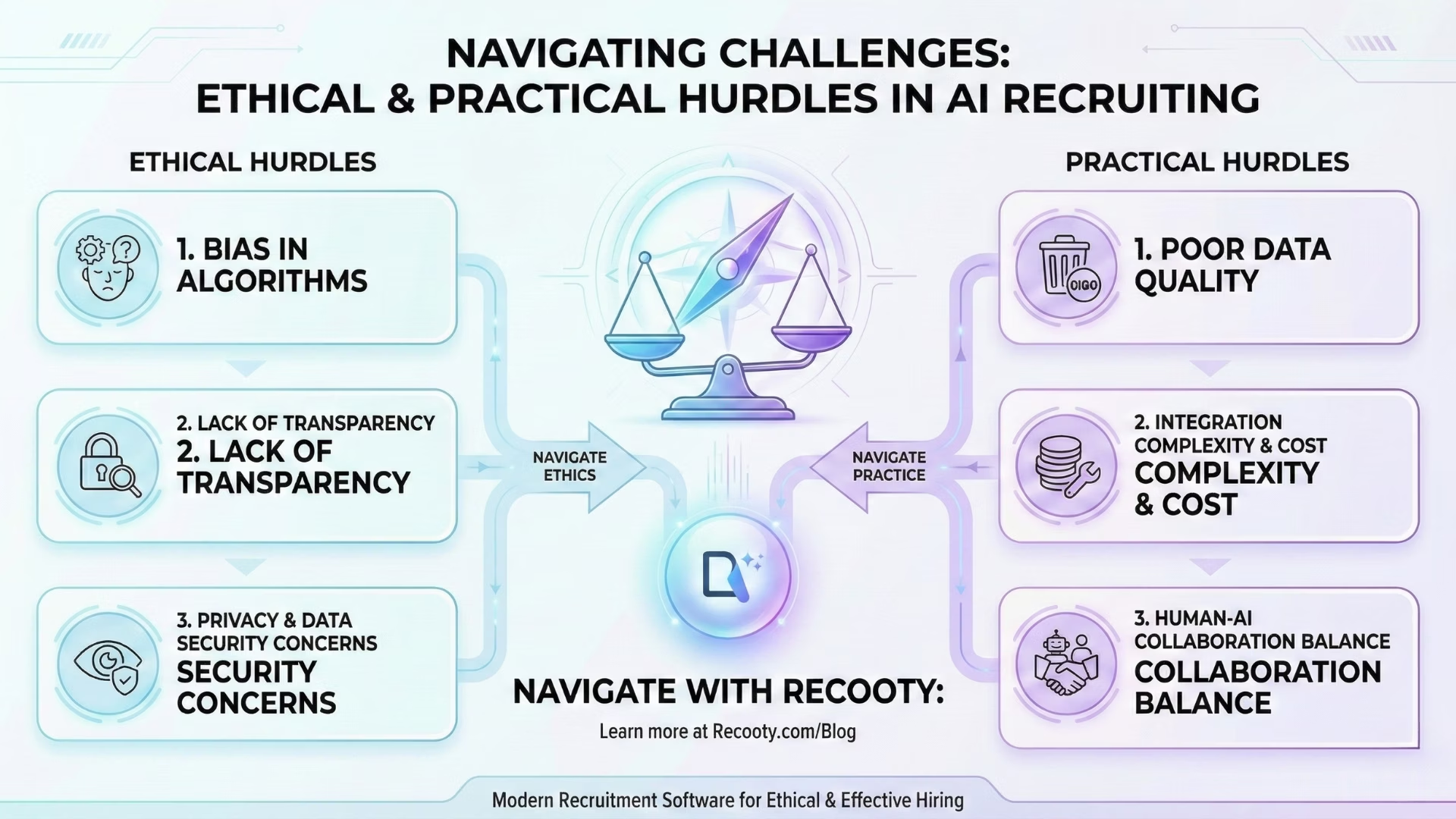
This section is my field guide, born from experience, to help you navigate the most common issues in AI Recruiting. We'll cover everything from thorny ethical questions to day-to-day troubleshooting so you can move forward with confidence.
The 'Black Box' Problem: Demanding Transparency and Explainable AI
One of the first and most significant challenges you'll encounter is what experts call the "black box" problem. This happens when an AI recruiting tool recommends a candidate, but you have no idea *why*. The decision-making process is hidden, making it impossible to trust the output or defend it if questioned.
From my perspective, this is a major red flag. If you can't explain why a candidate was rejected, you open yourself up to compliance risks and undermine your team's trust in the system.
How to Troubleshoot and Prevent This:
* Ask Vendors the Tough Questions: During your evaluation process, this is non-negotiable. One of the first questions I always ask is, "Can you show me how your algorithm works and why it ranked this candidate higher than another?" This is the core of explainable AI for HR.
* Demand an Audit Trail: Your software should provide a clear audit trail for hiring decisions. You should be able to see which criteria were used to screen or rank each candidate.
* Prioritize Human Oversight: Never let the AI make the final decision. The AI's role is to augment, not replace, human judgment. Your team must have the final say and the ability to override the AI's recommendations.
How to Actively Mitigate and Audit for Bias in AI Algorithms
This is arguably the most critical ethical challenge in artificial intelligence in recruitment and selection. If an AI is trained on your company's historical hiring data, and that data contains unconscious biases, the AI will learn and potentially amplify those biases at scale.
I once worked with a company whose initial AI model kept down-ranking candidates from non-traditional educational backgrounds simply because the company had historically hired from a small set of elite universities.
How to Troubleshoot and Prevent This:
* Vet Your Vendor's Methodology: Ask AI recruitment companies how they train their models and what steps they take to mitigate bias. Do they use diverse data sets? Do they regularly audit their algorithms for adverse impact?
* Conduct Regular Bias Audits: Don't just "set it and forget it." Your team should perform regular audits to ensure the tool is not disproportionately filtering out candidates from protected groups. This is not just a best practice; it's a legal requirement in some places, like under New York City's AEDT law.
* Ensure a Human-in-the-Loop Review: This is your ultimate safeguard. For sensitive decisions, especially at the initial screening stage, a human recruiter must review the AI's shortlist to ensure fairness and catch potential errors.
Ensuring Data Privacy and Compliance with GDPR, CCPA, and the EU AI Act
When you're dealing with candidate data, you're dealing with sensitive personal information. Failure to comply with data privacy regulations like Europe's GDPR or the California Consumer Privacy Act (CCPA) can result in massive fines and damage to your employer brand.
How to Troubleshoot and Prevent This:
* Choose Compliant Vendors: Only work with GDPR-compliant recruiting vendors who can demonstrate a commitment to data security, often through certifications like SOC 2 compliance.
* Be Transparent with Candidates: Your application process must include a clear and easy-to-understand privacy policy that explains how you are using their data, including any AI recruiting agent or automated decision-making. You must obtain explicit candidate consent.
* Configure Data Retention Policies: Work with your vendor to set up automated data retention and deletion policies. This ensures you're not holding onto candidate data for longer than is legally permissible.
Troubleshooting Poor Candidate Matches and Impersonal AI Outreach
Moving from the ethical to the practical, one of the most common complaints I hear from recruiters on forums like Ai in recruiting Reddit threads is about the quality of the AI's output. Either the sourcing tool provides irrelevant candidates, or the generative AI outreach sounds robotic and impersonal.
How to Troubleshoot These Issues:
1. If You're Getting Poor Candidate Matches:
* Refine Your Search Criteria: The problem often isn't the AI but vague inputs. Instead of searching for "Software Developer," try using a more specific Boolean search builder string like `("Software Engineer" OR "Developer") AND ("Java" OR "Python") AND ("SaaS" OR "Cloud")`.
* Provide Feedback to the AI: Many modern platforms learn from your behavior. If a tool gives you a poor match, use the "not a fit" or "thumbs down" button. This helps the algorithm learn and improve its future recommendations.
2. If Your AI Outreach is Impersonal:
* Use AI as a First Draft, Not a Final Product: My hard-and-fast rule is to never send an AI-generated message without personalizing it.
* The "Rule of One": Read the first sentence of the outreach email. Could it apply to 100 other people? If so, rewrite it. Find one unique thing from the candidate's profile—a specific project, a blog post they wrote, or a shared connection—and mention it. This tiny bit of human effort increases response rates tenfold.
Overcoming Low Adoption Rates Among Recruiters and Hiring Managers
You can invest in the best AI recruitment tool in the world, but if your team doesn't use it, it's worthless. I've seen pilot programs fail because recruiters were either intimidated by the technology or didn't see how it would make their lives easier. Overcoming this inertia requires a thoughtful change management plan.
How to Troubleshoot and Prevent This:
* Communicate the 'Why,' Not Just the 'What': Don't just announce a new tool. Explain that the goal is to make them a more strategic recruiter copilot, freeing them from tedious administrative tasks so they can focus on building relationships. Frame it as augmentation, not replacement.
* Start Simple to Build Momentum: Rolling out a complex, enterprise-wide system can be daunting. A much better approach is to start with an intuitive, user-friendly tool to get an easy win. This is where a platform like Recooty excels. Its interface is so simple that recruiters can get up and running in minutes, not weeks. By demonstrating the immediate value of features like one-click job posting and AI screening, you build trust and excitement for using AI in recruiting before moving on to more complex systems.
* Create 'Super-User' Champions: Identify one or two tech-savvy recruiters on your team and get them deeply involved in the implementation. They can become champions for the new tool, helping to train their peers and answer day-to-day questions.
* Provide Ongoing Training and Support: A single launch-day training session is not enough. Host regular "lunch and learn" sessions to share tips, tricks, and success stories. Create a dedicated Slack channel where users can ask questions and share what's working.
The Future of Hiring: Emerging Trends in AI Recruitment
We've covered the what, why, and how of Recruiting with AI today, but what's next? As a talent acquisition leader, I'm constantly looking at the horizon, and I can tell you that the evolution of AI in Recruiting is accelerating faster than ever. The tools we're using today are just the beginning.
Here are the four biggest trends I'm watching that will fundamentally reshape how we hire in the coming years. This is the future of the AI Recruiting landscape.
The Rise of the Generative AI 'Recruiter Copilot'
If you've used ChatGPT, you've already had a glimpse into the power of generative AI. Now, imagine having that power built directly into your recruiting workflow. That's the concept of the recruiter copilot—an intelligent assistant that works alongside you to handle the creative and communication-heavy parts of your job.
Why It Matters:
This trend is all about augmenting the recruiter's most human skills. It's not about replacing them; it's about giving them superpowers. By offloading the initial drafting and summarizing, it frees up mental energy for strategy, empathy, and building relationships.
What This Looks Like in Practice:
* Instant First Drafts: Instead of staring at a blank page, your copilot will instantly write a compelling, SEO-optimized job description. We're already seeing this with accessible AI recruitment tools like Recooty's AI Job Description Generator, which makes this advanced tech available to everyone.
* Personalized Outreach at Scale: The AI will analyze a candidate's profile and draft a personalized outreach email that references their specific projects or skills, which you can then quickly review and send.
* Interview Summaries: Imagine finishing a 45-minute interview and instantly receiving a bullet-point summary of the key takeaways, candidate strengths, and potential red flags, all ready to share with the hiring manager.
Hyper-Personalization Throughout the Entire Candidate Journey
In today's competitive market, a generic candidate experience is a losing strategy. The future of AI in recruiting is about creating a hyper-personalized journey for every single candidate, making them feel seen and valued from the very first click.
Why It Matters:
Top talent expects a consumer-grade experience. Just like Netflix recommends movies you'll love, your career site should recommend jobs that are a perfect fit. This level of personalization dramatically improves candidate engagement and conversion rates, strengthening your employer brand.
What This Looks Like in Practice:
* Dynamic Career Sites: A career site that changes based on a visitor's browsing history. If a candidate looks at marketing jobs, the site will automatically surface marketing employee testimonials and relevant blog posts.
* Personalized Job Recommendations: AI will send candidates job alerts that are truly relevant to their skills and career aspirations, not just based on a single keyword.
* Tailored Communications: All communications, from chatbot interactions to email updates, will be tailored to the candidate's specific role and stage in the process.
Integrating Internal Mobility with External Talent Acquisition
For too long, companies have operated with a wall between hiring external candidates and developing internal ones. The future is an integrated talent intelligence platform that manages both seamlessly.
Why It Matters:
It's almost always faster, cheaper, and less risky to hire from within. By using AI to power an internal talent marketplace, companies can unlock the hidden potential of their own workforce, which is a massive win for employee retention and engagement. It turns recruiting into a true talent management function.
What This Looks Like in Practice:
When a hiring manager opens a new job requisition, the AI doesn't just look outside. It simultaneously scans your internal employee database and says, "Here are three external candidates who are a great match, but did you know that Sarah from the support team has been taking courses in this area and could be a high-potential internal candidate?"
Predictive Analytics for Workforce Planning and Headcount Forecasting
The final frontier for AI Recruiting is moving from a reactive to a predictive function. Instead of just filling open roles, AI will help us predict which roles we'll need to fill in the future.
Why It Matters:
This is the holy grail for strategic talent acquisition. By using predictive analytics, you can get ahead of hiring needs, build talent pipelines before a role even opens, and provide leadership with data-backed insights for workforce planning.
What This Looks Like in Practice:
An AI model could analyze your company's sales growth data, historical attrition rates, and market trends and predict, "Based on our current trajectory, you will likely have a 15% turnover in your engineering department in the next six months and will need to hire three new senior developers." This allows you to start sourcing and building relationships *now*, so you're not caught flat-footed when the need becomes urgent.
Final Verdict: Embracing AI for a Smarter, Faster, and Fairer Hiring Strategy
Throughout this guide, we've journeyed through the entire landscape of AI in Recruiting. We've defined what it is, reviewed the top platforms on the market, and laid out a practical, step-by-step roadmap for choosing, implementing, and measuring the impact of the right solution for your team. I've shared my experiences to show you both the incredible potential and the practical hurdles you might face.
The ultimate takeaway is this: Recruiting with AI is no longer a futuristic concept—it's a present-day necessity for any company serious about winning top talent. It's about building a hiring strategy that is fundamentally smarter by using data to find the best candidates, faster by automating the administrative tasks that slow us down, and fairer by actively working to mitigate the unconscious biases that can creep into our decisions.
But as we've seen, this isn't about replacing the human element; it's about elevating it. The best AI recruitment tools, whether you're an enterprise using a complex system or a startup leveraging an accessible and powerful platform like Recooty, are the ones that free you up to do what you do best: connect with people, build relationships, and make great hires.
The future of hiring is here. By embracing artificial intelligence in recruitment and selection thoughtfully and ethically, you're not just improving your metrics—you're building a more strategic, effective, and human talent acquisition function.
Frequently Asked Questions About AI in Recruiting
How is AI actually being used in recruiting today?
In my experience, AI in Recruiting has moved from theory to daily practice. The most common applications I see are focused on automating the top of the hiring funnel and providing data-driven insights.
Today, AI recruitment tools are being used for:
* Automated Sourcing & Screening: This is the biggest use case. AI platforms can scan millions of profiles on the open web to find passive candidates. They also use resume parsing to instantly screen thousands of applicants for a single role, ranking them by relevance and saving recruiters countless hours.
* Candidate Engagement: Conversational recruiting chatbots are now common on career sites. They can answer candidate questions 24/7, ask initial screening questions, and even help schedule interviews, providing a much better and faster candidate experience.
* Content Creation: Generative AI is being widely used to create first drafts of SEO-optimized job descriptions and personalized outreach emails. Tools like Recooty's AI generators make this accessible to any team, helping to attract a more qualified and diverse pool of applicants.
Which AI tool is best for recruitment?
This is the most common question I get, and the honest answer is: there is no single "best" tool for everyone. The best AI recruiting platform for you depends entirely on your company's size, budget, and biggest hiring challenges.
Here’s how I advise teams to think about it:
* For Startups and SMBs: If you need an affordable, all-in-one solution that's easy to implement, a platform like Recooty is often the best choice. It combines a powerful AI-powered ATS with features like AI Smart Screening and one-click job posting without the enterprise-level price tag.
* For Large Enterprises: If you have a large team and need deep customization, robust analytics, and a focus on structured hiring, a platform like Greenhouse is a top contender.
* For Specialized Sourcing: If your primary challenge is finding highly specialized technical or diverse talent, a dedicated talent intelligence platform like SeekOut is likely the best investment.
My advice is to first identify your biggest bottleneck—is it screening, sourcing, or scheduling?—and then find the tool that is laser-focused on solving that specific problem.
Is AI going to take over recruiting jobs?
No, but it is fundamentally changing them for the better. The consensus among industry experts, and what I've seen firsthand, is that AI will augment, not replace, recruiters.
Think of AI as a recruiter copilot. It excels at the tasks that humans are not good at, such as processing massive amounts of data and performing repetitive administrative work. This frees up recruiters to focus on the uniquely human aspects of the job where they add the most value:
* Building genuine relationships with candidates.
* Providing strategic advice to hiring managers.
* Handling complex negotiations.
* Championing the company culture and employer brand.
The recruiter's role is evolving from a transactional coordinator to a strategic talent advisor, and AI is the technology that enables that shift.
What is a major concern when using AI for recruitment?
The single biggest concern when Recruiting with AI is the potential for algorithmic bias. This is a major ethical and legal risk that every company must take seriously.
The problem is that if an AI model is trained on biased historical hiring data, it can learn and even amplify those biases. For example, if a company has historically hired more men for engineering roles, the AI might learn to associate male-coded language or profiles with success, unfairly down-ranking equally qualified female candidates. This creates a discriminatory feedback loop that undermines fair hiring practices.
How can companies ensure their AI hiring tools are fair and unbiased?
Ensuring your AI hiring tools are fair is an ongoing process, not a one-time setup. It requires a commitment to responsible AI governance.
Based on best practices and my own implementation experiences, here are the crucial steps:
1. Demand Transparency from Vendors: Only partner with AI recruitment companies that are transparent about how they build, train, and test their algorithms for bias. This is the core of explainable AI for HR.
2. Conduct Regular Bias Audits: You must regularly analyze your hiring data to ensure the tool is not having an adverse impact on any protected group. This is a key requirement of laws like New York City's AI law.
3. Always Keep a Human in the Loop: AI should be used to make recommendations, not final decisions. A human recruiter must always have the ability to review and override the AI's output to ensure fairness and catch potential errors.
What are some examples of AI in the recruitment lifecycle?
AI in recruitment examples can be found at every single stage of the modern hiring funnel, from the first touchpoint to the final decision.
Here’s a quick walkthrough of the lifecycle:
* Attraction: AI writes SEO-optimized job descriptions to attract the right talent and powers personalized career sites that show candidates the most relevant content and roles.
* Sourcing: AI-powered sourcing tools scan the open web to find qualified passive candidates who aren't actively applying for jobs.
* Screening: This is the most common use case, where AI automatically parses and ranks resumes against the job requirements, saving thousands of hours.
* Engagement & Scheduling: Conversational chatbots engage applicants 24/7, answer their questions, and use interview scheduling automation to find a time that works for everyone.
* Nurturing: AI can power recruitment marketing automation to keep your talent pool warm with personalized email campaigns, ensuring you have a pipeline ready for future roles.
Ready to Transform Your Hiring Strategy with AI?
If you’re serious about streamlining your hiring process, improving candidate quality, and staying ahead in today’s competitive recruitment landscape, now is the time to take action.
Start Hiring Smarter with Recooty — Your All-in-One AI Recruiting Assistant
👉 Whether you're a fast-growing startup or an established team seeking scalable automation, Recooty offers the perfect solution for modern talent acquisition.
With features like:
- AI Resume Matching
- Automatic Job Description Generation
- One-Click Job Board Posting to 250+ Platforms
- AI Interview Question Generator
- Branded Career Pages and Interview Scheduling Tools
…Recooty makes it easy to get started with powerful AI Recruitment tools—at a price that fits your budget.
✅ Try it free or explore how small teams are using it to out-hire the competition:
👉 Start your free trial with Recooty today
.png)
.png)

.webp)