.webp)

.webp)
Navigating the Modern Workforce Landscape
The contemporary professional landscape is in a constant state of flux, rapidly redefining the traditional paradigms of employment and engagement.
For Human Resources professionals, this era presents both profound challenges and unprecedented opportunities.
Gone are the days when employee loyalty was simply assumed, or when a clear, linear career path was the universal expectation.
Today, a confluence of societal shifts, technological advancements, and evolving individual priorities has fundamentally reshaped the employee-employer dynamic.
We are witnessing a monumental re-evaluation of the role of work in people's lives, a shift accelerated by global events and heightened awareness of personal well-being.

At the epicenter of these transformative workplace trends are two phrases that have rapidly permeated boardrooms, water coolers, and social media feeds alike: quiet quitting and quiet firing.
These aren't merely catchy buzzwords; they are potent indicators of deeper systemic issues within organizations worldwide.
While often discussed in tandem, they represent fundamentally different phenomena, one stemming from employee sentiment and the other from managerial action.
Yet, both carry significant implications for employee engagement, employee retention, and the overall health of your workplace culture.
Understanding the nuances of each, their root causes, and their far-reaching impacts is no longer a peripheral concern for HR; it is a critical imperative for maintaining organizational health and competitive advantage in a talent-driven market.
This comprehensive guide aims to equip HR professionals with the knowledge and actionable HR strategies necessary to navigate these complex challenges.
A resilient and thriving organization in this new era relies heavily on strategic talent management, and that journey unequivocally begins with embracing modern, efficient HR and recruitment solutions.
By proactively adopting innovative approaches, such as leveraging collaborative hiring platforms, organizations can lay a strong foundation for a more engaged and committed workforce from the very first interaction.
This forward-thinking approach is essential for preventing the disengagement that often underpins both quiet quitting and quiet firing.
Understanding Quiet Quitting: The Employee's Silent Shift
The term quiet quitting burst into the popular lexicon, primarily through social media platforms, capturing the zeitgeist of a workforce re-evaluating its relationship with professional exertion.
Initially misunderstood as outright laziness or a subversive form of resignation, quiet quitting is, in fact, a far more nuanced phenomenon.
It signifies a profound shift in how employees perceive and allocate their energy and commitment to their jobs, often as a direct response to prevailing workplace conditions.
For HR, grasping this distinction is vital, as misinterpreting the signs can lead to ineffective, or even counterproductive, interventions.
What Exactly is Quiet Quitting?
At its core, quiet quitting is not about an employee leaving their job or performing poorly.
Instead, it is a conscious decision by an employee to adhere strictly to the confines of their job description and contracted working hours, deliberately disengaging from any tasks or responsibilities that fall outside these boundaries.
This means they are no longer going "above and beyond" expectations, nor are they volunteering for extra projects, answering emails late into the night, or dedicating personal time to work-related activities.
They are, quite simply, doing precisely what they are paid to do, no more, no less.
Historically, this behavior has had various names, such as "work-to-rule" (often associated with unionized environments) or simply "coasting." However, the modern iteration, popularized through viral TikTok videos and discussions, carries a different resonance.
It emerged particularly strongly in the wake of the global pandemic, a period that prompted widespread introspection about work-life balance, personal well-being, and the value of one's time outside of professional obligations.
This contemporary trend reflects a collective rejection of the pervasive "hustle culture" that glorified overwork and boundless dedication to one's career, often at the expense of personal health and relationships.
The spectrum of quiet quitting is broad.
On one end, it can represent a healthy recalibration, where employees establish necessary boundaries to protect their mental health and reclaim their personal lives.
This can be a positive development, leading to more sustainable work habits and preventing burnout.
On the other end, it can signify deep disengagement, a precursor to actual resignation, where an employee has emotionally checked out but remains employed for financial stability while actively seeking new opportunities.
It's this latter, more concerning manifestation that HR professionals must be adept at identifying and addressing.
Understanding this duality is crucial, as the HR response to an employee setting healthy boundaries will differ significantly from the response to an employee spiraling into deep disengagement.
Key Signs of Quiet Quitting for HR to Observe
Detecting quiet quitting requires keen observation and a proactive approach from HR and management.
Unlike overt acts of poor performance or insubordination, the signs of quiet quitting are subtle shifts in behavior and attitude.
They are often deviations from a previously established pattern of engagement and initiative.
For HR, acting as the eyes and ears of the organization, noticing these changes early is paramount to preventing wider employee disengagement and potential employee turnover.
Here are detailed indicators that HR should be diligently watching for:
- Decreased initiative and proactive behavior: An employee who previously offered innovative solutions, volunteered to lead projects, or sought out opportunities to improve processes now waits to be assigned tasks.
They complete their core duties adequately but show no interest in problem-solving beyond their immediate scope or identifying future challenges.
They might stop suggesting new ideas in meetings, choosing instead to remain silent unless directly prompted.
This signals a deeper psychological withdrawal from the company's future success.
- Data Points to Monitor: Performance review comments regarding initiative, project participation logs, attendance at voluntary training/innovation workshops.
- Reduced participation in non-mandatory activities/meetings: This is one of the most visible quiet quitting examples.
The employee consistently declines invitations to optional team social events, after-work gatherings, or even non-essential departmental meetings.
They may log off precisely at the end of their workday, even if it means missing informal team discussions or collaborative wrap-ups.
They might respond to requests for participation with polite but firm refusals, prioritizing personal time over team cohesion.
These activities, while not directly tied to core deliverables, are crucial for building team cohesion, fostering a sense of belonging, and strengthening workplace culture.
A consistent withdrawal signals a diminished emotional investment in the team and organization.
- Data Points to Monitor: Attendance records for optional team events, engagement in internal social platforms, observations from team leaders regarding social integration.
- Lack of enthusiasm for growth or new responsibilities: When presented with opportunities for professional development, a promotion, or a challenging new project, the employee exhibits a lukewarm response, or even polite disinterest.
They might express contentment with their current role and workload, effectively signaling a lack of ambition or desire to expand their capabilities within the company.
Discussions about a clear career pathing feel like an obligation, not an opportunity.
A lack of desire for growth can halt an employee's personal development and limits the organization's ability to leverage their full potential.
It can also indicate that the employee perceives the rewards (financial or otherwise) of taking on more responsibility as insufficient compared to the increased effort or stress.
- Data Points to Monitor: Engagement in development conversations, uptake of training programs, application for internal promotions, stated career goals during performance reviews.
- Increased focus on strict adherence to working hours: This is a hallmark of the quiet quitting relationship.
The employee arrives precisely at their start time and is visibly (or digitally) offline the moment their workday concludes.
They rarely check emails or messages outside of these hours, and their availability is strictly limited to their schedule.
There's a noticeable precision in logging in and out, rather than a natural flow.
While establishing boundaries is healthy, an overly rigid adherence can hinder urgent collaborative efforts or create a perception of unresponsiveness, especially in roles that occasionally require flexibility.
It highlights a conscious decision to separate work from personal life to the minute.
- Data Points to Monitor: Login/logout times (for remote/hybrid roles), responsiveness outside of core hours, observations of immediate departure at day's end.
- A potential rise in absenteeism or tardiness: You might observe a subtle but consistent increase in the use of sick days, or an employee arriving a few minutes late more frequently than before.
These instances might be within company policy, but the pattern itself is a deviation from their usual reliability.
They might take longer lunch breaks or be less concerned about managing personal appointments around work schedules.
While minor, these shifts can indicate a waning sense of commitment and responsibility towards the job.
It often signals a lower threshold for tolerating minor discomforts or inconveniences related to work, further pointing to employee disengagement and a lack of psychological attachment to their role or team.
- Data Points to Monitor: Absenteeism rates, tardiness records, patterns in leave requests (e.g., frequent short-term leave).
HR professionals can leverage HR analytics by correlating these behavioral observations with data from employee engagement surveys, performance reviews, and employee turnover rates to identify patterns and address quiet quitting effectively.
Why Employees Quiet Quit: Underlying Causes
No employee wakes up and unilaterally decides to disengage without a reason.
Quiet quitting is almost always a symptom, not the root disease.
It serves as a defense mechanism, a quiet protest, or a coping strategy against perceived injustices, overwhelming demands, or a lack of support within their workplace culture.
For HR to truly address and mitigate this trend, a deep dive into its underlying causes is essential, moving beyond surface-level observations to understand the deeper psychological and organizational factors at play.
Here are the primary drivers I've identified through extensive observation and HR analysis:
- Burnout and overwhelming workloads: This is undeniably the most significant factor fueling the quiet quitting phenomenon.
Modern work environments often demand relentless productivity, constant connectivity, and the blurring of professional and personal lines.
Employees are frequently stretched thin, managing heavier workloads with fewer resources, leading to chronic stress.
Burnout is not merely feeling tired; it’s a state of emotional, physical, and mental exhaustion caused by prolonged or excessive stress.
When employees reach this breaking point, quiet quitting becomes a survival mechanism—a desperate attempt to conserve what little energy they have left and prevent a complete psychological or physical collapse.
They retract their extra effort to create a buffer against further exhaustion, implicitly stating, "I can no longer give more than the absolute minimum required to survive." This intense pressure directly undermines work-life balance, pushing employees to seek respite by any means necessary.
- Feeling undervalued or a lack of recognition/fair compensation: Few things erode employee morale faster than the perception of being unappreciated or unfairly compensated.
Employees consistently going the extra mile, working overtime, and exceeding expectations will eventually question the value of their dedication if their efforts are met with silence, minimal praise, or annual raises that barely keep pace with inflation.
When hard work is invisible, or worse, taken for granted, the psychological contract between employee and employer fractures.
Why contribute beyond what's expected if there's no tangible reward—be it financial, professional growth, or simple acknowledgment? This directly impacts job satisfaction and leads to a calculated withdrawal of discretionary effort, which in turn leads to significant employee disengagement, as the intrinsic motivation to perform at a high level diminishes.
- A desire for better work-life balance and mental well-being: The seismic shifts brought about by the pandemic prompted a collective re-evaluation of priorities across generations.
For many, particularly Gen Z and Millennials, the traditional career-centric model has lost its luster.
They witnessed the fragility of life and understood that personal fulfillment, family time, hobbies, and mental health are not secondary to career advancement, but often paramount.
Quiet quitting becomes a conscious choice to establish and fiercely protect boundaries between professional obligations and personal life.
It's an active resistance to the notion that one's identity should be solely defined by their job.
This generation is entering and navigating the workforce with a clear-eyed understanding of the costs of overcommitment and a strong desire to prioritize well-being.
The quiet quitting relationship with work is a reflection of this profound cultural shift.
- Disconnection from the company mission or poor leadership: Employees want to feel like their work matters.
If they feel disconnected from the company's overarching mission, or if they perceive a misalignment between stated values and actual practices, their intrinsic motivation suffers.
This disconnection is often exacerbated by poor leadership.
Managers who exhibit behaviors such as micromanagement, a lack of support, unclear communication, favoritism, or an inability to provide constructive feedback can be primary catalysts.
A manager who consistently dismisses concerns, fails to advocate for their team, or creates an environment of distrust will inevitably foster employee disengagement.
This kind of managerial neglect often leads to employees feeling alienated and undervalued, making the path toward quiet quitting seem like the only viable option for self-preservation, which directly contributes to a toxic workplace, further accelerating the decline in engagement.
HR professionals must integrate these insights into their overall HR strategies, moving towards proactive measures that address these root causes rather than merely reacting to the symptoms of quiet quitting.
The Impact of Quiet Quitting on Organizations
It's tempting to think, "Well, at least they're still doing their job." But this is a short-sighted view.
The cumulative effect of quiet quitting can be devastating to a workplace culture and your bottom line.
It’s a silent, insidious drain that erodes value without immediate, obvious red flags.
The temptation for leadership and HR might be to dismiss it as a non-issue, reasoning that employees are still fulfilling their basic duties.
However, this perspective overlooks the profound indirect and cascading costs that make quiet quitting a significant threat to organizational health and competitive edge.
Consider these far-reaching organizational consequences:
- Reduced productivity and innovation: Innovation, problem-solving, and efficiency gains rarely come from employees operating at the absolute minimum.
These advancements are born from curiosity, discretionary effort, a willingness to experiment, and collaborative initiative.
When employees are quietly quitting, they cease to offer new ideas, challenge existing processes, or seek out opportunities for improvement.
They perform their tasks adequately but lack the creative spark and proactive drive that push a company forward.
This stagnation in turn affects project quality, speed of delivery, and ultimately, the organization's capacity to adapt and grow in a dynamic market.
The difference between merely "doing the job" and truly "investing in the outcome" is where the most valuable contributions are lost.
This directly impacts productivity, stifles innovation, and contributes to a broader sense of employee disengagement.
- Lower team morale and engagement: Employee disengagement is highly contagious.
When a few team members consistently pull back their effort, it creates an imbalance.
Highly engaged employees often find themselves picking up the slack, covering for missed opportunities or unaddressed problems.
This can lead to resentment, feelings of unfairness, and eventually, burnout among the very people who are still committed.
The perception that some employees are "getting away" with doing less while others carry the burden can quickly poison team cohesion and reduce overall employee morale.
This downward spiral can lead to a broader cultural malaise where cynicism replaces enthusiasm, and the collective desire to excel diminishes.
This directly impacts employee morale, reinforces employee disengagement, and can foster a toxic workplace.
- Increased workload for engaged employees: In an environment where quiet quitting is prevalent, the workload doesn't magically disappear.
It shifts.
Those employees who remain highly engaged, committed, and willing to go the extra mile are inadvertently tasked with compensating for the withdrawn effort of their quietly quitting colleagues.
This increased burden places your most valuable and dedicated talent at a significantly higher risk of burnout themselves.
If these top performers eventually succumb to the pressure and either quiet quit or, worse, leave the organization entirely, the impact is catastrophic.
Losing your highly motivated employees creates an even larger void in productivity, institutional knowledge, and positive cultural influence, making recovery substantially more difficult and costly.
This creates risk for burnout, impacts employee retention, and can lead to a negative work-life balance for key talent.
- Potential for higher employee turnover in the long run: While quiet quitting doesn't mean immediate resignation, it is frequently a prelude to it.
Employees who are quietly quitting are often emotionally and mentally checked out, using their current role as a temporary holding pattern while they actively seek new employment opportunities.
They are performing the bare minimum to collect a paycheck and maintain a stable income during their job search.
By the time these employees formally resign, the organization has already endured months of diminished productivity, reduced innovation, and a noticeable dip in engagement.
This silent exodus incurs significant direct and indirect costs, including the expensive processes of recruitment, onboarding, and training new staff, not to mention the loss of accumulated experience and institutional knowledge.
It represents a failure of talent management to re-engage employees before they become irrecoverable.
This directly contributes to employee turnover, impacts employee retention, and highlights a failure in HR strategies if not addressed.
Recognizing these profound impacts underscores why HR must take quiet quitting seriously.
It’s not just an employee's personal choice; it's a critical workplace trend that demands strategic attention and proactive intervention to safeguard the organization's future.
Understanding Quiet Firing: The Employer's Subtle Dismissal
If quiet quitting represents an employee's silent recalibration of effort, quiet firing is the employer's equally subtle, yet often more insidious, strategy to manage out an unwanted employee.
This phenomenon is a passive-aggressive maneuver, a departure from transparent performance management and direct communication, designed to make an employee's role so undesirable or unfulfilling that they voluntarily choose to resign.
For HR professionals, understanding and actively preventing quiet firing is paramount, not only for maintaining an ethical workplace culture but also for mitigating significant legal risks and protecting the organization’s employer branding.
Defining Quiet Firing: A Passive-Aggressive Tactic
Quiet firing is the act of a manager making a job so unpleasant or unfulfilling for an employee that they feel they have no choice but to quit.
It is a passive-aggressive approach to termination. Instead of having a direct, honest conversation about performance issues, the manager uses subtle tactics to push the employee out.
This is the opposite of good performance management.
Proper management involves:
- Clear, documented feedback.
- Specific goals for improvement.
- Support and resources to help the employee succeed.
- A formal Performance Improvement Plan (PIP) if needed.
Quiet firing, conversely, operates in the shadows.
It relies on neglect, exclusion, and a gradual erosion of an employee's sense of value and belonging.
It is a manifestation of managerial neglect and can quickly foster a toxic workplace.
Managers who engage in this practice may believe they are cleverly circumventing the complexities of termination, but in reality, they are exposing the company to far greater legal risks, including claims of constructive dismissal and wrongful termination, which we will explore in detail.
Critical Signs You Might Be Quietly Fired (and how HR can spot them)
Recognizing quiet firing requires HR to be vigilant and empathetic, adopting both an employee-centric view (what does this feel like for the individual?) and an organizational oversight perspective (are there patterns of managerial behavior?). Employees often struggle to articulate that they are being "quietly fired," sensing something is wrong but unable to pinpoint the subtle machinations at play.
HR's role is to identify these insidious signs of quiet firing and intervene.
Here are the critical indicators, from the employee's experience and how HR can proactively identify them:
- Reduced responsibilities or removal from key projects: An employee who was previously entrusted with significant projects or critical client accounts suddenly finds their workload dwindling or their key duties being reassigned to others without a clear, logical explanation.
They might be given "busy work" – tasks that are menial, low-impact, or far below their skill level.
Their contributions are no longer central to team success.
HR can spot this by reviewing project assignment logs, monitoring changes in job descriptions or roles, and observing resource allocation across teams.
Are specific employees consistently sidelined from high-profile initiatives while others flourish? This is directly linked to managerial neglect and impacts employee morale.
- Exclusion from important meetings or communication loops: The employee notices they are no longer invited to critical strategy meetings they once attended, or they are removed from essential email distribution lists.
Key decisions that directly impact their work are made without their input or even their knowledge.
They might find out about important company news through informal channels rather than official communications.
This creates significant professional and social isolation.
HR can detect this by reviewing meeting invites, communication platform memberships, and team project management tools.
Conducting confidential check-ins or pulse surveys that ask about inclusion in decision-making and access to information can also help.
This creates a toxic workplace environment and fosters employee disengagement.
- Lack of constructive feedback, development, or promotion opportunities: One-on-one meetings with their manager become perfunctory, consistently canceled, or devolve into vague, unhelpful conversations.
The employee receives no meaningful performance feedback, no guidance on career development, and no support for skill enhancement.
They are consistently passed over for promotions or training programs, even when they express interest and appear qualified, often with no explanation or boilerplate excuses.
Their clear career pathing simply vanishes.
HR can identify this by reviewing performance review cycles – are certain employees consistently receiving minimal feedback or no development plans? Are managers failing to conduct regular one-on-ones? Analyzing internal promotion data for fairness and consistency is also key.
This highlights a failure in performance management and leadership development, leading to stagnation.
- Stalled raises or stagnant career pat### Despite meeting or exceeding expectations, the employee's salary remains stagnant for years, or they receive only minimal, below-market adjustments.
There's no discussion about future growth within the company, lateral moves, or upward mobility.
They perceive their career as having hit a permanent ceiling, specifically and unfairly.
HR can detect this by conducting regular compensation equity reviews and analyzing salary progression relative to performance for all employees.
Scrutinizing talent reviews and succession planning discussions for fairness is also important.
This contributes to employee disengagement and impacts job satisfaction.
- Increased micromanagement or unfair criticism: The manager suddenly begins scrutinizing every aspect of the employee's work, pointing out minor flaws that would typically be overlooked for others.
Feedback becomes disproportionately negative, overly critical, and often delivered in a public or humiliating manner.
The employee feels constantly under a microscope, with unrealistic expectations placed upon them that are not applied to their peers.
HR can identify this by reviewing performance documentation for bias or a sudden, inexplicable shift in feedback tone.
Investigating patterns of grievances or complaints from employees working under a specific manager can also be insightful.
This creates a toxic workplace and indicates poor management tactics.
- Social isolation within the team: The employee feels actively excluded from informal team interactions, social events, or even casual conversations.
Colleagues may avoid them, possibly due to subtle cues from management, creating a deeply uncomfortable and alienating environment.
They might be overlooked for team lunches or after-work events.
HR can observe team dynamics during meetings or company events.
Using engagement surveys to gauge feelings of belonging and psychological safety is also helpful.
Be attuned to any employee complaints about bullying or exclusion.
This contributes to employee morale decline and a toxic workplace.
HR professionals can identify these patterns through rigorous HR analytics, by analyzing employee turnover rates by department or manager, reviewing performance management documentation for consistency and fairness, and creating avenues for confidential employee feedback.
Motivations Behind Quiet Firing for Employers
While quiet firing is a harmful practice, it's rarely executed out of pure malice.
More often, it stems from a complex interplay of managerial discomfort, organizational pressures, and a lack of proper leadership development.
Understanding these motivations is crucial for HR professionals to design effective interventions that address the root causes of this destructive behavior, rather than merely punishing the symptoms.
Here are the primary motivations that lead employers and managers to engage in quiet firing:
- Avoiding difficult conversations or formal termination processes: The process of formally terminating an employee is one of the most challenging aspects of a manager's role.
It requires courage, clear communication, rigorous documentation, and often, emotional resilience.
Many managers lack the training, experience, or confidence to conduct these conversations effectively and compassionately.
They fear confrontation, potential emotional outbursts, or even the perception of being the "bad guy." Quiet firing, from this perspective, appears to be an easier, less confrontational path.
The hope is that the employee, facing increasingly unpleasant circumstances, will simply resign, allowing the manager to avoid the discomfort and stress of a direct dismissal.
This fundamental failure in leadership development is a significant driver.
This reflects poor management tactics, a lack of leadership development, and a direct avoidance of performance management responsibilities.
- A desire to reduce headcount without severance costs: In periods of economic uncertainty, or when a company needs to downsize, there can be immense pressure to reduce headcount.
Formal layoffs often come with significant costs, including severance pay, extended benefits, and potential legal fees.
Quiet firing can be seen as a cost-saving measure, a way to shed employees without incurring these direct expenses.
The cynical calculation is that if an employee quits, the company pays nothing.
This motivation, while seemingly pragmatic from a financial standpoint, is deeply unethical and carries substantial legal risks, particularly concerning claims of constructive dismissal or wrongful termination.
It prioritizes short-term financial savings over ethical treatment and long-term organizational health.
- Poor management skills or lack of leadership training: Not all managers are equipped with the necessary skills to effectively lead, motivate, and manage their teams, especially when faced with underperformance or employee disengagement.
Many individuals are promoted into management roles based on their technical expertise rather than their people-management capabilities.
A manager might inadvertently engage in quiet firing because they simply don't know how to provide constructive feedback without causing demotivation, develop a Performance Improvement Plan, motivate a struggling employee, navigate difficult conversations, or offer a clear career pathing.
Their neglect, while perhaps unintentional in its genesis, ultimately leads to the same destructive outcomes, leaving the employee feeling abandoned and systematically pushed out.
This highlights a critical gap in leadership development and ongoing managerial support from HR, and is a clear sign of managerial neglect.
- A response to perceived quiet quitting (a retaliatory cycle): This is a particularly toxic dynamic.
A manager observes signs of quiet quitting in an employee—perhaps a reduction in discretionary effort or a perceived lack of enthusiasm.
Instead of addressing these concerns directly, investigating the root causes of the employee's disengagement (e.g., burnout, lack of work-life balance), and attempting to re-engage them, the manager retaliates.
This retaliation manifests as subtle acts of quiet firing: withholding opportunities, reducing responsibilities, or limiting communication.
This creates a vicious cycle where the employee's initial disengagement is met with managerial neglect, confirming their feeling of being undervalued and further driving them towards actual resignation.
It transforms a potentially salvageable situation into an irretrievable loss and exacerbates a toxic workplace, leading to retaliation claims.
HR professionals must understand that these motivations, while offering context, do not excuse the practice of quiet firing.
Instead, they provide critical targets for developing preventative HR strategies focused on leadership development, transparent performance management, and upholding strong organizational health and ethical standards.
The Damaging Impact of Quiet Firing on Employees and Company Culture
The repercussions of quiet firing extend far beyond the immediate departure of an employee.
It inflicts deep, systemic damage that can scar individuals, erode trust throughout the organization, and significantly undermine the company's long-term health and reputation.
Unlike a direct termination, which, while painful, offers closure, quiet firing leaves employees in a prolonged state of uncertainty and psychological distress.
For HR, understanding this devastating impact is crucial for advocating against and preventing such practices.
Here's a comprehensive look at the damaging impact:
- Severe psychological distress, anxiety, and self-doubt for employees: Being subjected to quiet firing is a deeply traumatizing experience.
Employees often feel confused, isolated, and increasingly insecure.
They spend countless hours agonizing over "what went wrong," questioning their competence, and doubting their self-worth.
The ambiguity is particularly damaging; without direct feedback, they lack clarity on their performance or their standing within the company.
This constant state of uncertainty can lead to chronic stress, debilitating anxiety, and even depression.
It erodes confidence, making it harder for them to seek new opportunities or articulate their value in future job searches.
The mental and emotional toll can linger for years, impacting future career decisions and overall well-being.
This directly leads to burnout, employee disengagement, and severe mental health impacts, undermining employee well-being.
- Erosion of trust and loyalty within the workforce: When employees witness a colleague being quietly fired, or if they themselves experience it, the fundamental trust in leadership and the organization is shattered.
They understand that transparency, fairness, and direct communication are not prioritized.
This creates a culture of fear and suspicion: "If it happened to them, it could happen to me." The unspoken message is that the company prioritizes avoiding difficult conversations and severance costs over treating its people with respect and dignity.
This betrayal of trust makes employees less loyal, less willing to go the extra mile, and more likely to quietly quit themselves, or actively seek opportunities elsewhere.
This destroys employee morale, impacts employee retention, and directly relates to the concept of a toxic workplace.
- Creation of a toxic work environment: Quiet firing fosters a toxic workplace characterized by passive aggression, lack of psychological safety, and rampant gossip.
When problems are not addressed directly, they fester.
Other employees might feel compelled to participate in the exclusion of the targeted individual, either actively or passively, out of fear for their own jobs.
This insidious dynamic makes it impossible for teams to collaborate effectively, innovate freely, or maintain high employee engagement.
Productivity suffers not just from the targeted employee, but from the entire team operating under a cloud of anxiety and distrust.
It normalizes indirect and dishonest management tactics.
- Damage to employer branding and difficulty attracting talent: In today's interconnected world, news travels fast.
Stories of quiet firing quickly spread through professional networks, online forums like quiet firing Reddit, and employer review sites like Glassdoor.
This significantly tarnishes the company's employer branding.
Top talent, who have many options, will actively avoid organizations known for such unethical practices.
Why would a highly skilled professional choose to work for a company where they might be quietly pushed out rather than constructively managed? The long-term costs of a damaged reputation—manifesting as reduced applicant pools, longer hiring cycles, and the inability to attract high-caliber candidates—far outweigh any short-term savings gained from avoiding a proper termination process.
This directly impacts employer branding, making talent acquisition much harder, and can lead to a long-term reputation as a toxic workplace.
- Potential legal ramifications: What starts as a "quiet" tactic can rapidly escalate into a loud and costly quiet firing lawsuit.
As discussed, quiet firing can easily cross the line into constructive dismissal, where an employee proves that the working conditions were so intolerable they had no option but to resign.
Furthermore, if the subtle pressure or neglect is motivated by an employee's protected characteristic (e.g., race, gender, age, disability) or in retaliation for a protected activity (e.g., reporting harassment, taking FMLA leave), it becomes illegal discrimination or retaliation.
HR professionals must be acutely aware of these legal risks.
The costs of defending against a wrongful termination or discrimination lawsuit—including legal fees, settlements, and damage to reputation—can be astronomical and far exceed the cost of a fair, legally compliant termination.
This highlights why adhering to ethical and legal safeguards is not just "nice to have" but a strategic necessity.
For HR, advocating against quiet firing is not just about employee welfare; it's about safeguarding the organization's legal standing, reputation, and its ability to attract and retain the talent essential for future success.
Key Differences: Quiet Quitting vs. Quiet Firing at a Glance
While both quiet quitting and quiet firing operate on a spectrum of subtle disengagement and passive aggression in the workplace, their fundamental nature, motivations, and locus of control are distinctly different.
Confusing these two phenomena can lead HR professionals down the wrong path when seeking solutions.
A clear understanding of their differences is essential for effective HR strategies and appropriate interventions, ensuring that responses are targeted and constructive rather than exacerbating existing problems.
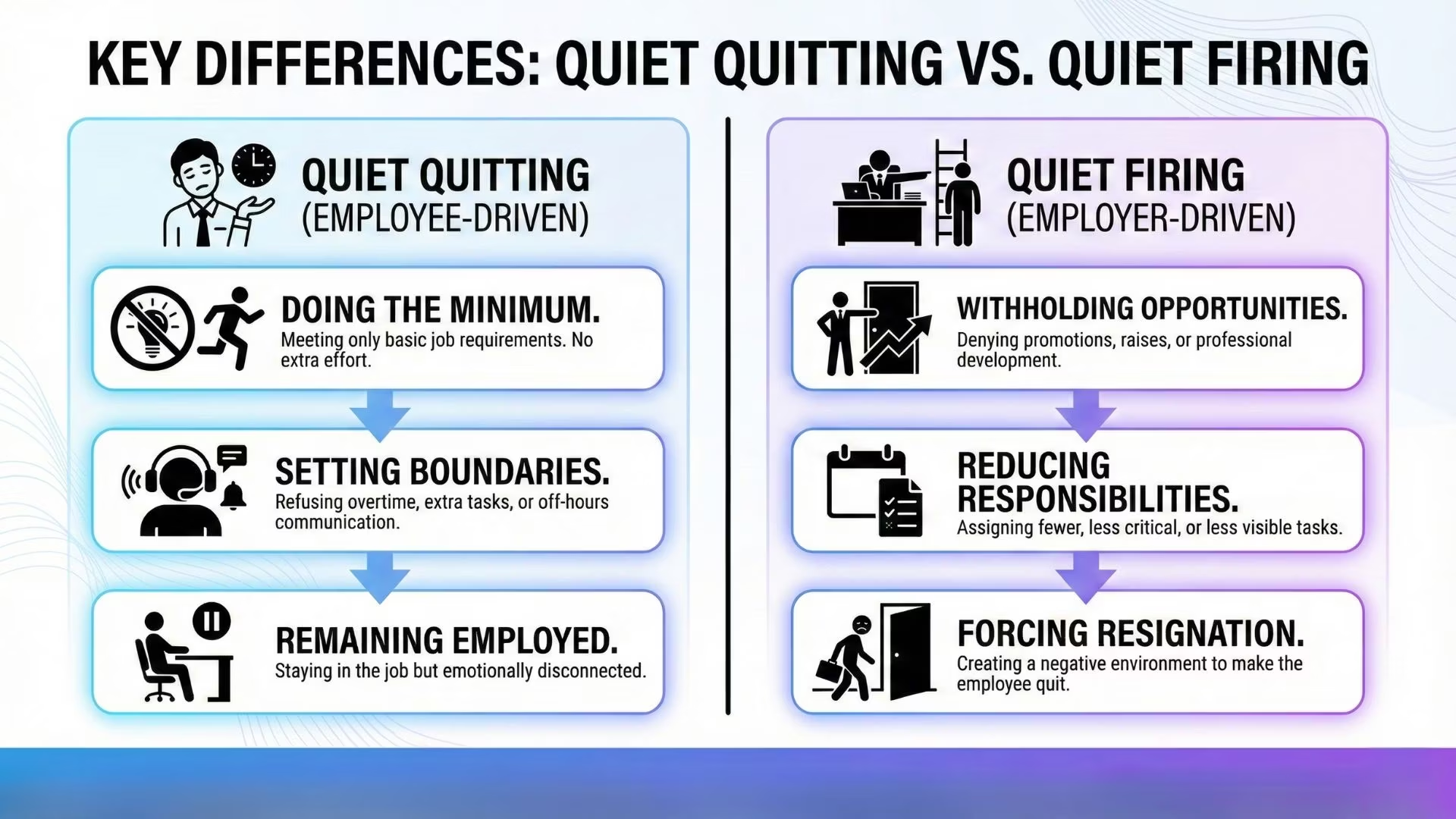
Let's break down the core distinctions:
Intent vs. Action: Who is Initiating the Behavior?
The most critical differentiator between quiet quitting and quiet firing lies in who is initiating the behavior and what their underlying intent is.
This distinction clarifies the agency at play in each scenario.
- Quiet Quitting: Employee's Action with Personal Intent
- In quiet quitting, the employee is the active agent.
Their behavior is a personal choice, an internal decision to modify their level of effort and commitment.
The intent is typically self-preservation: to establish and protect boundaries, mitigate burnout, improve work-life balance, or cope with feeling undervalued.
It is a withdrawal of discretionary effort, a refusal to engage in tasks beyond the explicit requirements of their role.
While this action has consequences for the employer, it originates from the employee's desire to manage their own energy, stress, and priorities.
It's often a reactive behavior in response to perceived organizational failures, poor leadership, or an unsustainable workplace culture.
They are saying, "I will do my job, but I will not sacrifice my well-being for it."
- Example: An employee consistently logs off exactly at 5 PM, even if a team discussion is ongoing, because they are prioritizing their evening family time.
They still complete all assigned work during the day.
- Quiet Firing: Employer's Action with Managerial Intent
- With quiet firing, the employer or, more specifically, a manager, is the active agent.
Their behavior is a deliberate (though often passive-aggressive) tactic designed to achieve a specific outcome: to make an employee so unhappy or disengaged that they voluntarily resign.
The intent is managerial—to avoid the formal, often challenging, and potentially costly process of termination.
It is a strategic effort to push an employee out without explicitly firing them.
This involves a pattern of behaviors that withdraw support, opportunities, and recognition, creating an increasingly unfavorable environment.
The manager is actively shaping the employee's experience to encourage an exit.
They are saying, "I want you to leave, but I won't fire you directly."
- Example: A manager consistently removes an employee from high-profile projects, stops inviting them to key team meetings, and provides minimal or vague feedback, despite the employee's attempts to seek clarification or express interest in new work.
Understanding this distinction is fundamental for HR.
You cannot solve an employee's self-directed boundary-setting with the same approach you would use to address a manager's intentional (or unintentionally neglectful) actions to force an employee out.
Agency & Control: Who Holds the Power?
The concept of agency – who has the power to act and influence the situation – is another critical lens through which to differentiate quiet quitting and quiet firing.
- Quiet Quitting: Employee-Driven Agency
- In the context of quiet quitting, the employee retains a degree of agency and control.
They are making a conscious choice about how much emotional and physical energy they invest in their work.
They are setting boundaries, whether explicit or implicit, to reclaim control over their time, effort, and personal well-being.
This is an act of self-empowerment, a response to feeling a lack of control in other aspects of their work life (e.g., workload, recognition, clear career pathing).
It’s about the employee deciding where to draw the line and actively managing their work-life balance.
While the reasons for this choice may stem from negative external factors (like a toxic workplace or managerial neglect), the decision to quietly quit remains within the employee's purview.
- Practical Example: An employee decides not to check work emails after hours, turning off notifications to preserve personal time.
This is a choice they make.
- Quiet Firing: Manager-Driven Control
- In quiet firing, the manager (and by extension, the organization) holds the power and control.
The manager is actively manipulating the employee's work environment to achieve a desired outcome (resignation).
The employee, in this scenario, becomes a passive recipient of these actions.
They are put in a reactive, defensive position, often feeling confused, undervalued, and increasingly powerless.
The subtle tactics of exclusion, reduced responsibilities, and lack of development are designed to erode the employee's job satisfaction and sense of belonging, leaving them with little agency to improve their situation within the current role.
The manager orchestrates the conditions, and the employee is left to react to them.
- Practical Example: A manager consistently bypasses an employee for training opportunities that would advance their skills, effectively stalling their career without direct communication.
This is an action initiated by the manager.
This distinction in agency is vital for HR.
When addressing quiet quitting, the focus might be on empowering employees, providing resources, and improving work-life balance.
When confronting quiet firing, the emphasis shifts to managing managers, enforcing performance management standards, and addressing unethical or potentially illegal management tactics.
Consequences: Distinct Outcomes for Both Individuals and the Organization
While both phenomena can lead to negative outcomes, the specific nature and severity of their consequences—for both the individuals involved and the organization—differ significantly.
Understanding these distinct impacts allows HR to prioritize interventions and communicate risks more effectively to leadership.
- Consequences of Quiet Quitting:
- For the Employee: The immediate consequence can be improved work-life balance and reduced burnout.
However, the long-term risks include being overlooked for promotions, stagnation in their career, and potentially being targeted for formal performance improvement plans if their "bare minimum" falls below acceptable standards or if management perceives their lack of initiative negatively.
Their clear career pathing might disappear.
They might eventually face a formal termination if their performance is eventually deemed insufficient, even if they started by merely setting boundaries.
- For the Organization: The primary consequences are a loss of potential productivity and innovation.
The company misses out on discretionary effort, new ideas, and proactive problem-solving.
This can lead to decreased employee morale among remaining engaged staff, increased workload for those still going "above and beyond," and a gradual erosion of workplace culture.
Ultimately, unchecked quiet quitting can lead to higher employee turnover as disengaged employees eventually seek greener pastures.
It subtly undermines organizational health.
- Consequences of Quiet Firing:
- For the Employee: The consequences are far more severe and often psychologically damaging.
Employees experience intense stress, anxiety, employee disengagement, and a profound sense of self-doubt.
They can suffer from feelings of betrayal, isolation, and a damaged professional reputation if the passive-aggressive tactics escalate.
This can severely impact their ability to find new employment and their long-term mental health.
Many may question "Is quiet firing bad? " or "How to deal with quiet firing?"
- For the Organization: The repercussions are devastating.
Quiet firing inevitably leads to a toxic workplace environment, characterized by fear, distrust, and low employee morale.
It destroys team cohesion and makes it impossible to foster genuine employee engagement.
Crucially, it exposes the organization to severe legal risks, including costly quiet firing lawsuits based on constructive dismissal, discrimination, or retaliation claims.
Furthermore, it significantly damages employer branding, making it incredibly difficult to attract and retain high-quality talent in the future, as negative stories spread rapidly online (e.g., quiet firing Reddit).
This constitutes a major threat to corporate responsibility and organizational health.
HR's strategic role involves developing HR strategies that proactively prevent both quiet quitting and quiet firing, recognizing that each requires a distinct approach based on its unique intent, agency, and set of consequences.
HR's Proactive Role: Strategies to Prevent Both Phenomena
The best way for HR to address quiet quitting and quiet firing is not through reactive measures, but through a robust, proactive strategy aimed at building an inherently healthy and engaging workplace culture.
This involves a multi-faceted approach that nurtures employee engagement, empowers managers, ensures employee well-being, and fosters a sense of purpose and growth.
By focusing on preventative HR strategies, organizations can create environments where these destructive phenomena struggle to take root, safeguarding both their human capital and their competitive edge.
Fostering a Culture of Engagement and Recognition
A deeply engaged workforce is the strongest defense against quiet quitting and a clear indicator that quiet firing tactics are unlikely to succeed.
When employees feel connected, valued, and recognized, they are naturally more invested in their roles and the organization's success.
HR plays a pivotal role in cultivating this environment.
- Implement regular, two-way feedback and performance reviews: Annual performance reviews are often too infrequent and backward-looking to effectively foster employee engagement.
HR should champion a culture of continuous feedback, where managers conduct weekly or bi-weekly one-on-ones that serve as genuine conversations, not just status updates.
These meetings should focus on current progress, challenges, learning opportunities, and the employee's overall well-being.
Feedback should be specific, constructive, and forward-looking.
Crucially, it must be two-way; employees should feel empowered to provide feedback to their managers and HR without fear of retribution.
This builds trust and ensures that minor issues are addressed before they escalate into employee disengagement.
- HR Action: Develop manager training on effective feedback techniques, active listening, and conducting meaningful one-on-ones.
Implement tools to track feedback frequency and quality.
- Build robust recognition programs: A lack of recognition is a primary driver of employees feeling undervalued, leading to quiet quitting.
Recognition should be timely, specific, and visible.
It needs to extend beyond annual awards to include everyday appreciation.
Implement peer-to-peer recognition systems, where colleagues can acknowledge each other's contributions.
Managers should be trained to provide consistent, genuine praise for efforts, achievements, and positive behaviors.
Tying recognition to company values reinforces desired workplace culture and motivates employees to go above and beyond.
- HR Action: Design and promote diverse recognition programs (e.g., spot bonuses, public shout-outs, informal thank-yous).
Educate managers on the impact of frequent, specific recognition.
- Start at the beginning with hiring and emphasize collaborative approaches: The foundation of a strong, engaged workplace culture is built upon who you bring into the organization.
A thoughtful hiring process ensures not only skill alignment but also cultural fit and a shared understanding of expectations.
Relying on collaborative hiring platforms is a strategic move.
These platforms facilitate input from multiple team members and stakeholders during the recruitment process, from initial screening to final interviews.
This ensures that new hires are vetted for team cohesion, shared values, and a commitment to collective success.
When multiple people are involved in selecting a candidate, there's a greater sense of shared responsibility for their integration and success, reducing the likelihood of a mismatch that could lead to early employee disengagement or the conditions ripe for quiet firing.
It fosters a sense of communal investment in talent from day one.
- HR Action: Implement multi-stakeholder interview processes, train hiring managers on assessing cultural add, and promote the use of collaborative hiring technologies.
Prioritizing Employee Well-being and Work-Life Balance
In an era defined by burnout and a re-evaluation of personal priorities, genuinely prioritizing employee well-being and work-life balance is no longer a perk; it's a strategic imperative for organizational health.
HR's proactive role here can significantly reduce the propensity for quiet quitting.
- Offer genuine flexible work arrangements: The flexibility offered during the pandemic reshaped expectations.
Organizations that can genuinely offer options for remote work, hybrid schedules, compressed workweeks, or flexible hours demonstrate trust and responsiveness to individual needs.
This empowers employees to integrate their work and personal lives in a way that reduces stress and enhances employee well-being.
Flexibility is a powerful antidote to the feeling of being constantly "on" and can prevent the need for employees to quietly quit to reclaim personal time.
- HR Action: Develop clear, equitable policies for flexible work.
Provide managers with training on managing hybrid/remote teams effectively.
- Provide accessible mental health support and resources: The stigma around mental health is slowly dissipating, but access to resources remains critical.
HR should go beyond basic Employee Assistance Programs (EAPs).
Offer subscriptions to mental health apps, organize regular workshops on stress management, mindfulness, and resilience.
Train managers to recognize the signs of burnout in their team members and to guide them towards available resources with empathy and discretion.
Creating an environment where it's safe to discuss mental health challenges is a key component of employee well-being.
- HR Action: Vet and promote comprehensive mental health benefits.
Organize mental health awareness campaigns and manager training programs.
- Promote and model healthy boundaries: Policies are only effective if they are reinforced by leadership behavior.
If senior leaders regularly send emails at 10 PM, work while on vacation, and expect immediate responses, they create a culture of "always-on" that undermines any official work-life balance policies.
HR has a vital role in educating all levels of leadership on the importance of modeling healthy boundaries.
This includes encouraging leaders to disconnect, schedule emails for business hours, and actively take their full vacation leave.
This demonstrates that employee well-being is genuinely valued, reducing the need for employees to resort to quiet quitting as a defensive measure.
- HR Action: Develop guidelines for after-hours communication.
Integrate boundary-setting into leadership development programs.
Clear Career Pathing and Development Opportunities
Employees who see a future within the organization, understand how to grow, and feel invested in their personal development are far less likely to become disengaged and quietly quit.
A lack of clear career pathing and development opportunities can lead to stagnation, frustration, and a search for opportunities elsewhere.
HR's strategic role here is to illuminate these paths and provide the resources for growth.
- Make career paths transparent: Don't let career progression be a mystery.
Organizations should clearly define roles, skill requirements, and the various trajectories employees can take within the company.
Create easily accessible documentation, internal wikis, or HR portal sections that detail potential career ladders, lateral move options, and the competencies needed for each step.
This transparency empowers employees to take ownership of their career development and visualize their long-term future within the organization, directly combating feelings of being in a "dead-end job."
- HR Action: Collaborate with department heads to map out career paths.
Communicate these pathways regularly to employees.
- Invest in comprehensive training and development: A commitment to continuous learning signals to employees that they are valued and that the organization is invested in their growth.
Offer a dedicated budget for external courses, certifications, workshops, and conferences that align with both individual career development goals and organizational needs.
Beyond external opportunities, foster internal learning through lunch-and-learns, cross-functional project assignments, and access to online learning platforms.
This upskilling not only benefits the employee but also enhances the overall capabilities and resilience of the workforce, improving organizational health.
- HR Action: Develop a learning and development budget, curate relevant training resources, and track employee participation and skill acquisition.
- Promote internal mobility and leverage AI for talent matching: Giving current employees the first opportunity for new roles or promotions is a powerful strategy for employee retention and fighting employee disengagement.
It demonstrates a commitment to nurturing internal talent.
In my professional opinion, one of the most powerful tools for enhancing internal mobility is modern HR technology, specifically platforms integrated with AI.
For instance, tools featuring AI candidate ranking and matching capabilities can be used not just for external recruitment but also for identifying current employees whose skills, experience, and development goals align perfectly with new internal roles.
This proactive matching helps employees find their "next fit" within the company, preventing stagnation and showing them a clear future.
It ensures that talent is utilized optimally across the organization and acts as a fantastic way to prevent employees from feeling overlooked and ultimately seeking opportunities outside.
- HR Action: Implement an internal job board, encourage managers to support internal transfers, and explore AI-powered internal talent matching systems.
- Establish effective mentorship programs: Mentorship provides invaluable guidance, support, and a sense of belonging for employees at all stages of their careers.
Connecting junior employees with senior leaders, or even peer-to-peer mentorship, can help individuals navigate career challenges, develop new skills, and feel more connected to the organization.
Mentors can offer insights into clear career pathing, provide support for employee well-being, and act as advocates, significantly reducing feelings of isolation and disconnection that can lead to quiet quitting.
- HR Action: Design and launch structured mentorship programs, providing training for both mentors and mentees.
Empowering Managers Through Training and Accountability
Managers are the linchpin of employee engagement and the primary defense against both quiet quitting and quiet firing.
Without well-equipped, empathetic, and accountable leaders, even the best HR strategies will falter.
HR's role here is to transform managers from administrators into effective people leaders, providing them with the tools and the framework to foster a thriving team environment.
This is central to leadership development.
- Implement comprehensive leadership development programs focused on communication, empathy, and constructive feedback: Many individuals are promoted into management roles due to their technical prowess, not necessarily their ability to lead and motivate people.
HR must provide targeted leadership development training that equips managers with core soft skills.
This includes training on:
- Effective communication: How to conduct meaningful one-on-ones, deliver difficult news with empathy, and clearly articulate expectations and organizational goals.
- Empathy and emotional intelligence: Understanding team members' perspectives, recognizing emotional cues, and responding with compassion.
- Constructive feedback: Moving beyond vague criticism to provide specific, actionable feedback that helps employees grow, rather than demotivating them.
Role-playing difficult conversations is invaluable.
- Conflict resolution: Equipping managers to address team disputes and individual grievances fairly and effectively, preventing escalation into a toxic workplace.
- HR Action: Design an ongoing leadership development curriculum.
Utilize external experts or internal senior leaders for training delivery.
- Train managers on identifying and addressing disengagement proactively: Managers need to be trained to spot the signs of quiet quitting early—the subtle shifts in behavior, attitude, and participation that signal an employee is struggling.
More importantly, they need to know how to intervene.
This involves teaching them to:
- Initiate curious, non-judgemental conversations with employees they suspect are disengaging.
- Explore the root causes of disengagement (e.g., burnout, lack of work-life balance, feeling undervalued).
- Co-create solutions with the employee, focusing on re-engagement and support rather than punitive measures.
- Utilize HR resources like EAPs and employee well-being programs.
- HR Action: Develop workshops specifically on "spotting the signs of disengagement" and "re-engaging employees." Provide managers with toolkits for these conversations.
- Hold managers accountable for employee retention and engagement metrics: What gets measured gets managed.
To truly embed positive management tactics, HR must integrate employee retention and employee engagement metrics into manager performance reviews and compensation structures.
This sends a clear message that people leadership is a core, measurable part of their job, not an afterthought.
Accountability metrics could include:
- Team turnover rates: Especially voluntary turnover.
- Team engagement scores: From anonymous surveys.
- Quality of one-on-one frequency and feedback: Measured through qualitative feedback or CRM-like tools.
- Participation in team development programs.
- HR Action: Develop clear KPIs for manager performance related to people management.
Regularly review these metrics with senior leadership and managers.
This reinforces the importance of organizational health through effective talent management.
By strategically investing in leadership development and ensuring managers are held accountable for creating positive team environments, HR can build a powerful bulwark against both the silent creep of quiet quitting and the destructive force of quiet firing.
Legal and Ethical Safeguards for HR Professionals
Navigating the complexities of quiet quitting and quiet firing demands that HR professionals operate with a sharp understanding of both legal compliance and ethical responsibility.
While quiet quitting is primarily a cultural and engagement challenge, quiet firing carries significant legal risks that can expose an organization to costly lawsuits and reputational damage.
HR's role here is to act as the organization's legal and ethical compass, ensuring that all people management practices are fair, transparent, and compliant with employment law, protecting both the employees and the company.
Understanding Constructive Discharge and Its Risks
This is arguably the most significant legal risk associated with quiet firing.
What managers often perceive as a clever way to avoid termination complexities can rapidly escalate into a quiet firing lawsuit based on constructive dismissal, also known as constructive discharge.
- Defining "intolerable working conditions": Constructive dismissal occurs when an employer deliberately creates or allows working conditions to become so objectively intolerable that a reasonable employee would feel compelled to resign.
In essence, the employee doesn't quit voluntarily; they are forced out by the employer's actions (or inactions), which the law treats as a de facto termination.
Key to this is the "reasonable person" standard – the conditions must be so adverse that anyone in the employee's position would find them unbearable.
- Examples of conditions leading to constructive dismissal in quiet firing:
- Drastically cutting an employee's pay or hours without legitimate business reasons, or singling out a specific employee for cuts.
- Demoting an employee without cause to a significantly lower position in terms of responsibility, pay, or status.
- Reassigning an employee to a role with significantly lower status or responsibilities (e.g., a senior manager relegated to administrative tasks).
- Creating or allowing a hostile work environment (e.g., constant harassment, verbal abuse, intentional social isolation) where the employee is targeted.
- Stripping away all meaningful duties, leaving an employee with no work or only menial tasks, making their role irrelevant.
- Repeatedly denying reasonable accommodations for a disability, forcing the employee to work under unmanageable conditions.
- When quiet firing becomes a legal liability: If an employee can successfully prove constructive dismissal, their resignation is legally treated as a wrongful termination.
This opens the door for significant legal claims, including:
- Back pay and front pay: Compensation for lost wages.
- Severance pay: As if they had been formally terminated.
- Damages for emotional distress: Due to the psychological harm inflicted.
- Punitive damages: In cases of egregious conduct.
- Attorney's fees: Which can be substantial.
The cost of a quiet firing lawsuit: Defending against such a lawsuit is incredibly expensive, time-consuming, and damaging to employer branding.
The legal fees alone can far exceed the cost of a legitimate severance package, making the initial "cost-saving" motivation of quiet firing completely moot and incredibly short-sighted.
HR's role is to educate managers and leadership about this severe legal risk.
Avoiding Discrimination and Retaliation Claims
Beyond constructive dismissal, quiet firing is a dangerous practice because it can easily intersect with and give rise to claims of discrimination and retaliation, both of which are strictly prohibited by employment law.
- Ensuring all performance management is fair, objective, and non-discriminatory: If the employees being "quietly fired" are disproportionately members of a protected class (e.g., based on race, gender, age, religion, national origin, disability, sexual orientation, etc.), the employer faces a serious discrimination lawsuit.
The subtle tactics of quiet firing (exclusion, denied opportunities, unfair criticism) become evidence of discriminatory intent.
HR must ensure that:
- All performance management decisions (e.g., project assignments, promotions, feedback) are based on objective, job-related criteria, not on biases or personal feelings.
- Policies are applied consistently across all employees, regardless of their protected characteristics.
- Managers receive unconscious bias training as part of their leadership development.
- HR Action: Regularly audit performance review data, promotion records, and disciplinary actions for disparate impact on protected groups.
Implement standardized, objective criteria for all talent decisions.
- Protocols for addressing employee complaints without retaliation: Another major pitfall is retaliation.
If an employee engages in a protected activity (e.g., reporting harassment, filing a discrimination complaint, requesting FMLA leave, whistleblowing, or participating in an investigation), and is subsequently subjected to quiet firing tactics, the employer is vulnerable to a retaliation claim.
It doesn't matter if the initial complaint was unfounded; what matters is that the employer's adverse action (the quiet firing) was in response to the protected activity.
- Examples of illegal retaliation in quiet firing:
- Taking an employee off a key project immediately after they've reported sexual harassment.
- Denying an employee a promotion after they've requested a reasonable accommodation for a disability.
- Increased micromanagement or negative feedback following an employee's participation in an HR investigation.
- HR Action: Establish clear, well-communicated protocols for reporting grievances.
Train managers on anti-retaliation policies and the severe consequences of violating them.
Ensure that HR meticulously documents all complaints and subsequent actions, demonstrating a non-retaliatory approach.
The Power of Documentation: Protecting Both Parties
In any employment dispute, whether concerning quiet quitting or quiet firing, the quality and consistency of documentation can make or break a case.
For HR, meticulous record-keeping is not just an administrative task; it's a critical legal risk mitigation strategy and a cornerstone of fair talent management.
- Importance of consistent, clear records of performance, feedback, and development plans: Robust documentation creates an objective historical record.
It serves as evidence that management decisions were based on legitimate business reasons and performance, not on discriminatory or retaliatory motives.
This includes:
- Performance reviews: Detailed, objective assessments with specific examples and measurable goals.
- One-on-one meeting notes: Records of discussions about goals, feedback, career development, and employee concerns.
- Formal feedback: Copies of emails, memos, or official forms related to performance issues or positive recognition.
- Performance Improvement Plans (PIPs): Clearly outlining deficiencies, expectations for improvement, support offered, and consequences of failure.
- Training records: Documentation of completed leadership development or skill-building programs.
- Employee complaints and investigations: Thorough records of issues raised and how they were addressed.
This paper trail protects the company by demonstrating due process and legitimate business justifications for employment decisions.
It counters subjective claims of managerial neglect or biased treatment.
- Best practices for HR in documenting sensitive employee situations:
- Be specific and objective: Avoid emotional language, opinions, or assumptions.
Stick to observable facts, dates, times, and specific behaviors or outcomes.
Instead of "John has a bad attitude," write "On [Date], John missed the project deadline and did not communicate the delay to the team."
- Ensure it is timely: Document events as they happen, not weeks or months later.
Contemporaneous notes are far more credible in legal proceedings.
- Maintain confidentiality: Handle all documentation with appropriate discretion and adherence to privacy policies.
- Focus on business impact: Frame performance issues in terms of their effect on business goals, team productivity, or client relationships.
- Regularly audit documentation practices: HR should ensure managers are properly trained in documentation and adhere to company standards.
- Connection to Keywords: Critical for mitigating legal risks, defending against wrongful termination and quiet firing lawsuits, and demonstrating sound performance management.
Upholding Ethical Leadership and Company Values
Beyond strict legal compliance, HR has a profound ethical responsibility to champion a workplace where fairness, respect, and transparency are paramount.
Quiet firing is, at its core, an ethical failure, undermining the very fabric of a healthy workplace culture.
Upholding ethical leadership development and embodying core company values is not just morally right; it's a strategic imperative for long-term organizational health and employer branding.
- How HR can champion a fair and transparent workplace culture: HR professionals are often the custodians of an organization's values.
They must proactively:
- Educate leadership: Ensure senior management understands the ethical implications and long-term damage of passive-aggressive management tactics like quiet firing.
Frame ethical behavior as a competitive advantage.
- Promote open communication: Establish and model channels for direct, honest, and respectful communication between all levels of employees and management.
Encourage crucial conversations rather than avoidance.
- Advocate for due process: Ensure that all performance management processes, disciplinary actions, and terminations are conducted with fairness, consistency, and respect for the individual's dignity.
- Be a voice for employees: Ensure there are safe, confidential avenues for employees to raise concerns about unfair treatment, managerial neglect, or a toxic workplace without fear of retaliation.
- HR Action: Integrate ethics training into all leadership development programs.
Regularly review and update company codes of conduct and grievance policies.
- The long-term benefits of ethical people management: While quiet firing might offer perceived short-term gains (e.g., avoiding severance costs or difficult conversations), the long-term consequences are overwhelmingly negative.
Conversely, ethical people management builds:
- High trust: Employees trust that they will be treated fairly, fostering psychological safety and reducing employee disengagement.
- Stronger employer branding: A reputation as an ethical, supportive employer attracts top talent and strengthens corporate responsibility.
- Increased employee engagement and loyalty: Employees who feel respected and valued are more committed and willing to go the extra mile, reducing quiet quitting.
- Reduced legal risks: A transparent and fair approach minimizes the likelihood of costly lawsuits.
- A resilient workplace culture: One that can navigate challenges with integrity and collective effort, contributing to organizational health.
- HR Action: Regularly communicate the positive impacts of ethical leadership to all stakeholders.
Champion leaders who exemplify these values.
By embodying and championing ethical leadership, HR professionals do more than just manage legal compliance; they actively shape a thriving, respectful, and sustainable workplace culture for the future.
Building a Resilient and Engaged Workplace for the Future
To truly conquer the challenges posed by both quiet quitting and quiet firing, HR must shift from a reactive stance to a proactive, strategic one, focusing on building a resilient and deeply engaged workplace culture.
This involves continuous effort across various domains, from fostering robust communication to intelligently leveraging technology and understanding the evolving expectations of a diverse workforce.
The goal is to create an environment where employees feel too valued to silently withdraw and managers are too well-equipped and ethically bound to subtly push talent out.
This holistic approach is the bedrock of enduring organizational health.
Open Communication Channels and Feedback Loops
A culture of silence is the breeding ground for disengagement and passive-aggressive management tactics.
To combat this, HR must champion pervasive, honest, and safe communication channels and ensure feedback flows freely in all directions.
- Implement regular pulse surveys, focused one-on-ones, and insightful exit interviews: Relying solely on annual employee engagement surveys is insufficient.
HR should utilize a multi-pronged approac###
- Pulse Surveys: Short, frequent (e.g., quarterly) anonymous surveys that provide quick temperature checks on specific aspects of employee well-being, work-life balance, managerial support, or perceptions of workplace culture.
These allow for early detection of trending issues.
- Strategic One-on-Ones: Reiterate the importance of managers holding consistent, quality one-on-one meetings with their direct reports.
These are crucial touchpoints for discussing career development, addressing immediate concerns, providing constructive feedback, and simply checking in on the employee's mental state.
HR can provide templates and training to ensure these conversations are productive.
- Insightful Exit Interviews: When an employee decides to leave, this is a critical opportunity to gain candid feedback.
Train HR professionals to conduct in-depth, non-judgmental exit interviews that delve into the real reasons for departure, asking specific questions about managerial neglect, toxic workplace elements, opportunities for clear career pathing, and overall job satisfaction.
Analyzing patterns in exit interview data is key to identifying systemic issues.
- HR Action: Select and implement appropriate survey tools.
Develop training for managers on effective one-on-ones.
Standardize and analyze exit interview processes.
- Create safe spaces for employees to voice concerns: Employees must feel psychologically safe to speak up about issues without fear of retaliation.
HR should establish and promote multiple, clear avenues for voicing concerns.
This could include:
- Formal Grievance Process: A well-defined and communicated process for addressing complaints about harassment, discrimination, or unfair treatment.
- Ethics Hotline/Ombudsman: An anonymous channel for reporting serious ethical breaches or toxic workplace behaviors.
- Skip-Level Meetings: Regular meetings where employees can confidentially speak with their manager's boss, providing another layer of oversight and a chance to surface issues before they fester.
- HR Business Partners (HRBPs): Empowering HRBPs to act as trusted advisors and confidential sounding boards for employees.
- HR Action: Communicate these channels clearly and consistently.
Ensure prompt and thorough investigation of all reported concerns.
Leveraging Technology for Enhanced HR Operations
In the modern HR landscape, technology is not just an administrative tool; it's a strategic partner for enhancing employee engagement, improving talent management, and gaining critical insights into organizational health.
Intelligent use of HR technology can provide the data and efficiency needed to proactively address quiet quitting and quiet firing.
- Explain the integral role of Applicant Tracking Systems (ATS) in streamlining recruitment and talent management to prevent mismatches that lead to disengagement: The journey to an engaged workforce begins at the hiring stage.
A robust Applicant Tracking System (ATS) like Recooty is far more than just a resume database.
It is a critical foundation for proactive HR operations.
By streamlining the entire recruitment lifecycle—from job posting and candidate sourcing to screening, interviewing, and onboarding—an ATS ensures that you are consistently attracting and selecting the right talent.
A highly efficient ATS helps HR:
- Improve Candidate Quality: By providing powerful sourcing tools and allowing for standardized, data-driven candidate evaluation, an ATS helps identify individuals whose skills, experience, and cultural values are a strong match for the role and the organization.
This reduces the likelihood of hiring someone who is prone to employee disengagement.
- Enhance Candidate Experience: A smooth, professional application and interview process sets a positive tone for a new hire's journey.
A poor candidate experience can lead to early disengagement or a negative perception of the company, potentially contributing to future quiet quitting.
- Facilitate Collaborative Hiring: As previously discussed, an ATS can support collaborative hiring by enabling multiple team members to easily review applications, provide feedback, and participate in the selection process, ensuring a more holistic assessment and shared ownership of new hires.
- Prevent Mismatches: Ultimately, by making more informed hiring decisions, an ATS significantly reduces the incidence of job-person or culture-person mismatches.
These mismatches are foundational causes of low job satisfaction, early employee disengagement, and the subsequent risk of quiet quitting or becoming a target for quiet firing.
A strong ATS ensures that your investment in new talent yields engaged, long-term employees, thereby contributing significantly to overall employee retention and organizational health.
- HR Action: Invest in a comprehensive ATS, fully utilize its features, and integrate it with other HR systems for a holistic view of talent.
- Utilize HR analytics to identify trends in engagement and turnover: HR is increasingly becoming a data-driven function.
HR analytics involves collecting, analyzing, and interpreting data related to human capital to gain actionable insights.
By analyzing trends in:
- Employee engagement scores: Identifying departments or teams with consistently low scores.
- Employee turnover rates: Breaking down turnover by manager, department, tenure, or demographics to spot problematic areas or managerial neglect.
- Absenteeism and tardiness data: Correlating with employee disengagement or burnout indicators.
- Performance review distributions: Identifying managers who consistently give unusually low or high ratings, which might mask quiet firing or unaddressed performance issues.
- Learning and development participation: Tracking who is (and isn't) engaging in career development.
HR can identify early warning signs of quiet quitting and quiet firing.
This proactive data analysis allows for targeted interventions, such as focused leadership development for specific managers or employee well-being initiatives for struggling teams.
- HR Action: Invest in HR analytics tools and train HR teams in data analysis and interpretation.
Regularly present data insights to leadership to inform strategic decisions.
Addressing Generational Differences in Work Expectations
The modern workforce is a tapestry woven with diverse generations, each bringing unique perspectives, expectations, and motivations.
A failure to understand and adapt to these generational differences can inadvertently foster employee disengagement, leading to quiet quitting among certain demographics or ineffective management tactics that alienate segments of your workforce.
HR must develop nuanced HR strategies that acknowledge and embrace these differences.
- Tailoring strategies for Gen Z, Millennials, and other demographics:
- Gen Z: Often prioritize work-life balance fiercely, seek purpose in their work, demand transparency from leadership, and value mental health support.
The quiet quitting Gen Z trend is a direct reflection of their rejection of traditional "hustle culture." They are digital natives who expect seamless technology and clear, frequent feedback.
- Millennials: Value career development opportunities, flexibility, a sense of community, and ethical corporate responsibility.
They are often seeking meaning and impact in their roles and are highly sensitive to feeling undervalued.
- Gen X & Baby Boomers: While often associated with traditional work ethics, they too appreciate work-life balance later in their careers, value recognition for their experience, and seek opportunities to mentor younger generations.
- HR Action: Conduct demographic-specific employee engagement surveys.
Develop diverse benefits packages that cater to varying priorities (e.g., flexible schedules, robust retirement plans, parental leave).
- Understanding varying motivations for work-life integration vs.
separation: Different generations approach work-life balance in distinct ways.
Some, particularly younger generations, may prefer work-life integration, where work and personal life blend more seamlessly, allowing for flexibility throughout the day.
Others may prefer strict work-life separation, desiring clear boundaries between their professional and personal lives.
- HR Action: Provide a range of flexible work options.
Educate managers on different generational preferences for communication and work styles.
Encourage open dialogue about individual preferences for work-life balance to prevent misinterpretations (e.g., an employee logging off promptly might be setting a healthy boundary, not quietly quitting out of malice).
- Foster cross-generational mentorship and collaboration: Bridging generational gaps and building mutual understanding can significantly enhance workplace culture and employee engagement.
Implement programs that encourage cross-generational interaction:
- Reverse Mentorship: Where younger employees mentor senior leaders on new technologies, social media trends, or contemporary workplace expectations.
- Mixed-Generation Project Teams: To foster diverse perspectives and shared learning.
- Diversity & Inclusion Initiatives: Specifically addressing generational biases and promoting respect for different work styles and values.
- HR Action: Design and promote formal and informal cross-generational initiatives.
Include generational awareness in leadership development training.
Case Studies and Real-World Scenarios for HR
Theory is essential, but practical application is where HR truly makes an impact.
Presenting hypothetical or generalized case studies allows HR professionals to visualize these concepts in action and consider effective interventions.
These scenarios highlight the complexities and the nuanced approach required.
- Scenario 1: The Subtle Slide into Quiet Quitting
- Situation: Maria, a mid-level project manager in a tech company, was once highly proactive, volunteering for extra tasks and often staying late to perfect deliverables.
Over the last six months, her manager (Alex) has noticed she no longer proposes new ideas, her participation in optional team strategy meetings has dwindled, and she consistently signs off exactly at 5 PM, even when her team members are still collaborating.
Her core projects are still completed on time, but with less flair or initiative.
Alex feels frustrated, interpreting it as a lack of commitment, and is considering documenting her "lack of enthusiasm" for a potential Performance Improvement Plan.
- HR Intervention:
- Coach Alex against a punitive approac### HR (e.g., an HR Business Partner) advises Alex that a PIP is likely inappropriate at this stage, as Maria is still meeting core job requirements.
Instead, it suggests a compassionate, investigative approach.
- Facilitate a supportive conversation: HR helps Alex prepare for a one-on-one with Maria, focusing on open-ended questions and active listening.
Alex initiates by saying, "Maria, I've noticed a shift in your engagement in team discussions and a decreased interest in new initiatives.
I value your contributions, and I want to understand if everything is okay or if there's anything I can do to support you."
- Explore the root cause: Through the conversation, Maria reveals she's been feeling extreme burnout after leading two back-to-back, under-resourced projects that required significant unpaid overtime.
She also expresses frustration over a lack of recognition for her extra effort and feels her clear career pathing is unclear.
She's quietly quitting to protect her employee well-being.
- Co-create a solution: HR and Alex work with Maria to:
- Temporarily adjust her workload, giving her a project with a lighter immediate demand.
- Implement a structured recognition plan for her previous efforts.
- Schedule a dedicated career development discussion within the next month, outlining clear growth opportunities and relevant training.
- Establish explicit boundaries around after-hours communication for the entire team to improve work-life balance.
- Monitor and follow-up: HR advises Alex to regularly check in with Maria on her workload and engagement, documenting progress and ensuring the solutions are effective.
The goal is to re-engage, not punish her quiet quitting.
- Scenario 2: The Potential Quiet Firer
- Situation: David, a seasoned software engineer, approaches HR.
He says his manager, Sarah, has steadily been removing him from high-visibility coding projects, reassigning them to newer team members.
He hasn't received any career development opportunities in 18 months, his requests for training are ignored, and his one-on-ones with Sarah are frequently canceled or cut short.
Sarah's feedback in his last performance review was vague, mentioning "areas for improvement" without specifics.
David feels he's being deliberately sidelined and fears he's being quietly fired, leaving him with significant anxiety.
- HR Intervention:
- Listen and document: The HRBP meticulously records David's concerns, including dates, specific instances, and any available documentation from David (e.g., emails about canceled meetings, declined training requests).
- Data review and pattern analysis: HR reviews Sarah's team data:
- Has her team experienced higher-than-average employee turnover?
- Are other employees under Sarah reporting similar issues?
- Are David's performance metrics objectively lower than others, or is his decline attributed to lack of opportunity?
- Are there disparities in career development opportunities offered to Sarah's team members? The review reveals a concerning pattern of project reassignments and lack of development for David, contrasting with his prior strong performance and the growth opportunities given to other team members.
This signals potential managerial neglect and possibly quiet firing.
- Meet with Sarah (the manager) for a coaching session: HR schedules a confidential meeting with Sarah, framed initially as a leadership development discussion.
HR presents the objective data collected and expresses concerns about the consistency of performance management and career development within her team, using David's situation as a specific example without initially accusing her of quiet firing.
Questions include: "Can you walk me through the rationale for David's recent project reassignments?" and "What is your clear career pathing vision for David, and what development plans have you discussed with him?"
- Intervention and expectation setting: Based on Sarah's responses, HR intervenes.
If Sarah admits to feeling overwhelmed or avoids direct confrontation, HR offers leadership development training on performance management and communication.
If intent to push David out is strongly suspected (though often hard to get an explicit admission), HR clearly states the legal and ethical risks of quiet firing, including constructive dismissal and the damage to employer branding.
- Re-establish a plan for David: HR ensures a plan is put in place for David, either to genuinely re-engage him with meaningful work and development or to initiate a formal, transparent performance management process if there are legitimate performance concerns.
This might involve HR facilitating a mediated conversation between David and Sarah to ensure clear expectations and support.
- Ongoing monitoring and accountability: HR continues to closely monitor Sarah's management tactics and David's situation.
If Sarah's behavior does not improve, further disciplinary action, including a Performance Improvement Plan for Sarah herself, may be necessary.
This proactive monitoring mitigates legal risks and safeguards David's employee well-being.
These scenarios illustrate the nuanced approach required by HR—one that combines empathetic listening, data-driven analysis, robust leadership development, and unwavering commitment to ethical and legal standards.
Conclusion: HR's Essential Role in Shaping a Positive Work Environment
The modern workplace, characterized by evolving expectations, digital connectivity, and a heightened focus on employee well-being, presents a complex landscape for organizations.
Within this intricate environment, the phenomena of quiet quitting and quiet firing have emerged as critical indicators of deeper systemic issues.
Far from being mere buzzwords, they represent profound shifts in the employee-employer relationship that demand strategic attention from Human Resources professionals.
We've delved into the distinct nature of both concepts: quiet quitting, an employee's self-directed recalibration of effort often in response to burnout or feeling undervalued; and quiet firing, a manager's passive-aggressive tactic to compel an employee's resignation.
The differences in intent, agency, and consequences are stark, with quiet firing carrying significant legal risks like constructive dismissal and wrongful termination, alongside devastating impacts on employee morale and employer branding.
HR's essential role in this dynamic is unequivocally strategic.
It transcends administrative tasks to become the architect and guardian of a thriving, ethical, and resilient workplace culture.
By embracing a proactive approach, HR can fundamentally shape an environment where these destructive trends are preempted and effectively addressed.
This involves:
- Fostering genuine engagement and recognition: Cultivating a culture where employees feel seen, heard, and valued through continuous, two-way feedback and robust recognition programs, beginning with discerning collaborative hiring platforms.
- Prioritizing holistic employee well-being and sustainable work-life balance: Implementing flexible work policies, providing accessible mental health resources, and promoting healthy boundaries across all levels of the organization.
- Creating clear career development pathways and opportunities: Ensuring transparency in growth trajectories and investing in training, internal mobility (leveraging tools like AI candidate ranking for internal matches), and mentorship programs.
- Empowering and holding managers accountable: Investing in comprehensive leadership development that hones communication, empathy, and effective performance management skills, while clearly linking manager performance to employee retention and engagement metrics.
- Upholding rigorous legal and ethical safeguards: Educating on legal risks like constructive dismissal, preventing discrimination and retaliation claims, and championing meticulous documentation practices and ethical management tactics.
- Leveraging technology and data for organizational healt### Utilizing tools such as a powerful Applicant Tracking System (ATS) to ensure quality hires from the outset, and HR analytics to identify and address trends in employee disengagement and turnover.
- Understanding and adapting to generational differences: Tailoring HR strategies to meet the diverse expectations of Gen Z, Millennials, and other demographics regarding work-life integration, purpose, and feedback.
Ultimately, the future success of any organization hinges on its human capital.
HR professionals are the strategic partners who can ensure this capital is not quietly eroded or aggressively pushed away.
By focusing on creating a workplace culture that champions employee engagement, employee well-being, transparent communication, and ethical leadership, HR can build a resilient, productive, and ultimately thriving environment where employees feel valued, managers are equipped for success, and the organization is positioned for sustained growth in the dynamic world of work.

.png)
.png)

.webp)