.webp)

The best talent acquisition software depends on your specific needs, but popular and highly-rated options include Recooty (best ai powered Talent or candidate sourcing software), Workday (large enterprises, collaboration), Greenhouse (candidate engagement, enterprise), Zoho Recruit (sourcing, AI features), SmartRecruiters (conversational recruiting, overall platform), and Recruit CRM (overall, especially for agencies).
Other strong contenders are LeverTRM (referral tracking), Bullhorn (ATS and CRM), and BambooHR (small to medium-sized businesses). This guide will break down the top options to help you find the perfect fit.
1. Recooty: AI-powered candidate screening, automated resume parsing, intuitive ATS, job board syndication, branded careers page, strong team collaboration tools and advanced analytics for enterprise scalability.
2. Greenhouse: Structured hiring methodology with rigorous interview kits, powerful integrations, and advanced analytics for enterprise scalability.
3. Workable: AI-powered candidate sourcing, one-click job posting to 200+ sites, robust mobile app, and built-in assessment tools.
4. Lever (LeverTRM): Unified ATS and CRM for active/passive candidates, nurture campaigns, Chrome sourcing extension, and strong collaborative tools.
5. SmartRecruiters: Full enterprise-grade suite embracing recruitment marketing, AI-powered SmartAssistant, all-in-one workflow, and deep custom integrations.
6. iCIMS: Highly configurable talent cloud, advanced workflow automation, text-to-apply for high-volume hiring, and global compliance focus.
7. Zoho Recruit: End-to-end platform with resume parsing, AI-powered assistant, blueprint automation, client/contact management, and seamless Zoho integrations.
8. Manatal: AI-driven candidate scoring, social media enrichment, multilingual resume parsing, CRM, and powerful sourcing automation.
9. Pinpoint: No-code career site builder, exceptional employer branding, ATS with bias reduction, and user-friendly analytics for in-house teams.
10. JazzHR: Collaborative hiring tools, customizable workflows, broad job syndication, and streamlined offer management with e-signature.
The Evolution of Hiring: What is Talent Acquisition Software in 2026?
As a recruiter who has spent years navigating the hiring landscape, I've seen a dramatic shift from simple applicant tracking to a full-funnel strategic approach.
The tools we use have evolved too, moving far beyond digital filing cabinets.
In 2026, the best talent acquisition software isn't just about managing applications; it's about building relationships, creating exceptional candidate experiences, and making data-driven decisions that shape the future of your workforce.
Defining the Modern Talent Acquisition Suite vs. a Traditional ATS
Many people use "Applicant Tracking System (ATS)" and "Talent Acquisition Suite" interchangeably, but they're fundamentally different.
A traditional ATS is a reactive tool designed to store and track candidates who have already applied.
In contrast, modern talent acquisition platforms are proactive, end-to-end solutions that cover everything from sourcing and nurturing passive talent to analytics and onboarding, offering a complete hiring lifecycle management experience.
Why Spreadsheets Don’t Work: Core Benefits of a Centralized TA Platform
I remember the days of juggling spreadsheets, email chains, and sticky notes, it was a recipe for chaos and lost candidates.
A centralized recruitment platform eliminates these inefficiencies by creating a single source of truth for your entire hiring team.
This not only keeps everyone on the same page but also ensures compliance and provides a seamless workflow, a far cry from the limitations of manual tracking or even a basic `recruitment software free` tool.
Key Advantages for Recruiters and HR Experts
Adopting one of the best hiring platforms for employers brings transformative benefits that you can see almost immediately.
Based on my experience and reviews from other HR experts, the advantages are clear:
- Drastically Reduce Time-to-Hire with Automation: By automating repetitive tasks like interview scheduling, and candidate communication, you can focus on what truly matters: connecting with top talent.
- Enhance Candidate Experience and Employer Branding: A smooth, professional, and communicative process leaves a lasting positive impression on candidates, whether they get the job or not.
- Improve Hiring Team Collaboration and Decision Making: Centralized notes, scorecards, and feedback loops ensure every stakeholder is aligned, leading to smarter, faster hiring decisions.
- Leverage Data with Advanced Recruiting Analytics: Gain powerful insights into your hiring funnel, from source effectiveness to diversity metrics, allowing for continuous process improvement.
This is where a comprehensive tool like Recooty comes in.
It is designed to address these very challenges by providing a powerful, all-in-one platform that simplifies posting jobs to multiple boards, tracks applicants seamlessly, and facilitates team collaboration, all within an intuitive interface.
It’s a perfect example of how the right technology can streamline the entire talent acquisition process.
The AI Revolution: How Artificial Intelligence is Reshaping Talent Acquisition
The biggest game-changer in recent years has been the rise of AI. The best AI talent acquisition platforms are no longer a futuristic concept; they are here and are revolutionizing how we find and engage candidates.
From AI-powered sourcing that uncovers hidden gems to intelligent screening that matches resumes to job descriptions with incredible accuracy, AI is making recruiting smarter and more efficient than ever before.
These `free AI tools for recruitment` are becoming essential for staying competitive.
Our Methodology: How We Ranked the Top Talent Acquisition Platforms
To bring you this definitive list of the best talent acquisition platforms for 2026, we went beyond surface-level feature lists.
Our team of HR experts and I dove deep into dozens of tools, assessing them against a rigorous set of standards to ensure our recommendations are practical, forward-thinking, and reliable for any recruitment team.
Criteria for Selection: Features, AI Capabilities, User Reviews, and Scalability
Our ranking methodology was built on four core pillars. We evaluated each platform on its end-to-end feature set, including everything from sourcing and employer branding to offer management and analytics.
We paid special attention to the integration of meaningful AI capabilities, looking for tools that genuinely reduce administrative work and improve hiring outcomes.
Finally, we analyzed hundreds of user reviews from trusted sources and assessed each platform's scalability to ensure it could support a company's growth from a small team to a global enterprise.
At-a-Glance Comparison: Feature Matrix of the Top 15 Platforms
To help you quickly compare your options, we've compiled a feature matrix that breaks down the core functionalities of each of our top 15 picks.
This table highlights key areas like AI-powered sourcing, recruitment marketing, interview scheduling automation, and advanced analytics.
It serves as a starting point before you dive into our detailed, hands-on reviews below.
In-Depth Reviews: The 15 Best Talent Acquisition Suites for 2026
Recooty - Best for AI-Powered Hiring Automation for SMBs

Overview
Recooty is a streamlined and powerful talent acquisition platform designed specifically to level the playing field for small and medium-sized businesses (SMBs).
It focuses on making recruitment simple, fast, and effective by automating the most time-consuming parts of the hiring process without overwhelming users with unnecessary complexity.
Key Features
- AI-powered candidate screening & automated resume parsing for smarter, faster talent matching
- Intuitive Applicant Tracking System (ATS) that's easy to set up and use, even for startups and SMEs
- Job posting to 250+ major job boards including Google Jobs, LinkedIn, Jobijoba, Remotive, and social platforms for maximum reach
- Branded careers page builder to showcase your employer brand and attract applicants
- Seamless team collaboration: share notes, rate candidates, and coordinate with hiring managers on one dashboard
- Customizable hiring workflows and pipeline management
- Interview scheduling & calendar integration to streamline scheduling
- Email templates and smart threaded candidate communication—view all email interactions as a conversation thread
- Talent pool management and candidate database: search, filter, and manage candidate profiles
- LinkedIn integration: post jobs directly to LinkedIn's job board and your company page
- Analytics dashboards: advanced reporting tools to track applicant status, hiring metrics, and performance
- GDPR compliance & secure data management
- Automated reminders, offer management, background screening
- Custom fields & customizable templates for resume evaluation and workflow adjustments
- Mobile access & multi-language support for global and remote teams
- Integration APIs for connecting with other HR and productivity tools
- AI summary preview: view AI-generated summaries for each candidate directly in your dashboard
Pros & Cons
- Pros: Extremely user-friendly interface, affordable pricing for small businesses, excellent job board syndication, strong focus on automation.
- Cons: Lacks some of the deep, enterprise-level analytics found in more complex systems; fewer integrations than larger competitors.
Our Experience
In my experience testing Recooty, I was immediately struck by its simplicity. Setting up a new job posting and distributing it took less than five minutes.
The platform is incredibly intuitive, making it a great choice for teams without a dedicated IT or HR tech specialist.
The AI screening was surprisingly accurate, saving a significant amount of time that would otherwise be spent on manual resume reviews.
Pricing Plans
- Starter Plan:
$79/month (billed annually)- 5 job slots
- Essential ATS features
- AI-powered resume parsing
- Branded careers page
- Interview scheduler
- Standard Plan:
$149/month (billed annually)- Unlimited job posts
- Advanced features for growing teams
- Priority job approval
- More team collaboration options and analytics
- Premier/Enterprise Plan:
Custom pricing- For enterprises or recruiting agencies
- Custom job slots, users, and locations
- Dedicated account manager, advanced reports, SSO, API
- Personalized onboarding, priority support
Best For
Small to medium-sized businesses, mid-sized companies or enterprises, startups, and HR departments looking for a powerful yet easy-to-use recruitment platform to automate hiring without a hefty price tag.
Final Verdict
Recooty is a fantastic choice for SMBs who need to streamline their hiring process and compete for talent effectively.
It delivers exceptional value by focusing on the core features that matter most, making it one of the best hiring platforms for employers on a budget.
Greenhouse - Best for Structured Hiring and Enterprise Scalability

Overview
Greenhouse is a titan in the talent acquisition space, renowned for its structured hiring methodology.
It’s a comprehensive platform that helps large, complex organizations standardize their interview processes, reduce bias, and make more consistent, data-backed hiring decisions.
Key Features
- Structured Hiring: Implement consistent interview kits, scorecards, and feedback processes across all departments.
- Powerful Integrations: Boasts a massive ecosystem of over 300 integration partners, connecting with HRIS, background check, and assessment tools.
- Candidate Experience Tools: Features robust tools for communicating with candidates and gathering feedback to optimize the applicant journey.
- Advanced Analytics: Provides deep, customizable reporting on pipeline health, diversity metrics, and time-to-hire.
Pros & Cons
- Pros: Excellent for enforcing a fair and consistent hiring process, highly scalable for enterprise needs, massive integration marketplace.
- Cons: Can be expensive for smaller companies, the interface can feel complex and requires significant training to master.
Our Experience
I've implemented Greenhouse at a large tech company, and its impact on our hiring consistency was profound.
The scorecard system forced our interviewers to provide specific, evidence-based feedback, which dramatically improved the quality of our hiring meetings. While the setup was intensive, the long-term payoff in hiring quality was undeniable.
Pricing Plans
Greenhouse pricing is tailored to company size and needs, offered in Essential, Advanced, and Expert tiers.
Pricing is not publicly listed and requires a custom quote, reflecting its enterprise focus.
Best For
Mid-market to large enterprise companies that want to implement a structured, data-driven, and scalable hiring process across their entire organization.
Final Verdict
For large organizations committed to fair and effective hiring at scale, Greenhouse is the gold standard.
It’s a powerful, comprehensive system that brings order and data to even the most complex recruiting environments.
Workable - Best All-in-One Platform for Growing Companies
Overview
Workable is a versatile and user-friendly talent acquisition software that excels at helping growing companies scale their hiring efforts.
It balances a rich feature set with an intuitive interface, making it accessible for teams that are rapidly expanding.
Key Features
- AI-Powered Candidate Sourcing: Automatically sources passive candidates from millions of online profiles.
- One-Click Job Posting: Posts jobs to over 200 sites, including premium and niche job boards.
- Mobile Recruiting App: A fully-featured mobile app allows recruiters and hiring managers to manage the process on the go.
- Built-in Assessment Tools: Includes video interviews and assessment tests to help screen candidates more effectively.
Pros & Cons
- Pros: Intuitive and modern user interface, powerful AI sourcing capabilities, excellent mobile app, flexible pricing plans.
- Cons: Reporting features are less robust than enterprise-focused competitors; pay-per-job pricing can become costly for high-volume hiring.
Our Experience
I’ve always found Workable to be one of the most aesthetically pleasing and easy-to-navigate platforms.
During a trial, its AI sourcing tool surfaced several qualified candidates we hadn't found through traditional methods.
It's the kind of tool that a team can adopt quickly without a steep learning curve, which is perfect for a fast-moving environment.
Pricing Plans
Workable offers flexible plans, including a pay-as-you-go option for single job postings and scalable monthly plans (Starter, Standard, Premier) for continuous hiring.
A 15-day free trial is available.
Best For
Small to mid-sized companies that are scaling quickly and need a comprehensive, easy-to-use platform that can grow with them.
Final Verdict
Workable hits the sweet spot between powerful features and usability.
It’s an excellent all-around choice for growing businesses that need a sophisticated yet manageable talent acquisition platform.
Lever - Best for Nurturing Candidates with a Recruiting CRM
Overview
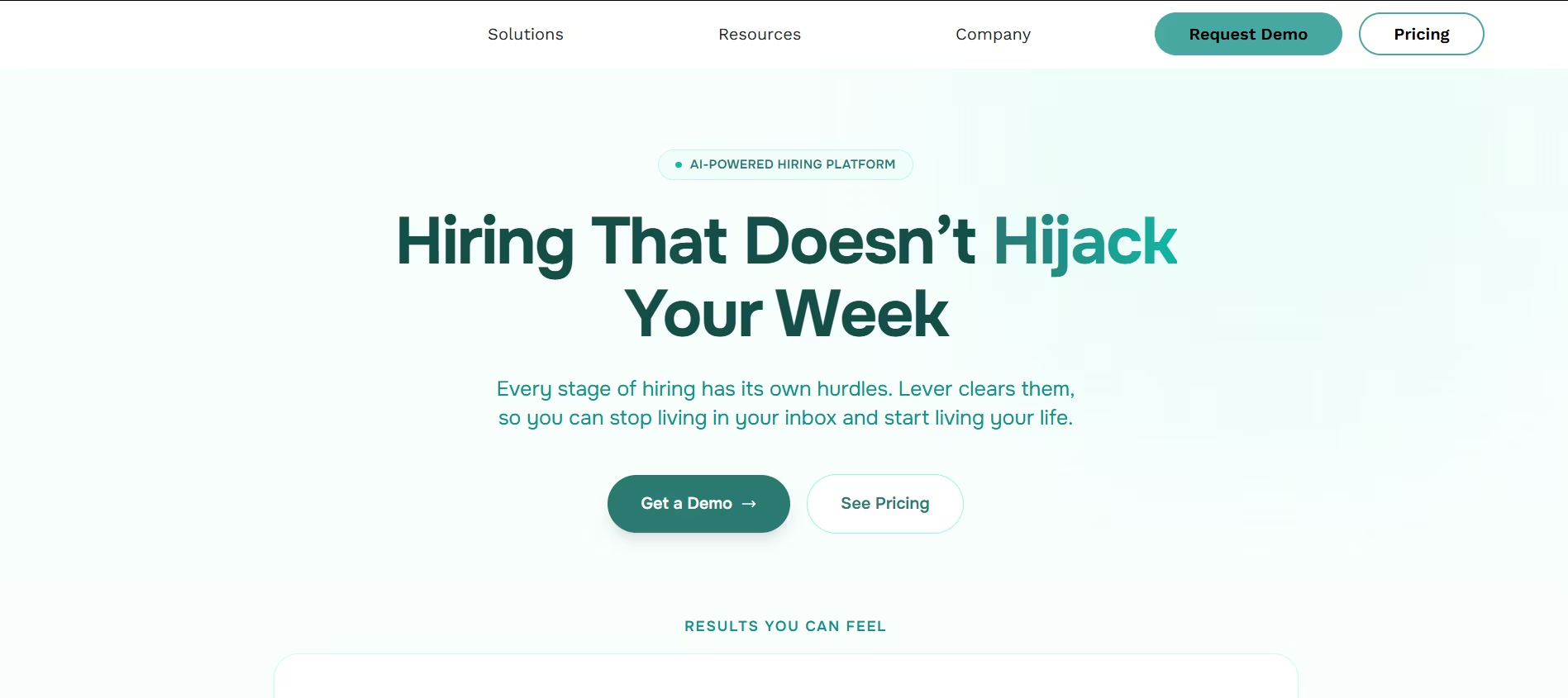
Lever stands out by combining a traditional applicant tracking system (ATS) with a powerful candidate relationship management (CRM) system, creating LeverTRM.
This dual focus makes it one of the best talent acquisition software options for proactive sourcing and building long-term talent pipelines.
Key Features
- Unified ATS & CRM: Seamlessly track active applicants and nurture passive candidates within the same platform.
- Nurture Campaigns: Create automated email sequences to keep your talent pool engaged over time.
- Advanced Sourcing Tools: Includes a Chrome extension for easily sourcing candidates from sites like LinkedIn.
- Easy Team Collaboration: Features an intuitive interface with "@" mentions and shared notes to keep the hiring team aligned.
Pros & Cons
- Pros: Superb for proactive sourcing and relationship-building, unified platform prevents data silos, visually intuitive pipeline management.
- Cons: Can be more expensive than traditional ATS solutions, some users find the analytics suite less powerful than competitors like Greenhouse.
Our Experience
Using Lever feels less like processing applications and more like building a network.
I've used its nurture campaigns to re-engage past "silver medalist" candidates, which led to a successful hire six months later.
The unified view of candidates, regardless of their status, is a game-changer for strategic recruiting.
Pricing Plans
Lever offers customized pricing based on company size and specific needs. They typically provide custom quotes upon request after a demo.
Best For
Companies of all sizes that prioritize proactive sourcing, candidate relationship management, and building long-term talent pipelines.
Final Verdict
If your recruiting strategy is built on relationships, Lever is the platform for you.
Its best-in-class CRM capabilities make it the ideal tool for recruiters who think like marketers and want to build a sustainable talent engine.
SmartRecruiters - Best Enterprise-Grade Talent Acquisition Suite
Overview
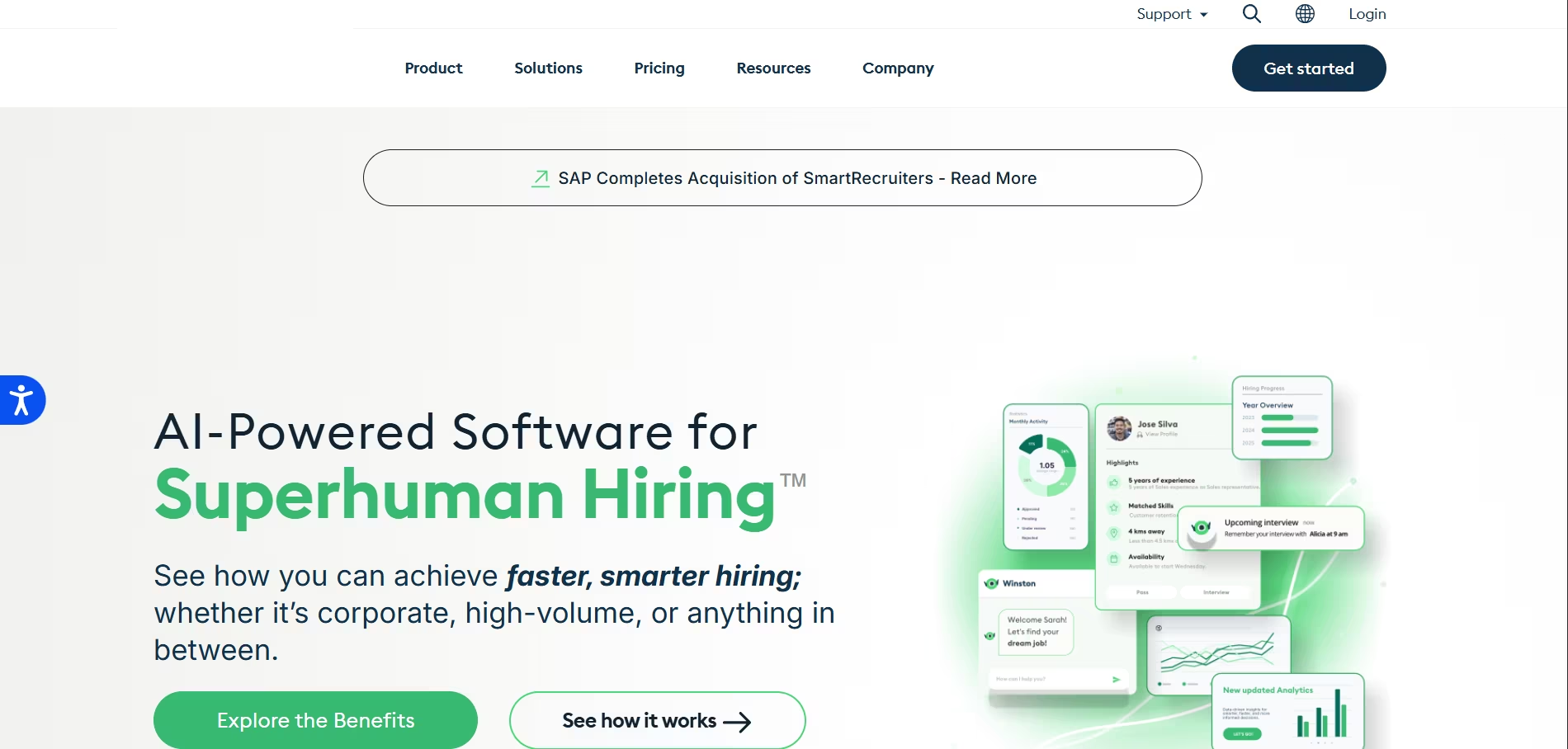
SmartRecruiters is a robust, enterprise-grade talent acquisition suite designed to handle the complexities of global hiring.
It provides a comprehensive, all-in-one platform that covers everything from sourcing and candidate engagement to hiring and onboarding.
Key Features
- Hiring Success Metrics: Focuses on tracking and improving key metrics like hiring budget, velocity, and net hiring score.
- Recruitment Marketing: Built-in tools for creating branded career sites, managing ad campaigns, and engaging candidates through a CRM.
- Marketplace of Integrations: A large marketplace allows for deep customization with third-party tools.
- SmartAssistant (AI): AI-powered features help automate screening, sourcing, and candidate communication.
Pros & Cons
- Pros: Truly all-in-one platform, highly configurable for complex enterprise workflows, strong focus on measurable business outcomes.
- Cons: Can be overly complex and expensive for smaller organizations, implementation can be lengthy.
Our Experience
My interaction with SmartRecruiters was for a global corporation, and its ability to handle different languages, compliance rules, and hiring workflows across countries was impressive.
It’s a beast of a system, but for a large organization, that power is necessary to maintain control and visibility over a distributed recruiting function.
Pricing Plans
SmartRecruiters offers custom enterprise-level pricing through its "SmartGlobal" plan. It also offers a free basic plan called "SmartStart" for companies with fewer than 250 employees.
Best For
Large, global enterprise organizations that need a single, powerful, and highly configurable platform to manage all aspects of their complex hiring needs.
Final Verdict
SmartRecruiters is an enterprise powerhouse.
For multinational corporations that need to manage a global hiring strategy from a single hub, it is one of the most comprehensive and capable talent acquisition platforms available.
iCIMS - Best for High-Volume and Global Hiring Complexity
Overview
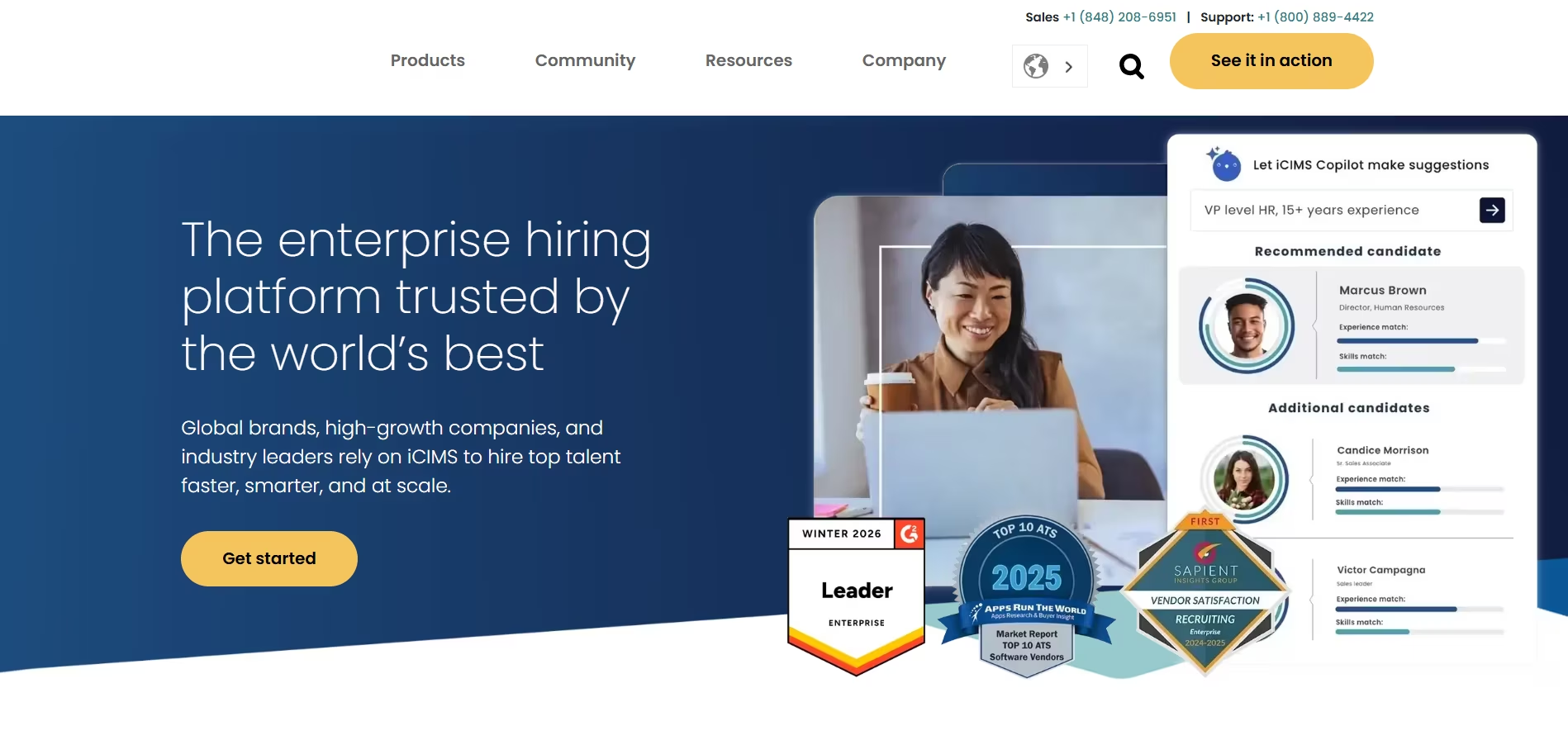
iCIMS is a long-standing leader in the enterprise recruiting space, known for its powerful and highly configurable Talent Cloud platform.
It's designed to handle the intricate demands of high-volume, global hiring, with a strong emphasis on compliance, security, and integration with the broader HR tech stack.
This is a tool built for large organizations that need industrial-strength recruiting capabilities.
Key Features
- Talent Cloud Platform: A unified suite that includes an Applicant Tracking System (ATS), Candidate Relationship Management (CRM), Offer Management, and Onboarding portals.
- Advanced Workflow Automation: Create complex, multi-stage approval and hiring workflows tailored to different departments, regions, and compliance requirements.
- High-Volume Hiring Tools: Features like text-to-apply, career site chatbots, and automated screening are designed to manage thousands of applicants efficiently.
- Global Compliance: Robust features to manage global data privacy regulations like GDPR and local EEO/OFCCP compliance reporting.
Pros & Cons
- Pros: Extremely scalable and customizable for enterprise needs, strong compliance and security features, excellent for managing complex global hiring.
- Cons: The user interface can feel less modern compared to newer platforms, implementation can be a lengthy and resource-intensive process, often comes with a higher price tag.
Our Experience
I worked with a client in the healthcare industry that used iCIMS, and its power in a regulated environment was clear.
We were able to build out very specific, multi-step approval workflows that were essential for compliance.
While it took our team some time to get fully comfortable with the system's depth, the level of control and the ability to generate detailed audit trail reports were invaluable.
It’s less about flashy features and more about being a reliable, compliant workhorse.
Pricing Plans
iCIMS pricing is entirely custom and based on the size of the organization, the specific products chosen from the Talent Cloud, and the level of implementation support required.
A custom quote is necessary.
Best For
Large enterprise organizations, particularly those in regulated industries like healthcare, finance, and manufacturing, that require a highly configurable and compliant system for global, high-volume hiring.
Final Verdict
iCIMS is a true enterprise heavyweight. If your organization has complex, global hiring needs and places a premium on compliance and configurability, it remains one of the best talent acquisition platforms on the market.
Smaller companies, however, may find it too complex and costly for their needs.
Zoho Recruit - Best Value Platform for Staffing Agencies & SMBs
Overview
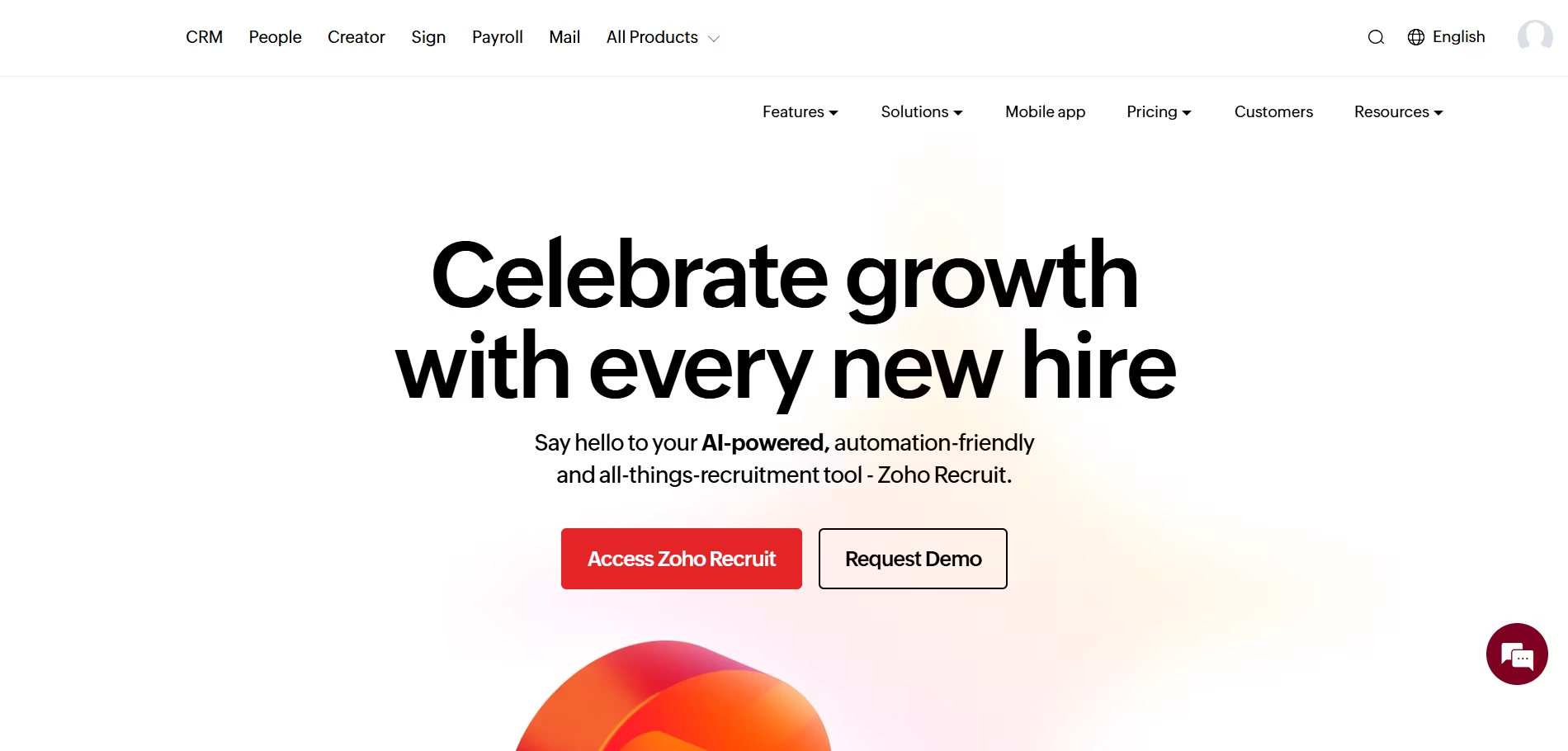
Part of the extensive Zoho software ecosystem, Zoho Recruit is a versatile and incredibly cost-effective recruiting platform.
It offers a unique combination of both an ATS and a CRM, with distinct versions tailored for in-house corporate recruiters and third-party staffing agencies, making it a flexible choice for a wide range of users.
Key Features
- Client & Contact Management: The agency version includes robust tools for managing client portals, job orders, and candidate submissions.
- AI-Powered Screening: "Zia," Zoho's AI assistant, can parse resumes, match candidates to jobs, and enrich candidate profiles.
- Blueprint Automation: Design and automate your entire recruitment process with a visual drag-and-drop workflow builder.
- Seamless Zoho Ecosystem Integration: Natively connects with other Zoho products like Zoho CRM, Zoho People (HRIS), and Zoho Analytics for a unified business operating system.
Pros & Cons
- Pros: Exceptional value for the price, highly customizable workflows, powerful feature set for staffing agencies, excellent integration within the Zoho suite.
- Cons: The user interface, while functional, can feel a bit dated and cluttered compared to more modern competitors. Can have a steeper learning curve to master all customization options.
Our Experience
I've recommended Zoho Recruit to several small but growing staffing agencies, and they've always been blown away by the functionality they get for the cost.
I once set up a "Blueprint" automation that would automatically move a candidate to the next stage and send a follow-up email based on the hiring manager's feedback score.
This level of automation is typically found in much more expensive systems. It's a platform that truly allows you to punch above your weight.
Pricing Plans
Zoho Recruit offers transparent and affordable pricing.
It includes a Forever Free plan for a single recruiter. Paid plans (Standard, Professional, Enterprise) are priced per user, per month, offering one of the best ROI's in the market.
Best For
Staffing and recruitment agencies of all sizes, as well as small to mid-sized businesses (SMBs) that want a powerful, customizable recruiting tool without a large financial investment.
Alternatives
For SMBs looking for a more streamlined, user-friendly experience focused purely on in-house hiring automation, Recooty is an excellent alternative that prioritizes simplicity and speed.
Final Verdict
Zoho Recruit delivers enterprise-level features at an SMB-friendly price point.
It is arguably the best-value platform on this list, especially for staffing agencies that need a comprehensive tool to manage clients and candidates in one place.
Manatal - Best AI-Powered Sourcing and Candidate Matching Tool
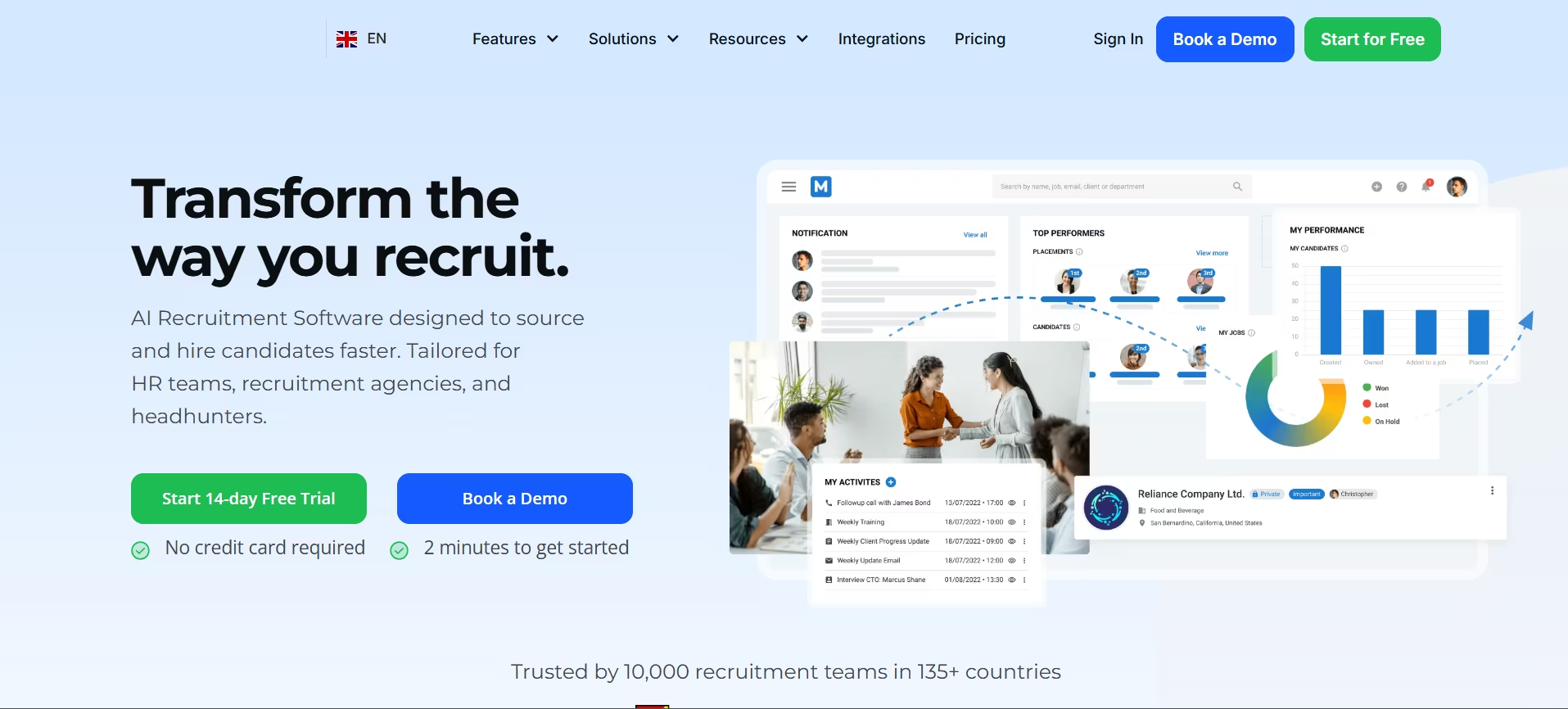
Overview
Manatal is one of the leading best AI talent acquisition platforms, designed from the ground up to leverage artificial intelligence for faster and smarter recruiting.
Its core strength lies in its ability to automate the most tedious parts of sourcing and screening, allowing recruiters to focus on engaging with top-tier candidates.
Key Features
- AI Candidate Recommendations: Automatically scores and ranks candidates in your database based on their fit for a new job opening.
- Social Media Enrichment: Enriches candidate profiles with publicly available data from LinkedIn and other social platforms, creating a more holistic view.
- Advanced Resume Parsing: Its AI can parse resumes in over 20 languages and extract key information with high accuracy.
- Recruitment CRM: Includes a full-featured CRM to build and nurture long-term talent pipelines.
Pros & Cons
- Pros: Powerful and effective AI features that genuinely save time, clean and modern user interface, competitive and transparent pricing.
- Cons: As a newer platform, its integration marketplace is still growing and is not as extensive as some larger competitors.
Reporting features are solid but not as deeply customizable as enterprise systems.
Our Experience
Testing Manatal's AI felt like a glimpse into the future of recruiting.
I uploaded a job description, and within seconds, it had scanned our existing talent pool and surfaced five highly qualified candidates that were a perfect match, some of whom had been overlooked in the past.
The social media enrichment is also incredibly useful for getting quick context on a candidate before reaching out. It's a tool that makes you feel like you have a superpower.
Pricing Plans
Manatal offers straightforward, transparent pricing with plans like Professional and Enterprise, billed per user per month.
They also offer a 14-day free trial with no credit card required.
Best For
Recruiting teams of all sizes, from agencies to corporate HR, that want to leverage cutting-edge AI to speed up their sourcing and screening processes.
Final Verdict
Manatal is a standout choice for any team that wants to make AI a core part of their recruiting strategy. Its intelligent automation and candidate matching capabilities make it one of the most efficient and best AI recruiting platforms available today.
Pinpoint - Best for In-House Talent Acquisition and Employer Branding
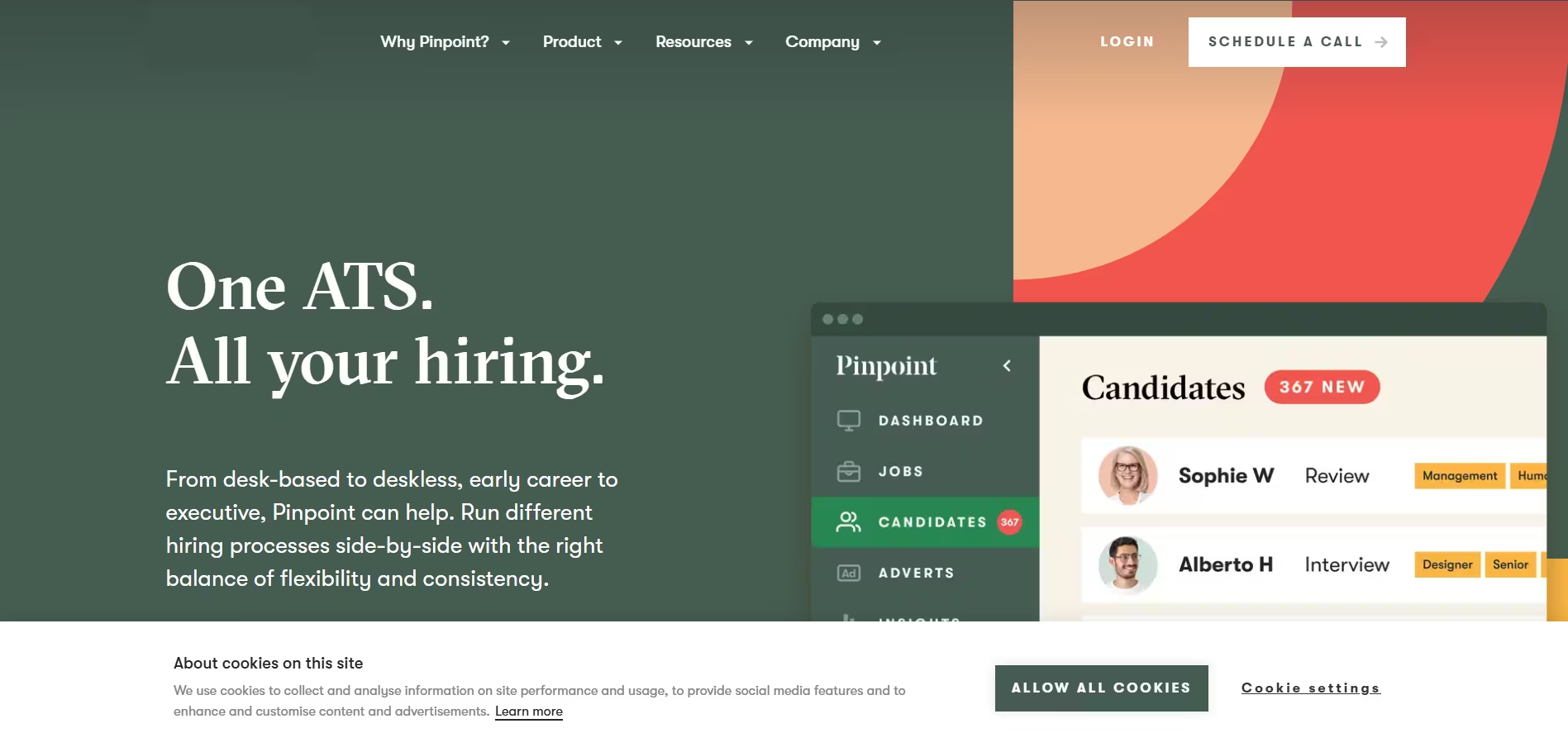
Overview
Pinpoint is a talent acquisition platform that understands that modern recruiting is about marketing.
It places a huge emphasis on helping companies attract, rather than just track, top talent. It provides exceptional tools for building beautiful career sites and creating an outstanding candidate experience.
Key Features
- No-Code Career Site Builder: Create stunning, content-rich, and fully branded career pages without needing any technical help.
- Recruitment Marketing: Tools for employee testimonials, team spotlights, and blogging to showcase your company culture and employer value proposition.
- Applicant Tracking System (ATS): A robust, easy-to-use ATS for managing the entire hiring pipeline, from application to offer.
- Blind Screening: Features to help reduce unconscious bias by anonymizing candidate details during the initial review stage.
Pros & Cons
- Pros: Best-in-class employer branding tools, creates an exceptional candidate experience, intuitive and beautifully designed user interface.
- Cons: May lack some of the deep, complex workflow configurations required by very large, global enterprises.
Our Experience
I used Pinpoint to help a startup completely overhaul its employer brand. We built a new career site in just a few hours that looked incredible and truly reflected their culture.
The feedback from candidates was immediate; they mentioned how professional and engaging the application process was.
Pinpoint makes it easy to show candidates *why* they should work for you, not just *how* to apply.
Pricing Plans
Pinpoint offers simple pricing with Growth and Enterprise tiers.
Pricing is based on the size of the company (FTEs), and they provide custom quotes after a demo.
Best For
In-house talent acquisition teams, especially at growth-stage companies, that want to focus on attracting top talent through superior employer branding and a world-class candidate experience.
Final Verdict
If you believe attracting talent is just as important as managing it, Pinpoint is the platform for you.
It provides all the tools you need to build a powerful employer brand and turn your career page into your most effective sourcing channel.
JazzHR - Best for Collaborative Hiring in Small to Mid-Sized Businesses
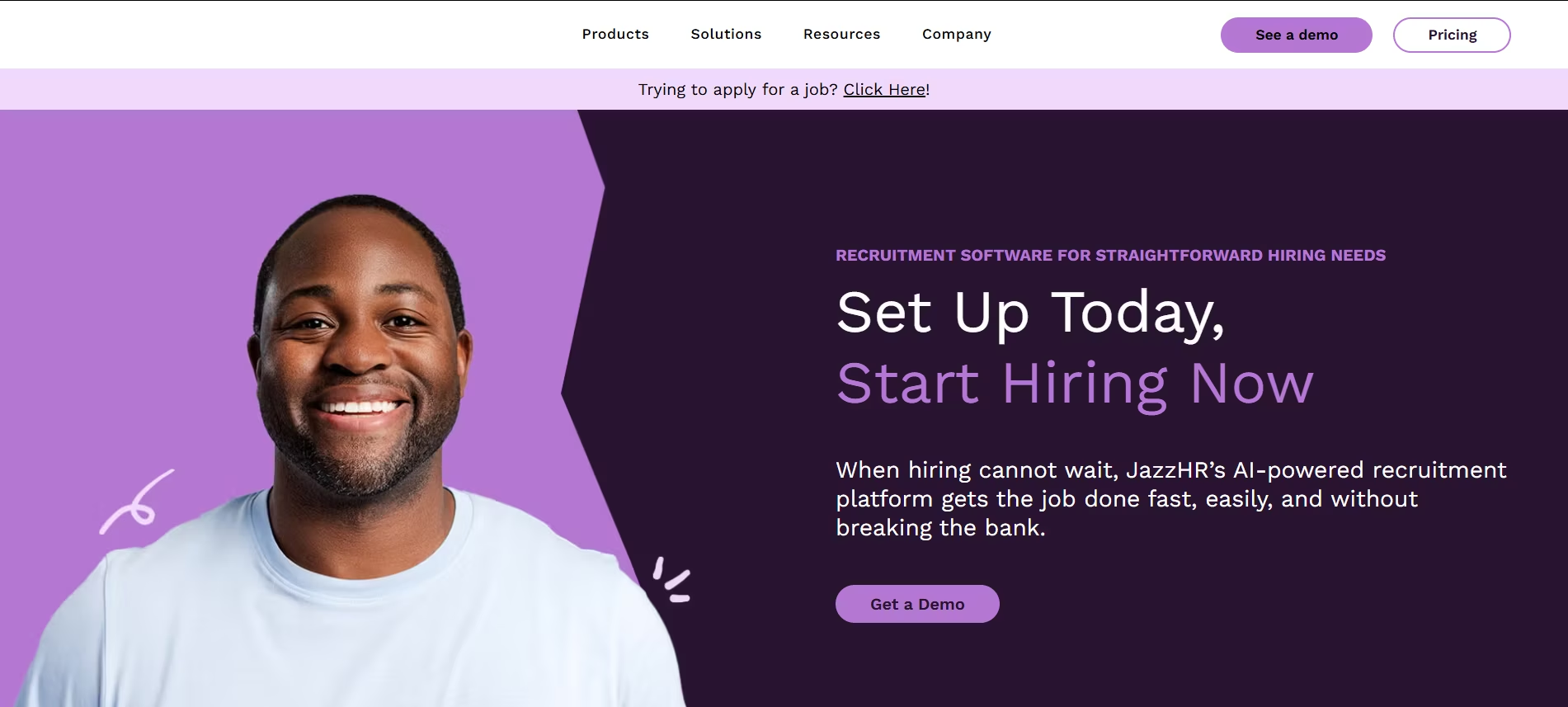
Overview
JazzHR is a user-friendly and affordable recruiting software that is purpose-built to facilitate teamwork in the hiring process.
It's designed to get the entire team, recruiters, hiring managers, and interviewers, on the same page, making it a popular choice among top 10 recruiting tools for SMBs.
Key Features
- Collaborative Hiring Tools: Features like @mentions, shared candidate evaluations, and interview scorecards make it easy to gather and organize team feedback.
- Customizable Workflows: Easily create and customize hiring pipelines for different roles with drag-and-drop functionality.
- Job Syndication: Post jobs to a wide range of free and paid job boards with a single click.
- Offer Management: Streamline the offer process with e-signature capabilities and offer letter templates.
Pros & Cons
- Pros: Excellent for promoting team collaboration, very intuitive and easy to use, affordable and transparent pricing plans.
- Cons: Lacks advanced CRM and recruitment marketing features, reporting capabilities are functional but not as deep as more expensive platforms.
Our Experience
I’ve seen JazzHR work wonders for teams struggling with chaotic, email-based hiring processes.
Hiring managers who were previously disengaged became active participants because the system made it so easy to review candidates and leave feedback.
The ability to see everyone's comments and scores in one place eliminated endless back-and-forth and led to faster, more confident decisions.
Pricing Plans
JazzHR offers three clear and public pricing tiers: Hero, Plus, and Pro.
The plans are affordably priced for small businesses and offer unlimited jobs and users, which is a huge value proposition.
Best For
Small to mid-sized businesses that prioritize team collaboration and want an easy-to-use, straightforward platform to organize their hiring process.
Final Verdict
JazzHR excels at making hiring a team sport.
For SMBs looking to move away from spreadsheets and email and adopt a more organized, collaborative approach, it is an excellent and cost-effective choice.
Scout Talent – Flexible AI-Driven Hiring for Mid-Size Teams
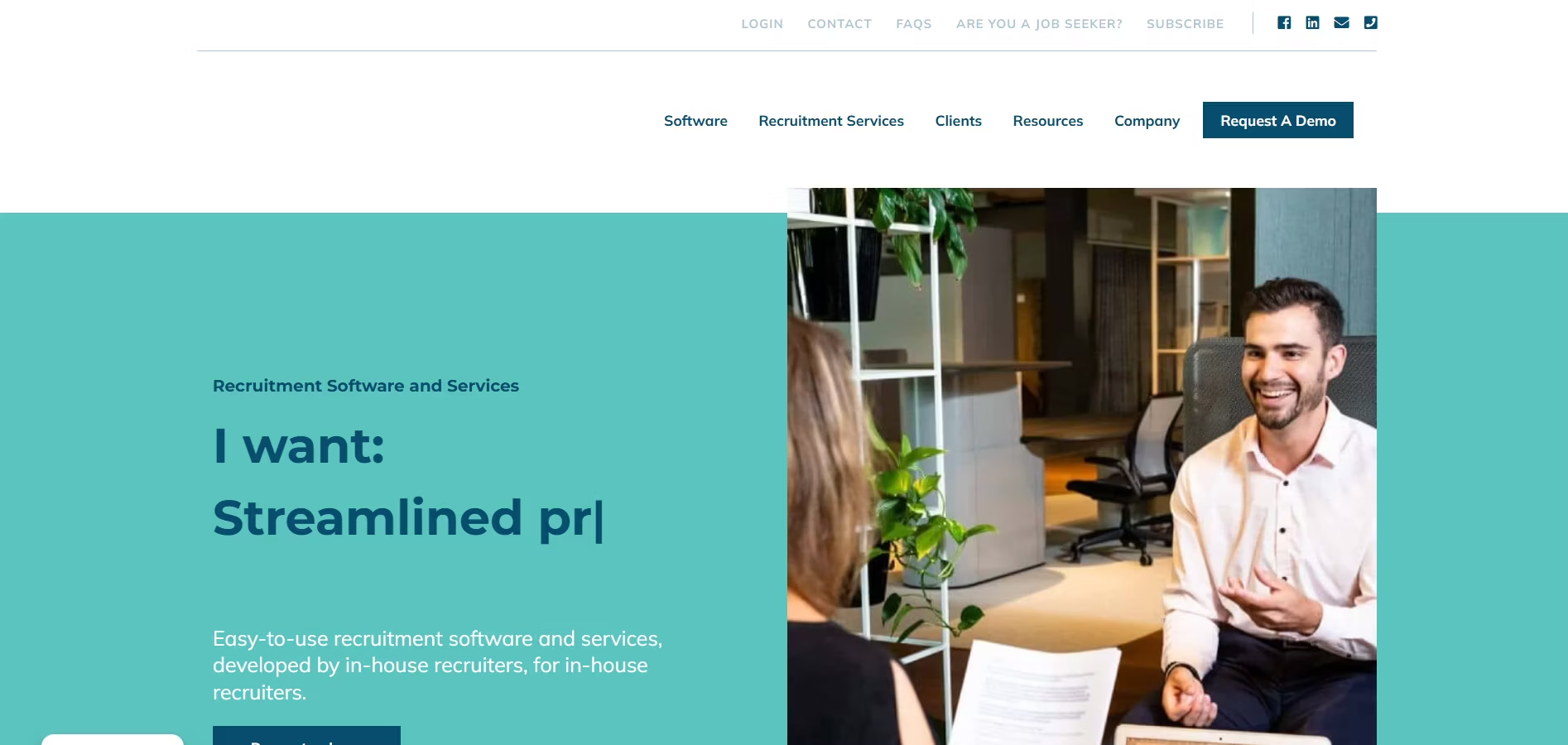
Overview
Scout Talent stands out for its modular approach to talent acquisition, pairing embedded AI with a customizable suite built for medium-sized businesses.
Whether you need branded job portals, advanced screening, or a centralized candidate database, Scout Talent lets you assemble the right tools for your workflow, no unneeded extras or "one-size-fits-all" package.
The platform excels at automating repetitive TA tasks while still offering a personal touch through dedicated onboarding and client support.
Key Features
- AI-generated job ads and candidate summaries that speed up sourcing and screening
- Branded job portal creation to elevate employer branding
- Centralized database for managing candidates organization-wide
- Automated pre-screening and ranking for faster shortlist creation
- Dedicated account support and onboarding for teams new to TA tech
- Optional modules for talent pooling and end-to-end onboarding
Pros
- Easy to design branded pages and job posts without technical support
- AI-powered screening tools minimize manual resume review
- Completely modular setup means you pay only for the features you need
Cons
- Higher starting price, with no free trial option
- Less suited for agencies or businesses with high-volume hiring needs
Best For
Mid-sized companies searching for scalable, embedded AI tools and a flexible platform that adapts as their talent strategy evolves.
GoHire – Modern, Affordable ATS for Global SMBs & Agencies
Overview
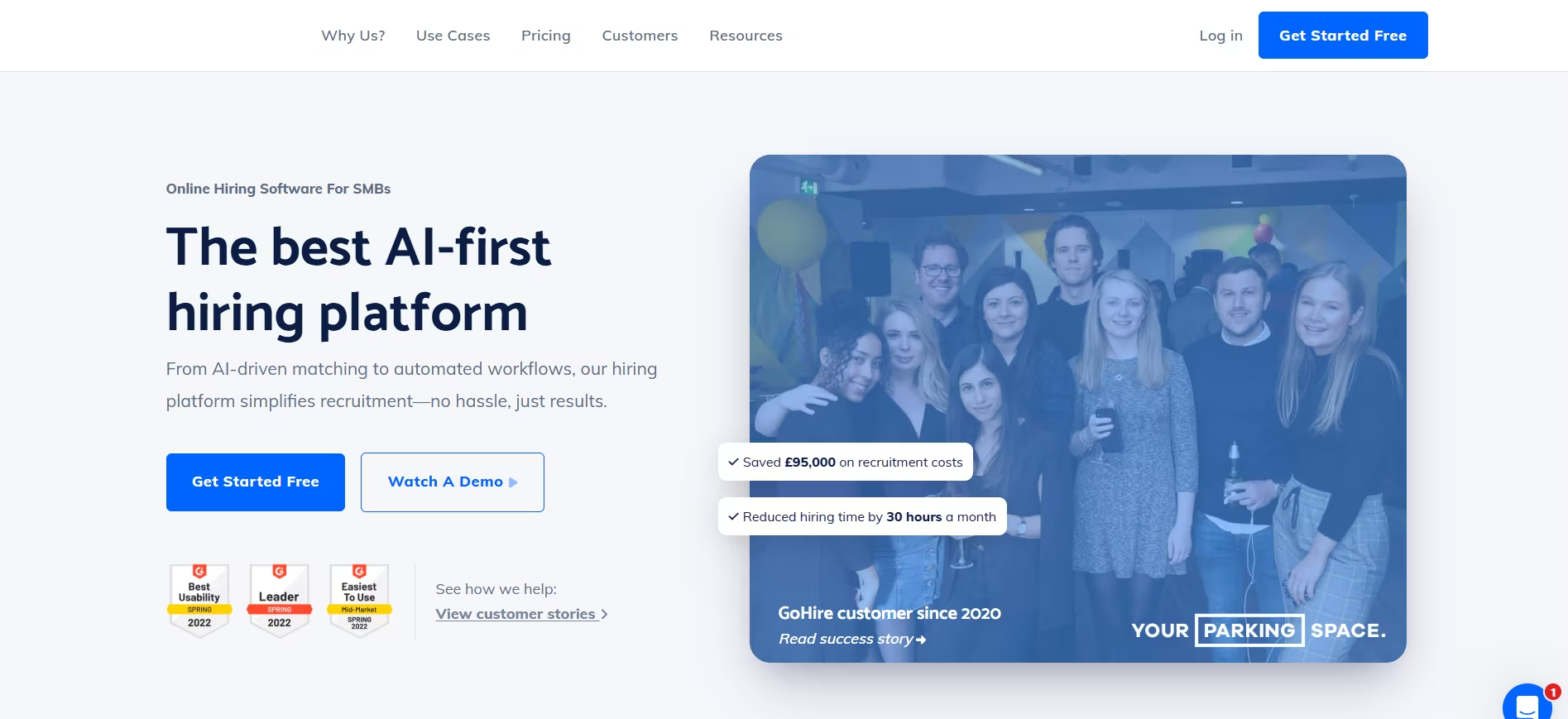
GoHire is a true value player for small and midsize businesses or boutique agencies.
The platform’s drag-and-drop candidate pipeline, internationalized workflows, and GDPR-compliant processes keep global teams organized without overcomplicating things.
Transparent, flexible pricing and quick onboarding make it easy to get started, plus, GoHire supports multilingual teams and multiple job boards.
While its advanced AI and HRIS features are modest compared to market giants, GoHire’s everyday ATS tools hit all the marks for lean recruiting teams.
Key Features
- Visual candidate pipeline management and collaborative feedback/notes
- One-click job posting to 15+ job boards and branded career site builder
- Automated interview scheduling and email communication templates
- Comprehensive analytics dashboard and report generation
- GDPR compliance and multi-language UI for global teams
- Fast onboarding and an intuitive, minimal interface
Pros
- Extremely affordable for growing businesses
- So intuitive, most users need little to no training
- Handy for agencies and distributed/global teams needing collaboration
Cons
- AI and HRIS integrations are basic, may not suit complex or data-heavy orgs
- Lacks deep customization for advanced talent analytics
Best For
Small businesses, startups, and staffing agencies wanting fast, global-ready recruiting at a budget-friendly price, without sacrificing core ATS functionality.
ExcelHire – AI-Powered Bulk Recruiting for Staffing Agencies
Overview
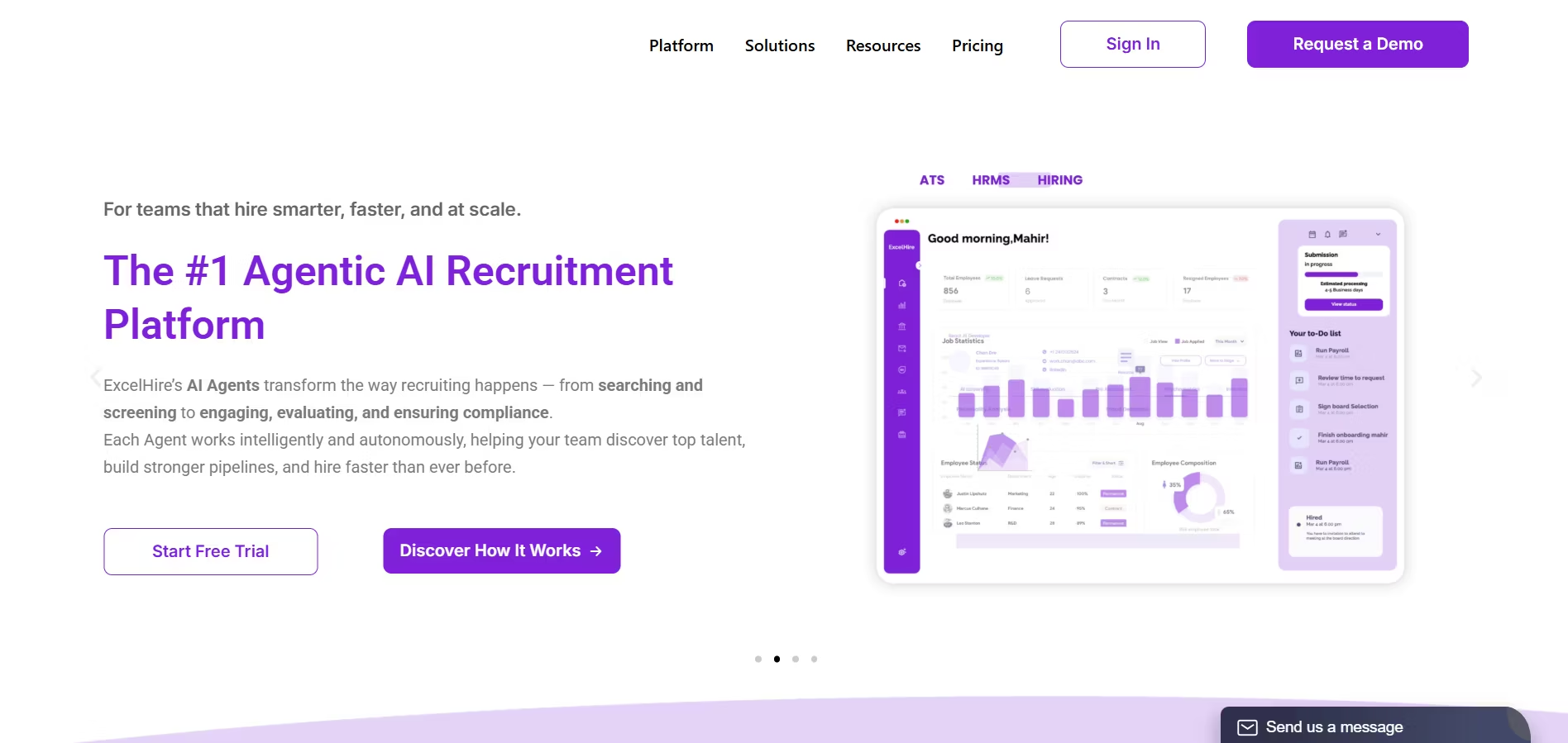
ExcelHire is built for the unique demands of staffing firms and high-volume hiring.
Its robust, AI-driven ATS automates everything from resume parsing and candidate ranking to bulk outreach and live engagement tracking.
ExcelHire’s vendor and bench management features, as well as seamless multi-channel integrations (LinkedIn, email, calendar), make it a powerhouse for large-scale recruiters, especially in the Indian and US staffing markets.
Key Features
- Instant AI-based resume parsing and prioritization for high-volume intakes
- Bulk email campaigns with automated follow-ups
- Real-time candidate engagement analytics
- Integrated vendor/bench management system
- Automatic parsing of job descriptions, pre-screening, and AI scoring
- Support for resume formatting and video interviews
- Deep reporting, invoicing, and compliance management
- Smooth integration with LinkedIn, calendars, and more
Pros
- Exceptional automation, saves huge time on manual processes
- Comprehensive compliance and audit-ready reporting
- Tailored workflows for Indian and US staffing agencies
Cons
- More complex UI and training required for small/new teams
- Feature-dense dashboard may feel overwhelming at first
Best For
Staffing firms and recruiting agencies seeking robust automation from sourcing to placement, with advanced vendor/client management and real-time analytics for high-volume hiring.
How to Choose the Right Talent Acquisition Software for Your Business
Choosing from the endless list of talent acquisition platforms can feel overwhelming. I've been there.
You're looking for a solution that not only solves today's hiring headaches but also scales with you into the future.
The wrong choice can lead to wasted money, frustrated hiring managers, and lost candidates.
The right one, however, can transform your entire recruiting function from a reactive cost center into a proactive, strategic powerhouse.
.jpg)
In this guide, I'll walk you through the exact steps I use when advising companies on how to select the best talent acquisition software.
We'll break down the essential features, evaluate needs based on your company's size, and dive into the critical role of AI in 2026.
Must-Have Features in a Modern Talent Acquisition Platform
Before you even look at a demo, it's crucial to have a checklist of non-negotiable features. The recruiting landscape has evolved, and the tools we use must keep pace.
Here are the five core pillars I believe every modern recruitment platform must have.
Integrated Applicant Tracking System (ATS) and CRM
A traditional ATS is great for managing people who have already applied. But what about the 90% of top talent who are passive candidates?
That's where a Candidate Relationship Management (CRM) system comes in. An integrated ATS/CRM allows you to track active applicants and proactively nurture passive talent in one place.
You can build talent pools, run email campaigns, and engage with promising individuals long before a job opening even exists. This is the key to moving from reactive to strategic hiring.
AI-Powered Resume Parsing and Candidate Ranking
I still remember the days of manually sifting through hundreds of resumes for a single role. It was time-consuming and prone to human error.
Today, the best AI talent acquisition platforms use artificial intelligence to instantly parse resumes, extract key skills and experience, and rank candidates against your job description.
This single feature can save recruiters hours of administrative work per day, allowing them to focus on what they do best: building relationships with people.
Automated Interview Scheduling and Communication Workflows
The endless email back-and-forth of scheduling interviews is a major bottleneck and a poor candidate experience. Modern platforms automate this entirely.
You can set your availability, and the software sends a link to candidates to book a time that works for them.
Furthermore, you can build automated communication workflows to keep candidates informed at every stage, ensuring no one falls through the cracks and your employer brand remains strong.
Advanced Sourcing and Talent Pool Management
Great recruiters don't wait for candidates to come to them. Your software should equip you with powerful sourcing tools, like a browser extension that can pull profiles from LinkedIn directly into your talent pool.
This allows you to build a rich, searchable database of potential hires that you can tap into for future roles, drastically reducing your reliance on expensive job boards.
Comprehensive Recruiting Analytics and Reporting Dashboards
You can't improve what you can't measure. A top-tier platform must provide an intuitive analytics dashboard that gives you real-time insights into key metrics.
You need to be able to track time-to-hire, cost-per-hire, source effectiveness, and pipeline conversion rates.
This data is essential for making informed decisions, demonstrating the ROI of your recruiting efforts, and identifying bottlenecks in your process.
Evaluating Software by Company Size & Specific Hiring Needs
The "best" software is not a one-size-fits-all solution. The right choice depends heavily on your company's size, hiring volume, and strategic goals.
For Startups & Small Businesses: What to Prioritize
For startups and SMBs, the priorities are affordability, ease of use, and core automation. You need a tool that your small team can implement quickly without a dedicated IT specialist.
Look for platforms with transparent pricing, excellent job board syndication, a simple ATS, and a branded careers page builder.
This is where tools designed for efficiency, like Recooty, truly shine by offering powerful features without the enterprise price tag or complexity.
For Mid-Market Companies: Scaling Your Hiring Efforts
As you grow, your needs shift towards scalability, integrations, and more robust analytics.
Your chosen platform must be able to handle increasing hiring volume and integrate with your other HR systems, like your HRIS.
Look for features like customizable workflows, advanced reporting, and a strong integration marketplace.
For Enterprise Organizations: Compliance, Security, and Integration
At the enterprise level, the stakes are higher. You need a platform that prioritizes global compliance (GDPR, OFCCP), enterprise-grade security (SOC 2), and deep, seamless integrations with systems like Workday or SAP SuccessFactors.
The ability to create complex, configurable workflows for different departments and regions is non-negotiable.
For Staffing Agencies: Client and Candidate Management Must-Haves
Staffing agencies have unique needs because they serve two customers: clients and candidates.
The best software for agencies includes specialized features like a client portal for real-time updates, robust contact management, and performance tracking for multiple recruiters.
The system must excel at both candidate sourcing and client relationship management.
The Critical Role of AI in 2026 Talent Acquisition
If there's one trend defining the future of recruiting, it's artificial intelligence.
AI is no longer a "nice-to-have"; it's a fundamental component of the best talent acquisition software and is essential for staying competitive.
How AI Tools like Recooty Automate Candidate Screening
Manual resume screening is one of the biggest time sinks in recruiting. This is where AI makes an immediate impact.
For example, a platform like Recooty uses AI to automatically scan, parse, and score incoming applications against the job requirements.
It instantly surfaces the most qualified candidates, allowing me to focus my time on the top 10% of applicants instead of manually reviewing every single one.
This dramatically accelerates the top of the hiring funnel.
Using AI for Passive Candidate Sourcing and Engagement
The most powerful free AI tools for recruitment go beyond your applicant pool. They actively scan the web, professional networks, and other sources to identify potential candidates who match your criteria but haven't applied.
These AI sourcing tools can build a pipeline of passive talent for you, complete with contact information and insights for personalized outreach.
The Rise of Recruiting Chatbots and Conversational AI
Your career page is often a candidate's first interaction with your company. AI-powered chatbots can engage visitors 24/7, answer frequently asked questions, screen for basic qualifications, and even schedule initial screening calls.
This creates a highly interactive and positive candidate experience while simultaneously qualifying leads for your recruiting team.
Mitigating Bias with AI-Driven Recruiting Software
One of the most promising applications of AI in recruiting is its potential to reduce unconscious bias.
When configured correctly, AI can be programmed to ignore demographic data like names, gender, or graduation years during the initial screening.
By focusing solely on skills, experience, and qualifications, these tools can help organizations build more diverse and inclusive teams, ensuring everyone gets a fair look based on merit.
Maximizing Your Investment: Implementation and Customization
I've seen it happen too many times: a company invests in one of the best talent acquisition platforms, but six months later, they're barely scratching the surface of its capabilities. Buying the software is just the first step.
The real transformation happens when you implement it thoughtfully and customize it to fit your unique hiring process. This is how you turn a good tool into a strategic advantage.
In this section, I'll share my step-by-step process for a successful rollout and give you some pro tips for automation that have saved my teams countless hours.
This is how you truly maximize the ROI on your investment in the best AI talent acquisition platforms.
A Step-by-Step Guide to a Smooth TA Software Implementation
A smooth implementation sets the foundation for success. Rushing this process is a mistake I've seen derail the adoption of even the best software.
From my experience managing these rollouts, following a structured plan is non-negotiable.
1. Define Your Goals & Assemble Your Team: Before you do anything, clearly define what success looks like. Is it reducing time-to-fill by 20%? Improving hiring manager satisfaction? Get specific.
Then, assemble a small implementation team with representatives from HR, IT, and at least one tech-savvy hiring manager who can be a champion for the new tool.
2. Data Migration and Cleanup: This is the step everyone wants to skip, but it's the most critical. Before you import your old candidate data, take the time to clean it up.
Remove duplicates, archive old records, and ensure everything is tagged correctly. Starting with a messy database will cripple your new system's effectiveness from day one.
3. Configure Your Core Workflows: Map out your ideal hiring process on a whiteboard *before* you start building it in the software.
Define the stages for different roles (e.g., a technical role will have different stages than a sales role). Set up user roles and permissions to ensure the right people have the right level of access.
4. Build Your Template Library: Save hours down the line by creating a library of templates for job descriptions, emails (acknowledgments, interview invites, rejections), and offer letters.
This ensures consistency in your communication and strengthens your employer brand.
5. Train, Train, Train: Host dedicated training sessions for recruiters and hiring managers. Don't just show them *how* to use the software; explain *why* you're making the change and how it will make their lives easier.
Record the sessions so new hires can watch them later.
6. Launch and Gather Feedback: Go live! But the work isn't done. For the first 30 days, actively solicit feedback from your users. What’s working well? What’s clunky? Be prepared to make small adjustments to your workflows based on this real-world feedback.
How to Calculate the ROI of Your New Talent Acquisition Platform
To justify the investment and secure future budget, you need to prove the software's value with data.
I always focus on tracking a few key metrics that clearly demonstrate the platform's impact on the business.
Measuring Reductions in Cost-Per-Hire and Time-to-Fill
These are the two most direct measures of efficiency.
Time-to-Fill: This is the number of days from when a job is opened to when an offer is accepted. Your new platform should drastically reduce this by automating screening, scheduling, and communication.
Track your average time-to-fill before and after implementation. A 25% reduction is a realistic and powerful result to show leadership.
Cost-Per-Hire: Calculate this by adding up all your recruiting costs (ad spend, recruiter salaries, etc.) and dividing by the number of hires.
The best talent acquisition software lowers this by improving sourcing from free channels, reducing the need for agency fees, and saving hundreds of hours of recruiter time.
Assessing Improvements in Quality of Hire and Retention
While efficiency is great, the ultimate goal is to hire better people who stay longer.
- Quality of Hire: This is a trickier metric, but you can measure it through proxies. I recommend using a simple hiring manager satisfaction survey 90 days after a new hire starts.
You can also track the new hire's first-year performance review score. An increase in these numbers shows your new tool is helping you make better, more data-driven decisions. - New Hire Retention: Track your 90-day and first-year retention rates. A great platform improves the candidate experience and helps you better assess for culture fit, both of which are directly linked to higher retention.
Pro Tips for Customizing Workflows and Automating Repetitive Tasks
This is where you unlock the true power of your platform. Automation isn't about replacing recruiters; it's about freeing them from administrative tasks so they can focus on human connection.
Create Role-Specific Pipelines: Don't use a generic hiring pipeline for every role. Customize your stages. A software engineer role might need a "Technical Assessment" stage, while a sales role needs a "Mock Presentation" stage. This keeps the process relevant and organized.
- Use "If-This-Then-That" Automation Triggers: The best systems allow you to set up simple automation rules.
For instance: - IF a candidate is moved to the "Phone Screen" stage, THEN automatically send them the email template with your scheduling link.
- IF a candidate is rejected, THEN wait 48 hours and automatically send the polite rejection email template. This small delay feels more human and prevents accidental sends.
- Automate Candidate Feedback: Set up automated reminders for interviewers who haven't submitted their scorecard feedback within 24 hours. This simple nudge can dramatically speed up your decision-making process.
- Leverage AI for Instant Shortlisting: This is a game-changer. With a tool like Recooty, you don't even have to build a complex rule.
Its AI is designed to automatically screen and rank candidates the moment they apply.
This means your recruiters can log in and immediately see a pre-vetted shortlist, turning a half-day task into a five-minute review.
It’s one of the most powerful forms of automation available, especially for lean teams.
Common Challenges in Talent Acquisition Tech Adoption (And How to Solve Them)
Even after you've chosen one of the best talent acquisition platforms, the journey isn't over. The implementation phase is where the real work begins, and it's often fraught with hidden challenges.
I've guided dozens of companies through this process, and I've seen the same roadblocks appear time and again.
Anticipating these hurdles is the key to a successful launch.
In this section, I’ll share the most common challenges I've encountered and provide a practical, battle-tested playbook for how to solve them, ensuring your new software delivers on its promise.
Overcoming Integration Hurdles with Your Existing HR Tech Stack (HRIS, Payroll)
One of the biggest technical nightmares is getting your shiny new recruitment platform to communicate with your existing systems, especially your Human Resources Information System (HRIS).
When they don't talk to each other, you end up with manual data entry, which is exactly what you bought the software to eliminate.
Why it Happens: Integrations can fail due to mismatched data fields (e.g., "First Name" in one system and "Given Name" in another), outdated APIs, or a lack of native integration between the two platforms.
How to Fix It:
1. Map Your Data Before You Integrate: Create a simple spreadsheet that maps the data fields between the two systems. For example: `ATS Field: "Candidate_FullName"` maps to `HRIS Field: "Employee_Legal_Name"`. This simple step can prevent countless headaches.
2. Prioritize Native Integrations: During your selection process, heavily favor a talent acquisition software list that offers pre-built, native integrations with your HRIS. This is far more reliable than relying on a third-party connector or a custom-built solution.
3. Involve Your IT Team Early: Don't wait until the last minute to bring in your IT experts. They need to review the API documentation and confirm that a stable, secure connection is possible.
4. Test, Test, and Test Again: Once the connection is built, run several test cases. Hire a "test" candidate in your ATS and ensure their data flows seamlessly into the HRIS with 100% accuracy. Check names, start dates, salary information, everything.
Driving User Adoption: How to Get Hiring Managers Onboard
The most powerful software is worthless if your hiring managers refuse to use it. I've seen teams invest six figures in a platform only for managers to revert to sending feedback over email and Slack, completely defeating the purpose.
Why it Happens: Hiring managers are busy. They often see new software as an extra administrative burden rather than a helpful tool. If it isn't intuitive and doesn't clearly make their lives easier, they won't adopt it.
How to Fix It:
1. Focus on "What's In It For Me?" (WIIFM): During training, don't just show them how to use the platform. Show them how it benefits them directly.
Frame it this way: "By using this tool to provide feedback, you'll get better candidates in front of you faster, and we can fill your open role in 30 days instead of 60."
2. Make Training Role-Specific and Bite-Sized: Hiring managers don't need to know every feature.
Create a 30-minute training session that covers only the three things they need to do: review candidates, leave feedback, and see the pipeline status. Record it so they can watch it on their own time.
3. Choose an Intuitive Platform: This is critical. A platform with a clunky, confusing interface is the number one enemy of user adoption.
This is where a tool like Recooty excels. It’s designed with such a clean and simple user interface that the learning curve for a busy manager is almost non-existent.
The easier it is to use, the more likely they are to adopt it.
4. Find Your Champions: Identify one or two tech-savvy hiring managers and get them to become super-users.
When their peers see them successfully using the tool and filling roles faster, they'll be more motivated to get on board.
Navigating Data Migration Complexities Without Losing Candidate Information
Moving your existing candidate database from an old system (or worse, from spreadsheets) into your new platform is a high-stakes process. A poorly executed migration can lead to lost data, jumbled candidate profiles, and a messy start with your new tool.
Why it Happens: Data is often unstructured, contains duplicates, or is formatted differently in the old system. Simply "dumping" it into the new one without a plan leads to chaos.
How to Fix It:
1. Clean Your Data First: This is non-negotiable. Before you export anything, go through your existing database.
Merge duplicate candidate profiles, archive applicants from roles that closed years ago, and standardize tags and labels. It's a painful process, but it pays huge dividends.
2. Do a Small Test Batch: Don't try to migrate 50,000 candidate records at once. Start with a small batch of 100 records. Import them into the new system and carefully check if all the fields (name, email, resume, notes, activity history) mapped over correctly.
3. Work with Your Vendor's Support Team: Your new software vendor has done this hundreds of times. Lean on their expertise. They can provide you with the correct import templates and guide you through the data migration process.
Troubleshooting and Refining AI-Powered Screening for Accuracy
Many teams are excited to use the best AI talent acquisition platforms, but are sometimes disappointed when the initial results aren't perfect.
They might find the AI is recommending irrelevant candidates or missing obvious keywords.
Why it Happens: The AI is a powerful engine, but it's not a mind reader. Its accuracy is 100% dependent on the quality of the data you provide it. Vague job descriptions and inconsistent feedback will lead to poor AI performance.
How to Fix It:
1. Feed it High-Quality Job Descriptions: The AI uses your job description as its source of truth. Ensure your JDs are clear, specific, and full of relevant keywords. Instead of saying "good communication skills," specify "experience presenting to executive leadership."
2. Create a Feedback Loop: Most AI systems learn over time. When you review AI-recommended candidates, use the "thumbs up" or "thumbs down" feature. This teaches the algorithm what a good match actually looks like for that specific role. The more you use it, the smarter it gets.
3. Start with "Knockout Questions": To improve accuracy at the top of the funnel, use simple screening questions for non-negotiable requirements (e.g., "Do you have the required certification for this role?").
This filters out unqualified applicants before the AI even has to analyze their resume.
4. Conduct a Bias Audit: Work with your vendor to understand how their algorithm is designed to mitigate bias.
It's important to periodically review the results to ensure the AI isn't unintentionally filtering out candidates from diverse backgrounds. A good AI should focus on skills and experience, not demographic proxies.
Future-Proofing Your Hiring: Key Trends for 2026 and Beyond
Choosing from the many talent acquisition platforms available today is about solving current challenges, but the truly smart investment is in a system that prepares you for the future.
As a recruiter who lives and breathes this industry, I'm constantly watching the horizon to see what's next.
The world of work is changing at an incredible pace, and the best AI talent acquisition platforms are at the forefront, driving trends that will redefine our roles by 2026.
Let's look at the key shifts you need to have on your radar. Understanding these trends will ensure the technology you choose today doesn't become obsolete tomorrow.
The Shift to Skills-Based Hiring and Internal Talent Marketplaces
For decades, we've relied on proxies for talent, degrees, years of experience, and former job titles. That era is ending.
The future is about skills-based hiring, a methodology focused on what a candidate can actually do, not where they've worked before.
Why It Matters:
- Wider Talent Pools: It opens your doors to talented individuals who may have taken non-traditional career paths.
- Improved Diversity: It reduces bias by focusing on tangible abilities rather than pedigree.
- Increased Agility: You can hire for the exact skills you need to complete a project, making your workforce more adaptable.
This trend extends internally, too. Internal talent marketplaces are becoming a core feature in modern HR tech.
These are systems that use AI to map the skills of your current employees. When a new role opens up, the first place the system looks is inside your own company, identifying employees who have the right skills and might be looking for a new challenge.
As research from sources like McKinsey shows, this approach dramatically boosts employee retention and saves on recruiting costs.
Integrating Advanced Diversity, Equity, and Inclusion (DEI) Analytics
DEI is no longer just a corporate buzzword; it's a business imperative.
The best talent acquisition software is moving beyond basic compliance reporting and providing deep, actionable analytics to help companies build truly diverse and inclusive teams.
Why It Matters:
Simply tracking the demographics of your applicants isn't enough.
You need to understand your entire hiring funnel to identify where systemic bias might exist. Advanced DEI dashboards can answer critical questions, such as:
- Are we losing candidates from underrepresented groups at a specific interview stage?
- Do the job descriptions for certain departments use language that unintentionally discourages diverse applicants?
- Which of our sourcing channels are most effective for attracting a diverse slate of candidates?
By providing this data, a modern recruitment platform allows you to move from guesswork to a data-driven DEI strategy, pinpointing the exact areas in your process that need improvement.
The Ethical Implications and Governance of AI in Recruitment
As we rely more on AI sourcing tools for recruiting, we must also become responsible stewards of this technology.
The ethical use of AI is becoming a major topic of conversation, and rightly so. An AI is only as unbiased as the data it's trained on, and if not governed carefully, it can perpetuate the very human biases we're trying to eliminate.
What to Look For:
When evaluating any AI recruiting platform, I always press vendors on these three points:
1. Transparency: Can they explain, in simple terms, *how* their algorithm makes a recommendation? A "black box" AI is a major red flag.
2. Bias Audits: Do they regularly audit their algorithms for demographic bias? Ask to see the results or methodology.
3. Data Privacy: How do they ensure compliance with regulations like GDPR and protect sensitive candidate data?
The future of AI in recruitment belongs to vendors who are committed to building fair, transparent, and ethical tools.
Hyper-Automation and its Impact on the Role of the Recruiter
We've been automating recruiting tasks for years, but we're now entering an era of hyper-automation. This isn't just about scheduling an interview; it's about automating an entire workflow.
Imagine this scenario:
A candidate applies for a role. The AI instantly screens their resume. A chatbot engages them with initial screening questions.
If they qualify, the system automatically sends them a link to schedule an interview based on the hiring manager's calendar.
After the interview, it automatically sends a reminder to the manager to submit their feedback.
This doesn't make recruiters obsolete. It makes them strategic.
When the administrative burden is lifted, the role of the recruiter evolves. We'll spend less time on paperwork and more time on high-impact activities that require a human touch:
- Building deep relationships with top-tier, passive talent.
- Acting as strategic talent advisors to leadership.
- Focusing on employer branding and telling our company's story.
This level of efficiency is no longer reserved for large enterprises.
Platforms like Recooty are democratizing this technology, bringing powerful AI and automation to small and mid-sized businesses.
This allows even the leanest HR teams to future-proof their hiring and focus on what truly matters: the people.
Making Your Final Decision: Selecting the Best TA Software for Your Team
We've covered a lot of ground, from in-depth talent acquisition platforms reviews to the future-proofing trends that will shape hiring in 2026.
Choosing from the extensive talent acquisition software list is a significant decision, but you are now equipped with the framework to make the right choice for your team.
The goal is no longer just to track applicants but to build a strategic, proactive, and efficient hiring engine.
The best talent acquisition software is the one that aligns with your specific needs, whether you're a startup prioritizing speed or an enterprise focused on global compliance.
The key takeaway is that modern platforms are defined by their ability to integrate ATS and CRM functionalities, leverage AI for intelligent screening, and provide the analytics needed to make data-driven decisions.
This is the new standard for the best hiring platforms for employers.
Ultimately, the right platform will free your team from administrative burdens so they can focus on what matters most: building genuine relationships with candidates.
It's an investment that pays dividends in reduced time-to-hire, improved quality of hire, and a stronger employer brand.
If you’re a small or mid-sized business looking to harness the power of AI and automation in a simple, intuitive package, your next step is clear. I highly recommend you explore Recooty.
It embodies many of the principles we've discussed, offering a powerful yet user-friendly solution to streamline your entire hiring process.
Start Your Free Trial of Recooty Today and take the first step toward transforming your talent acquisition strategy.
Frequently Asked Questions About Talent Acquisition Software
What is a talent acquisition platform?
A talent acquisition platform is an end-to-end software solution designed to manage the entire hiring lifecycle, from attracting candidates to making a hire.
Unlike a simple Applicant Tracking System (ATS), which primarily tracks applicants, a full talent acquisition suite is a proactive recruitment platform that includes tools for sourcing passive talent, a Candidate Relationship Management (CRM) system for nurturing talent pools, recruitment marketing, and advanced analytics.
From my experience, the biggest shift is moving from a reactive to a proactive mindset. A great platform doesn't just manage applications; it helps you build a sustainable pipeline of talent for future needs.
What is the best AI tool for recruiters?
The "best" AI tool really depends on your primary goal. The best AI talent acquisition platforms often specialize in solving a specific problem incredibly well.
- For AI-powered sourcing, tools like hireEZ or Manatal excel at finding passive candidates across the web.
- For AI-powered screening and automation for SMBs, a platform like Recooty is fantastic because its AI is built to quickly rank candidates and automate workflows within a simple, user-friendly interface.
- For conversational AI and candidate engagement, chatbots from vendors like Paradox (Olivia) are leaders.
The key is to identify your biggest bottleneck. If you spend most of your time screening resumes, then an AI-powered ATS is your best bet.
If sourcing is your challenge, then a dedicated AI sourcing tool for recruiting would be the right choice.
What is the difference between an ATS and a recruiting CRM?
I get this question all the time, and it's a critical distinction. The easiest way to think about it is "active" versus "passive."
- An Applicant Tracking System (ATS) is a reactive tool. It's a system of record for managing active candidates who have applied for a specific, open job. It helps you track them through the hiring stages, from application to offer.
- A Recruiting CRM is a proactive tool. It's a relationship management system for passive candidates, the talented people who haven't applied but you want to build a relationship with for future roles.
You use it to build talent pools, run email nurture campaigns, and keep your brand top-of-mind.
The most powerful talent acquisition platforms today integrate both, giving you a single system to manage your entire talent ecosystem.
Which is the best ATS software for small businesses?
For small businesses, I always recommend prioritizing affordability, ease of use, and core automation.
You need a system that your team can start using immediately without requiring a dedicated IT specialist.
Based on our reviews, some of the best options for small businesses include Recooty, JazzHR, and Workable.
These platforms offer transparent pricing, excellent job board syndication, and intuitive interfaces.
For example, a tool like Recooty is specifically designed to give small teams the hiring power of a large enterprise by simplifying tasks like posting to multiple job boards and providing AI screening, all at an accessible price point.
How can AI talent acquisition platforms like Recooty reduce hiring bias?
This is one of the most exciting and important applications of AI in our field. AI talent acquisition platforms can help mitigate unconscious human bias in several key ways:
- Focusing on Skills, Not Demographics: A well-designed AI can be programmed to ignore demographic information like names, gender, graduation years, or even photos. It focuses purely on matching the skills and qualifications listed on a resume to the requirements in the job description.
- Standardized Screening: The AI applies the exact same criteria to every single candidate, ensuring a consistent and fair initial review. This removes the variability that can come from different recruiters or moods.
- Data-Driven Insights: These platforms can provide analytics to help you identify potential bias in your funnel. For example, if you're losing candidates from a certain demographic at one specific interview stage, the data can flag that for further investigation.
Platforms like Recooty leverage this by using their AI to score and rank candidates based on objective criteria, ensuring that every applicant gets a fair look based on merit.
What are the most important features to look for in recruiting software?
When I'm evaluating a new tool, I use a core checklist to ensure it covers the essentials of a modern recruiting process. Here are the features I consider non-negotiable:
- Integrated ATS and CRM: The ability to manage both active applicants and passive talent pools in one place.
- AI-Powered Resume Parsing and Screening: This is a massive time-saver and a core feature of any of the best AI talent acquisition platforms.
- Automated Communication and Scheduling: Tools that automate interview scheduling and provide status updates to candidates are crucial for a good experience.
- Advanced Sourcing Tools: Look for a browser extension or similar tool that makes it easy to add candidates to your database from sites like LinkedIn.
- Recruiting Analytics and Reporting: You need an intuitive dashboard that tracks key metrics like time-to-fill and cost-per-hire.
Are there any good free talent acquisition software options available?
Yes, there are several platforms that offer recruitment software free plans, but it's important to understand their limitations.
These free tiers are typically designed for very small companies or individual recruiters with low hiring volume.
Limitations often include a cap on the number of active jobs, a limited number of users, and access to only the most basic features.
Vendors like Zoho Recruit and even Recooty offer free plans that are excellent for getting started.
They can be a great way to move away from spreadsheets, but as your company grows, you'll likely need to upgrade to a paid plan to access the more powerful automation and AI features.
How do I calculate the ROI on talent acquisition software?
Calculating the Return on Investment (ROI) is crucial for proving the value of your software to leadership. I recommend focusing on both cost savings and efficiency gains.
A simple way to approach it is:
1. Calculate Cost Savings: Add up the time saved on administrative tasks (multiplied by the recruiter's hourly rate) and any reduction in spending on external recruiting agencies or premium job boards.
2. Calculate Efficiency Gains: Quantify the value of reducing your time-to-fill. For example, if a sales role that generates $10,000/month in revenue is filled 15 days faster, that's a direct gain of $5,000.
3. Use the Formula:
ROI = [ (Total Financial Gain - Cost of Software) / Cost of Software ] x 100
By tracking these metrics before and after implementation, you can build a powerful business case that clearly demonstrates the software's positive impact.
Ready to Find the Best Talent Acquisition Platform for Your Hiring Needs?
Whether you’re a startup looking for your first ATS or an enterprise ready to scale globally, there’s no better time to act.
If you’re overwhelmed by the long talent acquisition software list, let’s simplify it.
Try Recooty — The Smart Choice for Modern Hiring
I personally recommend starting with Recooty, one of the best AI talent acquisition platforms for small to mid-sized teams.
It’s intuitive, cost-effective, and packed with features that automate posting, screening, and scheduling, everything your team needs to hire better, faster.
- Ranked among the top 10 recruiting tools by HR experts
- Seamless recruitment platform for AI screening, compliance, and job board integration
- Used by global companies and loved by thousands of HR teams for its ease of use
👉 Tap into our full feature set with a free 15-day trial of Recooty, no credit card required.
Start building your future-ready TA system today.
.png)
.png)

.webp)