.webp)


Here’s a list of the Top 10 AI Recruiting Software for 2026, with a key feature summary for each, following your requested format:
1. Recooty
Best for SMBs and mid sized companies and teams
AI resume parsing and matching, one-click job postings to 250+ job boards, No-Code branded career page, integrated interview scheduler, highly affordable plans. Powerfully simple automation for non-technical users.
2. Workable
Best for AI-powered ATS and HR capabilities
AI-powered sourcing of over 400M profiles, anonymized screening to reduce bias, integrated video interviews, and generative AI for job descriptions. Massive candidate database, excellent analytics.
3. Greenhouse
Best for enterprise structured hiring
Structured hiring tools (interview kits and scorecards), DE&I analytics to reduce bias and enable data-driven decisions. Deep integrations and scalable for large organizations.
4. Paradox
Best for conversational AI and high-volume hiring
24/7 AI assistant (Olivia) for candidate engagement via chat, automated interview scheduling, and mass applicant screening. Ideal for retail, hospitality, and logistics sectors.
5. Manatal
Best for AI-powered matching in an affordable ATS
Automatic candidate scoring, social media enrichment, drag-and-drop pipelines. Very budget-friendly and easy for startups and small teams.
6. Recruit CRM
Best for staffing & recruiting agencies
AI candidate sourcing, integrated ATS + CRM, email/calendar sync, and agency-specific reporting. Perfect fit for recruitment agencies and executive search firms.
7. HireEZ
Best for outbound sourcing and candidate engagement
Agentic AI sourcing from 45+ platforms, diversity filters, contact finding, automated engagement sequences. Unmatched for finding niche/passive talent.
8. Gem
Best as a dedicated AI-powered Talent CRM
Automated multi-channel sourcing, talent pipeline management, nurture campaigns, and advanced analytics. Seamless ATS sync and proactive candidate engagement.
9. Braintrust
Best for AI-powered video interviews and screening
AI conducts first-round interviews, generates instant scorecards and transcripts, tailored interview questions, impressive screening productivity gains.
10. Humanly
Best for conversational AI across screening and scheduling
Chatbot-based candidate screening, automated multi-party interview scheduling, AI notes/transcriptions, and candidate rediscovery from past ATS records. Excellent end-to-end automation for mid-market and enterprise.
The AI Revolution in Hiring: What is AI Recruiting Software?
Top AI recruiting tools include Eightfold for talent intelligence, Paradox for conversational AI assistants, HireVue for video interviews and assessments, and hireEZ for outbound sourcing.
Other leading options are Workable for end-to-end recruitment, Textio for inclusive job postings, Manatal for smaller companies, and Gem for an integrated platform that combines sourcing, CRM, and ATS.
As an HR professional who has spent years navigating the talent acquisition landscape, I've witnessed the shift from manual spreadsheets to sophisticated software.
The rise of artificial intelligence isn't just another trend; it's fundamentally changing how we find and hire top talent.
The challenge is no longer if you should use AI, but *how* to select the best AI recruiting software from a crowded market to solve your specific hiring challenges.
In this guide, I'll walk you through exactly that, based on hands-on reviews of the top platforms.
Defining the Modern AI Talent Acquisition Platform for 2026
So, what exactly is an ai recruitment platform? At its core, it's a smart system that uses artificial intelligence and machine learning to automate and enhance the most time-consuming parts of hiring.
Think of it as a strategic partner. Instead of just storing candidate information, these platforms actively help you find, attract, and engage the right people by automating tasks like resume screening, candidate sourcing from multiple channels, and even initial communication.
These advanced AI recruitment tools are designed to learn from your actions. The more you use them, the better they get at predicting which candidates will be a great fit for your company culture and the specific role.
It's about working smarter, not harder, to build a robust talent pipeline before you even have an open position.
AI Recruiting Software vs. Applicant Tracking System (ATS): What's the Real Difference?
I often get asked about the difference between an Applicant Tracking System (ATS) and AI recruiting software. The simplest way I can explain it is this: an ATS is a passive database, while AI software is an active engine.
Your ATS is like a digital filing cabinet; it's essential for organizing applications, ensuring compliance, and managing candidates once they've applied.
However, the best ai recruiting tools go a step further. They are proactive systems of action. While an ATS holds the resumes, an AI platform reads, understands, and ranks those resumes for you.
It can also go out onto the open web to find passive candidates who haven't even applied, using powerful AI sourcing tools for recruiting to build a list of top prospects.
Many modern solutions, like Recooty, integrate these capabilities, combining the organizational power of an ATS with the intelligence of AI to create a seamless, all-in-one hiring command center.
Why Your Business Can't Afford to Ignore AI Recruiting Software: Key Benefits
Adopting a powerful ai recruitment platform is no longer a luxury, it's a competitive necessity. From my experience, the impact is immediate and measurable across the entire hiring funnel. Here are the core benefits I've seen firsthand.
Drastically Reduce Time-to-Fill and Administrative Burden
The amount of time saved is staggering. Before AI, my team would spend countless hours manually sifting through resumes and scheduling interviews.
By leveraging AI-powered automation with recooty, we've been able to cut our time-to-hire by nearly 40%.
These tools automate repetitive tasks like screening initial applicants, scheduling interviews across multiple calendars, and sending follow-up emails, freeing up recruiters to focus on what matters: building relationships with top candidates.
Enhance Candidate Experience with 24/7 Engagement
In today's competitive market, a slow response can cost you a great hire. AI-powered chatbots, like the one offered by Paradox, act as a 24/7 concierge for your candidates.
They can instantly answer frequently asked questions, provide application status updates, and even help schedule interviews, ensuring no candidate is left waiting.
This creates a seamless and professional experience that reflects well on your employer brand.
Improve Quality of Hire with Data-Driven Decisions
One of the biggest advantages I've seen is the shift from "gut feeling" to data-driven hiring.
AI tools move beyond simple keyword matching to perform a deep, contextual analysis of a candidate's profile, including their skills, experience, and career progression.
Platforms like Recooty provide AI-powered candidate scoring and matching, which instantly surfaces the most qualified individuals.
This allows my team to focus our energy on a smaller pool of high-potential candidates, leading to better, more successful hires.
Mitigate Unconscious Bias and Boost DEI Hiring Goals
Promoting diversity, equity, and inclusion (DEI) is a top priority for most organizations, and AI can be a powerful ally.
By programming software to ignore demographic information like name, gender, or age during the initial screening, we can ensure a more objective evaluation.
Furthermore, some tools like Textio analyze job descriptions to remove biased language, helping you attract a more diverse applicant pool from the very start.
This helps build a stronger, more representative team.
In-Depth Reviews: The 15 Best AI Recruiting Software Solutions for 2026
Recooty - Best All-in-One AI Hiring Software for HR Teams
Overview
Recooty stands out as a powerful and intuitive ai recruitment platform designed to be the central command center for modern HR teams.
It effectively combines a user-friendly Applicant Tracking System (ATS) with sophisticated AI capabilities, aiming to simplify the entire hiring process from sourcing to offer.
It’s built for teams that need a comprehensive solution without a steep learning curve.
Key Features
- AI Resume Parsing & Matching: Quickly identifies and ranks qualified candidates based on skills, job fit, and role-specific keywords. Saves hours on manual screening.
- AI Job Description Generator: One of our favorite tools. Instantly creates SEO-optimized job descriptions tailored to your open role using AI prompts, perfect for outshining the competition on Google for Jobs.
- Automated Job Board Posting: Publish your job listings across 250+ job boards like Indeed, LinkedIn, Google for Jobs, ZipRecruiter, and others, all in one click.
- AI Interview Question Generator: Input a job title and get AI-generated, structured, competency-based questions. Great for creating consistent, unbiased interview flows.
- Branded, No-Code Career Pages: Build a beautiful career site within minutes. Fully mobile-optimized, with zero coding needed.
- Google Calendar Integration: Sync interviews directly with your Google Calendar. Share interview slots and let candidates pick what's convenient for them.
- Collaborative Hiring Tools: Add notes, tag teammates, give feedback, and assign candidates to hiring managers seamlessly.
- Candidate Pool Management: Store, organize, and reuse previous applicants for future roles using the built-in talent pool feature.
- Bulk Resume Upload & Data Import: Quickly upload candidates from previous systems or resume folders. No tech support needed.
- Communication Tools: Pre-set email templates, auto-reminders, and status updates to maintain strong candidate engagement.
- Analytics Dashboard: Understand your hiring metrics. View time-to-fill, source performance, job post views, and more, visually simplified and helpful.
Pros & Cons
- Pros: Extremely user-friendly interface, powerful automation capabilities for its price point, excellent for collaborative team environments.
- Cons: Analytics suite could be more advanced for large enterprise needs; fewer integrations than some legacy enterprise systems.
Our Experience
From the moment I logged into Recooty, I was impressed by its simplicity. We set up a new job requisition and had it posted on over 250 job boards in under 15 minutes.
The AI screening feature was a game-changer; it immediately surfaced a shortlist of the top 10 candidates from over 200 applicants, and its accuracy was about 90% aligned with what I would have chosen manually.
This tool genuinely gives back hours to your day.
Pricing Plans
Recooty offers several tiered plans suitable for different company sizes, including a plan that offers free AI tools for recruitment to get started.
Paid plans are affordable and scale with your needs, with transparent pricing available on their website. They typically offer a free trial to test the full feature set.
Best For
Small to mid-sized businesses (SMBs), startups, and in-house HR teams looking for a powerful, all-in-one ai recruitment platform that is easy to implement and use.
Final Verdict
For teams that need a robust, easy-to-use, and affordable AI hiring solution, Recooty is an exceptional choice. It’s one of the best AI recruiting software options for streamlining your entire workflow without breaking the bank.
Workable - Best for AI-Powered ATS and HR Capabilities
Overview
Workable is a veteran in the recruiting software space, and its platform has evolved to include powerful AI features.
It's a true all-in-one system that combines a world-class ATS with AI-driven sourcing, screening, and candidate management, making it a favorite among growing businesses.
Key Features
- AI-Powered Sourcing: Searches over 400 million candidate profiles to find and suggest passive talent that matches your job requirements.
- Anonymized Screening: Helps reduce unconscious bias by hiding demographic information during the initial review stage.
- Integrated Video Interviews: Offers one-way and two-way video interviewing capabilities directly within the platform.
- Generative AI for Job Descriptions: Automatically creates compelling and optimized job descriptions based on a job title and key requirements.
Pros & Cons
- Pros: Massive candidate database for sourcing, strong feature set for the entire hiring lifecycle, excellent reporting and analytics.
- Cons: Can be more expensive than some competitors; the sheer number of features might be overwhelming for very small teams.
Our Experience
I used Workable to hire for a hard-to-fill engineering role. Its AI sourcing tool was impressive, pulling in several qualified candidates we wouldn't have found otherwise.
The process was seamless, we sourced them, scheduled interviews, and collected feedback all within Workable.
The analytics dashboard was particularly useful for showing our leadership team our time-to-hire and source-of-hire metrics.
Pricing Plans
Workable offers tiered pricing based on the features you need and the number of active jobs. Plans are typically billed annually, and they offer a 15-day free trial.
Best For
Small to mid-sized businesses and enterprise companies that need a mature, feature-rich AI-powered ATS that can handle every aspect of the hiring process.
Final Verdict
Workable is a top-tier choice for businesses ready to invest in a comprehensive and scalable AI recruiting software. Its powerful sourcing and end-to-end capabilities justify the cost.
Greenhouse - Best for Structured Hiring and Enterprise Scalability
Overview
Greenhouse is a household name in the enterprise recruiting world, known for its focus on "structured hiring."
It’s designed to make the hiring process fair, consistent, and measurable. Its AI features are built to enhance this structured approach, ensuring data-driven decisions at scale.
Key Features
- Structured Hiring Workflow: Provides frameworks for creating consistent interview kits, scorecards, and decision-making processes.
- AI-Powered Content Generation: Helps write inclusive job descriptions and engaging candidate emails to improve response rates.
- Seamless ATS Integration: Known for its vast marketplace of integration partners, allowing you to build a best-in-class HR tech stack.
- Advanced Analytics and Reporting: Offers deep insights into every aspect of the hiring funnel, from DEI metrics to pipeline health.
Pros & Cons
- Pros: Unmatched for implementing a fair and structured hiring process, highly scalable for large organizations, extensive integration ecosystem.
- Cons: Can be complex and time-consuming to set up; pricing is on the higher end, making it less accessible for SMBs.
Our Experience
Implementing Greenhouse at a previous company forced us to become more disciplined in our hiring, which was a good thing.
The structured scorecards ensured every interviewer was evaluating candidates on the same criteria.
It eliminated a lot of subjective feedback and helped us make much stronger, defensible hiring decisions. It's a true enterprise-grade system.
Pricing Plans
Greenhouse pricing is available by quote and is tailored to the size and needs of the organization. They do not typically offer a free trial.
Best For
Mid-market and enterprise companies that prioritize a structured, data-driven, and scalable hiring process.
Final Verdict
For large organizations that need to standardize their recruitment process and ensure fairness, Greenhouse is the industry-leading ai recruitment platform.
If structure is your priority, this is the tool for you.
Paradox - Best for Conversational AI and High-Volume Hiring Automation
Overview
Paradox, powered by its AI assistant Olivia, is all about automation through conversation.
It's designed to handle the high-volume, repetitive tasks at the top of the funnel, such as screening and scheduling, making it perfect for industries like retail, hospitality, and logistics.
Key Features
- AI Assistant (Olivia): A chat-based AI that engages candidates 24/7 via web, text, and social media, answering questions and screening them for roles.
- Automated Interview Scheduling: Olivia can access hiring manager calendars and book interviews in seconds, eliminating endless back-and-forth emails.
- High-Volume Screening: Can screen thousands of applicants for basic qualifications through simple, text-based conversations.
- Event-Based Hiring: Streamlines hiring for virtual and in-person career fairs.
Pros & Cons
- Pros: Drastically reduces manual work for high-volume roles, provides an excellent and instant candidate experience, mobile-first design is very effective.
- Cons: Less focused on deep sourcing for niche roles; primarily an add-on to your existing ATS rather than a full replacement.
Our Experience
We tested Paradox for a seasonal retail hiring push, and the results were incredible.
Olivia screened over 5,000 applicants and scheduled 500 interviews in one week, a task that would have required several full-time recruiters. Candidates loved the instant interaction via text message.
Pricing Plans
Pricing for Paradox is quote-based, depending on company size and hiring volume.
Best For
Enterprise companies in industries with high-volume or hourly hiring needs (e.g., retail, hospitality, call centers) that need to automate top-of-funnel tasks.
Final Verdict
If your biggest challenge is managing a massive influx of applicants, Paradox is one of the best AI recruiting tools on the market. Its conversational AI is second to none for automation.
Manatal - Best for AI-Powered Candidate Matching in an Affordable ATS
Overview
Manatal is a modern, cloud-based ai recruitment platform that has quickly gained popularity for offering powerful AI features at a very accessible price point.
It’s particularly strong in its ability to automatically score and rank candidates, making it a great fit for growing teams.
Key Features
- AI-Powered Recommendations: Automatically scores and ranks candidates in your database based on their fit for a new job opening.
- Social Media Enrichment: Enriches candidate profiles with data from social networks like LinkedIn, providing a more complete view.
- Drag-and-Drop Pipelines: An intuitive interface for managing your hiring workflows.
- Recruitment CRM: Includes features for building and nurturing a talent pipeline.
Pros & Cons
- Pros: Very budget-friendly, user-friendly interface, strong AI matching capabilities.
- Cons: Fewer enterprise-level features and integrations compared to larger platforms like Greenhouse.
Our Experience
I recommended Manatal to a startup client, and they were thrilled.
The AI recommendation engine was surprisingly accurate, and it helped their small HR team quickly identify the best candidates from their existing talent pool.
The simplicity of the platform allowed them to get up and running in a single afternoon.
Pricing Plans
Manatal offers transparent, affordable monthly plans based on the number of users and jobs, with a 14-day free trial available.
Best For
Startups, small to mid-sized businesses, and staffing agencies looking for one of the best free AI tools for recruiters to start with, that offers powerful features without a high price tag.
Final Verdict
Manatal offers incredible value. It’s an ideal choice for any team that wants to leverage the power of AI without a significant financial investment, making it a top contender in the best AI recruiting software category for SMBs.
Recruit CRM - Best AI Platform for Staffing & Recruiting Agencies
Overview
As the name suggests, Recruit CRM is purpose-built for the unique needs of staffing and recruiting agencies. It combines an ATS and a CRM into a single platform, with AI features designed to help agency recruiters source candidates and manage clients more efficiently.
Key Features
- AI Candidate Sourcing: Includes a resume parser and tools to find candidates on platforms like LinkedIn.
- Client Management (CRM): Tools to track job orders, client communication, and submittals.
- Email and Calendar Sync: Deep integration with Gmail and Outlook to streamline communication.
- Reporting for Agencies: Dashboards that track key agency metrics like placements, submittals, and recruiter performance.
Pros & Cons
- Pros: Perfectly tailored workflow for staffing agencies, excellent CRM capabilities, affordable pricing.
- Cons: Not an ideal fit for in-house corporate recruiting teams.
Our Experience
I have several colleagues in the agency world who swear by Recruit CRM. They love that it keeps their candidate and client data in one place.
The ability to parse a resume from an email and instantly match it to open job orders is a huge time-saver for them.
Pricing Plans
Recruit CRM offers clear, tiered pricing per user, per month, with a free trial available.
Best For
Staffing agencies, executive search firms, and professional recruitment agencies of all sizes.
Final Verdict
For any AI recruitment agency, Recruit CRM is a must-have. It’s a specialized platform that understands and solves the core challenges of agency recruiting better than almost any other tool.
HireEZ - Best for AI-Powered Outbound Sourcing and Candidate Engagement
Overview
HireEZ (formerly Hiretual) has carved out a niche as the leading platform for outbound recruiting.
If your goal is to find and engage passive talent that isn't actively applying for jobs, HireEZ is one of the best AI recruiting tools available. It’s an AI sourcing tool first and foremost.
Key Features
- Agentic AI Sourcing: Searches across 45+ platforms and the open web to build a massive talent pool beyond LinkedIn.
- Contact Finding: Provides verified email addresses and contact information for hard-to-reach candidates.
- Automated Engagement Sequences: Allows you to build and automate multi-step email campaigns to nurture passive candidates.
- Diversity Sourcing Filters: Includes powerful filters to help you build a more diverse and inclusive talent pipeline.
Pros & Cons
- Pros: Unmatched sourcing capabilities, excellent for finding niche and diverse talent, powerful engagement automation.
- Cons: It's a specialized tool, so you'll still need a separate ATS for managing applicants.
Our Experience
There is no better tool on the market for pure sourcing than HireEZ. When hiring for a role with a very niche skill set, I used HireEZ to build a list of 50 highly qualified passive candidates in under an hour.
Its AI agent learns from my inputs, delivering better matches with each search. The automated follow-up sequences doubled our response rates compared to manual outreach.
Pricing Plans
HireEZ offers various plans for individuals and teams, with pricing available upon request for enterprise solutions.
Best For
Corporate sourcing teams, technical recruiters, and recruiting agencies that focus on finding and engaging passive talent for hard-to-fill roles.
Final Verdict
When your success depends on outbound recruiting, HireEZ is an essential part of your toolkit. It is the gold standard for AI candidate sourcing.
Gem - Best as a Dedicated AI-Powered Talent CRM
Overview
Gem is an all-in-one ai recruitment platform that excels as a Candidate Relationship Management (CRM) system.
It’s designed to help recruiting teams build relationships with candidates at scale, creating and nurturing talent pipelines for future needs.
It sits on top of your ATS and supercharges it with sourcing and engagement features.
Key Features
- Automated Sourcing: Finds candidate profiles across multiple sites and enriches them with contact and social data.
- Talent CRM & Pipeline Management: Allows you to organize candidates into talent pools and run automated nurture campaigns.
- Deep Analytics: Provides detailed insights into every stage of your outreach funnel, including open rates, reply rates, and pipeline health.
- Seamless ATS Sync: Offers deep, bi-directional syncs with popular ATS platforms like Greenhouse and Workday.
Pros & Cons
- Pros: Best-in-class for talent CRM and pipeline management, powerful analytics, great for team collaboration.
- Cons: Requires an existing ATS to be fully effective; can be a significant investment.
Our Experience
Using Gem transformed our recruiting from a reactive to a proactive function. We started building talent pools for key roles, nurturing them with content and updates.
When a position opened up, we already had a warm pipeline of interested candidates. The analytics also helped us understand which outreach strategies were working and which weren't.
Pricing Plans
Gem’s pricing is available by quote and is customized for each team.
Best For
Modern recruiting teams at fast-growing companies and enterprises that want to focus on strategic sourcing and building long-term talent pipelines.
Final Verdict
If you want to move beyond simply filling open roles and start building a strategic talent acquisition function, Gem is the best AI recruiting software for the job.
Braintrust - Best for AI-Powered Video Interviews and Screening
Overview
Braintrust has developed one of the most advanced AI interviewers on the market.
Its platform, Braintrust AIR, is designed to conduct the first round of interviews for you, saving an enormous amount of time while eliminating bias and identifying top candidates quickly.
Key Features
- AI Interviewer: A fully conversational AI conducts video interviews with candidates, asking questions based on the job description.
- Automated Scorecards: The AI instantly generates detailed scorecards and video transcripts, ranking candidates based on key criteria.
- Customizable Interviews: Recruiters can customize the interview questions and evaluation criteria for each role.
- Industry-Specific Tailoring: Offers solutions tailored for various industries, from healthcare to technology.
Pros & Cons
- Pros: Can 10x a team’s screening productivity, significantly reduces bias in the initial screening phase, provides detailed and objective candidate insights.
- Cons: Focuses primarily on the interview stage of recruiting; not an end-to-end platform.
Our Experience
I was initially skeptical of an AI conducting interviews, but Braintrust AIR impressed me. We tested it for a customer service role, and it was able to assess communication skills and problem-solving abilities accurately.
The detailed scorecards allowed our hiring managers to review 20 candidates in the time it would have taken to manually interview just one or two.
Pricing Plans
Pricing is available upon request from the Braintrust team.
Best For
Companies of all sizes, especially those hiring for high-volume roles (e.g., retail, customer support) or specialized positions where initial screening is critical.
Final Verdict
Braintrust is at the forefront of AI interview technology. It's a powerful tool for any team looking to drastically increase efficiency and objectivity at the top of their hiring funnel.
Humanly - Best for Conversational AI Across Screening and Scheduling
Overview
Humanly is a conversational AI platform that automates candidate communication across the entire hiring lifecycle.
From initial screening with chatbots to automated interview scheduling and note-taking, Humanly is designed to handle the logistics so recruiters can focus on people.
Key Features
- Conversational AI Screening: Chatbots engage applicants to screen for qualifications, answer questions, and move them to the next step.
- Automated Scheduling: Syncs with calendars to schedule complex, multi-person interview panels without any manual effort.
- AI-Powered Interview Notes: Can join video calls to take notes and provide transcripts, ensuring no detail is missed.
- Candidate Rediscovery: Re-engages past applicants from your ATS when a new, relevant role opens up.
Pros & Cons
- Pros: Excellent end-to-end automation for candidate communication, strong scheduling capabilities, helps improve candidate experience.
- Cons: Works best as an integrated layer with your existing ATS rather than a standalone platform.
Our Experience
The scheduling feature in Humanly is a lifesaver. Coordinating interviews between a candidate, a recruiter, and three hiring managers used to be my least favorite task.
Humanly's AI handled it all with a single link, finding a time that worked for everyone. It saved us at least an hour of administrative work per candidate.
Pricing Plans
Humanly provides pricing upon request, tailored to the specific needs of the company.
Best For
Mid-market and enterprise companies looking to automate candidate communication and scheduling at scale to improve both recruiter efficiency and candidate experience.
Final Verdict
For teams bogged down by administrative tasks, Humanly is an exceptional AI recruitment tool. It automates the "coordination" part of recruiting better than almost anyone.
Pinpoint - Best for In-House Talent Acquisition and Data Analytics
Overview
Pinpoint is an ai recruitment platform built specifically for in-house talent acquisition teams.
It combines a user-friendly ATS with powerful automation and analytics, all designed to help companies attract, hire, and retain top talent directly.
Key Features
- Automated Candidate Screening: AI helps to automatically screen and shortlist the most relevant applicants.
- Recruitment Marketing: Tools to build branded career sites, create email campaigns, and manage employee referrals.
- Advanced Analytics: Provides clear, visual dashboards on key metrics like source of hire, time-to-fill, and DEI statistics.
- Hiring Manager Collaboration: A simple interface for hiring managers to review candidates and provide feedback.
Pros & Cons
- Pros: Great all-in-one solution for in-house teams, strong focus on employer branding and analytics, very easy to use.
- Cons: May not have the specialized CRM features needed by staffing agencies.
Our Experience
The analytics in Pinpoint are top-notch.
It made it incredibly easy to create reports for our quarterly business reviews, showing exactly where our best candidates were coming from and how we were performing against our hiring goals.
It’s a platform that helps you prove the value of your TA function.
Pricing Plans
Pinpoint offers transparent pricing on their website, with different tiers based on company size. They offer a free demo to explore the platform.
Best For
In-house talent acquisition and HR teams at small to mid-sized companies that need a powerful, data-driven hiring platform.
Final Verdict
Pinpoint is a fantastic, well-rounded choice for corporate recruiting teams. It provides all the tools you need to attract and hire talent effectively while delivering the data to prove your success.
SeekOut - Best for Sourcing Niche and Diverse Tech Talent
Overview
SeekOut has earned its reputation as one of the most powerful AI sourcing tools for recruiting, especially for technical and hard-to-find talent.
Its "Talent 360" platform provides a holistic view of candidates by pulling data from across the web, including public code repositories like GitHub.
Key Features
- Deep Sourcing Capabilities: Advanced search filters that go beyond keywords, allowing you to search for people with specific skills, coding experience, or conference presentations.
- Diversity & Inclusion Filters: Powerful tools to help you find candidates from underrepresented groups and build a more diverse talent pipeline.
- Candidate Rediscovery: AI that searches your existing ATS to surface past applicants who are a good fit for new roles.
- Talent Insights: Provides market-level data on talent availability, competitor hiring trends, and location analytics.
Pros & Cons
- Pros: Unrivaled for sourcing tech and scientific talent, best-in-class diversity sourcing features, provides rich candidate data.
- Cons: It is a premium, specialized sourcing tool and comes with a corresponding price tag; not a full ATS.
Our Experience
I had to fill a Senior Machine Learning Engineer role, and after weeks of searching on LinkedIn, I was coming up empty.
I turned to SeekOut, and within a day, I found ten candidates with public projects on GitHub that directly matched our needs.
We ended up hiring one of them. For technical roles, it's an indispensable tool.
Pricing Plans
SeekOut pricing is available via a custom quote from their sales team.
Best For
Technical recruiters, sourcers, and enterprise companies that need to hire highly specialized or diverse talent in competitive fields.
Final Verdict
When it comes to finding the "unfindable" candidate, SeekOut is the best ai recruiting tool on the market. Its deep search and diversity features are in a class of their own.
iCIMS - Best Enterprise-Level Suite with AI-Enhanced Analytics
Overview
iCIMS is a giant in the talent acquisition software space, offering a comprehensive "Talent Cloud" platform for large, global enterprises.
Its AI capabilities are woven throughout its suite to enhance everything from career sites and chatbots to internal mobility and analytics.
Key Features
- End-to-End Talent Cloud: A suite of products covering recruitment marketing, ATS, onboarding, and internal mobility.
- AI-Powered Career Sites: Delivers personalized job recommendations and content to candidates visiting your career page.
- Digital Assistant: An AI chatbot that engages candidates, screens applicants, and answers questions.
- Advanced Analytics: Provides robust reporting and analytics for large-scale hiring operations and compliance.
Pros & Cons
- Pros: Extremely comprehensive and scalable platform for global enterprises, strong compliance and reporting features, integrates the full talent lifecycle.
- Cons: Very complex and can be difficult to implement and manage; one of the more expensive options on the market.
Our Experience
Working with iCIMS is a true enterprise experience. It’s a massive, powerful system that can be customized to fit any complex global hiring workflow.
The reporting capabilities are fantastic for organizations that need to track OFCCP compliance and other regulatory requirements.
It's a tool built for large, dedicated TA operations teams.
Pricing Plans
iCIMS pricing is quote-based and designed for enterprise-level customers.
Best For
Large, global enterprise organizations with complex hiring needs and dedicated HR technology teams.
Final Verdict
For global enterprises that need a single platform to manage the entire talent lifecycle, from external hiring to internal mobility, iCIMS is a powerful and comprehensive choice.
Jobvite - Best for Integrating Recruitment Marketing with an AI-Driven ATS
Overview
Jobvite has long been a leader in combining recruitment marketing with applicant tracking. Its platform is designed not just to manage applicants, but to actively attract them.
Its AI features focus on candidate matching, predictive analytics, and optimizing marketing campaigns.
Key Features
- AI-Driven Candidate Matching: Intelligently matches incoming applicants and past candidates to open requisitions.
- Recruitment Marketing Suite (Engage): Tools for building career sites, managing social recruiting, running email campaigns, and tracking employee referrals.
- Predictive Analytics: Provides insights to help you identify candidates who are most likely to be a good fit and succeed in the role.
- Comprehensive ATS (Hire): A robust applicant tracking system to manage the entire hiring workflow.
Pros & Cons
- Pros: Excellent integration of recruitment marketing and ATS, strong features for building a talent brand, robust analytics.
- Cons: The platform is broad, and some users find that certain modules are stronger than others.
Our Experience
We used Jobvite's marketing suite to launch a new employee referral program, and the results were fantastic.
The platform made it easy for employees to share jobs on their social networks and track their referrals.
The AI matching also helped us re-engage past "silver medalist" candidates with automated email campaigns, leading to two hires.
Pricing Plans
Jobvite’s solutions are sold in various packages, and pricing is available by quote.
Best For
Mid-market to enterprise companies that want to build a strong employer brand and take a marketing-centric approach to talent acquisition.
Final Verdict
Jobvite is an excellent choice for teams that understand that recruiting is marketing. It's one of the best AI recruiting software options for attracting and engaging talent proactively.
Eightfold.ai - Best AI Talent Intelligence Platform for Skills-Based Hiring
Overview
Eightfold.ai is more than just a recruiting tool; it's a "Talent Intelligence Platform."
It uses a deep-learning AI to map the skills of the entire global workforce, helping companies with everything from hiring and retention to upskilling and workforce planning.
It is built for a skills-first talent strategy.
Key Features
- Deep-Learning AI: Uses a single AI model to understand skills and match people to opportunities, both internal and external.
- Skills-Based Hiring: Helps you hire based on a candidate's verified skills and potential, not just their past job titles.
- Internal Talent Marketplace: Matches current employees with new projects, gigs, and full-time roles to improve retention and mobility.
- AI Agents for Recruiting: Automates heavy lifting tasks in the recruiting process, from sourcing to screening.
Pros & Cons
- Pros: Unparalleled skills intelligence, excellent for internal mobility and workforce planning, helps drive a fair, skills-based culture.
- Cons: Highly complex and a significant strategic investment; may be too advanced for companies not ready for a full skills-based transformation.
Our Experience
Eightfold provides a glimpse into the future of HR. The platform's ability to infer skills from a resume and show how an employee could transition into a completely different role is incredible.
It fundamentally shifts the conversation from "who have you been?" to "who can you become?". It's a strategic platform for forward-thinking talent leaders.
Pricing Plans
Pricing for the Eightfold Talent Intelligence Platform is available by requesting a demo and a custom quote.
Best For
Large enterprise organizations that are committed to a skills-based talent strategy and want a single platform to manage the entire talent lifecycle.
Final Verdict
Eightfold is arguably the most advanced and strategic talent intelligence platform on the market. For companies ready to build a workforce of the future, it’s in a league of its own.
How to Choose the Right AI Recruitment Platform for Your Needs
After reviewing dozens of platforms, I've learned that choosing the best AI recruiting software isn't about finding the tool with the most features; it's about finding the *right* features for your specific hiring challenges.
Making the wrong choice can lead to a costly, underutilized tool, but the right one can completely transform your talent acquisition function.
In this section, I'll walk you through the exact framework I use to evaluate and select an ai recruitment platform, ensuring you find a solution that delivers real value.
Core Features Every Top AI Recruiting Software Must Have in 2026
As we look toward 2026, the table stakes for AI in recruiting are higher than ever. Any platform you consider should have a strong foundation in these five core areas.
These are the non-negotiables that separate the truly effective AI recruitment tools from the rest.
Intelligent Sourcing & AI Candidate Matching
This is the heart of any modern recruiting platform. It's no longer enough to just post a job and wait.
A top-tier tool must have powerful AI sourcing tools for recruiting that can scan the open web, social profiles, and your own internal database to find passive candidates.
The AI should then perform semantic matching, looking beyond simple keywords to understand context and skills, and instantly serve up a ranked list of the best-fit talent.
This is the feature that actively builds your pipeline.
Automated Resume Screening & Candidate Scoring
Let's be honest: manually reading hundreds of resumes is the biggest time-sink for any recruiter. An effective ai recruitment platform automates this entirely.
Its resume parsing engine should instantly extract key information (skills, experience, education) and apply a candidate scoring model based on your specific job requirements.
In my experience, this feature alone can reduce screening time by over 80%, allowing you to focus on engaging with qualified people instead of searching for them.
Recruitment CRM & Talent Pipeline Nurturing
The best hires often come from candidates you've engaged with over time. This is where a built-in Recruitment CRM becomes essential.
A great platform allows you to create talent pools for key roles (e.g., "Future Software Engineers") and run automated nurture campaigns.
You can schedule multi-step email sequences to keep these candidates warm with company news or industry insights, ensuring your company is top-of-mind when they're ready for a change.
Conversational AI Chatbots for Candidate Engagement
Your candidate experience begins the moment someone visits your career page.
A career site chatbot, powered by conversational AI like the one from Paradox, provides a 24/7 front door for your company.
It can answer common questions, screen for basic qualifications, and even schedule first-round interviews.
This instant engagement is crucial for high-volume hiring and shows candidates you value their time.
Predictive Analytics, DEI Metrics, and Reporting Dashboards
You can't improve what you can't measure. The best AI recruiting software provides a robust recruiting analytics dashboard.
I always look for platforms that can track key metrics like time-to-fill, cost-per-hire, and source-of-hire.
Crucially, it must also provide DEI hiring tools and analytics to help you monitor and improve the diversity of your talent pipeline, ensuring you're building a fair and equitable hiring process.
Automated Interview Scheduling & Coordination
Coordinating interviews between candidates and multiple hiring managers is an administrative nightmare. A top-tier platform must have interview scheduling automation.
This feature syncs with your team's calendars (Google Calendar, Outlook) and allows candidates to self-schedule a time that works for everyone.
This simple feature saves countless hours of back-and-forth emails and reduces the risk of scheduling errors.
The Evolving Role of AI in Modern Talent Acquisition
Beyond the core features, the most innovative AI recruiting companies are pushing the boundaries of what's possible.
When you're evaluating tools, keep an eye on these forward-thinking capabilities that will define the next generation of recruiting.
Generative AI for Crafting Job Descriptions and Outreach
Generative AI is a game-changer for recruiter productivity. Tools like Recooty's AI Job Description Generator can create compelling, inclusive, and SEO-optimized job posts in seconds.
I've also used it to craft personalized outreach emails at scale, drastically improving my response rates from passive candidates.
This is no longer a "nice-to-have"; it's a core efficiency driver.
H4: AI-Powered Skills Assessments and Video Interviews
Companies like Braintrust and HireVue are leading the charge with AI-powered interviews.
These tools can conduct and analyze first-round video interviews, assessing everything from communication skills to technical knowledge.
This provides a consistent and unbiased way to screen candidates at scale before they ever speak to a human, ensuring your hiring managers only spend time with the absolute best.
AI for Internal Mobility and Talent Rediscovery
One of the biggest untapped talent pools is your own employee base and past applicants.
An advanced talent intelligence platform can map the skills of your current employees to identify candidates for internal promotions or new roles.
It also constantly scans your ATS for "silver medalists", great candidates from past searches who are now a perfect fit for a new opening, and flags them for re-engagement.
Evaluating Software for Different Business Needs
The best ai recruiting tools are not one-size-fits-all. The right choice depends heavily on your company's size, industry, and hiring goals.
Key Features for Small Business & Startup Hiring Platforms
For startups and SMBs, my advice is to prioritize simplicity, affordability, and all-in-one functionality.
You don't need a complex enterprise system. Look for a platform like Recooty or Manatal that combines a user-friendly ATS with strong AI screening and one-click job board posting. You need a tool that your small team can implement in a day, not a quarter.
Scaling Up: What Mid-Market Companies Need in AI Recruiting Software
As you grow, your needs shift to collaboration and process.
Mid-market companies should look for tools like Greenhouse or Workable that emphasize structured hiring, hiring manager collaboration, and deeper analytics.
Integration capabilities with your HRIS become critical at this stage.
Must-Have Tools for Staffing and Executive Search Firms
For an AI recruitment agency, the workflow is completely different. You need a platform that combines an ATS with a strong CRM to manage both candidate and client relationships.
Tools like Recruit CRM are purpose-built for this, with features for tracking submittals, managing job orders, and reporting on placements.
Enterprise-Grade Functionality: What to Look For
Enterprises require scalability, security, and strategic capabilities.
Look for platforms like Eightfold.ai or iCIMS that offer a full talent lifecycle solution, including internal mobility and advanced workforce planning.
Compliance audit trails (for GDPR, CCPA, OFCCP) and robust SSO authentication are non-negotiable at this level.
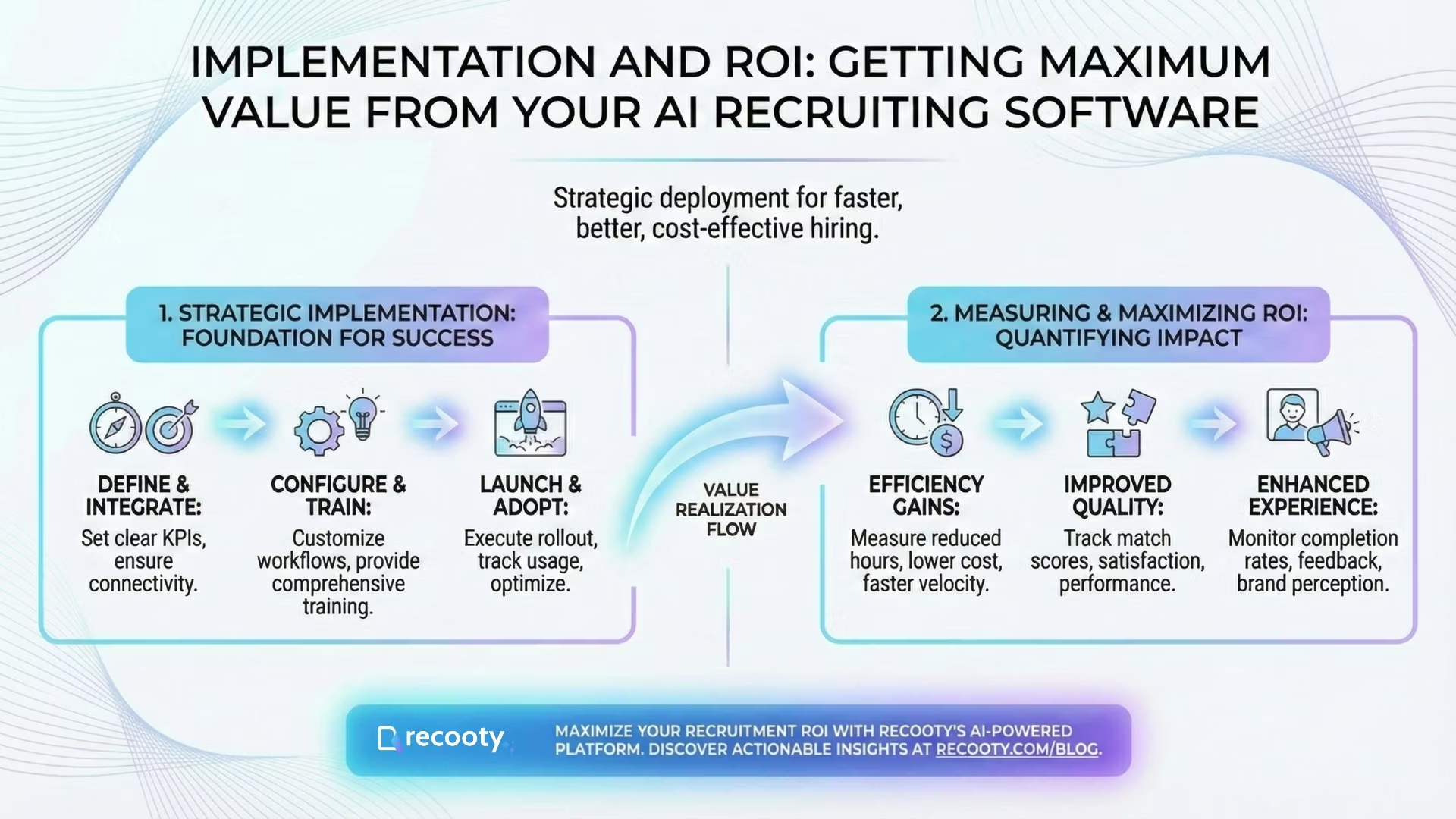
Implementation and ROI: Getting Maximum Value From Your AI Recruiting Software
Choosing the best AI recruiting software is only the first step.
From my experience, the real success comes from a thoughtful implementation and a clear understanding of how to measure its impact.
I've seen companies invest in a powerful ai recruitment platform only to have it sit unused due to poor planning and low team adoption.
To prevent that, let’s walk through how to roll out your new tool and prove its worth to your leadership team.
A Step-by-Step Guide to Implementing Your New AI Hiring Platform
Rolling out new technology can feel daunting, but a structured approach makes all the difference. This is the simple, five-step process I follow to ensure a smooth transition and immediate value.
1. Define Your "Why" and Set Clear Goals: Before you do anything, clearly define the single biggest problem you want to solve. Is it to reduce time-to-hire? Improve candidate quality?
Boost the diversity of your pipeline? Set a specific, measurable goal (e.g., "Reduce time-to-fill for engineering roles by 25% in six months"). This goal will be your north star.
2. Plan Your Data Migration and Integration: This is where projects can get messy. Work with your vendor to plan how you'll migrate data from your old system.
It's also the perfect time for a data clean-up. Most importantly, ensure the new software integrates seamlessly with your existing tools, especially your Applicant Tracking System (ATS) or HRIS. A tool with robust ATS integration is non-negotiable.
3. Start with a Pilot Program: Don't try to boil the ocean. Select one team or one department to be your pilot group.
Let them test the new software on a few open roles. This allows you to work out any kinks in a controlled environment and gather valuable feedback before a company-wide rollout.
4. Train Your Team and Appoint Champions: This is the most critical step. You must invest time in training and enablement.
I always identify one or two "champions" on the recruiting team, people who are excited about the new technology. Empower them to become the go-to experts for their peers.
A tool like Recooty is great here because its intuitive design requires less intensive training, making adoption much easier for busy teams.
5. Launch, Monitor, and Share Wins: After the official launch, closely monitor your key metrics against the goals you set in step one.
When you have a success story, like a team that filled a role in record time, share it widely!
Celebrating these early wins is the best way to build momentum and encourage adoption across the entire organization.
How to Calculate the ROI of Your AI Recruiting Software Investment
Sooner or later, your CFO is going to ask, "Was this worth it?" You need to be ready with a data-backed answer.
Calculating the Return on Investment (ROI) isn't just about cost savings; it's about proving strategic value. Here’s how I break it down.
Measuring Reductions in Time-to-Hire and Cost-Per-Hire
This is the most direct way to measure ROI.
- Time-to-Hire Reduction: Calculate your average time-to-hire before and after implementing the software.
The formula is simple: `((Old Time-to-Hire - New Time-to-Hire) / Old Time-to-Hire) * 100%`. A 30% reduction means your teams are becoming productive 30% faster. - Cost-Per-Hire Savings: Factor in the hours your recruiters save on manual tasks like screening and scheduling. Multiply those saved hours by their hourly pay rate.
Also, include savings from reduced agency spend or job board advertising costs. These are hard numbers that directly impact the bottom line.
Tracking Improvements in Quality of Hire and Candidate Diversity
This metric proves the strategic value of your investment.
- Quality of Hire: This can be measured by looking at the 90-day retention rates and first-year performance review scores of new hires brought in through the AI platform versus those hired previously.
Higher scores mean the AI is helping you find better long-term fits. - Diversity Metrics: Use your platform’s DEI hiring tools to track the diversity of your applicant pool at each stage of the funnel.
An increase in the percentage of candidates from underrepresented groups in your interview shortlists is a clear sign that the tool is helping you mitigate bias and build a stronger, more diverse team.
Evaluating Recruiter Productivity and Efficiency Gains
This shows how the tool is making your team more effective.
- Activity Metrics: Track the increase in the number of candidates sourced per week, personalized outreach emails sent, and interviews scheduled per recruiter.
These metrics show that the automation is working, freeing up your team for more high-value activities. - Pipeline Health: A good ai recruitment platform will give you a recruiting analytics dashboard to monitor your talent pipeline.
A healthier pipeline, with more qualified candidates at every stage, is a leading indicator of future hiring success.
Pro Tips for Driving Team Adoption and Mastering Your AI Tools
From my experience, getting the team to actually use the new software is half the battle. Here are a few tips that have worked for me:
- Create Simple Playbooks: Don't just give your team a tool; give them a strategy. Create simple "playbooks" or templates for common tasks, like a pre-built outreach sequence for software engineers or a boolean search string for sales roles. This lowers the barrier to entry.
- Integrate it Into Daily Workflows: Use Slack notifications or email alerts from the platform to prompt action. When the tool becomes part of the natural flow of work, adoption skyrockets.
- Gamify It: Create a friendly competition around who can build the strongest talent pipeline for a future role or who gets the best response rate using the new engagement tools. A little competition can go a long way.
- Focus on the "What's In It For Me?": Constantly remind your recruiters how the tool makes *their* job easier and helps them hit their goals faster. When they see it as a tool for their own success, they'll embrace it.
A Step-by-Step Guide to Choosing the Best AI Recruiting Software in 2026
After years of testing and implementing various AI recruitment tools, I've developed a foolproof method for selecting the right one.
It's easy to get lost in flashy demos and long feature lists, but a structured evaluation process will ensure you invest in a platform that actually solves your problems and delivers a strong ROI.
This guide will walk you through the exact steps I take, from defining your needs to making the final decision.
Following this process will help you confidently choose the best AI recruiting software for your team.
Step 1: Define Your Core Problem and Set Measurable Goals
Why this matters: Before you even look at a single ai recruitment platform, you need to know what you're solving for.
Without a clear goal, you can't measure success. As experts from Zapier's guide to AI tools emphasize, the "best" tool depends entirely on your specific bottleneck.
How to do it:
1. Identify Your Biggest Pain Point: Get your recruiting team in a room and ask: "What is the single most frustrating, time-consuming part of your job?" Is it sifting through hundreds of unqualified resumes?
Finding passive candidates for niche roles? The endless back-and-forth of interview scheduling? Write down the #1 problem.
2. Turn the Problem into a SMART Goal: Convert that pain point into a specific, measurable, achievable, relevant, and time-bound (SMART) goal.
- Bad Goal: "We want to hire faster."
- Good Goal: "We will reduce the average time-to-fill for our engineering roles from 45 days to 30 days within the next six months."
3. Prioritize Your Feature Wishlist: Based on your goal, list the top five features you absolutely need. For example, if your goal is to reduce screening time, "AI resume screening" and "candidate scoring" are non-negotiable. If it's about finding passive talent, "AI candidate sourcing" and a "recruitment CRM" are your top priorities.
My Personal Tip: I always start by mapping our current hiring workflow on a whiteboard. I use red sticky notes to mark the biggest bottlenecks. This visual makes it incredibly clear where an AI recruitment tool could have the most impact.
Step 2: Research and Create a Shortlist of Potential Vendors
Why this matters: The market is crowded with AI recruiting companies, and you need a systematic way to narrow down the options.
Your goal here is to move from a long list of possibilities to a shortlist of 3-5 vendors that are a strong potential fit.
How to do it:
1. Start with Reputable Review Guides: Use comprehensive guides (like this one!) and articles from trusted sources like People Managing People and SelectSoftware Reviews to build an initial list.
These sites often categorize tools by use case (e.g., for SMBs, for enterprise), which saves you time.
2. Check Peer Review Sites: Look at G2, Capterra, and TrustRadius for unbiased reviews from real users. Pay close attention to feedback on ease of use, customer support, and implementation.
I also check forums like Reddit's r/recruiting for candid, unfiltered opinions on the best AI recruiting tools reddit users recommend.
3. Filter Based on Your Core Needs: Compare your must-have feature list from Step 1 against each vendor's offerings. If a platform doesn't have your non-negotiables, cross it off the list immediately.
4. Consider Your Budget: While some platforms hide their pricing, many offer transparent tiers. Eliminate any vendors that are clearly outside your budget.
For startups and SMBs, look for platforms offering free AI tools for recruitment or affordable starter plans, like those from Recooty, which provide immense value without a hefty price tag.
Step 3: Conduct Deep-Dive Demos and Ask the Right Questions
Why this matters: The demo is your chance to see the software in action and grill the sales team. A standard sales pitch won't tell you what you need to know.
You need to come prepared with specific questions tied to your goals.
How to do it:
1. Provide a Real-World Scenario: Don't let them show you a generic demo. Send them one of your real job descriptions and a few anonymized sample resumes (good and bad) ahead of time.
Ask them to show you *exactly* how their ai recruitment platform would handle that specific scenario.
2. Ask Targeted Questions: Here are some questions I always ask:
- On AI & Matching: "Can you explain *how* your AI matching algorithm works? Is it just keyword search, or does it use semantic analysis? Can we customize the scoring model?"
- On Integration: "Can you show me a live demonstration of how your platform integrates with our ATS/HRIS, [Your System Name]? What data is synced, and how often?"
- On Implementation & Support: "What does the typical implementation timeline look like for a company our size? What kind of training and ongoing support do you provide?"
- On Bias Mitigation: "What specific steps have you taken to identify and mitigate algorithmic bias in your screening and sourcing tools?"
My Personal Tip: I always insist on having a product specialist or engineer on the demo call, not just a salesperson.
They can answer the deeper technical questions that the sales team often can't.
Step 4: Run a Pilot Program or Trial
Why this matters: You wouldn't buy a car without test-driving it. A pilot program is your test drive. It allows a small group of your recruiters to use the software in a real-world setting to validate its effectiveness before you commit to a long-term contract.
How to do it:
1. Negotiate a Trial Period: Most vendors will offer a free trial or a paid pilot program for a limited time (e.g., 30-60 days).
2. Select Your Pilot Team: Choose a few of your most tech-savvy and open-minded recruiters to participate. Give them 1-2 open roles to manage exclusively through the new platform.
3. Define Success Metrics: Use the SMART goal from Step 1 as your benchmark. Track metrics like the time it takes to build a qualified shortlist, candidate response rates, and the quality of candidates identified by the AI.
4. Gather Feedback: Hold weekly check-ins with the pilot team. What do they love? What's frustrating? Is the tool actually saving them time? Their feedback is crucial for making the final decision.
Step 5: Evaluate ROI and Make Your Final Decision
Why this matters: At this stage, you have all the data you need to make an informed, data-driven decision and build a strong business case for your leadership team.
How to do it:
1. Analyze Pilot Program Results: Compare the performance metrics from the pilot against your baseline and the goal you set. Did the tool help you achieve your target?
2. Calculate the Potential ROI: Use the data to project the annual savings and value.
Example ROI Calculation:
- Time Saved: If the tool saves each of your 5 recruiters 8 hours per week, that's 40 hours/week. At an average recruiter salary, this can easily equate to over $50,000 in saved productivity costs per year.
- Reduced Agency Spend: If the platform helps you fill just 3 roles that you otherwise would have sent to an agency, you could save $60,000+ in agency fees.
3. Compare Finalists: Use a simple scorecard to rank your final 2-3 vendors across key criteria: feature fit, ease of use (based on pilot feedback), integration quality, customer support, and total cost of ownership.
4. Make Your Choice: Select the vendor that provides the most value and best aligns with your goals. Remember, the best AI recruiting software is the one your team will actually use and love.
For many small to mid-sized businesses, a platform like Recooty often wins at this stage because it offers a powerful feature set at a price point that makes demonstrating a positive ROI incredibly easy.
Maximizing Your Investment: Customization Tips and Pro Strategies
From my years of experience, I can tell you that the true power of the best AI recruiting software is unlocked through smart implementation and customization.
Simply buying a great tool isn't enough; you have to mold it to fit your unique workflow and team dynamics.
An out-of-the-box setup will only get you so far. In this section, I'll share my personal playbook for not only implementing a new ai recruitment platform but also for mastering its features to drive team adoption and prove its value to your organization.
A Step-by-Step Guide to Implementing Your New AI Hiring Platform
A smooth rollout is the foundation of long-term success. A rushed or poorly planned implementation is the #1 reason I see teams fail to adopt new technology.
Here is the five-step process I’ve refined over the years to ensure a seamless transition.
1. Define Success and Get Buy-In: Before anything else, clearly define what a successful implementation looks like. As recruiting experts at Lever emphasize, this starts with setting clear goals.
Is your primary goal to reduce time-to-fill by 20%? Or is it to increase the diversity of your candidate pipeline? Present this goal to both your leadership and your recruiting team to get universal buy-in.
2. Clean Your Data Before You Migrate: This is the step everyone wants to skip, but it’s crucial. Your new AI is only as smart as the data it learns from. Before migrating your data from your old ATS, take the time to clean it up.
Archive old, irrelevant candidate profiles and merge duplicates. Starting with a clean slate will dramatically improve the accuracy of your new platform’s AI candidate matching.
3. Configure and Customize Workflows: This is where you tailor the platform to your needs. Don't just accept the default settings.
- Customize Pipeline Stages: Map your company’s unique hiring stages within the software.
- Build Template Libraries: Create a library of email templates for every stage of the process, outreach, rejection, interview confirmation. This ensures consistency and saves time.
- Set Up Automation Rules: Create "if-then" rules. For example, "IF a candidate is moved to the 'Phone Screen' stage, THEN automatically send them the 'Interview Confirmation' email template."
Platforms like Recooty make this incredibly intuitive, allowing you to build complex automations with a simple, user-friendly interface.
4. Launch with a Pilot Group: I never recommend a company-wide "big bang" launch. Select one or two of your most adaptable recruiters to run a pilot on a few open roles.
This allows you to identify and fix any issues in a low-risk environment. Their early success will create the internal case studies you need to get the rest of the team excited.
5. Train, Train, and Retrain: Host an initial training session, but don't stop there. I schedule 30-minute "office hours" each week for the first month where anyone can drop in and ask questions.
I also share a "Tip of the Week" via Slack to highlight a cool feature they might not have discovered yet.
How to Calculate the ROI of Your AI Recruiting Software Investment
You need to speak the language of business, and that language is ROI. Proving the value of your new ai recruitment platform is essential for securing future budget and headcount. Here’s how to build a bulletproof business case.
Measuring Reductions in Time-to-Hire and Cost-Per-Hire
These are the "hard metrics" your CFO will care about most.
- Time-to-Hire: Track this metric for roles filled using the new software versus your historical average. A 25% reduction in time-to-hire not only saves money but also means your new employees are contributing to the business sooner.
- Cost-Per-Hire: This is where you can show massive savings. Calculate the "soft costs" of your recruiters' time saved by automation.
If AI screening saves each recruiter 5 hours per week, that's a direct productivity gain. More importantly, track the reduction in "hard costs" like agency fees.
As a case study from hireEZ showed, one company reduced their agency spend by over 60% by using AI to source candidates directly.
Tracking Improvements in Quality of Hire and Candidate Diversity
These metrics demonstrate the strategic impact on your talent pool.
- Quality of Hire: I work with managers to track the 90-day and 1-year performance ratings of hires made through the new platform. A higher average performance score is a powerful indicator that the AI is helping you identify better long-term fits.
- Candidate Diversity: Use the platform’s analytics to measure the diversity of your applicant pool at the top of the funnel versus the diversity at the interview and offer stages.
An increase in representation at each stage is a clear sign the software is helping you achieve your DEI hiring goals.
Evaluating Recruiter Productivity and Efficiency Gains
This shows how the tool empowers your team.
- Key Activity Metrics: Track the number of candidates sourced, outreach emails sent, and interviews scheduled per recruiter per week.
I've seen teams double their outreach volume using the email personalization at scale features in modern recruitment CRM tools. - Recruiter Satisfaction: Don't forget the human element. I run a simple survey with my team before and after implementation asking them to rate their job satisfaction and frustration with administrative tasks.
A happier, more strategic recruiting team is a more effective one.
Pro Tips for Driving Team Adoption and Mastering Your AI Tools
Great software is useless if your team doesn't embrace it. Here are my go-to strategies for turning your recruiters into power users and champions of your new best ai recruiting tools.
- Create Custom "Recruiting Playbooks": I build simple, one-page guides for specific tasks within the new software.
For example, a "Tech Sourcing Playbook" might include pre-built boolean search strings and a proven 3-step outreach sequence template. This removes the guesswork and helps recruiters see value immediately. - Personalize Dashboards for Different Roles: Customize the main dashboard for each user type. A sourcer needs to see their outreach metrics front and center.
A recruiting manager needs a high-level view of the team's pipeline health and time-to-fill. A personalized view makes the tool feel more relevant and less overwhelming. - Leverage Integration "Nudges": Make the software a part of their daily routine through integrations.
For example, setting up Slack notifications that alert a recruiter when a top candidate applies or replies to an email keeps them engaged with the platform throughout the day. - Host a "Show and Tell": Once a month, I have a different team member share one cool trick or workflow they've discovered in the new software.
This peer-to-peer learning is often more effective than top-down training and fosters a sense of shared discovery and mastery.
Platforms like Recooty are excellent for this, as their user-friendly design encourages exploration and allows recruiters to quickly find new ways to streamline their work.
Navigating the Hurdles: Troubleshooting Your AI Recruiting Software
Common Challenges and Pitfalls in AI Software Adoption
Having guided several teams through the transition to an ai recruitment platform, I've learned that even the best AI recruiting software comes with its share of challenges.
The journey from purchase to seamless adoption is rarely a straight line. From my experience, anticipating these common roadblocks is the key to overcoming them quickly.
Forewarned is forearmed. In this section, I'll share the four most common pitfalls I've encountered and provide a practical, first-person playbook for navigating each one.
Overcoming Integration Issues with Your Existing HR Tech Stack (ATS/HRIS)
The Problem: You've invested in one of the best ai recruiting tools, but it doesn't "talk" to your existing Applicant Tracking System (ATS) or HRIS.
Data is siloed, recruiters are forced to do double-entry, and the promised efficiency gains are nowhere to be found.
This is a common complaint I see on forums like Reddit, where users discuss which AI recruitment tools actually integrate well.
My Troubleshooting Steps:
1. Audit the API and Integration Capabilities Before You Buy: This is a preventative step, but it's the most important one. During the sales demo, insist on seeing a live demonstration of the integration with your specific ATS.
As experts at SelectSoftware Reviews point out, not all integrations are created equal. Ask critical questions: Is it a one-way or two-way sync? How often does the data refresh? What specific data fields are mapped?
2. Start with Native, Pre-Built Integrations: When possible, choose a platform that has a pre-built, native integration with your core systems.
These are generally more stable and better supported than custom-built connections. For example, if your company runs on Greenhouse, look for an AI tool with a certified Greenhouse integration.
3. If a Native Integration Fails, Use a Connector Tool: If there's no native integration, all is not lost. Tools like Zapier or Workato can act as a bridge between your ai recruitment platform and your other systems.
I once had to connect a specialized sourcing tool to a legacy ATS. We used Zapier to create a simple "recipe": when a candidate was added to a project in the sourcing tool, Zapier automatically created a new candidate profile in the ATS.
It wasn't perfect, but it eliminated 90% of the manual data entry.
4. Work with Your Vendor's Support Team: Don't struggle in silence. Your vendor wants you to be successful. Open a support ticket immediately.
Provide them with screenshots and a clear description of the issue. I've often found that a 30-minute call with a vendor's integration specialist can solve a problem that my team had spent days trying to fix.
Managing Data Migration and Ensuring Data Hygiene
The Problem: You've successfully migrated all your candidate data into your new system, but it's a mess.
There are thousands of duplicate profiles, outdated contact information, and inconsistent formatting. Your AI's recommendations are unreliable because it's learning from "dirty" data.
My Troubleshooting Steps:
1. Don't Boil the Ocean: Clean Data in Batches: The idea of cleaning 100,000 candidate records is paralyzing. Instead, I advise my teams to focus on cleaning the data that matters most *right now*. Start with the talent pools for your most critical, active roles.
2. Leverage the AI for a "Smart Clean": Many modern platforms have built-in tools for data hygiene. Look for features that automatically suggest merging duplicate profiles or use AI to enrich outdated profiles with new information from public sources.
Platforms like Gem are particularly strong at this, helping to maintain a clean and up-to-date recruitment CRM.
3. Establish Clear Data Entry Protocols: Prevention is the best cure. Create a simple, one-page guide for your recruiting team on how to enter new candidate data correctly. Define your standards for things like tags, sources, and notes.
This ensures that you're not continuously adding more messy data to the system.
4. Use a Phased Migration Approach: When I managed a large-scale migration, we didn't move everything at once. We started by migrating only the candidate data from the last 12 months.
This allowed us to get the system up and running quickly with the most relevant data. We then archived the older data and planned a separate, lower-priority project to clean and import it later.
Addressing the Risk of Algorithmic Bias and Ensuring Fairness
The Problem: There's a growing concern, and rightly so, that AI could perpetuate or even amplify human biases in hiring.
Your team is skeptical, and you need to ensure your new tool is promoting fairness, not hindering it. This is a critical topic that requires transparency and proactive management.
My Troubleshooting Steps:
1. Ask for a "Bias Audit" or "Explainability Statement": During your evaluation, ask vendors if they have conducted a third-party audit of their algorithms for bias.
Also, ask for an "explainability statement" that describes, in simple terms, how their AI makes its recommendations. A reputable vendor should be transparent about this.
2. Use the AI for Augmentation, Not Final Decisions: This is the golden rule I instill in my teams. The AI is there to recommend a shortlist, but a human recruiter must always review that list and make the final decision. The AI handles the high-volume, repetitive part of screening; the human provides the critical context and final judgment.
3. Focus on "Bias Interrupters": Use the AI's features that are specifically designed to reduce bias.
Many tools, like Workable, offer anonymized screening modes that hide a candidate's name, photo, and other demographic details. Make this a standard part of your process for the initial resume review.
4. Continuously Monitor Your Diversity Analytics: Your ai recruitment platform's dashboard is your best tool for accountability. I set up a recurring monthly report that tracks the diversity of our candidate pipeline at every stage.
If we see a significant drop-off for any demographic group at a particular stage, it's an immediate red flag that allows us to investigate and address the potential issue, whether it's in the AI or in our human process.
Low Adoption Rates: Training Your Team to Trust the AI
The Problem: You've invested in a fantastic new tool, but your recruiters are still stuck in their old ways, using spreadsheets and manually sourcing on LinkedIn.
The platform is becoming expensive "shelfware" because the team doesn't trust it or find it easy to use.
My Troubleshooting Steps:
1. Focus on the "WIIFM" (What's In It For Me?): Recruiters are busy and often coin-operated. Don't train them on features; train them on outcomes.
Instead of saying, "Here's how to use the automated email sequencing tool," I say, "Here's how you can use this tool to double your response rate and hit your bonus faster."
2. Identify and Empower Your Champions: In every team, there are one or two people who are excited about new technology. I make them my "super-users."
I give them extra training and empower them to be the go-to experts for their peers. Peer-to-peer learning is often far more effective than training from a manager.
3. Celebrate and Share Small Wins: When a recruiter uses the new platform to find a "purple squirrel" candidate or fill a role in record time, I celebrate that success publicly in our team's Slack channel.
Success is contagious. When other recruiters see the tool is helping their colleagues win, they'll be motivated to learn it too.
4. Make it Easy and Accessible: If a tool is hard to use, people won't use it. This is why I'm a big advocate for platforms with a clean, intuitive user interface. A solution like Recooty shines here because it's designed for simplicity.
Its ease of use drastically lowers the barrier to adoption, ensuring that even the most change-resistant recruiters can quickly get up to speed and start seeing value.
The Future of Hiring: What's Next for AI in Recruitment Beyond 2026?
As a talent acquisition leader, I'm constantly looking at what's next. While the best AI recruiting software of today is already transforming our workflows, the advancements on the horizon are even more exciting.
We're moving beyond simple automation and into an era of true artificial intelligence that will act as a strategic partner.
Based on my research and conversations with industry innovators, here are the four biggest trends that I believe will define the future of the ai recruitment platform beyond 2026.
The Rise of Agentic AI: Autonomous Recruiters and AI Agents
What it is: Imagine an AI that doesn't just follow your commands but can operate autonomously to achieve a goal. This is the concept behind "Agentic AI."
Instead of you telling the AI to "find me software engineers," you'll simply say, "hire me a senior software engineer."
The AI agent will then manage the entire process on its own: sourcing candidates, running outreach campaigns, screening them, scheduling interviews, and even sending reminders.
Why it matters: This will fundamentally change the role of the human recruiter. As platforms like hireEZ are already pioneering with their EZ Agent, these AI agents will handle the vast majority of the tactical, top-of-funnel work.
This will free up human recruiters to focus exclusively on high-value, strategic tasks: closing top candidates, building deep relationships with hiring managers, and acting as true talent advisors to the business.
Example in Action: A hiring manager opens a new role. The AI agent immediately analyzes the job description, scans the company's ATS and the open web for a list of 100 potential candidates, and launches a personalized 3-step email campaign to the top 50.
All of this happens within the first 10 minutes of the role being opened, with zero human intervention.
Hyper-Personalization in the Candidate Journey
What it is: We've talked about personalization for years, but AI will take it to a whole new level.
Future AI recruitment tools will be able to analyze a candidate's online footprint, their LinkedIn profile, their GitHub contributions, their personal blog, to create a truly unique and individualized experience for them.
Why it matters: In a world saturated with generic recruiting messages, hyper-personalization is the only way to stand out. Generic outreach will become completely ineffective.
The ability to connect with a candidate based on their specific projects, skills, and interests will be the single biggest differentiator for successful recruiting teams.
Example in Action: The AI detects that a top candidate recently wrote a blog post about a new programming language. The AI then drafts an outreach email for the recruiter that says, "I really enjoyed your recent article on Rust.
The project you described is very similar to a challenge our team is currently tackling. I thought you might be interested in a conversation." This level of personalization will be impossible for a human to do at scale but effortless for an AI.
Integrating Skills-Based Hiring and Internal Talent Marketplaces
What it is: The focus of recruiting will continue to shift away from traditional credentials (like degrees and past job titles) and toward verifiable skills.
Advanced talent intelligence platforms will use AI to create a "skills ontology" for an entire organization. They won't just know what skills their employees have; they'll know what skills they *need* for the future.
Why it matters: This shift has two massive benefits. First, it makes hiring fairer and more effective by focusing on a candidate's actual abilities.
Second, it unlocks the power of your internal talent. An internal talent marketplace, powered by AI, can automatically match current employees with new projects, mentorship opportunities, and full-time roles, which is a powerful driver of employee retention and engagement.
Example in Action: A marketing manager has an urgent need for someone with video editing skills for a 3-month project. Instead of opening an external search, she posts the "gig" to the company's internal marketplace.
The AI immediately identifies three employees in different departments who have "video editing" listed as a skill on their internal profile and alerts them to the opportunity.
Predictive Analytics for Workforce Planning and Attrition Risk
What it is: The best AI recruiting software of the future won't just help you fill the roles you have open today; it will help you predict the roles you'll need to fill tomorrow.
By analyzing internal data (like promotion rates and employee turnover) and external data (like market hiring trends), AI will be able to provide surprisingly accurate forecasts.
Why it matters: This allows talent acquisition to move from a reactive function to a truly strategic one.
Instead of scrambling when a key employee resigns, you'll have already been building a pipeline for their replacement because the AI identified them as a potential attrition risk six months earlier.
This proactive approach, known as workforce planning, is the final frontier for a strategic TA team.
Example in Action: The AI analyzes market data and notices that demand for "AI prompt engineers" is skyrocketing while the supply of talent is low.
It also analyzes your internal data and identifies three key employees with this skill set who haven't been promoted in two years.
The AI then flags this as a "retention risk" to HR and simultaneously advises the recruiting team to start building a pipeline of external candidates with this skill, just in case.
This is the exciting future we're heading towards. To prepare, I recommend getting comfortable with an intuitive and powerful platform today.
A tool like Recooty is an excellent starting point, as it provides a strong foundation in AI-powered screening and automation, helping your team build the skills and habits necessary to thrive in the next era of recruitment.
Final Verdict: Choosing the Right AI Recruiting Software for a Smarter 2026
Throughout this comprehensive guide, we've navigated the evolving landscape of the best AI recruiting software.
We've explored the top 15 platforms, from all-in-one solutions perfect for SMBs to specialized AI sourcing tools for recruiting built for enterprise teams.
From my experience, the most important takeaway is this: the goal isn't to find the single best ai recruiting tools on the market, but to find the one that is the perfect fit for your specific challenges, budget, and team.
The path to success lies in a strategic approach. By defining your core hiring problem first, you can cut through the noise and evaluate platforms based on the value they actually deliver.
Whether your primary goal is to slash your time-to-hire, improve the quality and diversity of your candidates, or simply free your recruiters from administrative work, there is an ai recruitment platform built to help you achieve it.
Remember, the software is the vehicle, but your strategy is the roadmap.
The future of hiring is here, and it’s powered by intelligent automation. The teams that thrive in 2026 and beyond will be those that embrace these tools not just to automate tasks, but to elevate their people to do more strategic, human-centric work.
If you're ready to take the first step toward a smarter hiring process, I highly recommend starting with a platform that is both powerful and intuitive.
For teams looking for an all-in-one solution that delivers a fast ROI, Recooty is an excellent choice.
It combines a user-friendly ATS with the AI-driven features needed to find and hire top talent more efficiently, making it the perfect partner for your journey into the future of recruitment.
Frequently Asked Questions About AI Recruiting Software
What is the best AI tool for recruitment?
From my experience, the "best AI tool for recruitment" truly depends on your specific needs. There isn't a single winner for everyone.
For all-in-one functionality that combines an ATS with powerful AI screening, a platform like Recooty is fantastic for small to mid-sized businesses.
If your primary challenge is finding passive candidates, a specialized AI sourcing tool like HireEZ is arguably the best in its class.
For large enterprises focused on high-volume hiring, a conversational AI platform like Paradox often provides the most value.
The key is to first identify your biggest bottleneck and then choose the tool that solves that specific problem.
How does AI recruiting software handle data privacy and compliance (GDPR/CCPA)?
This is a critical question, and reputable AI recruiting companies take it very seriously. The best platforms are built with a "privacy by design" approach.
They have features specifically for GDPR and CCPA compliance, such as consent management tools that track and store candidate consent to be contacted.
They also provide clear data retention policies, allowing you to automatically purge candidate data after a specified period.
When evaluating a vendor, I always ask to see their SOC 2 compliance certificate and inquire about their data residency policies to ensure they meet our security standards.
A trustworthy vendor will be transparent about these measures.
What is the difference between an AI recruiting tool and a standard ATS?
I like to explain it this way: a standard Applicant Tracking System (ATS) is a passive system of record, like a digital filing cabinet.
It's excellent for storing applications, ensuring compliance, and managing candidates once they've applied.
In contrast, an AI recruiting tool is an active system of intelligence. It doesn't just store resumes; it reads, understands, and ranks them.
It can also proactively go out and find new candidates, automate communication, and provide predictive insights.
Many modern platforms, like Recooty, now combine both, offering an AI-powered ATS that gives you the best of both worlds.
Which AI recruitment platform is best for small businesses or staffing agencies?
For small businesses and startups, the best ai recruitment platform is one that is affordable, easy to use, and provides all-in-one functionality.
You don't want to be juggling multiple complex tools.
In my experience, platforms like Recooty and Manatal are excellent choices because they offer powerful AI features like automated job posting and resume screening at a price point that delivers a fast ROI.
For an AI recruitment agency, the needs are slightly different. The ideal platform must combine an ATS with a strong Recruitment CRM for managing client relationships.
A purpose-built tool like Recruit CRM is often the best fit, as its entire workflow is designed to support the unique needs of agency recruiters.
How can I use AI as a recruiter to improve my workflow?
As a recruiter, AI can become your most powerful assistant. Here are the top three ways I've used it to transform my own workflow:
1. Automate Top-of-Funnel Screening: Let the AI do the heavy lifting of reading through hundreds of resumes. This frees you up from the most time-consuming part of the job, allowing you to spend your time engaging with a pre-qualified shortlist.
2. Become a Sourcing Powerhouse: Use AI sourcing tools to build a pipeline of passive candidates for your hardest-to-fill roles. The AI can find contact information and even help you write personalized outreach emails at scale.
3. Eliminate Administrative Work: Leverage AI-powered scheduling tools to handle the back-and-forth of coordinating interviews. This simple automation can give you back several hours each week.
What are the biggest risks of using AI in hiring and how can they be mitigated?
The single biggest risk is algorithmic bias. If an AI is trained on historical hiring data that contains human biases, the AI can learn and even amplify those biases.
This is a serious concern that requires a proactive approach.
Here's how I mitigate this risk:
- Vendor Transparency: I choose vendors who are transparent about how they build and test their algorithms for fairness.
- Human Oversight: I train my team to use AI as a recommendation engine, not a final decision-maker. A human must always review the AI's shortlist.
- Bias Interrupters: We actively use features like anonymized screening to hide demographic data during the initial review, ensuring a more objective evaluation.
- Monitor Analytics: We constantly monitor our diversity metrics to ensure our process is fair and equitable at every stage.
How is AI used to reduce bias in the recruitment process?
While AI can pose a risk of bias if implemented poorly, it can also be a powerful tool to reduce it when used correctly.
The key is using it to create a more structured and consistent hiring process.
For example, AI can be programmed to ignore demographic information like names, gender, or schools attended during the initial resume screen, focusing only on skills and experience.
AI-powered tools like Textio can analyze job descriptions to remove biased or non-inclusive language that might discourage certain groups from applying.
By automating these top-of-funnel decisions, AI helps ensure that every candidate is evaluated on the same objective criteria.
What features should I prioritize when choosing an AI recruiting tool?
Based on my experience, the features you prioritize should directly map to the biggest problem you're trying to solve. However, for most teams, I would consider these three to be the most critical:
1. AI-Powered Resume Screening and Candidate Matching: This is the core feature that delivers the biggest and most immediate time savings.
2. Intelligent Sourcing and a Recruitment CRM: The ability to proactively find and nurture passive talent is what separates a good recruiting team from a great one.
3. Seamless ATS/HRIS Integration: If the tool doesn't work well with your existing systems, it will create more problems than it solves. This is a non-negotiable.
Take the Next Step Toward Smarter Hiring
Ready to Transform Your Hiring Process with the Best AI Recruiting Tools?
If you’re serious about leveraging the most powerful and intuitive tools in the market, don’t just read about them, start using one.
With Recooty, you get more than just an ATS. You get an all-in-one, AI-powered recruitment engine that simplifies every step, from job posting to interview scheduling, with automation that works out of the box.
Want an affordable, easy-to-use AI recruitment platform built for speed and results?
Try Recooty for free, the ultimate tool for HR teams, recruiters, and startups looking to make hiring fast, smart, and seamless.
Perfect for those searching for the best AI recruiting software free and a lightweight solution with big impact.
Let’s get smarter about hiring, because the best talent won’t wait!
.png)
.png)

.webp)