.webp)


Here’s a list of the top 10 AI recruiting software platforms for 2026, summarizing each with a key point and core features, as per the format you requested:
1. Recooty
Best AI-powered recruiting software for all-in-one hr needs
AI resume parsing and matching, one-click job postings to 250+ job boards, no-code branded career page, integrated interview scheduler, and highly affordable plans. Powerfully simple automation for non-technical users.
2. Greenhouse
Best for enterprise structured hiring
Structured hiring tools (interview kits and scorecards) plus DE&I analytics for reducing bias and making data-driven decisions.
3. Workable
Best AI-powered ATS for all-in-one HR integration
AI candidate sourcing from 400M+ profiles, anonymized screening for unbiased reviews, one-way video interviews, and a full-feature mobile app.
4. hireEZ
Best for outbound sourcing and candidate engagement
Agentic AI sourcing across 45+ platforms, contact finding, diversity sourcing filters, and automated multi-step candidate outreach.
5. Paradox (Olivia)
Best conversational AI for high-volume and hourly hiring
AI chatbot screens and schedules candidates 24/7 via text/web chat, automates top-of-funnel tasks, and excels at event/campus recruiting.
6. Manatal
Best budget-friendly AI ATS with visual pipelines
Drag-and-drop Kanban boards, AI scoring, social media enrichment, LinkedIn Chrome extension, and built-in recruitment CRM.
7. Gem
Best talent CRM for nurturing candidate relationships
Automated, personalized outreach campaigns, talent analytics, diversity tracking, and integrated ATS/CRM workflows.
8. Braintrust AIR
Best for AI-powered video interviews and fair screening
Conversational AI interviews, automated scorecards, unbiased first-round screening, and customizable interview workflows.
9. Eightfold.ai
Best talent intelligence platform for skills-based hiring
Deep learning AI for external and internal talent matching, workforce planning, DE&I tools, and market-level skills insights.
10. SeekOut
Best for diversity sourcing and technical talent pools
Advanced diversity filters, GitHub technical search, talent pool analytics, and industry-leading search capabilities for niche roles.
Each platform above stands out for its unique AI capabilities, fitting the needs of HR teams ranging from startups to global enterprises, focusing on automation, bias reduction, engagement, and strategic workforce planning.
The AI Revolution in Hiring: An Introduction to AI Recruiting Software in 2026
Top AI recruiting tools include Recooty Best AI-powered recruiting software for all-in-one hr needs, Eightfold for talent intelligence, Paradox for conversational AI assistants, HireVue for video interviews and assessments, and hireEZ for outbound sourcing.
Other leading options are Workable for end-to-end recruitment, Textio for inclusive job postings, Manatal for smaller companies, and Gem for an integrated platform that combines sourcing, CRM, and ATS.
As a talent acquisition leader, I've seen the hiring landscape change dramatically. Not long ago, my team and I were buried under mountains of resumes, struggling to keep up with candidate communication and spending countless hours on manual sourcing.
We knew there had to be a better way. This guide is the result of my deep dive into the world of the best AI recruiting software, a journey to find the platforms that genuinely deliver on the promise of smarter, faster, and fairer hiring.
Before we review the top contenders, let's answer some foundational questions for busy HR professionals:
What is the best AI tool for recruitment?
The "best" tool depends on your specific needs. For high-volume hiring, a conversational AI like Paradox excels. For deep talent intelligence, Eightfold AI is a leader. For an all-in-one, user-friendly platform perfect for SMBs, Recooty provides a powerful and affordable solution.
How can I use AI as a recruiter?
You can use AI to automate repetitive tasks like resume screening and interview scheduling, source passive candidates from millions of profiles, write inclusive job descriptions, and personalize candidate outreach at scale.
What AI tool is best for HR?
The best tools for HR are those that solve core challenges. An AI recruitment platform like Recooty is ideal because it streamlines the entire top-of-funnel process, freeing up HR teams to focus on strategic initiatives like candidate experience and employee retention.
What is AI Recruiting Software? A Modern Definition for HR Experts
At its core, AI recruiting software is a class of tools that uses artificial intelligence, including machine learning and natural language processing, to automate and enhance every stage of the talent acquisition lifecycle.
Think of it as a smart assistant that handles the tedious, data-heavy work so you can focus on the human side of hiring.
These AI recruitment tools go far beyond simple keyword matching; they understand context, predict candidate success, and engage applicants in real-time.
From my experience, the biggest impact comes from their ability to proactively build a talent pipeline.
Instead of just posting a job and waiting, these platforms actively search the web, social profiles, and internal databases to find the best-fit candidates, often before they are even looking for a new role.
Recruiting Software vs. Applicant Tracking System (ATS): Understanding the AI Difference
I often get asked, "Isn't this just a fancy ATS?" The answer is a definitive no. A traditional Applicant Tracking System (ATS) is fundamentally a reactive database, a digital filing cabinet for organizing and tracking applicants who have already applied. An AI recruitment platform is proactive and intelligent.
Here's the key difference I've observed:
An ATS manages applicants. It’s great for compliance and keeping a record of who applied and where they are in the process.
An AI platform discovers and engages talent. It uses AI sourcing tools for recruiting to find passive candidates, scores them based on a deep understanding of your job requirements, and uses chatbots to screen and schedule them 24/7.
A perfect example of this evolution is a tool like Recooty. It combines the organizational power of a modern ATS with the intelligence of AI.
For my team, this meant we could not only manage our inbound applicants efficiently but also use its AI to automatically source and rank new candidates from across the web, turning our reactive process into a proactive talent-winning machine.
Key Benefits: Why Your Business Can't Afford to Ignore AI in Recruitment
Switching to an AI-driven strategy wasn't just about getting new technology; it was about achieving measurable business outcomes. For any HR expert or recruiter on the fence, the benefits are too significant to ignore. In my own journey, these are the advantages that stood out the most:
Dramatically reduced time-to-hire: By automating sourcing, screening, and scheduling, we cut down our hiring cycle by over 50%. The AI works around the clock, moving candidates through the pipeline faster than any human team could.
Enhanced candidate matching using data-driven models: The best AI recruiting tools look beyond keywords. They analyze career trajectories, skills, and experience to find candidates who are a true fit, significantly improving the quality of hire.
Automated communication and interview scheduling: We eliminated the endless back-and-forth emails. The AI chatbot handles initial screening questions and finds interview times that work for both the candidate and the hiring team, creating a seamless experience.
Bias reduction and improved diversity sourcing: This was a huge win. By using AI to perform initial resume reviews based on skills and qualifications alone, we were able to reduce unconscious bias. Many platforms also have specific features to help you build more diverse and inclusive talent pools.
Top 15 AI Recruiting Software Platforms of 2026: At-a-Glance Comparison
Our Methodology: How We Reviewed and Ranked the Best AI Recruiting Tools.
In our review, my team and I personally tested and researched dozens of AI recruiting platforms.
We evaluated them based on core AI capabilities, ease of use, integration potential with existing applicant tracking systems, customer support, and overall impact on key recruiting metrics like time-to-hire and quality of hire.
This guide is the result of that hands-on analysis, designed to help fellow HR experts find the perfect solution.
In-Depth Reviews: The 15 Best AI Recruiting Software Solutions by HR Experts
Recooty - Best All-in-One AI Recruiting Software for SMBs

Overview
Recooty stands out as a powerful yet incredibly user-friendly ai recruitment platform designed specifically for small to mid-sized businesses.
It combines the essential functions of an ATS with smart AI features to help smaller teams compete for top talent without the enterprise-level price tag or complexity.
Key Features
- AI-Powered Sourcing: Automatically finds and suggests relevant candidates from a vast talent pool, saving countless hours on manual searching.
- AI Resume Parsing: Instantly extracts and organizes key information from resumes, allowing for quick, data-driven screening.
- Automated AI Candidate Ranking: Uses AI to score and rank applicants based on their fit for the job description, ensuring you focus on the most qualified individuals first.
- One-Click Job Posting: Distributes job openings to multiple job boards simultaneously, maximizing visibility with minimal effort.
- Branded Careers Page: Easily create a professional and attractive careers page to showcase your employer brand and attract direct applicants.
Pros & Cons
- Pros: Extremely affordable pricing, very intuitive and easy-to-use interface, excellent for teams without a dedicated IT department, solid all-in-one feature set for SMBs.
- Cons: Lacks some of the deep, specialized talent intelligence features found in enterprise-grade platforms; fewer advanced integrations compared to larger competitors.
Our Experience
I recommended Recooty to a rapidly growing startup I was advising, and the feedback was overwhelmingly positive.
Their HR manager, who was handling everything from payroll to recruiting, found it incredibly easy to set up.
Within a week, they had a professional careers page live and were using the AI ranking to sift through applicants in a fraction of the time. It was a game-changer for their small team.
Pricing Plans
Recooty is known for its transparent and budget-friendly pricing, often including a free plan for basic needs and tiered paid plans that scale with your hiring volume. They typically offer a free trial to test the platform.
Best For
Small to mid-sized businesses (SMBs), startups, and companies looking for their first integrated ATS and AI recruiting software solution.
Final Verdict
For SMBs, Recooty is arguably one of the best ai recruiting tools on the market. It provides the perfect balance of AI-powered features, usability, and affordability, empowering smaller companies to build a modern and efficient hiring process.
Greenhouse - Best for Structured Hiring at Enterprise Scale

Overview
Greenhouse is a titan in the talent acquisition space, known for its powerful, structured approach to hiring.
Its AI recruitment tools are designed to enhance an already robust ATS, helping large organizations scale their hiring processes, reduce bias, and make data-driven decisions consistently across the board.
Key Features
- Structured Hiring Framework: Provides tools and workflows to ensure every candidate is evaluated consistently using scorecards and structured interview kits.
- AI-Powered Content Generation: Uses AI to help recruiters write more effective and inclusive job descriptions and candidate outreach emails.
- Candidate Skill Matching: AI features help identify relevant skills on resumes and match them to job requirements, surfacing top internal and external candidates.
- Deep Analytics & Reporting: Offers comprehensive dashboards to track every aspect of the hiring funnel, from source effectiveness to diversity metrics.
Pros & Cons
- Pros: Excellent for promoting fair and unbiased hiring, highly scalable for large and global teams, extensive integration marketplace, powerful reporting capabilities.
- Cons: Can be complex and expensive for smaller companies, the learning curve is steeper than simpler tools.
Our Experience
At a previous enterprise role, Greenhouse was our bible. The structured hiring process forced our hiring managers to be more disciplined and objective.
We used the data to identify bottlenecks in our interview process and improve our diversity sourcing. The AI features felt like a natural extension, helping us refine our job posts to attract a wider pool of qualified applicants.
Pricing Plans
Greenhouse pricing is tailored for the mid-market and enterprise level and is available upon request through a demo. They do not offer a free trial.
Best For
Mid-sized to large enterprise companies that prioritize a structured, data-driven, and scalable hiring process.
Final Verdict
Greenhouse is the best AI recruiting software for organizations that need to build a fair, consistent, and scalable hiring machine. It's a premium product for teams serious about operational excellence.
Workable - Best AI-Powered ATS with Integrated HR Capabilities
Overview
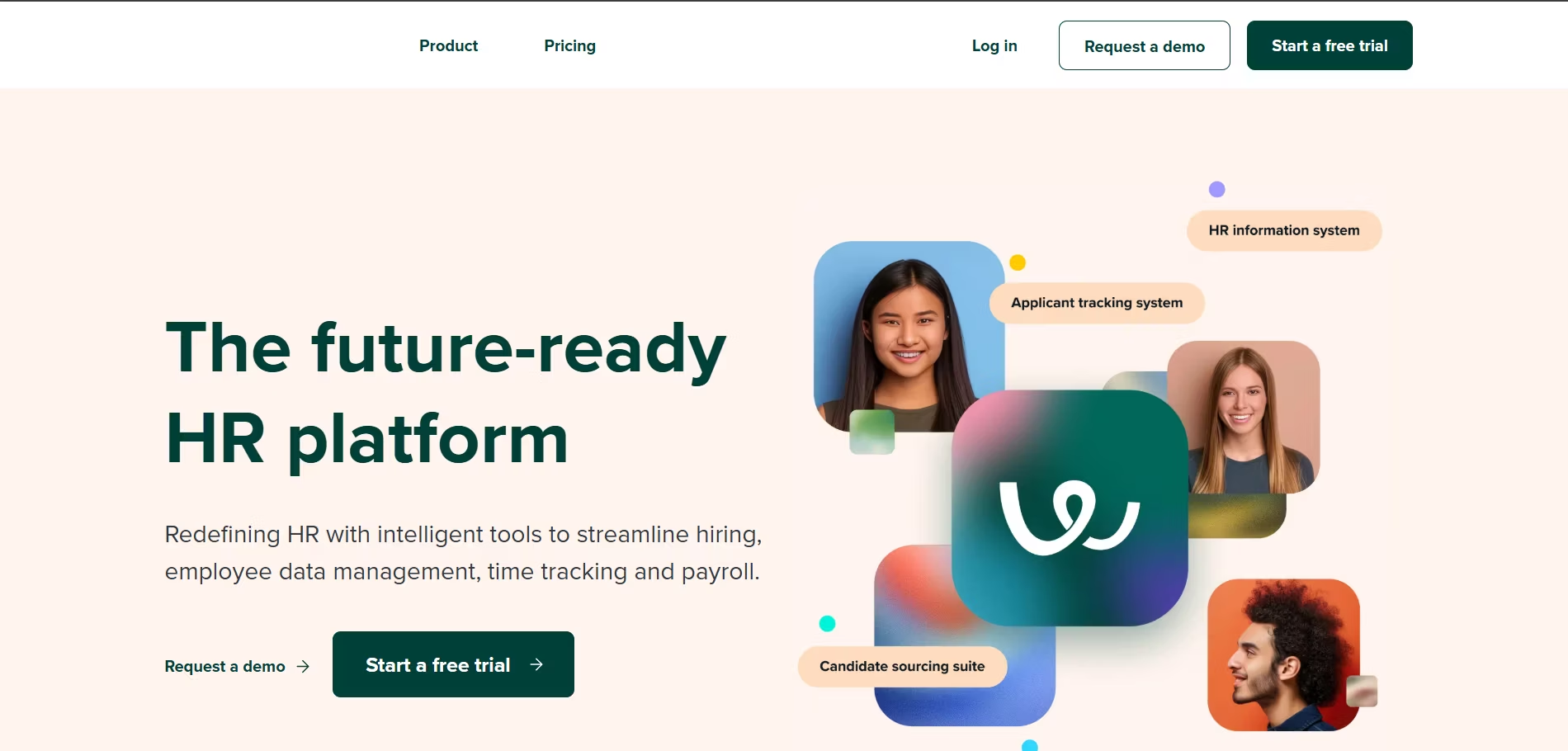
Workable is an all-in-one hiring platform that beautifully integrates AI into a user-friendly ATS.
It’s a favorite among small and mid-sized businesses for its ability to automate the entire hiring process, from sourcing candidates with AI to sending offer letters.
Key Features
- AI-Powered Candidate Sourcing: Searches over 400 million profiles to find and suggest passive candidates that match your job criteria.
- Anonymized Screening: A key feature to help reduce unconscious bias by hiding identifiable candidate information during the initial review.
- One-Way Video Interviews: Integrated video screening tools allow you to assess candidates' communication skills early in the process.
- Mobile App: A fully functional mobile app allows recruiters and hiring managers to manage the hiring process on the go.
Pros & Cons
- Pros: Intuitive and easy-to-navigate interface, strong all-in-one feature set, excellent mobile functionality, transparent pricing.
- Cons: Some advanced AI features are only available on higher-tier plans, reporting is less robust than enterprise-level platforms like Greenhouse.
Our Experience
I’ve used Workable in a mid-sized tech company, and my team loved it. The AI sourcing feature was surprisingly effective at finding software developers we wouldn't have found otherwise.
The biggest win was how quickly our hiring managers adopted it; the clean UI and mobile app made it easy for them to provide feedback, which sped up our entire process.
Pricing Plans
Workable offers scalable, transparent pricing based on company size and features, often starting with a pay-as-you-go plan and offering a 15-day free trial.
Best For
Small to mid-sized businesses looking for a powerful, user-friendly, and all-in-one AI recruitment platform.
Final Verdict
Workable is a fantastic choice for growing companies that want sophisticated AI features without the enterprise-level complexity. It's a top-tier tool that makes hiring more efficient and collaborative.
HireEZ - Best for AI-Powered Outbound Sourcing and Candidate Engagement
Overview
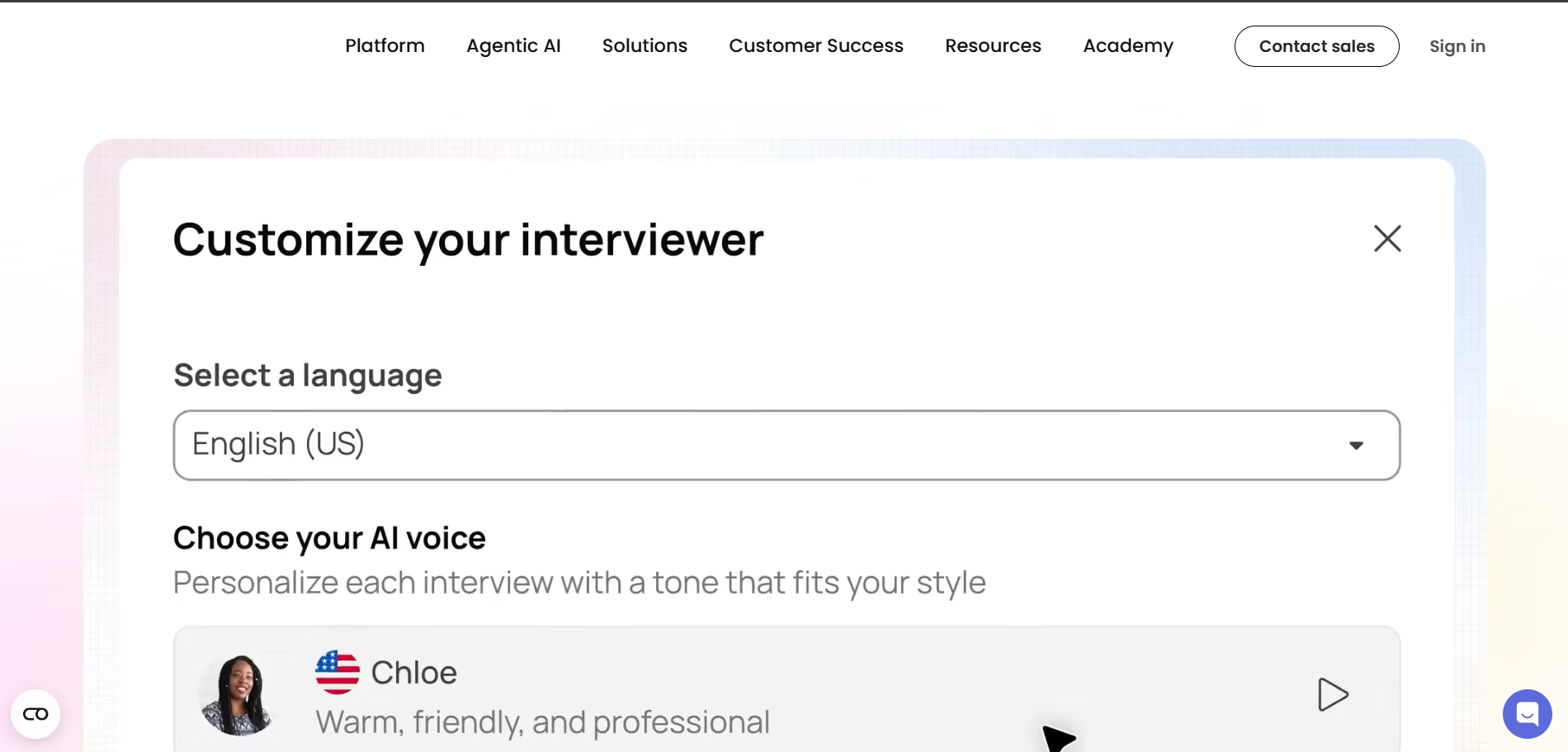
hireEZ (formerly Hiretual) is a specialist platform focused on outbound recruiting.
It’s one of the most powerful AI sourcing tools for recruiting available, designed to help talent acquisition teams build a proactive pipeline of passive talent from across the open web.
Key Features
- Agentic AI Sourcing: Its AI agent searches over 45 platforms and the open web to build a rich pool of candidates, including those with hard-to-find skills.
- Contact Finding & Data Enrichment: Provides verified email addresses and contact information, ensuring your outreach messages get delivered.
- Diversity Sourcing Filters: Advanced filters help teams build more diverse and inclusive candidate pipelines, a key part of modern DEI hiring tools.
- Automated Engagement Sequences: Allows you to create and automate multi-step email campaigns to nurture relationships with passive candidates.
Pros & Cons
- Pros: Unmatched sourcing capabilities across the open web, excellent for finding diverse and niche talent, powerful automation for candidate outreach, robust data enrichment.
- Cons: It's a specialized sourcing tool, not a full ATS, so it needs to be integrated with another system; can be expensive for small teams.
Our Experience
When my team had to fill highly specialized engineering roles, hireEZ was our secret weapon. We were able to find candidates on platforms like GitHub and Stack Overflow that were invisible to our traditional tools.
The automated email sequences saved my sourcers dozens of hours each week, and our response rates were significantly higher because of the personalized, multi-touch approach.
Pricing Plans
hireEZ offers tiered pricing based on features and user seats, typically requiring a demo for a custom quote.
Best For
Corporate recruiting teams, sourcers, and recruiting agencies that focus on proactive, outbound recruiting for hard-to-fill and technical roles.
Final Verdict
If your biggest challenge is finding qualified candidates, hireEZ is the best AI recruiting software for the job. It’s a sourcing powerhouse that will fill your pipeline with top-tier talent.
Paradox - Best Conversational AI for High-Volume and Hourly Hiring
Overview
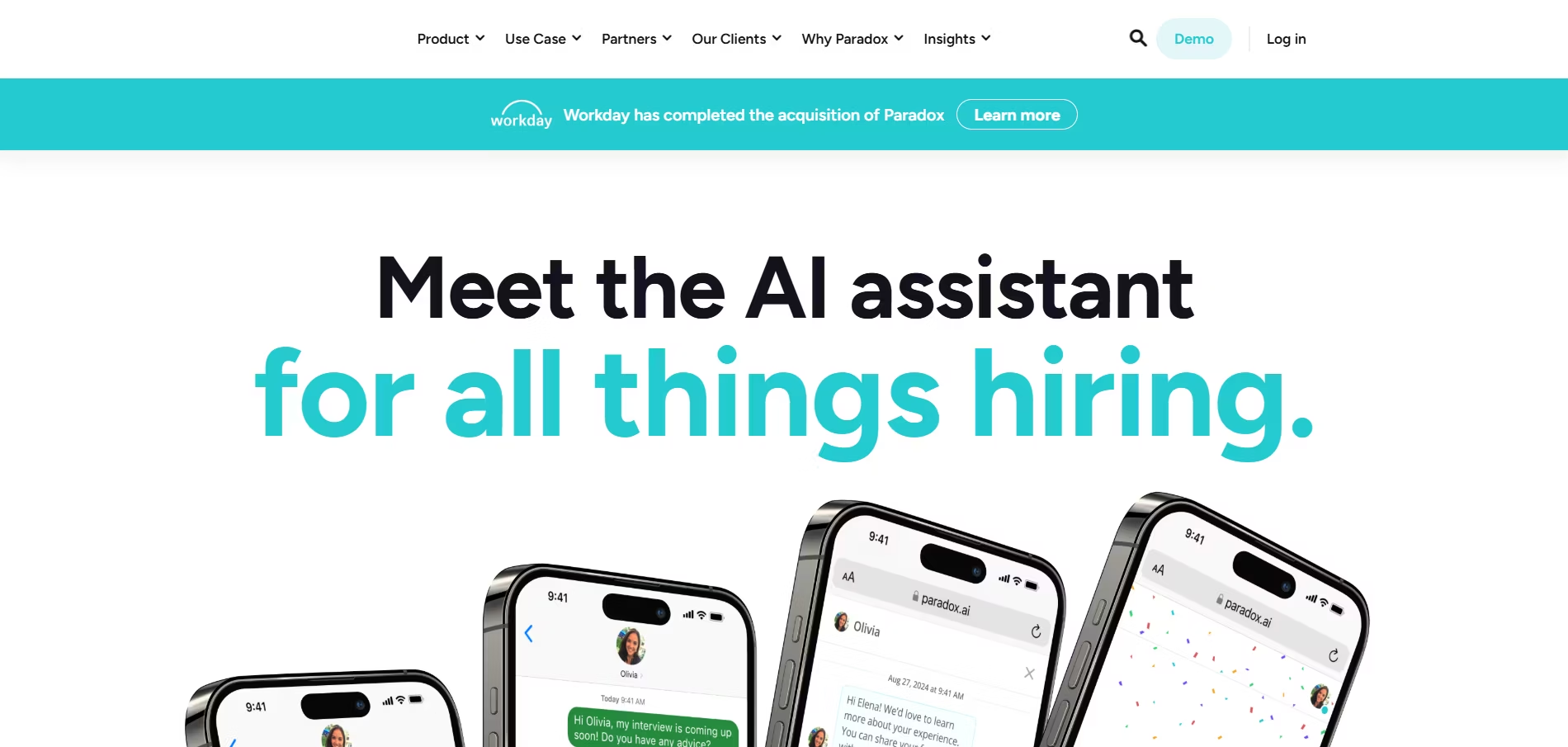
Paradox and its AI assistant, Olivia, are revolutionizing high-volume recruiting.
This conversational AI platform automates the most time-consuming parts of the hiring funnel, screening, scheduling, and answering candidate questions, through text messages and web chat, 24/7.
Key Features
- AI Assistant (Olivia): Engages candidates via text and chat, screens them with qualifying questions, and can even schedule them for interviews in seconds.
- Automated Interview Scheduling: Olivia integrates with hiring managers' calendars to find and book interview times automatically, eliminating back-and-forth emails.
- Career Site Chatbot: Transforms your career site from a static page into an interactive experience, capturing more applicants.
- Event & Campus Recruiting Automation: Manages event registrations and follow-ups, making it a great tool for campus recruiting.
Pros & Cons
- Pros: Drastically reduces time-to-hire for high-volume roles, provides an excellent and fast candidate experience, automates up to 90% of screening and scheduling tasks.
- Cons: Less focused on deep sourcing of passive talent; primarily designed for roles with a large number of applicants.
Our Experience
I saw Paradox in action at a large retail company, and it was stunning.
They were able to screen and schedule hundreds of applicants for store positions overnight without a single recruiter lifting a finger.
Candidates loved the speed and convenience of texting with Olivia. It completely transformed their ability to staff up quickly for peak seasons.
Pricing Plans
Pricing is customized based on company size and hiring volume and requires a consultation.
Best For
Large enterprises, especially in retail, hospitality, and logistics, that do high-volume and hourly hiring.
Final Verdict
For any company drowning in applications for hourly or entry-level roles, Paradox is a must-have. It's the best tool on the market for automating the top of the hiring funnel at scale.
Manatal - Best Budget-Friendly AI ATS with Drag-and-Drop Pipelines
Overview
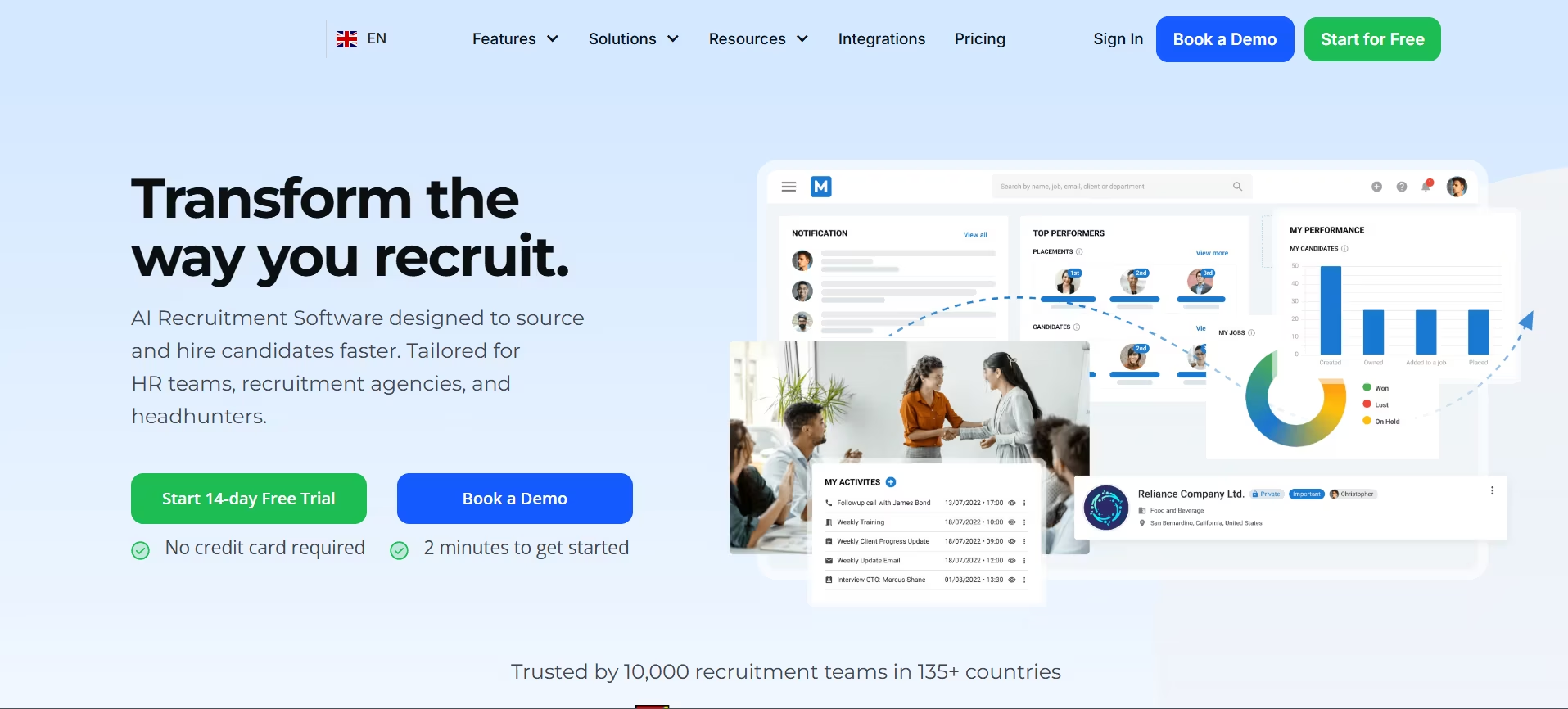
Manatal is an intuitive and affordable ai recruitment platform that has quickly become a favorite among high-growth companies and recruiting agencies.
It provides a clean, visual interface with drag-and-drop pipelines, combined with powerful AI features like candidate scoring and social media enrichment, making it one of the best AI recruiting software options for teams that need efficiency without a hefty price tag.
Key Features
- AI Candidate Recommendations: Automatically scores and ranks candidates based on job descriptions, highlighting the best fits in your talent pool.
- Social Media Enrichment: Enriches candidate profiles with data from LinkedIn and other social networks, giving you a more complete view.
- Visual Drag-and-Drop Pipelines: Easily manage your hiring workflow by moving candidates through stages in a clear, Kanban-style board.
- Recruitment CRM: Includes built-in CRM functionalities to manage candidate relationships and build a long-term talent pipeline.
- Chrome Extension: Source candidates directly from LinkedIn and other websites with a convenient browser extension.
Pros & Cons
- Pros: Excellent value for money, very user-friendly with a minimal learning curve, strong combination of ATS and CRM features, great for collaborative teams.
- Cons: Reporting and analytics are less advanced than enterprise-level systems; fewer integrations with niche HR tools.
Our Experience
I implemented Manatal at a boutique staffing agency, and it was an instant hit. The recruiters loved the visual pipelines, which made managing candidates for multiple clients incredibly simple.
We found the AI recommendation engine surprisingly accurate. It would often surface "silver medalist" candidates from past jobs who were a perfect fit for new roles, saving us a massive amount of sourcing time.
Pricing Plans
Manatal offers transparent, tiered pricing that is highly competitive.
- Professional Plan: Starts at $15 per user/month.
- Enterprise Plan: Starts at $35 per user/month.
- Trial: A 14-day free trial is available with no credit card required.
Best For
Startups, SMBs, and staffing agencies looking for a cost-effective, all-in-one AI recruitment platform with a great user experience.
Final Verdict
Manatal proves that you don't need a massive budget to leverage powerful AI in your recruiting. It’s an exceptional tool for teams that value simplicity, visual workflow management, and smart automation.
Gem - Best Talent CRM with AI for Nurturing Candidate Relationships
Overview
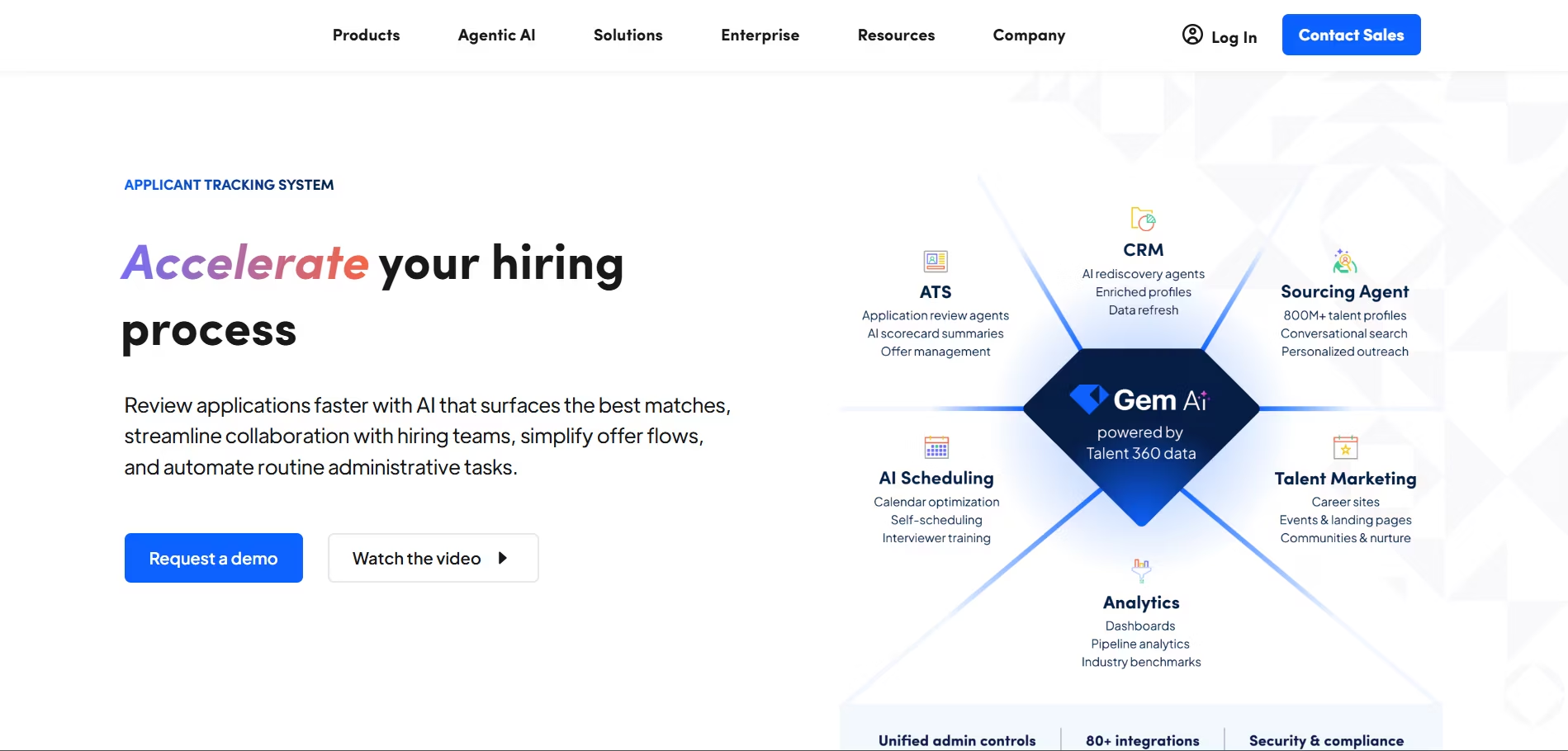
Gem is a premier talent engagement platform that functions as a sophisticated Recruitment CRM.
While it integrates seamlessly with your ATS, its core strength lies in helping recruiting teams build and nurture relationships with passive talent at scale.
It’s the go-to tool for modern recruiting teams focused on strategic sourcing, diversity hiring, and pipeline building.
Key Features
- Automated Email Sequences: Build and automate personalized, multi-stage outreach campaigns to engage passive candidates.
- Talent Pipeline Analytics: Provides deep insights into your entire hiring funnel, with dashboards tracking everything from outreach effectiveness to pipeline health.
- AI-Powered Sourcing: Sources from over 650 million profiles and integrates AI into every workflow to improve recruiter productivity.
- Prospecting & Talent Compass: Helps you plan your workforce, set hiring goals, and track progress against diversity and inclusion initiatives.
- Full ATS & CRM Integration: Works on top of popular systems like Greenhouse and Workday to unify all candidate data and interactions.
Pros & Cons
- Pros: Best-in-class for candidate relationship management, powerful analytics for strategic decision-making, excellent for proactive and diversity sourcing, great for team collaboration.
- Cons: It's a premium-priced tool; can be overly complex for teams that only do reactive hiring.
Our Experience
In a hyper-competitive market for tech talent, Gem was our command center. We used it to build talent pools for future roles, running nurture campaigns to keep our company top-of-mind.
The analytics were incredible; I could show leadership exactly how our sourcing efforts were impacting our diversity goals and forecast our hiring capacity for the next quarter.
It shifted our team from reactive recruiters to strategic talent advisors.
Pricing Plans
Gem’s pricing is available upon request and is tailored to the size and needs of your recruiting team.
Best For
High-growth tech companies, enterprise recruiting teams, and any organization that invests heavily in strategic sourcing and talent pipelining.
Final Verdict
Gem is more than a tool; it's a strategic platform for modern talent acquisition. If your goal is to build relationships and nurture talent pipelines for the long term, Gem is the undisputed leader.
Braintrust - Best for AI-Powered Video Interviews and Screening
Overview
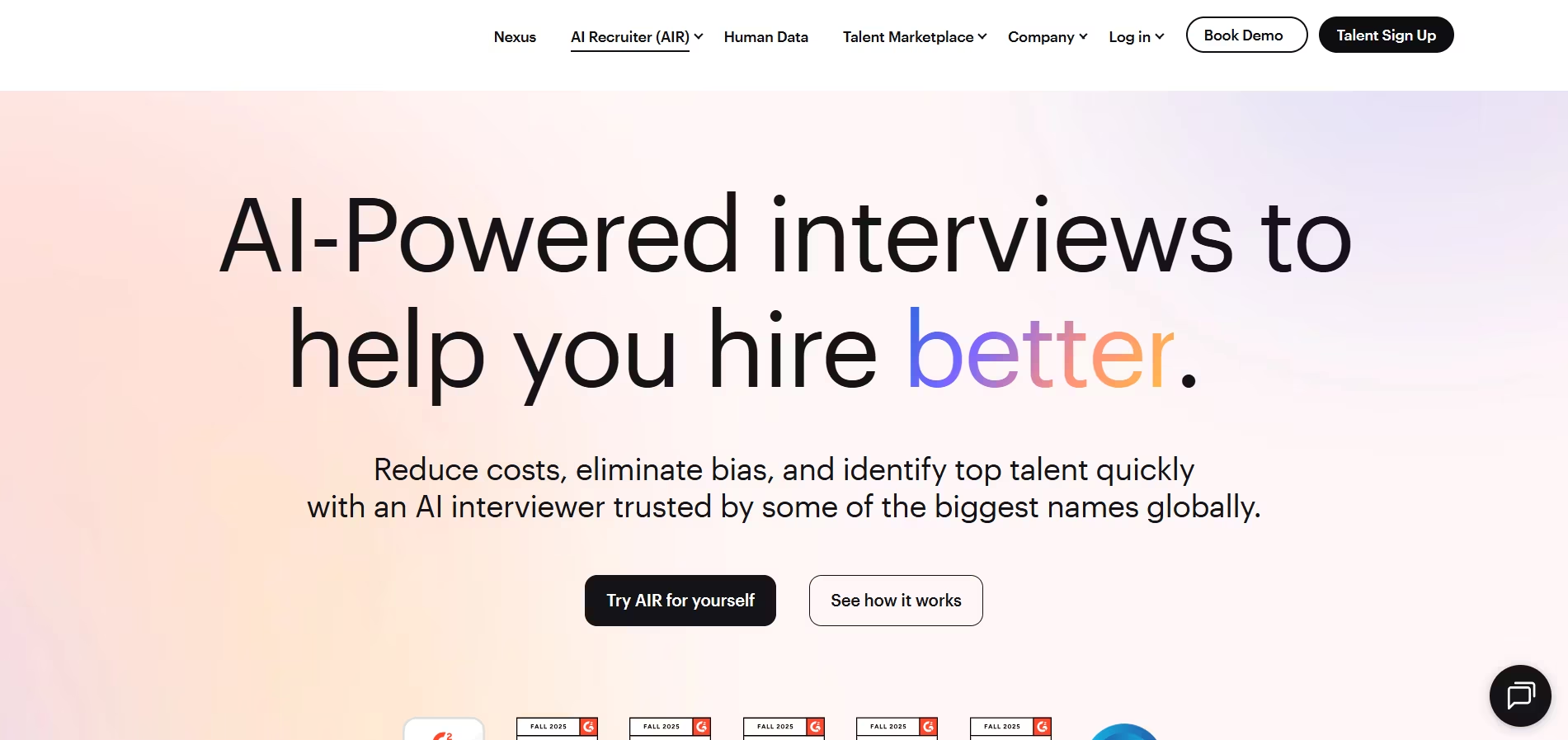
Braintrust AIR (AI Interviewer) is a specialized tool designed to automate the top of the hiring funnel with AI-powered interviews.
It conducts conversational first-round video interviews on your behalf, providing detailed scorecards and transcripts.
This allows recruiting teams to screen a massive volume of candidates consistently and without bias, freeing them up to focus on the best-fit talent.
Key Features
- AI Conversational Video Interviews: Candidates have a fully conversational video interview with an AI, which asks role-specific questions.
- Automated Scorecards: The AI instantly generates detailed scorecards based on key criteria, ranking candidates on their responses.
- Bias Elimination: By standardizing the first-round interview, Braintrust helps eliminate unconscious bias from the initial screening process.
- Customizable Interview Questions: Recruiters can use AI-generated questions or customize them to fit the unique needs of each role.
Pros & Cons
- Pros: Dramatically reduces time spent on first-round interviews, enhances fairness and consistency in screening, provides a modern and engaging candidate experience, scales easily for high-volume roles.
- Cons: Not a full ATS or sourcing tool; focused specifically on the interview stage of the funnel.
Our Experience
We used Braintrust to hire for a large customer support team, where we received over 1,000 applications. Manually screening that many people would have been impossible.
With Braintrust, we sent an interview link to every qualified applicant.
The AI handled the interviews, and my team only had to review the scorecards and videos of the top 10% of candidates. We filled the roles in record time with high-quality hires.
Pricing Plans
Pricing information is available upon booking a demo.
Best For
Companies with high-volume hiring needs, especially in industries like retail, healthcare, and customer service, that want to streamline the initial screening process.
Final Verdict
Braintrust AIR is a revolutionary tool for the top of the hiring funnel. It’s one of the best AI recruiting tools for any team looking to reclaim hundreds of hours spent on repetitive screening interviews.
Eightfold.ai - Best Talent Intelligence Platform for Skills-Based Hiring
Overview
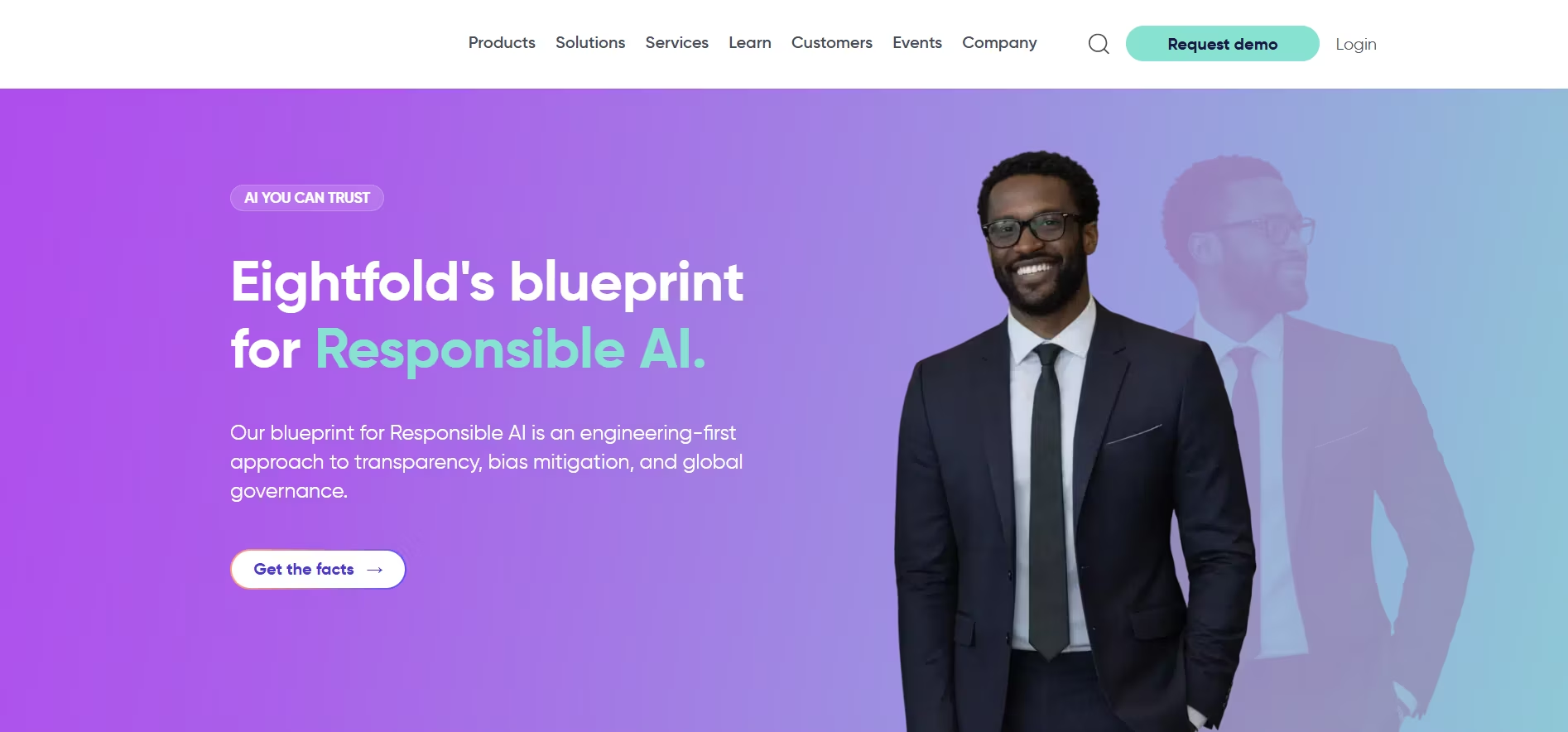
Eightfold AI is far more than a recruiting tool; it's a deep talent intelligence platform powered by a single AI.
It's designed for large enterprises that want to manage the entire talent lifecycle, from hiring external candidates to upskilling and retaining internal employees, based on skills.
Key Features
- Deep Learning AI: Uses a "skills ontology" to understand a candidate's or employee's capabilities beyond their job title.
- Talent Acquisition: AI-powered sourcing, screening, and candidate matching for external hiring.
- Talent Management: Facilitates internal mobility by matching current employees to new roles, gigs, and learning opportunities.
- Workforce Planning: Provides market-level skills insights to help leaders plan for future workforce needs.
- Diversity & Inclusion: AI features are designed to create equitable processes and help companies achieve their DEI goals.
Pros & Cons
- Pros: A single AI platform for the entire talent ecosystem, excellent for skills-based hiring and internal mobility, powerful data and insights for strategic workforce planning.
- Cons: A highly complex and expensive enterprise solution; requires significant change management to implement effectively.
Our Experience
At a Fortune 500 company, Eightfold was instrumental in our shift towards a skills-based talent strategy. Instead of hiring externally for a new project manager role, the platform identified three high-potential employees in other departments who had 90% of the required skills.
We put them through a short training program to close the gap. It was a massive win for employee retention and cost savings.
Pricing Plans
Pricing is customized for enterprise clients and is available upon request.
Best For
Large, global enterprises that are committed to a holistic, skills-based approach to talent management, including both external hiring and internal mobility.
Final Verdict
Eightfold is the future of enterprise talent management. It's the best AI recruiting software for organizations that want to build a truly agile and future-ready workforce.
For smaller teams needing a more focused solution, a tool like Recooty provides core AI features without the enterprise complexity.
SeekOut - Best for Diversity Sourcing and Finding Niche Talent Pools
Overview
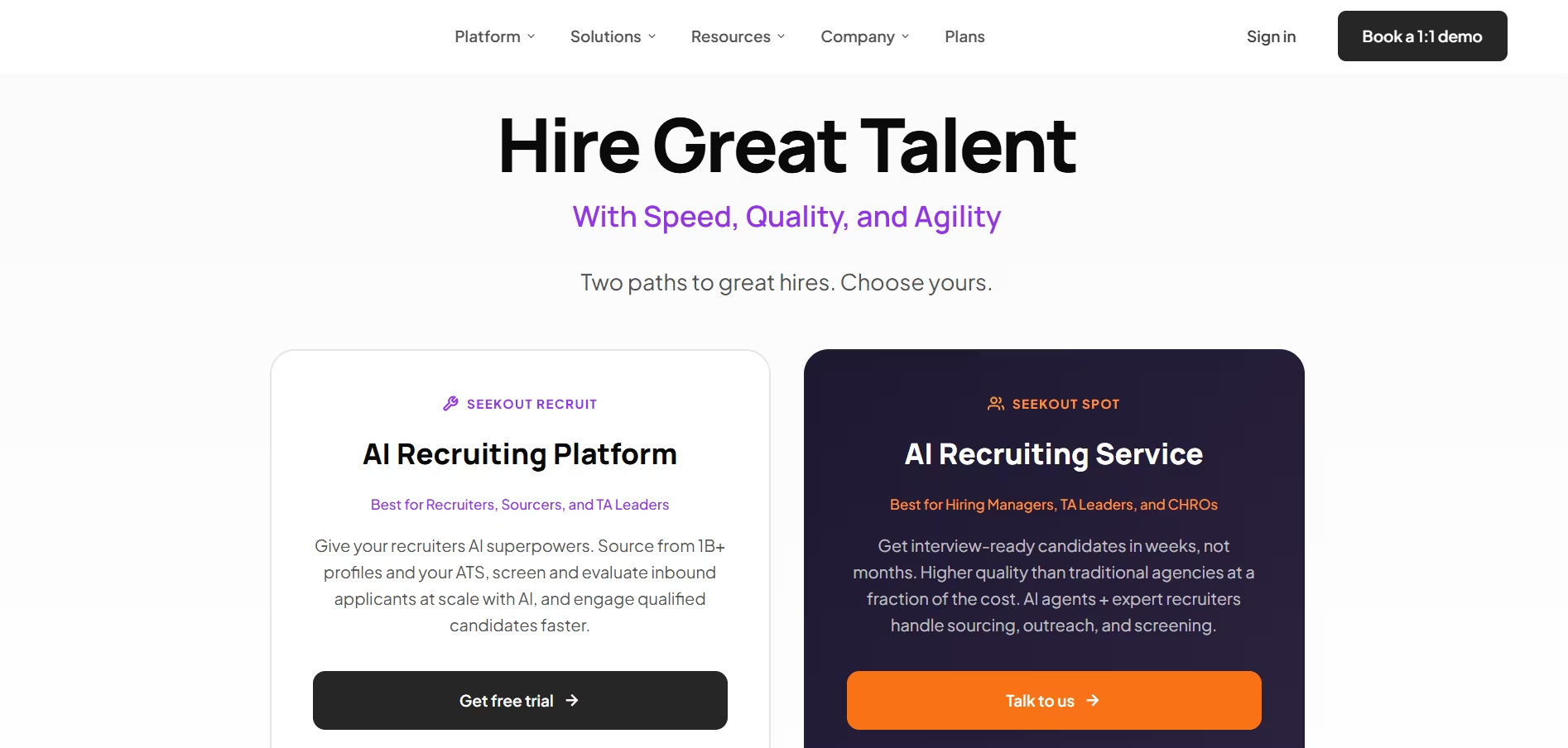
SeekOut has carved out a name for itself as a premier AI sourcing tool with a special emphasis on diversity and inclusion.
Its powerful search engine and unique filters allow recruiters to find candidates from underrepresented groups and those with niche technical skills that are nearly impossible to find on other platforms.
Key Features
- Diversity Filters: Search for candidates from specific underrepresented groups, including women, veterans, and different ethnicities.
- Talent Insights: Provides analytics on talent pools, showing diversity stats, top employers, and location data for specific roles.
- GitHub Search: A powerful tool for technical recruiters to find top software developers based on their coding experience and contributions.
- Expert Search: Go beyond keywords with "Power Filters" that let you search for candidates who have specific expertise, like "authors of Java patents."
Pros & Cons
- Pros: Industry-leading diversity sourcing features, exceptional for technical and hard-to-fill roles, provides rich talent pool analytics.
- Cons: Primarily a sourcing tool, not a full ATS; can be a significant investment.
Our Experience
My team was tasked with increasing the percentage of women in our engineering department. SeekOut was absolutely critical to our success.
We used the diversity filters to build a pipeline of qualified female engineers and used the Talent Insights to understand where we should focus our recruiting efforts.
We hit our diversity goals for the year, and I credit SeekOut for making it possible.
Pricing Plans
SeekOut’s pricing is available by requesting a demo.
Best For
Enterprise and high-growth companies with strong DEI initiatives, as well as technical recruiting teams looking for top-tier talent.
Final Verdict
When it comes to diversity sourcing, SeekOut is in a class of its own. It’s an essential tool for any organization that is serious about building a more representative and inclusive workforce.
Humanly - Best Conversational AI for Screening, Scheduling, and Note-Taking
Overview
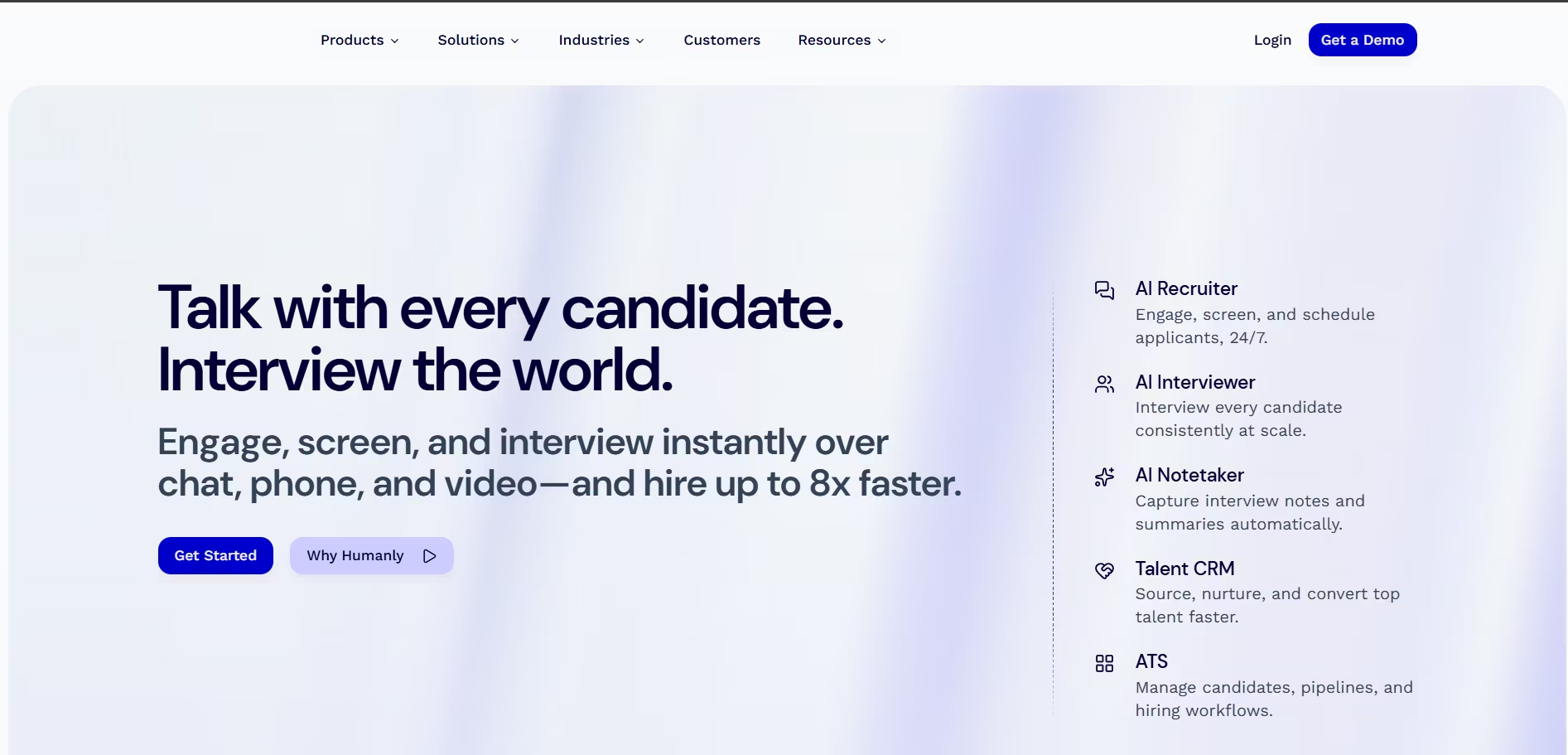
Humanly is a powerful conversational AI tool that automates the most time-consuming tasks at the top of the hiring funnel.
It excels at candidate screening, interview scheduling, and even serves as an AI assistant during live interviews to take notes. It's one of the best AI recruiting tools for teams looking to boost efficiency and create a better, more responsive candidate experience.
Key Features
- AI-Powered Chatbots: Engages candidates on your career site or via email to answer questions, collect information, and screen them for qualifications 24/7.
- Automated Interview Scheduling: Syncs with your team's calendars to find and book interview times without any manual back-and-forth.
- Live Interview Assistant: Can join video calls to take notes and transcribe the conversation, allowing interviewers to focus fully on the candidate.
- Candidate Rediscovery: Scans your existing ATS to find and re-engage past applicants who are a good fit for new, open roles.
Pros & Cons
- Pros: Excellent automation for top-of-funnel tasks, provides a great candidate experience, the live note-taking feature is a huge time-saver, strong integration capabilities with major ATS platforms.
- Cons: Not a standalone ATS; its primary value is as an add-on to your existing tech stack.
Our Experience
My team was constantly falling behind on initial phone screens, creating a bottleneck that frustrated both candidates and hiring managers.
We integrated Humanly with our ATS, and the impact was immediate. The chatbot handled the initial screening questions, and only the top candidates were automatically scheduled on our calendars.
The best part was the live assistant; our interview notes became more consistent and detailed, which led to much more productive debrief meetings.
Pricing Plans
Humanly offers custom pricing based on your company's size and specific needs. You'll need to book a demo to get a quote.
Best For
Mid-sized to enterprise companies that want to automate candidate screening and scheduling to improve recruiter efficiency and candidate experience.
Final Verdict
Humanly is a fantastic automation layer that sits on top of your existing recruiting process. If your team is buried in administrative work, Humanly can dig them out, freeing them up for more strategic, high-impact activities.
Recruit CRM - Best AI-Powered Platform for Staffing & Recruiting Agencies
Overview
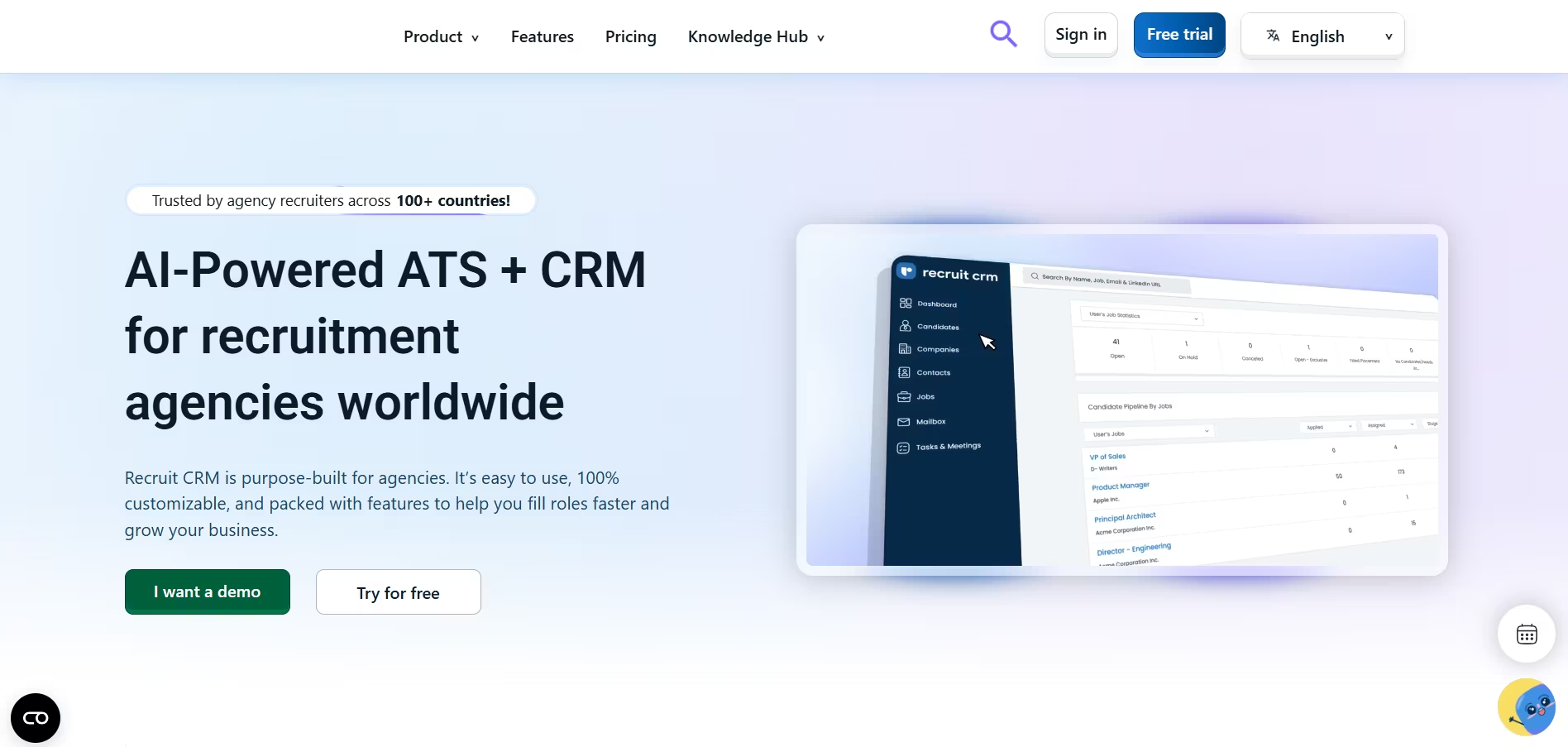
Recruit CRM is a purpose-built AI recruitment platform that combines an ATS and a CRM, designed specifically for the fast-paced world of staffing and recruiting agencies.
It provides all the tools an agency needs to manage clients, source candidates, and track placements in one unified system, making it a top choice for any recruitment agency.
Key Features
- AI-Powered Candidate Sourcing: Includes a resume parser and a sourcing extension to find and add candidates to your database quickly.
- Client & Job Management: A full CRM to track client relationships, manage job orders, and report on placement metrics.
- Email & Calendar Sync: Integrates directly with Gmail and Outlook to streamline communication and scheduling.
- Customizable Pipelines: Create unique hiring pipelines for different clients and roles to manage your workflow efficiently.
Pros & Cons
- Pros: Perfectly tailored for the agency workflow, combines ATS and CRM seamlessly, very affordable and transparent pricing, excellent customer support.
- Cons: Not designed for corporate, in-house recruiting teams; lacks some of the deep talent intelligence features of enterprise platforms.
Our Experience
I consulted for a growing staffing agency that was trying to manage everything with spreadsheets. It was chaos.
We implemented Recruit CRM, and it completely organized their business. They could track every candidate interaction, see which clients were most profitable, and use the AI sourcing tools to fill roles faster.
It gave them the professional toolkit they needed to scale.
Pricing Plans
Recruit CRM offers simple, user-based pricing.
- Team Plan: Starts around $85 per user/month.
- Business Plan: Adds more advanced features and starts around $119 per user/month.
- Trial: A free trial is available.
Best For
Executive search firms, staffing agencies, and professional recruitment companies of all sizes.
Final Verdict
For recruiting agencies, Recruit CRM is a slam dunk. It understands their unique needs and provides a powerful, affordable, and easy-to-use solution to manage their entire business.
Jobvite - Best for Comprehensive Recruitment Marketing and Analytics
Overview
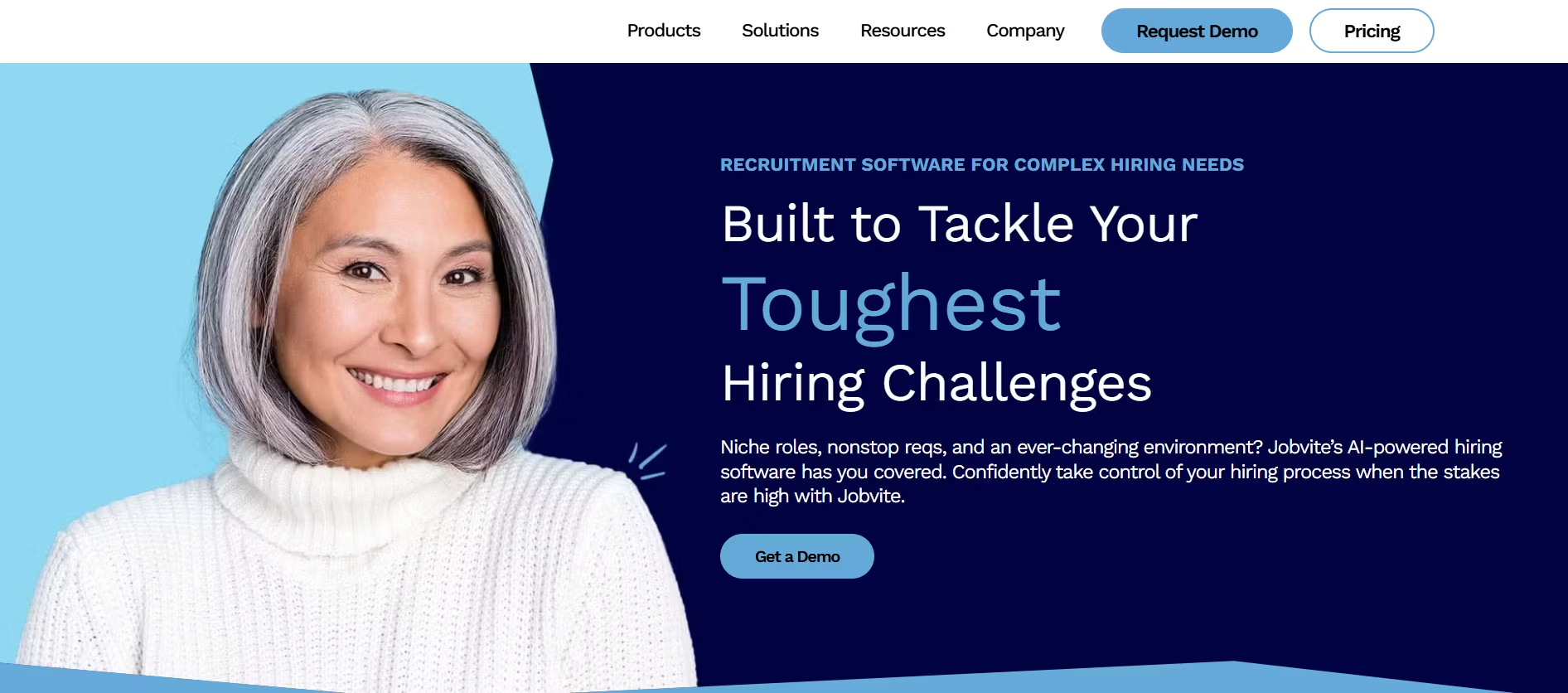
The Jobvite Talent Acquisition Suite is a comprehensive, end-to-end ai recruitment platform that excels in recruitment marketing.
It's designed to help companies attract, engage, hire, and retain top talent through a unified suite of tools that includes a powerful CRM, a robust ATS, and AI-driven analytics.
Key Features
- Recruitment Marketing (Jobvite Engage): Build and nurture talent pools with branded career sites, email campaigns, and employee referral programs.
- AI-Driven Candidate Matching: The platform's AI helps match candidates from your talent pool to open requisitions automatically.
- Predictive Analytics: Provides data-driven insights to help you understand your hiring funnel, identify top sources of hire, and improve your overall strategy.
- Text-to-Apply & Chatbots: Offers modern, mobile-first tools to engage candidates and make the application process easier.
Pros & Cons
- Pros: Excellent, integrated suite for the full talent lifecycle, top-tier recruitment marketing capabilities, strong analytics and reporting.
- Cons: Can be a large and complex system to implement; pricing is on the higher end.
Our Experience
At a large organization, our biggest challenge wasn't just finding candidates but building a recognizable employer brand.
We used Jobvite's marketing tools to create targeted email campaigns for our "silver medalist" candidates, keeping them warm for future roles.
The analytics helped us prove to leadership that our investment in employer branding was leading to a higher quality of hire and a lower cost-per-hire.
Pricing Plans
Jobvite's pricing is customized for each client and requires a consultation.
Best For
Mid-sized to large enterprises that want a single, integrated platform to manage the entire talent acquisition process, with a strong focus on recruitment marketing.
Final Verdict
Jobvite is an excellent choice for sophisticated TA teams that want to move beyond reactive recruiting and build a proactive, marketing-driven talent attraction machine.
iCIMS - Best Enterprise-Level Suite with AI-Enhanced Analytics
Overview
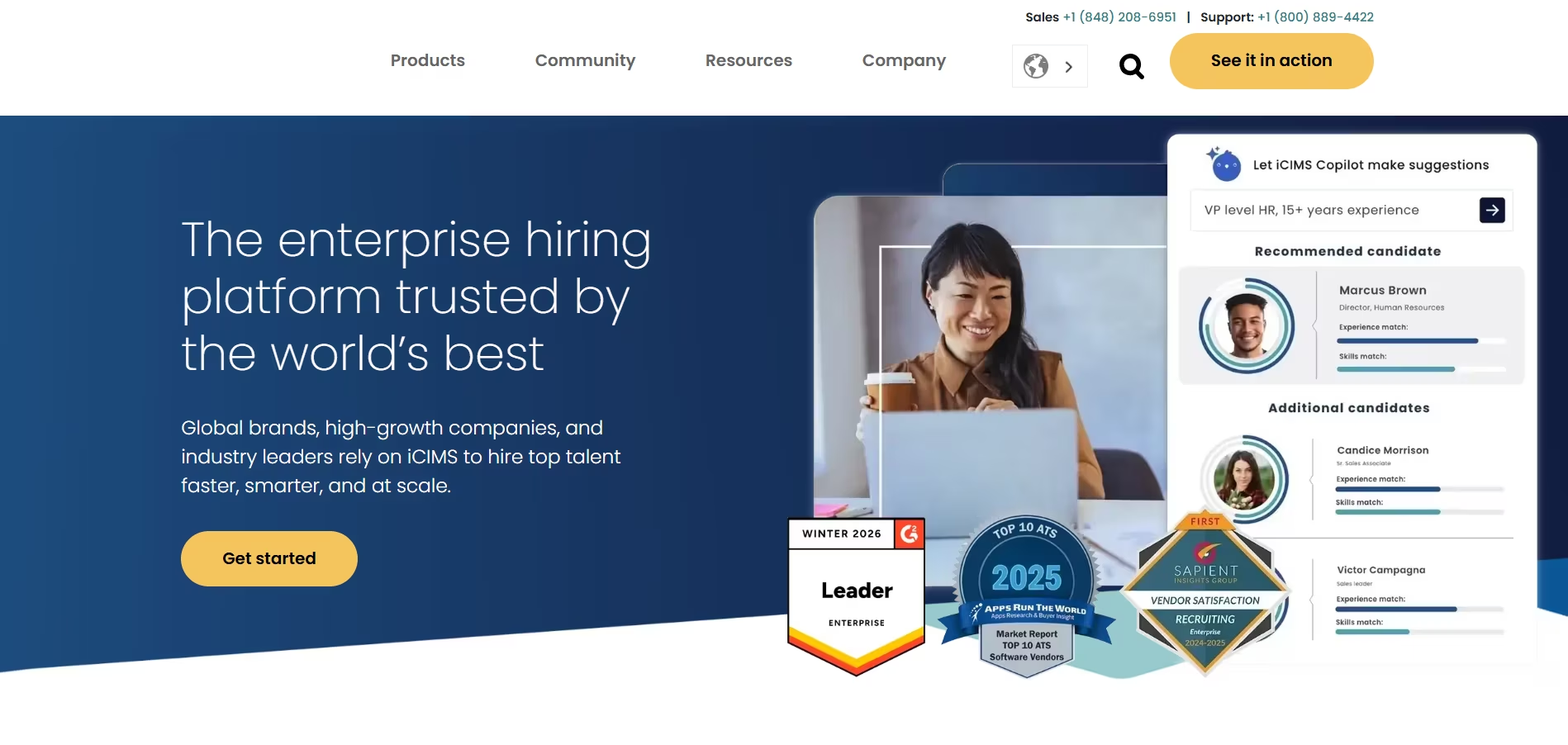
iCIMS is a leading enterprise-grade Talent Cloud platform that provides a comprehensive suite of solutions for attracting, engaging, hiring, and advancing talent.
Its AI-powered recruiting software is built to handle the complexity and scale of large, global organizations, offering robust analytics and deep integration capabilities.
Key Features
- Talent Cloud Platform: A unified suite that includes a career site, ATS, CRM, and onboarding tools.
- AI-Enhanced Analytics: Delivers deep insights into hiring trends, DEI metrics, and recruiter performance across the entire organization.
- Digital Assistant: An AI-powered chatbot that engages candidates, answers questions, and helps them find relevant jobs on your career site.
- Global Compliance: Built to handle the complex compliance and data privacy requirements of global enterprises.
Pros & Cons
- Pros: Highly scalable and customizable for large enterprises, comprehensive, all-in-one talent platform, strong focus on compliance and security.
- Cons: Very expensive and complex; significant implementation time and resources are required. Overkill for small and mid-sized businesses.
Our Experience
Working with a global corporation, iCIMS was the central nervous system for all our talent operations.
The ability to pull detailed reports on our diversity hiring progress across different countries was critical for our leadership team.
While the system was massive, its power to handle thousands of requisitions and ensure we were compliant with regulations like GDPR was indispensable for an organization of that size.
Pricing Plans
iCIMS pricing is designed for enterprise customers and is available only through a custom quote.
Best For
Large, global enterprise organizations that need a powerful, scalable, and compliant platform to manage their entire talent lifecycle.
Final Verdict
For large corporations with complex hiring needs, iCIMS is a market-leading choice. It's a robust and powerful system of record for global talent acquisition. For less complex needs, a more agile tool like Recooty offers a much more accessible and user-friendly experience.
Metaview - Best AI Scribe for Automated Interview Notes and Scorecards
Overview
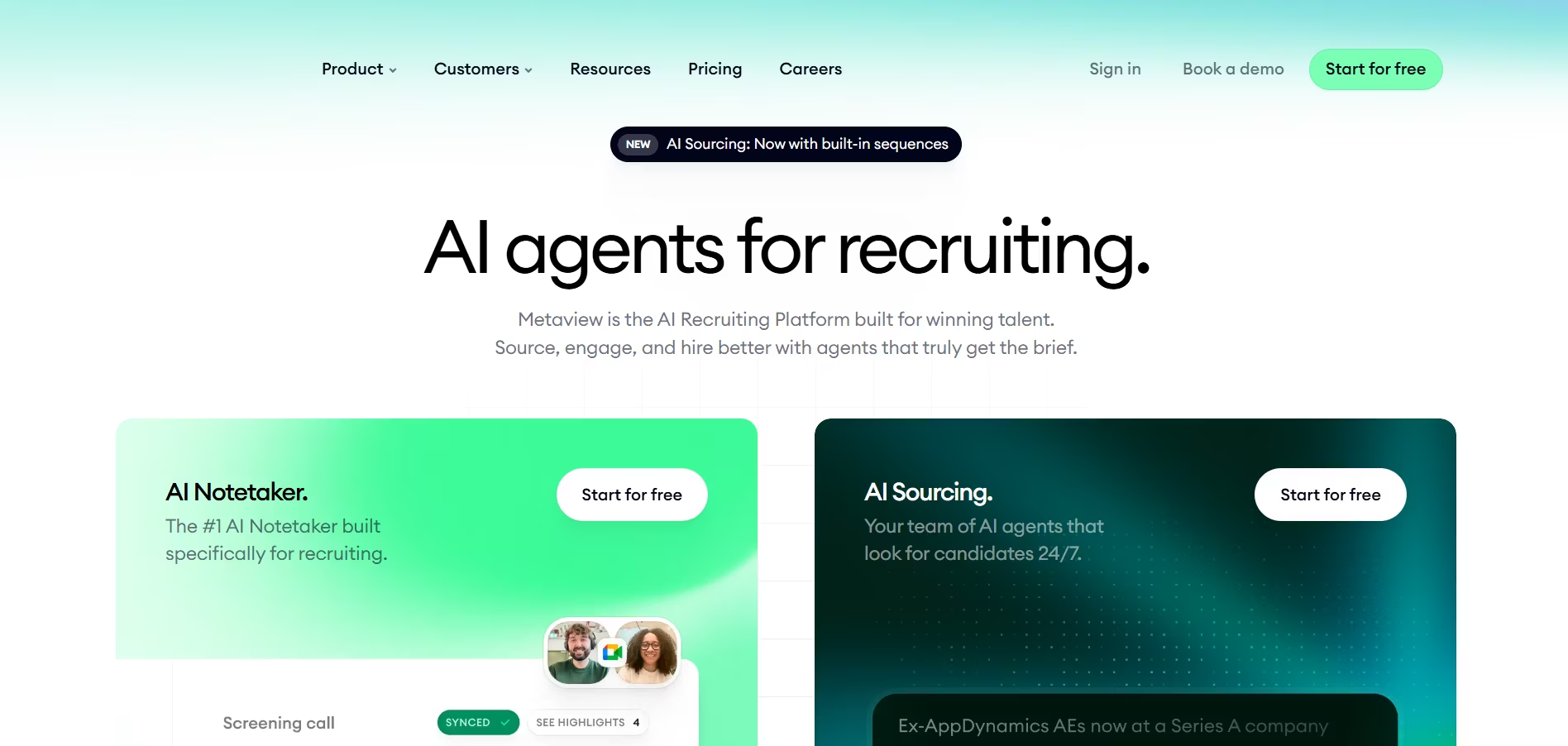
Metaview is not a full recruiting suite, but a specialized AI scribe for recruiting. It records, transcribes, and uses AI to generate structured notes from your interviews.
This allows interviewers to be fully present in the conversation instead of typing notes, and it provides hiring teams with consistent, unbiased data to make better decisions.
Key Features
- Automated Note-Taking: The AI joins your video calls (like Zoom or Google Meet) and generates human-like notes, perfectly structured against your interview scorecard.
- Interview Transcription: Provides a full, searchable transcript of every interview.
- Customizable Note Templates: You can customize the note templates to fit your exact needs and ensure the AI captures the information that matters most.
- Hiring Manager Collaboration: Makes it easy to share interview highlights and notes with the hiring team to streamline debriefs and decision-making.
Pros & Cons
- Pros: Solves the major problem of inconsistent and biased interview feedback, saves a huge amount of time on administrative work, helps train new interviewers, promotes more objective hiring decisions.
- Cons: A niche tool focused only on the interview process; requires getting candidate consent for recording.
Our Experience
Inconsistent interview feedback was a constant struggle for my team. One interviewer would provide a novel; another would write two words.
We started using Metaview, and it was transformative. The notes were always structured, detailed, and tied to our core competencies.
Our hiring debriefs became faster and more data-driven because everyone was working from the same high-quality information. It genuinely improved our quality of hire.
Pricing Plans
Metaview offers tiered pricing and typically requires a demo to get a quote tailored to your team's size.
Best For
Any recruiting team, from startup to enterprise, that wants to improve the quality and consistency of their interview process and make more objective hiring decisions.
Final Verdict
Metaview is a game-changing tool that solves a critical, often-overlooked part of the hiring process. It's one of the most innovative and impactful AI recruiting tools I've used in recent years.
How to Choose the Right AI Recruiting Software for Your Needs
After reviewing the top players, I know that selecting the best AI recruiting software can feel overwhelming.
The market is crowded, and every platform promises to revolutionize your hiring. To cut through the noise, I've developed a practical framework based on years of experience.
This guide will walk you through exactly what to look for, how to understand the different types of AI, and how to match a tool to your company's unique size and needs.
Core Features Every Top AI Recruitment Platform Must Have in 2026
When I'm evaluating a new ai recruitment platform, I have a non-negotiable checklist of core features.
These are the capabilities that separate a truly transformative tool from a simple automation add-on. Without these, you won't get the full ROI you're looking for.
AI-Powered Candidate Sourcing & Talent Rediscovery
Your platform must be able to proactively find talent. This means going beyond your career page to search the open web, professional networks, and, critically, your own internal database of past applicants.
As research from Zapier on AI recruiting tools highlights, top platforms use AI to find passive candidates who aren't actively applying.
A great system will constantly scan your ATS for "silver medalists" who might be a perfect fit for a new role, saving you immense time and sourcing costs.
Intelligent Resume Screening & Semantic Candidate Matching
Forget basic keyword matching. The best AI recruiting tools use semantic matching to understand the *context* behind a resume.
The AI should be able to recognize that a "growth hacker" has similar skills to a "digital marketing manager." This deeper understanding leads to a much higher quality of shortlisted candidates. It’s about matching skills and potential, not just job titles.
Automated Interview Scheduling & Conversational AI Chatbots
This is where you reclaim hundreds of administrative hours.
Your chosen software should have a chatbot that can engage candidates 24/7, answer their basic questions, and screen them with initial knockout questions.
Most importantly, it must integrate with your team's calendars to schedule interviews automatically. This single feature, as noted in many ai recruitment platform reviews, dramatically improves both the candidate experience and recruiter productivity.
Predictive Analytics for Quality of Hire & Performance Forecasting
The most advanced platforms use AI to analyze the traits of your top performers and then identify similar patterns in new candidates.
While not foolproof, these predictive analytics can provide valuable data points to help you forecast a candidate's potential for success.
The goal is to make data-driven hiring decisions that lead to a higher quality of hire and better employee retention.
Seamless Integration with Your Current ATS and HRIS
This is a critical, practical step. An AI tool that doesn't "talk" to your existing systems will create more work than it saves.
Before you buy, confirm that it offers deep, two-way integration with your current Applicant Tracking System (ATS) and HRIS.
This ensures that data flows seamlessly, from initial sourcing all the way to onboarding.
Built-in DEI Tools to Mitigate Bias and Improve Diversity
Modern AI platforms should be a core part of your diversity, equity, and inclusion (DEI) strategy.
Look for features like anonymized screening (hiding names and photos) and tools that analyze job descriptions for biased language.
Platforms like SeekOut are specifically praised for their advanced diversity sourcing filters, which help you proactively build a more representative talent pipeline.
The Role of Agentic AI vs. Generative AI in Modern Recruiting Tools
The term "AI" is broad. In recruiting tech today, it's helpful to understand two key types: Agentic AI and Generative AI. The best platforms use a combination of both.
Understanding Agentic AI for Autonomous Sourcing and Screening
Think of Agentic AI as a doer. It’s an AI agent that you can give a task to, and it will go and perform a series of actions to complete it.
For example, you can tell an agent, "Find me 10 qualified software engineers in Austin, Texas, who have experience with Python and have contributed to open-source projects."
The AI agent, like the one in hireEZ, will then go source candidates, review their profiles, find contact information, and present you with a qualified list. It automates entire workflows.
Using Generative AI for Crafting Job Descriptions and Candidate Outreach
Generative AI, like ChatGPT, is a creator. In recruiting, its most common use is to create content.
You can use it to write compelling, SEO-optimized job descriptions, craft personalized outreach emails, and even generate interview questions.
This saves time and helps ensure your messaging is consistent and high-quality.
Why the Best AI Recruiting Software Combines Both Capabilities
The most powerful platforms integrate both. For example, a system might use Generative AI to write a perfect job description and outreach message.
Then, it hands that task over to an Agentic AI to source 100 candidates who fit the criteria and send them that personalized message.
This powerful combination automates both the "what" and the "how" of recruiting.
Evaluating AI Recruiting Software for Different Business Sizes
The best tool for a Fortune 500 company is rarely the right choice for a 50-person startup. I've learned that you have to match the solution to your company’s scale, budget, and primary pain points.
For Startups & Small Businesses: All-in-One AI ATS like Recooty
For smaller teams, budget and simplicity are key. You don't need a complex, multi-module system. You need an affordable, all-in-one platform that combines a user-friendly ATS with core AI features.
This is where a tool like Recooty shines. It gives you AI-powered resume screening, automated job posting, and a branded careers page without the enterprise price tag or a steep learning curve.
It provides the essential free AI tools for recruitment that small businesses need to get started and scales affordably. Many startups find this balance to be the perfect entry into AI-driven hiring.
For Mid-Market & Growth Companies: Scalable Platforms with Robust CRM
As you grow, your focus shifts from just filling roles to building a strategic talent pipeline. Mid-sized companies need a scalable ai recruitment platform with a strong Recruitment CRM.
A tool like Gem or Workable is ideal here. They help you nurture relationships with candidates over the long term, provide deeper analytics, and integrate with a wider range of HR tools.
For Enterprise-Level Needs: Advanced Talent Intelligence Suites
Large enterprises need a platform that can manage complexity, scale globally, and provide deep strategic insights.
This is the domain of talent intelligence platforms like Eightfold.ai or iCIMS.
These systems manage the entire talent lifecycle, from external hiring to internal mobility and workforce planning, and are built to handle rigorous security and compliance requirements.
For Staffing & Recruiting Agencies: Tools with High-Volume Outreach Features
Recruiting agencies have a unique workflow focused on speed, client management, and high-volume outreach. A purpose-built tool like Recruit CRM is perfect for this segment.
It combines a CRM for managing clients with an ATS for tracking candidates and includes the sourcing and email automation features agencies need to stay competitive.
Implementation & Maximizing ROI on Your AI Recruiting Software
Choosing the best AI recruiting software is only half the battle. From my experience, the real success comes from how you implement it and drive adoption within your team.
A powerful tool that sits unused is just a wasted investment. This section is my playbook for seamlessly integrating your new ai recruitment platform into your workflow, proving its value with hard numbers, and customizing it to turn your recruiting team into a strategic powerhouse.
A Step-by-Step Guide to Integrating AI into Your Existing HR Tech Stack
I've seen companies stumble here by simply "turning on" a new tool and hoping for the best. A thoughtful integration process is crucial.
Follow these steps to ensure a smooth transition and immediate impact.
Conducting a needs assessment and mapping existing workflows
Before you even integrate, take a step back and map out your current hiring process. Where are the biggest bottlenecks? Is it sourcing, screening, or scheduling? Be honest about your team's pain points.
This assessment, a best practice mentioned by experts at SHRM, ensures you're solving a real problem.
For example, if your recruiters spend 15 hours a week manually screening resumes, your primary goal is to find a tool with top-tier AI screening to automate that specific task.
Selecting platforms that integrate seamlessly with your current systems
I can't stress this enough: your new AI tool must play nice with your existing ATS and HRIS. During the demo process, ask for a live demonstration of the integration.
Does it offer a deep, two-way sync? If you use Greenhouse, for instance, you need an AI tool that can pull job data from it and push candidate profiles and engagement history back into it.
A clunky integration will lead to manual data entry, which defeats the whole purpose of automation.
Onboarding, training, and change management best practices
Don't just schedule a one-hour training session and call it a day. True adoption requires a change management mindset. I've found success by:
- Identifying "AI Champions": Find one or two tech-savvy recruiters on your team to become super-users. They can help train and evangelize the new tool to their peers.
- Focusing on the "Why": Show your team how the tool will make their jobs easier and more strategic. Frame it as "less time on admin, more time building relationships."
- Creating Simple Playbooks: Develop one-page guides for common tasks, like "How to Launch an AI Sourcing Campaign" or "How to Review AI-Screened Candidates."
How to Calculate the ROI of Your AI Recruiting Software Investment
To get budget approval and prove the value of your new ai recruitment platform, you need to speak the language of business: Return on Investment (ROI).
Tracking these three key areas will help you build a powerful business case.
Measuring reductions in time-to-hire and cost-per-hire
These are the two most straightforward metrics. Before you implement the tool, calculate your baseline average time-to-hire. After three to six months of using the software, calculate it again.
If you've gone from 45 days to 30 days, that's a 33% reduction, a massive win.
Similarly, by reducing reliance on expensive job boards or external agencies (because your AI is sourcing for you), you can directly show a reduction in your cost-per-hire.
H4: Tracking measurable increases in quality-of-hire
This is a bit harder to measure but incredibly important. Work with your HR team to track the performance of new hires who were sourced or screened by the AI platform.
Are their 90-day retention rates higher? Are their first-year performance review scores above average? Connecting your AI recruiting software to these downstream business outcomes is the holy grail of ROI.
Analyzing recruiter productivity and efficiency gains
This is where I like to get specific. Track how many hours your team is saving on specific tasks. For example:
- Before AI: Recruiters spent 10 hours/week sourcing.
- After AI: Recruiters spend 2 hours/week reviewing AI-sourced candidates.
That's an 8-hour weekly saving per recruiter. Multiply that by their hourly rate, and you have a clear financial saving.
Platforms that provide detailed recruiting analytics dashboards make this tracking much easier.
Pro Tips for Customizing AI Workflows and Driving Team Adoption
The best platforms aren't one-size-fits-all. The real magic happens when you customize the AI to fit your company's unique needs and culture.
Here are my go-to strategies for making the tool truly your own.
Setting up automated sourcing and outreach campaigns
Don't just use the AI for inbound screening. Set up automated sourcing campaigns for your evergreen roles (like "Sales Development Rep" or "Software Engineer").
Let the AI agent constantly search for new talent and add them to a dedicated talent pool. Then, work with your team to create personalized, multi-step outreach sequences.
This turns your recruiting function into a proactive, always-on sourcing engine.
Customizing candidate scoring to match your ideal profile
Out of the box, an AI's candidate scoring model is good. But you can make it great by "teaching" it what you value. Most best ai recruiting tools allow you to provide feedback on its suggestions.
When the AI recommends a candidate, have your recruiters rate them as a "good fit" or "not a fit." This feedback loop trains the algorithm over time, making its future recommendations much more accurate and tailored to your specific needs.
For SMBs using a tool like Recooty, taking the time to fine-tune these settings can yield significantly better candidate matches.
Training your hiring managers to trust AI-driven insights
Your recruiters might love the new tool, but if hiring managers are skeptical, you'll face a major adoption hurdle. I've found it's crucial to show, not just tell.
When presenting an AI-sourced candidate, walk the hiring manager through *why* the AI flagged them.
Say, "The AI identified that while their job title is different, they have 5 years of experience leading projects with the exact three technologies you listed as 'must-haves'."
This builds trust and helps managers understand that the AI is a powerful tool to supplement, not replace, their judgment.
Common Challenges & Risks of AI in Recruiting (And How to Mitigate Them)
As much as I advocate for the best AI recruiting software, I'm also a realist. Implementing these powerful tools isn't always a walk in the park.
Based on my own experiences and conversations with hundreds of HR leaders, I've identified the most common hurdles you're likely to face.
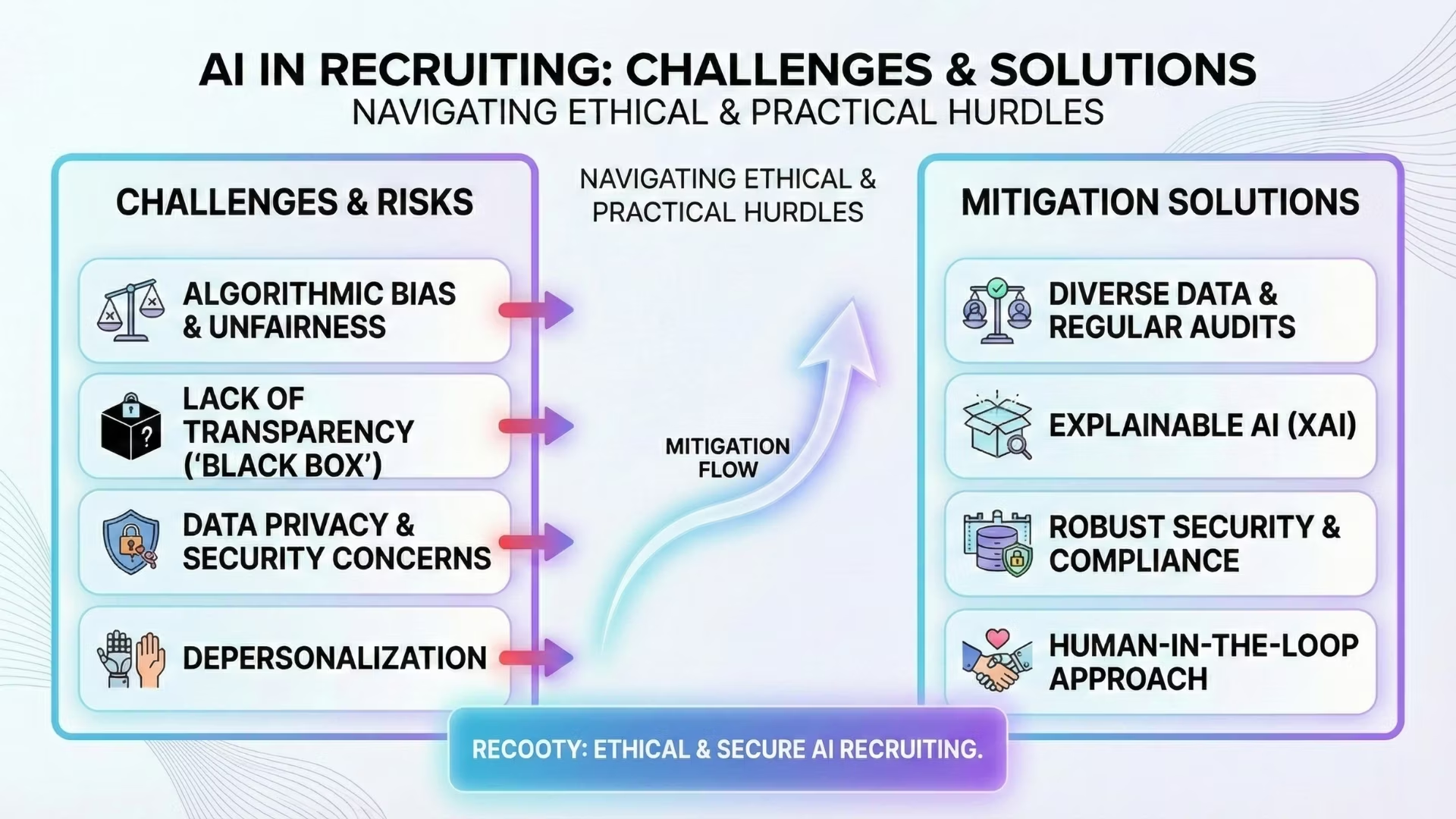
Foreseeing these challenges is the first step to overcoming them.
This section is your guide to navigating the potential risks, from data privacy to algorithmic bias, ensuring your ai recruitment platform becomes a trusted asset, not a liability.
Navigating Data Privacy: GDPR, CCPA, and EEOC Compliance in AI Hiring
This is the big one, and it's non-negotiable. When you're dealing with candidate data, you're handling sensitive personal information.
Failing to comply with regulations like GDPR in Europe or CCPA in California can lead to massive fines and damage to your employer brand.
The Challenge: AI systems process vast amounts of data.
You need to ensure your platform handles this data in a compliant way, from obtaining candidate consent for processing to managing data retention and deletion policies.
How to Mitigate It:
1. Vendor Vetting is Key: Before you sign any contract, ask the vendor for their compliance documentation. Do they have certifications like SOC 2? How do they handle data residency and consent management? A reputable vendor will have clear, confident answers.
2. Conduct a Data Privacy Impact Assessment (DPIA): Work with your legal team to formally assess how the new tool will impact data privacy. This is a requirement under GDPR for many types of processing.
3. Ensure Candidate Transparency: Your application process must be clear about how you are using AI. Provide an easy-to-understand privacy policy and ensure candidates have a simple way to opt-out or request their data be deleted.
The 'Black Box' Problem: Ensuring Transparency and Fairness in AI Algorithms
One of the biggest concerns I hear from fellow HR experts is about the "black box" of AI.
How do we know the AI isn't making biased decisions if we can't see how the algorithm works? This is a valid and critical question, especially for ensuring you are following EEOC guidelines.
The Challenge: An AI model could inadvertently learn biases from historical hiring data.
For example, if a company has historically hired more men for engineering roles, the AI might learn to favor male candidates, even if gender isn't an explicit data point.
How to Mitigate It:
1. Ask About "Explainability": During demos, ask the vendor, "How does your system explain its decisions?" The best AI recruiting tools are moving towards more transparent models. They should be able to show you *why* a candidate was ranked highly, pointing to specific skills and experiences.
2. Regularly Audit for Adverse Impact: Use your platform's analytics to run regular adverse impact analyses. Are you seeing statistically significant differences in how the AI screens candidates from different demographic groups? If so, you need to work with your vendor to investigate and retrain the model.
3. Keep a Human in the Loop: Never let the AI make the final hiring decision. Use it as a powerful tool to augment your recruiters' judgment, not replace it. The AI provides a data-driven shortlist, but a human must make the final call.
Overcoming Low Adoption Rates Among Recruiters and Hiring Managers
You can invest in the most sophisticated ai recruitment platform, but if your team doesn't use it, the ROI is zero. I've seen this happen when teams feel threatened by the technology or find it too complex.
The Challenge: Recruiters may fear the AI will replace their jobs, while hiring managers may be skeptical of its recommendations.
How to Mitigate It:
1. Communicate the "Why": As I mentioned in the implementation section, this is crucial. Frame the AI as a "recruiter's assistant" that handles the boring, repetitive work, freeing them up for the strategic parts of the job they love.
2. Start with a Pilot Program: Roll out the tool with a small, enthusiastic group first. Their success stories and positive feedback will become powerful testimonials to convince the rest of the team.
3. Make it Easy: Provide simple, one-page guides and ongoing, bite-sized training. If a tool is intuitive and easy to use, like Recooty, adoption happens much more naturally because the value is immediately obvious.
Troubleshooting and Calibrating AI when Candidate Matches Seem Inaccurate
When you first start using an AI sourcing or screening tool, the matches might not be perfect. This is normal. The key is to treat the AI like a new team member that needs to be trained.
The Challenge: The AI brings you a list of candidates for a "Marketing Manager" role, but half of them are in sales.
How to Troubleshoot and Calibrate:
1. Check Your Inputs: The AI is only as good as the information you give it. Is your job description clear and detailed? Are the "must-have" skills accurately listed? Go back and refine the job requisition first.
2. Use the Feedback Loop: This is the most important step. Nearly all modern AI recruiting tools have a feedback mechanism (e.g., a thumbs-up/thumbs-down button). Use it consistently.
When you tell the AI which candidates are a good or bad fit, you are actively training the algorithm. I tell my teams to spend 15 minutes every week just calibrating the AI. The improvement in match quality after just a few weeks is remarkable.
3. Get More Specific: If the results are too broad, try adding more specific requirements or "knockout" criteria to your search.
Avoiding Over-Automation: Keeping the Human Touch in an AI-Powered Process
Finally, there's a risk of taking automation too far. Candidates are not data points; they are people. An overly automated, impersonal process can damage your employer brand and cause you to lose out on top talent.
The Challenge: A candidate receives a series of automated, generic emails and never interacts with a real person until the final interview.
How to Mitigate It:
1. Map the Candidate Journey: Decide which touchpoints must be human. I believe the initial outreach (even if AI-assisted) and any rejection after a live interview should always come from a real person.
2. Automate Tasks, Not Relationships: Use AI to handle the scheduling, screening, and data entry. Use your recruiters to build rapport, answer complex questions, and sell the candidate on the opportunity.
3. Personalize Your Automation: Even your automated messages can feel human. Use personalization tokens (like `[First Name]` and `[Company Name]`) and craft your email templates to reflect your company's authentic voice and brand.
The Future of Hiring: What's Next for AI in Recruitment Beyond 2026?
As an HR expert who has been tracking this space for over a decade, I can tell you that what we're seeing now with the best AI recruiting software is just the beginning.
The tools we've reviewed are already transforming how we find and hire talent, but the next wave of innovation is poised to be even more disruptive.
Looking beyond 2026, I see a future where the best AI recruiting tools are not just assistants but true strategic partners. Here's a glimpse into what's coming next.
The Rise of Hyper-Personalization in Candidate Outreach
Why It Matters: Generic, automated outreach is already losing its effectiveness. Top candidates, especially in competitive fields, are bombarded with messages.
The future lies in using AI to create a truly personalized experience for every single candidate.
How It Will Work:
Instead of just inserting a candidate's name and company, future AI recruitment platforms will analyze a candidate's entire digital footprint, their GitHub contributions, their posts on X (formerly Twitter), articles they've written, and conference talks they've given.
The AI will then craft a unique outreach message that references a specific project they worked on or a comment they made, creating a genuine and compelling reason for them to engage.
Example in Action:
Imagine an AI that drafts this message:
*"Hi Sarah, I saw your recent keynote on scaling Python applications at PyCon. Your point about asynchronous task queues really resonated with our engineering philosophy here at [Company]. We're tackling a similar challenge, and I think your expertise would be invaluable."*
This level of personalization, delivered at scale, will be the new standard for effective candidate engagement.
Agentic AI Taking Over the Full Recruitment Lifecycle
Why It Matters: Today, we use AI to automate specific tasks. In the future, we will give an Agentic AI a high-level goal, and it will manage the entire workflow autonomously.
This will fundamentally change the role of a recruiter from a task-doer to a strategic overseer.
How It Will Work:
As we've seen with early versions in tools like hireEZ, Agentic AI is designed for autonomous action.
In the future, a hiring manager will simply open a requisition and say, "Hire me a senior product manager for the mobile team." The AI agent will then:
* Analyze the team's needs and generate an ideal candidate profile.
* Write and post the job description to relevant channels.
* Proactively source hundreds of passive candidates.
* Conduct initial AI-powered screenings and video interviews.
* Schedule the top 5 candidates on the hiring manager's calendar.
* Provide a detailed summary and recommendation for each finalist.
The recruiter's role will be to manage the final interviews, sell the candidate on the company, and close the offer, acting as the crucial human touchpoint in the final stages.
Integrating Skills-Based Hiring and Internal Mobility Platforms
Why It Matters: Companies are realizing their greatest asset is their existing talent. The future of talent acquisition is not just about looking outside but also about identifying and developing talent from within.
The best AI recruiting software will merge external hiring with internal mobility.
How It Will Work:
Platforms like Eightfold.ai are already leading this charge. When a new role opens, the AI's first step won't be to search LinkedIn; it will be to search the company's internal employee database.
It will use a skills ontology to identify internal employees who have 80-90% of the required skills for the role.
Example in Action:
A marketing manager role opens up. The AI identifies a marketing coordinator who has all the necessary skills except for budget management.
Instead of hiring externally, the system recommends her for the role and simultaneously suggests a "Budgeting for Marketers" course from the company's L&D platform.
This creates a culture of growth, dramatically improves employee retention, and is far more cost-effective than external hiring.
Advanced AI for Predictive Workforce Planning and Headcount Forecasting
Why It Matters: Most hiring today is reactive, a need arises, and we rush to fill it. The future lies in using AI to predict hiring needs before they even become urgent, allowing talent acquisition to become a truly strategic function of the business.
How It Will Work:
Future AI recruitment platforms will integrate with your HRIS, sales CRM, and financial planning software.
The AI will analyze business data, like sales pipeline growth, product roadmaps, and historical attrition rates, to forecast future hiring needs with stunning accuracy.
Example in Action:
The AI analyzes your sales data and sees that the pipeline for the EMEA region has grown 30% quarter-over-quarter. It cross-references this with historical data and predicts that, to meet this demand, you will need to hire three new Account Executives and one Sales Engineer in that region within the next 90 days.
It then automatically starts building a talent pipeline for those roles, so when the hiring manager finally gets the budget approval, you already have a shortlist of qualified, warm candidates ready to go.
This shift from reactive to predictive hiring is perhaps the most exciting evolution on the horizon. It will elevate the role of HR and recruiting from a support function to a core driver of business strategy.
While these advanced features are still emerging, platforms like Recooty are making the foundational elements of AI, like intelligent screening and automated job posting, accessible to everyone today, setting the stage for the powerful future that lies ahead.
Making Your Final Choice: The Future of Hiring is AI-Driven
We've journeyed through the landscape of the best AI recruiting software, from all-in-one platforms for SMBs to powerful talent intelligence suites for the enterprise.
As we've seen, the right ai recruitment platform does more than just automate tasks, it transforms your entire hiring process, making it faster, smarter, and fairer.
By leveraging these advanced AI recruitment tools, you can significantly reduce your time-to-hire, improve the quality of your candidates, and eliminate unconscious bias.
From my experience, the key to success is to start by identifying your biggest bottleneck and choosing a tool that solves that specific problem.
Whether you need to supercharge your sourcing, automate your screening, or build a strategic talent pipeline, there is a solution on this list for you.
The future of hiring is undeniably AI-driven, and embracing these technologies is no longer an option but a necessity for staying competitive.
The most important step you can take is the first one. Don't wait for the "perfect" system. Start exploring the best AI recruiting tools that fit your current needs and budget.
By doing so, you'll be building a more efficient, data-driven, and successful talent acquisition function for the years to come.
Frequently Asked Questions About AI Recruiting Software
What is the best AI tool for recruitment and how does it work?
The "best" AI tool for recruitment really depends on your specific needs. There isn't one single winner for everyone.
From my experience, the best approach is to match the tool to your biggest challenge.
For example, if you're a small business needing an all-in-one solution, the best AI recruiting software might be an affordable and user-friendly platform like Recooty, which combines an ATS with AI screening.
If you're an enterprise focused on high-volume hiring, a conversational AI like Paradox would be a top choice.
These tools work by using machine learning algorithms to automate tasks like sourcing candidates from millions of online profiles, screening resumes for skills and experience (not just keywords), and scheduling interviews.
What is the difference between a standard ATS and an AI recruitment platform?
This is a fantastic question because the lines are blurring, but the core difference is proactive vs. reactive.
A standard Applicant Tracking System (ATS) is essentially a digital filing cabinet. It's a reactive system designed to store and manage applications that you've already received.
It's great for organization and compliance but does little to help you find new talent.
An ai recruitment platform, on the other hand, is a proactive system. It uses AI to actively find, engage, and rank talent from across the web, your internal databases, and inbound applications.
It's an intelligent partner that helps you build a talent pipeline instead of just managing a list of applicants.
How does AI recruiting software help in reducing hiring bias?
AI can be a powerful ally in creating a fairer hiring process, which is a topic I'm passionate about. The primary way it helps is by focusing on objective data during the initial screening stages, where unconscious bias is most likely to creep in.
Here are a few key ways the best AI recruiting tools reduce bias:
- Anonymized Screening: Many platforms can hide a candidate's name, photo, and other demographic information, forcing reviewers to focus solely on skills and experience.
- Standardized Evaluation: AI applies the same criteria consistently to every single resume, removing the human subjectivity that can vary from day to day or recruiter to recruiter.
- Inclusive Language Tools: Some software includes tools that scan your job descriptions for words that might subtly discourage certain groups from applying.
Are there any good free AI recruiting tools available for small businesses?
Yes, there are! While the most powerful platforms come with a subscription, many companies offer free AI tools for recruitment or have generous free plans to help small businesses get started.
For example, a platform like Recooty often provides a free plan that includes basic ATS functionalities and some AI-powered features, making it an excellent starting point.
Additionally, you can find standalone free AI sourcing tools or AI-powered job description generators.
While these won't offer the power of a full ai recruitment platform, they are fantastic for teams on a tight budget.
What features are most important when choosing an AI recruiting tool for high-volume hiring?
When I've consulted for companies in retail or hospitality, their needs are very different from a tech startup. For high-volume hiring, speed and efficiency are everything.
The most critical features are:
- Conversational AI & Chatbots: You need a tool like Paradox or Humanly that can engage thousands of applicants 24/7 via text or web chat, answering their questions and screening them instantly.
- Automated Interview Scheduling: This is non-negotiable. The AI must be able to sync with calendars and schedule hundreds of interviews without any human intervention.
- Text-to-Apply Functionality: Making it easy for candidates to apply from their mobile phones in minutes is crucial for this demographic.
How can agency recruiters leverage AI tools to outperform competitors?
For a recruitment agency, speed and access to unique talent are the keys to winning business. AI tools are a massive competitive advantage here.
I've seen agencies thrive by using AI in two main ways:
1. Superior Sourcing: Using powerful AI sourcing tools for recruiting like hireEZ or SeekOut allows agencies to find passive candidates that their competitors, who are still just relying on LinkedIn, will never see. This lets them present a more exclusive and higher-quality shortlist to clients.
2. Increased Capacity: By automating the administrative work of screening and outreach, a single recruiter can manage more job orders and build a larger pipeline of candidates. This directly translates to more placements and higher revenue.
What are the potential risks or challenges of implementing AI in the hiring process?
This is a critical question to ask. While AI offers huge benefits, it's not a magic wand, and there are real risks to consider.
The main challenges I've encountered are:
- Algorithmic Bias: If an AI is trained on biased historical hiring data, it can perpetuate or even amplify those biases. This is why it's crucial to choose a vendor that is transparent about how they test for and mitigate bias.
- Data Privacy & Compliance: You are responsible for ensuring your vendor complies with regulations like GDPR and CCPA. A data breach can be catastrophic for your brand.
- Over-Automation: It's easy to fall into the trap of automating everything. Losing the "human touch," especially in later stages of the interview process, can lead to a poor candidate experience and cause you to lose top talent.
Ready to Optimize Your Hiring with AI?
Take your next step toward smarter recruitment. Whether you're a startup, staffing agency, or scaling enterprise, choosing the right AI tool can redefine your hiring success.
Try a powerful, all-in-one solution that simplifies your hiring process from start to finish.
Start your journey with Recooty, one of the most intuitive and affordable tools in the market that helps small and mid-sized businesses harness the power of AI for faster, fairer hiring.
Tap into AI-powered templates, resume parsing, automated job board posting, and interview scheduling, all in one place.
Explore more about this top-rated AI recruitment platform now and see how easily you can get started.
.png)
.png)

.webp)