.webp)


Internal mobility is the strategic movement of employees to new roles, projects, or development opportunities within the same company.
It covers promotions, lateral transfers, and developmental projects to boost skills, engagement, and retention.
By leveraging existing talent, companies can adapt quickly and reduce hiring costs.
Tired of seeing your best employees leave for new opportunities? The constant cycle of external recruiting is expensive and time-consuming.
This guide is your answer. We will show you how to build a powerful internal mobility program. You'll learn to retain your top talent by focusing on internal hiring.
With the right strategy and tools like a modern applicant tracking system, you can create a dynamic workplace where employees see a future.
By focusing on systems that support collaborative hiring and leverage smart technology, you unlock the potential already inside your walls.
This isn't just theory. As a recruitment business partner who has helped organizations design their talent strategies, I've seen firsthand what works.
A strong internal talent mobility plan, powered by a platform like Recooty, transforms your company from a stepping stone into a career destination.
You will reduce turnover and build a more resilient, skilled, and engaged workforce.
Tools using AI candidate matching can even help you discover hidden talent within your own teams.
What is internal mobility? It’s the simple practice of moving employees to new roles within your company.
Why is internal hiring so important? It’s the most effective way to improve employee retention and slash recruitment costs.
This guide will give you the blueprint to make it happen.
What Exactly Are We Talking About? Defining the Core Concepts
Before we build a strategy, we need to speak the same language.
The terms "internal mobility," "internal hiring," and "internal talent mobility" are often used together.
However, they each have a distinct meaning.
Understanding them is the first step to mastering your talent strategy.
What Is Internal Mobility?
Internal mobility is the movement of employees within an organization.
It’s the big-picture concept that covers any change in an employee's role, team, or responsibilities.
Think of it as creating pathways for your people to grow without having to leave.
This movement isn't just about climbing the ladder. It can be sideways, project-based, or developmental.
The goal is to match employee skills and career aspirations with the company's needs.
What is Vertical Mobility?
Vertical mobility is the most traditional form of career progression.
This is when an employee moves up (or in rare cases, down) the corporate hierarchy.
It's what most people think of when they hear the word "promotion."
An employee receives a new title, more responsibilities, and usually a pay increase.
This type of mobility is a powerful motivator.
It shows employees that their hard work and dedication are recognized and rewarded with greater influence.
What is Lateral Mobility?
Lateral mobility involves an employee moving to a different role at the same seniority level.
This is not a promotion but a horizontal shift into a new department, team, or function.
It's a fantastic way for employees to broaden their skill sets and gain a more holistic understanding of the business.
For example, a marketing specialist might move into a product development role.
They aren't getting a promotion, but they are gaining invaluable new skills.
This cross-functional experience makes them a more versatile and valuable asset to the company.
What are Developmental Moves?
Developmental moves are temporary or short-term assignments designed for skill-building.
These are not permanent role changes but opportunities for employees to learn and grow.
They are a flexible way to address skill gaps and prepare employees for future roles
This category includes things like job rotations, secondments, or being assigned to a special cross-functional project.
An engineer might spend three months working with the sales team to better understand customer needs.
This experience makes them a better, more customer-centric engineer when they return to their primary role.
How Is Internal Hiring Different?
If internal mobility is the concept of movement, internal hiring is the process of making that movement happen.
It is the specific action of filling an open position with a current employee instead of an external candidate.
It is the practical application of an internal mobility philosophy.
Internal hiring is a core component of any talent retention strategy.
It is the mechanism that turns the promise of career growth into a reality.
This process can take several forms.
Promotions as Internal Hires
When a Senior Analyst position opens, and you promote a high-performing Junior Analyst to fill it, that is an internal hiring decision.
You are filling a vacant role from your existing talent pool.
This is the most common example of internal hiring.
Transfers as Internal Hires
If a position opens in your London office and an employee from your New York office applies and gets the job, that is also an internal hire.
The company fills a need by transferring an existing employee.
This leverages their institutional knowledge while giving them a new experience.
Succession Planning
Succession planning is a proactive form of internal hiring.
It involves identifying and developing high-potential employees to fill future leadership roles.
Instead of waiting for a critical position to become vacant, the organization grooms internal candidates ahead of time.
This ensures a smooth transition and business continuity.
Temporary to Permanent Roles
Many companies hire temporary staff or contractors for specific projects.
When that project ends, converting a top-performing contractor into a full-time employee is a smart internal hiring move.
You already know their work ethic, skills, and cultural fit, which significantly reduces the risk of a bad hire.
What is Internal Talent Mobility?
Internal talent mobility is the overarching, holistic strategy that encompasses both internal mobility and internal hiring.
It is about creating a fluid "talent ecosystem" within your organization.
It's a deliberate, top-down cultural philosophy that encourages and facilitates the movement of talent to where it's needed most.
A company with a strong internal talent mobility strategy doesn't just allow internal moves; it actively encourages them.
It provides the tools, resources, and cultural support for employees and managers to see the entire organization as a landscape of opportunity.
This strategic approach ensures that employee movement is aligned with both individual career goals and the long-term objectives of the business.
It’s about being proactive, not reactive, in managing your workforce.
Why Should Your Company Prioritize Internal Mobility?
Implementing an internal talent mobility program isn't just a nice-to-have HR initiative.
It's a powerful business strategy with a significant return on investment.
The benefits extend far beyond the HR department, impacting everything from your bottom line to your company's ability to innovate.
As highlighted by business leaders on platforms like Forbes, a focus on internal talent is crucial for long-term success.
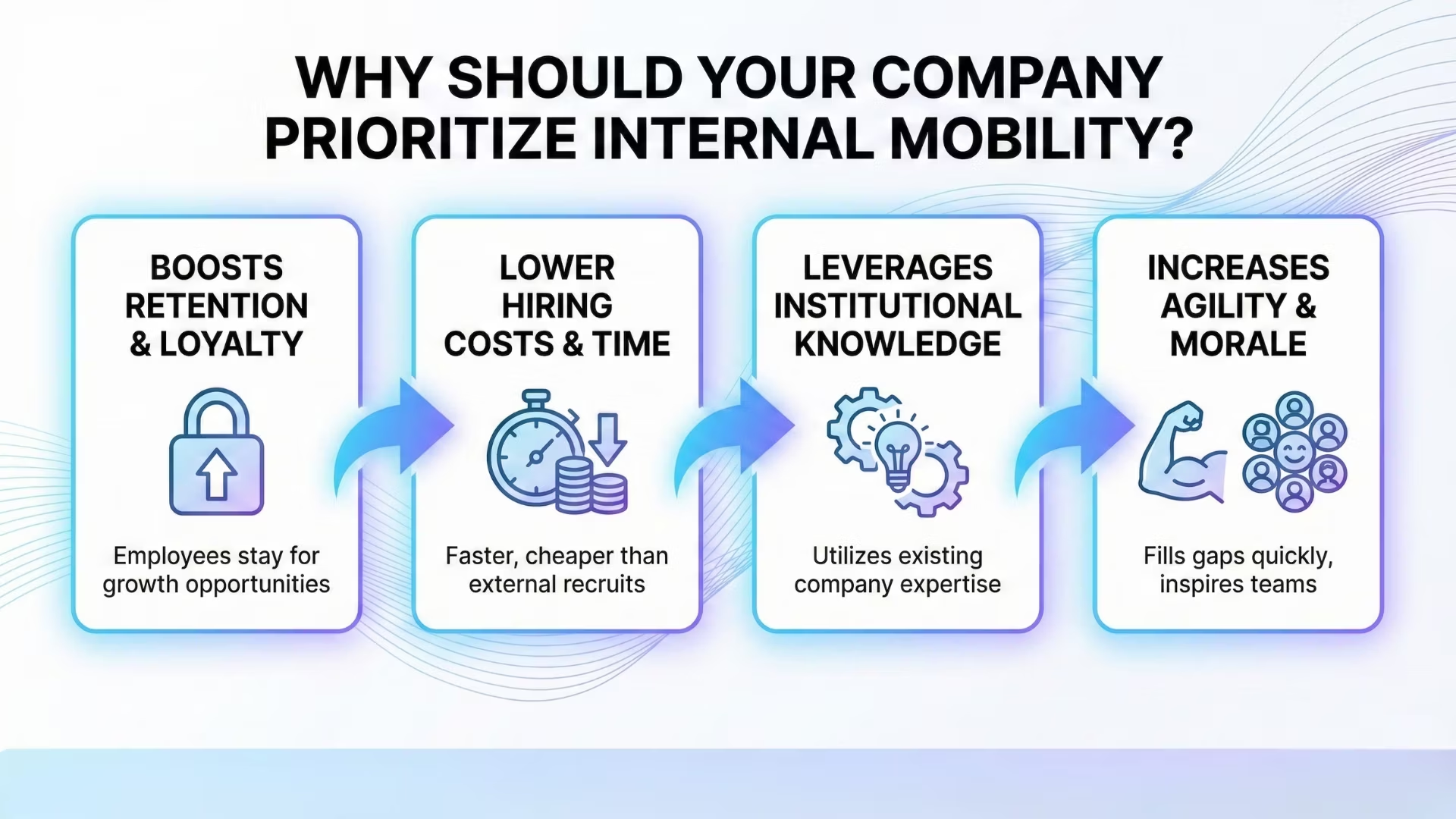
How does internal hiring boost employee retention and morale?
The number one reason employees leave their jobs is a lack of career development opportunities.
When your talented people feel stuck in a dead-end role, they will inevitably start looking elsewhere.
An internal mobility program is the most direct way to combat this.
When employees see their colleagues being promoted and moving into new, exciting roles, it sends a powerful message.
It tells them that the company invests in its people and that there is a clear path for career growth.
This sense of opportunity is a massive driver of employee engagement and loyalty.
Instead of polishing their resumes, your best people will be focused on developing the skills they need for their next internal move.
This creates a positive feedback loop: engaged employees perform better, making them strong candidates for internal roles, which further boosts morale.
How much money can you save with internal mobility?
External hiring is incredibly expensive.
Consider the costs involved: agency fees, advertising job postings, screening hundreds of resumes, and conducting multiple rounds of interviews.
These recruitment costs add up quickly.
On top of that, there's the cost of onboarding a new employee, which can take months before they are fully productive.
Internal hiring dramatically reduces these expenses.
You eliminate the need for external advertising and recruitment agencies.
The screening process is faster because you are dealing with a known quantity—you already have performance data and manager feedback.
The biggest saving, however, comes from onboarding.
An internal hire already understands the company culture, systems, and key stakeholders.
They can hit the ground running and become productive in their new role in a fraction of the time it would take an external hire.
This accelerated time-to-productivity represents a massive cost saving.
How does internal mobility create a more adaptable workforce?
In today's fast-changing business environment, adaptability is a competitive advantage.
An organization that can pivot quickly and deploy skills where they are needed most is built to last.
Internal talent mobility is the engine that drives this agility.
When employees move between departments and work on different projects, they develop a wide range of skills.
This skill development makes your workforce more versatile and resilient.
You are no longer dependent on a few siloed experts.
Instead, you have a deep bench of talent with cross-functional knowledge.
This organizational agility means that when a new challenge or opportunity arises, you can quickly assemble a team with the right mix of skills from across the company, rather than having to hire externally.
Is internal mobility the key to better succession planning?
Leadership transitions are one of the biggest risks any organization faces.
When a key leader leaves unexpectedly, it can create a vacuum that disrupts operations and damages morale.
A robust internal mobility program is the best insurance policy against this risk.
By creating clear career paths and providing developmental opportunities, you are constantly building your leadership pipeline.
Succession planning becomes an ongoing process, not a frantic reaction to a departure.
You can identify high-potential employees early in their careers and guide them through a series of roles that prepare them for future leadership positions.
When a senior role opens up, you have a pool of qualified, experienced internal candidates who are ready to step up.
This ensures continuity and stability at the highest levels of the organization.
How can internal hiring strengthen your company culture?
Every external hire is a gamble on cultural fit. No matter how rigorous your interview process is, you never truly know if a new person will align with your company's values and work style until they are on the job.
A bad cultural fit can be toxic, disrupting team dynamics and productivity. Internal hiring eliminates this gamble.
You are promoting or transferring someone who is already a part of your culture. They know the unwritten rules, they have established relationships, and they understand how things get done.
Furthermore, internal mobility helps break down the departmental silos that can stifle collaboration and innovation.
When people move between teams, they build bridges and share knowledge, fostering a more unified and collaborative "one-company" mindset.
How Do You Implement Internal Mobility? (Types and Mechanisms in Action)
Understanding the "why" is easy; the real challenge lies in the "how." A successful internal mobility program isn't a single initiative but a collection of different mechanisms and pathways.
Each type of movement serves a different purpose for the employee and the organization.
Let's explore these mechanisms in detail.
Promotions: The Classic Career Ladder
Promotions are the most visible and traditional form of internal mobility. They represent a vertical move up the organizational chart, offering increased responsibility, authority, and compensation.
This is a critical tool for recognizing and retaining top performers who have demonstrated mastery in their current role and are ready for the next level of leadership or expertise.
Why it works: Promotions are powerful motivators.
They provide a clear and tangible reward for high performance and dedication, signaling to the entire workforce that loyalty and excellence are valued.
For the company, promoting from within ensures that leadership roles are filled by individuals who have a deep understanding of the business and a proven track record of success within its specific context.
How to do it: The key to effective promotions is a fair and transparent process.
This involves having clearly defined career ladders for different roles, objective performance metrics, and a structured review process.
Managers should be trained to have regular career conversations with their direct reports to discuss their aspirations and what they need to do to be considered for the next level.
Open roles should be posted internally to ensure all qualified employees have a chance to apply.
Lateral Transfers: Building Cross-Functional Experts
A lateral transfer is a horizontal move to a role in a different department or team, but at a similar level of seniority.
While it doesn't come with a bigger title or an immediate pay raise, it offers something equally valuable: a wealth of new skills and experiences.
This is a cornerstone of modern talent management strategy.
Why it works: Lateral moves are the ultimate tool for breaking down silos.
They create employees with a holistic view of the business, who understand how different functions connect and impact one another.
An employee who has worked in both sales and product development, for example, can offer unique insights that lead to better products and more effective sales strategies.
This cross-pollination of ideas is a powerful driver of innovation.
How to do it: Encourage a culture where exploring different parts of the business is seen as a smart career move, not a sign of stagnation.
Create clear processes for employees to express interest in other departments.
Tools like an internal talent marketplace can use AI candidate ranking to help employees see which roles might be a good fit based on their existing and adjacent skills.
Job Rotations: The Ultimate Skill-Building Tool
Job rotation programs are structured, formal programs where employees spend a set amount of time (e.g., 3-6 months) in different roles or departments.
These are particularly common in leadership development programs, designed to give future leaders a comprehensive understanding of the entire business operation.
Why it works: Rotational programs are an accelerated form of skill development.
They immerse employees in new environments, forcing them to learn quickly and adapt.
This builds not only technical skills specific to each function but also crucial soft skills like adaptability, communication, and problem-solving.
It's an investment that pays huge dividends by creating a pipeline of well-rounded, agile leaders.
How to do it: Design a formal program with clear objectives, timelines, and support structures.
Pair participants with mentors in each rotation. Ensure that the work they are doing is meaningful and not just "shadowing." Gather feedback from both the employee and the host manager after each rotation to refine the program and track progress.
Project-Based Assignments: Agile Talent Deployment
In a fast-moving organization, needs can change quickly.
A critical project might emerge that requires a specific set of skills for a limited duration.
Instead of hiring a contractor, you can pull together a temporary team of internal experts from different departments.
This is an agile and effective form of internal talent mobility.
Why it works: Project-based work allows the company to be incredibly agile, deploying talent exactly where it's needed without the overhead of permanent hires.
For employees, it's a fantastic, low-risk way to gain new experiences, work with different people, and develop new skills while still having the security of their primary role.
It keeps work interesting and exposes them to different facets of the business.
How to do it: Create a centralized system or "talent marketplace" where managers can post upcoming projects and the skills required.
Employees can then browse these opportunities and apply for projects that match their skills and developmental goals.
This requires a culture of collaboration where managers are willing to "lend" their top talent to other teams for the greater good of the company.
Mentorships & Job Swaps: Learning Through Collaboration
Not all mobility has to involve a formal change in role.
Mentorship programs and job swaps are powerful developmental tools that facilitate knowledge sharing and empathy.
In a job swap, two employees might switch roles for a short period, from a day to a few weeks, to walk in each other's shoes.
Why it works: These methods are excellent for building empathy and understanding between departments.
When a sales representative and a customer support agent swap roles for a day, they each gain a profound appreciation for the challenges the other faces.
This leads to better collaboration and more effective processes.
Mentorships are crucial for knowledge transfer, especially for passing on the institutional wisdom of senior employees to the next generation.
How to do it: Formalize the programs to give them structure and legitimacy.
Create a system for employees to sign up as mentors or mentees.
For job swaps, start with a pilot program between two collaborative departments.
Provide clear guidelines and objectives for participants to ensure it's a valuable learning experience.
Temporary to Permanent: The "Try Before You Buy" Approach
This mechanism involves converting contractors, interns, or temporary employees into full-time, permanent staff.
While they may not have been permanent employees initially, they have become a known quantity within your organization, making this a form of low-risk internal hiring.
Why it works: This is the ultimate extended interview.
You've had months to assess the individual's skills, work ethic, and, most importantly, their cultural fit.
There are no surprises.
For the individual, it's a chance to prove their value and secure a permanent position in a company they already know and enjoy working for.
It's a win-win.
How to do it: Implement a structured process for evaluating temporary staff for permanent roles.
Don't let their contracts simply expire without a conversation.
Managers should provide regular feedback and have a clear process for recommending a high-performing contractor for an open full-time position.
How Do You Build a Winning Internal Mobility Program? (A Step-by-Step Framework)
A successful internal mobility program doesn't happen by accident.
It requires a deliberate, structured approach that involves clear policies, the right technology, and a supportive culture.
Follow this step-by-step framework to build a program that drives retention and engagement.
This is how you move from theory to a practical, impactful talent management strategy.
Step 1: How do you get leadership on board?
Your program will fail without buy-in from the top.
You need to make the business case for internal mobility.
Go beyond the HR benefits and speak the language of the C-suite: cost savings, risk mitigation, and competitive advantage.
What to do: Prepare a presentation with hard data.
Show the current costs of employee turnover and external recruitment.
Project the potential savings from a modest increase in the internal hiring rate.
Why it matters: Leadership provides the budget, resources, and cultural authority needed to make the program a success.
When leaders champion internal mobility, it signals to the entire organization that this is a strategic priority, not just another HR fad.
How to do it: Use industry benchmarks to show how you stack up against competitors.
Highlight the risks of not having a strong leadership pipeline.
Frame internal mobility as a key enabler of the company's long-term business goals.
Step 2: What policies and processes should you create?
Clarity and fairness are non-negotiable.
You must establish a clear, transparent, and consistent process for how internal moves happen.
Ambiguity creates frustration and accusations of favoritism, which can poison your company culture.
What to do: Create a formal policy document.
It should outline eligibility criteria (e.g., minimum time in a current role), the application process, how interviews are conducted, and how decisions are made and communicated.
Why it matters: A well-defined process ensures a level playing field for all employees.
It builds trust in the system and encourages people to participate.
It also protects the organization by ensuring decisions are fair and defensible.
How to do it: A common best practice is to require that all open positions are posted internally for a minimum period (e.g., five business days) before being opened to external candidates.
The policy should also clarify the role of the employee's current manager in the process—they should be informed, but they should not have veto power over an employee's desire to explore other opportunities.
Step 3: What is the right technology for internal mobility?
In a small company, you might manage this process with spreadsheets.
But to scale, you need technology.
Modern HR tech can transform internal mobility from a manual, cumbersome process into a seamless and intelligent system.
What to do: Evaluate technology solutions like a robust applicant tracking system (ATS) and an internal talent marketplace.
The right ATS can help you manage internal applications just as effectively as external ones.
A talent marketplace goes a step further, proactively matching employees' skills and aspirations to open roles, projects, and mentorship opportunities.
Why it matters: Technology provides the visibility and efficiency needed to make internal mobility work at scale.
It makes it easy for employees to see what opportunities are available and for HR and hiring managers to find qualified internal candidates.
As organizations like Deloitte point out, technology is a key enabler of a modern talent ecosystem.
How to do it: Look for tools that focus on skills, not just job titles.
A system that can analyze an employee's profile and suggest a lateral move they might not have considered is incredibly powerful.
The goal is to create a "career GPS" for your employees, powered by intelligent technology.
Step 4: How can you map skills and career paths?
Employees can't navigate to a destination if they don't have a map.
You need to provide them with visibility into what a career at your company can look like.
This involves mapping out potential career paths and being transparent about the skills needed for different roles.
What to do: For key roles and job families, create career maps that show potential vertical and lateral moves.
For each role on the map, define the core competencies and skills required.
Why it matters: This transparency empowers employees to take ownership of their career development.
They can see where they are, where they could go, and what skills they need to develop to get there.
It turns abstract career ambitions into an actionable plan.
How to do it: This doesn't have to be a massive, top-down project at first.
Start with one or two critical departments.
Work with managers and high-performing employees in those roles to document their career journeys and the skills that were most important.
Use this information to build out your initial maps, then expand from there.
Step 5: How do you communicate your internal mobility program?
You can build the world's best program, but if no one knows it exists, it will fail.
A continuous communication plan is essential to drive awareness, understanding, and participation.
What to do: Launch your program with a company-wide announcement.
But don't stop there.
Regularly share success stories of employees who have made internal moves.
Feature open internal roles in company newsletters and on intranet homepages.
Why it matters: Communication builds and sustains the culture of internal mobility.
It keeps the program top-of-mind and reminds employees that growth opportunities are available.
Seeing their peers succeed is the most powerful encouragement for others to explore their own internal career options.
How to do it: Integrate communication about internal mobility into all parts of the employee lifecycle.
Talk about it during onboarding to set expectations from day one.
Equip managers to discuss it during performance reviews.
Make it a regular topic at all-hands meetings.
Step 6: How do you empower your managers?
Managers are the single most important factor in the success or failure of your program.
A supportive manager can be a career coach who helps their people find their next great opportunity.
A fearful manager can be a gatekeeper who hoards talent and kills morale.
What to do: Train your managers on the company's philosophy of internal talent mobility.
Teach them how to have effective career conversations.
Most importantly, change how you measure their success.
Why it matters: If managers are only rewarded for their team's immediate output, they have a strong incentive to block their best people from leaving.
This short-sighted behavior is destructive in the long run.
How to do it: Adjust your performance management system.
Reward managers not for hoarding talent, but for developing and exporting it to other parts of the organization.
Celebrate the manager whose team member gets a big promotion in another department.
This shifts the mindset from "losing my best person" to "I am a developer of talent for the entire company."
Step 7: How do you integrate mobility with the HR ecosystem?
Internal mobility should not exist in a silo.
To be truly strategic, it must be deeply integrated with your other talent management processes.
This creates a cohesive system that supports employee growth from every angle.
What to do: Connect your internal mobility platform with your Learning and Development (L&D) programs, performance management system, and workforce planning tools.
Why it matters: This integration creates a seamless experience for employees and provides powerful data for the organization.
It allows you to build a true talent ecosystem.
How to do it:
- Link to L&D: When an employee expresses interest in a new internal role, your system should be able to recommend specific training courses or resources from your L&D platform to help them close any skill gaps.
- Link to Performance Management: Career aspirations and developmental goals should be a standard part of every performance review conversation.
- Link to Workforce Planning: Data from your internal mobility program can provide critical insights into your skills inventory and bench strength, helping you make more strategic decisions about future hiring and training needs.
What Are the Common Roadblocks to Internal Mobility and How Do You Fix Them?
Even the best-designed programs can run into trouble.
Anticipating these common challenges and having a plan to address them is crucial for long-term success.
Let's look at the biggest roadblocks and their practical solutions.
Problem: Why do some managers hoard their talent?
This is the most common and destructive challenge.
A manager, fearing their team's performance will suffer, actively or passively discourages their top employees from seeking internal moves.
They might delay approvals, give a lukewarm reference, or simply not inform their team about open roles.
How do you fix it? Change the incentives and the culture.
- Adjust Performance Metrics: As mentioned before, formally recognize and reward managers for developing and exporting talent.
Make "talent development" a core competency on which all managers are evaluated.
- Celebrate Talent Exporters: Publicly praise managers who have a track record of promoting their people into bigger roles, even in other departments.
Frame them as the company's best leaders.
- Provide Support: Reassure managers that you will support them in backfilling the role.
A smooth backfill process can reduce the anxiety associated with losing a key team member.
Problem: Why do employees say they can't find opportunities?
You believe you have plenty of opportunities, but in employee engagement surveys, people complain about a lack of career growth.
This is a visibility and communication problem.
If the process is confusing or opportunities are not easily accessible, employees will assume they don't exist.
How do you fix it? Create a one-stop-shop for internal careers.
- Implement an Internal Career Portal: This is non-negotiable.
You need a single, easy-to-find place where all internal jobs, projects, and mentorship opportunities are posted.
This should be a part of your company intranet.
- Proactive Communication: Don't just post and pray.
Actively push opportunities to employees through newsletters, dedicated Slack/Teams channels, and manager briefings.
- Simplify the Application: Make the internal application process as simple as possible.
An employee shouldn't have to fill out a 20-page application for a role within their own company.
Problem: How do you handle the fear of "brain drain" from the departing team?
The "talent-hoarding" manager's fear is not entirely unfounded.
When a star player leaves a team, it can create a real short-term gap in knowledge and productivity.
The key is to manage this transition effectively, rather than trying to prevent it.
How do you fix it? Focus on proactive knowledge transfer and succession.
- Implement a Knowledge Transfer Plan: Make a structured knowledge transfer process a mandatory part of any internal move.
This should involve documentation, shadowing, and a clear hand-off period.
The departing employee's responsibility is not just to do their job, but to make their job easy for the next person to do.
- Cross-Train Your Team: Encourage cross-training and skill-sharing within teams as a standard practice.
This ensures that there is always some redundancy in critical skills and that no single person is the sole point of failure.
- Focus on the Backfill: Frame the departure as an opportunity.
It creates a growth opportunity for another team member to step up, or it allows the manager to bring in a new person with a different skillset.
Problem: How do you prevent unfair or biased processes?
If employees perceive the internal mobility process as a "who you know" system, they will lose trust and disengage.
Favoritism, unconscious bias, and informal "shoulder-tapping" for promotions can destroy the credibility of your entire program.
How do you fix it? Implement structure, transparency, and accountability.
- Use Structured Interviews: Insist on using a consistent set of competency-based questions for all internal candidates for a given role.
This allows for a more objective, apples-to-apples comparison.
- Diverse Interview Panels: Ensure that interview panels include individuals from different backgrounds and departments to help mitigate individual biases.
- Communicate Decisions Respectfully: For every internal hire, there will be unsuccessful internal candidates.
It is critically important to provide them with timely, constructive, and respectful feedback.
Explain why they weren't selected and what they can do to be a stronger candidate for future roles.
This turns a rejection into a developmental opportunity.
How Do You Measure the Success of Your Internal Mobility Strategy?
To justify the continued investment in your internal mobility program, you need to demonstrate its value.
This means going beyond feel-good stories and tracking concrete metrics that show the program's impact on the business.
A data-driven approach is essential for gaining credibility and securing resources.
What are the essential quantitative metrics to track?
These are the hard numbers that will make your CFO and CEO pay attention.
They provide a clear, objective measure of the program's health and impact.
Internal Mobility Rate (IMR):
- What it is: The percentage of open roles filled by internal candidates over a specific period.
- Formula: (Total number of internal moves / Total number of employees) x 100.
Or, more commonly, (Number of roles filled internally / Total number of roles filled) x 100.
- Why it matters: This is your headline metric.
It shows the overall activity level of your program.
A rising IMR is a clear sign of a healthy and active internal talent ecosystem.
Cost-per-Hire (Internal vs.
External):
- What it is: The total cost of filling a role, calculated separately for internal and external candidates.
- Formula: Total Recruitment Costs / Number of Hires.
For internal hires, costs might include the HR team's time and any internal job board technology.
For external hires, costs include advertising, agency fees, recruiter salaries, etc.
- Why it matters: This directly demonstrates the financial ROI.
The difference between the two numbers is a hard saving that you can take to your leadership team.
It is almost always significantly cheaper to hire internally.
Time-to-Fill (Internal vs.
External):
- What it is: The number of days from when a job is opened to when an offer is accepted, calculated separately for internal and external hires.
- Why it matters: This metric shows the efficiency of your hiring process.
A shorter time-to-fill for internal roles means less downtime for the team and faster productivity.
This is a critical operational benefit.
Retention Rate of Internally Moved Employees:
- What it is: The percentage of employees who are still with the company 12, 24, or 36 months after an internal move.
- Why it matters: This is the ultimate proof that your program is working.
If employees who move internally stay longer than the general employee population, it's a powerful indicator that you are successfully matching people with roles where they feel engaged and see a future.
You can also compare the retention rate of managers who export talent vs.
those who hoard it.
How do you measure the qualitative impact?
Not all benefits can be captured in a simple number.
Qualitative measures help tell the story behind the data and capture the impact on culture, engagement, and readiness for the future.
Employee Engagement Scores:
- What it is: Use your company's regular engagement or pulse surveys.
Pay close attention to questions related to career development, growth opportunities, and fairness of promotions.
- How to measure: Track the scores on these specific questions over time.
You can also segment the data to compare the engagement levels of employees who have made an internal move versus those who have not.
- Why it matters: A successful mobility program should lead to a measurable increase in employee satisfaction with career opportunities, which is a key driver of overall engagement.
Bench Strength for Critical Roles:
- What it is: A measure of how many "ready-now" internal candidates you have for your most critical leadership and technical positions.
This is a core metric for succession planning.
- How to measure: This is often done through a talent review process, where leadership teams assess the potential and readiness of employees for future roles.
The output is often a "9-box" grid or a similar talent map.
- Why it matters: It quantifies the organization's readiness for the future and its resilience against unexpected departures.
A strong bench is a sign of a healthy talent pipeline.
Innovation and Collaboration Metrics:
- What it is: This is more difficult to measure but can be incredibly impactful.
It's about tracking the impact of cross-functional movement on business outcomes.
- How to measure: Look for anecdotal evidence and case studies.
Did a project staffed by a cross-functional internal team lead to a new product idea? Did a lateral move from engineering to marketing result in a more effective product launch?
- Why it matters: This connects internal mobility directly to business innovation.
It shows that moving people around isn't just an HR exercise; it's a way to generate new ideas and solve problems more creatively.
What's Next? The Future of Internal Talent Mobility
The world of work is changing at an unprecedented pace.
The concept of a linear career path is becoming obsolete.
To stay competitive, your internal talent mobility strategy must evolve as well.
Here are the key trends that are shaping the future of how companies develop and deploy their people.
The Rise of AI-Powered Talent Marketplaces
The internal career portal is evolving.
The future is an intelligent, AI-driven talent marketplace.
This is a platform that goes beyond simply listing jobs.
It creates a dynamic ecosystem where opportunities find people, not the other way around.
What it looks like: An employee has a profile that details not just their job history, but their skills, project experience, and career aspirations.
The AI engine then proactively recommends opportunities to them—not just full-time roles, but also short-term projects, mentorship opportunities, and relevant training courses.
As a resource on LinkedIn Learning suggests, personalizing employee learning and development is key.
Why it matters: This technology democratizes opportunity.
It ensures that everyone has visibility into potential career moves, not just those with the right network.
It helps uncover hidden talent within the organization and allows for a truly agile deployment of skills.
Shifting from Job Titles to a Skills-First Approach
In the future, your job title will matter less than the portfolio of skills you possess.
Organizations are moving towards a skills-first approach to talent management.
This means deconstructing rigid job descriptions into a collection of underlying skills and competencies.
What it looks like: Instead of searching for a "Marketing Manager," a hiring manager will search for skills like "SEO strategy," "market analysis," "brand management," and "team leadership." The system will then find all employees who possess these skills, regardless of their current job title or department.
Why it matters: A skills-based approach dramatically expands the internal talent pool.
It recognizes that a data analyst in finance might have the analytical skills needed for a marketing analytics role.
This focus on transferable skills is the key to unlocking true cross-functional mobility and building a more adaptable workforce.
How will remote and hybrid work change internal mobility?
The rise of remote and hybrid work has broken down geographical barriers to talent.
This has a profound impact on internal mobility.
A role that was once only available to people in the London office is now potentially open to any qualified employee, anywhere in the world.
What it looks like: Location becomes less of a constraint for many roles.
A talented employee in a small satellite office now has access to the same career opportunities as someone at headquarters.
This can also lead to more innovative forms of mobility, like short-term virtual assignments on global teams.
Why it matters: This massively expands the scope and inclusivity of your internal mobility program.
It allows you to deploy the best talent to the right role, regardless of physical location.
However, it also requires a more deliberate effort to build culture and connection among geographically dispersed teams.
Personalized Learning Paths and Career Journeys
The one-size-fits-all approach to career development is dead.
The future is about providing employees with personalized learning paths and career journeys that are tailored to their individual skills, interests, and goals.
What it looks like: Technology will play a huge role here.
Based on an employee's career goals, the system will create a personalized development plan.
It might recommend a specific lateral move, a project assignment to build a critical skill, and a series of online courses—all designed to help them reach their desired next role.
Why it matters: Personalization drives engagement.
When employees feel that the company is genuinely invested in their unique career journey, their loyalty and commitment skyrocket.
It shifts the dynamic from the company dictating a career path to the company co-creating a career journey with the employee.
How Can Employees Navigate Internal Mobility for Career Growth?
A successful program requires active participation from employees.
They need to be the drivers of their own careers.
This section provides a practical, step-by-step guide for employees who want to leverage their company's internal mobility opportunities.
Start with Self-Assessment: What are your skills and goals?
You can't plan a journey without knowing your starting point and your desired destination.
The first step is to look inward.
Don't wait for your manager to tell you what's next.
What to do: Take a detailed inventory of your skills—both technical and soft skills.
What are you great at? What do you enjoy doing? Then, think about your long-term career goals.
What kind of work do you want to be doing in two years? In five years? How to do it: Use a simple T-chart.
On one side, list your strengths and skills.
On the other, list the areas you want to develop.
Be honest with yourself.
This self-awareness is the foundation of your career plan.
How to find internal opportunities?
Once you know what you're looking for, you need to know where to look.
Don't just wait for opportunities to fall into your lap.
Be proactive.
What to do: Your first stop should be your company's internal career portal.
Make a habit of checking it weekly.
But don't stop there.
Network internally.
Have coffee chats with people in departments that interest you.
How to do it: When you network, don't just ask for a job.
Be curious.
Ask people about their roles, what challenges they face, and what skills are most important for their team.
This builds relationships and gives you valuable intelligence about potential future roles.
How do you talk to your manager about moving roles?
This can be a scary conversation, but it's essential.
A good manager should be your biggest advocate.
The key is to frame the conversation collaboratively.
What to do: Schedule a dedicated time to discuss your career goals.
This should not be a surprise topic at the end of a weekly check-in.
Come prepared to talk about your self-assessment and your long-term aspirations.
How to do it: Frame it as a partnership.
Say something like, "I am really committed to growing my career here at the company.
I've been thinking about my long-term goals, and I'd love to get your advice on how I can build the skills I need to get there." This shows that you are not planning to leave tomorrow, but are looking for a path to grow within the company.
How to prepare for an internal interview?
Don't assume that an internal interview is just a formality.
You still need to prepare and sell yourself.
In some ways, the stakes are even higher because you will continue to work with these people regardless of the outcome.
What to do: Treat it as seriously as you would an external interview.
Research the role and the team.
Prepare specific examples of your accomplishments using the STAR (Situation, Task, Action, Result) method.
How to do it: The big difference with an internal interview is that you are a known quantity.
Don't shy away from this.
Leverage your institutional knowledge.
Talk about how your understanding of the company's culture and systems will allow you to make an immediate impact.
Also, be prepared to answer the question, "Why do you want to leave your current team?" Be positive and focus on the pull of the new opportunity, not the push from your old role.
Frequently Asked Questions about Internal Mobility
What is meant by internal mobility?
Internal mobility refers to the movement of employees to different roles within the same organization.
This can include promotions (vertical moves), transfers to different departments (lateral moves), or temporary assignments on new projects (developmental moves).
What is another word for internal mobility?
Other common terms include internal talent movement, career progression, and talent mobility.
They all refer to the strategic practice of developing and deploying employees within the company.
How do I ask for internal mobility?
Start by having a proactive career conversation with your manager.
Express your long-term commitment to the company and your desire to grow.
Ask questions like, "What skills do I need to develop to be ready for the next level?" or "Are there any upcoming projects where I could gain experience in a new area?"
How do you calculate the internal mobility rate?
The internal mobility rate is typically calculated as the percentage of open positions that were filled by internal candidates during a specific period.
The formula is: (Number of Roles Filled Internally / Total Number of Roles Filled) x 100.
Are internal hires better than external hires?
Internal hires offer significant advantages.
They have a shorter onboarding time, lower hiring costs, and a proven cultural fit.
However, external hires can bring fresh perspectives and new skills that may not exist within the organization.
A healthy talent strategy uses a balanced approach, leveraging both internal and external talent pipelines.
Conclusion
Internal mobility is not just an HR program; it is a fundamental business strategy for the modern era.
In a world where talent is the ultimate competitive advantage, the ability to retain, develop, and deploy your best people is paramount.
By embracing internal hiring and building a robust internal talent mobility ecosystem, you transform your organization into a place where employees want to build a long-term career.
The benefits are clear and compelling.
You will see a dramatic improvement in employee retention, a significant reduction in recruitment costs, and the creation of a more agile, skilled, and engaged workforce.
You will build a strong leadership pipeline and a collaborative culture that can weather any storm.
Implementing a successful program requires a strategic commitment, clear processes, and the right technology.
It requires a cultural shift where managers are celebrated as developers of talent, and employees are empowered to own their career journeys.
The journey may require effort, but the destination—an organization full of engaged, growing, and loyal employees—is more than worth it.
Call to Action
Ready to stop the talent drain and start building your internal talent pipeline? Discover how Recooty's Applicant Tracking System can help you identify, manage, and hire your best internal candidates with ease.
Streamline your internal hiring process and create the career pathways your employees are looking for.
Sign up for a free demo today and see how you can turn your company into a career destination.
.png)
.png)

.webp)