.webp)


Why Your New Hires Feel Lost and How a Buddy System Can Be Their Guide
Starting a new job is overwhelming. New faces, new processes, and a new culture can make even the most confident professional feel lost.
This initial uncertainty is a major pain point that can lead to slow productivity, disengagement, and, ultimately, early turnover.
But what if every new hire had a friendly guide from day one? This is where implementing a buddy system for new hire onboarding transforms the new employee experience.
From the moment you streamline your entire recruitment process, you're focused on how to improve the candidate experience.

An Applicant Tracking System sets the stage, but the real work of integration begins on day one, and a buddy program is your most powerful tool for success.
This guide is your complete blueprint for building a world-class onboarding buddy program.
I’ve spent years in HR and have seen firsthand how a well-structured system boosts confidence and accelerates integration.
We will move beyond theory to provide actionable steps, templates, and troubleshooting advice.
By using modern HR solutions and focusing on human connection, you'll learn to build a program that not only welcomes new team members but also secures their long-term success with your company.
We'll explore how collaborative hiring features can help identify great potential buddies even during the hiring phase.
You will achieve higher retention, foster a stronger company culture, and turn new hires into productive, engaged employees faster than ever before.
With tools from Recooty, you can manage the entire employee lifecycle with greater efficiency.
The Foundation: What Is an Onboarding Buddy System?
An onboarding buddy system is a structured program that pairs a new employee with a seasoned, existing employee.
This "buddy" is not their manager but a peer who serves as an informal guide, a friendly face, and a go-to resource for the unwritten rules of the workplace.
Their primary role is to help the new hire navigate the social and cultural aspects of the company during their first few weeks or months.
Think of it as a dedicated friend at work. They answer the "silly" questions a new hire might be hesitant to ask their boss.
Questions like, "Where's the best place for coffee?" or "What's the real dress code on Fridays?" This informal support system is crucial for social acclimation and helps new employees feel a sense of belonging from the very beginning.
It’s a key part of modern HR onboarding practices.
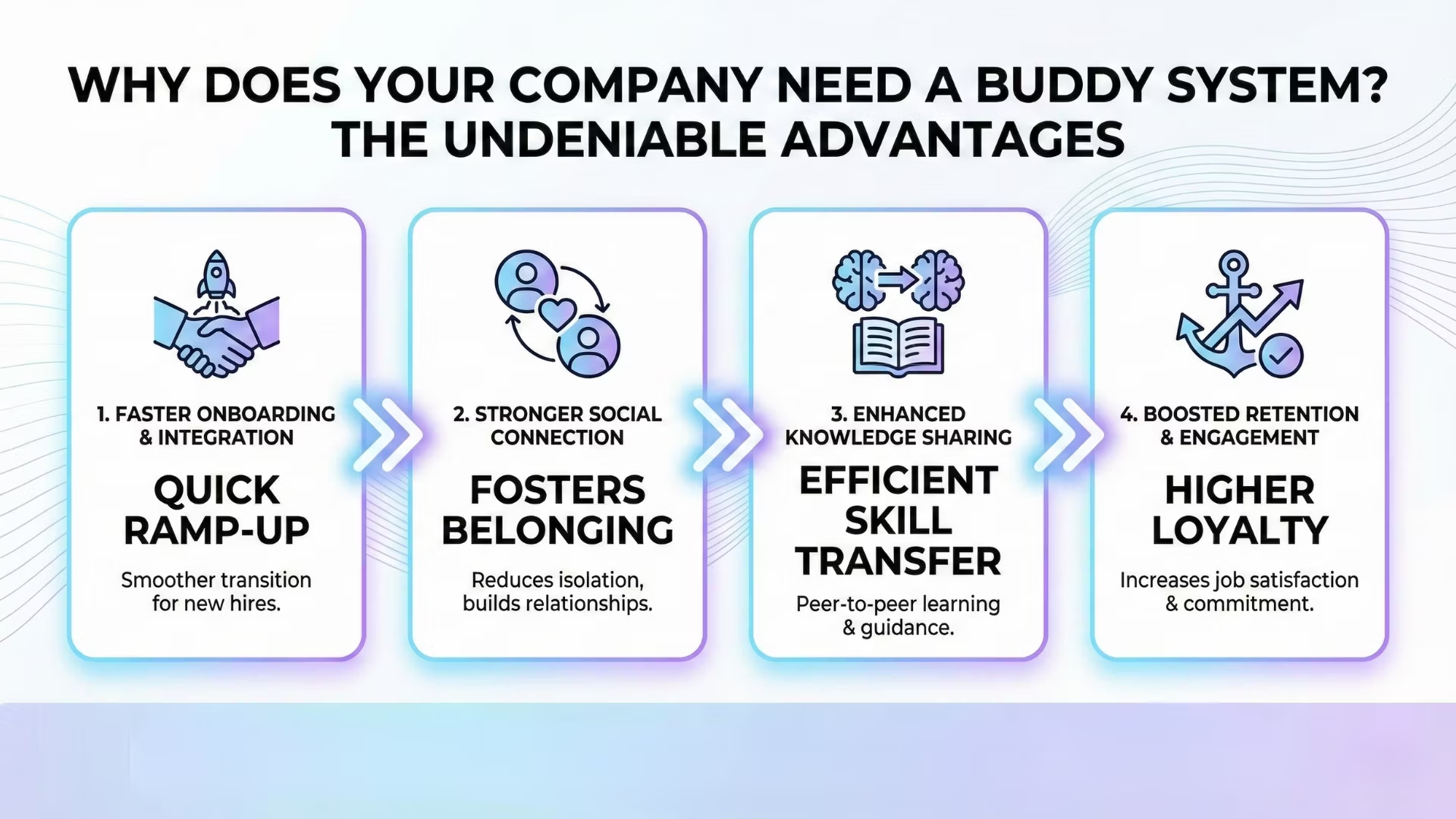
Why Does Your Company Need a Buddy System? The Undeniable Advantages
Implementing a buddy program isn't just a nice-to-have; it's a strategic business decision with a measurable return on investment.
The benefits extend to everyone involved—the new hire, the buddy, and the organization as a whole.
In my experience, the impact on employee engagement and retention is immediate and profound.
How does a buddy system benefit new hires?
For a new employee, the first few weeks are a whirlwind. A buddy acts as an anchor in the storm, providing stability and support that formal training often misses.
- Increased Comfort and Confidence: A buddy provides a safe space for questions, reducing the anxiety of the unknown.
This support builds confidence, empowering new hires to take on challenges sooner.
- Faster Social Integration: Buddies actively introduce new hires to other colleagues and teams.
This accelerates the process of building a professional network and feeling like part of the community.
- Clearer Cultural Understanding: A buddy can explain the company’s unwritten rules and norms.
This insight into the company culture helps new hires adapt more quickly and avoid common missteps.
- Improved Productivity: With a go-to person for procedural and logistical questions, new hires spend less time feeling stuck.
This direct line to information helps them get up to speed on their tasks and contribute meaningfully much faster.
What are the organizational benefits of a buddy program?
The ripple effect of a positive new hire experience benefits the entire company.
A successful buddy system directly impacts your bottom line and strengthens your organizational health.
- Higher Employee Retention Rates: When new hires feel supported and connected, they are far more likely to stay.
A strong buddy system can dramatically reduce costly 30-60-90 day turnover.
- Enhanced Employee Engagement: A welcoming environment fosters loyalty and enthusiasm.
This initial positive experience translates into higher long-term job satisfaction and engagement.
- Accelerated Time-to-Productivity: Buddies help new hires navigate internal systems and processes efficiently.
This support shortens the learning curve and allows new employees to become productive team members faster.
- Stronger, More Inclusive Culture: A buddy program signals that you care about your employees as individuals.
It reinforces a culture of collaboration, peer support, and teamwork.
- Increased Managerial Efficiency: By handling informal questions, buddies free up managers to focus on strategic training and performance goals.
This makes the entire onboarding process more efficient.
A Step-by-Step Blueprint for Crafting Your Buddy System Program
A successful buddy system doesn't happen by accident. It requires careful planning, thoughtful execution, and continuous refinement.
Here’s a detailed, phased approach to building your program from the ground up.
Phase 1: How should we plan and set goals for the program?
Before you pair a single employee, you need a clear vision. This strategic foundation will guide every decision you make and ensure your program delivers real results.
Defining Clear Objectives for Your Program
Start by asking what you want to achieve. Are you trying to reduce early turnover, increase new hire satisfaction scores, or speed up productivity? Your goals should be S.M.A.R.T. (Specific, Measurable, Achievable, Relevant, Time-bound).
- Example Goal 1: "Increase our 90-day new hire retention rate by 15% within the next fiscal year."
- Example Goal 2: "Improve the 'sense of belonging' score in our new hire feedback surveys by 25% over the next six months."
- Example Goal 3: "Reduce the average time-to-full-productivity for new engineers from 6 weeks to 4 weeks."
Establishing Program Scope and Duration
Decide on the key parameters of your program. A clear framework prevents confusion and sets expectations for everyone involved.
- Duration: How long will the formal buddy relationship last? Common durations are 30, 60, or 90 days.
I recommend at least 90 days to cover the entire initial integration period.
- Participants: Will the program be for all new hires or specific departments? A company-wide program is ideal for consistency.
- Structure: Will meetings be structured or informal? A mix is best.
Suggest a few required check-ins (e.g., first day, end of week one, 30-day mark) but encourage informal coffee chats and lunches.
Phase 2: How do we find and prepare the best buddies?
The success of your program hinges on the quality of your buddies. They are your culture carriers and the first impression of your team's supportive nature.
What is the selection criteria for an effective buddy?
Not everyone is cut out to be a buddy. You need to select employees who genuinely want to help and who embody your company's values.
- Positive and Enthusiastic: Choose employees who are passionate about the company and their work.
Their positive attitude is contagious.
- Strong Performers: Buddies should be knowledgeable and proficient in their own roles.
They need to be credible sources of information.
- Excellent Communicators: Look for people with strong interpersonal skills who are patient and approachable.
- Well-Connected: An ideal buddy has a good network within the company and can facilitate introductions.
- Volunteers vs.
Appointees: Always prioritize volunteers.
Someone who wants to be a buddy will be far more engaged than someone who is assigned the role.
How should we train our buddies?
Never assume a great employee will automatically be a great buddy. Providing clear training and guidelines is essential for consistency and success.
Your training should cover:
- Program Goals and Structure: Ensure they understand the "why" behind the program.
- The Buddy's Role and Responsibilities: Use a clear new employee buddy program checklist to outline their tasks.
- Boundaries: Clearly state what a buddy is NOT.
They are not a manager, therapist, or HR representative.
- Conversation Starters and Check-in Topics: Provide a template with suggested topics for their meetings.
- Company Resources: Equip them with knowledge about key resources to direct the new hire to.
- Confidentiality and Escalation: Train them on how to handle sensitive information and when to escalate issues to HR or a manager.
How can we motivate and incentivize buddies?
Being a buddy is extra work. To ensure they stay motivated, you need to recognize their contribution and make the role desirable.
- Public Recognition: Acknowledge great buddies in company newsletters, team meetings, or all-hands announcements.
- Small Rewards: Offer gift cards, a free lunch, or extra PTO as a thank you.
- Link to Professional Development: Frame the buddy role as a leadership development opportunity.
It helps them build mentorship and communication skills.
- Managerial Support: Ensure managers are supportive and allow buddies the time needed to fulfill their duties without it negatively impacting their core responsibilities.
Phase 3: How do we match new hires with the right buddy?
Thoughtful matching is the secret sauce of a great buddy program. A poor match can make the experience awkward or unhelpful, while a great match can forge a lasting professional relationship.
What are the nuances of effective buddy matching?
Go beyond just pairing people in the same department.
Deeper compatibility creates a much stronger connection.
- Role and Department: It's helpful to match someone within the same or a related team for job-specific context.
However, a cross-departmental buddy can be great for building a wider network.
- Shared Interests: If possible, gather information on hobbies or interests.
A shared love for hiking or board games can be a great icebreaker.
- Communication Styles: Try to match an outgoing new hire with an equally sociable buddy, or a more introverted person with someone who is a patient and calm communicator.
- Career Goals: Pairing a new hire with a buddy who has a career path they admire can add a layer of informal mentorship to the relationship.
- Leverage Technology: Don't be afraid to use technology to find the best fit.
Modern HR tools can help you identify ideal pairings based on a wide range of data points.
For instance, AI candidate matching technology can be adapted to suggest pairings based on skills, experience, and personality profiles for optimal compatibility.
How should we communicate expectations to everyone?
Once a match is made, send a welcome email to the new hire, the buddy, and the new hire's manager.
This email should clearly outline the program, the purpose of the relationship, the expected duration, and the first steps. Clarity prevents confusion.
The Buddy's Handbook: What Are the Roles and Responsibilities?
A well-defined role empowers your buddies to be effective. This handbook section clarifies what is expected of them and provides best practices for success.
What is the core mission of an onboarding buddy?
An onboarding buddy's primary mission is to provide informal support and help a new hire feel welcome.
Their responsibilities fall into a few key categories.
- Offer a Warm Welcome: Be the first friendly face.
Reach out before the new hire's start date to say hello and answer any last-minute questions.
- Answer Informal Questions: Be the go-to person for questions about office logistics, company acronyms, social etiquette, and team norms.
- Provide Emotional Support: Check in regularly. Ask how they're feeling and offer encouragement.
Starting a new job is stressful, and a little empathy goes a long way.
- Facilitate Introductions: Proactively introduce the new hire to other team members and key people in other departments.
- Be a Cultural Guide: Share stories and insights that bring the company culture to life.
Explain "the way things are done around here."
What is a buddy NOT responsible for?
Clarifying boundaries is just as important as defining responsibilities.
This protects the buddy from burnout and ensures the manager's role is respected.
A buddy is NOT:
- A Manager: They do not discuss performance, set goals, or give formal feedback.
- An HR Representative: They do not discuss salary, benefits, or official company policies.
They should direct these questions to HR.
- A Formal Trainer: They are not responsible for teaching the technical aspects of the job.
They can point to resources, but formal training belongs to the manager and training teams.
- A Therapist: While they should be supportive, they are not equipped to handle serious personal or mental health issues.
They should know how to guide the new hire to the company's EAP or HR for professional help.
How can buddies foster genuine connections?
The best buddy relationships move beyond a checklist of tasks to form a real connection. Encourage your buddies to adopt these best practices.
- Be Proactive: Don't wait for the new hire to ask for help.
Reach out, schedule check-ins, and invite them to lunch or coffee.
- Practice Active Listening: Pay attention to what the new hire is saying and ask follow-up questions.
Show that you genuinely care about their experience.
- Share Your Own Experiences: Be open about your own journey at the company, including your own initial challenges.
This vulnerability builds trust and makes you more relatable.
- Celebrate Small Wins: Acknowledge their progress.
A simple "great job in that meeting today" can be a huge confidence booster.
Navigating the Landscape: How to Troubleshoot and Optimize Your Program
No program is perfect from the start. Being prepared for common challenges and having a plan to address them is key to long-term success and continuous improvement.
What are the potential challenges or pitfalls of a buddy system?
Anticipating problems is the first step to preventing them. Here are some of the most common hurdles I've seen organizations face.
- Lack of Commitment: Buddies become too busy with their own work and neglect their responsibilities.
- Poor Matching: A personality clash or lack of common ground makes interactions awkward and unhelpful.
- Unclear Guidelines: Buddies and new hires are unsure of their roles, leading to confusion and inaction.
- Buddy Burnout: The same few star employees are repeatedly asked to be buddies, leading to fatigue.
- New Hire Reluctance: A new hire might be too shy or intimidated to reach out to their buddy.
- Perceived Irrelevance: The program feels like a "check-the-box" exercise with no real value.
What are some strategies for troubleshooting these issues?
When you encounter a problem, address it proactively.
A quick response can save a struggling buddy-new hire relationship and improve the overall program.
Problem
Troubleshooting Strategy
Buddy is unresponsive
HR or the manager should check in with the buddy. If they are overloaded, reassign the new hire to a different buddy.
Poor match/No chemistry
Offer a "no-fault" rematch. Let both parties know it's okay if the fit isn't right and discreetly find a new partner.
Confusion about roles
Send out a program refresher email. Host a quick Q&A session for all current buddies to clarify expectations.
Buddy burnout
Create a larger pool of trained volunteers. Implement a rotation system so no one is a buddy ṆṬmore than once or twice a year.
New hire is not engaging
Encourage the buddy to be extra proactive in scheduling the first few meetings. The manager should also encourage the new hire to utilize their buddy.
How can we optimize the buddy program for long-term success?
A great program evolves.
Use feedback and data to make continuous improvements.
- Gather Regular Feedback: Survey new hires and buddies at the end of the program.
Ask what worked well and what could be improved.
- Host Buddy Roundtables: Create a support network for your buddies.
A quarterly meeting allows them to share best practices and troubleshoot challenges together.
- Update Your Training: Use the feedback you collect to refine your training materials and guidelines each year.
- Adapt and Evolve: As your company grows and changes, your buddy program should too.
Be open to trying new approaches, like cross-functional or remote-first buddy systems.
Measuring Impact: How to Prove the Value of Your Buddy System
To secure ongoing support and resources for your buddy program, you need to demonstrate its value.
This means tracking the right metrics and connecting them to key business outcomes.
What are the key metrics for evaluating a buddy program's success?
Your metrics should directly relate to the goals you set in the planning phase. A mix of quantitative and qualitative data will tell the most complete story.
- New Hire Retention Rate: This is the ultimate metric.
Track retention at the 30, 90, and 180-day marks.
Compare the retention rate of employees who had a buddy to those who didn't (if you have a control group).
- Time-to-Productivity: Work with managers to assess how quickly new hires are able to work independently and meet performance expectations.
- New Hire Satisfaction Surveys: Use pulse surveys or a dedicated onboarding survey.
Ask specific questions about the buddy program's effectiveness.
- Employee Engagement Scores: Look for a positive correlation between participation in the buddy program and higher engagement scores in your company-wide surveys.
- Qualitative Feedback: Collect anecdotes and testimonials from new hires, buddies, and managers.
These stories bring the data to life.
How do we calculate the ROI of a buddy system?
Demonstrating a return on investment makes a powerful business case.
A simple ROI calculation can be framed like this:
ROI = (Financial Gains - Program Costs) / Program Costs
- Financial Gains: Calculate the cost savings from reduced turnover.
For example, if the cost to replace an employee is $15,000 and your program prevents 5 early departures, your savings are $75,000.
Also, estimate the value of faster productivity.
- Program Costs: These are typically minimal.
Include the cost of any small incentives (gift cards, lunches) and the cost of the time buddies spend away from their primary tasks.
Even a conservative estimate will likely show a significant positive ROI, proving that the benefits of a buddy system at work far outweigh the costs.
Adaptability and Versatility: How to Tailor Your Buddy System
One size does not fit all. A modern buddy system must be flexible enough to work for different environments, company sizes, and specific onboarding needs.
How does a buddy system work for remote and hybrid onboarding?
In a remote or hybrid environment, a buddy is more important than ever. They are a crucial link to the company culture when there are no "water cooler" moments.
- Be Intentional with Communication: Schedule regular video calls.
Don't rely solely on chat messages, as face-to-face interaction builds rapport more effectively.
- Focus on Virtual Socialization: The buddy should invite the new hire to virtual coffee chats with team members or to join company social channels (e.g., a Slack channel for pet lovers).
- Help Navigate Digital Tools: Buddies can help new hires understand the etiquette and best practices for using communication tools like Slack, Teams, and Asana.
- Be Mindful of Time Zones: If the buddy and new hire are in different time zones, establish clear expectations for response times and schedule meetings that work for both of them.
What are the different models of buddy systems?
You can structure your program in several ways depending on your goals.
- Peer Buddy (Most Common): A teammate in a similar role who provides day-to-day support.
- Mentor Buddy: A more senior employee who can offer career advice and guidance in addition to informal support.
This blends onboarding with a mentor program.
- Cultural Buddy: An employee from a different department who is exceptionally well-versed in the company culture.
This is great for fostering cross-departmental connections.
- Cross-Departmental Buddy: Intentionally pairing a new hire with someone from a team they will work with closely.
This helps build critical working relationships from day one.
What are the legal and ethical considerations?
While buddy systems are informal, it's wise to be mindful of potential issues.
- Confidentiality: Remind buddies that they may hear sensitive personal or professional information and that it should be kept confidential unless it involves illegal activity or harassment, which must be reported to HR.
- Avoiding Bias: Ensure your buddy selection and matching process is fair and inclusive.
Avoid any practices that could be seen as discriminatory.
- Setting Boundaries: Train buddies to avoid giving advice on personal matters (financial, legal, medical) and to maintain professional boundaries.
Future-Proofing Onboarding with Technology and AI
As workplaces evolve, so too must our HR practices. Technology can supercharge your buddy program, making it more efficient, effective, and scalable.
Integrating your buddy program for new hires with your broader HR tech stack creates a seamless experience.
When your onboarding system, like the one offered by Recooty, communicates with your performance management and employee engagement platforms, you create a powerful, data-driven approach to talent management.
This synergy ensures that the positive momentum from a great onboarding experience carries through the entire employee lifecycle.
By embracing human resources technology, you're not just improving a single program; you're building a smarter, more responsive organization for the future.
Your Guide to a Successful Launch and a Brighter Onboarding Future
Implementing a buddy system for new hire onboarding is one of the most impactful investments you can make in your people and your culture.
It transforms a stressful, uncertain time into a welcoming and supportive experience.
By moving beyond a simple checklist and building a program with clear goals, dedicated training, thoughtful matching, and a commitment to continuous improvement, you create a powerful engine for engagement and retention.
The journey from a nervous new hire to a confident, productive team member is a critical one.
A buddy doesn't just show them the ropes; they show them they belong.
It's time to champion this change in your organization.
Use this guide to build, refine, and champion a buddy program that will pay dividends for years to come, creating a stronger, more connected workplace for everyone.
can you please format the heading correctly
Implementing a Buddy System for New Hire Onboarding: A Comprehensive Guide to Seamless Integration and Enhanced Retention
Why Your New Hires Feel Lost and How a Buddy System Can Be Their Guide
Starting a new job is overwhelming.
New faces, new processes, and a new culture can make even the most confident professional feel lost.
This initial uncertainty is a major pain point that can lead to slow productivity, disengagement, and, ultimately, early turnover.
But what if every new hire had a friendly guide from day one?
This is where implementing a buddy system for new hire onboarding transforms the new employee experience.
From the moment you streamline your entire recruitment process, you're focused on how to improve the candidate experience.
An Applicant Tracking System sets the stage, but the real work of integration begins on day one, and a buddy program is your most powerful tool for success.
This guide is your complete blueprint for building a world-class onboarding buddy program.
I’ve spent years in HR and have seen firsthand how a well-structured system boosts confidence and accelerates integration.
We will move beyond theory to provide actionable steps, templates, and troubleshooting advice.
By using modern HR solutions and focusing on human connection, you'll learn to build a program that not only welcomes new team members but also secures their long-term success with your company.
We'll explore how collaborative hiring features can help identify great potential buddies even during the hiring phase.
You will achieve higher retention, foster a stronger company culture, and turn new hires into productive, engaged employees faster than ever before.
With tools from Recooty, you can manage the entire employee lifecycle with greater efficiency.
The Foundation: What Is an Onboarding Buddy System?
An onboarding buddy system is a structured program that pairs a new employee with a seasoned, existing employee.
This "buddy" is not their manager but a peer who serves as an informal guide, a friendly face, and a go-to resource for the unwritten rules of the workplace.
Their primary role is to help the new hire navigate the social and cultural aspects of the company during their first few weeks or months.
Think of it as a dedicated friend at work.
They answer the "silly" questions a new hire might be hesitant to ask their boss.
Questions like, "Where's the best place for coffee?" or "What's the real dress code on Fridays?" This informal support system is crucial for social acclimation and helps new employees feel a sense of belonging from the very beginning.
It’s a key part of modern HR onboarding practices.
Why Does Your Company Need a Buddy System? The Undeniable Advantages
Implementing a buddy program isn't just a nice-to-have; it's a strategic business decision with a measurable return on investment.
The benefits extend to everyone involved—the new hire, the buddy, and the organization as a whole.
In my experience, the impact on employee engagement and retention is immediate and profound.
How does a buddy system benefit new hires?
For a new employee, the first few weeks are a whirlwind.
A buddy acts as an anchor in the storm, providing stability and support that formal training often misses.
- Increased Comfort and Confidence: A buddy provides a safe space for questions, reducing the anxiety of the unknown.
This support builds confidence, empowering new hires to take on challenges sooner.
- Faster Social Integration: Buddies actively introduce new hires to other colleagues and teams.
This accelerates the process of building a professional network and feeling like part of the community.
- Clearer Cultural Understanding: A buddy can explain the company’s unwritten rules and norms.
This insight into the company culture helps new hires adapt more quickly and avoid common missteps.
- Improved Productivity: With a go-to person for procedural and logistical questions, new hires spend less time feeling stuck.
This direct line to information helps them get up to speed on their tasks and contribute meaningfully much faster.
What are the organizational benefits of a buddy program?
The ripple effect of a positive new hire experience benefits the entire company.
A successful buddy system directly impacts your bottom line and strengthens your organizational health.
- Higher Employee Retention Rates: When new hires feel supported and connected, they are far more likely to stay.
A strong buddy system can dramatically reduce costly 30-60-90 day turnover.
- Enhanced Employee Engagement: A welcoming environment fosters loyalty and enthusiasm.
This initial positive experience translates into higher long-term job satisfaction and engagement.
- Accelerated Time-to-Productivity: Buddies help new hires navigate internal systems and processes efficiently.
This support shortens the learning curve and allows new employees to become productive team members faster.
- Stronger, More Inclusive Culture: A buddy program signals that you care about your employees as individuals.
It reinforces a culture of collaboration, peer support, and teamwork.
- Increased Managerial Efficiency: By handling informal questions, buddies free up managers to focus on strategic training and performance goals.
This makes the entire onboarding process more efficient.
A Step-by-Step Blueprint for Crafting Your Buddy System Program
A successful buddy system doesn't happen by accident. It requires careful planning, thoughtful execution, and continuous refinement.
Here’s a detailed, phased approach to building your program from the ground up.
Phase 1: Strategic Planning and Goal Setting
Before you pair a single employee, you need a clear vision.
This strategic foundation will guide every decision you make and ensure your program delivers real results.
Defining Clear Objectives for Your Program
Start by asking what you want to achieve. Are you trying to reduce early turnover, increase new hire satisfaction scores, or speed up productivity? Your goals should be S.M.A.R.T. (Specific, Measurable, Achievable, Relevant, Time-bound).
- Example Goal 1: "Increase our 90-day new hire retention rate by 15% within the next fiscal year."
- Example Goal 2: "Improve the 'sense of belonging' score in our new hire feedback surveys by 25% over the next six months."
- Example Goal 3: "Reduce the average time-to-full-productivity for new engineers from 6 weeks to 4 weeks."
Establishing Program Scope and Duration
Decide on the key parameters of your program.
A clear framework prevents confusion and sets expectations for everyone involved.
- Duration: How long will the formal buddy relationship last? Common durations are 30, 60, or 90 days.
I recommend at least 90 days to cover the entire initial integration period.
- Participants: Will the program be for all new hires or specific departments? A company-wide program is ideal for consistency.
- Structure: Will meetings be structured or informal? A mix is best.
Suggest a few required check-ins (e.g., first day, end of week one, 30-day mark) but encourage informal coffee chats and lunches.
Phase 2: Identifying and Equipping Your Buddies
The success of your program hinges on the quality of your buddies. They are your culture carriers and the first impression of your team's supportive nature.
Buddy Selection Criteria: Choosing the Right Guides
Not everyone is cut out to be a buddy. You need to select employees who genuinely want to help and who embody your company's values.
- Positive and Enthusiastic: Choose employees who are passionate about the company and their work.
Their positive attitude is contagious.
- Strong Performers: Buddies should be knowledgeable and proficient in their own roles.
They need to be credible sources of information.
- Excellent Communicators: Look for people with strong interpersonal skills who are patient and approachable.
- Well-Connected: An ideal buddy has a good network within the company and can facilitate introductions.
- Volunteers vs. Appointees: Always prioritize volunteers.
Someone who wants to be a buddy will be far more engaged than someone who is assigned the role.
Comprehensive Buddy Training and Guidelines
Never assume a great employee will automatically be a great buddy.
Providing clear training and guidelines is essential for consistency and success.
Your training should cover:
- Program Goals and Structure: Ensure they understand the "why" behind the program.
- The Buddy's Role and Responsibilities: Use a clear new employee buddy program checklist to outline their tasks.
- Boundaries: Clearly state what a buddy is NOT.
They are not a manager, therapist, or HR representative.
- Conversation Starters and Check-in Topics: Provide a template with suggested topics for their meetings.
- Company Resources: Equip them with knowledge about key resources to direct the new hire to.
- Confidentiality and Escalation: Train them on how to handle sensitive information and when to escalate issues to HR or a manager.
Motivating and Incentivizing Buddies
Being a buddy is extra work.
To ensure they stay motivated, you need to recognize their contribution and make the role desirable.
- Public Recognition: Acknowledge great buddies in company newsletters, team meetings, or all-hands announcements.
- Small Rewards: Offer gift cards, a free lunch, or extra PTO as a thank you.
- Link to Professional Development: Frame the buddy role as a leadership development opportunity.
It helps them build mentorship and communication skills.
- Managerial Support: Ensure managers are supportive and allow buddies the time needed to fulfill their duties without it negatively impacting their core responsibilities.
Phase 3: The Art of Matching: Pairing New Hires with Their Perfect Ally
Thoughtful matching is the secret sauce of a great buddy program.
A poor match can make the experience awkward or unhelpful, while a great match can forge a lasting professional relationship.
Beyond Basic Compatibility: Nuances of Effective Matching
Go beyond just pairing people in the same department.
Deeper compatibility creates a much stronger connection.
- Role and Department: It's helpful to match someone within the same or a related team for job-specific context.
However, a cross-departmental buddy can be great for building a wider network.
- Shared Interests: If possible, gather information on hobbies or interests.
A shared love for hiking or board games can be a great icebreaker.
- Communication Styles: Try to match an outgoing new hire with an equally sociable buddy, or a more introverted person with someone who is a patient and calm communicator.
- Career Goals: Pairing a new hire with a buddy who has a career path they admire can add a layer of informal mentorship to the relationship.
- Leverage Technology: Don't be afraid to use technology to find the best fit.
Modern HR tools can help you identify ideal pairings based on a wide range of data points.
For instance, AI candidate matching technology can be adapted to suggest pairings based on skills, experience, and personality profiles for optimal compatibility.
Communicating Expectations to Both Parties
Once a match is made, send a welcome email to the new hire, the buddy, and the new hire's manager.
This email should clearly outline the program, the purpose of the relationship, the expected duration, and the first steps.
Clarity prevents confusion.
Phase 4: Seamless Integration with Existing Onboarding Processes
A buddy system should complement, not replace, your formal onboarding.
It weaves the social and cultural threads into the procedural fabric created by HR and managers.
This integration ensures a holistic and supportive new hire experience.
The buddy program runs parallel to other activities.
While HR handles paperwork and benefits enrollment, the buddy can take the new hire for a coffee break.
While the manager conducts the 30-day performance check-in, the buddy checks in on how they're feeling about their new team.
This dual support system ensures no one falls through the cracks.
The Buddy's Handbook: Roles, Responsibilities, and Best Practices
A well-defined role empowers your buddies to be effective.
This handbook section clarifies what is expected of them and provides best practices for success.
The Core Mission: What Does an Onboarding Buddy Do?
An onboarding buddy's primary mission is to provide informal support and help a new hire feel welcome.
Their responsibilities fall into a few key categories.
- Offer a Warm Welcome: Be the first friendly face.
Reach out before the new hire's start date to say hello and answer any last-minute questions.
- Answer Informal Questions: Be the go-to person for questions about office logistics, company acronyms, social etiquette, and team norms.
- Provide Emotional Support: Check in regularly.
Ask how they're feeling and offer encouragement.
Starting a new job is stressful, and a little empathy goes a long way.
- Facilitate Introductions: Proactively introduce the new hire to other team members and key people in other departments.
- Be a Cultural Guide: Share stories and insights that bring the company culture to life.
Explain "the way things are done around here."
What a Buddy Is NOT: Clarifying Boundaries and Roles
Clarifying boundaries is just as important as defining responsibilities.
This protects the buddy from burnout and ensures the manager's role is respected.
A buddy is NOT:
- A Manager: They do not discuss performance, set goals, or give formal feedback.
- An HR Representative: They do not discuss salary, benefits, or official company policies.
They should direct these questions to HR.
- A Formal Trainer: They are not responsible for teaching the technical aspects of the job.
They can point to resources, but formal training belongs to the manager and training teams.
- A Therapist: While they should be supportive, they are not equipped to handle serious personal or mental health issues.
They should know how to guide the new hire to the company's EAP or HR for professional help.
Cultivating Connection: Best Practices for Buddies
To be truly effective, buddies should follow a few simple best practices.
These habits ensure the relationship is helpful, consistent, and positive.
They build a strong foundation for the new hire's success.
Encourage buddies to schedule the first meeting on day one.
A quick coffee or walk around the office can make a huge difference.
They should also schedule regular, brief check-ins throughout the program's duration.
Consistency is key to building trust and rapport.
Fostering Genuine Connections: Strategies for Deep Engagement
The best buddy relationships move beyond a checklist of tasks to form a real connection.
Encourage your buddies to adopt these best practices.
- Be Proactive: Don't wait for the new hire to ask for help.
Reach out, schedule check-ins, and invite them to lunch or coffee.
- Practice Active Listening: Pay attention to what the new hire is saying and ask follow-up questions.
Show that you genuinely care about their experience.
- Share Your Own Experiences: Be open about your own journey at the company, including your own initial challenges.
This vulnerability builds trust and makes you more relatable.
- Celebrate Small Wins: Acknowledge their progress.
A simple "great job in that meeting today" can be a huge confidence booster.
Navigating the Landscape: Challenges, Troubleshooting, and Optimization
No program is perfect from the start.
Being prepared for common challenges and having a plan to address them is key to long-term success and continuous improvement.
Common Hurdles: Potential Pitfalls of a Buddy System
Anticipating problems is the first step to preventing them.
Here are some of the most common hurdles I've seen organizations face.
- Lack of Commitment: Buddies become too busy with their own work and neglect their responsibilities.
- Poor Matching: A personality clash or lack of common ground makes interactions awkward and unhelpful.
- Unclear Guidelines: Buddies and new hires are unsure of their roles, leading to confusion and inaction.
- Buddy Burnout: The same few star employees are repeatedly asked to be buddies, leading to fatigue.
- New Hire Reluctance: A new hire might be too shy or intimidated to reach out to their buddy.
- Perceived Irrelevance: The program feels like a "check-the-box" exercise with no real value.
Proactive Problem Solving: Strategies for Troubleshooting
When you encounter a problem, address it proactively.
A quick response can save a struggling buddy-new hire relationship and improve the overall program.
Problem
Troubleshooting Strategy
Buddy is unresponsive
HR or the manager should check in with the buddy. If they are overloaded, reassign the new hire to a different buddy.
Poor match/No chemistry
Offer a "no-fault" rematch. Let both parties know it's okay if the fit isn't right and discreetly find a new partner.
Confusion about roles
Send out a program refresher email. Host a quick Q&A session for all current buddies to clarify expectations.
Buddy burnout
Create a larger pool of trained volunteers. Implement a rotation system so no one is a buddy more than once or twice a year.
New hire is not engaging
Encourage the buddy to be extra proactive in scheduling the first few meetings. The manager should also encourage the new hire to utilize their buddy.
Optimizing for Long-Term Success: Advanced Tips
A great program evolves. Use feedback and data to make continuous improvements.
- Gather Regular Feedback: Survey new hires and buddies at the end of the program.
Ask what worked well and what could be improved.
- Host Buddy Roundtables: Create a support network for your buddies.
A quarterly meeting allows them to share best practices and troubleshoot challenges together.
- Update Your Training: Use the feedback you collect to refine your training materials and guidelines each year.
- Adapt and Evolve: As your company grows and changes, your buddy program should too.
Be open to trying new approaches, like cross-functional or remote-first buddy systems.
Measuring Impact: Proving the Value of Your Buddy System
To secure ongoing support and resources for your buddy program, you need to demonstrate its value.
This means tracking the right metrics and connecting them to key business outcomes.
Defining Success: Key Metrics for Evaluation
Your metrics should directly relate to the goals you set in the planning phase.
A mix of quantitative and qualitative data will tell the most complete story.
- New Hire Retention Rate: This is the ultimate metric.
Track retention at the 30, 90, and 180-day marks.
Compare the retention rate of employees who had a buddy to those who didn't (if you have a control group).
- Time-to-Productivity: Work with managers to assess how quickly new hires are able to work independently and meet performance expectations.
- New Hire Satisfaction Surveys: Use pulse surveys or a dedicated onboarding survey.
Ask specific questions about the buddy program's effectiveness.
- Employee Engagement Scores: Look for a positive correlation between participation in the buddy program and higher engagement scores in your company-wide surveys.
- Qualitative Feedback: Collect anecdotes and testimonials from new hires, buddies, and managers.
These stories bring the data to life.
Calculating ROI: Demonstrating the Business Case
Demonstrating a return on investment makes a powerful business case.
A simple ROI calculation can be framed like this:
ROI = (Financial Gains - Program Costs) / Program Costs
- Financial Gains: Calculate the cost savings from reduced turnover.
For example, if the cost to replace an employee is $15,000 and your program prevents 5 early departures, your savings are $75,000.
Also, estimate the value of faster productivity.
- Program Costs: These are typically minimal.
Include the cost of any small incentives (gift cards, lunches) and the cost of the time buddies spend away from their primary tasks.
Even a conservative estimate will likely show a significant positive ROI, proving that the benefits of a buddy system at work far outweigh the costs.
Gathering Feedback: Surveys, Interviews, and Analytics
To gather the data you need, use a multi-pronged approach.Don't rely on a single method. Send anonymous surveys to new hires and buddies at the end of the program.
Ask them to rate the program's effectiveness and provide open-ended comments.
Also, conduct brief, informal interviews with a sample of participants to gather deeper insights and compelling stories.
Leveraging Data for Continuous Improvement
Data is only useful if you act on it. Create a simple process for reviewing feedback quarterly.
Look for trends. Are buddies from a certain department getting consistently low ratings? Your training might need to be adjusted.
Are new hires saying they wish the program lasted longer? Consider extending it. This cycle of feedback and refinement is what turns a good program into a great one.
It shows your employees that you are listening and committed to improving their experience.
Adaptability and Versatility: Buddy Systems for Every Workplace
One size does not fit all. A modern buddy system must be flexible enough to work for different environments, company sizes, and specific onboarding needs.
Remote and Hybrid Onboarding: Buddies in a Digital World
In a remote or hybrid environment, a buddy is more important than ever. ṆṬThey are a crucial link to the company culture when there are no "water cooler" moments.
- Be Intentional with Communication: Schedule regular video calls.
Don't rely solely on chat messages, as face-to-face interaction builds rapport more effectively.
- Focus on Virtual Socialization: The buddy should invite the new hire to virtual coffee chats with team members or to join company social channels (e.g., a Slack channel for pet lovers).
- Help Navigate Digital Tools: Buddies can help new hires understand the etiquette and best practices for using communication tools like Slack, Teams, and Asana.
- Be Mindful of Time Zones: If the buddy and new hire are in different time zones, establish clear expectations for response times and schedule meetings that work for both of them.
Diverse Models: Exploring Different Buddy System Structures
You can structure your program in several ways depending on your goals.
- Peer Buddy (Most Common): A teammate in a similar role who provides day-to-day support.
- Mentor Buddy: A more senior employee who can offer career advice and guidance in addition to informal support.
This blends onboarding with a mentor program.
- Cultural Buddy: An employee from a different department who is exceptionally well-versed in the company culture.
This is great for fostering cross-departmental connections.
- Cross-Departmental Buddy: Intentionally pairing a new hire with someone from a team they will work with closely.
This helps build critical working relationships from day one.
Scaling Your Program: Considerations for Various Company Sizes and Industries
Your program's design should adapt to your organization's scale.
A small startup might have an informal, organic buddy process.
Everyone pitches in to help the new person feel welcome.
A large enterprise, however, needs a more structured approach.
This requires a dedicated program manager, a formal training module, and a scalable matching process, often supported by HR technology.
The core principles remain the same, but the execution must be more rigorous to ensure consistency across hundreds or thousands of new hires.
Legal and Ethical Considerations
While buddy systems are informal, it's wise to be mindful of potential issues.
- Confidentiality: Remind buddies that they may hear sensitive personal or professional information and that it should be kept confidential unless it involves illegal activity or harassment, which must be reported to HR.
- Avoiding Bias: Ensure your buddy selection and matching process is fair and inclusive.
Avoid any practices that could be seen as discriminatory.
- Setting Boundaries: Train buddies to avoid giving advice on personal matters (financial, legal, medical) and to maintain professional boundaries.
Future-Proofing Onboarding: The Role of Technology and AI
As workplaces evolve, so too must our HR practices.
Technology can supercharge your buddy program, making it more efficient, effective, and scalable.
Beyond Manual Matching: How AI Enhances Buddy Programs
Manual matching in a large company is time-consuming and prone to bias.
AI can analyze data points beyond just department and title.
It can consider communication styles, shared interests from employee profiles, and even the current workload of potential buddies to suggest the most effective pairings.
This leads to better matches and a more personalized experience.
The Synergy of Human and Digital: Integrating Buddy Systems with HR Tech
Integrating your buddy program for new hires with your broader HR tech stack creates a seamless experience.
When your onboarding system, like the one offered by Recooty, communicates with your performance management and employee engagement platforms, you create a powerful, data-driven approach to talent management.
This synergy ensures that the positive momentum from a great onboarding experience carries through the entire employee lifecycle.
By embracing human resources technology, you're not just improving a single program; you're building a smarter, more responsive organization for the future.
Innovating Onboarding for Tomorrow's Workforce
The future of onboarding is personalized and dynamic.
Imagine a system where the buddy program is just one part of a customized journey for each new hire.
This could include gamified learning modules, AI-powered resource recommendations, and virtual reality office tours.
The buddy remains the essential human element, guiding the new hire through this tech-enabled experience.
Your Guide to a Successful Launch and a Brighter Onboarding Future
Implementing a buddy system for new hire onboarding is one of the most impactful investments you can make in your people and your culture.
It transforms a stressful, uncertain time into a welcoming and supportive experience.
By moving beyond a simple checklist and building a program with clear goals, dedicated training, thoughtful matching, and a commitment to continuous improvement, you create a powerful engine for engagement and retention.
The journey from a nervous new hire to a confident, productive team member is a critical one.
A buddy doesn't just show them the ropes; they show them they belong.
It's time to champion this change in your organization.
Use this guide to build, refine, and champion a buddy program that will pay dividends for years to come, creating a stronger, more connected workplace for everyone.

.png)
.png)

.webp)