.webp)


Quality of Hire (QoH) metrics measure the long-term value and success new employees bring to an organization.
They go far beyond simple metrics like speed or cost of hiring.
Instead, they combine crucial factors such as job performance, retention rates, and the time it takes for a new hire to reach full productivity.
Additionally, they incorporate manager satisfaction and cultural fit, offering a holistic view of a hire's true impact.
This essential data is often assessed through structured surveys and performance evaluations, typically at key milestones like 6-12 months post-hire.
The overarching goal is to accurately gauge hiring effectiveness and continuously improve future recruitment strategies.
I’ve personally witnessed how companies transform their entire workforce when they cease relying on intuition and instead embrace robust measurement frameworks.
This fundamental shift towards a data-driven approach is absolutely crucial for achieving sustainable growth and a high-performing culture.
With innovative tools like Recooty AI Applicant tracking system, organizations can establish this critical data-driven foundation right from the initial stages of their talent acquisition process.
You're undoubtedly here because you, or your organization, have experienced the significant repercussions of a less-than-ideal hire.
A poor hiring decision can incur substantial costs in terms of wasted time, financial expenditure, and even a measurable decline in team morale.
Relying solely on gut feelings or subjective impressions during the interview process is, in today's competitive landscape, a significant gamble.
This comprehensive guide is designed to eliminate that gamble entirely.
It provides a clear, actionable framework, detailing exactly how to measure Quality of Hire with precision and confidence.
By the time you conclude this extensive read, you will possess the indispensable tools and knowledge required to definitively prove your recruitment ROI.
You will be able to build a stronger, significantly more productive workforce.
Most importantly, you will consistently make superior hiring decisions, every single time.
It's imperative that we move beyond basic recruiting metrics and instead channel our focus towards what genuinely drives overarching business success.
Advanced features, such as AI candidate ranking, are now making it considerably easier than ever before to accurately predict which candidates are most likely to evolve into high-quality, impactful hires.

What is Quality of Hire?
It’s the definitive measure of a new employee's long-term, tangible value to your company.
Why is measuring QoH important?
It profoundly connects your strategic hiring efforts directly to measurable business outcomes and overall organizational profitability.
What Is Quality of Hire (And Why Should It Be Your Top Priority)?
Before we delve into intricate formulas, advanced methodologies, and practical spreadsheets, it's essential that we establish a shared understanding.
Grasping the core concept of Quality of Hire is the foundational first step towards mastering this critical metric.
It represents a fundamental, strategic shift in how organizations perceive and define recruiting success.
At its heart, QoH is fundamentally about value, not merely volume.
It moves the conversation beyond simply filling open positions to ensuring that those positions are filled with individuals who genuinely elevate the organization.
What is the formal definition of Quality of Hire (QoH)?
Quality of Hire (QoH) is a strategic HR metric of paramount importance.
It systematically evaluates the tangible and intangible value that a new employee contributes to the organization over an extended period.
This metric purposefully transcends superficial indicators such as time-to-fill (how quickly a role was filled) or cost-per-hire (how cheaply a hire was made).
Instead, QoH meticulously addresses a far more profound and impactful business question: "Did we successfully hire the right person for this role, and are they actively contributing to and accelerating the achievement of our strategic organizational goals?"
This concept of "value" within QoH is inherently multifaceted and encompasses numerous dimensions.
It includes, but is not limited to, the new hire's job performance as measured against pre-established key objectives and expectations.
It also considers their seamless ability to integrate into the company culture, becoming a productive and collaborative team member.
Furthermore, it takes into account their demonstrated long-term potential for growth and development within the company, and crucially, their retention – how long they remain a valuable asset to the organization.
From my extensive experience in talent management and HR analytics, the most effective and actionable definition of QoH remains elegantly simple: it is a comprehensive measure of the overall positive and sustained impact a new hire consistently has on your business's success.
This positive impact can manifest in increased productivity, enhanced innovation, improved team cohesion, and a direct contribution to strategic business objectives.
Why should my business care about measuring QoH? The undeniable impact on your bottom line.
Ignoring the measurement of Quality of Hire is akin to attempting to navigate a complex journey without any instrumental guidance.
You might be moving forward, but you lack crucial information about your efficiency, effectiveness, and impending challenges.
Measuring Quality of Hire is not merely a beneficial practice; it is absolutely critical for several fundamental reasons that directly impact your organization's financial health and overall strategic trajectory.
This makes it an indispensable component of any robust strategic HR framework.
Firstly, QoH directly and significantly influences your recruitment ROI (Return on Investment).
Consider this: a truly high-quality hire is an immediate and continuous asset.
They generate more revenue, develop innovative solutions faster, enhance customer satisfaction, and drive operational efficiencies.
Their contributions directly translate into measurable financial gains for the company.
Conversely, a bad hire represents a substantial drain on resources.
This cost extends far beyond their salary.
It includes expenses for recruitment, onboarding, and extensive training.
More critically, it encompasses the hidden costs of lost productivity, potential project delays, and the adverse effects on team morale, which can ripple throughout the entire department.
Quantifying this impact highlights the immense financial upside of prioritizing quality.
Secondly, a strong focus on QoH demonstrably improves employee retention.
When your hiring processes are finely tuned to identify individuals who are not only a perfect fit for the technical demands of a role but also deeply aligned with your company's values and culture, those employees are significantly more likely to remain with the organization for the long term.
This strategic alignment drastically reduces your turnover costs, which are notoriously high and often underestimated.
High turnover, particularly among new hires, is a colossal drain on both financial capital and human resources, constantly forcing your organization to restart the expensive and time-consuming recruitment cycle.
By focusing on QoH, you proactively build a stable, committed workforce composition.
Finally, and perhaps most importantly, consistently prioritizing QoH directly drives enhanced organizational performance.
An organization populated with a high proportion of high-quality hires is inherently more agile, more adaptable to market changes, more innovative in its approach to challenges, and ultimately, far more successful in achieving its long-term business goals.
Data-driven hiring strategies, underpinned by robust QoH metrics, are not just about finding good people; they are about systematically building a powerful competitive advantage.
Such an approach ensures that your talent pipeline is consistently brimming with individuals who are not merely competent but are genuinely future leaders and critical contributors, ready to propel the company forward.
This strategic approach to talent acquisition transforms hiring from a transactional activity into a core driver of competitive excellence.
How is QoH different from Time-to-Hire or Cost-per-Hire? Understanding effectiveness vs.
efficiency.
This distinction is absolutely crucial and yet frequently overlooked by many HR and talent acquisition teams.
Confusing these metrics can lead to misguided strategies and ultimately, suboptimal hiring outcomes.
Time-to-Hire and Cost-per-Hire are, fundamentally, efficiency metrics.
They primarily measure how fast your recruiting process operates and how cheaply it manages to acquire new talent.
While important for operational management and controlling workforce spend, they offer limited insight into the true value of your hires.
- Time-to-Hire: This metric calculates the average number of days it takes to fill an open position, typically from the date the job requisition is opened to the date a candidate accepts an offer.
A lower time-to-hire often indicates a streamlined and responsive recruitment process.
- Cost-per-Hire (CPH): This metric aggregates all internal and external recruitment expenditures (e.g., advertising, agency fees, recruiter salaries, onboarding costs) and divides them by the total number of hires made over a specific period.
A lower CPH suggests a cost-effective recruitment operation.
Quality of Hire, in stark contrast, is an effectiveness metric.
It measures how good your process is at delivering talent that not only performs well but also contributes significantly to the organization's strategic objectives over time.
It's about the quality of talent, not just the quantity or speed of acquisition.
Consider a practical scenario: You might boast a remarkably low Time-to-Hire.
Perhaps you consistently fill every open role in a mere 10 days, showcasing impressive recruitment efficiency.
However, if a significant percentage, say 50%, of those newly hired employees voluntarily leave within their first year, your process, despite its speed, is fundamentally not effective.
In this scenario, you are merely churning through employees rapidly, incurring repeated costs and disrupting teams, without building a stable or high-performing workforce composition.
The focus on time to hire becomes a vanity metric if Quality of Hire is neglected.
Prioritizing efficiency metrics exclusively can be a dangerous trap.
It often incentivizes rushed decisions during the screening and interviewing stages, potentially leading to poor quality hires.
A truly sophisticated and strategic HR function understands the critical importance of balancing both efficiency and effectiveness.
These enlightened organizations recognize that investing a little more time or a slightly higher upfront cost to meticulously find the right person – someone who genuinely excels in their role and aligns with the company's long-term vision – yields exponential dividends in the long run.
This holistic perspective is the profound power and strategic advantage gained by unwavering focus on Quality of Hire.
It shifts the focus from short-term transactional successes to long-term sustainable growth and a robust talent pipeline.
The Core Elements: What Are the Most Important Quality of Hire Metrics to Track?
Moving beyond theoretical definitions, it's time to delve into the practical components of Measuring Quality of Hire.
As previously emphasized, QoH is not a monolithic metric but rather a comprehensive composite derived from a blend of diverse data points.
There is no single magic number that encapsulates "quality." The most effective and insightful approach is to construct a balanced scorecard, integrating several key Quality of Hire metrics.
This section will systematically break down the most impactful and widely recognized metrics, providing detailed guidance on how to define, track, and interpret each one.
This systematic approach forms the bedrock of robust HR analytics.
How do I measure new hire performance? Objective evaluation of contribution.
This metric is consistently ranked as the most heavily weighted and foundational component of any comprehensive QoH framework.
It directly quantifies whether the new employee is not only performing their job competently but also exceeding expectations and making significant contributions.
For this metric, the emphasis must be on gathering objective data, rather than relying solely on subjective managerial feelings or impressions.
The goal is to move from "I think they're doing well" to "They have achieved X, Y, and Z against their targets."
What to do: The cornerstone of measuring performance is to meticulously track the new hire's achievements against pre-defined goals and expectations.
These goals should be established with clarity and transparency, ideally during the initial onboarding phase and formalized within your performance management system.
Leverage your company's existing goal-setting framework, whether it utilizes OKRs (Objectives and Key Results) or KPIs (Key Performance Indicators).
Ensure these goals are SMART (Specific, Measurable, Achievable, Relevant, Time-bound) to allow for clear evaluation.
Why it matters: This metric serves as the ultimate, empirical proof of a truly successful hire.
It unequivocally demonstrates whether the individual possesses the requisite skills, competencies, and motivational drive to consistently meet or surpass established performance expectations.
High performance scores directly validate the efficacy of your initial candidate selection process, including your screening, interviewing, and assessment methodologies.
Furthermore, strong performance directly correlates with increased employee productivity and tangible contributions to team and organizational performance.
It is a direct link to the business goals the hire was brought in to address.
How to do it (actionable steps for data collection and analysis):
- Formal Performance Reviews: Systematically integrate scores derived from formal 90-day, 6-month, and annual performance reviews into your QoH calculation.
It is imperative to standardize your rating scale across all departments and managers (e.g., a consistent 1-5 scale, or a descriptive scale such as "Exceeds Expectations," "Meets Expectations," "Needs Development").
This standardization is critical for comparability and mitigating bias.
A new hire consistently scoring "Exceeds Expectations" or a 4-5 on a 5-point scale is a strong indicator of a high-quality hire.
- KPI/OKR Achievement: Directly track the percentage of goals or key results the new hire successfully achieves within their first year of employment.
For instance, in a sales role, this could be a direct measure of quota attainment (e.g., 105% of target).
For a software developer, it might involve tracking the number of successful project completions, lines of error-free code delivered, or critical bug fixes.
For a marketing specialist, it could be the percentage increase in website traffic or lead generation attributable to their campaigns.
The key is to select metrics that are directly attributable to the individual's role.
- 360-Degree Feedback: Implement a structured 360-degree feedback process.
This involves systematically gathering feedback not only from the new hire's direct manager but also from their peers, cross-functional collaborators, and even direct reports if applicable.
This multi-rater feedback mechanism provides a significantly more holistic, balanced, and nuanced view of their performance, impact, and interpersonal effectiveness, moving beyond a single, potentially biased perspective.
It captures aspects like teamwork, communication, and leadership potential.
How do I track employee retention and turnover? Identifying a sustainable workforce.
High rates of new hire turnover are an undeniable and costly red flag for any organization.
Such departures unequivocally signal a significant mismatch within the hiring process itself, which could stem from misaligned role expectations, a poor cultural fit, inadequate management, or insufficient onboarding support.
This metric is a foundational piece of any effective talent measurement strategy.
What to do: The primary focus here should be on calculating the first-year retention rate.
This specific metric represents the percentage of all new hires within a given period who are still actively employed by the company after completing 12 full months.
Beyond this, it's crucial to meticulously distinguish between voluntary turnover (employees choosing to leave) and involuntary turnover (employees being terminated by the company).
Each type of turnover offers different insights into your hiring and management effectiveness.
Why it matters: Employee retention is an exceptionally powerful and telling indicator of a successful hire.
A new employee who chooses to stay and thrive within the organization typically reflects a high degree of job satisfaction, a strong cultural fit, and the effectiveness of your comprehensive onboarding success programs.
High retention rates among new hires translate directly into substantial financial savings by drastically reducing the immense costs associated with re-hiring, retraining, and the loss of institutional knowledge.
Conversely, consistently high turnover among new employees represents a considerable drain on financial resources and severely disrupts team cohesion and project continuity.
It highlights critical weaknesses in your recruitment strategy and overall employee lifecycle management.
How to do it (practical steps for data collection and analysis):
- Calculate First-Year Retention Rate: This is a straightforward calculation.
First-Year Retention Rate = (Number of Hires who Completed 1 Year / Total Number of Hires in that Period) x 100.
For instance, if you hired 100 people in 2024 and 85 of them were still employed on their one-year anniversary in 2025, your first-year retention rate is 85%.
- Analyze Exit Interviews: For every employee, particularly new hires, who departs the organization, conducting thorough and empathetic exit interviews is invaluable.
The data gathered from these interviews should be meticulously analyzed for recurring themes, patterns, or specific pain points.
Are new hires consistently citing similar reasons for their departure, such as a lack of career growth opportunities, issues with management, or a mismatch with the company culture? Identifying these commonalities can pinpoint systemic problems within your hiring process, onboarding, or workplace environment that need immediate attention.
- Segment by Department/Manager: To gain even deeper insights, disaggregate your turnover rate data by specific departments, business units, or even individual hiring managers.
A remarkably high turnover rate within a particular team or under the stewardship of one specific manager might indicate an underlying leadership issue, a challenging team dynamic, or unrealistic expectations for that role, rather than a fundamental flaw in the initial hiring decision.
This granular analysis allows for targeted interventions and coaching for managers who may be struggling to retain new talent.
This demonstrates a sophisticated approach to HR analytics.
How can I calculate productivity and ramp-up time? Accelerating new hire contribution.
Ramp-up time is a critically important metric that quantifies the duration it takes for a new hire to transition from their initial start date to becoming fully productive and self-sufficient in their role.
A demonstrably shorter ramp-up time directly translates into a faster and more significant return on your initial hiring investment.
This particular metric forms a crucial piece of your broader HR analytics framework and directly reflects the efficiency of your talent development programs.
What to do: The first, and most crucial, step is to clearly and objectively define what "fully productive" means for each specific role within your organization.
This definition should be concrete and measurable, moving beyond vague terms.
Once this benchmark is established, you can then systematically track the actual time it takes for new hires in that role to consistently reach and sustain that milestone.
Why it matters: This metric provides invaluable insight into the overall efficiency and effectiveness of your onboarding success and initial training programs.
It also serves as a strong indicator of the candidate's inherent ability to learn rapidly, adapt to new environments, and quickly master required skills.
A high-quality hire is characterized by their ability to get up to speed significantly faster, enabling them to start contributing meaningful value and enhancing team output in a shorter timeframe.
This directly impacts project timelines, service delivery, and overall organizational performance.
How to do it (practical methodologies for tracking and measurement):
- Set Clear Milestones: Engage in collaborative discussions with relevant hiring managers to establish precise, quantifiable 30-day, 60-day, and 90-day productivity goals for each new hire.
These milestones should build progressively towards the "fully productive" benchmark.
For example, a 30-day goal might be to complete all mandatory training and understand core systems, while a 90-day goal could be to independently manage a small project or a specific client portfolio.
- Track Task Completion and Autonomy: For certain roles, particularly those with defined, repeatable tasks, you can directly track when a new hire can consistently handle their assigned responsibilities without constant assistance or supervision.
For instance, a new customer service representative might be deemed fully productive when they can independently handle a full caseload of customer inquiries at an acceptable service level, or when their call resolution time matches that of experienced team members.
- Leverage System Data: Many existing organizational systems already contain the data necessary to measure productivity.
For sales roles, you can track precisely when a new hire consistently hits 100% of their sales quota or reaches a specific revenue target.
This data is often readily available in your CRM (Customer Relationship Management) system.
For engineers or product developers, the milestone could be their first successful major code deployment, the completion of a significant feature, or the resolution of critical bugs, data often found in project management software or version control systems.
By systematically integrating and analyzing this existing data, you can build a robust picture of individual employee productivity and ramp-up efficiency.
What's the best way to gauge hiring manager satisfaction? The internal customer perspective.
The hiring manager is arguably your most critical internal customer in the recruitment process.
Their ultimate satisfaction with a new hire serves as a profoundly important and direct indicator of a successful placement.
If the hiring manager is genuinely pleased with the individual's performance, fit, and contributions, it's a strong testament that you have likely made a high-quality hire.
This metric provides essential feedback on the effectiveness of your hiring process effectiveness.
What to do: It is absolutely vital to move beyond informal conversations and systematically collect structured, quantifiable feedback from hiring managers regarding their new hires.
This process must be formalized to ensure consistency, comparability, and to minimize reliance on anecdotal evidence.
Why it matters: Hiring manager satisfaction directly reflects whether the new employee is not only meeting but also exceeding the specific needs and expectations of the team and the role.
This feedback serves to validate the recruiter's deep understanding of the role's intricate requirements, the accuracy of the candidate profile, and the effectiveness of the assessment methods used during selection.
Consistently low satisfaction scores from multiple hiring managers are a significant red flag.
They often point to a critical disconnect or systemic issue between the talent acquisition function and the specific business units it serves, necessitating a review of the recruitment strategy and inter-departmental collaboration.
How to do it (actionable methods for soliciting and analyzing feedback):
- Standardized Surveys: Develop and deploy a short, precisely standardized survey to the hiring manager at crucial intervals post-hire.
Typical checkpoints include 30 days, 90 days, and 180 days after the new employee's start date.
Consistency in timing and questions is key to tracking trends and making meaningful comparisons.
- Utilize a Rating Scale: Incorporate a clear and consistent rating scale (e.g., a 1-10 numerical scale or a Likert scale with descriptors) for managers to evaluate the new hire on specific, pre-defined competencies and attributes.
These could include technical skills, teamwork abilities, communication effectiveness, problem-solving aptitude, cultural alignment, and overall contribution to the team.
- Ask Key, Actionable Questions: Beyond numerical ratings, include open-ended or carefully phrased qualitative questions that elicit specific insights.
Examples include:
- "How does this employee's performance and impact compare to your initial pre-hire expectations?" (This directly assesses the accuracy of your forecasting).
- "Based on your experience with this new hire so far, and knowing what you know now, would you enthusiastically hire this person again for this role?" (This is a powerful, direct question that cuts to the core of satisfaction).
- "What specific strengths has this new hire brought to the team, and what areas, if any, require further development?" (This provides actionable coaching insights).
- Mitigating Bias in Subjective Metrics: A critical challenge with manager satisfaction ratings is potential for bias.
To ensure fairness and accuracy:
- Provide Clear Guidelines and Training: Offer training to all hiring managers on how to conduct fair and objective evaluations, focusing on observable behaviors rather than personal opinions.
- Use Behaviorally Anchored Rating Scales (BARS): Instead of just "Excellent," provide specific behavioral examples for each rating level (e.g., "Always meets deadlines and proactively seeks additional work" for an "Exceeds Expectations" rating).
This reduces subjectivity.
- Encourage Justification: Require managers to provide brief justifications or examples for their ratings, especially at the extremes.
- Combine with Objective Data: Always cross-reference subjective manager satisfaction scores with more objective performance metrics, such as KPI achievement and project delivery rates.
This triangulation helps validate or contextualize the manager's feedback.
How do I assess employee engagement and cultural fit? Cultivating a thriving environment.
A new employee, no matter how technically brilliant or outwardly high-performing, can quickly become a detriment if they are disengaged from the company's mission or a poor cultural fit within their team.
Such individuals not only pose a significant flight risk but can also exert a subtle yet profoundly negative influence on the morale, productivity, and overall dynamics of the existing team.
Accurately assessing employee engagement and cultural fit for new hires is therefore paramount for ensuring their long-term success and positive contribution to the organization.
This forms a vital part of understanding the long-term post-hire impact.
What to do: The objective here is to systematically measure how connected, committed, and aligned new hires feel to the company's overarching mission, values, and their immediate team.
This involves employing a combination of quantitative and qualitative feedback mechanisms to deeply understand their intrinsic motivation and their alignment with your company's core values.
Why it matters: High levels of employee engagement are consistently and demonstrably linked to superior individual productivity, significantly lower turnover rates, increased innovation, and higher levels of customer satisfaction.
When new hires are genuinely engaged, they are more proactive, resilient, and invested in the company's success.
Similarly, a strong cultural fit ensures smoother team collaboration, more effective communication, and a generally more positive and inclusive work environment.
It's not merely about hiring someone who can do the job; it's about finding individuals who will genuinely thrive in your specific organizational environment and positively contribute to its unique workforce composition.
This helps foster a healthy candidate experience from interview through to daily work life.
How to do it (methodologies for data collection and analysis):
- New Hire Pulse Surveys: Implement short, frequent, and anonymous pulse surveys specifically tailored for new hires.
These surveys, administered at regular intervals (e.g., weekly for the first month, then monthly for the first six months), can gauge initial impressions, assess satisfaction with the onboarding process, inquire about clarity of roles and expectations, and measure early feelings of belonging and connection with their manager and team.
Questions could include: "How supported do you feel by your manager?", "Do you feel like you belong here?", "Are your daily tasks aligned with your understanding of the role?"
- eNPS (Employee Net Promoter Score): Adapt the widely recognized Net Promoter Score (NPS) methodology to measure employee sentiment.
Ask new hires the single, powerful question: "On a scale of 0-10, how likely are you to recommend our company as a great place to work to your friends or network?" Scores are then categorized as Promoters (9-10), Passives (7-8), and Detractors (0-6).
A high eNPS among new hires indicates a positive initial experience and strong overall satisfaction.
- Structured Behavioral Assessment in Reviews: During formal performance reviews (e.g., at 90 days and 6 months), integrate specific sections dedicated to assessing how well the new hire consistently demonstrates company values and contributes to the desired culture.
Instead of vague questions, use concrete, observable behaviors as criteria.
For example, if "Collaboration" is a core value, assess "Actively seeks input from teammates" or "Shares knowledge freely." This links their daily behavior directly back to your organizational culture and values, providing objective evidence of fit.
- Onboarding Buddy/Mentor Feedback: Pair new hires with an experienced onboarding buddy or mentor.
Collect structured feedback from these mentors about the new hire's integration, eagerness to learn, social connections, and demonstrated alignment with company norms and values.
This provides a peer-level perspective on cultural assimilation.
Why is source of hire a critical QoH metric? Optimizing your recruitment funnel.
Understanding which source of hire consistently brings you the most talented and successful employees is not merely interesting data; it's a profound game-changer for optimizing your entire talent acquisition strategy.
This knowledge empowers your organization to strategically allocate resources, focus budget, and concentrate effort where it yields the highest quality returns.
It's a fundamental aspect of effective recruitment ROI calculation.
What to do: For every single candidate who ultimately becomes an employee, it is imperative to meticulously track and record their original source of hire.
This means identifying the very first touchpoint or channel through which they engaged with your organization (e.g., an employee referral, a specific job board, LinkedIn, your company career page, an agency, etc.). Subsequently, you must systematically analyze the QoH scores (derived from the combined metrics discussed above) for all hires originating from each of these distinct sources.
Why it matters: This powerful metric directly informs and optimizes your overarching recruitment strategy.
Imagine discovering, through this analysis, that employee referrals consistently yield new hires with the highest average QoH score, superior first-year retention rates, and significantly higher manager satisfaction.
This data provides an unequivocal business case to strategically double down on your employee referral program, investing more resources into incentivizing and promoting it.
Conversely, if you identify a specific job board or recruitment agency that consistently produces new hires with low QoH scores and high turnover, this empirical evidence allows you to make an informed decision to reduce or entirely eliminate spending on that underperforming channel.
This data-driven approach moves your recruitment from guesswork to precision, maximizing your workforce spend on effective channels.
How to do it (practical steps for tracking and analysis):
- Track Consistently in Your ATS: Your applicant tracking system is designed to be the central repository for this information.
Ensure that every single candidate profile has an accurately recorded "Source" field.
This often involves standardized dropdown menus or mandatory fields.
From my practical experience, a well-configured and diligently maintained ATS is the absolute backbone of reliable source analysis and, by extension, robust QoH measurement.
Without clean pre-hire data, connecting your recruiting actions to post-hire outcomes becomes impossible.
- Analyze Performance Data by Source: After a sufficient period (typically 6-12 months post-hire), generate detailed reports.
Compare the average performance scores, first-year retention rates, ramp-up times, and hiring manager satisfaction scores for cohorts of hires originating from each different recruitment channel.
Look for statistically significant differences that highlight high-performing sources.
- Calculate Cost-per-Quality-Hire (CPQH): To take this analysis a step further and provide a truly impactful financial metric, calculate the Cost-per-Quality-Hire.
This involves dividing the total cost associated with a specific recruitment channel by the number of high-quality hires that channel successfully produced.
For instance, if Job Board A cost $10,000 and yielded 5 high-quality hires, its CPQH is $2,000.
If Job Board B also cost $10,000 but only yielded 2 high-quality hires, its CPQH is $5,000.
This metric provides a far more accurate and strategic measure of the true ROI of recruitment efforts for each source, guiding future investment decisions.
What are the best pre-hire indicators of quality? Foresight in talent acquisition.
While the majority of definitive Quality of Hire data is necessarily collected post-hire, after an employee has had time to demonstrate their capabilities, it is entirely possible – and highly advantageous – to track specific pre-hire indicators.
These early metrics can function as powerful leading indicators, offering valuable insights and helping to predict the future success and quality of a candidate even before they step through your doors.
This proactive approach significantly enhances your predictive analytics capabilities within talent acquisition.
What to do: The core activity here involves systematically analyzing data derived from your candidate selection process.
The objective is to identify robust correlations between specific scores or outcomes from your pre-hire assessments and the subsequent post-hire performance and overall QoH of those individuals.
This means connecting dots between how candidates performed in the interview stage and how they perform in the actual job.
Why it matters: Identifying and leveraging strong pre-hire indicators allows you to continuously refine and optimize your interview and assessment process.
For example, if you consistently observe that candidates who achieve high scores on a particular technical skills test or a structured behavioral interview consistently evolve into top performers within a specific role, that assessment tool can then be formally established as a mandatory, high-predictive component of your standard hiring process.
This iterative refinement significantly improves the overall predictive power of your talent acquisition funnel, leading to a higher proportion of high-quality hires.
It ensures you're selecting for inherent capability and potential.
How to do it (actionable methods for tracking and correlation):
- Structured Interview Scores: Implement a rigorously standardized interview scorecard for every candidate, ensuring all interviewers evaluate candidates against a consistent set of key competencies (e.g., problem-solving, communication, teamwork, technical aptitude).
Assign numerical scores to each competency.
Subsequently, after new hires have been with the company for 6-12 months, correlate their initial interview scores with their post-hire performance review scores, retention data, and manager satisfaction ratings.
Look for positive correlations – did high interview scores consistently predict high on-the-job performance?
- Assessment Test Results: If your organization utilizes various assessment tests (e.g., technical coding tests, cognitive ability assessments, personality profiles, situational judgment tests), meticulously track the scores of all candidates.
Over time, analyze which specific assessment or combination of assessments proves to be the most accurate predictor of success (i.e., high QoH) for a given role or role family.
For instance, you might find that a specific coding challenge score is a better predictor of an engineer's performance than their GPA.
- Recruiter and Hiring Manager Pre-Hire Ratings: Require both recruiters and hiring managers to provide a structured, quantifiable pre-hire rating for each candidate before an offer is extended (e.g., an overall "fit" score, or a likelihood-of-success prediction).
Later, compare these initial ratings with the eventual post-hire performance data.
This analysis serves a dual purpose: it helps to calibrate your interviewers and recruiters, highlighting whose judgments are most consistently accurate, and it provides valuable feedback on the efficacy of your entire evaluation process.
This is a powerful tool for talent measurement.
Should I track promotion rates and career trajectory? The long-term view of talent.
For organizations committed to achieving a truly sophisticated and long-term view of Quality of Hire, merely assessing a new employee's performance and retention within their first year is insufficient.
To fully grasp the ultimate value and impact a hire brings to the organization, it becomes imperative to extend your tracking horizon.
Monitoring career growth and promotion rates offers a powerful, albeit more advanced, method to gauge the enduring value of your talent acquisition efforts.
This proactive approach is fundamental for effective succession planning and nurturing your talent pipeline.
What to do: The process involves systematically monitoring the career progression of specific cohorts of employees (i.e., groups of individuals hired during the same period).
Specifically, you should track how many individuals are promoted, the speed at which these promotions occur, and the nature of their career trajectory (e.g., moving into leadership roles, becoming subject matter experts, transitioning to other high-impact departments).
Why it matters: Employees who achieve promotions and demonstrate upward mobility are, by definition, clearly adding significant and sustained value to the organization.
Their progression serves as strong empirical evidence of their high performance, leadership potential, adaptability, and a high ceiling for future contributions.
A consistently high promotion rate observed within a particular hiring cohort or from a specific source of hire (e.g., an internal referral program) indicates that your talent acquisition efforts were exceptionally effective at identifying and recruiting individuals not just for the immediate role, but for their long-term potential and ability to grow into critical future leaders within your company.
This provides crucial insights for career management strategies and long-term talent development.
How to do it (methodologies for tracking and analysis):
- Cohort Analysis: Group all employees hired within a specific timeframe (e.g., all hires from Q1 2024, or all hires in the entire year 2024).
Then, track the career progression of these specific cohorts over an extended period, typically 3 to 5 years.
This longitudinal analysis allows you to observe long-term trends and identify patterns of success.
- Leverage HRIS Data: Your Human Resources Information System (HRIS) is the primary system for this data.
It should contain comprehensive records of employee start dates, job history, promotion dates, new job titles, and compensation changes.
Regularly run reports to analyze promotion velocity (the average time between promotions) and internal mobility rates (how often employees move to new roles or departments) for your new hire cohorts.
- Compare to Organizational Baseline: To contextualize your findings, compare the promotion rates and career trajectory of your new hire cohorts against the company-wide average or against established benchmarks for similar roles.
Are your recent hires, on average, progressing faster or more frequently than your historical employee base? If so, this is a strong positive indicator of improved QoH.
This type of analysis enables sophisticated HR analytics and a deep understanding of your workforce composition dynamics.
How does onboarding success impact Quality of Hire? The critical first impression.
Even the most promising and high-potential candidate can falter or ultimately fail to thrive if they are subjected to a poor or inadequate onboarding success experience.
Onboarding should never be viewed as a mere administrative formality involving paperwork and system access.
It is, in fact, the singularly critical process of seamlessly integrating a new employee into the company's culture, workflows, and team dynamics.
Its effectiveness has a profound and undeniable impact on the eventual Quality of Hire.
What to do: The objective here is to systematically measure the effectiveness of your onboarding program and, crucially, to correlate these onboarding-specific metrics with your broader QoH indicators, such as ramp-up time, first-year retention, and early new hire performance scores.
Why it matters: A thoughtfully designed and successfully executed onboarding process serves as the vital launchpad that sets a new hire up for immediate and sustained success.
It plays a pivotal role in clarifying role expectations, fostering early social connections with colleagues and managers, and significantly accelerating their time to full productivity.
A positive onboarding experience directly influences nearly every other Quality of Hire metric.
It enhances employee engagement, strengthens cultural fit, reduces the likelihood of early turnover, and contributes directly to faster contributions to team output.
It also significantly improves the overall candidate experience, reinforcing their decision to join your organization.
How to do it (actionable methods for measuring onboarding effectiveness):
- New Hire Experience Surveys: Deploy targeted new hire surveys at strategic intervals during the initial weeks and months.
Administer a short survey at the end of their first week (e.g., on day 5) to gauge immediate impressions, ask about administrative smoothness, and initial feelings of welcome.
Follow up with another comprehensive survey at the end of their first month (e.g., day 30) to assess their understanding of their role, access to resources, quality of training, and integration with their team.
Questions could include: "Did you receive the necessary tools and information to do your job?", "Do you understand your key responsibilities?", "How well do you feel integrated into your team?"
- Structured 30/60/90-Day Check-ins: Implement formal, structured check-in meetings involving the new hire, their direct manager, and ideally, an HR representative or HRBP.
These meetings serve as critical touchpoints to review progress against initial goals, address any challenges or concerns, provide constructive feedback, and ensure the new hire feels supported and on track.
Documenting outcomes and action items from these check-ins allows for tracking progress and identifying potential issues early.
- Track Onboarding Completion Rates: Monitor the completion rates of all mandatory onboarding activities and training modules.
This could include compliance training, system access setup, introductory meetings with key stakeholders, and role-specific training modules.
Compare the QoH scores (performance, retention, satisfaction) of new hires who completed the full, structured onboarding program versus those who, for any reason, did not.
This correlation can powerfully demonstrate the direct impact of your onboarding efforts on actual hire quality.
For instance, a higher QoH for those who completed all modules highlights the value of the program's components.
- Onboarding Feedback from Managers: Collect specific feedback from hiring managers on the effectiveness of the onboarding process itself.
Did it adequately prepare the new hire? Were resources readily available? What could be improved? This feedback loop is essential for the continuous improvement of your onboarding programs, directly impacting the hiring process effectiveness and future QoH.
How Do I Create a Quality of Hire Formula? A Practical Guide to Quantification
Moving from understanding individual metrics to synthesizing them into a coherent and actionable score is where the real power of Measuring Quality of Hire lies.
This step, developing a robust QoH formula, is often where many organizations encounter a significant roadblock, a critical content gap that this section aims to address.
I will provide practical, step-by-step examples, ranging from simple to more advanced weighted models, to equip you with the knowledge to establish a meaningful and customized quality of hire formula for your own organization.
This transforms raw data into a quantifiable measure of success.
Can you give me a specific, actionable simple Quality of Hire formula to start with?
Absolutely.
If your organization is new to the concept of quantifying QoH, or if you prefer a straightforward approach, it is always advisable to start simple.
Resist the urge to overcomplicate the process from the outset.
Instead, identify and select 3-4 core metrics that are most impactful and relevant to your business objectives, and crucially, that you can reliably and consistently track with your existing data infrastructure.
The Simple Average Formula:
A widely adopted and excellent starting point for calculating QoH is to compute a simple average of a few selected key indicators.
Before averaging, it's essential to normalize each metric to a percentage scale (0-100%) to ensure they are comparable and carry equal weight in the initial calculation.
Let's define three foundational metrics for our simple formula:
- Performance (P): This represents the new hire's performance review score, typically from their first annual or mid-year review.
- Normalization Example: If your performance review uses a 5-point scale, a score of 4 out of 5 would be normalized to (4/5) * 100% = 80%.
- Retention (R): This binary metric assesses whether the employee remained with the company for at least one full year.
- Normalization Example: If the employee completed one year of service, their retention score is 100%.
If they departed before completing one year, their score is 0%.
- Manager Satisfaction (MS): This is the score derived from the hiring manager's survey regarding their satisfaction with the new hire.
- Normalization Example: If the manager rates the new hire 8 out of 10 on a satisfaction scale, this is normalized to (8/10) * 100% = 80%.
The Simple Quality of Hire Formula would be:
QoH Score = (P% + R% + MS%) / 3
Let's walk through a clear, actionable example to illustrate this formula:
Imagine a new hire named Sarah.
- After her first year, Sarah receives a performance review score of 4 out of 5 (normalized to 80%).
- She successfully remains employed with the company for over a year (resulting in a retention score of 100%).
- Her direct manager, in a formal survey, provides a satisfaction rating of 9 out of 10 for Sarah (normalized to 90%).
Now, let's plug these values into our simple formula:
QoH Score for Sarah = (80% + 100% + 90%) / 3 QoH Score for Sarah = 270% / 3 QoH Score for Sarah = 90%
Based on this calculation, Sarah would be clearly categorized as a high-quality hire.
This simple formula is advantageous because it is remarkably easy to comprehend and communicate across the organization.
It provides an excellent, accessible entry point for introducing the concept of measuring Quality of Hire and initiating a data-driven approach to talent acquisition KPIs.
It builds immediate credibility and understanding.
What's a more advanced, weighted Quality of Hire formula? Tailoring to strategic priorities.
As your organization matures in its HR analytics capabilities and refines its understanding of what truly constitutes "quality" for different roles, you will inevitably recognize that not all QoH metrics hold equal importance.
For example, for a critical, revenue-generating sales role, a new hire's direct performance (e.g., quota attainment) might be deemed significantly more crucial than their ramp-up time or even their early cultural integration.
A weighted QoH formula offers the necessary flexibility and sophistication to accurately reflect these nuanced business priorities.
This is a key part of developing a truly meaningful talent management strategy.
The Weighted Average Formula:
In this more advanced model, you systematically assign a specific weight (expressed as a percentage or decimal) to each chosen metric, directly reflecting its relative importance to the role and the organization's strategic objectives.
The sum of all assigned weights must always equal 100% (or 1.0).
Let's define a set of four metrics and assign example weights:
- Performance (P): Assigned a weight of 50% (or 0.50). (This is considered the most critical factor for this hypothetical role).
- Retention (R): Assigned a weight of 20% (or 0.20).
- Ramp-Up Time (RU): Assigned a weight of 15% (or 0.15).
- Manager Satisfaction (MS): Assigned a weight of 15% (or 0.15).
(Total weights: 50% + 20% + 15% + 15% = 100%)
The Weighted Quality of Hire Formula is:
QoH Score = (P% * Weight_P) + (R% * Weight_R) + (RU% * Weight_RU) + (MS% * Weight_MS)
For the Ramp-Up Time metric, you'll need a clear method to convert the time duration into a normalized percentage score.
For instance:
- New hire reaches full productivity in less than 3 months = 100%
- New hire reaches full productivity in 3 to 6 months = 75%
- New hire reaches full productivity in greater than 6 months = 50%
- (You could also include 0% for those who never reach full productivity or leave before then).
Let's apply this with a detailed example for an engineer, Tom:
- Performance (P): Tom consistently delivers outstanding results and receives a perfect performance review score of 5 out of 5 (normalized to 100%).
- Retention (R): Tom remains a valuable employee, staying with the company for over a year (resulting in a retention score of 100%).
- Ramp-Up Time (RU): Tom integrates quickly and becomes fully productive within 4 months of his start date (scoring 75% based on our defined scale).
- Manager Satisfaction (MS): Tom's manager is highly impressed with his contributions, providing a top satisfaction rating of 10 out of 10 (normalized to 100%).
Now, let's substitute these scores and their respective weights into our weighted formula:
QoH Score for Tom = (100% * 0.50) + (100% * 0.20) + (75% * 0.15) + (100% * 0.15) QoH Score for Tom = 50 + 20 + 11.25 + 15 QoH Score for Tom = 96.25%
Based on this more granular calculation, Tom is identified as an exceptionally high-quality hire, contributing significantly across all weighted metrics.
This weighted approach provides a more nuanced, sophisticated, and ultimately more business-aligned score that accurately reflects your organization's specific strategic priorities for different roles.
It moves beyond generic metrics to a truly customized understanding of candidate quality.
How do I collect the data for my QoH formula? Integrating disparate data sources effectively.
Developing sophisticated QoH formulas is only half the battle; the more challenging, and often underestimated, aspect is the practical execution of data collection.
This frequently involves navigating a landscape of disparate systems and siloed information, which represents a significant content gap for many organizations.
This section will provide an in-depth, actionable guide on how to effectively integrate these diverse data sources into a cohesive QoH score.
What you need to do: Your role essentially becomes that of a data detective and an integrator.
Your primary objective is to systematically extract specific, relevant data points from various platforms and systems across your organization and then consolidate them into a single, unified repository for analysis.
Why it matters: Even the most perfectly designed QoH formula is rendered useless without a foundation of reliable, consistent, and accurate data.
A centralized and standardized approach to data collection is absolutely paramount for ensuring the integrity of your QoH calculations, the credibility of your results, and the ease of reporting.
Accurate data allows for credible HR analytics and insights into hiring process effectiveness.
How to do it – Your Data Source Map and Integration Strategy (in-depth guidance):
- Applicant Tracking System (ATS): The Gateway for Pre-Hire Data
- Function: Your applicant tracking system is the indispensable single source of truth for all pre-hire candidate data.
It tracks candidates from initial application through offer acceptance.
- Relevant QoH Data:
- Candidate Source: Crucial for understanding which channels yield high-quality hires.
Ensure this is a mandatory field and consistently updated.
- Application Date & Offer Acceptance Date: Needed for calculating Time-to-Hire (though QoH moves beyond this, it's a related metric).
- Interview Scores: If you use structured interviews with scorecards, the ATS should record these.
- Assessment Results: Scores from any pre-employment skills tests, cognitive assessments, or behavioral profiles.
- Recruiter & Hiring Manager Pre-Hire Ratings: Any initial ratings or feedback documented before the final hiring decision.
- Integration Tip: Ensure your ATS has robust reporting capabilities that allow you to easily export this data in a structured format (e.g., CSV, Excel).
- Human Resources Information System (HRIS): The Repository for Employee Lifecycle Data
- Function: Your HRIS is the central system for managing all employee-related data throughout their tenure with the company.
- Relevant QoH Data:
- Start Date & Termination Date: Absolutely critical for accurately calculating employee retention rates and the first-year turnover ratio.
- Employee ID: A unique identifier that allows you to link HRIS data with other systems.
- Job Title & Department History: Essential for tracking promotion rates and career trajectory over the long term.
- Salary History: Can be used in advanced ROI calculations.
- Manager Information: To link employees to their hiring manager for satisfaction surveys.
- Integration Tip: Your HRIS should have robust data export features.
Consider API integrations if you move to a more advanced BI solution.
- Performance Management System: The Source for Post-Hire Impact
- Function: This platform is dedicated to managing employee goals, tracking their progress, and conducting formal performance reviews.
- Relevant QoH Data:
- Performance Review Scores: The numerical or categorical ratings from 90-day, 6-month, and annual performance evaluations.
- KPI/OKR Achievement: Data on whether specific Key Performance Indicators or Objectives and Key Results were met or exceeded.
- 360-Degree Feedback Results: Scores and qualitative feedback from peers, direct reports, and managers.
- Goal Setting Records: Documentation of initial goals set for new hires, which can be tracked against actual achievement.
- Integration Tip: Ideally, this system should either integrate directly with your HRIS or allow for easy data export to consolidate performance data with employee tenure information.
- Employee Engagement & Survey Tools: Capturing the Qualitative Nuance
- Function: Tools (e.g., SurveyMonkey, Qualtrics, internal platforms) designed to create and administer surveys and collect feedback from employees.
- Relevant QoH Data:
- Hiring Manager Satisfaction Scores: From dedicated surveys sent to managers post-hire.
- New Hire Engagement Scores: From pulse surveys or specific new hire experience questionnaires.
- Cultural Fit Assessments: Self-assessments or manager assessments of how well the new hire aligns with company values.
- Onboarding Feedback: New hire satisfaction with the onboarding process.
- Integration Tip: While survey tools might not directly integrate with other HR systems, they should allow for easy export of anonymized or identifiable responses, which can then be matched with other data using a unique employee ID.
- The "Integrator" – Your Central Analysis Hub (Addressing Content Gap):
- Beginner Level: The Master Spreadsheet (Excel/Google Sheets): For organizations just starting, a well-structured master spreadsheet is your most practical and cost-effective integrator.
- Setup: Create a central spreadsheet.
Each row represents a single new hire.
Create columns for every QoH metric you're tracking (e.g., Employee Name, Start Date, ATS Source, Interview Score, 90-Day Performance Score, 1-Year Retention Status, Manager Satisfaction Score, Ramp-Up Time in Months, Calculated QoH Score).
- Process: Manually pull the necessary data from your ATS, HRIS, Performance Management System, and Survey Tools.
Populate the relevant cells for each new hire.
This manual process, while time-consuming, provides an intimate understanding of your data and calculation.
- Actionable Advice: Start with a small cohort of hires (e.g., all hires from the last quarter).
Focus on getting the process right before scaling.
Use conditional formatting in your spreadsheet to highlight high and low QoH scores.
- Intermediate/Advanced Level: Business Intelligence (BI) Tools & Dedicated HR Analytics Platforms: As your QoH program matures and the volume of data increases, manual integration becomes unsustainable.
- Overview: Invest in a dedicated Business Intelligence (BI) tool like Tableau, Microsoft Power BI, Looker, or a specialized HR analytics platform.
These powerful software solutions are designed to connect directly to multiple disparate data sources (your ATS, HRIS, etc.) via APIs or data connectors.
- Key Features: They automate the data extraction, transformation, and loading (ETL) process.
They allow you to create dynamic, interactive dashboards for visualizing QoH trends, drill down into specific cohorts or sources, and run sophisticated analyses.
They can also aid in benchmarking QoH against industry standards.
- Actionable Advice: Prioritize tools with strong data integration capabilities.
Work with your IT or data analytics team to establish secure data pipelines.
These platforms can transform your raw data into compelling visualizations that communicate the impact of QoH to executive leadership, providing insights for strategic HR decisions.
This systematic approach to data collection and integration, even if starting with manual spreadsheets, is absolutely foundational.
It addresses the critical content gap of practical implementation.
Once your data streams are established, you can reliably calculate and interpret your QoH, moving your organization towards truly data-driven hiring.
The Right Arsenal: What Tools Can Help Me Measure Quality of Hire?
While a disciplined approach to data collection is paramount, the process of Measuring Quality of Hire can be significantly streamlined, scaled, and enhanced through the judicious use of appropriate HR technology.
Manually tracking complex QoH metrics across numerous new hires is not only prone to error but also highly inefficient and ultimately unsustainable in a growing organization.
The right HR technology stack can automate critical data collection and analytical processes, saving invaluable time for your HRBPs and talent acquisition teams, while simultaneously providing deeper, more actionable insights.
Applicant Tracking Systems (ATS): The Foundation of Talent Acquisition
An Applicant Tracking System (ATS) is the undisputed cornerstone of any modern and efficient recruiting function.
It serves as your primary system of record for every stage of the hiring process, from initial candidate engagement to offer acceptance.
- Overview: An ATS is a software application designed to help recruiters and hiring managers manage job postings, efficiently source candidates, track their progress through various stages of the hiring pipeline, and systematically collect feedback from interviewers.
It streamlines administrative tasks and centralizes candidate information.
- Key Features for QoH: When selecting or evaluating an ATS with QoH in mind, prioritize robust reporting capabilities that allow for granular data extraction.
The system must possess the ability to accurately and consistently track candidate source – a critical factor for source-of-hire analysis.
Features that facilitate the standardization of interview feedback, such as customizable scorecards and structured interview templates, are also absolutely vital for collecting consistent pre-hire data.
- Pros & Cons: An ATS excels at managing and providing access to comprehensive pre-hire data (e.g., application details, interview notes, initial assessments).
However, a standalone ATS typically does not natively contain post-hire performance, retention, or engagement data.
Therefore, effective integration with other HR systems (HRIS, Performance Management) is crucial to creating a holistic QoH score.
- First-person experience: From my extensive experience, a well-implemented and diligently maintained ATS is the non-negotiable first step towards any meaningful QoH program.
Without a clean, centralized, and accessible source of pre-hire data, it becomes exceedingly difficult, if not impossible, to reliably connect your talent acquisition activities and decisions to ultimate post-hire business outcomes.
- Recooty as an example: Modern platforms like Recooty exemplify how an ATS can serve as a powerful central hub for talent data.
They not only help track precisely where your most promising candidates originate but also integrate advanced functionalities.
Features like AI candidate ranking can leverage data to provide a powerful pre-hire indicator of quality, helping recruiters and hiring managers to quickly identify and focus their attention on the most promising applicants from the very outset of the recruitment cycle.
This early intelligence is invaluable for predicting long-term success.
Performance Management Software: Unlocking Post-Hire Contribution
This category of software is your primary source for the crucial "performance" component of your QoH equation, providing objective data on how well new hires are meeting expectations and contributing to organizational performance.
- Overview: Performance management tools are specifically designed to assist managers and employees in collaboratively setting clear goals (e.g., KPIs, OKRs), tracking progress against these objectives, facilitating ongoing feedback, and conducting formal performance reviews.
They foster a culture of continuous improvement and accountability.
- Key Features for QoH: For QoH measurement, the ability to define, track, and report on KPIs (Key Performance Indicators) and OKRs (Objectives and Key Results) is absolutely essential.
Look for platforms that support 360-degree feedback mechanisms, allowing for multi-rater evaluations.
Customizable and standardized review templates are also important for ensuring consistency in performance assessments across the organization.
- Pros & Cons: These platforms are unparalleled as the most reliable source for objective post-hire performance data.
The primary challenge, however, lies in establishing seamless data bridges or integrations to connect this rich performance data back to the original pre-hire information residing in your ATS or HRIS.
Without this connection, performance data remains siloed from the hiring context.
Employee Engagement & Survey Tools: Capturing the Qualitative Dimension
These specialized tools are indispensable for capturing the crucial qualitative aspects of QoH, providing insights into a new hire's experience, satisfaction, and cultural assimilation.
- Overview: These platforms are specifically engineered to measure and analyze employee sentiment through various types of surveys, ranging from quick check-ins to comprehensive annual assessments.
They help organizations understand employee morale, motivation, and overall workplace satisfaction.
- Key Features for QoH: Key features to look for include the capability to deploy agile pulse surveys (short, frequent questionnaires) specifically targeted at new hires.
Robust eNPS (Employee Net Promoter Score) tracking is valuable for gauging overall satisfaction and likelihood of recommendation.
Furthermore, the ability to create and customize survey templates for collecting hiring manager satisfaction feedback and detailed onboarding feedback is crucial.
- Pros & Cons: Employee engagement and survey tools provide invaluable, rich insights into aspects like cultural fit and employee engagement, which are often difficult to quantify purely through performance metrics.
However, it's important to acknowledge that the data collected can inherently be subjective.
Therefore, it is critical to use these qualitative insights in conjunction with more objective performance metrics to build a comprehensive and balanced QoH assessment.
Business Intelligence (BI) & HR Analytics Platforms: The Central Brain for Integration
These represent the most advanced and sophisticated tools in the QoH measurement arsenal.
They function as the central brain of your data ecosystem, seamlessly connecting all your other disparate HR and business systems to provide a unified, strategic view.
- Overview: BI platforms (e.g., Tableau, Microsoft Power BI, Looker) and specialized HR analytics platforms are designed to ingest, consolidate, and analyze data from numerous sources (your ATS, HRIS, Performance Management System, etc.) into a single, integrated data warehouse or analytical environment.
They empower users to create dynamic, interactive dashboards and conduct deep, exploratory data analyses.
- Key Features for QoH: Essential features include robust data connectors and APIs for seamless integration with a wide array of HR and business systems.
Highly customizable dashboards are critical for visualizing QoH trends and slicing data by various dimensions (e.g., source of hire, department, manager).
Powerful data visualization capabilities are necessary to communicate complex insights clearly.
Crucially, many advanced platforms offer predictive analytics functionalities, allowing you to forecast future QoH based on current trends and pre-hire indicators.
- Pros & Cons: These tools are incredibly powerful for achieving a truly holistic and strategic view of QoH across the entire employee lifecycle.
They can transform raw data into compelling narratives that drive executive decisions.
However, they can be complex to set up and configure, often requiring significant initial investment, specialized technical expertise, and potentially dedicated HR analytics or data analyst resources.
They are generally considered the final, highly sophisticated piece of the puzzle for organizations aiming to implement a fully mature and highly data-driven QoH program.
Their ability to deliver actionable insights makes them a worthy long-term investment for strategic HR.
Tailoring Quality: How Can I Adapt QoH for Different Roles?
One of the most prevalent yet significant mistakes organizations make when implementing a Quality of Hire program is the misguided attempt to apply a single, generic QoH formula to every single role across the company.
This represents a critical content gap in many discussions around QoH measurement.
The fundamental reality is that the very definition of "quality" and what constitutes success changes dramatically, and often profoundly, between different job functions, departments, and levels within an organization.
To truly harness the power of QoH, a customized, role-specific approach is not just beneficial, but absolutely essential.
Why isn't there a one-size-fits-all QoH metric? The fallacy of universal application.
The core reason a universal QoH metric fails is simple: the key performance indicators (KPIs) and expected contributions of a top-performing employee are inherently distinct across different roles.
- Consider the difference: The quantifiable success metrics for a highly effective salesperson are fundamentally different from those of a brilliant software engineer.
A salesperson's quality is primarily measured by metrics like closed deals, pipeline generated, revenue growth, and customer acquisition.
In contrast, an engineer's quality is often assessed by criteria such as code quality (e.g., low bug rates, maintainability), system uptime, project completion speed, and innovative problem-solving.
- Applying the exact same set of standardized metrics (e.g., "lines of code written" to a salesperson, or "new client accounts" to an engineer) would not only be meaningless but would also result in a skewed, inaccurate, and ultimately useless picture of your hiring success for both roles.
Such a generic approach would obscure valuable insights and lead to flawed strategic decisions.
- Customization is the absolute key to transforming QoH into a truly strategic and impactful tool.
It ensures that you are meticulously measuring what genuinely matters for each distinct part of your business, aligning the QoH definition directly with the unique business goals and operational realities of specific teams.
This nuanced approach is vital for accurate talent measurement and effective workforce composition.
How do I measure QoH for a sales role? Tying quality to revenue.
For roles directly tied to revenue generation, such as sales representatives, account managers, or business development executives, you can and should anchor QoH directly to quantifiable sales outcomes and other hard, objective metrics.
- Key Metrics (for a sales QoH formula):
- Quota Attainment (%): The percentage of their sales quota achieved by the new hire.
This is often the most critical metric.
- Average Deal Size ($): How the average value of deals closed by the new hire compares to team benchmarks.
- Sales Cycle Length (days): The average time it takes for the new hire to close a deal, compared to team averages.
- Customer Retention Rate (%): For accounts managed by the new hire, the percentage of customers retained over a period (if applicable to the role).
- Pipeline Generation Value ($): The total value of new opportunities generated by the new hire.
- Manager Satisfaction (%): Feedback from the sales manager on the new hire's performance, motivation, and fit.
- First-Year Retention (%): Did they stay for at least one year?
- Example Weighted Formula for a Sales QoH Score:
- (Quota Attainment % * 0.40)
- (Pipeline Generation Value vs.
Target % * 0.20)
- (Customer Retention % for managed accounts * 0.15)
- (Manager Satisfaction % * 0.15)
- (First-Year Retention % * 0.10)
- Why it works: This example formula is intentionally heavily weighted towards the single most important and direct outcome for a sales role: consistently hitting their number and driving revenue.
It directly links the new hire's success to the company's financial bottom line.
This makes the QoH score immediately understandable and highly impactful for sales leadership.
It's a clear example of how HR analytics can directly inform revenue-generating strategies.
How do I measure QoH for a technical role? Balancing code with collaboration.
For highly specialized technical roles, such as software engineers, data scientists, UX/UI designers, or cybersecurity analysts, the definition of quality revolves around the delivery of high-quality work, technical expertise, problem-solving, and effective collaboration within a team context.
- Key Metrics (for a technical QoH formula):
- On-Time Project Delivery (%): The percentage of assigned projects or tasks completed on or before deadlines.
- Code Quality (measured by bug/defect rate): The number of bugs or defects introduced into code, or scores from automated code quality tools (e.g., static analysis).
- Peer Review Scores: Formal or informal feedback scores from fellow engineers on code quality, collaboration, and adherence to best practices.
- System Uptime/Stability Contribution (%): For roles impacting infrastructure, their contribution to maintaining system reliability.
- Problem-Solving Effectiveness (Manager Rating): Manager's assessment of their ability to diagnose and resolve complex technical issues.
- Manager Satisfaction (%): Overall feedback from the engineering manager on technical competence, teamwork, and initiative.
- Ramp-Up Time (to independent contribution): Time to perform tasks without significant guidance.
- Example Weighted Formula for a Technical QoH Score:
- (Code Quality Score % * 0.35)
- (On-Time Project Delivery % * 0.25)
- (Peer Review Score % * 0.20)
- (Manager Satisfaction % on problem-solving * 0.10)
- (Ramp-Up Time Score % * 0.10)
- Why it works: This formula specifically focuses on the core responsibilities and essential contributions of a technical individual contributor.
It adeptly balances objective individual output (code quality, project delivery) with crucial team impact and collaboration (peer review scores).
This tailored approach ensures that "quality" in an engineering context is accurately and comprehensively assessed, directly reflecting the new hire's ability to contribute to the overall technical excellence and reliability of the product or service.
This is a critical example of how to define candidate quality for specialized roles.
How do I measure QoH for a leadership role? Impact through influence and team success.
Measuring the quality of a manager, team lead, or executive hire is inherently more complex than for individual contributors.
A leader's impact is primarily felt indirectly, through their ability to inspire, guide, develop, and empower their team.
Their success is intrinsically linked to the performance and well-being of the individuals they lead.
This requires a shift in the focus of your human capital metrics.
- Key Metrics (for a leadership QoH formula):
- Their Team's Retention Rate (%): The turnover rate within the leader's direct reports or department.
High retention indicates effective leadership and a positive team environment.
- Their Team's Employee Engagement Score: The average engagement score of the leader's direct reports, measured via internal surveys.
A high score suggests effective leadership and a supportive culture.
- 360-Degree Feedback Scores: Comprehensive feedback gathered from their direct reports, peers, and their own manager, assessing leadership competencies such as communication, delegation, strategic thinking, and people development.
- Achievement of Departmental KPIs/OKRs: The extent to which the leader's team or department meets or exceeds its pre-defined Key Performance Indicators or Objectives and Key Results.
- Succession Planning Readiness (%): The percentage of their team members identified as high-potential or ready for promotion, indicating effective talent development.
- Budget Management (if applicable): How effectively they manage resources within their department.
- Example Weighted Formula for a Leadership QoH Score:
- (Team Retention Rate % * 0.30)
- (Team Employee Engagement Score % * 0.25)
- (Achievement of Departmental Goals % * 0.20)
- (360-Degree Feedback Score % * 0.15)
- (Succession Planning Readiness % * 0.10)
- Why it works: This formula correctly defines a leader's "quality" by the tangible success and health of the team they are responsible for.
A truly great leader fosters a stable, engaged, and high-performing team that consistently achieves its objectives.
This approach aligns the QoH metric directly with strategic organizational outcomes like workforce composition effectiveness and talent development.
This customized framework is paramount for assessing leadership impact and ensuring that new leaders are not only performing but also building a stronger future workforce.
To effectively define these role-specific criteria and ensure broad buy-in, it is crucial to involve key stakeholders from the very beginning.
Utilizing a platform that actively supports collaborative hiring allows multiple stakeholders—including hiring managers, team leads, and experienced HRBPs—to collectively weigh in on what "quality" specifically looks like for a particular role before the first resume is even screened.
This early and thorough alignment on success criteria is more than half the battle in developing a meaningful and accurate QoH measurement system.
It builds a shared understanding and commitment to the defined metrics, enhancing the overall hiring process effectiveness.
Building a Better Workforce: Strategies for Improving Quality of Hire
Measuring Quality of Hire is an invaluable exercise, but its true power is unleashed when those insights are leveraged to actively improve Quality of Hire.
It’s not enough to just know where you stand; you need to understand why and how to elevate your hiring success.
This section will delve into actionable strategies across the entire employee lifecycle, from refining your initial recruitment strategy to fostering long-term talent development.
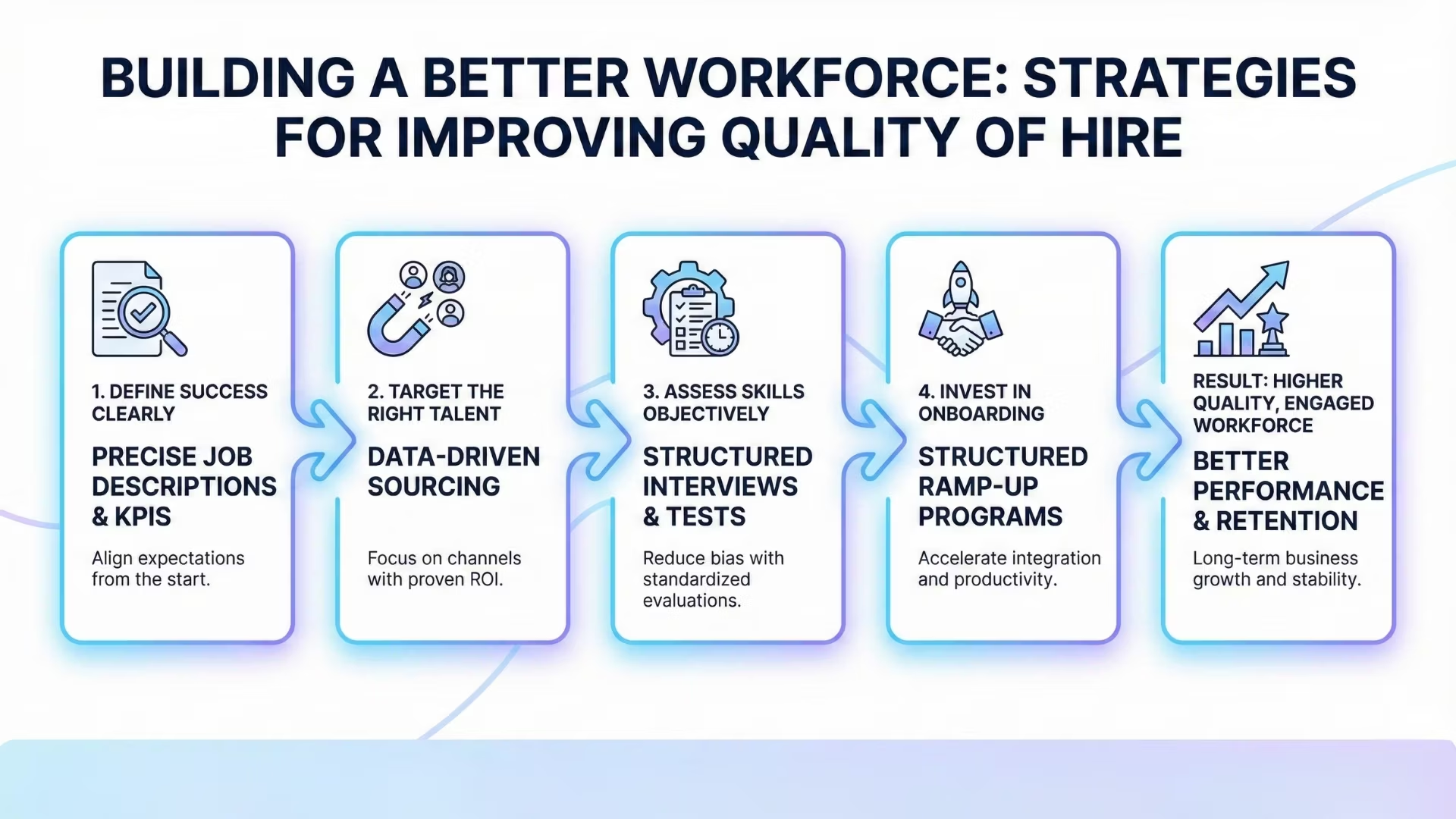
Enhancing Recruitment Processes: The First Line of Defense for Quality
The journey to a high-quality hire begins long before a candidate even applies.
Your entire recruitment ecosystem must be designed to attract, assess, and select top talent effectively.
- Refine Job Descriptions: Vague or boilerplate job descriptions attract a wide, often unqualified, applicant pool.
Create detailed, compelling, and accurate job descriptions that clearly outline responsibilities, required skills, and cultural expectations.
Use language that resonates with the candidate quality you seek.
- Targeted Sourcing: Leverage your source of hire data.
If internal referrals consistently yield your best hires, invest more in that program.
Focus your efforts on job boards, professional networks, and communities where your ideal candidates are active.
Use data-driven hiring to inform where you spend your recruiting budget.
- Structured Interviewing: Move away from unstructured, conversational interviews.
Implement structured interviews with standardized questions directly tied to core competencies and job requirements.
Use behavioral and situational questions to assess past performance and future potential.
All interviewers should use a consistent scorecard to mitigate bias and ensure objective evaluation.
This increases the predictive validity of your interviews.
- Robust Assessment Methods: Integrate skills tests, work sample tests, and cognitive ability assessments where appropriate.
These pre-hire assessments are often far more predictive of job performance than interviews alone.
Tailor assessments to the specific requirements of the role to ensure relevance and fairness.
- Optimized Candidate Experience: A positive candidate experience is crucial.
Even rejected candidates can become brand ambassadors or future applicants.
Maintain clear communication, provide timely feedback, and treat all candidates with respect.
A poor experience can deter high-quality candidates from even considering your organization.
The Impact of Effective Onboarding Programs: Setting Hires Up for Success
Onboarding is not merely an administrative checkbox; it is a critical strategic phase that directly influences a new hire's productivity, engagement, and ultimately, their long-term QoH.
- Pre-boarding Engagement: Start engagement before day one.
Provide access to company culture information, team introductions, and necessary paperwork.
This reduces first-day anxiety and builds excitement.
- Structured Onboarding Roadmaps: Develop clear, structured onboarding roadmaps for the first 30, 60, and 90 days.
These roadmaps should outline key tasks, training modules, meetings, and initial goals.
This helps accelerate ramp-up time.
- Dedicated Onboarding Buddies/Mentors: Pair new hires with experienced colleagues who can provide guidance, answer questions, and help them navigate the company culture.
This fosters a sense of belonging and support.
- Regular Check-ins: Managers should conduct regular, structured check-ins with new hires (e.g., weekly for the first month, then bi-weekly).
These conversations should focus on progress, challenges, and integration, demonstrating commitment to their well-being and success.
- Cultural Immersion: Actively integrate new hires into the company culture.
Organize team lunches, social events, and opportunities to connect with cross-functional colleagues.
This reinforces cultural fit and builds a strong sense of community.
Continuous Feedback and Performance Management for New Hires: Nurturing Growth
A high-quality hire thrives on constructive feedback and clear performance expectations.
The ongoing performance management process is vital for ensuring their continued growth and contribution.
- Early Performance Conversations: Don't wait for the annual review.
Managers should have frequent, informal performance conversations with new hires, particularly in their first 6-12 months.
Address any performance gaps early and reinforce positive behaviors.
- Clear Goal Setting (KPIs/OKRs): Ensure new hires have clear, measurable KPIs (Key Performance Indicators) or OKRs (Objectives and Key Results) aligned with departmental and business goals.
Regularly review progress and adjust goals as needed.
- Development Plans: Work with new hires to create individual talent development plans.
Identify areas for skill enhancement and provide access to relevant training, mentorship, or stretch assignments.
This demonstrates a commitment to their career management.
- 360-Degree Feedback Integration: Incorporate 360-degree feedback mechanisms into regular performance cycles, especially for new hires moving into leadership or complex roles.
This provides a multi-dimensional view of their performance and impact.
- Manager Training: Equip managers with the skills to provide effective, unbiased, and growth-oriented feedback.
Training on active listening, coaching techniques, and performance documentation is crucial for fostering new hire success.
This directly addresses the potential for manager bias in performance ratings.
Leveraging Analytics for Strategic Adjustments in Talent Acquisition: The Data Loop
The entire process of Measuring Quality of Hire creates a powerful feedback loop.
The data you collect isn't just for reporting; it's for continuous improvement of your recruitment strategy.
- Regular QoH Reporting: Establish a consistent cadence for reporting QoH metrics to HR leadership, talent acquisition teams, and even executive leadership.
Highlight trends, successes, and areas for improvement.
- Root Cause Analysis: When QoH scores are low for a particular cohort, source, or role, conduct a root cause analysis.
Was it a problem with sourcing? Assessment? Interviewing? Onboarding? Manager support? Use the data to pinpoint the exact breakdown in the hiring process effectiveness.
- A/B Testing Recruitment Strategies: Use your QoH data to test different recruitment approaches.
For example, run a pilot with a new assessment tool for one role and compare the QoH of those hires against a control group.
- Predictive Modeling: As your data set grows, explore predictive analytics.
Can you build models that forecast a candidate's likely QoH score based on pre-hire indicators? This enables more proactive and strategic hiring decisions.
- Share Insights Broadly: Disseminate QoH insights across your organization.
Educate hiring managers on the impact of their decisions and how their feedback contributes to better hiring outcomes.
This builds a culture of shared accountability for candidate quality.
By systematically implementing these strategies, your organization can move beyond merely observing QoH to actively driving its improvement.
This continuous cycle of measurement, analysis, and strategic adjustment is the hallmark of a truly advanced and impactful talent acquisition function, directly contributing to superior organizational performance.
The Horizon: Advanced Concepts & Future Trends in Quality of Hire
As organizations become more sophisticated in their approach to Quality of Hire metrics, the focus inevitably shifts towards leveraging advanced analytical techniques and emerging technologies.
The future of Measuring Quality of Hire promises even deeper insights, greater predictive power, and more seamless integration into overall strategic HR planning.
This section explores these cutting-edge concepts and future directions, addressing key content gaps in current discussions.
Predictive analytics for QoH: Forecasting future talent success.
Traditional QoH measurement often looks backward, assessing the quality of hires after they've joined.
Predictive analytics, however, aims to look forward, using historical data to forecast the likelihood of a candidate becoming a high-quality hire before an offer is even extended.
This capability transforms talent acquisition from a reactive function into a proactive, strategic one.
- What it is: Predictive analytics involves using statistical models, machine learning algorithms, and large datasets to identify patterns and correlations between pre-hire data points (e.g., assessment scores, interview feedback, source of hire, previous experience) and post-hire success metrics (e.g., performance ratings, retention, promotion velocity).
- How it works: Data scientists or advanced HR analysts can build models that ingest historical candidate data (application info, test scores, interview feedback) and link it to the actual QoH outcomes of those hires.
The model then learns which pre-hire factors are most strongly associated with high (or low) QoH.
When a new candidate enters the pipeline, the model can generate a "predicted QoH score" or a "likelihood-of-success" score based on their profile and assessment results.
- Benefits:
- Proactive Decision-Making: Helps prioritize candidates most likely to succeed, even if they don't fit traditional molds.
- Reduced Bias: Algorithms can sometimes reduce unconscious human bias if trained on diverse, objective data.
- Optimized Sourcing: Directs recruitment efforts towards channels and candidate profiles that historically yield high QoH.
- Enhanced Interviewing: Guides interviewers to focus on the most predictive competencies.
- Actionable Advice (Addressing Content Gap):
- Start with Data Foundation: You need clean, consistent, and sufficiently large datasets across your ATS, HRIS, and performance management systems.
Without this, predictive models cannot be accurately built or trained.
- Pilot Program: Begin with a pilot for a specific, high-volume role where you have ample historical data.
- Iterate and Refine: Predictive models are not set-and-forget.
They require continuous monitoring, validation, and retraining as your data changes and the market evolves.
- Ethical Considerations: Ensure transparency and fairness.
Avoid models that perpetuate historical biases present in your training data.
Ethical AI in recruiting is paramount.
The Role of AI and Technology in QoH Measurement: Automation and Intelligence.
Artificial Intelligence (AI) and advanced HR technology are rapidly revolutionizing how organizations approach Measuring Quality of Hire.
Beyond basic data integration, AI can provide capabilities that were previously unimaginable, directly addressing several content gaps.
- AI-Powered Candidate Matching and Screening:
- How it works: AI algorithms can analyze job descriptions, resumes, and candidate profiles against your internal data of high-performing employees.
They can identify patterns, skills, and experiences that correlate with success in specific roles, automating initial screening and suggesting the best matches.
- QoH Impact: This significantly improves the initial candidate quality in your pipeline, as recruiters spend less time on manual screening and more time engaging with highly relevant candidates.
Tools with AI candidate ranking capabilities, like those offered by Recooty, can prioritize applicants based on predictive success indicators.
- Automated Data Collection and Integration:
- How it works: AI-powered integration platforms can automatically extract relevant data from your ATS, HRIS, performance management system, and even external sources, cleansing and normalizing it before feeding it into your QoH models.
- QoH Impact: This eliminates manual data entry errors, reduces administrative burden, and ensures your QoH calculations are based on the most up-to-date and comprehensive information.
It addresses the content gap of integrating disparate data sources seamlessly.
- Natural Language Processing (NLP) for Feedback Analysis:
- How it works: NLP can analyze qualitative data from open-ended survey responses, interview notes, and 360-degree feedback to identify sentiment, recurring themes, and emerging issues related to new hire experience, cultural fit, and manager satisfaction.
- QoH Impact: Converts unstructured text into actionable insights, providing a deeper understanding of the "why" behind QoH scores and helping to mitigate biases in subjective feedback by identifying patterns that might otherwise be missed.
- Chatbots for New Hire Onboarding Support:
- How it works: AI-powered chatbots can provide instant answers to common new hire questions, guide them through onboarding tasks, and offer personalized support, freeing up HR and managers.
- QoH Impact: Improves the onboarding success experience, leading to faster ramp-up time and higher employee engagement during the critical initial period.
Long-Term Impact Analysis of Quality Hires: Beyond the First Year.
A significant content gap in many QoH discussions is the lack of focus on its long-term tracking beyond the initial 6-12 months.
True quality manifests and compounds over years, not just months.
Understanding this long-term impact is vital for succession planning and strategic workforce composition.
- Correlation with Career Growth and Promotions:
- What to track: Use cohort analysis to follow new hires from specific periods over 3-5 years (or even longer).
Monitor how many of them receive promotions, the speed of their advancement, and whether they are identified as high-potential talent in formal reviews.
- QoH Impact: A strong correlation between high initial QoH scores and accelerated career growth/promotion rates provides powerful evidence of your hiring team's ability to identify future leaders.
This validates your investment in your talent acquisition team.
- Leadership Development and Key Project Ownership:
- What to track: Identify how many high-QoH individuals eventually move into critical leadership positions, become mentors for new hires, or take ownership of high-impact strategic projects.
- QoH Impact: Demonstrates the cascading effect of quality hires on innovation, team development, and overall organizational performance.
It shows that your early investment in quality translates into a robust internal pipeline for leadership and key roles.
This is crucial for long-term talent development.
- Impact on Team Performance and Innovation:
- What to track: Assess the long-term impact of a high-QoH individual on their team's productivity, morale, and ability to innovate.
This can be challenging but can be observed through team-level KPIs, engagement scores, and qualitative feedback.
- QoH Impact: A single high-quality hire can elevate an entire team.
Tracking this collective uplift provides a holistic view of the exponential returns on good hiring decisions, affirming the strategic importance of QoH beyond individual metrics.
- Longitudinal Data Integration:
- Actionable Advice: To achieve this, you need robust data integration between your ATS, HRIS, and performance management systems that can track employee data over many years.
Develop unique employee identifiers that persist throughout their tenure, allowing seamless data linkage for long-term cohort analysis.
This addresses the challenge of disparate data sources for extended periods.
Benchmarking QoH Against Industry Standards: Knowing Where You Stand.
Understanding your internal QoH trends is crucial, but knowing how you compare to peers can provide external validation and identify opportunities for improvement.
- External Benchmarking:
- How to do it: Participate in industry surveys or leverage data from HR analytics firms that aggregate QoH data across similar companies or industries.
Look at average retention rates for specific roles, typical ramp-up times, and general performance expectations.
- QoH Impact: Helps identify if your organization is an outlier (positively or negatively) and provides targets for improvement.
If your QoH for engineers is significantly lower than industry average, it signals a need to re-evaluate your technical recruitment strategy.
- Internal Benchmarking:
- How to do it: Establish your own historical baseline.
For instance, calculate the average QoH for all hires over the past 3-5 years.
Then, compare current QoH scores against this internal benchmark to track progress.
- QoH Impact: Shows whether your continuous improvement efforts are actually yielding results.
Celebrating improvements against your own baseline can be a powerful motivator for the talent acquisition team.
- Challenges: Industry benchmarks can be hard to find or may not perfectly align with your specific company's definition of "quality" or its roles.
Always interpret external benchmarks with caution and contextualize them against your unique organizational environment and business goals.
By embracing these advanced concepts and leveraging emerging technologies, organizations can elevate their Quality of Hire measurement from a nascent initiative to a truly sophisticated and predictive science.
This not only optimizes talent acquisition but also directly contributes to building a resilient, high-performing workforce ready for future challenges and opportunities.
Avoiding Pitfalls & Embracing Best Practices: Mastering Quality of Hire
Implementing a robust Quality of Hire program is a transformative endeavor, but it's also fraught with potential missteps.
Many organizations, despite good intentions, fall into common traps that undermine their efforts.
This section will equip you with the knowledge to avoid common pitfalls in QoH measurement and outline the best practices for successful QoH programs, advocating for a truly holistic approach to QoH assessment.
We will also provide crucial guidance on mitigating bias in subjective QoH metrics and offer illustrative real-world scenarios to ground these concepts in practical application, addressing significant content gaps.
Avoiding Common Pitfalls in QoH Measurement: Don't Trip at the Starting Line.
Understanding these frequent errors is the first step toward a successful QoH strategy.
- Focusing Solely on Efficiency Metrics (e.g., Time-to-Hire, Cost-per-Hire):
- The Pitfall: As extensively discussed, exclusively chasing a low cost per hire or a fast time to hire can lead to rushed decisions and compromised candidate quality.
These are important operational metrics, but they do not measure effectiveness.
- Best Practice: Always balance efficiency metrics with effectiveness metrics like QoH.
Recognize that a slightly higher upfront investment in time or money can lead to exponentially greater long-term value from a quality hire.
- Using a One-Size-Fits-All QoH Formula:
- The Pitfall: Applying the same QoH metrics and weights to vastly different roles (e.g., sales, engineering, HR) will yield irrelevant and misleading data.
The definition of "quality" is contextual.
- Best Practice: Customize your QoH formula for different job families or departments.
Involve hiring managers and HRBPs from each area to define what success looks like specifically for their roles.
This ensures relevance and buy-in.
- Lack of Clear, Objective Definitions for Metrics:
- The Pitfall: Vague definitions (e.g., "good performance," "fits culture") lead to inconsistent data collection and subjective interpretations, rendering your QoH unreliable.
- Best Practice: For every metric, create crystal-clear, objective, and measurable definitions.
How is "good performance" quantified (e.g., "achieves 90% of KPIs")? How is "cultural fit" assessed (e.g., "demonstrates X, Y, Z company values through observable behaviors")? This standardization is critical for accurate talent measurement.
- Inconsistent Data Collection and Missing Data:
- The Pitfall: If data is collected sporadically, or if significant portions are missing (e.g., half your new hires don't have a 90-day review), your QoH calculations will be inaccurate and unreliable.
- Best Practice: Establish rigorous data collection strategies and standard operating procedures.
Utilize your applicant tracking system, HRIS, and performance management software to automate data capture wherever possible.
Conduct regular data audits to identify and address gaps.
- Ignoring Qualitative Data in Favor of Quantitative Data:
- The Pitfall: Focusing solely on numbers (e.g., performance scores, retention rates) can miss crucial insights into employee engagement, cultural fit, and the overall new hire experience.
- Best Practice: Adopt a holistic approach to QoH assessment that systematically combines quantitative data with rich qualitative feedback (e.g., manager surveys, new hire pulse surveys, exit interview insights).
The "why" behind the numbers often lies in the qualitative data.
- Failing to Act on the Data:
- The Pitfall: The biggest mistake of all is to collect QoH data, calculate scores, and then do nothing with the insights.
- Best Practice: Establish a clear process for leveraging analytics for strategic adjustments.
Regularly review QoH data with stakeholders, conduct root cause analyses for low scores, and implement targeted changes to your recruitment strategy, onboarding programs, or performance management processes.
The goal is continuous improvement of hiring process effectiveness.
Best Practices for Successful QoH Programs: Your Roadmap to Excellence.
Building on avoiding pitfalls, here are the proactive steps to ensure your QoH program is robust and impactful.
- Executive Buy-in and Sponsorship:
- Why it matters: Without support from senior leadership, QoH initiatives often falter due to lack of resources or perceived importance.
- Actionable Advice: Frame QoH in terms of business impact and recruitment ROI.
Demonstrate how it directly contributes to revenue, profitability, and organizational performance.
Present data that resonates with executive priorities.
- Define "Quality" Collaboratively:
- Why it matters: QoH is most effective when it reflects the specific needs and values of the organization.
- Actionable Advice: Involve HRBPs, hiring managers, and even high-performing employees in defining what "quality" means for different roles.
Use workshops and facilitated discussions to gain consensus.
This builds ownership and relevance.
- Integrate QoH into the Entire Employee Lifecycle:
- Why it matters: QoH is not just a recruiting metric; it's a measure that spans the entire employee lifecycle.
- Actionable Advice: Connect pre-hire data from your ATS with post-hire data from HRIS and performance systems.
Ensure onboarding programs are designed with QoH in mind.
Track talent development and career management to understand long-term impact.
- Start Small, Iterate, and Scale:
- Why it matters: Attempting to implement a perfect, company-wide QoH program from day one is overwhelming and often leads to failure.
- Actionable Advice: Begin with a pilot program for a specific department or a few key roles.
Refine your metrics, formulas, and data collection processes based on learnings.
Once successful, gradually expand the program across the organization.
- Train Your Managers:
- Why it matters: Managers are critical to both the feedback process and the success of new hires.
- Actionable Advice: Provide comprehensive training to hiring managers on effective interviewing techniques, objective performance assessment, giving constructive feedback, and understanding their role in mitigating bias in subjective QoH metrics.
This empowers them to contribute accurate data and support new hires effectively.
- Communicate Transparently:
- Why it matters: Transparency builds trust and understanding across the organization.
- Actionable Advice: Share QoH results (both positive and areas for improvement) with relevant stakeholders.
Explain what is being measured, why it's important, and how the data is being used to improve hiring.
Encourage open dialogue and feedback.
Mitigating Bias in Subjective QoH Metrics: Ensuring Fairness and Accuracy (Addressing Content Gap).
Subjective metrics like hiring manager satisfaction and cultural fit ratings can be powerful, but they are also prone to unconscious bias.
Ensuring fairness and accuracy is paramount for credible QoH.
- Structured Interviewing and Scorecards:
- Method: Require all interviewers to use standardized questions asked in the same order, with a predefined scoring rubric for each answer.
This forces objective evaluation against criteria, rather than subjective impressions.
- Impact on Bias: Reduces affinity bias (liking candidates similar to oneself) and confirmation bias (seeking information that confirms initial impressions).
- Behaviorally Anchored Rating Scales (BARS) for Performance/Satisfaction:
- Method: Instead of simply asking managers to rate "performance" on a 1-5 scale, provide specific, observable behavioral examples for each rating point.
For example, a "5 - Exceeds Expectations" might be tied to "Proactively identifies complex problems and implements innovative solutions without supervision," while a "3 - Meets Expectations" is "Consistently completes assigned tasks within deadlines."
- Impact on Bias: Reduces halo/horn effect (overall impression influencing individual ratings) and central tendency bias (managers rating everyone in the middle).
It forces managers to focus on concrete behaviors, not just feelings.
- 360-Degree Feedback Mechanisms:
- Method: Supplement manager ratings with feedback from multiple sources: peers, direct reports (if applicable), and even cross-functional collaborators.
This provides a multi-dimensional perspective.
- Impact on Bias: Averages out individual biases.
If one manager has a strong positive or negative bias, it's diluted by the feedback from others, providing a more balanced view of performance and fit.
- Manager Training on Unconscious Bias and Feedback:
- Method: Provide mandatory training for all hiring managers on how unconscious biases affect hiring and performance evaluations.
Train them on effective, constructive, and objective feedback delivery techniques.
- Impact on Bias: Raises awareness of biases, empowering managers to actively counteract them in their assessments.
Improves the quality and fairness of all feedback.
- Calibration Sessions:
- Method: For performance reviews and satisfaction ratings, conduct regular calibration sessions where groups of managers discuss and align their ratings for new hires (or all employees).
- Impact on Bias: Helps standardize rating practices across different managers and departments, bringing outlier ratings into alignment and ensuring consistent application of performance criteria.
- Anonymity in Engagement Surveys:
- Method: Ensure new hire employee engagement and cultural fit surveys are truly anonymous.
- Impact on Bias: Encourages honest feedback, especially on sensitive topics, without fear of reprisal, leading to more accurate insights into their experience.
Illustrative Case Studies: QoH in Action (Addressing Content Gap).
Let's explore some hypothetical but detailed real-world scenarios demonstrating the tangible benefits and challenges of QoH implementation.
Case Study 1: Mid-Sized Tech Startup – Identifying a Sourcing Gem
- Challenge: Tech startup "InnovateCo" had high time-to-fill for engineering roles and was spending heavily on premium job boards.
Turnover for new engineers was also high in the first year.
They suspected their sourcing wasn't bringing in the right talent but had no hard data.
- QoH Implementation: InnovateCo implemented a weighted QoH formula for engineers, focusing on:
- Code Quality (40%) – measured by peer review scores and bug rates in first 6 months.
- Project Delivery (30%) – percentage of tasks completed on time in first 90 days.
- Ramp-Up Time (15%) – time to independent feature ownership.
- Manager Satisfaction (15%).
They meticulously tracked source of hire in their applicant tracking system.
- Results & Impact: After 12 months, the data revealed a surprising insight:
- Hires from expensive job boards had average QoH scores but very long ramp-up times and lower retention.
- Hires from a relatively inexpensive "developer community forum" (which they had only minimally used) had the highest average QoH scores, fastest ramp-up, and almost 100% first-year retention.
- Action Taken: InnovateCo drastically reduced spending on underperforming job boards and reallocated budget to sponsor events and build relationships within the high-performing developer community forum.
They also implemented AI candidate ranking tools to prioritize candidates from these community sources.
- Outcome: Within another 6 months, their average engineering QoH improved by 15%, time-to-fill decreased significantly (as they found talent faster through targeted sources), and recruitment costs were reduced by 20%.
This demonstrated a clear, positive recruitment ROI.
Case Study 2: Large Retail Chain – Tackling Manager Bias in Customer Service
- Challenge: "MegaMart" had inconsistent Quality of Hire metrics for customer service representatives.
Some store managers consistently rated all new hires as "excellent," while others were overly critical.
This made it impossible to identify which stores had truly high-quality hires or effective training.
Manager satisfaction ratings were highly unreliable due to obvious manager bias.
- QoH Implementation: MegaMart revised its QoH formula for customer service roles to include:
- Average Customer Satisfaction Scores (from new hire's interactions, 40%).
- Call Resolution Rate (30%).
- Attendance/Punctuality (10%).
- Manager Satisfaction (20%) – but with a new BARS (Behaviorally Anchored Rating Scale) and mandatory manager training on objective feedback.
They also implemented 30/60/90-day check-ins to standardize performance discussions.
- Results & Impact: Initial manager satisfaction scores became more varied and, crucially, more aligned with the objective metrics (customer satisfaction, resolution rates).
Store managers who previously rated everyone highly now had clear, behavioral anchors to guide their feedback.
Managers who were overly critical were coached based on the new objective BARS framework.
- Action Taken: They identified specific training gaps for new hires in stores with lower QoH.
They also recognized high-performing store managers who consistently produced high-QoH hires, using them as internal mentors.
- Outcome: Within a year, the consistency of QoH scores across different stores significantly improved.
Overall customer service quality improved by 8%, demonstrating the impact of fair and accurate QoH measurement on front-line service delivery and organizational performance.
Case Study 3: Healthcare Provider – Long-Term Leadership Pipeline
- Challenge: "HealthFirst" struggled with succession planning for mid-level management roles.
They hired many external managers, but few progressed to senior leadership, leading to a shallow internal talent pipeline.
They needed to understand the long-term impact analysis of quality hires.
- QoH Implementation: HealthFirst developed a sophisticated QoH model for management hires, tracking them for up to 5 years, including:
- Team Retention Rate (30%).
- Team Employee Engagement Score (25%).
- Achievement of Departmental Objectives (20%).
- 360-Degree Feedback (15%).
- Promotion Velocity/Leadership Readiness (10%) – tracking identified high-potential candidates.
They integrated data from their HRIS and performance systems for long-term tracking of QoH.
- Results & Impact: Analysis revealed that external hires from certain agencies had high initial performance but low promotion velocity and lower team engagement scores after 2-3 years.
Internal promotions, while having slightly longer initial ramp-up, consistently showed higher long-term QoH, particularly in leadership development and succession planning.
- Action Taken: HealthFirst shifted its recruitment strategy to prioritize internal talent for management roles, investing heavily in leadership development programs for high-potential individual contributors.
For external hires, they partnered with agencies that focused on candidates with a proven track record of developing their teams.
- Outcome: After three years, HealthFirst saw a 30% increase in internal promotions to leadership roles, significantly strengthening their talent pipeline.
This demonstrated that a truly high-quality hire in leadership is one who not only performs but also develops others for the future, contributing to career management across the organization.
These case studies, while illustrative, highlight that effective QoH implementation is not a theoretical exercise.
It's a strategic imperative that, when executed thoughtfully and with a commitment to data integrity and continuous improvement, yields tangible and significant benefits across the entire organization.
It moves the needle on business goals and truly elevates the HR function to a strategic partner.
What Problems Will I Face When Measuring QoH? (And How to Fix Them)
Embarking on the journey of implementing a comprehensive Quality of Hire program is a strategic investment.
However, like any significant organizational initiative, it is not without its challenges.
It's not a smooth, perfectly linear path.
You will almost certainly encounter various obstacles and complexities along the way.
Being proactive and prepared to address these common issues is absolutely key to ensuring the success and sustainability of your QoH measurement efforts.
This section will systematically outline some of the most prevalent problems organizations face and provide actionable, step-by-step solutions for how to effectively troubleshoot them.
This is how you tackle the question, "Why is quality of hire so hard to measure?"
What if I have dirty or incomplete data? The data integrity hurdle.
This is, without a doubt, the most ubiquitous and frustrating problem encountered when initiating QoH measurement.
You might attempt to extract performance review scores only to discover they are inconsistently recorded, using different scales or formats across departments.
Alternatively, you might find that crucial candidate source data is entirely missing for a substantial portion of your new hires.
This issue directly impacts the reliability of your HR analytics.
- Step-by-step fix (proactive and reactive measures):
- Don't Panic or Give Up: The presence of dirty data is a reality in almost every organization.
It’s a sign that your current processes need refinement, not a reason to abandon the QoH initiative.
- Start a Focused Data Cleanup Project: Identify one or two absolutely critical QoH metrics where data quality is poor (e.g., source of hire, 90-day manager satisfaction).
Make it a targeted mission for the next quarter to ensure that for all new hires moving forward, these specific data points are accurately and consistently captured.
- Retroactive Clean-up (Strategic): For historical data, focus your clean-up efforts on the most recent 12-24 months.
Attempting to cleanse years of old data can be overwhelming and yield diminishing returns.
Prioritize data for roles and departments that are strategically most important.
- Manual Reconciliation for Small Gaps: For minor gaps, HR or recruiting teams may need to manually review employee files or interview notes to fill in missing information.
- Preventive tips (long-term solutions for data integrity):
- Standardize Everything: This is the golden rule.
Create standard operating procedures (SOPs) for all data entry related to recruitment and employee management.
Define clear data fields, formats, and required inputs.
- Mandatory Fields in Systems: Configure your applicant tracking system (ATS), HRIS, and performance management software to make critical QoH data fields (e.g., candidate source, hiring manager, start date) mandatory.
Use dropdown menus or controlled vocabularies instead of free-text fields wherever possible to ensure consistency.
- System Integrations: Invest in integrated HR technology solutions that seamlessly communicate with each other.
For example, when a candidate moves from ATS to HRIS, key data should transfer automatically, reducing manual entry errors and ensuring data continuity throughout the employee lifecycle.
- Regular Data Audits: Schedule periodic (e.g., quarterly) data audits to review the accuracy and completeness of your QoH-related data.
Address discrepancies immediately and use audit findings to refine your data entry processes.
How do I handle manager bias in satisfaction surveys? Ensuring objective feedback.
This is a very real and frequently overlooked challenge with subjective QoH metrics.
You'll often encounter managers who rate everyone exceptionally high ("halo effect") or those who are notoriously tough graders, exhibiting a "horn effect" or extreme critical bias.
This inconsistency can severely skew your QoH data, making comparisons unreliable and insights questionable.
This directly relates to the content gap of mitigating bias.
- Step-by-step fix (interventional strategies):
- Identify Outliers: Use statistical methods (e.g., calculating standard deviations) or simple data visualization to identify managers whose ratings consistently deviate significantly from the departmental or organizational average.
- Facilitate Calibration Conversations: Approach outlier managers in a supportive, non-confrontational manner.
Present them with their rating data compared to the average.
Frame it as an opportunity for calibration and consistency, explaining how their ratings impact the overall QoH analysis.
- Provide Coaching on Feedback: Use these conversations as a coaching opportunity.
Help managers understand the importance of objective, behavioral-based feedback rather than personal feelings.
- Combine with Objective Data: Wherever possible, combine the subjective manager satisfaction rating with more objective data points from performance management, such as the new hire's KPI achievement or OKR attainment.
If a manager gives a low satisfaction score but the new hire is crushing their KPIs, investigate the disconnect.
- Preventive tips (proactive measures for reducing bias):
- Train Your Managers Extensively: Implement mandatory, recurring manager training on unconscious bias and effective, structured feedback techniques.
Teach them how to give specific, actionable, and fair feedback.
- Use Behaviorally Anchored Rating Scales (BARS): As discussed, provide managers with clear, specific behavioral examples for each rating level in their surveys.
This forces them to evaluate observable actions rather than vague impressions.
- Implement 360-Degree Feedback: For manager satisfaction, collect feedback not only from the direct hiring manager but also from the new hire's peers, and potentially direct reports or cross-functional stakeholders.
This multi-rater feedback dilutes individual biases and provides a more rounded picture.
- Anonymize Where Appropriate: While manager satisfaction for a specific hire usually isn't anonymous to HR, ensuring other engagement surveys are anonymous can encourage more honest general feedback that can inform manager training.
What if my leaders don't buy into measuring QoH? Building a compelling business case.
Some organizational leaders, particularly those focused purely on financial metrics or operational efficiency, might perceive QoH as "soft" HR jargon or a tangential activity.
They may be skeptical of its tangible value or hesitant to allocate resources to its implementation.
This lack of leadership buy-in is a critical barrier to the success of your QoH program.
- Step-by-step fix (strategies for gaining support):
- Speak Their Language (Business Impact): This is paramount.
Avoid HR-centric terminology.
Instead, frame your QoH initiative explicitly in terms of business goals and quantifiable results.
Talk about money saved, revenue generated, increased market share, and competitive advantage.
- Start a Pilot Program in a Supportive Department: Identify a department leader who is already receptive to data and willing to collaborate.
Implement your QoH program specifically within their team.
- Demonstrate Direct ROI: Rigorously track the QoH of new hires in your pilot.
After 6-12 months, present clear data showing the direct correlation between high QoH hires and that department's measurable outcomes (e.g., increased sales, faster project delivery, higher customer satisfaction, reduced departmental turnover).
Hard data and a successful internal case study are by far the most effective ways to win over skeptics and secure sustained leadership buy-in.
- Connect to Strategic Imperatives: Show how improving QoH directly supports broader company-wide strategic imperatives (e.g., "We need to innovate faster," "We need to improve customer experience," "We need to scale rapidly").
- Preventive tips (proactive measures for ongoing buy-in):
- Tie QoH to High-Level Business Goals from Day One: When designing your QoH framework, ensure that your chosen metrics and weights are clearly aligned with the organization's overarching strategic objectives.
- Regular, Concise Reporting: Provide executive leaders with regular, high-level, and easy-to-digest reports on QoH trends.
Focus on key insights and strategic implications, rather than overwhelming them with raw data.
- Educate on the Cost of Bad Hires: Periodically remind leadership of the substantial, often hidden, financial and cultural costs associated with poor hires.
Quantify these costs to highlight the value of preventing them through improved QoH.
How do I track QoH long-term? Sustaining the momentum beyond the first year.
Many organizations, if they measure QoH at all, tend to focus exclusively on the initial 6-12 months post-hire.
While this early period is crucial, stopping there misses a massive opportunity to understand the true, compounding long-term impact and value that a high-quality hire brings to the organization over several years.
This is a significant content gap that needs to be addressed for a truly strategic QoH program.
- Step-by-step fix (actionable strategies for sustained tracking):
- Establish Multi-Year Evaluation Points: Formally embed evaluation points beyond the first year into your HR calendar and processes.
These could be at the 2-year, 3-year, and 5-year marks post-hire.
- Automated Reminders: Configure your HRIS, talent management system, or even a simple project management tool to send automated reminders to HRBPs or departmental leaders for these long-term re-evaluations for specific hiring cohorts.
- Focus on Advanced Long-Term Metrics: For these extended evaluations, shift focus to metrics that reflect deeper impact:
- Promotion Rates & Velocity: Has the employee been promoted? How quickly? Into what roles?
- Leadership Development & Mentorship: Has the employee moved into a leadership role? Are they now mentoring new hires? Leading key strategic initiatives?
- Succession Planning Status: Is the employee identified as a high-potential individual or a potential successor for critical roles?
- Project Leadership/Key Contribution: Has the employee led high-impact projects or been a critical contributor to major organizational successes?
- Peer & Upward Feedback: Utilize 360-degree feedback to gauge their influence and effectiveness with peers and reports.
- Cohort Analysis: Continue to analyze specific hiring cohorts.
For instance, track all engineers hired in 2024.
How many of them are still with the company in 2027? How many have been promoted? How many are leading teams? This longitudinal cohort analysis provides invaluable insights into your ability to hire for long-term potential.
- Preventive tips (proactive measures for building a long-term framework):
- Build a Long-Term Talent Development Strategy: From the very inception of your QoH program, think about the entire employee lifecycle.
Your ultimate goal isn't merely to make a good hire for the immediate role; it's to hire individuals who possess the potential to grow, evolve, and ultimately become future leaders and critical anchors within your company.
Your talent development programs should be designed to nurture this potential.
- Robust HRIS & Data Architecture: Ensure your HRIS (Human Resources Information System) and overall data architecture can store and easily access historical employee data over many years.
Consistent employee IDs are crucial for linking data across different time points and systems.
- Integrate QoH into Succession Planning: Directly link your long-term QoH data into your succession planning efforts.
Identify which talent acquisition strategies and sources consistently produce individuals who are most likely to fill future leadership and critical roles.
This makes QoH a truly strategic input for organizational continuity and growth.
By systematically addressing these challenges and implementing proactive, data-driven solutions, organizations can move beyond simply measuring QoH to actively managing and continuously improving the quality of their workforce.
This transforms talent acquisition from a transactional process into a strategic engine for sustained organizational performance and competitive advantage.
Frequently Asked Questions About Quality of Hire
This section aims to address some of the most common questions and clarify key concepts related to Quality of Hire Metrics, Measuring Quality of Hire, and How to Measure Quality of Hire, drawing from the comprehensive insights already provided.
What are the 5 key HR metrics?
While there can be some variation in what constitutes the "top 5" depending on organizational priorities, a widely recognized set of key HR metrics often includes:
- Time to Fill: The duration from job requisition approval to candidate acceptance.
- Cost per Hire: The total cost of recruitment divided by the number of hires.
- Employee Turnover Rate: The percentage of employees leaving an organization over a period.
- Revenue per Employee: A measure of how much revenue each employee generates.
- Quality of Hire (QoH): The long-term value and success a new employee brings to the organization.
While Time to Fill and Cost per Hire are crucial for recruitment efficiency, and turnover and revenue per employee provide broader organizational health insights, Quality of Hire is arguably the most strategic and impactful metric.
It directly assesses the effectiveness of your entire talent acquisition process in bringing in valuable talent, connecting HR efforts directly to business goals and organizational performance.
How do you calculate cost-per-hire (CPH)?
Cost-per-hire (CPH) is calculated by summing all your internal and external recruiting costs incurred over a specific period and then dividing that total by the number of hires successfully made within that same period.
Formula: CPH = (Total Internal Recruiting Costs + Total External Recruiting Costs) / Total Number of Hires
- Internal Costs typically include recruiter salaries, overheads for the recruiting department, employee referral bonuses, and candidate assessment software subscriptions.
- External Costs generally encompass job board advertising fees, agency fees, background check expenses, relocation expenses, and candidate travel costs.
It's important to remember that CPH is an essential efficiency metric, indicating how cost-effectively you are filling positions.
However, it provides no information about the actual quality or long-term value of the people you hired.
A low CPH is only truly valuable if it's coupled with a high Quality of Hire.
What is the 80/20 rule in recruiting?
The 80/20 rule, also known as the Pareto Principle, is a widely observed phenomenon that suggests that approximately 80% of outcomes or effects often originate from 20% of causes or efforts.
In the context of recruiting metrics and talent acquisition, this principle often translates to:
- 80% of your high-quality hires will likely come from just 20% of your sourcing channels or recruitment efforts.
- Similarly, 80% of your organizational impact or productivity might come from 20% of your workforce (the high-quality hires).
This principle underscores why tracking the "Source of Hire" metric is so critically important within your QoH framework.
By diligently analyzing which 20% of your recruitment channels (e.g., employee referrals, specific professional networks, targeted campaigns) consistently yield the highest QoH, you can strategically identify that vital top 20%.
This empowers you to then focus the majority of your budget, time, and effort on those highly effective sources, maximizing your recruitment ROI and continuously improving the overall candidate quality entering your organization.
It's a key insight for optimizing your recruitment strategy.
What is a good Quality of Hire score?
There is no single, universally applicable benchmark for a "good" Quality of Hire score, as its definition and calculation are highly dependent on your organization's specific formula, chosen metrics, weighting, industry, and strategic objectives.
What constitutes an excellent score for one company might be average for another.
The most effective practice is to benchmark against yourself.
- Establish a Baseline: After your first year of diligently tracking QoH using your defined formula, you will establish an average baseline QoH score for your organization.
- Set Improvement Targets: Your primary goal for subsequent years should be to consistently improve upon your own baseline score.
For instance, if your initial average QoH was 75%, an achievable and meaningful goal for the next year might be to increase it to 80%.
- Common Indicators: While an exact number is elusive, organizations generally aim for a high percentage of new hires to meet or exceed performance expectations.
A common internal goal is to have 80-90% of new hires consistently meet or surpass their initial performance objectives and show strong retention beyond the first year.
Regularly reviewing and refining your QoH definition and calculation based on internal performance data and strategic shifts is more valuable than striving for an arbitrary external number.
The journey of continuous improvement is what truly defines a successful QoH program, driving better organizational performance over time.
How long should you wait before measuring Quality of Hire?
You should approach Measuring Quality of Hire as an ongoing process with multiple, strategically timed intervals rather than a single, one-off event.
Each measurement point provides different, yet valuable, insights:
- Early Indicators (30-90 Days Post-Hire):
- Purpose: To assess immediate onboarding success, initial manager satisfaction, and early cultural integration.
It’s too soon for full performance data, but you can gauge engagement, resource access, and basic role understanding.
- Metrics to use: New hire pulse surveys, manager satisfaction surveys (initial impressions), completion of onboarding tasks, early feedback on ramp-up time.
- Comprehensive Assessment (6 Months to 1 Year Post-Hire):
- Purpose: This is typically the most critical and comprehensive measurement period.
It allows sufficient time for the new hire to fully ramp up to productivity, demonstrate consistent job performance, and for their cultural fit to solidify.
It’s also crucial for first-year employee retention.
- Metrics to use: Formal 6-month or annual performance review scores (KPIs/OKRs), actual ramp-up time to full productivity, detailed hiring manager satisfaction surveys, first-year retention status, initial employee engagement scores.
This is where your full quality of hire formula can be applied most effectively.
- Long-Term Impact (2-3 Years and Beyond):
- Purpose: To understand the ultimate, compounding value of a hire.
This assesses career growth, promotion rates, leadership potential, and sustained contribution.
This addresses the content gap of long-term tracking.
- Metrics to use: Promotion velocity, internal mobility, identification as high-potential talent in succession planning, sustained high performance ratings, 360-degree feedback for leadership roles, and overall impact on organizational performance and innovation.
By collecting data at these staggered intervals, you build a dynamic and holistic picture of QoH, allowing for timely interventions in the early stages and a strategic understanding of long-term talent cultivation.
This comprehensive approach ensures that data-driven hiring extends far beyond the initial recruitment phase.
Conclusion: From Guesswork to Greatness in Talent Acquisition
Measuring Quality of Hire is far more than merely another metric to add to your HR dashboard or a fleeting trend in talent management.
It represents a fundamental and absolutely essential shift in mindset—a profound evolution from reactive, intuition-driven recruiting to a meticulously proactive, strategically data-driven talent acquisition approach.
At its very core, it is about the unwavering recognition that the caliber of individuals you bring into your organization is the single most important and enduring driver of your company's long-term success and competitive advantage.
This extensive guide has meticulously equipped you with the comprehensive knowledge, actionable metrics, practical formulas, and robust frameworks necessary to embark on this transformative journey.
You now possess a deep understanding of what is Quality of Hire, how to precisely define "quality" within your unique organizational context, how to objectively track new hire performance, and how to accurately calculate a meaningful QoH score.
You've learned the critical importance of customizing your measurement approach for highly diverse roles and are prepared to skillfully troubleshoot the common problems and challenges that inevitably arise during implementation.
You are now supremely equipped to move beyond superficial recruiting metrics like time-to-hire and cost per hire, and instead, pivot your focus entirely to the profound effectiveness of your hiring and its direct, undeniable impact on every facet of organizational performance.
The path to mastering QoH will undeniably demand discipline, foster deep collaboration across departments, and require an unwavering commitment to data integrity and continuous learning.
However, the dividends reaped from this investment are truly immense and far-reaching.
An organization that proficiently masters measuring Quality of Hire systematically cultivates a high-performing team of exceptional contributors.
This leads to a substantial reduction in costly employee turnover, a significant increase in overall employee productivity, and the creation of an almost unbeatable competitive advantage in the marketplace.
You will effectively leave the realm of guesswork behind and step confidently into a future defined by strategic, impactful, and predictable hiring outcomes.
Ultimately, a deep understanding and mastery of your Quality of Hire metrics is the definitive key to systematically building and sustaining a workforce that is not only capable but exceptionally well-positioned to achieve any ambitious business goal.
Your Next Step to Consistently Higher Quality Hires
Are you ready to transcend the limitations of traditional recruiting, build a consistently high-quality team, and eliminate the costly reliance on intuition and guesswork in your hiring process? The strategic adoption of the right HR technology makes all the difference, providing the indispensable data foundation you need to make smarter, more informed, and ultimately more successful hiring decisions.
Discover how Recooty’s state-of-the-art Applicant Tracking System can revolutionize your talent acquisition by streamlining your data collection, enhancing your candidate assessment processes, and empowering you to identify top-tier talent from the very first interaction.
Start Your Free Trial Today!
For a deeper dive into how our innovative solutions can address your specific hiring challenges and elevate your Quality of Hire, we invite you to experience it firsthand.
Request a personalized demo to witness how Recooty’s advanced, AI-powered features can fundamentally transform your entire hiring ecosystem, guiding you towards a future of unparalleled talent acquisition success.

.png)
.png)

.webp)