.webp)

.avif)
Finding reliable construction workers can feel like searching for a needle in a haystack in today's competitive labor market.
The demand for skilled labor is consistently high, and the most qualified candidates are often snapped up quickly by your competitors.
This leaves many construction companies struggling with a frustrating cycle of no-shows, a flood of unqualified applicants, and inevitable project delays that significantly hurt their bottom line.
It's a persistent, draining battle that consumes valuable time and critical resources that could be better spent on project management and growth.

As a technical writer specializing in hiring technology, I've observed this pervasive struggle across numerous industries.
However, the intensity of this challenge is particularly acute within the construction sector, where labor shortages can have immediate and costly repercussions on project timelines and budgets.
This comprehensive guide is meticulously built on extensive research into what genuinely works for construction recruiting in the modern era.
We will delve far beyond generic tips and provide you with a complete, actionable playbook designed to transform your hiring strategy.
You will gain invaluable insights into proven methods for attracting top talent, meticulously vetting candidates for genuine reliability, and implementing effective strategies to retain the invaluable workers who form the bedrock of any successful construction project.
By the time you reach the conclusion of this extensive guide, you will possess a clear, detailed roadmap for establishing a consistent, high-quality talent pipeline, drastically reducing your recurring hiring headaches, and consistently staffing your projects with an exceptional A-team.
This entire process is fundamentally about working smarter, not merely harder.
The strategic implementation of a robust and intuitive Applicant Tracking System (ATS) like Recooty is specifically engineered to automate and meticulously organize a substantial number of the intricate steps we will explore.
This technological advantage makes truly effective and efficient construction hiring not just an aspiration, but an entirely achievable reality for construction company, regardless of its size or specialization.
1. Mastering Online Job Boards for Maximum Reach
Online job boards are undeniably the most common starting point for construction companies embarking on a construction hiring initiative.
They offer an unparalleled reach to a vast pool of potential candidates.
However, without a strategic approach, this wide reach can easily translate into an overwhelming deluge of irrelevant applications, wasting precious time and resources.
The absolute key to success lies in being exceptionally strategic, meticulously targeting the most effective platforms with a finely tuned and compelling message.
A Step-by-Step Guide to Job Board Success
What to do: Your initial, critical step is to choose your posting platforms with astute wisdom.
Resist the temptation to scatter your job ads indiscriminately across every available board.
Instead, meticulously identify and select a balanced mix.
Include one or two expansive, generalist job boards such as Indeed or ZipRecruiter for broad visibility across the job-seeking population.
Crucially, also integrate one or two highly specialized, construction-specific job boards like ConstructionJobs.com. These niche platforms are vital for reaching a more targeted, industry-experienced audience.
Why it matters: Posting your job advertisements on these specialized niche sites significantly increases the likelihood that your ad will be seen exclusively by individuals who are actively and specifically seeking employment within the construction sector.
This intelligent targeting dramatically enhances the overall quality and relevance of your incoming applications.
Furthermore, a meticulously crafted, clear, and engaging job description serves as your single most potent tool in this entire process.
How to do it:
- Select Your Platforms Strategically: Begin by researching and selecting a carefully curated combination of 1-2 prominent, large-scale general job boards (such as Indeed or ZipRecruiter).
Complement these with 1-2 highly focused, industry-specific construction job boards.
This dual approach ensures both broad visibility and targeted applicant quality.
- Craft a Magnetic and Detailed Job Description: Move beyond a rudimentary list of duties and responsibilities.
Start with an exceptionally compelling and concise summary that vividly describes the role's impact and your company's mission.
Utilize clear, unambiguous language throughout, employing bullet points for easy readability when outlining specific responsibilities, required skills, and critical qualifications.
Crucially, always include a precise and competitive salary range or hourly wage.
This transparency is consistently identified as one of the single most influential factors for modern job seekers.
- Integrate Specific, Search-Optimized Keywords: Adopt the mindset of a job seeker actively searching for opportunities.
Incorporate highly relevant and commonly searched terms such as "construction laborer," "skilled carpenter," "certified welder," "heavy equipment operator," or "construction project manager" directly into both your job title and the body of your description.
These keywords improve searchability.
- Optimize the Application Process for Mobile Devices: A significant majority of today's job seekers initiate and complete their applications from smartphones or other mobile devices.
Ensure that your entire application process is intuitively simple, streamlined, and fully responsive across all screen sizes.
Avoid demanding the upload of complex, multi-page documents that are cumbersome or impossible for candidates to manage effectively on a mobile device.
Customization Tips for Different Roles
Your recruitment strategy and the content of your job posts must be meticulously tailored to the specific demands of each role you are attempting to fill.
A job post for a senior Project Manager will, by necessity, appear vastly different from an advertisement for a General Laborer.
- For General Laborers: Concentrate your messaging on the fundamental essentials.
Prominently highlight the physical requirements of the role, clearly describe the types of projects they will be contributing to, emphasize potential opportunities for overtime, and underscore the inherent stability and consistent nature of the work.
For these roles, prioritize and actively emphasize attributes such as reliability, a strong work ethic, and a positive attitude over extensive prior experience.
- For Skilled Trades (e.g., Electricians, Plumbers, Welders, Carpenters): Be exceptionally precise and explicit about the exact required certifications (e.g., journeyman license, specific welding certifications) and the minimum number of years of relevant experience.
Detail the specific types of systems, materials, or environments they will be working on (e.g., commercial HVAC installations, residential electrical wiring, structural steel welding).
Also, highlight any specialized tools, equipment, or cutting-edge technology that your company utilizes.
- For Management Roles (e.g., Project Managers, Superintendents, Estimators): Shift your focus to critical leadership skills, the candidate's portfolio of successfully completed projects, and their proficiency with industry-standard software (e.g., Procore, Primavera P6, Bluebeam, AutoCAD).
Provide detailed information on the typical scope, complexity, and budget of the projects they will be entrusted to manage.
Emphasize the unique aspects of your company culture and clearly articulate the pathways for significant career growth and advancement within your organization.
Common Issues & Troubleshooting
Problem: "I'm receiving an overwhelming number of unqualified applicants, making the screening process inefficient."
- Fix: The primary culprit is often a job description that is too vague or lacks precise requirements.
Immediately revise your job description to include more specific and unambiguous "must-have" qualifications.
Utilize the advanced screening questions feature available on most job boards.
These allow you to set automatic filters to instantly disqualify candidates who clearly do not meet your non-negotiable minimum criteria (e.g., "Do you possess a valid driver's license?" or "Do you have a minimum of 3 years of verifiable experience as a certified welder?").
- Further Action: Consider adding a short, mandatory skills-based question directly within the application.
For instance, ask a welder to briefly describe their experience with a specific type of joint or material.
Problem: "My job post is not generating sufficient views or applications."
- Fix: Your job title might not be optimally crafted for search engines or candidate appeal.
Experiment with A/B testing different, clearer titles—for example, try "Experienced Residential Carpenter" instead of a generic "Construction Professional." Critically, ensure that the advertised salary range or hourly wage is genuinely competitive and aligns with current market rates for your specific geographical area and skill set.
Many premium job boards offer sponsored post options, allowing you to pay a small fee to boost your ad's visibility.
This can be a highly cost-effective solution for urgent or hard-to-fill roles.
- Further Action: Review the first few sentences of your job description.
Are they engaging and captivating? Do they immediately grab attention and clearly state what makes this opportunity unique or appealing?
How Recooty Streamlines Job Board Posting
The manual process of individually posting job openings to a multitude of different online job boards is an incredibly tedious and time-consuming endeavor.
This is precisely where the power and efficiency of an Applicant Tracking System (ATS) become not just beneficial, but absolutely essential.
Recooty fundamentally transforms this process by allowing you to simultaneously post your job opening to an extensive network of over 250+ diverse job boards with just a single, effortless click.
This groundbreaking feature instantly and massively expands your reach to a global talent pool without requiring any additional manual effort or administrative burden on your part.
Crucially, all incoming applications, irrespective of their originating job board, are seamlessly funneled and centralized directly into your intuitive Recooty dashboard.
This unified system ensures you remain perfectly organized, drastically reduces the chances of any promising candidate slipping through the cracks, and provides a clear, comprehensive overview of your entire applicant pipeline.
2. Unlocking the Power of Employee Referrals
Your existing, dedicated team members are, without a doubt, your most potent secret weapon in the continuous quest for finding reliable construction workers.
They possess an intimate understanding of your company's unique culture, are acutely aware of the day-to-day demands and nuances of the job roles, and, perhaps most importantly, maintain extensive networks of trustworthy friends, former colleagues, and industry contacts within the construction sector.
A well-structured and thoughtfully implemented employee referral program serves as a powerful incentive, motivating your invaluable team to actively tap into these personal and professional networks on your behalf.
A Step-by-Step Guide to Creating a Referral Machine
What to do: Design and launch an employee referral program that is characterized by its simplicity, absolute clarity, and genuinely rewarding incentives.
The overarching objective is to make the participation process incredibly straightforward and effortless for your current team, ensuring they feel genuinely valued and deeply appreciated for their proactive efforts in helping to expand your workforce.
Why it matters: Referred employees consistently demonstrate higher levels of reliability, tend to exhibit significantly longer tenure within the company, and are, on average, a much better cultural fit from the outset.
This is largely because they arrive at your company pre-vetted, having received an informal endorsement from someone you already implicitly trust.
This internal validation profoundly accelerates the entire construction recruiting process, reducing uncertainty and increasing the likelihood of a successful hire.
How to do it:
- Clearly Define and Publicize Attractive Rewards: The incentive offered must be substantial and genuinely appealing enough to motivate participation.
Financial bonuses, typically paid out after the new hire successfully completes a predetermined probationary period (e.g., 90 days), have proven to be the most universally effective.
Consider implementing a tiered reward system: offer a higher, more significant bonus for successfully referring a highly skilled tradesperson or a hard-to-find specialist, compared to the bonus for a general laborer.
- Ensure Effortless Sharing and Submission: Avoid creating an overly bureaucratic or complicated referral process.
Equip your team with a straightforward, shareable digital link to the relevant job description, which they can easily transmit via text message, email, or social media.
Establish a simple, dedicated mechanism—such as a concise online form or a specific email address—where they can quickly and conveniently submit their referral's name and contact information.
- Vigorously Promote the Program Internally and Continuously: The program's success hinges on its visibility and consistent reinforcement.
Make formal announcements at all-hands team meetings, strategically place eye-catching flyers or posters in common areas like the breakroom, job site trailer, or locker rooms, and send out regular, engaging reminders through internal communication channels.
The goal is to keep the referral program consistently top-of-mind for every employee.
- Meticulously Track All Referrals and Ensure Prompt Payouts: Establish a system to acknowledge every single referral submission promptly.
When a referred candidate is successfully hired and subsequently passes their probationary period, it is absolutely crucial to pay out the promised bonus immediately and without delay.
A sluggish or inconsistent payout schedule will quickly erode employee trust, stifle motivation, and ultimately undermine the entire program's effectiveness.
Customization Tips for Your Company Size
The structure and promotion of your employee referral program can and should be adapted to the specific scale and operational dynamics of your construction business.
- For Small Crews and Companies: Maintain a high degree of simplicity.
A straightforward, generous cash bonus for any successful hire resulting from a referral works exceptionally well.
In smaller, more tightly knit teams, the personal connection between employees is naturally stronger, and a genuine, heartfelt "thank you for helping us out" can carry immense weight and significantly boost morale.
- For Large Construction Firms and Enterprises: Consider implementing a more sophisticated and structured program.
This might involve a tiered bonus system where the incentive escalates for roles that are historically more challenging or critical to fill.
Additionally, you could strategically run time-limited "referral drives" or "contests" offering augmented incentives.
These focused campaigns can be highly effective when you need to quickly fill multiple positions for a new, large-scale project.
Common Issues & Troubleshooting
Problem: "My employees are not actively participating in the referral program, despite its existence."
- Fix: This lack of engagement typically stems from either insufficient program visibility or an incentive structure that is not perceived as sufficiently compelling.
Intensify your internal promotion efforts through various channels.
More importantly, directly solicit feedback from your team: ask them what kind of reward would genuinely motivate them.
You might discover that additional paid time off, specific professional development opportunities, or even recognition in a company newsletter are more appealing than a purely cash bonus.
- Further Action: Designate an internal "Referral Champion" – someone enthusiastic who can evangelize the program and answer questions.
Problem: "We are receiving low-quality referrals that do not meet our standards."
- Fix: It's probable that your team does not fully grasp the precise caliber or specific qualities you are actively seeking in referred candidates.
During your next team meeting or through targeted internal communications, clearly and emphatically reiterate the paramount importance of referring individuals who are not only reliable and hardworking but who also demonstrably embody and align with the company's core values.
Remind employees that their own professional reputation is, to some extent, intrinsically linked to the quality of the people they recommend.
- Further Action: Provide specific examples of what a "good fit" looks like, drawing from your current high-performing employees.
How Recooty Can Manage Your Referrals
Attempting to track and manage employee referrals manually using cumbersome spreadsheets is a recipe for disorganization, errors, and significant frustration.
Recooty's advanced Applicant Tracking System offers an elegant and efficient solution.
It allows you to effortlessly manage and categorize all candidate sources.
When a referred applicant enters the system, you can easily and accurately tag them with the specific name of the employee who made the referral.
This robust tracking capability makes it incredibly simple to monitor the overall success and effectiveness of your referral program in real-time.
More importantly, it ensures that every deserving employee receives their promised bonus promptly and accurately, thereby nurturing trust, sustaining motivation, and reinforcing the program's long-term viability.
3. Strategic Partnerships with Construction Staffing Agencies
In the demanding world of construction, situations often arise where you need to fill a critical role immediately.
In such urgent scenarios, a specialized construction staffing agency can prove to be an invaluable and often indispensable lifeline.
These agencies are not merely generalist recruiters; they possess specific expertise in construction recruiting and meticulously cultivate and maintain extensive, pre-vetted pools of candidates who are not only qualified but also genuinely ready to commence work with minimal delay.
By leveraging their services, you effectively delegate the laborious tasks of sourcing, initial screening, and preliminary vetting to experienced professionals, thereby saving your company an enormous amount of time and effort.
A Step-by-Step Guide to Working with Agencies
What to do: Your paramount task is to carefully select a reputable and established agency that possesses a demonstrated track record of specialization within the construction industry.
A generic, broad-spectrum recruitment agency, lacking specific industry insight, will inevitably struggle to accurately comprehend and fulfill your precise requirements regarding specialized skills, essential certifications, and industry-specific experience.
Why it matters: The right staffing agency functions as a highly effective and seamlessly integrated extension of your internal hiring team.
They possess a deep, nuanced understanding of the intricacies of the construction labor market, including prevailing wage rates, skill availability, and regional demands.
This specialized knowledge enables them to swiftly and precisely connect you with appropriate skilled workers, fulfilling needs ranging from temporary general laborers for short-term projects to permanent placements for highly sought-after project managers or specialized engineers.
Their efficiency directly impacts your project continuity.
How to do it:
- Thoroughly Identify and Vet Potential Agencies: Begin by conducting comprehensive research to pinpoint "construction staffing agencies" or "construction recruiters" operating within your specific geographical region.
Beyond online searches, critically examine their online reviews, paying close attention to testimonials from other construction firms.
Crucially, request and meticulously check references from fellow contractors or industry peers whom you trust, inquiring about their experiences with the agency's quality of candidates and responsiveness.
- Clearly Define the Scope and Terms of the Partnership: Before engaging, hold explicit discussions to establish the precise nature of your needs.
Are you primarily seeking temporary workers to staff a specific, time-limited project? Are you interested in a flexible "temp-to-hire" arrangement, which allows you to thoroughly evaluate a candidate's performance before committing to a permanent offer? Or is your objective a direct-hire placement for a critical, long-term permanent role within your organization? Clearly articulate these expectations upfront.
- Provide a Comprehensive and Detailed Job Brief: This particular step is arguably the most critical in ensuring a successful agency partnership.
Furnish the agency with an exceptionally detailed and unambiguous job description.
This must encompass not only all the "must-have" technical skills and required certifications but also a clear outline of the desired soft skills, work ethic, and specific personality traits that are essential for success and seamless integration within your existing team and company culture.
The more exhaustive and precise the information you provide, the higher the likelihood of receiving perfectly matched candidate submissions.
- Establish a Robust and Consistent Feedback Loop: Commit to providing the agency with prompt, constructive, and unequivocally honest feedback on every candidate they present.
This active engagement is vital; your feedback enables them to continuously refine their candidate search parameters, quickly adjust their understanding of your preferences, and efficiently narrow down their focus to identify the ideal fit for your specific team and operational requirements.
Without consistent feedback, their efforts may diverge from your precise needs.
Customization Tips for Project Needs
The nature of your collaboration with a construction staffing agency should be strategically customized to align with the specific demands and timelines of your individual projects and long-term hiring goals.
- For Short-Term or Project-Specific Needs: A temporary staffing agency is often the most pragmatic and cost-effective solution.
You gain the flexibility to quickly bring on general laborers or skilled tradespeople for the exact duration required by a particular project, without incurring the long-term overheads and commitments associated with permanent employment.
This offers unparalleled agility.
- For Highly Specialized, Difficult-to-Fill Roles: For positions requiring unique or scarce expertise (e.g., experienced superintendents with specific project type experience, niche engineers, or senior safety managers), a specialized recruitment firm (often referred to as an executive search firm or "headhunter") can be extraordinarily valuable.
These firms leverage deep industry networks and often employ targeted outreach strategies to identify and attract top-tier talent who may not be actively seeking new employment opportunities.
- For Sustained, High-Volume Hiring Initiatives: If your firm is undertaking a large-scale, long-term project that necessitates the continuous recruitment of numerous personnel across various roles, an agency can effectively function as an outsourced, dedicated recruiting department.
In this capacity, they can comprehensively manage the entire hiring funnel for you, from initial candidate generation to final offer negotiation, significantly alleviating internal resource strain.
Common Issues & Troubleshooting
Problem: "The agency's fees appear prohibitively expensive for our budget."
- Fix: While agency fees can indeed seem substantial at first glance, it is imperative to conduct a comprehensive cost-benefit analysis.
Accurately calculate the true, often hidden, costs associated with a vacant position.
Factor in the financial impact of project delays, the increased overtime expenses incurred by your existing staff to cover gaps, and the significant amount of time and managerial effort that you and your project leads would otherwise expend on manual sourcing, screening, and interviewing.
Frequently, when these factors are quantified, the agency fee reveals itself to be a comparatively small investment to secure a reliable, productive worker on-site swiftly.
- Further Action: Discuss fee structures and guarantees with multiple agencies.
Some may offer different payment terms or replacement guarantees if a hire doesn't work out.
Problem: "The agency consistently submits unqualified or unsuitable candidates."
- Fix: This recurring issue is almost invariably symptomatic of a fundamental communication breakdown.
Your initial job brief or ongoing feedback loop is likely insufficiently detailed or clear.
Proactively schedule a dedicated, in-depth discussion with your primary agency contact.
Walk them through a typical day in the life of the role, vividly describing the specific challenges, required problem-solving, and the exact attributes that define a successful employee within your organization.
Remember: providing better, more precise input to the agency will directly and unequivocally lead to better, more aligned candidate output.
- Further Action: Provide examples of why certain candidates were unsuitable, offering concrete details beyond just "not a good fit." This helps the agency learn your specific preferences.
How Recooty Helps Manage Agency Candidates
Even when you opt to collaborate with external staffing agencies, maintaining a unified and centralized repository for all your candidate information remains crucial for consistency and effective management.
Recooty provides a robust solution for this.
You can easily furnish your agency partners with a unique, secure link, enabling them to directly upload their recommended candidates into your dedicated Recooty Applicant Tracking System.
This seamless integration ensures a consistent and standardized hiring process for all applicants, regardless of their origin.
It also empowers you to efficiently compare and evaluate agency-submitted candidates side-by-side with direct applicants from other sources.
This comprehensive view ensures that you consistently make the most informed and optimal hiring decisions for every position.
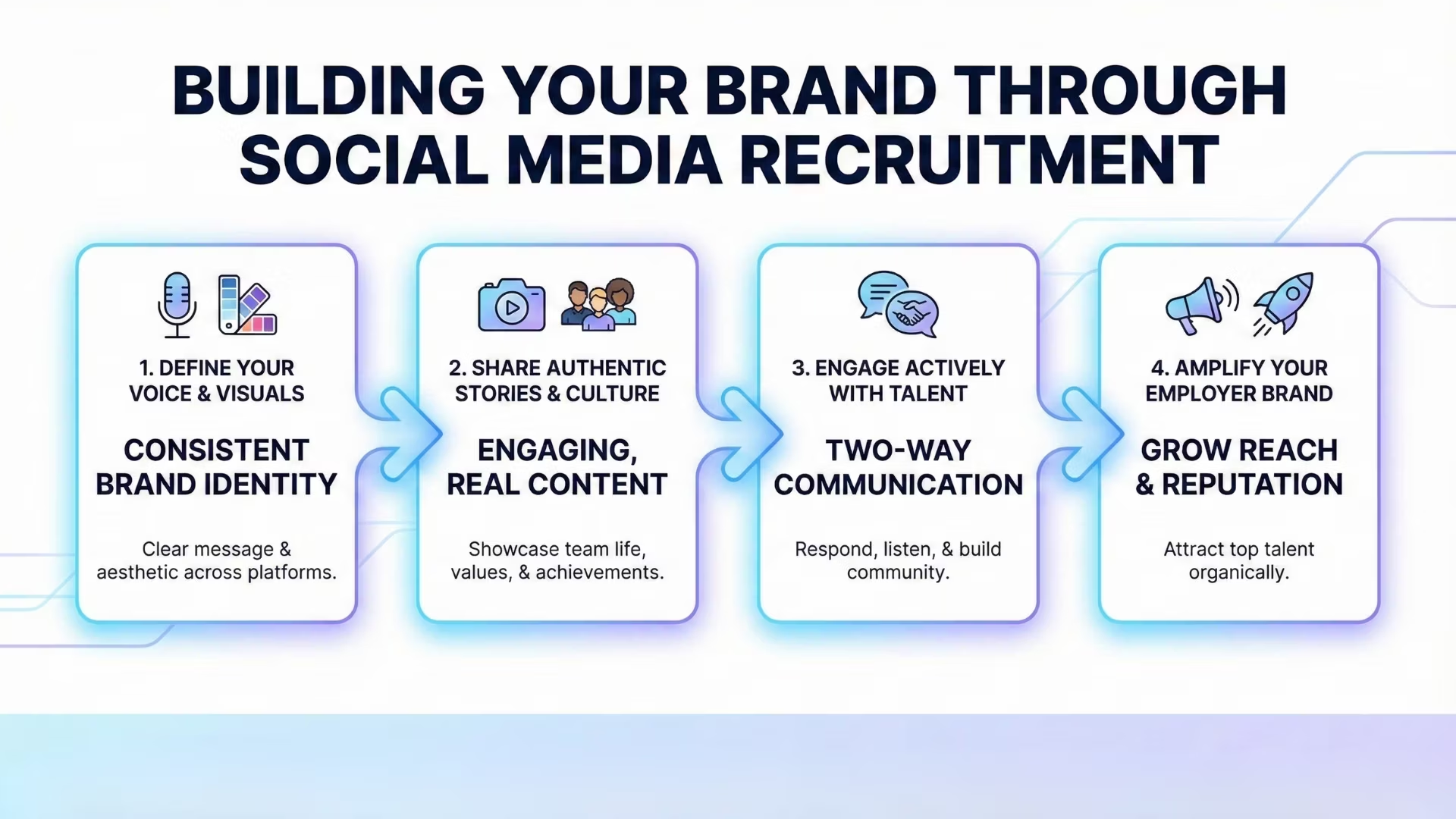
4. Building Your Brand Through Social Media Recruitment
Social media platforms have evolved far beyond their initial purpose of sharing personal updates and vacation photos.
In the context of modern talent acquisition, they have emerged as an incredibly powerful and dynamic tool for finding reliable construction workers and, crucially, for effectively showcasing what truly differentiates your company as an exceptional place to work.
Social media strategically enables you to connect with passive candidates—individuals who may not be actively engaged in a job search but are receptive to exploring a more appealing opportunity if it presents itself.
A Step-by-Step Social Media Recruiting Guide
What to do: Leverage social media as a proactive instrument to meticulously construct and continuously enhance your employer brand.
Engage consistently and authentically with potential candidates.
Your primary focus should be on demonstrating—rather than merely stating—the unique and compelling experience of working within your company culture.
Why it matters: A strong, positive, and active social media presence instantly projects an image of your company as forward-thinking, modern, and transparent.
This perception is vital in attracting contemporary talent.
More profoundly, it allows you to cultivate a vibrant online community and build a sustainable pipeline of talent that you can strategically access whenever a new role or project opportunity materializes within your organization.
How to do it:
- Select the Most Appropriate Platforms: Tailor your social media efforts to where your target candidates spend their time:
- Facebook: Remains an exceptionally effective platform for connecting with local skilled tradespeople and general laborers.
Utilize community groups, local job groups, and highly targeted advertising campaigns to reach this demographic.
- LinkedIn: This is the undisputed professional networking platform and the definitive go-to for recruiting project managers, civil engineers, superintendents, estimators, and other professional-level roles within the construction industry.
- Instagram: Provides an unparalleled visual medium, perfect for showcasing your completed projects, highlighting your diverse team members, and vividly depicting your unique company culture through high-quality photos, compelling short videos, and engaging "Stories."
- Authentically Showcase Your Company Culture: Consistently post captivating, high-quality photos and short, dynamic videos of your team members actively engaged in their work.
Always obtain explicit permission from individuals before featuring them.
Actively highlight significant company milestones, such as safety achievements, the successful completion of challenging projects, team-building events like company lunches, or individual employee promotions and recognition.
This type of authentic, visually rich content resonates far more powerfully and convincingly with potential candidates than any generic text-based job advertisement could ever achieve.
- Implement Targeted Job Advertisements: Both Facebook and LinkedIn offer incredibly sophisticated advertising platforms with granular targeting capabilities.
You can precisely target users based on a wide array of criteria, including their current job titles, declared skills, professional interests, geographical location, and even educational background.
This precision targeting ensures that your job advertisement is shown almost exclusively to the most relevant and highly qualified audience segments, maximizing your return on ad spend.
- Engage Proactively and Respond Thoughtfully: Social media is inherently a two-way communication channel.
When individuals comment on your posts, ask questions, or send direct messages, it is absolutely paramount to respond promptly, professionally, and thoughtfully.
This active engagement demonstrates that your company is attentive, values communication, and is genuinely interested in interacting with its audience and potential hires.
Ignoring comments or inquiries can quickly deter interested candidates.
Customization Tips for Different Platforms
Maximize your impact by adapting your content and engagement strategies to the unique strengths and user behaviors of each social media platform.
- On Facebook: Actively seek out and join relevant local "Construction Jobs," "Skilled Trades," or "Tradesmen in [Your City]" groups.
Once a member, share your open positions within these groups.
Always meticulously review and adhere to each group's specific posting rules and guidelines to avoid being flagged or removed.
Engage in conversations, offer advice, and subtly promote your opportunities.
- On LinkedIn: Actively encourage all your office staff, project managers, and senior leadership to proactively build and nurture their professional networks.
Empower them to regularly share your company's job openings, significant project updates, and positive company news with their connections.
This organic sharing leverages their personal credibility and vastly expands the reach of your recruitment efforts beyond your company page.
- On Instagram: Strategically utilize a mix of broad and niche-specific hashtags to significantly increase the discoverability and visibility of your posts.
Examples include #[YourCity]Construction, #[YourTrade]Life (e.g., #ElectricianLife, #CarpenterLife), #SkilledTrades, #ConstructionJobs, or even specific project hashtags if applicable.
Focus on visually appealing content that tells a story.
Common Issues & Troubleshooting
Problem: "Despite consistent posting, our social media content receives very little engagement or interaction."
- Fix: The most common reason for low engagement is often an over-reliance on solely posting job advertisements.
Diversify your content strategy.
Incorporate more engaging, interactive, and value-driven content.
Ask open-ended questions (e.g., "What's the one tool in your belt you absolutely can't live without and why?"), share behind-the-scenes glimpses of your projects, celebrate team milestones, or spotlight individual employee achievements.
People are inherently more likely to engage with human-interest stories and interactive prompts, rather than just static recruitment ads.
- Further Action: Experiment with different content formats: live videos, polls, quizzes, or employee takeovers.
Problem: "I am apprehensive about potential negative comments or public criticism on our social media channels."
- Fix: It is prudent and advisable to establish a clear and concise moderation policy for your social media accounts.
It is entirely acceptable and often necessary to hide or delete comments that are overtly profane, spammy, discriminatory, or violate your company's code of conduct.
For legitimate, constructive criticism, however, it is crucial to respond promptly, professionally, and with transparent honesty.
Your publicly visible response to negative feedback can, surprisingly, be a powerful opportunity to build trust and demonstrate that your company is a responsible, accountable, and receptive employer.
- Further Action: Proactively address common industry pain points in your content, showing you understand and are working to improve.
How Recooty Integrates with Social Sharing
Recooty is meticulously designed to simplify and amplify your social media recruitment efforts, eliminating unnecessary complexities and maximizing your efficiency.
When you successfully create a new job posting within the Recooty platform, it automatically generates a unique, optimized, and easily shareable link for that specific job.
You can then effortlessly post this direct link to your company's profiles on Facebook, LinkedIn, Instagram (in your bio or stories), or any other relevant social media platform.
When a prospective candidate clicks on this link, they are seamlessly directed to your professional, custom-branded careers page.
Here, they can review the job details and complete their application in just a few intuitive clicks, creating a fluid, user-friendly, and highly efficient experience from their initial social media discovery to their successful application submission.
5. Cultivating Relationships with Trade Schools & Vocational Programs
The future pipeline of reliable construction workers is actively being educated and trained in vocational schools, trade academies, and community colleges across the nation.
Proactively establishing and nurturing robust relationships with these essential educational institutions represents a potent, long-term strategic investment that can consistently deliver a steady stream of highly motivated, foundationally skilled, and eager-to-learn entry-level talent directly to your company.
A Step-by-Step Guide to Local Recruiting Partnerships
What to do: Make a concerted effort to immerse your company within your local community's educational landscape.
Your objective should be to establish your firm as the unequivocally preferred construction company—the first name that students, career counselors, and vocational instructors instinctively think of when discussing job placement, internship opportunities, and structured apprenticeship pathways.
Why it matters: This forward-thinking strategy provides you with an invaluable advantage: the ability to identify and engage with promising talent before your direct competitors do.
Beyond the direct hiring benefits, active community involvement generates immense goodwill, significantly enhancing your company's brand reputation as a responsible and engaged local employer.
As substantiated by the U.S. Department of Labor, well-structured apprenticeship programs are a proven, highly effective solution for comprehensively recruiting, expertly training, and successfully retaining a world-class, skilled workforce.
You can explore comprehensive resources and learn more about registered apprenticeships through their official portal, accessible here.
How to do it:
- Forge Strong Relationships with Key Instructors: Make it a priority to visit local trade schools, vocational academies, and community colleges.
Proactively introduce yourself and your company to the department heads and lead instructors within programs relevant to your hiring needs—such as welding, electrical technology, carpentry, HVAC, or heavy equipment operation.
Offer to serve as a guest speaker to their classes, share real-world project insights, provide practical materials or outdated equipment for their workshops, or, ideally, volunteer to serve on an industry advisory board for their curriculum development.
- Actively Participate in Educational Job Fairs: Ensure your company has a prominent presence by setting up an engaging booth at job fairs specifically hosted by local educational institutions and community organizations focused on career development.
Arrive fully prepared with captivating visual aids showcasing your signature projects, clear and concise informational materials about your company, and detailed explanations of the diverse career paths, growth opportunities, and benefits you offer.
Make sure your team interacting with students is enthusiastic and knowledgeable.
- Establish Structured Internship or Apprenticeship Programs: Develop and implement formal, structured programs designed to bring in students for part-time employment, summer work, or year-long apprenticeships.
This approach serves as the ultimate "try before you buy" mechanism, allowing your company to thoroughly evaluate a student's technical skills, work ethic, safety consciousness, and cultural fit firsthand, while simultaneously providing them with invaluable real-world experience and mentorship.
- Connect with Local Veterans' Organizations: Actively reach out to local military veterans' support groups, transition assistance programs, and military placement services.
Military veterans frequently possess an extraordinary combination of discipline, robust technical skills acquired through service, innate leadership qualities, and an unshakeable safety-first mindset.
These attributes make them exceptionally well-suited and highly desirable candidates for a multitude of roles within the construction industry.
Customization Tips for Your Local Market
Maximize the return on your investment in community engagement by specifically targeting institutions and organizations that directly align with your immediate and long-term talent needs and the unique characteristics of your local labor market.
- Analyze and Address Your Specific Needs: If your company consistently faces a recurring demand for plumbers, electricians, or sheet metal workers, strategically direct the majority of your outreach and engagement efforts towards building profound, lasting relationships with the lead instructors and program directors of the plumbing, electrical, or sheet metal technology programs at the nearest vocational institutions.
- Go Where the Talent Pool Naturally Concentrates: If your geographical community is home to a significant military installation or a large population of transitioning service members, forging strong partnerships with military base career centers or local veterans' employment organizations can prove to be an invaluable "goldmine" for discovering and recruiting highly disciplined, adaptable, and often technically skilled workers.
Common Issues & Troubleshooting
Problem: "Engaging with schools and community groups feels like a significant effort with only a small number of hires resulting from it."
- Fix: It is essential to fundamentally reframe your perspective on this strategy.
This is not primarily about generating an immediate, large volume of hires for a single opening; rather, it is about the sustained, long-term process of robust talent pipeline building.
The foundational relationships you meticulously cultivate today with educators and community leaders will yield substantial dividends for many years into the future.
Consider the profound impact of a single influential instructor who, over the course of a decade, consistently directs dozens of high-quality, pre-trained graduates towards your company.
- Further Action: Track the long-term success of hires from these programs.
Highlight internal success stories to motivate continued engagement.
Problem: "Students coming from these programs often seem to lack sufficient real-world, on-the-job experience."
- Fix: It is crucial to recognize that this perceived lack of experience is precisely the inherent purpose and value proposition of offering an apprenticeship, internship, or entry-level role.
By bringing these students into your company, you gain the invaluable opportunity to train them meticulously your specific way.
You can impart your company's exact standards for quality, safety protocols, operational efficiency, and work ethic from their very first day on the job.
This direct mentorship allows you to actively mold and shape your future foremen, superintendents, and skilled trades specialists, ensuring they are perfectly aligned with your organizational values and operational methodologies.
- Further Action: Pair new apprentices with experienced mentors on your team to provide structured guidance and accelerated learning.
How Recooty Helps Track Offline Candidates
When you successfully connect with promising candidates at a bustling job fair, during a trade school visit, or at any other community-based recruitment event, you need an exceptionally simple and efficient mechanism to seamlessly integrate their information into your centralized hiring system.
Recooty offers a powerful solution through its user-friendly interface for manual candidate entry.
You can effortlessly and quickly create a comprehensive profile for each promising individual directly within your Applicant Tracking System.
This includes the ability to easily upload their resume or CV if they have one available, and, crucially, to append detailed, custom notes about your conversation, their skills, and your initial impressions.
This meticulous digital record-keeping ensures that these valuable offline connections and potential future hires are never inadvertently lost, forgotten, or misplaced amidst a pile of paper resumes or scattered handwritten notes.
6. Optimizing Your Careers Page: Your Digital Recruitment Hub
Your company's website is far more than a mere digital brochure designed exclusively for potential clients; it must be strategically recognized and developed as one of your single most powerful and continuously operational construction recruiting tools.
A dedicated, meticulously designed, and intuitively navigable careers page serves as your digital recruitment hub.
It possesses the profound capability to attract top-tier talent and, critically, to convince them that your organization is the unequivocally right place to invest their professional future and build a fulfilling career within the construction industry.
A Step-by-Step Guide to a Powerful Careers Page
What to do: Dedicate resources to creating a comprehensive and engaging careers section on your company's primary website.
This section should dynamically showcase your unique company culture, proudly highlight your impressive portfolio of completed projects, and, above all, make the entire application process incredibly straightforward and user-friendly for prospective candidates.
Why it matters: In today's highly competitive talent market, candidates are actively and critically evaluating potential employers with the same rigor (if not more) as you are evaluating them.
A professionally designed, informative, and engaging careers page instantly conveys that you are a serious, reputable employer who genuinely values its team members and invests in its future workforce.
Conversely, a clunky, outdated, or difficult-to-navigate careers page can inadvertently project a negative image, potentially deterring even the most promising candidates, regardless of your company's actual strengths or positive work environment.
How to do it:
- Establish a Clearly Visible and Dedicated "Careers" Page: Ensure that your careers page is effortlessly discoverable from your website's main navigation menu.
Do not relegate it to an obscure position in the website's footer where it might be overlooked.
Prominent placement signals that hiring is a priority for your organization.
- Articulate and Showcase Your Mission and Core Values: Dedicate a prominent section to concisely and compellingly explain what your company genuinely stands for.
Are you a legacy, family-owned business renowned for decades of uncompromising quality and craftsmanship? Are you a dynamic, cutting-edge firm enthusiastically embracing the latest construction technologies and sustainable practices? Clearly communicate these distinguishing characteristics and your core values.
This transparency helps candidates determine if their personal values align with your organization's ethos.
- Feature Your Team Members and Highlight Key Projects: Integrate high-quality, professional photographs and, if possible, engaging videos of your actual crew members actively working on job sites.
Employee testimonials, whether written or in short video clips, are extraordinarily powerful and authentic.
A brief video featuring a foreman or project manager genuinely discussing what they appreciate most about working for your company can convey more authenticity and attraction than pages of written text.
Showcase visually impressive completed projects to demonstrate the quality of your work.
- Guarantee a Simple and Mobile-Friendly Application Process: The entire online application experience must be intuitively designed to be both mobile-responsive and exceptionally efficient.
Candidates should be able to complete the application, from start to finish, in no more than five minutes.
Every additional step, complex form field, or requirement for cumbersome document uploads will inevitably lead to a higher rate of candidate abandonment, causing you to lose valuable applicants before they even complete the process.
Customization Tips for Your Brand
Tailor your careers page content to authentically reflect your company's unique brand, specialization, and competitive advantages, making it truly stand out.
- Highlight Your Unique Niche or Specialization: If your company is renowned for its expertise in historic building renovations, dedicate prominent space to showcasing those unique and challenging projects, along with testimonials from clients or preservation societies.
If your firm is recognized for an unparalleled commitment to safety, make your impeccable safety record and your robust safety programs a central and compelling theme throughout your careers page.
- Embrace Authenticity Over Polished Perfection: You do not necessarily require a high-budget, ultra-slick corporate recruitment video to be effective.
A genuine, heartfelt video featuring your company's founder or a long-tenured employee passionately discussing their vision or their experiences, even if shot simply on a smartphone, can often be far more impactful and relatable.
Authenticity in your messaging fosters trust and creates a more human connection with potential hires.
Common Issues & Troubleshooting
Problem: "Our company website receives substantial traffic, yet we observe a very low application rate on our dedicated careers page."
- Fix: The most frequent cause of this discrepancy is an overly complicated or frustrating application process.
Conduct a thorough internal audit: personally test the entire application journey from a candidate's perspective, using various devices, especially a mobile phone.
If you find it cumbersome, slow, or frustrating, it is virtually guaranteed that prospective candidates will too.
Additionally, critically review the content of your careers page—is it truly compelling, inspiring, and does it genuinely motivate someone to want to apply to your company?
- Further Action: Add a clear "Why Work Here?" section with bullet points on benefits, culture, and growth.
Problem: "We lack the financial resources or internal expertise for a fancy, professionally designed careers page."
- Fix: It's important to understand that an exorbitant budget for a web designer is not a prerequisite for an effective careers page.
Simplicity, clarity, and ease of use are far more crucial.
A clean, well-organized page featuring authentic, high-quality photographs, a concise description of your company, and clearly listed job openings is often all that is necessary.
The most vital functional component is the underlying application system, which, fortunately, can be seamlessly handled and powered by a robust Applicant Tracking System (ATS).
- Further Action: Utilize free online tools or templates for basic web design if completely building from scratch.
Focus on functionality.
How Recooty Powers Your Careers Page
This is precisely one of the core areas where Recooty provides exceptional value and brilliantly shines for construction businesses of every size.
Recooty empowers you by providing a sleek, highly customizable, and fully mobile-responsive careers page that you can effortlessly set up and brand within mere minutes, requiring absolutely no specialized web design expertise on your part.
This professionally crafted page allows you to prominently feature your company logo, integrate a compelling description of your organization, and will automatically and dynamically list all your current open job positions in a clean, organized format.
This bespoke careers page can be seamlessly integrated and linked directly from your existing company website or, if preferred, can even function effectively as a completely standalone, dedicated careers portal.
Its implementation ensures a polished, professional, and friction-free experience for every candidate, significantly elevating your employer brand and streamlining the application process.
7. Engaging with Local and Niche Industry Associations
Industry associations serve as invaluable epicenters of concentrated talent, specialized knowledge, and critical networking opportunities within the construction sector.
By proactively engaging with and becoming an active participant in relevant organizations—such as the Associated General Contractors of America (AGC), the National Association of Home Builders (NAHB), or your specific local Home Builders Association (HBA) or trade-specific groups—you strategically position your company directly in front of a highly motivated and established network of dedicated construction professionals.
A Step-by-Step Guide to Association Recruiting
What to do: Commit to actively participating in one or two highly relevant construction associations that align with your company's specialization and geographical focus.
It is crucial to understand that merely holding a passive membership typically yields minimal tangible value; consistent and active engagement is the undeniable key to unlocking their full recruiting potential.
Why it matters: These industry organizations frequently offer exclusive, member-only job boards that are meticulously browsed by high-quality, experienced candidates who are deeply serious about advancing their careers within the construction industry.
Furthermore, they host invaluable networking events, provide access to specialized training programs, and offer continuous professional development opportunities.
Being a visible and actively involved member unequivocally signals that your company is profoundly committed to upholding industry standards, fostering best practices, and investing in the future of the construction trade.
This strong commitment significantly enhances your appeal as a desirable employer.
You can readily locate a local chapter of the esteemed Associated General Contractors of America (AGC) to initiate or expand your strategic outreach and engagement efforts.
Another excellent resource for industry trends and statistics is the National Association of Home Builders (NAHB).
How to do it:
- Strategically Join the Right Associations: Conduct thorough research to identify precisely which construction associations are most vibrant, active, and influential within your specific region.
Crucially, ensure that these organizations directly align with your company's primary trade, project specialization (e.g., commercial, residential, heavy civil, industrial), and long-term business objectives.
- Actively Post on Their Exclusive Job Boards: Many of these professional associations operate dedicated, member-exclusive job boards.
These platforms consistently attract a caliber of candidate who is often more experienced, more deeply committed to the industry, and explicitly seeking opportunities within reputable, established member firms.
Prioritize posting your critical job openings on these targeted boards.
- Prioritize Networking at All Events: Make it an absolute imperative to attend their regular monthly meetings, annual conferences, specialized workshops, and informal social gatherings.
Your objective should extend beyond merely seeking immediate hires; concentrate on cultivating genuine, mutually beneficial relationships with other contractors, suppliers, industry leaders, and skilled professionals within your field.
These relationships often lead to unforeseen collaborative opportunities and invaluable talent referrals.
- Engage Actively and Seek Leadership Roles: Elevate your company's profile by volunteering for a committee, offering to organize an event, or even seeking a position on the association's board.
Becoming a familiar, respected, and influential face within the local industry community will naturally lead to organic, high-quality referrals and a steady stream of recruitment opportunities as other members and industry professionals come to trust and recognize your firm's reputation.
Customization Tips for Your Specialization
Tailor your association involvement to directly support your company's unique specialization and talent acquisition goals.
- Align Deeply with Your Niche: If your construction business predominantly focuses on residential home building and remodeling, your most impactful engagement will likely be with your local Home Builders Association (HBA) or regional residential contractors' groups.
Conversely, if your firm specializes in large-scale civil engineering projects or heavy infrastructure development, an organization dedicated to civil contractors or infrastructure development will offer more relevant networking and talent pools.
- Leverage Existing Supplier Relationships: Your company's material suppliers, equipment vendors, and specialty service providers are often themselves active members of these very same industry associations.
Proactively engage with your trusted representatives from these suppliers.
Ask them if they know of any skilled tradespeople, project managers, or other professionals who might currently be seeking new employment opportunities.
Their extensive networks can often yield valuable, pre-vetted leads.
Common Issues & Troubleshooting
Problem: "The annual membership fees for these associations seem excessively high for our budget."
- Fix: It is crucial to recalibrate your perception of these membership fees.
Instead of viewing them as a pure expense, strategically classify them as a critical marketing and talent acquisition investment.
Calculate the tangible and intangible costs associated with even a single bad hire, or the substantial financial implications of project delays directly attributable to chronic short-staffing.
When these factors are accurately quantified, the access, networking opportunities, and the stream of high-caliber talent provided through active association membership can very quickly generate a return on investment that far outweighs the initial fee, often with just one successful, reliable hire.
- Further Action: Start with a lower-tier membership if available, and actively track the value received.
Highlight specific success stories internally to justify the investment.
Problem: "I feel like I'm primarily networking with my direct competitors, which seems counterproductive."
- Fix: While it's true you will interact with competitors, this is actually a significant advantage, not a drawback.
Active engagement allows you to remain acutely informed about the latest industry trends, prevailing wage rates for various skills, shifts in the local labor market, and emerging technologies.
Furthermore, by building genuine professional relationships, you can foster an environment where competitors might refer projects they can't handle to your firm, or, equally important, refer talented individuals they know who are seeking new opportunities but aren't a fit for their own company.
This collaborative spirit strengthens the entire local industry ecosystem.
- Further Action: Focus on building relationships based on mutual respect and shared industry challenges, rather than direct competition.
How Recooty Tracks Niche Candidate Sources
When your proactive engagement with industry associations successfully generates job applicants from their exclusive job boards or through networking events, it is absolutely essential to precisely track the efficacy of these different sources.
This allows you to accurately determine which associations are delivering the highest quality and quantity of candidates.
Within Recooty, this tracking is straightforward and powerful.
You can effortlessly create custom source tags (e.g., "AGC Job Board," "HBA Networking Event," "Trade Fair 2024").
By consistently applying these specific tags to candidates as they enter your system, you gain the ability to generate detailed reports.
These reports provide invaluable insights into exactly which associations and events are providing the best return on your investment of time and money, enabling you to strategically optimize your future recruitment efforts by focusing resources where they yield the most impactful results.
8. Implementing an "Always-On" Talent Pipeline Strategy
The most opportune moment to actively recruit is often when you don't have an immediate, pressing need to fill a position.
This counter-intuitive, yet profoundly effective, "always-on" or "passive" recruiting strategy dictates that your company is perpetually engaged in the process of meticulously building and nurturing a robust pipeline of highly qualified, potential candidates.
When a critical position unexpectedly opens up within your organization, you are not forced to commence an arduous search from ground zero.
Instead, you are strategically positioned to start with a meticulously curated, "warm" list of pre-identified and pre-qualified individuals who are already familiar with your company and potentially interested in future opportunities.
A Step-by-Step Guide to Passive Candidate Sourcing
What to do: Systematically integrate talent acquisition into the very fabric of your company's daily operations and strategic planning.
Critically, train your entire leadership team—from project managers to foremen—to adopt an "always-on" recruiter mindset.
Additionally, make it effortlessly simple for promising potential candidates to express their interest in your company, even in the absence of an immediate job opening.
Why it matters: This proactive, forward-looking approach dramatically compresses the typical "time-to-hire" metric, often reducing it from weeks or even months down to a mere matter of days.
It fundamentally transforms recruiting from a reactive, crisis-driven panic into a strategic, continuous, and integrated core business function.
By continuously cultivating relationships and building a talent reserve, you mitigate the risks associated with sudden departures or rapid project expansion.
How to do it:
- Strategic Branding of Your Job Sites and Company Assets: Your company trucks, equipment, job site trailers, and perimeter signage are not merely utilitarian assets; they are dynamic, mobile billboards.
Proactively integrate clear and compelling "We're Hiring" messages onto these assets.
Crucially, include easily accessible calls to action such as a dedicated recruitment phone number, a direct link to your careers page, or a scannable QR code that immediately directs interested individuals to your online application portal.
- Empower and Train Your Field Leaders: Your foremen, superintendents, and project leads are on the front lines, operating at the very heart of the construction process.
They consistently interact with subcontractors, material suppliers, and even workers from other companies on a daily basis.
Invest in training them to recognize and identify standout talent within their immediate professional orbit.
Provide them with a simple, streamlined mechanism—such as a dedicated app, a quick text message protocol, or a specific email address—to effortlessly pass the contact information and a brief assessment of promising individuals back to your central hiring team.
- Proactively Create and Maintain a Talent Pipeline: When you encounter an exceptionally strong candidate during an interview process, or simply through networking, but do not have an immediate or perfectly fitting opening, resist the urge to simply discard their resume or forget their potential.
Instead, actively create a dedicated "bench" or talent pipeline within your Applicant Tracking System.
Meticulously store their contact information, relevant skills, and your initial assessment.
Critically, establish a system for periodically "touching base" with these individuals through personalized, non-intrusive communications to keep them engaged and aware of your company's ongoing growth.
- Embrace Constant Networking: Adopt an ethos of continuous networking.
Always remain open and receptive to engaging in conversations with potential talent, whether you encounter them casually at a local building material supplier's store, a community event, a professional breakfast club, or a business networking group.
Every interaction is a potential opportunity to uncover a future, reliable team member.
Customization Tips for Your Team
To maximize the effectiveness of an "always-on" strategy, tailor your communication tools and methods to seamlessly integrate with your team's existing workflows and preferences.
- Equip Your Field Supervisors with Specialized Tools: Provide your foremen and superintendents with branded business cards that feature a prominently displayed QR code on the back.
This QR code should directly link to your company's careers page or a specific "Express Interest" form.
If they encounter a particularly sharp and capable subcontractor or another worker on a job site, they can effortlessly hand them a card, making it simple for the individual to connect with your company.
- Streamline Lead Submission for Simplicity: Develop and implement an exceptionally simple and efficient text message or email system specifically for your supervisors to submit promising leads.
For example, a supervisor could quickly text: "Lead: John Doe (Electrician) @ Main St Project.
Num: 555-1234.
Strong work ethic, quick learner." The easier the process, the more leads you will receive.
Common Issues & Troubleshooting
Problem: "Our current team leaders and supervisors claim they don't have the available time to engage in recruiting when there isn't an immediate job opening."
- Fix: It's essential to communicate and demonstrate the profound long-term value of this approach.
Emphasize that a brief, five-minute conversation today with a promising individual can potentially save your company 50 hours (or more) of desperate, reactive searching and hiring efforts next month or next quarter.
This requires a fundamental and deliberate shift in organizational mindset, but it is unequivocally one of the most powerful and sustainable strategies for achieving enduring hiring success and operational stability.
- Further Action: Recognize and reward supervisors who consistently bring in high-quality leads, even if those leads aren't immediately hired.
Problem: "We lack an effective system for managing and tracking all these passive contacts when there isn't an open job to assign them to."
- Fix: This is precisely the core challenge that a robust Applicant Tracking System (ATS) is specifically designed to address and resolve.
Instead of relying on disparate, easily lost spreadsheets, cluttered email inboxes, or scattered handwritten notes, a modern ATS like Recooty functions as your company's secure, centralized, and meticulously organized private talent database.
It allows you to systematically store, categorize, and track every single potential candidate, creating a ready-to-deploy "bench" of talent.
- Further Action: Regularly review your talent pipeline within the ATS to keep promising candidates top of mind.
How Recooty Builds Your Talent Pipeline
Recooty is the quintessential tool for flawlessly executing an "always-on" recruiting strategy, empowering your construction company to build and maintain a dynamic talent pipeline.
With Recooty, you can effortlessly add passive candidates to your dedicated talent pool, meticulously tag them with specific skill sets (e.g., "Master Electrician," "Bilingual Foreman," "Concrete Finisher"), and append detailed notes from your interactions or assessments.
When a new position suddenly opens up, your initial step is no longer the time-consuming process of crafting and posting a new job advertisement.
Instead, your first action is to intuitively search your meticulously curated internal database within Recooty.
This allows you to instantly retrieve a targeted list of qualified, pre-vetted candidates who are already familiar with your company and who have previously expressed interest.
This dramatically accelerates the hiring process, ensuring you fill critical roles faster and with significantly higher-quality individuals from your own cultivated talent pool.
9. Developing a Magnetic Company Culture for Retention & Attraction
A genuinely strong, positive, and supportive company culture is not merely a desirable attribute; it is your ultimate and most sustainable competitive advantage in both finding and retaining reliable construction workers in a challenging labor market.
Your company's culture is, in essence, its living reputation—the collective perception of what it's truly like to work for your organization.
Are you widely known within the industry as a workplace where every individual is treated with profound respect, where safety is an absolute and unwavering priority, and where hard work is consistently and equitably rewarded? Or, regrettably, are you perceived as a company characterized by high employee turnover, prevalent burnout, or a lack of investment in its people? The answer to this question profoundly impacts your ability to attract and keep top talent.
A Step-by-Step Guide to Building a Magnetic Culture
What to do: Consciously and intentionally cultivate a company culture that is firmly centered on foundational principles such as unwavering safety, mutual respect among all team members, and abundant opportunities for professional growth and advancement.
It's crucial to understand that this endeavor is not about superficial perks like installing a ping-pong table in the breakroom; it's about the fundamental, deeply ingrained way you consistently interact with and treat your most valuable asset: your people.
Why it matters: A robust and positive company culture directly translates into a significant reduction in employee turnover, which represents a massive, often underestimated, hidden cost in the construction industry.
Happy, respected, and engaged employees are demonstrably more productive, exhibit higher levels of safety consciousness, and organically evolve into your most authentic and compelling recruiters, spreading positive word-of-mouth about your workplace.
According to the U.S. Bureau of Labor Statistics' comprehensive Occupational Outlook Handbook for Construction and Extraction Occupations, steady job growth is projected, indicating that competition for the most skilled and reliable workers will only intensify.
In this environment, a truly great culture is how your company decisively wins the talent war.
How to do it:
- Prioritize Safety as Your Foremost Value: An absolute, uncompromising commitment to safety must be the bedrock of your operations and is non-negotiable.
This translates into tangible actions: consistently invest in the highest quality personal protective equipment (PPE), meticulously conduct regular, engaging, and relevant safety training sessions, and, crucially, empower every single team member, regardless of their position, with the authority and expectation to immediately stop work if they identify any unsafe condition or practice.
Foster a culture where safety is everyone's responsibility and concern.
- Invest Proactively in Modern Tools and High-Quality Equipment: Providing your team with reliable, efficient, and modern tools and equipment is a tangible demonstration that you genuinely value their productivity, their professional well-being, and their ability to perform their jobs effectively.
Constantly battling with outdated, broken-down, or subpar equipment is a pervasive source of deep frustration and inefficiency for skilled tradespeople and general laborers alike, often leading to decreased morale and higher turnover.
- Consistently Recognize and Fairly Reward Hard Work: Move beyond merely pointing out errors or shortcomings.
Make it a deliberate practice to publicly acknowledge and genuinely celebrate team members who consistently go above and beyond, demonstrate exceptional skill, or contribute significantly to project success.
Implement transparent, clear, and achievable bonus structures that are directly tied to critical metrics such as project completion, adherence to budget, quality of workmanship, and outstanding safety records.
Recognition builds loyalty.
- Champion and Facilitate Internal Promotion: Create transparent and accessible career paths for your employees.
Clearly demonstrate to your entry-level laborers that there are well-defined opportunities for them to advance to skilled trades, then to foreman, and eventually to superintendent or other supervisory roles within your organization.
Investing in your team's ongoing professional development and growth is unequivocally the most effective long-term strategy to ensure their loyalty, retention, and sustained commitment to your company's success.
This could include covering costs for certifications or specialized training.
Customization Tips for Retention
Tailor your cultural initiatives to resonate deeply with the specific needs, preferences, and aspirations of your construction workforce.
- Actively Solicit Feedback on Employee Values: Resist the temptation to assume you inherently know which benefits or cultural elements are most important to your team.
Conduct anonymous internal surveys or facilitate open, structured discussions to directly ask employees whether they would prefer, for instance, a more comprehensive health insurance plan, additional paid time off, more flexible work arrangements where feasible, or enhanced professional training opportunities.
Tailor your offerings based on their genuine input.
- Consistently Celebrate Project Successes and Milestones: When a challenging project is successfully completed on time, within budget, and to an exceptional standard of quality, make it a point to celebrate this achievement with the entire crew who contributed to its success.
A catered team lunch, a small but meaningful monetary bonus, or even a public recognition ceremony goes a remarkably long way in demonstrating genuine appreciation for their hard work and dedication, reinforcing a positive team spirit.
Common Issues & Troubleshooting
Problem: "The concept of 'company culture' feels overly corporate or abstract for the practical, hands-on environment of a construction company."
- Fix: It's helpful to reframe the term.
Instead of thinking of "culture" as a buzzword, understand it simply as "the way things are done around here." Ask yourself and your team: Is your company a place where individuals genuinely feel respected, are proud of the work they do, and are confident in their safety? That collective sentiment, those shared norms and expectations, is your culture.
It fundamentally boils down to your company's reputation, the level of respect shown to employees, and a collective, unwavering commitment to executing high-quality, safe work.
- Further Action: Share stories of company values in action – how a team member went above and beyond for safety or quality.
Problem: "We are a small to medium-sized construction company and cannot realistically afford expensive perks or benefits comparable to large corporations."
- Fix: It's crucial to recognize that a truly magnetic company culture is rarely, if ever, primarily built upon lavish perks or exorbitant benefits.
Its foundation rests firmly on core principles such as genuine respect, an uncompromising commitment to safety, and providing clear opportunities for growth and fair treatment.
Simple, yet profoundly impactful, actions like consistently expressing sincere "thank yous," equipping your team with high-quality, reliable tools, and establishing yourself as a consistently fair, honest, and supportive employer cost virtually nothing financially but cultivate immense loyalty, deep trust, and enduring commitment among your workforce.
- Further Action: Focus on non-monetary recognition, such as public praise, mentorship opportunities, or choice of project.
How Recooty Supports a Great Hiring Experience
Your company's underlying culture is not just an internal phenomenon; it is vividly reflected and communicated throughout your entire hiring process.
A protracted, disorganized, and impersonal hiring experience inadvertently sends a clear, negative message to potential candidates: that your company may not truly value their time or their professional contributions.
Recooty is specifically engineered to empower you to create a consistently professional, respectful, and engaging candidate experience from the very first interaction.
With features like automated, personalized communication templates, intuitive interview scheduling tools that eliminate tedious back-and-forth, and a clear, transparent application journey, you are able to demonstrate to candidates, right from the outset, that your organization is an organized, professional, and candidate-centric company—a place where they would genuinely want to work and build their career.
10. Implementing Robust Candidate Vetting: Skills Testing & Background Checks
While attracting a large pool of applicants is essential, the ultimate goal of construction recruiting is to hire reliable workers.
This means moving beyond resumes and interviews to thoroughly verify skills, experience, and trustworthiness.
Implementing robust skills testing and comprehensive background checks is not just a best practice; it's a critical investment in your company's safety, productivity, and long-term reputation.
Skipping these steps can lead to costly bad hires, project delays, and potential safety hazards.
A Step-by-Step Guide to Robust Vetting
What to do: Develop a standardized, multi-faceted vetting process that objectively assesses a candidate's practical skills and thoroughly scrutinizes their background for reliability and safety.
Why it matters: In construction, a worker's practical ability and integrity are paramount.
A great resume doesn't always translate to on-site competence, and a clean interview doesn't guarantee trustworthiness.
Thorough vetting protects your company from liabilities, ensures project quality, and maintains a safe working environment.
How to do it:
- Develop Practical Skills Assessments: For skilled trades, create standardized practical tests.
This could involve a hands-on welding test, a carpentry joint assembly, troubleshooting a simple electrical circuit, or operating a piece of equipment under supervision.
Observe not just the final product, but the process, safety practices, and problem-solving approach.
- Conduct Comprehensive Reference Checks: Go beyond just calling the provided numbers.
Prepare a list of specific, behavioral questions (e.g., "Tell me about a time John demonstrated strong teamwork," "How did Mary handle unexpected challenges on a project?"). Ask for a second or third reference if the first isn't insightful.
Try to speak with a direct supervisor who can comment on work quality and reliability.
- Implement Standardized Background Checks: Partner with a reputable third-party service to conduct criminal background checks.
Depending on the role and company policy, this may also include motor vehicle record (MVR) checks (essential for anyone driving company vehicles or operating equipment), and potentially drug screenings.
Ensure compliance with all federal, state, and local laws regarding background checks.
- Verify Certifications and Licenses: For roles requiring specific certifications (e.g., OSHA, specific equipment operator licenses, journeyman electrician license), always independently verify their validity with the issuing authority.
Do not just accept a photocopy.
- Structured Interviewing: While vetting focuses on verification, a structured interview (covered in less detail as a strategy, but crucial here) complements it.
Use consistent questions for all candidates in a given role to allow for fair comparison.
Ask situational and behavioral questions that reveal past performance and problem-solving skills, which are strong indicators of future behavior.
Customization Tips for Different Roles & Company Needs
The depth and type of vetting should be proportionate to the risk and skill level of the role.
- For Entry-Level Laborers: Focus on background checks for safety, drug screening, and verifying basic work history for reliability.
A simple physical aptitude test (e.g., lifting a certain weight) might be relevant.
- For Skilled Trades (e.g., Electricians, Plumbers, Heavy Equipment Operators): Practical skills tests are crucial.
Comprehensive reference checks that delve into specific project experiences and problem-solving abilities are vital.
Verify all trade licenses and certifications with the issuing bodies.
MVR checks are essential for operators.
- For Management (e.g., Project Managers, Superintendents): Focus on detailed behavioral interviews, extensive reference checks from previous direct reports and superiors, and verification of their project portfolio and educational credentials.
Leadership and problem-solving scenarios are key.
- For Subcontractors: Beyond individual worker vetting, ensure the subcontractor company itself is properly licensed, insured, has a strong safety record, and can provide references from other General Contractors.
Common Issues & Troubleshooting
Problem: "Skills testing takes too much time and resources."
- Fix: Consider the cost of a mistake.
A single error by an unskilled worker can lead to significant rework, material waste, schedule delays, or, worst of all, a safety incident.
A well-designed, efficient skills test (even a short one) is a small investment to avoid these massive costs.
You can also develop standardized, quick tests that can be administered efficiently.
- Further Action: Leverage technology for certain tests, such as online simulations for basic mechanical aptitude or safety knowledge.
Problem: "Background checks are expensive and complicated."
- Fix: Partnering with a reputable background check provider can simplify the process and ensure legal compliance.
While there's a cost, compare it to the potential financial and reputational damage of hiring someone with a concerning criminal history or a revoked driver's license who then causes an incident.
Think of it as an essential risk mitigation strategy.
- Further Action: Understand the legal limitations of background checks (e.g., "Ban the Box" laws) in your jurisdiction to avoid discrimination.
The EEOC provides guidelines on background checks to ensure fairness and compliance.
Problem: "Candidates sometimes drop out when asked for skills tests or background checks."
- Fix: This can actually be a positive indicator.
Highly reliable and qualified candidates, who have nothing to hide, typically embrace these steps as a sign of a professional employer.
Those who drop out may not have been the reliable workers you needed anyway.
Be transparent about your vetting process early on, so candidates know what to expect.
- Further Action: Frame these steps positively as part of ensuring a safe and skilled team, which benefits everyone.
How Recooty Supports Robust Vetting
Recooty can significantly streamline and organize your candidate vetting processes, integrating these critical steps into your overall hiring workflow.
- Customizable Application Workflows: Within Recooty, you can easily design your hiring workflow to include specific stages for "Skills Test," "Reference Check," and "Background Check." This ensures these steps are never missed.
- Document Management: Upload and securely store skills test results, reference check notes, and background check reports directly within each candidate's profile.
This keeps all critical vetting information centralized and accessible to your hiring team.
- Integration with Third-Party Tools: While Recooty doesn't conduct background checks directly, it can integrate with many third-party providers.
You can often trigger these checks directly from a candidate's profile within Recooty, and the results can be uploaded back into the system for a seamless experience.
- Structured Interview Management: Recooty's platform facilitates structured interviewing by allowing you to create custom interview scorecards for different roles.
This ensures your interviewers ask consistent questions and evaluate candidates against predefined criteria, leading to more objective and fair assessments that complement skills tests and background checks.
- Compliance Support: By centralizing your data and providing clear workflows, Recooty helps maintain a consistent process, which is crucial for demonstrating compliance with hiring regulations and avoiding discriminatory practices.
This meticulous record-keeping is vital for maintaining an auditable trail of your hiring decisions.
Are You Drowning in Resumes? Recooty Can Help.
Implementing just a few of the sophisticated strategies outlined above will undoubtedly yield improvements in your construction recruiting efforts.
However, the comprehensive and consistent implementation of all these strategies, especially within a dynamic and often unpredictable industry like construction, can quickly feel overwhelming without the right technological ecosystem in place.
A fragmented, disorganized, and manual hiring process inevitably leads to myriad missed opportunities, considerable administrative frustration, and, most critically, the loss of high-caliber talent to more agile competitors.
Here’s a detailed breakdown of precisely how Recooty is meticulously designed to solve the most pervasive and challenging recruitment obstacles that construction companies routinely encounter.
Challenge 1: The Entire Hiring Process is Chaotic and Disorganized.
You find yourself grappling with an unmanageable sprawl of candidate information: resumes are scattered across your email inbox, precariously piled on your physical desk, tucked away in various folders on your computer, or, perhaps, a promising lead is scribbled on a napkin by your superintendent.
This chaotic decentralization renders it virtually impossible to accurately track who has been contacted, what the current status of each candidate is, or what the crucial next step in their hiring journey should be.
- Recooty's Solution: A powerful, centralized Applicant Tracking System (ATS).
With Recooty, every single candidate, regardless of their originating source, resides within one intuitive, meticulously organized, and easily navigable dashboard.
You gain immediate, crystal-clear visibility into your entire hiring pipeline at a single glance.
Candidates can be effortlessly moved between various stages (e.g., Applied, Interview, Offer, Hired) with a simple drag-and-drop interface, guaranteeing that no valuable lead or application ever inadvertently gets lost or forgotten.
Challenge 2: You Waste a Disproportionate Amount of Time on Unqualified Candidates.
You dedicate countless hours sifting through what often amounts to dozens, if not hundreds, of resumes.
This exhaustive manual review is frequently undertaken just to identify one or two individuals who meet your absolute minimum, basic requirements for a given role.
This is time that could be far more productively allocated to critical tasks such as preparing new project bids, expertly managing ongoing construction projects, or maintaining a vital presence on the job site.
- Recooty's Solution: Advanced AI Candidate Ranking.
Recooty’s proprietary AI technology functions as your intelligent, tireless personal screening assistant.
It meticulously analyzes every incoming application against your specific job requirements and automatically provides a concise, objective score (e.g., 9/10, 7/10).
This immediate quantitative assessment empowers you to instantly focus your valuable attention exclusively on the most promising and highly qualified candidates, efficiently filtering out the less suitable applicants.
Challenge 3: Your Internal Hiring Team Lacks Alignment on Crucial Decisions.
The decision-making process for new hires often requires the collective input and consensus of multiple key stakeholders within your organization—yourself, your project manager, and your lead foreman.
This frequently devolves into protracted email chains, conflicting and unorganized feedback, and an agonizingly slow decision-making cycle.
This protracted process inevitably results in the loss of exceptionally talented individuals to more agile and faster-moving competitors.
- Recooty's Solution: Streamlined Collaborative Hiring functionalities.
Recooty allows you to seamlessly invite your entire hiring team into the platform.
Once invited, team members can collaboratively view candidate profiles, easily leave private ratings and detailed comments, and instantly access all aggregated feedback in one meticulously organized and transparent location.
This fosters superior communication, eliminates redundancy, and empowers your team to make more informed, data-driven, and significantly faster hiring decisions together.
Challenge 4: You Inadvertently Lose Track of Great Candidates for Future Roles.
Imagine you conduct an interview with a fantastic, highly skilled carpenter, but the specific project they were intended for unexpectedly gets put on hold.
Six months later, a new project materializes, and you desperately need a carpenter, yet you can no longer locate their resume or contact information.
You are then forced to endure the time-consuming and costly process of starting your entire talent search over from scratch.
- Recooty's Solution: An infinitely searchable and strategically managed Talent Pipeline.
With Recooty, every single applicant who has ever applied to your company automatically becomes an integral part of your private, continuously growing talent database.
The next time you identify a need for a specific role, such as a carpenter, you simply execute a quick search for "carpenter" within Recooty.
The system instantly presents you with a curated list of qualified, previously vetted candidates whom you can immediately contact, saving your company considerable time, effort, and advertising expenditures.
Your Top Construction Recruiting Questions Answered
What is a construction recruiter or staffing agency?
A construction recruiter, or a specialized staffing agency, is a professional firm that dedicates its expertise to helping construction companies identify, source, and ultimately hire qualified candidates for a wide array of roles within the industry.
They effectively act as a strategic intermediary, expertly handling the often-laborious tasks of candidate sourcing, initial screening, and preliminary vetting of applicants.
This invaluable service saves contractors a significant amount of administrative time and provides them with direct access to a broader, more diverse, and often pre-qualified talent pool.
How do construction recruiters typically get paid for their services?
Recruiters in the construction sector generally operate under one of two primary compensation models: contingency or retained.
In a contingency placement model, which is prevalent for many standard and mid-level roles, the agency only earns a predetermined fee (typically calculated as a percentage of the successfully placed candidate's first-year annual salary) once their referred candidate is actually hired by your company.
For highly specialized, senior-level executive searches or highly confidential roles, agencies may work on a retained basis, meaning they receive a portion of their fee upfront, regardless of the outcome, to dedicate exclusive resources to the search.
How easy is it for individuals with no prior experience to get hired in construction?
It is remarkably achievable to secure employment in the construction industry with no previous experience.
The construction sector is characterized by a persistent and often high demand for labor across many trades, offering numerous accessible entry points.
The most effective and recommended pathway for individuals lacking prior experience is to enroll in an apprenticeship program, which are frequently sponsored and run by local trade unions.
These comprehensive programs are designed to provide paid, hands-on, on-the-job training seamlessly integrated with structured classroom instruction, thereby creating a direct, structured, and financially supported pathway to a skilled trade career.
What are considered the highest-paid jobs within the construction industry?
The highest-paying roles within the construction industry are typically those that demand highly specialized skills, advanced certifications, extensive experience, or significant management and leadership responsibilities.
These lucrative positions often include Construction Executives/Managers (such as Directors of Construction, Senior Project Managers), highly technical roles like Elevator Installers and Repairers (who require precise mechanical and electrical expertise), and specialized engineering positions such as Pipeline Engineers, Structural Engineers, or Drilling Engineers.
Top earners in these critical positions can realistically command annual salaries well into the six figures, often exceeding $150,000 to $200,000 depending on location, specific expertise, and project complexity.
What are the most effective strategies for finding reliable subcontractors?
Identifying and securing truly reliable subcontractors necessitates a combination of strategic networking and rigorous due diligence.
Begin by actively soliciting referrals and recommendations from trusted industry contacts, including your material suppliers, equipment vendors, and fellow general contractors.
Always conduct thorough reference checks, speaking directly with past clients or other GCs they have worked for.
Crucially, verify their current insurance coverage and all relevant licenses, and meticulously review a portfolio of their past work to assess quality and consistency before formally engaging them with a contract.
How can construction companies effectively avoid making bad hires?
Proactively avoiding bad hires begins with establishing a highly structured and systematic hiring process.
Move beyond a superficial review of resumes and conduct in-depth interviews that incorporate specific behavioral questions (e.g., "Describe a specific situation where you encountered a safety hazard on a job site and what actions you took to resolve it").
Always conduct multiple, comprehensive reference checks, actively seeking insights into a candidate's work ethic, problem-solving abilities, and interpersonal skills.
For skilled trades roles, seriously consider implementing a practical, hands-on skills test as an integral component of your interview process to objectively verify their claimed capabilities and ensure they meet your quality standards.
What is a typical hourly rate or salary that construction workers and contractors can expect?
The compensation for construction workers and contractors exhibits significant variability, primarily influenced by factors such as the specific role, the individual's level of experience, the required skill set, and the prevailing economic conditions and cost of living within the geographical location.
For instance, general contractors might typically charge an average hourly rate of around $50, but this can fluctuate considerably, ranging from $30 to $85 per hour, depending on the complexity of the project, their overhead, and local market demand.
Specialized roles, highly skilled trades, and senior management positions will, of course, command substantially higher salaries or hourly rates, often aligning with the six-figure incomes mentioned previously.
For more detailed salary information, consulting resources like the U.S. Bureau of Labor Statistics or industry-specific wage surveys can provide valuable local insights.
Additional Construction Recruiting Questions Answered
What are the specific challenges of construction recruiting in rural versus urban areas?
Recruiting in rural areas often means a smaller local talent pool, requiring companies to cast a wider net or offer incentives for relocation.
There might be fewer trade schools or associations, making community outreach more crucial.
In urban areas, the challenge typically shifts to intense competition from many other construction firms, higher cost of living (demanding higher wages), and navigating complex local regulations or union requirements.
Both environments necessitate tailored strategies, but rural areas often prioritize broader reach and incentives, while urban areas focus on competitive employer branding and efficiency.
What are the key legal considerations and compliance requirements when hiring construction workers?
Hiring construction workers involves several critical legal and compliance considerations.
These include adhering to wage and hour laws (including overtime and prevailing wage rates for public projects), ensuring worker classification is correct (employee vs.
independent contractor) to avoid misclassification penalties, complying with OSHA safety regulations and providing mandatory safety training, and conducting non-discriminatory background checks in accordance with EEOC guidelines and state/local "Ban the Box" laws.
Additionally, understanding immigration laws and verifying employment eligibility (I-9 compliance) is essential, especially given the diverse workforce in construction.
How can construction companies effectively build their employer brand to attract top talent?
Building a strong employer brand is crucial for attracting top construction talent.
This involves consistently showcasing what makes your company a great place to work, beyond just project portfolios.
Key elements include: emphasizing a culture of safety and respect, highlighting opportunities for training and career advancement, celebrating team successes and employee recognition, maintaining an active and engaging social media presence that shares behind-the-scenes glimpses, and ensuring a professional, efficient, and transparent hiring process.
Your employer brand communicates your values and differentiates you in a crowded market.
What are the common career progression and development opportunities for construction workers?
Construction offers diverse and clear career progression paths for motivated individuals.
A common trajectory might start from General Laborer, advancing to a Skilled Trade Apprentice (e.g., electrician, carpenter, plumber), then to a Journeyman or Foreman.
From there, advancement can lead to Superintendent, Project Manager, Estimator, or even specialized roles like Safety Manager or Quality Control Manager.
Many companies also support continued education, certifications (e.g., LEED, PMP), or specialized training (e.g., advanced welding techniques, heavy equipment operation) to help workers climb the career ladder.
How does the "gig economy" or temporary contract work impact construction hiring?
The "gig economy" significantly impacts construction hiring by increasing the availability and demand for temporary, project-based, or contract workers.
This trend offers construction companies greater flexibility to scale their workforce up or down based on project needs without the long-term commitments of permanent hires.
It's particularly prevalent for specialized skills required for specific project phases or for general labor needs.
However, managing contract workers requires careful attention to worker classification laws to avoid miscategorization, ensuring proper insurance, and maintaining consistent quality control.
For workers, it offers flexibility but may come with less job security and fewer benefits compared to permanent employment.
Building Your A-Team is the Foundation of Your Success
In the rapidly evolving and intensely competitive landscape of the modern construction industry, effective construction recruiting is fundamentally no longer a passive exercise of simply placing a job ad and passively hoping for the best.
It absolutely demands a proactive, sophisticated, and multi-channel approach that seamlessly integrates intelligent technology, continuous proactive networking, and an unwavering, genuine commitment to cultivating and maintaining an exceptional company culture.
By meticulously leveraging online job boards, strategically empowering your existing team to refer high-quality candidates, diligently attending trade schools and community events, optimizing your digital presence, and assiduously building a continuous talent pipeline, you possess the power to fundamentally transform your hiring process.
What once might have been a constant, draining headache can evolve into a powerful, sustainable competitive advantage that fuels your company's growth.
The diverse and comprehensive strategies detailed throughout this guide provide a robust, actionable framework for finding reliable construction workers who will drive your projects forward.
Remember that consistency and a long-term perspective are absolutely paramount.
The implementation of an intuitive and powerful technological solution, such as Recooty, can serve as the essential organizational backbone, diligently automating the myriad of tedious administrative tasks and liberating your valuable time.
This freedom allows you to refocus your energy and expertise on what truly matters: genuinely connecting with exceptional people, meticulously vetting their capabilities, and ultimately building an elite team that is not only capable of tackling any construction project with unparalleled efficiency but also committed to your company's enduring success and shared vision.
Your company's reputation, your project quality, and your long-term profitability are intrinsically built by the hands of your workers—it is unequivocally time to strategically invest in building the most skilled, dedicated, and reliable team possible.
Ready to transform your hiring process and build your dream team?
Stop struggling with antiquated methods, eliminate administrative bottlenecks, and stop drowning in disorganized paperwork.
It's time to elevate your recruitment game and start building your A-team with confidence and efficiency.
Explore how Recooty's powerful, user-friendly, and AI-driven platform can comprehensively streamline and optimize your construction recruiting efforts from the very initial candidate touchpoint through to successful hiring and onboarding.
Sign Up for a Free Demo Today and Revolutionize Your Construction Hiring!

.png)
.png)

.webp)