.webp)


Finding the right people for your manufacturing business is tougher than ever. The industry faces a perfect storm: a widening skills gap, an aging workforce, and fierce competition for top talent.
Old methods of posting a job and waiting for applications just don’t work anymore.
You need a proactive, modern approach. That’s why having effective Manufacturing Recruitment strategies is no longer a choice—it’s a critical necessity for survival and growth.
This guide is designed to be your definitive playbook. I've spent years in the talent acquisition space, and I've seen firsthand what works and what doesn't.
We will walk through 10 actionable strategies on How to Hire Skilled Workers in Manufacturing.
We'll cover everything from building an irresistible employer brand to leveraging cutting-edge technology.
To truly succeed, you need a powerful ally, which is why a modern recruitment platform Recooty.com can be a game-changer.
It allows you to streamline your hiring process with an advanced Applicant Tracking System, leverage AI Candidate Ranking to pinpoint top talent, and facilitate seamless teamwork with collaborative hiring features.
By the end of this article, you will have a clear, step-by-step framework to attract, hire, and retain the skilled workers your business needs to thrive.
Let’s build your future-proof workforce, together.
Strategy 1: How do I develop a magnetic employer brand?
The Explanation
Your employer brand is your company's reputation as a place to work.
It’s the story people tell about you when you’re not in the room.
In manufacturing, where old stereotypes of dark, dirty factories still linger, a strong brand is your most powerful tool for attracting manufacturing talent.
A magnetic brand shows potential candidates that you offer a modern, safe, and rewarding career, not just a job.
It helps you stand out from the competition and attract skilled workers who are looking for a great organizational culture and long-term career growth.
A step-by-step guide to building your brand
- Define Your Identity: Start by asking critical questions.
What is your company's mission? What are your core values? What makes your workplace unique? Get input from your current employees to ensure authenticity.
- Craft Your Employee Value Proposition (EVP): Your EVP is the promise you make to your employees.
It summarizes the rewards and benefits they receive for their performance.
This includes competitive compensation, benefits, employee development opportunities, and a positive culture.
- Gather Social Proof: Collect testimonials, photos, and videos from your current employees.
Let them be the heroes of your story.
Showcasing real people thriving in your workplace is more powerful than any marketing slogan.
- Optimize Your Online Presence: Your careers page is your brand's headquarters.
Make it visually appealing and easy to navigate.
Share your brand story on social media platforms like LinkedIn, showcasing the modern, high-tech side of your operations.
- Be Consistent: Ensure your brand message is consistent across all channels, from job descriptions to interview questions.
Every interaction a candidate has with your company should reinforce your brand identity.
How can I customize my employer brand?
- For Heavy Machinery vs. Precision Electronics: A heavy machinery company might emphasize strength, durability, and building the world's infrastructure.
A precision electronics firm could focus on innovation, meticulousness, and creating the future of technology.
Your brand's tone should match your sector.
- For Small vs. Large Companies: Small manufacturers can highlight a close-knit, family-like culture and the opportunity for employees to make a significant impact.
Large corporations can showcase extensive resources, global opportunities, and structured career advancement paths.
What are common issues and how can I troubleshoot them?
- Problem: Inauthentic Branding: Your brand promises a modern, innovative culture, but your factory floor and management style are outdated.
Candidates will see this disconnect during the interview process.
- Solution: Be honest. Your brand must reflect reality. If you are working on modernizing, frame it as a journey of growth and invite new hires to be a part of the transformation.
- Problem: Inconsistent Messaging: Your social media posts show a fun, relaxed environment, but your job descriptions are rigid and formal.
- Solution: Create a brand style guide for all recruitment communications.
Ensure everyone involved in hiring, from recruiters to managers, understands and uses the same tone and messaging.
How does Recooty help build an employer brand?
A modern tool like Recooty is essential for bringing your employer brand to life.
You can create beautiful, custom-branded career pages that tell your company's story and showcase your unique culture.
By centralizing your job postings and communications, Recooty ensures every candidate receives a consistent, professional, and on-brand experience, reinforcing your reputation as an employer of choice.
FAQs about Employer Branding
- What elements are crucial for a strong manufacturing employer brand?
- The most crucial elements are authenticity, a clear mission, employee testimonials, a focus on safety and innovation, and a professionally designed careers page.
- How long does it in manufacturing take to build an effective employer brand?
- Building a strong brand takes time and consistency. Expect to see initial results in 3-6 months, but it's an ongoing effort that evolves with your company.
- Can a small manufacturer compete with larger companies on employer branding?
- Absolutely. Small manufacturers can leverage their unique strengths, such as a tight-knit culture, direct access to leadership, and a greater sense of individual impact, to create a powerful and appealing brand.
Strategy 2: How can I optimize job descriptions for modern manufacturing roles?
The Explanation
A job description is often the first real interaction a candidate has with your company.
In the past, these were just lists of duties.
Today, an effective manufacturing job description is a marketing tool designed to attract and engage top skilled workers.
It needs to be clear, compelling, and optimized for search engines so the right people can find it.
It should sell the role and the company, highlighting the modern, tech-driven aspects of the job and dispelling any outdated industry stereotypes.
This is a fundamental step in building your manufacturing talent pipeline.
A step-by-step guide to writing better job descriptions
- Start with an Engaging Title: Be specific and use common industry terms.
Instead of "Factory Worker," use "CNC Machine Operator" or "Robotics Maintenance Technician." This improves searchability and clarity.
- Write a Compelling Summary: Open with a 2-3 sentence summary that sells the role.
Explain how this position contributes to the company's mission.
Make the candidate the hero of the story.
- Focus on Outcomes, Not Just Duties: Instead of listing tasks like "Operates machinery," describe the outcome: "Operates CNC machinery to produce high-precision components for the aerospace industry." This gives the work purpose.
- Use Inclusive and Active Language: Avoid jargon and overly formal language.
Use "you will" statements to help candidates envision themselves in the role.
Ensure the language is gender-neutral and welcoming to all backgrounds.
- Highlight the Modern Aspects: Mention the technology, software, and advanced machinery the role involves.
Talk about your commitment to safety, continuous improvement (like lean manufacturing), and employee development.
- Clearly List Requirements: Separate "must-have" qualifications from "nice-to-have" skills.
This encourages more candidates, including those with transferable skills, to apply.
How can I customize my job descriptions?
- For Entry-Level Roles: Focus on the opportunity to learn and grow. Highlight your training programs, mentorship opportunities, and the potential for career advancement.
Emphasize soft skills like teamwork, reliability, and a willingness to learn.
- For Highly Specialized Roles: Be very specific about the technical requirements, certifications, and machinery experience needed.
Use precise keywords that an expert in that field, like a production supervisor or machinist, would search for.
- Emphasizing Safety vs. Innovation: For roles involving heavy machinery, make safety a prominent theme.
For R&D or engineering roles, emphasize innovation, problem-solving, and the cutting-edge technology they will work with.
What are common issues and how can I troubleshoot them?
- Problem: Vague Language: Using generic phrases like "detail-oriented" or "team player" without context.
- Solution: Provide specific examples. Instead of "team player," say "Collaborates with a team of 5 technicians to meet daily production targets."
- Problem: Unrealistic Requirements: Listing 10 years of experience for a new technology or requiring a bachelor's degree for a role that needs technical skills.
- Solution: Conduct a job analysis. Work with the hiring manager to distinguish essential skills from preferences. Consider skills-based hiring over strict degree requirements.
How does Recooty help with job descriptions?
Recooty's Applicant Tracking System simplifies the entire process.
It provides templates to help you craft clear and effective job descriptions.
More importantly, it allows you to post your optimized job descriptions to multiple job boards with a single click, ensuring maximum visibility and reaching a wider audience of qualified skilled labor.
FAQs about Job Descriptions
- How can I make my manufacturing job descriptions more appealing to younger talent?
- Highlight technology, opportunities for training and development, and your company's commitment to sustainability and a positive corporate culture.
Use a conversational tone and showcase a clear career path.
- Should I include salary ranges in job descriptions?
- Yes, whenever possible. Job postings with salary ranges get significantly more applicants.
It promotes transparency and ensures you attract candidates who align with your compensation structure, saving time for everyone.
- What are common mistakes to avoid in manufacturing job descriptions?
- Avoid using internal jargon, setting unrealistic expectations, having a long list of "requirements," and failing to sell the opportunity. Always proofread for typos and clarity.
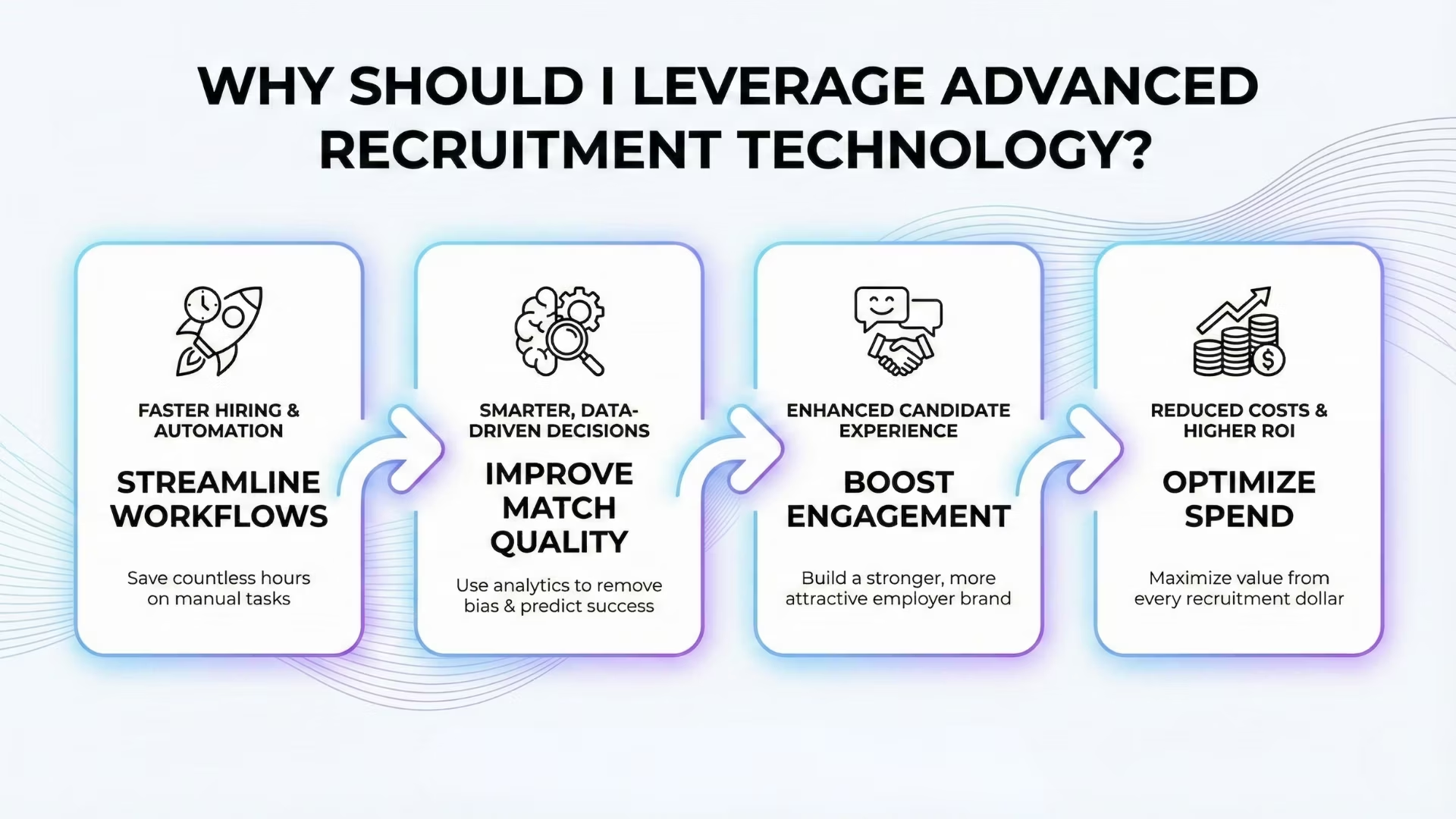
Strategy 3: Why should I leverage advanced recruitment technology?
The Explanation
The manufacturing sector is all about efficiency, and your recruitment process should be no different.
Leveraging HR tech, AI in recruitment manufacturing, and automation is no longer a luxury; it’s essential for competing in a tight labor market.
These tools help you work smarter, not harder.
Technology can automate repetitive tasks, analyze candidates more effectively, and improve the overall candidate experience.
By embracing these tools, you can reduce your time-to-hire, lower your cost-per-hire, and make more data-driven decisions on How to Hire Skilled Workers in Manufacturing.
A step-by-step guide to implementing HR technology
- Implement an Applicant Tracking System (ATS): An ATS is your central command for recruitment.
It helps you post jobs, collect applications, screen candidates, schedule interviews, and communicate with applicants—all from one place.
- Use AI for Candidate Sourcing and Matching: AI-powered tools can scan millions of profiles on job boards and professional networks to find candidates who match your criteria, including passive candidates who aren't actively looking.
- Leverage AI for Candidate Ranking: Once applications are in, AI can rank them based on how well they match the job requirements.
This helps you quickly identify the most promising candidates in a large applicant pool.
- Automate Communication: Use automation to send instant confirmations to applicants, provide status updates, and schedule interviews.
This keeps candidates engaged and ensures no one falls through the cracks.
How can I customize my tech stack?
- For Small Businesses: You don't need a massive, enterprise-level system.
Start with a user-friendly and affordable ATS like Recooty that combines job posting, candidate management, and collaboration features.
- For Large Enterprises: Look for a scalable solution that can handle high-volume hiring and integrate with your existing HRIS (Human Resources Information System).
Advanced features like predictive analytics and multi-location management become more important.
What are common issues and how can I troubleshoot them?
- Problem: Over-reliance on AI: Using AI to make final decisions without human oversight can lead to bias and overlooking great candidates with non-traditional backgrounds.
- Solution: Use AI as a tool to support, not replace, human judgment.
Recruiters should always review the top candidates identified by AI and make the final call.
- Problem: Poor Candidate Experience: Automation, if not configured properly, can feel cold and impersonal.
- Solution: Personalize your automated messages.
Ensure there are clear points for human interaction, especially during the interview and offer stages.
- Problem: Integration Challenges: Your new ATS doesn't work well with your email system or calendar.
- Solution: Before choosing a tool, verify its integration capabilities.
Look for platforms like Recooty that offer seamless integrations with tools you already use.
How does Recooty lead the way in HR technology?
Recooty is designed specifically to solve these challenges.
Its intuitive Applicant Tracking System makes managing your hiring pipeline effortless.
The platform's powerful AI Candidate Ranking and AI Candidate Matching features analyze skills and experience to surface the best-fit candidates in seconds, dramatically speeding up your screening process.
This technology empowers you to focus your energy on engaging with top talent rather than sifting through resumes.
FAQs about Recruitment Technology
- How does AI help in hiring skilled manufacturing workers?
- AI helps by automating the screening of resumes, matching candidates' skills to job requirements with high accuracy, and sourcing passive talent from across the web.
This allows recruiters to focus on qualified candidates faster.
- What is an Applicant Tracking System and why is it important for manufacturing?
- An ATS is a software that centralizes and automates the recruitment process.
It's crucial for manufacturing because it helps manage high volumes of applications for roles like machine operators and pickers/packers while ensuring a consistent and efficient process.
- Can HR tech replace human recruiters in manufacturing?
- No. HR tech is a powerful tool that enhances a recruiter's abilities.
It handles the administrative work, but human recruiters are still essential for building relationships, assessing cultural fit, and making the final hiring decision.
Strategy 4: How can I build a robust talent pipeline?
The Explanation
One of the most effective Manufacturing Recruitment strategies is to stop thinking about hiring only when you have an open position.
Building a manufacturing talent pipeline is a long-term strategy that involves proactively identifying and engaging with potential candidates before you need them.
This approach is crucial for an industry with a known labor shortage.
By cultivating relationships with local schools, offering apprenticeships, and engaging with the community, you create a sustainable source of skilled talent for years to come.
A step-by-step guide to pipeline cultivation
- Partner with Educational Institutions: Connect with local high schools, vocational schools, community colleges, and technical universities.
Offer to speak to students, participate in career fairs, and provide facility tours.
- Develop Apprenticeship and Internship Programs: These are the ultimate "try before you buy" programs.
They allow you to train individuals on your specific equipment and processes while evaluating them for full-time roles.
This is a proven method for manufacturing workforce development.
- Engage with the Local Community: Sponsor local events, host open houses, or partner with community organizations.
Showcasing your company as a great local employer can attract talent from your own backyard.
- Maintain a Talent Pool: Use your ATS to tag promising candidates who weren't the right fit for a current role but might be perfect for a future one.
Keep in touch with them through occasional newsletters or updates.
How can I customize my pipeline strategies?
- Based on Local Landscape: If your area has strong vocational schools, focus your efforts there.
If you're near a military base, create a program aimed at attracting veterans with valuable technical skills.
- Based on Skill Needs: If you need more welders, partner with a school that has a strong welding program.
If you need robotics technicians, collaborate with a college that offers automation degrees.
Tailor your partnerships to your specific talent gaps.
What are common issues and how can I troubleshoot them?
- Problem: Lack of Engagement from Schools: Educational institutions are often busy and may not respond to initial outreach.
- Solution: Be persistent and offer clear value. Propose a specific partnership, like offering to help update their curriculum to match industry needs or providing equipment for their labs.
- Problem: Low ROI on Internships: Interns are given menial tasks and don't convert to full-time hires.
- Solution: Create a structured internship program with clear learning objectives, a dedicated mentor, and meaningful projects.
Treat your interns as future employees, not temporary help.
How does Recooty support talent pipelining?
Recooty's ATS is perfect for managing a long-term talent pipeline.
You can create specific pipelines for different roles or sources (e.g., "Vocational School Interns").
The system allows you to tag and categorize candidates, add notes, and easily search your database when a new position opens up, ensuring you never lose track of a great potential hire.
FAQs about Talent Pipelines
- How can manufacturers start a successful apprenticeship program?
- Start by partnering with a local community college or the Department of Labor.
Define the on-the-job training and classroom instruction components.
Create a clear progression path with incremental wage increases as skills are mastered.
- What are the benefits of engaging with local schools for recruitment?
- It creates a direct source of entry-level talent, allows you to influence curriculum to meet your needs, and helps change the perception of manufacturing careers among students, parents, and educators.
- How can we make manufacturing careers appealing to high school students?
- Showcase the technology and innovation. Highlight the earning potential and career paths. Offer hands-on experiences through facility tours, summer camps, or guest lectures from your own young and successful employees.
Strategy 5: What are skill-based hiring and assessment strategies?
The Explanation
The skills gap is one of the biggest manufacturing industry challenges. Many traditional hiring practices, like requiring a 4-year degree for a technical role, are outdated and shrink the talent pool unnecessarily. Skills-based hiring is the solution.
This approach prioritizes a candidate's demonstrable abilities and potential over their formal education or years of experience.
By focusing on what a candidate can do, you can identify hidden talent, improve the quality of hire, and build a more capable and diverse workforce.
A step-by-step guide to implementing skills-based hiring
- Redefine Job Requirements: For each role, identify the core competencies and technical skills needed for success.
Distinguish between essential skills and those that can be trained.
- Design Practical Assessments: Create assessments that mimic real-world tasks.
For a machinist, this could be a hands-on test on a specific machine.
For a quality control inspector, it could be identifying defects in a sample product.
- Use Competency-Based Interviews: Instead of asking "Tell me about yourself," ask behavioral questions like, "Tell me about a time you had to troubleshoot a complex equipment failure.
What steps did you take?" This reveals problem-solving and critical thinking skills.
- Offer Virtual Work Experiences: For some roles, you can use simulations or virtual experiences for candidates to assess their skills in a controlled, remote environment.
This is a modern approach that appeals to tech-savvy talent.
How can I customize my skills assessments?
- For Basic vs. Advanced Roles: For an entry-level picker/packer, the assessment might be a simple test of attention to detail and following multi-step instructions.
For a senior robotics programmer, the assessment would be a complex coding challenge or a system debugging simulation.
- Assessing Soft Skills: Don't forget soft skills. Use team-based exercises to assess collaboration or present a hypothetical problem to evaluate critical thinking.
What are common issues and how can I troubleshoot them?
- Problem: Potential for Bias: Assessments can inadvertently favor one demographic over another if not designed carefully.
- Solution: Standardize your assessments and scoring rubrics. Have multiple trained evaluators assess each candidate to reduce individual bias.
Regularly review your assessments for fairness and effectiveness.
- Problem: Difficulty in Standardization: It's hard to create a single test for a role that involves a wide variety of tasks.
- Solution: Focus on assessing core, non-negotiable skills. For other skills, use competency-based interview questions to gauge a candidate's experience and ability to learn.
How does Recooty support skills-based hiring?
Recooty helps you embed skills-based hiring into your process.
You can use custom screening questions in your application forms to assess initial skill levels.
The platform's note-taking and collaborative review features allow your team to track and discuss candidates' performance on practical assessments, ensuring all stakeholders are aligned on skill competencies.
FAQs about Skills-Based Hiring
- What is the difference between skills-based hiring and traditional hiring?
- Traditional hiring often relies heavily on proxies for skill, like degrees and years of experience.
Skills-based hiring focuses on directly measuring a candidate's ability to perform the job's tasks through assessments and practical interviews.
- How can I accurately assess technical skills during an interview?
- Involve your technical experts. Have a senior machinist or engineer conduct a portion of the interview.
Use a combination of technical questions, problem-solving scenarios, and, if possible, a hands-on assessment.
- Are certifications more important than experience in manufacturing?
- It depends on the role. For some roles (like welding or electrical work), certifications are critical for safety and compliance.
For others, years of hands-on experience and a proven track record of success may be more valuable. A balanced approach is often best.
Strategy 6: How do I offer competitive compensation and benefits?
The Explanation
In a competitive market for skilled labor, you can't ignore the fundamentals. Offering competitive compensation manufacturing packages and comprehensive benefits is a cornerstone of any effective recruitment strategy.
While culture and growth opportunities are important, salary and perks are often the deciding factor for top candidates.
A strong compensation package shows that you value your employees and are willing to invest in their financial well-being.
It's a direct reflection of your employer reputation and is critical for both attracting manufacturing talent and retaining manufacturing talent.
A step-by-step guide to designing your compensation packages
- Conduct Market Research: Use resources like the Bureau of Labor Statistics, industry reports from firms like Deloitte, and salary comparison websites to benchmark your pay rates.
Ensure you are competitive for your specific roles and geographic location.
- Look Beyond the Paycheck: Your benefits package is a key differentiator.
This includes health insurance, retirement plans (like a 401k with a company match), paid time off, and life insurance.
- Offer Unique and Valued Perks: Think about what your workforce would truly value.
This could include things like tuition reimbursement for professional development, wellness programs, tool allowances, or performance-based bonuses.
- Communicate the Total Value: Don't just tell candidates the hourly wage.
Provide them with a total compensation statement that shows the full value of their salary, bonuses, and the company's contribution to their benefits.
How can I customize my compensation and benefits?
- Balancing Compensation with Perks: If you're a smaller company that can't match the top-tier salaries of larger competitors, you can stand out with unique benefits.
Consider offering more flexible schedules, a better work-life balance, profit-sharing, or a stronger sense of community.
- Flexible Benefits Options: A younger employee might value tuition assistance more, while an older employee might prioritize a robust retirement plan.
If possible, offer a flexible benefits plan that allows employees to choose the options that matter most to them.
What are common issues and how can I troubleshoot them?
- Problem: Budget Constraints: You want to be competitive, but your budget is tight.
- Solution: Focus on high-impact, low-cost perks.
This could include additional paid time off, flexible scheduling, or robust employee recognition programs.
Clearly communicate the non-monetary value of working at your company.
- Problem: Not Communicating Value Effectively: Candidates only see the hourly rate and don't understand the full value of your benefits package.
- Solution: Create a one-page "Total Rewards" summary to share with candidates during the offer stage.
Break down the monetary value of health insurance, retirement contributions, and other benefits.
How does Recooty help with compensation and benefits?
While Recooty doesn't set your pay scales, it plays a vital role in communication.
You can use its offer letter templates to clearly and professionally present your compensation and benefits packages.
Centralized communication ensures that every candidate receives a clear, consistent, and compelling offer that highlights the full value you provide.
FAQs about Compensation and Benefits
- What benefits are most valued by manufacturing workers today?
- Beyond competitive pay, the most valued benefits are comprehensive health insurance, a good retirement/401k plan, generous paid time off, and opportunities for overtime or bonuses.
- How often should manufacturing companies review their compensation structure?
- You should review your compensation structure at least once a year to ensure it remains competitive with the local labor market and industry trends.
- Can non-monetary benefits truly compete with higher salaries?
- For some candidates, yes.
A significantly better work-life balance, a positive and supportive corporate culture, or exceptional opportunities for professional growth can be more appealing than a slightly higher salary at a less desirable company.
Strategy 7: Why should I foster a positive and inclusive workplace culture?
The Explanation
A positive and inclusive organizational culture is a powerful magnet for talent.
It's the difference between a place where people have to work and a place where they want to work.
In manufacturing, a strong culture is deeply intertwined with safety, respect, and teamwork.
This is more than just a "nice-to-have"; it's a core retention strategy and a key part of your employer brand.
A workplace where employees feel safe, valued, and respected is one where they are more productive, more engaged, and more likely to stay for the long haul.
A positive culture also attracts a wider, more diverse pool of candidates.
A step-by-step guide to fostering a great culture
- Prioritize Safety Above All Else: A true safety culture goes beyond compliance.
It's about empowering every employee to speak up about hazards and actively participating in creating a safe environment.
This is non-negotiable in manufacturing.
- Promote Diversity, Equity, and Inclusion (DEI): Actively work to build a workforce that reflects the diversity of your community.
Implement fair hiring practices, provide DEI training, and create employee resource groups.
An inclusive environment is one where everyone feels they belong.
- Encourage Open Communication and Feedback: Create channels for employees to share their ideas and concerns without fear of retaliation.
This could be through regular team meetings, suggestion boxes, or anonymous surveys.
- Implement Recognition Programs: Regularly and publicly recognize employees who go above and beyond.
This can range from a simple "thank you" from a manager to a formal "Employee of the Month" program with tangible rewards.
How can I customize my culture initiatives?
- For Different Generations: Boomers might value stability and formal recognition.
Millennials and Gen Z often value flexibility, continuous feedback, and a sense of purpose.
Tailor your communication and recognition styles to resonate with your diverse workforce.
- For Diverse Backgrounds: Ensure your company's holidays, events, and communication styles are inclusive of different cultural and religious backgrounds.
Make sure your leadership team reflects the diversity you want to see in your organization.
What are common issues and how can I troubleshoot them?
- Problem: Lack of Leadership Buy-in: Front-line managers don't model the desired cultural behaviors.
- Solution: Culture change starts at the top.
Leadership must champion the initiatives and be held accountable.
Provide training for managers on how to foster a positive and inclusive team environment.
- Problem: Culture Feels Inauthentic: The company has posters about "teamwork" on the walls, but the environment is highly competitive and individualistic.
- Solution: Your culture is defined by actions, not words.
Back up your stated values with concrete policies, programs, and behaviors.
If you value teamwork, reward team performance.
How does Recooty promote an inclusive culture?
Recooty's collaborative hiring features are designed to promote a more inclusive culture from the very first step.
By allowing you to easily involve diverse interview panels, you can gather multiple perspectives on each candidate.
The platform’s standardized feedback and scoring features help reduce unconscious bias, ensuring that hiring decisions are based on skills and qualifications, which is the foundation of a fair and equitable workplace.
FAQs about Workplace Culture
- How can we improve diversity and inclusion in our manufacturing workforce?
- Start by broadening your sourcing channels to reach more diverse communities.
Use blind resume reviews to reduce bias, ensure your interview panels are diverse, and partner with organizations that support underrepresented groups in manufacturing.
- What are effective ways to gather employee feedback on company culture?
- Use a mix of methods: anonymous engagement surveys, one-on-one "stay interviews," small group discussions, and an open-door policy with management.
The key is to act on the feedback you receive.
- Does a strong safety culture truly attract more skilled workers?
- Yes, absolutely. For skilled workers, especially those with families, a proven commitment to safety is a major selling point.
It shows that you care about your employees' well-being, which is a powerful indicator of a good employer.
Strategy 8: Why should I prioritize continuous employee development?
The Explanation
Investing in your current employees is one of the smartest Manufacturing Recruitment strategies you can have.
Prioritizing continuous employee development, upskilling, and cross-training not only boosts retention but also turns your company into a talent magnet.
Top candidates aren't just looking for a job; they're looking for a career.
When they see that you provide clear paths for career advancement and invest in helping your employees grow their skills, you become a much more attractive employer.
This approach also helps you solve the skills gap from within.
A step-by-step guide to employee development
- Establish Formal Training Programs: Create structured training for new hires (onboarding) and ongoing training for existing employees.
This could include technical skills, safety protocols, and leadership development.
- Implement Mentorship Programs: Pair new or junior employees with experienced veterans.
This is a powerful way to transfer institutional knowledge, build relationships, and support professional growth.
- Create Clear Career Paths: Work with employees to map out potential career paths within the company.
Show them what skills and experience they need to advance from an entry-level operator to a team lead or production supervisor.
- Encourage Cross-Training: Train employees in multiple roles or functions.
This creates a more flexible and resilient workforce, and it keeps employees engaged by providing variety and new challenges.
How can I customize my development programs?
- Based on Evolving Technology: As you adopt new automation or IoT (Internet of Things) technology, create specific skill enhancement programs to train your existing workforce on these new systems.
Partner with technology vendors for specialized training.
- For Different Learning Styles: Offer a mix of training methods.
This could include hands-on, on-the-job training, online e-learning modules, classroom-style workshops, and tuition reimbursement for external courses.
What are common issues and how can I troubleshoot them?
- Problem: Time Constraints: Production schedules are tight, and it's hard to pull employees off the line for training.
- Solution: Build training time into the schedule.
Use "micro-learning" sessions (short, 15-minute lessons) during shift changes.
Leverage simulators or offline equipment for training that doesn't disrupt production.
- Problem: Measuring ROI: It's difficult to prove the financial return on your training investment.
- Solution: Track key metrics before and after training.
These could include productivity rates, error rates, safety incidents, and employee retention rates.
Show the correlation between your training efforts and business improvements.
How does Recooty support employee development?
Recooty is a valuable tool for managing internal mobility.
When a new position opens up, you can easily search your existing employee database for individuals who have expressed interest or have been developing the necessary skills.
This supports your "promote from within" culture and helps track employee development goals as they align with new opportunities.
FAQs about Employee Development
- What are the most in-demand skills for manufacturing workers in the next 5-10 years?
- The most in-demand skills will be a blend of technical and soft skills.
This includes data analysis, robotics/automation maintenance, digital literacy, problem-solving, critical thinking, and adaptability.
- How can small manufacturers afford comprehensive training programs?
- Start small. Leverage free or low-cost resources from industry associations like the National Association of Manufacturers (NAM).
Partner with local community colleges.Focus on high-impact on-the-job training and mentorship, which are very cost-effective.
- Is internal upskilling more effective than external hiring for specialized roles?
- It's often more effective and less expensive. An internal candidate already understands your culture and processes.
Investing in their skills builds loyalty and sends a powerful message to your entire workforce that you support growth.
Strategy 9: Should I embrace flexible scheduling models?
The Explanation
The traditional 9-to-5, Monday-to-Friday schedule is becoming a thing of the past, even in manufacturing.
Embracing flexible scheduling manufacturing models is a powerful strategy to meet changing candidate expectations and improve work-life balance.
Offering options like flex, "split shifts", and "shift swapping" can significantly widen your talent pool, attracting skilled workers who may have family or other commitments.
It's a key differentiator that can dramatically improve both recruitment and retention.
A step-by-step guide to implementing flexible schedules
- Survey Your Employees: Start by asking your current workforce what kind of flexibility they would value most.
This ensures you're implementing solutions that will actually make a difference.
- Explore Different Models:
- Compressed Workweeks: Employees work full-time hours in fewer days (e.g., four 10-hour shifts).
- Flex-time: Employees can choose their start and end times within a certain core period.
- Shift Swapping: Allow employees to trade shifts with qualified colleagues, giving them more control over their schedules.
- Part-Time Roles: Create dedicated part-time positions to attract students, semi-retired workers, or parents.
- Establish Clear Guidelines: Create a formal policy that outlines the rules and procedures for flexible scheduling.
This should cover eligibility, request processes, and how operational needs will be met.
- Leverage Technology: Use scheduling software to manage complex schedules, facilitate shift swaps, and ensure you always have adequate coverage.
How can I customize my flexible scheduling?
- For 24/7 Operations: In continuous operation environments, compressed workweeks (like the 4-on, 4-off model) can be very effective.
Self-scheduling systems, where teams are responsible for ensuring coverage, can also work well with proper oversight.
- For Project-Based Work: For roles in maintenance or R&D, flex-time can be easier to implement, as their work is less dependent on the continuous operation of a production line.
What are common issues and how can I troubleshoot them?
- Problem: Operational Complexity: Managing varied schedules can be a logistical nightmare and lead to coverage gaps.
- Solution: Invest in modern scheduling software.
Start with a pilot program in one department to work out the kinks before rolling it out company-wide.
- Problem: Concerns about Fairness: Some employees may feel that others are getting preferential schedules.
- Solution: Have a clear, transparent policy that is applied consistently to everyone.
Ensure that business needs are the primary driver of all scheduling decisions.
How does Recooty support flexible scheduling recruitment?
In your job descriptions and candidate communications managed through Recooty, you can prominently feature your flexible scheduling options.
This acts as a powerful selling point.
You can also use custom fields in Recooty to track a candidate's preferred schedule or availability, helping you match the right people to the right shifts from the very beginning.
FAQs about Flexible Scheduling
- Can flexible schedules work in a 24/7 manufacturing operation?
- Yes, with careful planning.
Models like compressed workweeks, rotating shifts, and structured shift-swapping systems are designed for 24/7 environments and can improve employee satisfaction without compromising coverage.
- What are the benefits of shift swapping for employees and employers?
- For employees, it provides autonomy and helps them manage personal appointments and emergencies.
For employers, it reduces absenteeism and the need for managers to constantly fill last-minute gaps.
- How can manufacturers ensure fairness in flexible scheduling?
- The key is a clear, written policy that is applied consistently. Use a system (whether software or a manual process) that is transparent and accessible to all eligible employees.
Strategy 10: How do I measure, analyze, and adapt my recruitment ROI?
The Explanation
You can't improve what you don't measure.
The final, and perhaps most critical, Manufacturing Recruitment strategy is to adopt a data-driven approach.
Measuring your recruitment ROI (Return on Investment) allows you to see which strategies are working, where you're wasting money, and how you can optimize your process for better results.
By tracking key metrics, you move from guesswork to strategic decision-making.
This ensures your talent acquisition efforts are not just busy, but effective and aligned with your overall business goals.
A step-by-step guide to data-driven recruitment
- Identify Your Key Metrics: Don't try to track everything.
Focus on the metrics that matter most:
- Time-to-Hire: How long it takes from a job opening to a candidate accepting an offer.
- Cost-per-Hire: The total cost of a new hire (advertising, recruiter time, etc.) divided by the number of hires.
- Source of Hire: Where your best candidates are coming from (e.g., job boards, referrals, career fairs).
- Quality of Hire: The performance of new hires after 6-12 months (based on manager reviews, productivity, etc.).
- New Hire Retention Rate: The percentage of new hires who are still with the company after one year.
- Use Analytics Tools: Your ATS is your best friend here.
Modern systems have built-in analytics dashboards that track these metrics for you.
- Establish Regular Review Cycles: Set aside time every month or quarter to review your recruitment data with your hiring team.
- Analyze and Adapt: Look for trends.
Are employee referrals consistently your highest quality hires? Then invest more in your referral program.
Is a particular job board yielding a high volume of unqualified applicants? Reallocate that spending.
How can I customize my metrics?
- Based on Hiring Goals: If your primary goal is to fill roles quickly to meet a production surge, Time-to-Hire is your most important metric.
If you're focused on reducing turnover, Quality of Hire and New Hire Retention are your top priorities.
- Based on Business Objectives: If your company is focused on innovation, you might track the percentage of new hires with specific R&D skills.
If you're expanding into a new market, you might track the number of hires from that geographic area.
What are common issues and how can I troubleshoot them?
- Problem: Inaccurate Data: Data is being entered inconsistently or not at all.
- Solution: Train your recruitment team on the importance of data integrity.
Use an ATS that automates as much data collection as possible to reduce human error.
- Problem: Analysis Paralysis: You have tons of data but don't know what to do with it.
- Solution: Start simple.
Focus on just 2-3 key metrics.
Ask a specific question, like "What is our most cost-effective hiring source?" and use the data to answer it.
How does Recooty empower data-driven recruitment?
This is where a platform like Recooty truly shines.
Its powerful analytics and reporting features automatically track your most important recruitment metrics in real-time.
With clear, easy-to-understand dashboards, you can instantly see your time-to-hire, source effectiveness, and candidate pipeline status.
This data empowers you to make informed decisions, optimize your spending, and continuously improve your Manufacturing Recruitment strategies.
FAQs about Recruitment Metrics
- What are the most important recruitment metrics for manufacturing?
- The most important are Time-to-Hire, Cost-per-Hire, Source of Hire, and New Hire Retention Rate.
Quality of Hire is the ultimate goal but is harder to measure.
- How can I calculate the quality of hire in manufacturing?
- It's a combination of factors.
You can create a score based on the new hire's 90-day performance review score, their productivity numbers (if applicable), and their manager's satisfaction rating.
- How often should recruitment strategies be reviewed and adjusted?
- You should review your data on a monthly basis to spot immediate trends.
A deeper, more strategic review of your overall approach should be conducted quarterly or semi-annually.
The Future of Manufacturing Recruitment
The world of manufacturing is evolving at lightning speed, and so is recruitment.
The rise of advanced robotics and automation means that the skilled workers of tomorrow will need a hybrid skill set of technical expertise and digital literacy.
Global talent sourcing will become more common for highly specialized roles.
Your ability to adapt your Manufacturing Recruitment strategies will determine your success.
Embracing technology, focusing on people, and making data-driven decisions are the pillars of modern manufacturing recruitment.
The 10 strategies outlined in this guide provide a comprehensive framework to not just fill open positions, but to build a resilient, skilled, and engaged workforce that can power your company's growth for years to come.
The challenge is significant, but the opportunity is greater.
By implementing these strategies, you can transform your recruitment process from a reactive necessity into a strategic advantage.
It’s time to build your future.
Start today by exploring how a modern recruitment platform like Recooty can help you implement these strategies faster and more effectively.Request a demo to see how you can streamline your hiring process and find the skilled workers you need to succeed.
.png)
.png)

.webp)