



Key takeaways
- A strong job description is an internal source of truth for the role, while a job posting is the shorter candidate-facing version used to attract applications.
- Lead with the information candidates need to decide quickly: recognizable title, location and work pattern, pay range, role outcome, core responsibilities, required skills, preferred skills, and application steps.
- Separate required qualifications from preferred qualifications. Every extra requirement can narrow the pool, so keep only criteria that are job-related and genuinely necessary.
- Use AI to create a first draft or check clarity, but review every output for accuracy, inclusive language, pay transparency, accessibility, and legal requirements.
- Measure a job description by qualified application rate, completion rate, screen conversion, candidate questions, and early retention, not by application volume alone.
Don’t like this Job Description?
Create your own job description with AI in seconds
Generate JD for free
7 Tips to Write Perfect Job Description
Start with a clear job description that tells candidates what the role does, what success looks like, and which qualifications are genuinely required. Keep the candidate-facing version easy to scan, then use the approved role details to guide screening and interviews.
A job description is often a candidate’s first detailed view of your company. Plain language, a recognizable title, clear responsibilities, and honest information about pay and work pattern help the right people decide whether to apply.
1. Choose a Clear and Simple Job Title:
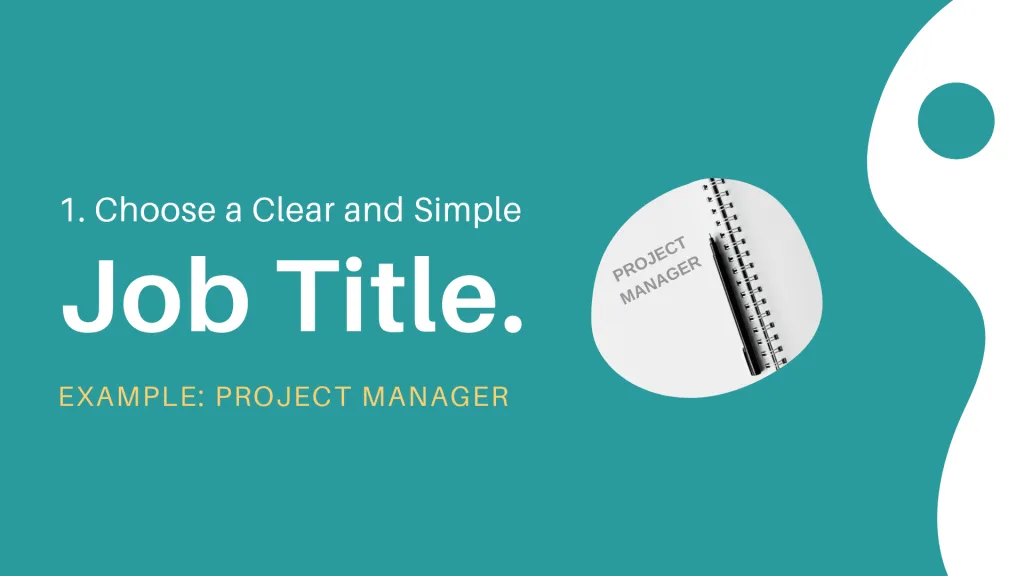
Writing a job description starts with a recognizable job title. Creative, witty, or fun job titles may seem cool and you may think that they represent the company’s personality. But in reality, they can make the role harder to find or understand. Use a title that tells candidates what the job does.
The title of your job description must be specific about the job and its responsibilities. Keep creativity secondary to clarity so candidates can find and understand the role.
2. Keep it Short:

When potential candidates visit the world of the internet for a job hunt, they tend to just skim through the job description. So if a job description includes jargon and confusing phrases, it can definitely turn them off. Lengthy, overly complicated, and difficult-to-read job descriptions simply push great candidates away. This is not at all desirable and we always want candidates to pay close attention to what they’re going through.
So, to grab the attention of candidates, the job description needs to be short and simple. Use short paragraphs, bullet points, and headers so candidates can scan the main points quickly. Some Applicant Tracking Systems provide quality job templates for almost every job.
3. Use of Strategic Keywords:
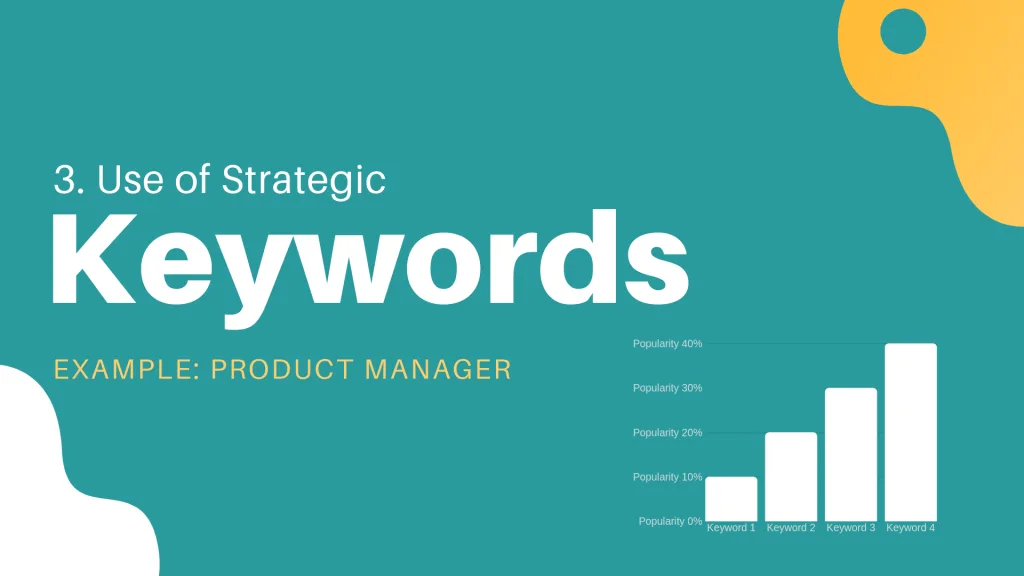
Everyone is aware that the world we have made for ourselves is majorly dependent upon the internet for almost each of its aspects. So make a job description more searchable, to survive amidst the ocean of various other job descriptions. To do this, using strategic keywords is extremely important while writing a job description.
If keywords are not used, the candidates will probably end up landing on the job description of other companies that may be your rival. And hence may end up losing a great hire to your competitors. So to avoid this disaster, take a good look at your competitor’s job description and make yours better. Or use various online tools to get a bunch of keywords to decorate your description.
4. Think About the Candidate’s Point of View:

The person you are about to hire is eventually going to become a part of your team. They are about to invest their time and skill set to build a better and more productive working environment.
Considering this, it becomes important for recruiters to decide on the profile of the potential candidate before designing job descriptions. That does not mean that one has to be rigid while doing so, but having a rough idea is great. This can be done effectively by visualizing the candidate you would like to recruit and accordingly building the job description as you would want to read it. It’s among the best tips to write a job description.
5. Be Specific and Concise with the Duties and Responsibilities:

With choosing the specific keywords and a well-designed structure, now we come to the main part of the job description, which is describing the job. With a good job title, it’s possible to reduce half of the burden of effectively describing the job. But this practice is still not enough.
Usually, job seekers expect a long boring list of job duties and they tend to read halfway and move on from such descriptions. And that’s how your best candidates may even leave the page already. To avoid this, you need to make your job description short, yet fun and exciting to read.
Ideally, the length of your job description should be about four to five sentences, explaining the job duties in as fewer words as possible. In this way, many people would want to work with such an efficient and resourceful organization.
6. Sell Your Company’s Open Position:

No matter if your candidates are employed or not, they need a strong reason to join you in the first place. That’s why you need to sell your job to your potential employees.
The brand personality of your company should appear in each and everything you do, including your job description. You should infuse the job description with your brand’s tone of voice to stand out from your competitors.
Also, to attract great talent, your company’s career page plays a crucial role. Career pages are a gateway to potential candidates. Tweak your career page and make it look professional to get more qualified candidates and build a stronger employer brand.
7. Speak Through Your Job Description:

Last but not least, give a human touch to your job description. Nobody wants to work for robots and that’s exactly the message you should give to your potential candidates. Check and make changes if the job description is over formal or rude in some way.
Make sure the job description has a pinch of the voice and personality of your company. Also, the tone in which the JD is designed is compatible with the culture, morals, and ethics of your company.
So now you know how to write a job description effectively that will surely attract great talent and let you make them part of your company.
Proofread the Description Before Sharing
Finally, the practice that will help you create a good impression with your job description is its impeccable content. If the content of the job description written on your company’s behalf features grammatical and spelling mistakes, questions will be raised about the professionalism of your company. Many people may give up applying for a job in your company because of this frivolous issue. Hence, ensuring a job description without grammar mistakes is a must.
You need to assign the task of writing a job description to someone who can produce a clear, concise, and meaningful draft. Once you have a draft, do not publish it immediately. Use a reliable online grammar check tool to identify spelling or grammar mistakes, then review the result yourself.
Job Description Sample
Here’s a sample job description template for a Human Resources Administrator:
Job Title:
Human Resources Administrator
Department:
Human Resources
Reports to:
HR Manager
Job Summary:
As a Human Resources Administrator, you’ll play a pivotal role in supporting our HR department’s operations. From maintaining employee records to handling administrative tasks and contributing to employee engagement initiatives, your efficiency will ensure the smooth functioning of our HR functions.
Responsibilities:
- Maintain accurate employee records, including personal and professional data.
- Assist in the recruitment process by posting job openings and coordinating interviews.
- Process payroll and benefits administration efficiently.
- Handle administrative tasks like drafting correspondence and managing HR documents.
- Support employee relations by addressing inquiries and concerns.
- Assist in organizing training and development programs.
- Coordinate employee engagement initiatives.
- Participate in HR projects, such as policy updates and process improvements.
- While not primary, these additional responsibilities contribute to the HR Administrator’s value within the organization.
Requirements:
- Bachelor’s degree in Human Resources, Business Administration, or a related field.
- Proven experience in HR administration or a related role.
- Knowledge of HR software and tools.
- HR certification is a plus.
- Strong organizational skills for efficient task and record management.
- Effective communication skills for employee interactions.
- Attention to detail to ensure accuracy in administrative tasks.
- Ability to handle confidential information with discretion.
Copy template
Don’t like this Job Description?
Create your own job description with AI in seconds
Best recruitment software for writing job descriptions: create one source of truth
The best recruitment software does more than generate words. It keeps the approved role definition connected to the careers page, job boards, screening criteria, interview scorecards, and hiring reports. Before choosing a tool, separate the internal job description from the candidate-facing job posting.
Job description versus job posting
| Document | Primary reader | What it should contain | How it is used |
|---|---|---|---|
| Internal job description | Hiring team, HR, finance, and managers | Role purpose, reporting line, essential functions, working conditions, classification details, approval history, and success measures | Compensation, consistent evaluation, accommodation, performance expectations, and workforce planning |
| Candidate-facing job posting | Potential applicants | Clear title, summary, location, work model, pay, responsibilities, requirements, benefits, culture, and application steps | Search visibility, self-selection, candidate trust, and applications |
Paychex’s current guidance describes the internal description as the detailed source of truth and the job posting as the external marketing version. Keeping both versions connected prevents the common problem where the advertised role promises one job but the interview and onboarding process evaluate another.
Candidate-first job description structure
Use this order so the candidate can answer the main questions without reading a wall of text:
- Recognizable job title: Use the term candidates search for, not an internal nickname.
- Two to four sentence summary: Explain the role’s purpose, manager, level, and business impact.
- Location and work pattern: State on-site, hybrid, remote, travel, schedule, and time-zone expectations.
- Compensation and benefits: Add a good-faith pay range, incentive structure, benefits, and time-off context where applicable.
- Six to ten key responsibilities: Start with action verbs and describe outcomes rather than every possible task.
- Required qualifications: Include only skills, experience, licenses, or physical functions the person genuinely needs.
- Preferred qualifications: Label useful extras separately so qualified candidates do not mistake them for barriers.
- Work environment and growth: Explain how the team works, how performance is supported, and what the person can learn.
- Application process: State the next step, expected timeline, accommodations route, and any required work sample.
Indeed’s current employer guidance recommends straightforward language, short sections, clear location and work pattern, core responsibilities, and pay near the beginning. Paychex recommends a candidate-facing posting of roughly 300 to 700 words, with the longer internal document kept separately for classification, physical requirements, and approval records. Treat the word count as a practical starting point, not a ranking rule.
Best hiring software with AI job description generator and auto-publish to careers page
The best hiring software with an AI job description generator and auto-publish to a careers page should keep the human-approved role record as the source for every downstream version. Evaluate the workflow in this order:
- Enter the actual role purpose, manager, level, location, work model, pay, responsibilities, requirements, and success measures.
- Generate a draft, then show what the AI added, removed, or inferred.
- Review the draft for invented qualifications, exaggerated benefits, vague culture claims, gendered language, and missing accessibility information.
- Approve one canonical version before publishing to the careers page and job boards.
- Confirm that edits, closing dates, structured data, source tags, and application instructions remain synchronized.
- Reuse the approved criteria for screening and interview scorecards without turning the AI draft into an automatic rejection rule.
Current AI job-description comparisons cover different categories, including generators, inclusive-language analyzers, job architecture tools, and ATS-integrated drafting systems. People Managing People’s 2026 comparison highlights that these tools differ by use case, price, templates, bias analysis, and integrations. Choose based on the workflow you need rather than a universal ranking.
Job description SEO and search visibility
Use keywords as signals of relevance, not as decoration. Include the standard job title, seniority, primary skills, location, work model, employment type, and industry terms naturally in the title, summary, responsibilities, and structured fields. Do not repeat keywords or add skills the role does not use.
For search and job-board visibility:
- Use one clear title without slogans, emojis, requisition codes, or internal language.
- Put the role and core outcome in the opening sentences.
- Use the same location and remote properties in the page, feed, and structured data.
- Keep the salary and work pattern consistent across the careers page and job boards.
- Add a canonical job page and remove or expire the page when the role closes.
- Test the page on mobile and with a screen reader before promotion.
Inclusive and compliant job-description review
The GOV.UK inclusive job-description guidance recommends neutral titles and language, accessible formats, adjustment options, and a clear distinction between essential and desirable criteria. It also warns that AI can repeat historical gender bias and says employers must review and adjust AI output.
Use this review before publishing:
| Review area | Question to ask |
|---|---|
| Necessity | Does every required qualification predict success in this role? |
| Accessibility | Can candidates request an adjustment, and is the posting readable on different devices? |
| Language | Have we removed stereotypes, unexplained jargon, and vague culture-fit wording? |
| Pay | Is the range realistic, approved, and consistent with the role’s location and level? |
| Work pattern | Are schedule, travel, time zone, and on-site expectations explicit? |
| AI review | Did a qualified human check accuracy, bias, privacy, and legal requirements? |
| Evaluation link | Do interview questions and scorecards use the same approved criteria? |
What current job-description competitors cover, and what they miss
The current SERP is strong on templates, AI generators, inclusive-language checks, and generic lists of sections. Indeed’s 2026 guide emphasizes scanability, requirements, pay, work environment, and progression. Paychex’s updated guide adds the important distinction between internal and external documents. GOV.UK guidance adds accessibility, inclusion, AI review, and measurement.
The useful connection is between writing and the hiring decision. A job description should create the exact criteria used for screening, interview scorecards, candidate communication, and onboarding. If those systems disagree, a polished posting can still produce a confusing or unfair hiring process.
Recooty editorial view: write for self-selection, then hire against the same promise
Our editorial view is that the best job description does not try to persuade everyone. It gives the right candidates enough detail to recognize a credible fit and gives others enough information to opt out early. Write plainly, show the trade-offs of the role, state the pay and work pattern, and keep the interview process faithful to what the posting promised.
For the next step, connect this article with how to create a career page that converts, how to post a job on Google for Jobs, how to reduce time-to-hire with an ATS, how to avoid discrimination in hiring, and the free AI job description generator.
Frequently Asked Questions
Include a recognizable title, role purpose, manager, location and work pattern, compensation, responsibilities, required and preferred qualifications, benefits, work environment, growth context, accommodations route, and application steps.
Keep the candidate-facing posting easy to scan. Paychex suggests roughly 300 to 700 words as a practical range, while the internal description can be longer because it supports classification, essential functions, approvals, and performance expectations.
Describe the real outcome, name the work and tools, separate required from preferred criteria, show pay and work pattern, explain the team and manager, and use a clear application process. Better detail helps qualified candidates self-select.
Yes, include a realistic salary or hourly range where possible and check local pay-transparency requirements. Also explain commission, bonus, equity, benefits, and whether the range changes by location when relevant.
AI can create a first draft, suggest clearer wording, and identify missing sections. A hiring manager and HR owner must verify the actual work, requirements, pay, inclusive language, accessibility, and legal context before publication.
Required qualifications are necessary to perform the role or meet a legal or operational condition. Preferred qualifications are useful but learnable or nonessential. Label them separately so candidates do not treat every desirable skill as a barrier.
Jump To Section
Author's Profile

Hardik Vishwakarma


Hardik Vishwakarma – AI Recruitment Strategist | HR Automation Expert | Applicant Tracking Software Specialist Hardik Vishwakarma is a recognized leader in HR automation and...
View Full Profile →