




Hiring the right employee starts before you publish a job. Define the work, prepare the legal and payroll basics, and build a consistent process for sourcing, screening, interviewing, offering, and onboarding.
This guide walks through each step for a first hire or a growing team. It also explains where recruiting software can reduce administrative work, which decisions need human review, and which measures show whether the hire is working after the offer is accepted.

Key takeaways
- Start with the role and the employment setup, then complete payroll, tax, insurance, recordkeeping, and required reporting before the start date.
- A strong hiring process connects a specific job description to consistent screening, structured interviews, a written offer, reference checks, and onboarding.
- The best recruitment software is the one that fixes your bottleneck: job distribution, applicant tracking, screening, scheduling, feedback, or reporting.
- Use human review for every consequential hiring decision. AI can organize and summarize applications, but it should not silently reject candidates or replace structured evaluation.
- Measure success after the hire with time to first qualified shortlist, stage conversion, offer acceptance, 30/60/90-day retention, and hiring-manager satisfaction.
Best recruitment software for hiring employees: what should you automate?
Recruitment software is useful when the team can make the hiring decision but loses time managing the process. Look for job distribution, a searchable applicant pipeline, screening questions, interview scheduling, structured scorecards, candidate communication, and reports. If the business is hiring its first employee, software should support the process without hiding the legal and human decisions that still belong to the employer.
Current search results split between first-employee checklists and best recruitment software roundups. The most useful guidance connects both: prepare the business legally, then choose tools based on hiring volume and the exact bottleneck. Greenhouse’s 2026 small-business comparison recommends judging platforms on structured hiring, transparent AI, whole-team adoption, setup ownership, total cost, and room to grow. Read the comparison.
| Hiring need | Useful capability | Human decision that remains essential | Success measure |
|---|---|---|---|
| Reach more candidates | Multi-board posting, careers page, referrals, sourcing | Which channels reach the right talent pool | Qualified applicants per source |
| Reduce manual screening | Knockout questions, resume search, AI summaries | Whether criteria are job-related and fair | Qualified shortlist rate |
| Keep interviews consistent | Interview kits, scorecards, structured questions | Evidence-based candidate evaluation | Scorecard completion and agreement |
| Prevent candidate drop-off | Scheduling, reminders, status updates | Honest expectations and timely communication | Response time and offer acceptance |
| Improve future hiring | Funnel and source reporting | What to change in the next hiring cycle | Time to fill and 90-day retention |
Our editorial view: do not buy a tool because it says AI. Buy it when it makes a defined step clearer, faster, or more consistent, and verify that a person can understand and challenge its recommendations.
A business can only be as good as the people who keep it going. The employees, as well as the job applicants, hold a lot more importance than the customers of a company. They are the most valuable brand ambassadors a company can have. To be able to successfully sell a brand to paying customers, the employees need to be connected emotionally to the company’s goals and values.
Whether you are hiring your first employee or adding a member to your existing team, it is extremely crucial to find the best fit. Hence hiring worthy and highly productive individuals is the first step that needs to be taken by any company to achieve great heights of success.
Here’s how to Hire Employees for Your Company:
1. Make Your Business Legally Ready
Before you hire an employee, you are required to have an Employee Identification Number (EIN) with the IRS along with a state tax ID in case your state requires it. EIN, in simple terms, is a tax ID number for a business that works like a Social Security number (SSN) for tax purposes. By applying online through IRS you can get it for free.
You can easily apply for an EIN if you’re a sole proprietor or partnership and use the same in place of your SSN for taxes. If you’re planning to form an LLC, LLP, or other type of legal entity then you should do that before you apply for EIN as it will allow you to get the tax ID on your business’s name in place of your own.
You don’t need to form a legal entity to hire people, however, it could be quite helpful. You can choose to form a Limited Liability Company (LLC) as a single owner or with your partners. It is the simplest type of entity that allows separating your personal assets and liabilities from your business’s. However, LLC approval time may take weeks.
Hiring employees will add potential liability to your business that’s why you might be concerned about putting your personal assets against those liabilities. To ascertain the right business structure as per your situation we recommend you to consult an attorney to make a sound decision.
Additionally, your state might need you to have insurance for things like unemployment, compensation of workers, and general liability to confirm the safety and security for your employees.
2. Do Your Research:
The very first step at efficient and successful hiring is knowing what you need. Prepare yourself for recruiting by looking into similar job openings, their descriptions, job trends in your industry, the keywords used and resumes of the qualified candidates to understand what skills are required for roles and responsibilities that you’re hiring for.
3. Create An Employer Brand:
Successful hiring doesn’t only involves new hires, but it is, more importantly, ensuring that your company is the type of firm that high-quality candidates want to work for. Great candidates don’t just choose on the basis of the job description, you need to focus intensely on your employer branding.
Employer branding is basically how a company is perceived by prospective or current employees. Having a positive employer branding doesn’t only help to hire and retain great talents but it also amplifies the future hiring scope for a company.
4. Select a Highly-Clickable Job Title:
A job title is the first element that a job seeker sees while looking for a job. That’s why, the job title should be simple, descriptive and crystal clear, so clear that the candidate gets a rough idea about his responsibilities just by reading it.
Job seekers usually Google whenever they’re looking for a job. That’s why job titles should include keywords that are most likely to be searched by them to get maximum visibility.
5. Create Great Job Descriptions:
A job description is the most important element that represents a company to its prospective employees. So, after being done with the job title, recruiters need to create an effective job description that stands out from the crowd.
Describe the successful person and not job applicant in a job description, make sure the candidates connect with it. Following the best practices for creating clear and meaningful job descriptions will definitely lure in and fetch great talents.
Creating the right job description is among the most crucial steps for building an excellent team. A compelling job description holds the following:
- A picture of your company’s culture.
- In what ways the work will impact the company and the people it serves
- How much influence, autonomy, and decision-making does this role entail
- The level of experience, traits, and must-have + desired skills
- Info about everyday duties and responsibilities to carry in this role
- Growth opportunities this role offers
- Expectations from the employee in this role
- Statement of company values including diversity, equity, and inclusion (DEI), in addition to how your company incorporates these in work and recruiting procedures.
The challenging thing about this is to fill it all in a clear and concise description. Job seekers do read tons of job descriptions throughout the day and these can blend together pretty easily. For this, you need to make your job description distinctive by making it clear, succinct, and to the point.
You also need to balance the role’s requirements and your commitment to equity. Assess the actual requirements of the role and create a job description that is inclusive and avoids including such language and requirements that excludes candidates needlessly.
Finally, review your job description for the last time to ensure it doesn’t accidentally contain any language or requirements that violateEqual Employment Opportunity (EEO) laws and lead to discrimination.
6. Consider Posting Jobs on Multiple Platforms:
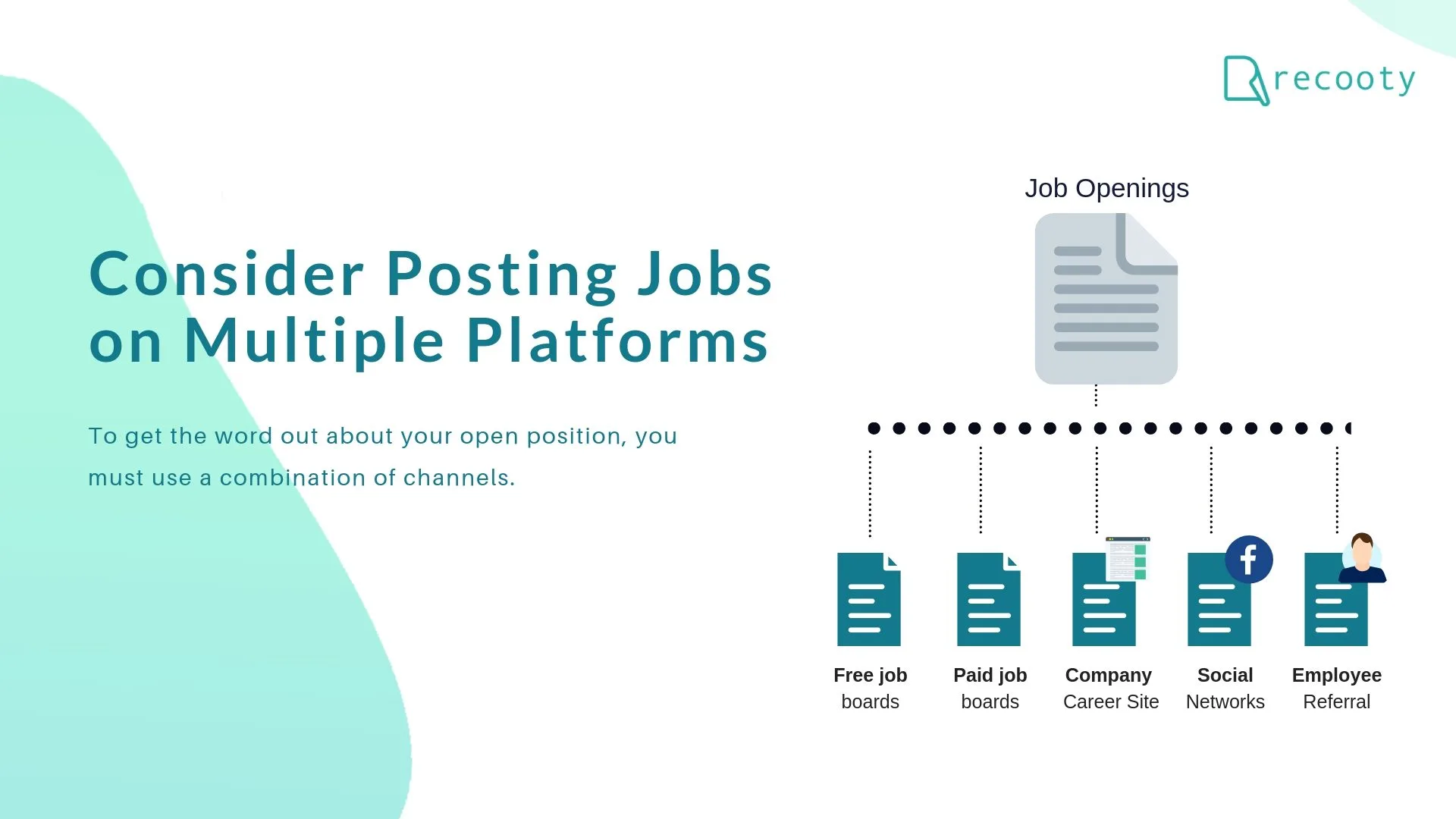
Once getting decided with an appropriate and relevant job title and description, in the next step you need to make sure your job opening gets the maximum exposure by multiple job board posting and talent pool. To get the word out about your open position, a combination of channels is used. Consider posting the job opening on various job boards to get maximum exposure.
Candidates who are referred by your existing employees are often more knowledgeable about your company. Posting job openings on various job sites and social media platforms is yet another effective way to get high exposure.
So, how to get started?
If you can’t reach the right people, the job description, no matter how impressive it is, is worthless. That’s why you must be mindful of where you spread the word about the open position.
You can get started by easily tapping into your immediate network if you’re just starting and in case it’s your first hire then it’s best. But make sure to try not to assemble a homogeneous team with people with similar experiences and viewpoints as it can lead to limiting the ability to see different perspectives and the absence or inadequacy of diversity in the team.
Apart from that,job boardsandrecruiting agenciesare great ways to reach a wide pool of candidates. However, before jumping on to them you need to balance the cost against the time saved and the potential benefit these bring in your recruitment process. Here are some top job boards you can try:
- Indeed
- Monster
- LinkdeIn
- ZipRecruiter
- Google for Jobs
- Talent.com
- Craigslist
- CareerJet
One more option is towork with a recruiterin case:
- You have already used all resources in your network and recruiting firms to find the right talent.
- There is an urgent need to hire an employee for an open role.
- You’re building a team outside of your region or in a country you’re knowledgeable about.
- You need to hire candidates with special skill sets.
Pro Tip: Recruitment software can offer you one-click job posting on free and paid job boards, career site and more. Also, you can review application, schedule interviews and hire, all at one place.
7. Review and Filter Applications:
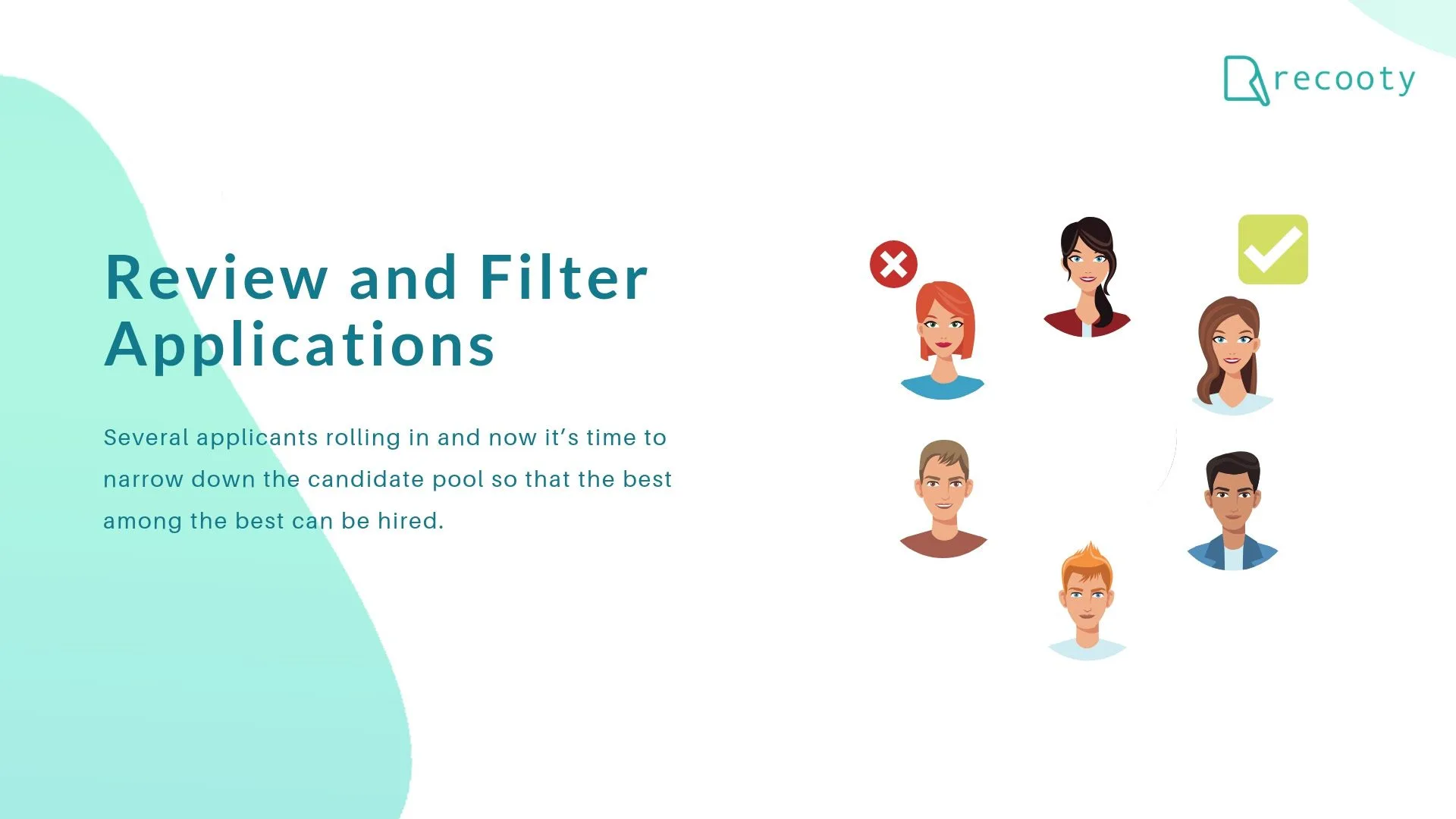
After getting the word out, recruiters will receive several applicants rolling in and now it’s time to narrow down the candidate pool so that the best among the best can be hired.
Filter out the candidates whose resumes and application don’t match the mentioned keywords of the job description and send them a rejection email immediately. Analyze the relevance of the received applications closely and shortlist the final slot for the further process.
Important things to note:
Nowadays there is abled technology that can help you do that which includes artificial intelligence AI. But you need to consider that these advanced tools like AI and hiring algorithms might sometimes carry human biases and screen out candidates who might be a good fit for the position due to the same.
To avoid this you can try the following practices:
- Be aware of what criteria you enter to avoid any kind of biases and discrimination.
- Announce to candidates that you’re utilizing AI to sort applications
- Examine your tools regularly to avoid any space for bias.
Additionally, here are some factors you can consider to measure a candidate’s potential
- Their ability to understand the problem that your company and that particular role solve.
- Submit their applications accurately without making significant errors.
- Their connection with your company’s mission.
- Check which achievements they chose to show and how
- The candidate’s personality
- Patterns of their past job experiences.
- Signs if they’re innovative and have the potential to grow internally.
8. Run Background Checks:
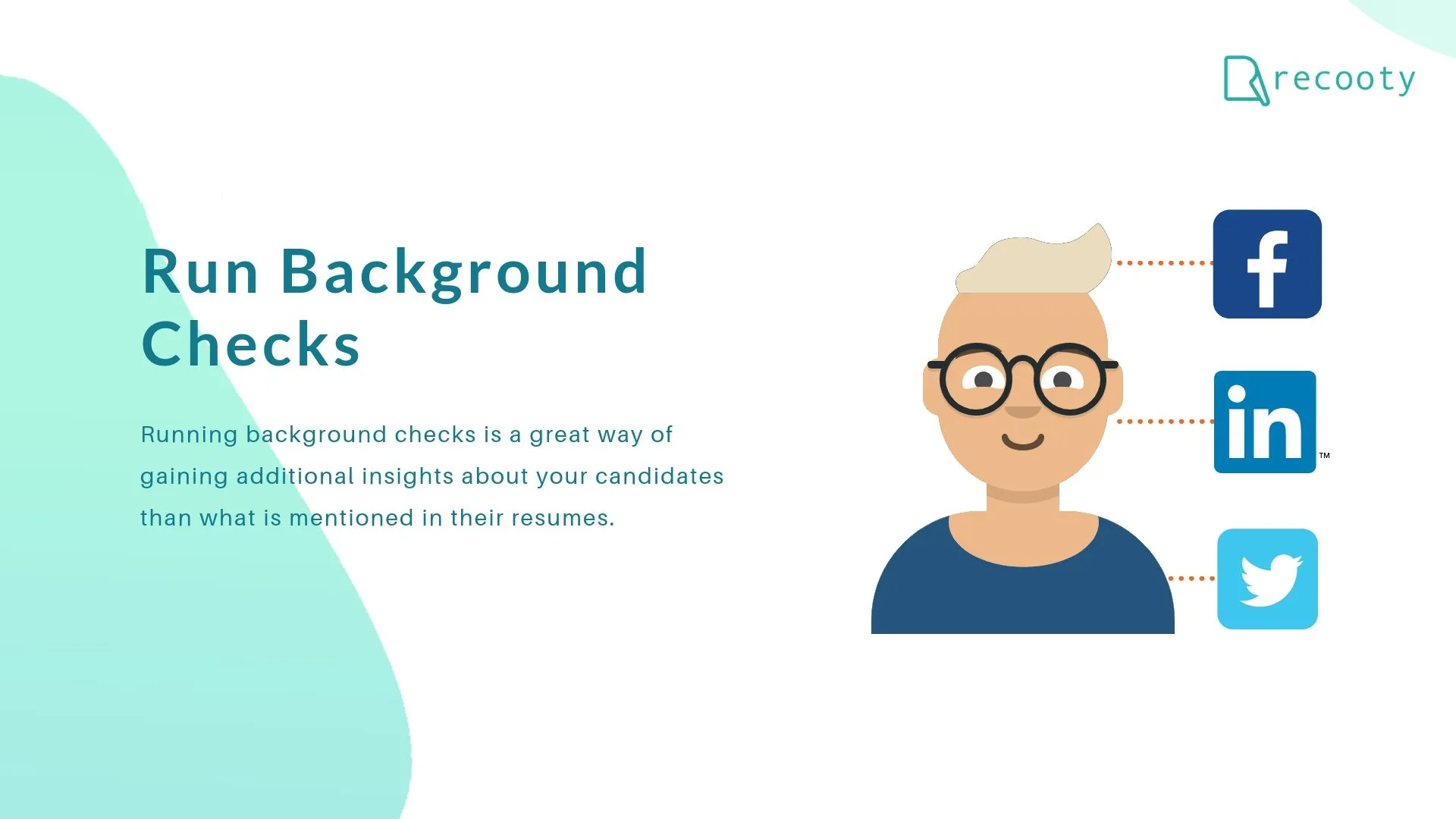
Running background checks is a great way of knowing more and gaining additional insights about your candidates than what is mentioned in their resumes.
Go through their social media accounts, inquire why they left their previous jobs, what kind of a college did they graduate from. It can help you verify their skills, and ensure that you are about to hire employees who can keep up to your ethical requirements.
9. Interview to Select the Best Candidate:
An interview is the final and most important step of the hiring process that’s why you need to be fine-tuned with your interview process. It’s usually considered a best practice to conduct a structured interview which includes asking the same set of questions, assigning them the same tasks and situations and then evaluating them equally with the same reference.
The questions should be strategic that reveals the skills, qualification and important personality traits of the candidates.
Asking the following questions during interviewing will let you get familiar with the candidates
- What qualities do you usually look for in a company?
- How are your skills and experience relevant to this position?
- Tell me about your long-term goals.
- Why do you want to leave your existing job? Or Why did you leave your last job?
- Can you tell me about your strengths and weaknesses?
- Do you have any questions for me?
10. Offer Them the Position
Once you find the best fit for your company and ultimately your company, send them an offer letter without any further delay.
You can follow these extremely helpful tips by Forbes Human Resource Council members to figure out the salary and benefits package, hold an honest and straightforward conversation, clarify every aspect of their offer, and expect any special requests from your top candidate.
11. Set-Up an Efficient Onboarding Process:
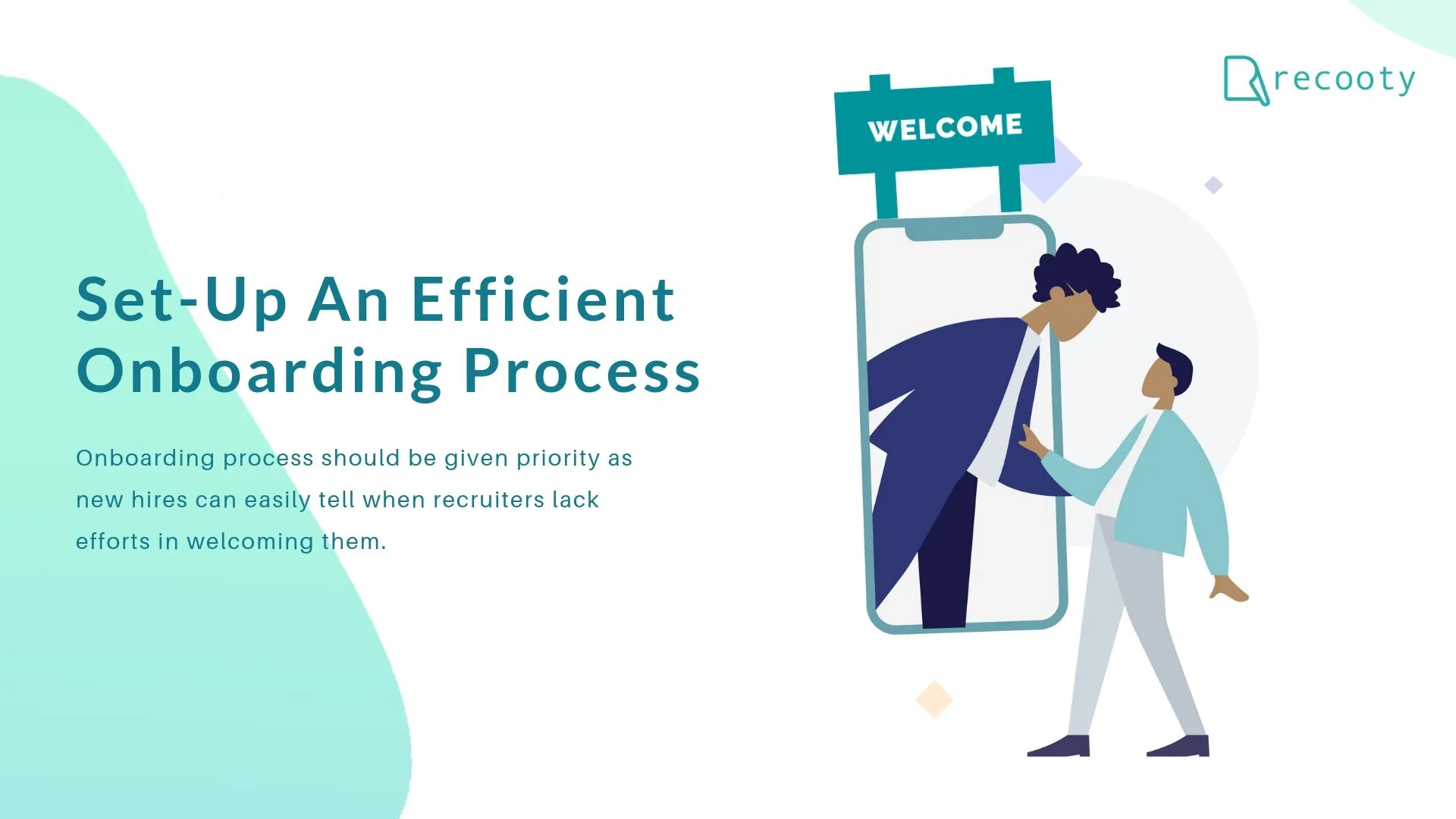
Once you’re done with testing the candidates in every way possible and then selecting the best, the next and most important step is getting the new employees on board and make sure they’re successful and most likely to stay.
The onboarding process should be given priority as new hires can easily tell when recruiters lack efforts in welcoming them.
12. Develop Employee Retention Strategies:
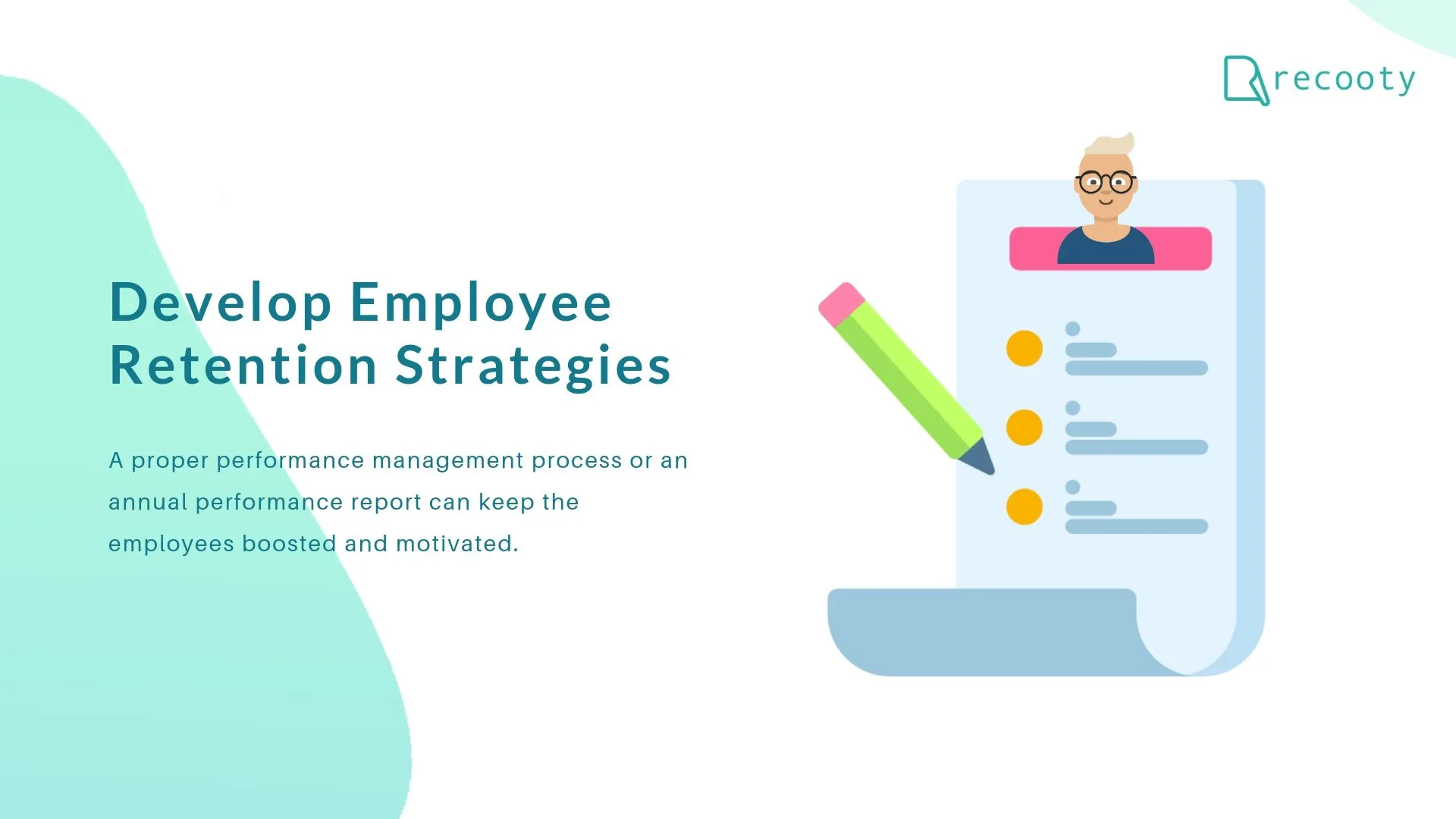
When you deal with hiring and training the employees, it becomes very important to retain the employees to make sure your company is well-staffed.
That’s why developing an employee retention strategy is very crucial. A proper performance management process or an annual performance report can keep the employees boosted and motivated.
Giving regular feedback about their work and making sure they know their work is appreciated is yet again another great strategy that can keep them motivated.
First-employee compliance checkpoint
Before the employee starts, confirm the items that apply to your business and location. The U.S. Small Business Administration says employers should distinguish employees from independent contractors, arrange payroll and tax handling, collect a completed W-4, complete Form I-9, keep required records, and learn state new-hire reporting rules. Use the SBA hiring and employee-management guide and the IRS guidance linked there for the current requirements.
| Checkpoint | What to confirm | Why it matters |
|---|---|---|
| Worker classification | Employee or independent contractor status | Misclassification can create tax, wage, and benefits liability |
| Employer setup | EIN, state or local tax IDs, payroll owner | Payroll cannot be treated as an afterthought |
| Insurance and notices | Workers’ compensation and required workplace posters | Requirements vary by state and workforce size |
| Hiring records | W-4, I-9, offer, pay records, and retention process | Supports payroll administration and lawful recordkeeping |
| Employee policies | Handbook, leave, safety, anti-discrimination, and conduct rules | Sets expectations before problems occur |
| Reporting and benefits | New-hire reporting, unemployment, required leave, and optional benefits | Deadlines and obligations vary by jurisdiction |
ADP’s updated first-employee guide groups the preparation work into an EIN, handbook, workplace posters, workers’ compensation, and recordkeeping before the candidate search begins. It then follows the hiring sequence with role definition, job advertising, prescreening, interviews, an offer, reference and background checks, and onboarding. See ADP’s first-employee checklist. Treat this section as a practical checkpoint, not legal advice, because state and local rules can change.
Hiring metrics to review after the first 30 days
The hiring process is not complete when the offer is accepted. Review the result with a short scorecard after the new employee has had time to start contributing:
- Speed: days from approved requisition to first qualified shortlist, interview, and accepted offer.
- Quality: hiring-manager rating, work-sample evidence, and progress against the role’s first 30-day outcomes.
- Process health: percentage of applications screened, scorecards completed, candidate response time, and stage drop-off.
- Retention signal: whether the employee is still engaged and on track at 30, 60, and 90 days.
- Fairness and reach: source mix, consistent evaluation criteria, and whether qualified candidates are being screened out for irrelevant reasons.
How to use AI without outsourcing the hiring decision
Use AI for drafting, sorting, scheduling, summaries, and suggested screening questions. Require human review before rejection, progression, or offer decisions. Record the job-related criteria used, check whether the output reflects those criteria, and review outcomes for unexpected exclusion. Greenhouse’s current guidance similarly emphasizes explainability, adjustable evaluation criteria, data-use questions, and human accountability for the final decision.
Frequently Asked Questions
Define the role and employment setup first, then prepare the job description, source candidates through more than one channel, use consistent screening questions, schedule a structured interview, issue a written offer, complete checks and forms, and prepare onboarding. Speed should come from clear ownership and fewer delays, not skipped compliance steps.
No. A small business can hire with a clear process and basic tools. Recruitment software becomes useful when applications are being lost, interviews are hard to coordinate, several people need to review candidates, or you need repeatable reporting. Compare total cost and setup effort before choosing a platform.
Include the role’s outcomes, responsibilities, must-have and preferred skills, reporting line, work location or schedule, compensation range when available, benefits, growth path, application steps, and a brief explanation of the company’s working environment. Keep criteria tied to the work and remove unnecessary requirements.
Common federal items include an EIN for the employer, Form W-4 for tax withholding, and Form I-9 to verify identity and work authorization. State and local requirements can add tax registration, new-hire reporting, workers’ compensation, posters, leave, and other records. Confirm the current rules with the IRS, SBA, Department of Labor, and your state agencies.
The best way to hire people involves a structured recruitment process with defined roles and requirements, a compelling job description, objective assessments, and positive communication.
The process to hire employees involves defining job requirements, advertising the job, screening resumes, conducting interviews and assessments, making a job offer, and completing necessary paperwork.
To hire an employee for the first time, create a job description, advertise the job, screen resumes, and conduct interviews. Select the best candidate and provide necessary paperwork, such as employment contracts and tax forms.
To hire an employee, make a job offer that includes details on the job title, start date, compensation package, and any other relevant information. Congratulate them on their new position and express enthusiasm for them to join the team.
Source: https://recooty.com/blog/how-to-hire-employees-a-step-by-step-guide/
Jump To Section
Author's Profile

Recooty


Recooty is one of the fastest-growing Applicant Tracking Systems, helping businesses of all sizes streamline their hiring process. Through its content, Recooty shares expert insights...
View Full Profile →