All Recooty Articles, HR Tutorials and Tips
Top 26 Best AI ATS Applicant Tracking Systems in 2026 (HR Reviews)

 All Recooty Articles, HR Tutorials and Tips


Choosing the best AI ATS in 2026 depends on how your team hires. For small and mid-sized businesses, Recooty is the best AI applicant tracking system if you want fast setup, AI resume parsing, candidate ranking, AI job descriptions, interview question generation, and job board posting without enterprise complexity. For structured enterprise hiring, Greenhouse is stronger. For data-heavy recruiting teams, Ashby is a better fit. For outbound sourcing, hireEZ, Gem, Pin, and Juicebox deserve attention.
This guide compares 26 AI applicant tracking systems by use case, AI features, pricing transparency, ease of setup, and fit for different hiring teams. The goal is not to call one tool perfect for everyone. The goal is to help founders, HR managers, recruiters, and recruiting agencies choose an AI ATS that matches their hiring volume, budget, workflow, and team size.
| Rank | AI ATS | Best for | Pricing style | Standout AI strength | Main limitation |
|---|---|---|---|---|---|
| 1 | Recooty | SMBs, startups, and growing teams | Public plans | AI resume parsing, explainable candidate scoring, AI JD generation, interview questions, and 250+ job boards | Reporting is simpler than enterprise suites |
| 2 | Gem | Enterprise sourcing and talent CRM | Quote-based | AI sourcing, outreach sequences, talent CRM, and pipeline analytics | Too heavy for small teams |
| 3 | Greenhouse | Structured enterprise hiring | Quote-based | Structured hiring, scorecards, automation, and AI-assisted workflows | Setup takes time |
| 4 | Ashby | Data-driven tech teams | Quote-based / startup plans | Recruiting analytics, custom workflows, AI summaries, and search | Learning curve for non-recruiters |
| 5 | Workable | Fast global job posting | Public and custom plans | AI sourcing, screening, job posting, and scheduling | Core AI depth varies by plan |
| 6 | Zoho Recruit | Zoho users and agencies | Public plans | Zia AI, candidate matching, resume parsing, and workflow automation | Interface can feel busy |
| 7 | Pinpoint | Compliance-focused in-house teams | Quote-based | Candidate filters, structured hiring, DEI, and compliance | Less suited to fast SMB hiring |
| 8 | Pin | Autonomous sourcing and outreach | Quote-based | AI recruiter-style sourcing, outreach, and scheduling | Newer product with maturing integrations |
| 9 | hireEZ | Passive candidate sourcing | Quote-based | AI sourcing across large talent pools and outbound engagement | Not a full ATS by itself |
| 10 | Juicebox | Plain-English candidate search | Public and enterprise plans | Natural-language search over large profile databases | Needs an ATS for full tracking |
| 11 | Manatal | Budget-conscious SMBs | Public plans | AI recommendations, resume parsing, and CRM | AI depth is lighter than newer tools |
| 12 | BambooHR | HR teams that want ATS plus HRIS | Quote-based | Hiring plus onboarding inside a broader HR system | Not built as an AI-first ATS |
| 13 | Deel Hire | Global hiring and payroll handoff | Quote-based | Global hiring workflows and compliance support | Less focused on advanced recruiting AI |
| 14 | SmartRecruiters | Global enterprise hiring | Quote-based | Enterprise workflows, CRM, analytics, and partner ecosystem | Complex for SMBs |
| 15 | Lever | Relationship-driven recruiting | Quote-based | Talent CRM, nurture sequences, and candidate engagement | Better for mature TA teams |
| 16 | Breezy HR | Visual hiring pipelines | Public and custom plans | Visual workflow, automation, scheduling, and team collaboration | AI features are not as deep |
| 17 | iSmartRecruit | Agencies and high-volume teams | Public / quote-based | AI candidate matching, recruitment CRM, and automation | Advanced features may sit on higher plans |
| 18 | Loxo | Recruiting agencies and executive search | Public and custom plans | AI sourcing, CRM, outreach, and agency workflow | More agency-focused than in-house |
| 19 | iCIMS | Large enterprise talent teams | Quote-based | Talent cloud, automation, CRM, and high-volume workflows | Enterprise cost and setup |
| 20 | JazzHR | Budget ATS for small teams | Public plans | Simple hiring workflow with some automation | Light on AI |
| 21 | Paradox | High-volume conversational hiring | Quote-based | Olivia conversational AI, screening, and scheduling | Enterprise-first |
| 22 | Eightfold AI | Talent intelligence and internal mobility | Quote-based | Skills-based AI matching and workforce intelligence | Not a lightweight ATS |
| 23 | Teamtailor | Employer branding and candidate experience | Quote-based | Career sites, candidate engagement, and AI-assisted workflows | Branding-first, not AI-screening-first |
| 24 | Rippling Recruiting | Companies already using Rippling | Module-based | Hiring tied to HR, payroll, and IT workflows | Not ideal as a standalone AI ATS |
| 25 | Recruit CRM | Staffing and search agencies | Public plans | ATS plus CRM, AI matching, GPT-assisted outreach | Less relevant for in-house HR teams |
| 26 | Ceipal ATS | Staffing firms and vendor-heavy recruiting | Quote-based | AI matching, VMS, CRM, onboarding, and compliance | Setup and UI can feel heavy |
An AI applicant tracking system is recruiting software that uses artificial intelligence to help teams manage applicants, screen resumes, rank candidates, write job descriptions, schedule interviews, and move people through the hiring process.
A traditional ATS stores applicants and helps recruiters track hiring stages. An AI ATS goes further. It can read resumes, extract skills, compare candidates against job requirements, suggest top matches, write role-specific job posts, generate interview questions, and trigger follow-up messages. The best AI ATS tools reduce manual work without removing recruiter judgment.
For most SMBs, the highest-value AI ATS features are resume parsing, candidate ranking, job description generation, automated emails, interview scheduling, job board posting, and basic hiring analytics. Enterprise teams usually need more: structured scorecards, compliance controls, approval workflows, DEI reporting, integrations, and security reviews.
We evaluated each AI applicant tracking system across seven practical criteria: AI resume parsing and candidate matching, quality of automation, ease of setup, pricing transparency, reporting depth, candidate experience, and fit by team size. We also looked at whether each platform works as a full ATS, a sourcing tool, a recruiting CRM, or a broader HR platform with recruiting features.
The ranking gives the most weight to buyer fit, not raw feature count.
For SMBs, the highest-weighted factors are ease of setup, AI resume parsing, AI candidate ranking, job posting, workflow automation, and public pricing.
For enterprise tools, the highest-weighted factors are structured hiring, governance, reporting, integrations, compliance support, and recruiting operations depth. Pricing and feature availability can change, so each vendor section links to the company’s own product or pricing pages where possible.
Recooty is a strong fit for startups, SMBs, lean HR teams, and agencies that want an AI powered ATS with fast setup and public pricing. It is not trying to replace deep enterprise systems like Greenhouse, Ashby, iCIMS, SmartRecruiters, or Eightfold for large global talent teams.

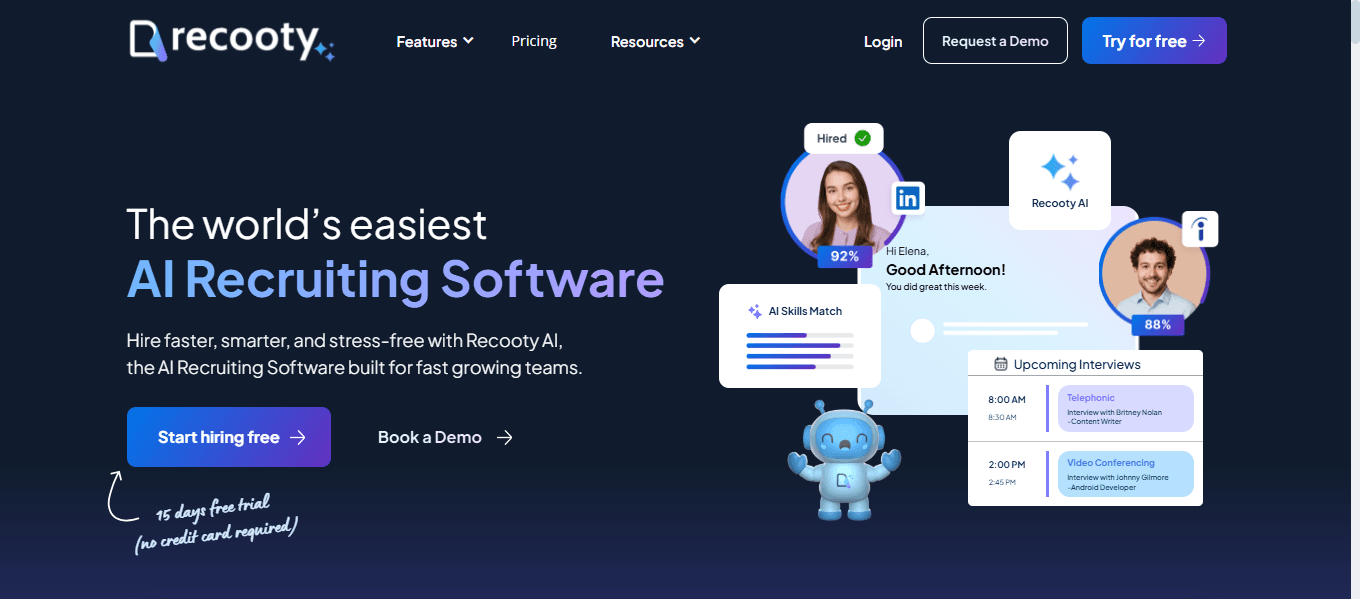
Recooty is an AI powered applicant tracking system built for small and mid-sized teams that want to hire faster without managing a complicated recruiting stack. It combines job posting, AI resume parsing, AI candidate ranking, career pages, interview scheduling, team collaboration, and AI writing tools in one system.
Recooty is the best AI applicant tracking system for teams that need practical AI, not a heavy enterprise rollout. A founder, HR manager, or small recruiting team can use it to create job posts, publish roles to 250+ job boards, collect applications, rank candidates, and prepare interview questions from one dashboard.
Best for: startups, SMBs, growing HR teams, remote-first companies, and lean recruiting teams.
Key AI features: AI resume parsing, AI candidate ranking, AI job description generator, AI interview question generator, AI HR email generator, workflow automation, branded career pages, job board posting, and candidate communication.
Pros: Recooty is easy to set up, clear to use, and built around everyday hiring tasks. It works well for teams that do not have a recruiting operations function or months to configure workflows. Its biggest advantage is speed: job creation, posting, shortlisting, and interview prep can happen inside one platform.
Cons: Recooty’s reporting is simpler than enterprise analytics platforms. Large companies that need complex approval routing, deep BI, internal mobility, and multi-region compliance may want Greenhouse, Ashby, SmartRecruiters, iCIMS, or Eightfold.
Verdict: Recooty is the best AI ATS for SMBs that want AI resume screening software, job board reach, candidate ranking, and recruiter-friendly automation without enterprise bloat.
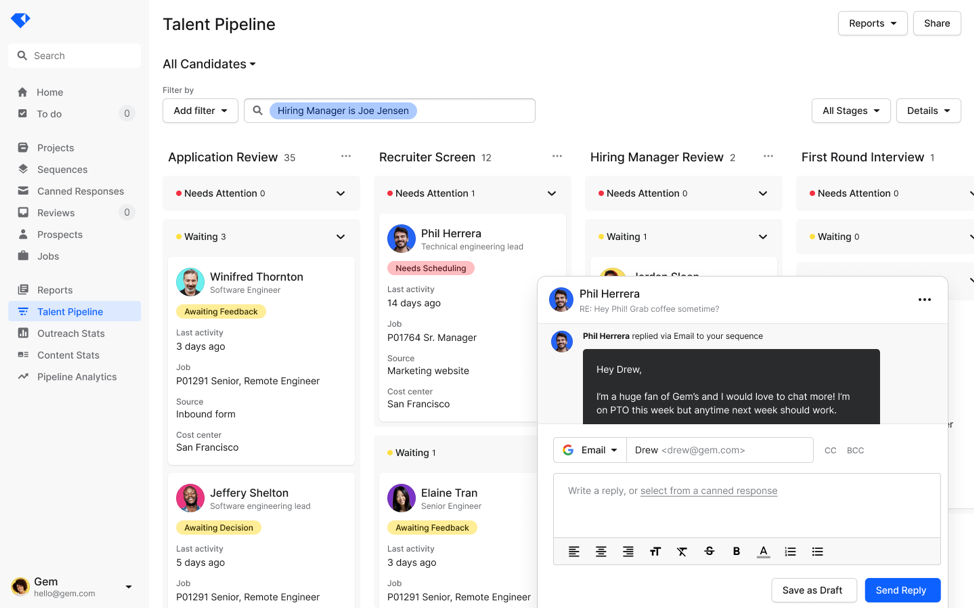
Gem combines sourcing, recruiting CRM, outreach, analytics, scheduling, and ATS workflows. It is strongest for mid-market and enterprise teams that rely heavily on outbound recruiting and candidate relationship management.
Gem’s main value is the way sourcing, outreach, and pipeline analytics connect. Recruiters can build talent pools, run sequences, track responses, and measure pipeline movement without jumping across multiple tools.
Best for: enterprise recruiting teams, outbound sourcing teams, and talent teams with mature pipeline programs.
Key AI features: AI sourcing, outreach sequences, talent CRM automation, pipeline analytics, candidate rediscovery, and engagement workflows.
Pros: Gem is powerful for teams that hire proactively and need a strong talent CRM. It gives recruiting leaders better visibility into source quality, pipeline health, and outreach performance.
Cons: It is more platform than a small team usually needs. Pricing is quote-based, and implementation may require a mature recruiting process.
Verdict: Gem is one of the best AI ATS solutions for enterprise sourcing and talent engagement, but it is not the simplest choice for SMBs.
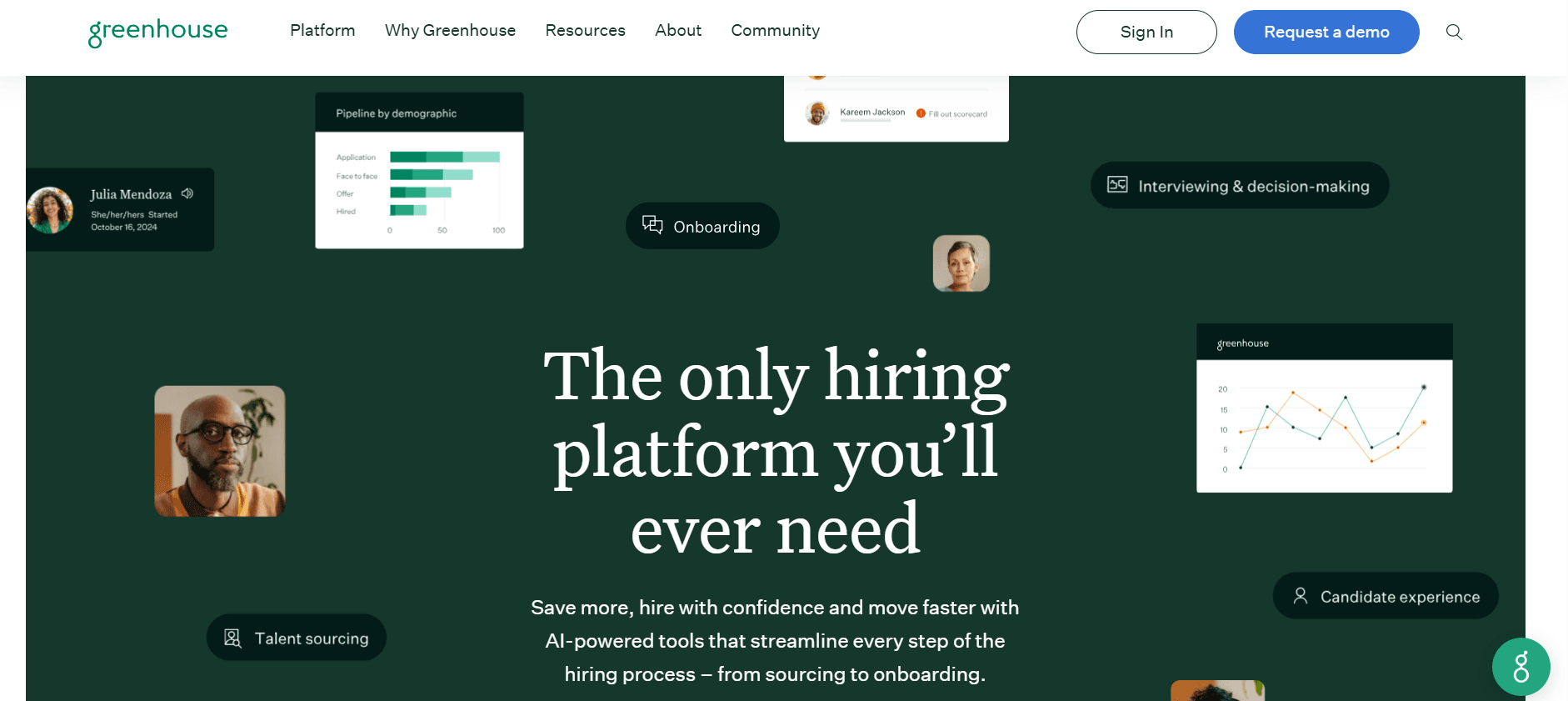
Greenhouse is a long-standing enterprise ATS known for structured hiring, interview scorecards, workflows, permissions, integrations, and reporting. It is best for organizations that care deeply about consistency, compliance, and repeatable hiring processes.
Greenhouse’s AI features are useful, but the main reason to choose it is structure. It helps large teams align recruiters, hiring managers, interviewers, and leadership around defined stages and scorecards.
Best for: enterprises, high-growth companies with recruiting operations, and teams that need structured interviews.
Key AI features: AI-assisted hiring workflows, candidate filtering, job description support, interview support, reporting, and automation.
Pros: Greenhouse is strong on process discipline, scorecards, integrations, and enterprise reporting. It is a good fit when multiple teams, locations, and approval layers are involved.
Cons: It can feel heavy for startups and SMBs. Setup takes planning, and pricing is not publicly simple. Smaller teams in that position can compare these Greenhouse alternatives.
Verdict: Greenhouse is one of the best ATS with AI features for structured enterprise hiring. Choose it when hiring consistency matters more than speed-to-launch.
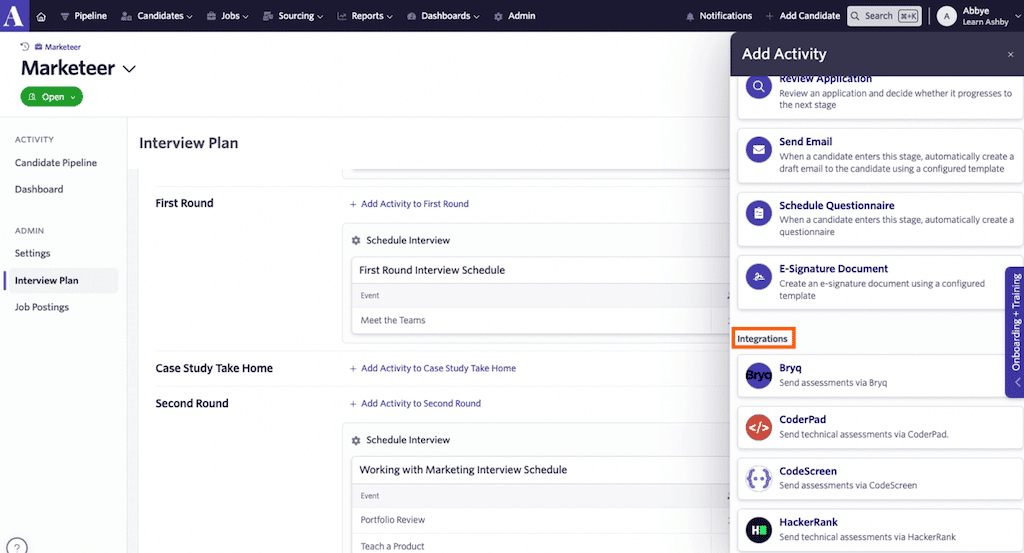
Ashby is built for recruiting teams that want deep analytics, configurable workflows, sourcing, scheduling, and ATS data in one place. It is especially popular with tech companies that treat recruiting like an operating system.
Ashby stands out for reporting depth. Teams can track funnel conversion, source quality, interviewer performance, diversity metrics, and pipeline movement with more precision than most SMB tools offer.
Best for: tech companies, scaleups, data-driven recruiting teams, and companies with dedicated recruiting operations.
Key AI features: AI-assisted application review, candidate search support, summaries, analytics, custom reporting, and workflow automation.
Pros: Ashby gives sophisticated teams strong control over data, workflows, and reporting. It is a good choice if you want an AI recruitment platform with ATS integration, CRM-style workflows, and BI-grade visibility.
Cons: Non-recruiters may need training. Smaller teams may find it more complex than necessary.
Verdict: Ashby is a strong AI ATS software choice for teams that care about analytics and customization more than plug-and-play simplicity.
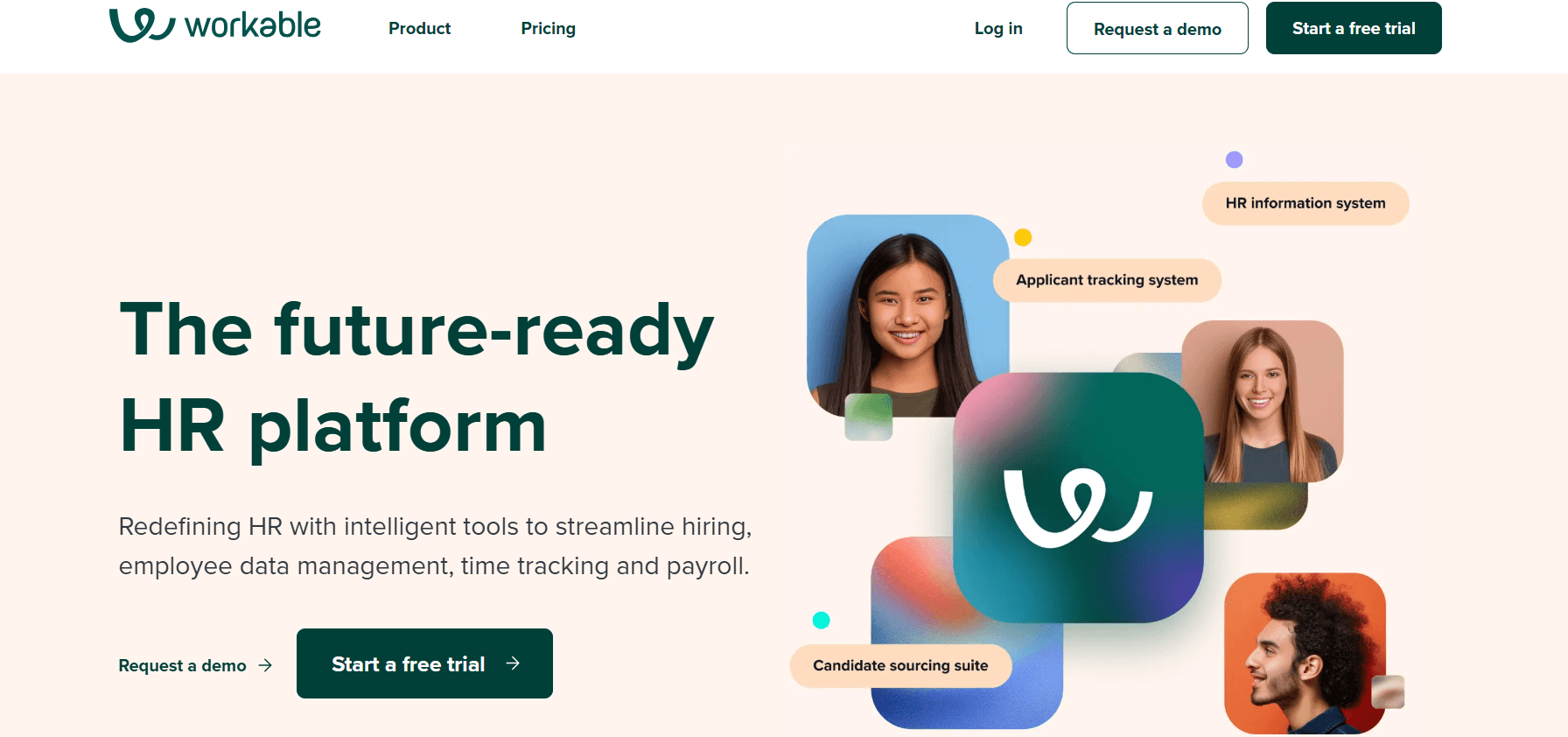
Workable is a well-known ATS for teams that want fast job posting, candidate tracking, sourcing, scheduling, and hiring workflows. It is often a fit for companies that hire across locations and need job visibility quickly.
Workable’s AI features vary by plan and setup, but the platform is strong at the basics: job distribution, candidate management, interview scheduling, and team collaboration.
Best for: growing companies that need job board reach and a clean ATS experience.
Key AI features: AI sourcing, screening support, job description help, candidate recommendations, automation, and scheduling.
Pros: Workable is polished and easy to adopt. It is a good option for teams that need broad job posting and a familiar ATS workflow.
Cons: Some advanced AI and automation capabilities may depend on plan level or modules. SMBs should compare total cost carefully against these Workable alternatives.
Verdict: Workable is a strong applicant tracking software option if global posting and easy adoption are top priorities.
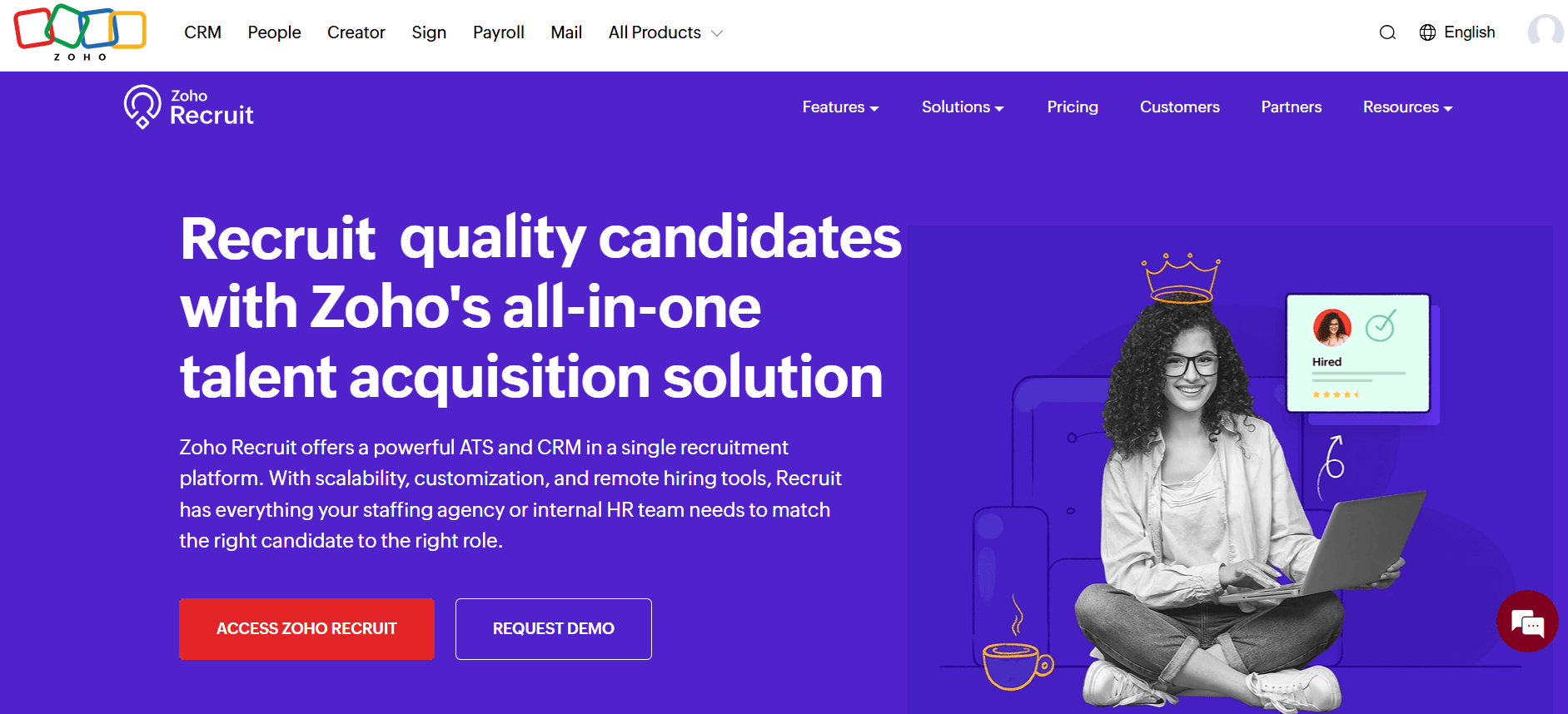
Zoho Recruit is an ATS and recruitment CRM with AI features through Zia, Zoho’s AI assistant. It works well for teams already using Zoho CRM, Zoho People, or other Zoho products.
Zoho Recruit supports resume parsing, candidate matching, workflow automation, job posting, interview scheduling, client management for agencies, and custom pipelines.
Best for: agencies, Zoho ecosystem users, and teams that want configurable workflows at a moderate price.
Key AI features: Zia AI matching, resume parsing, job description assistance, candidate recommendations, and workflow automation.
Pros: Zoho Recruit is flexible and affordable compared with many enterprise systems. Agencies may like the CRM features and customization options.
Cons: The interface can feel crowded, and setup may take time if workflows are complex. If that rules it out, see Zoho Recruit alternatives.
Verdict: Zoho Recruit is a good applicant tracking system with AI for teams already invested in Zoho or agencies that need ATS plus CRM features.
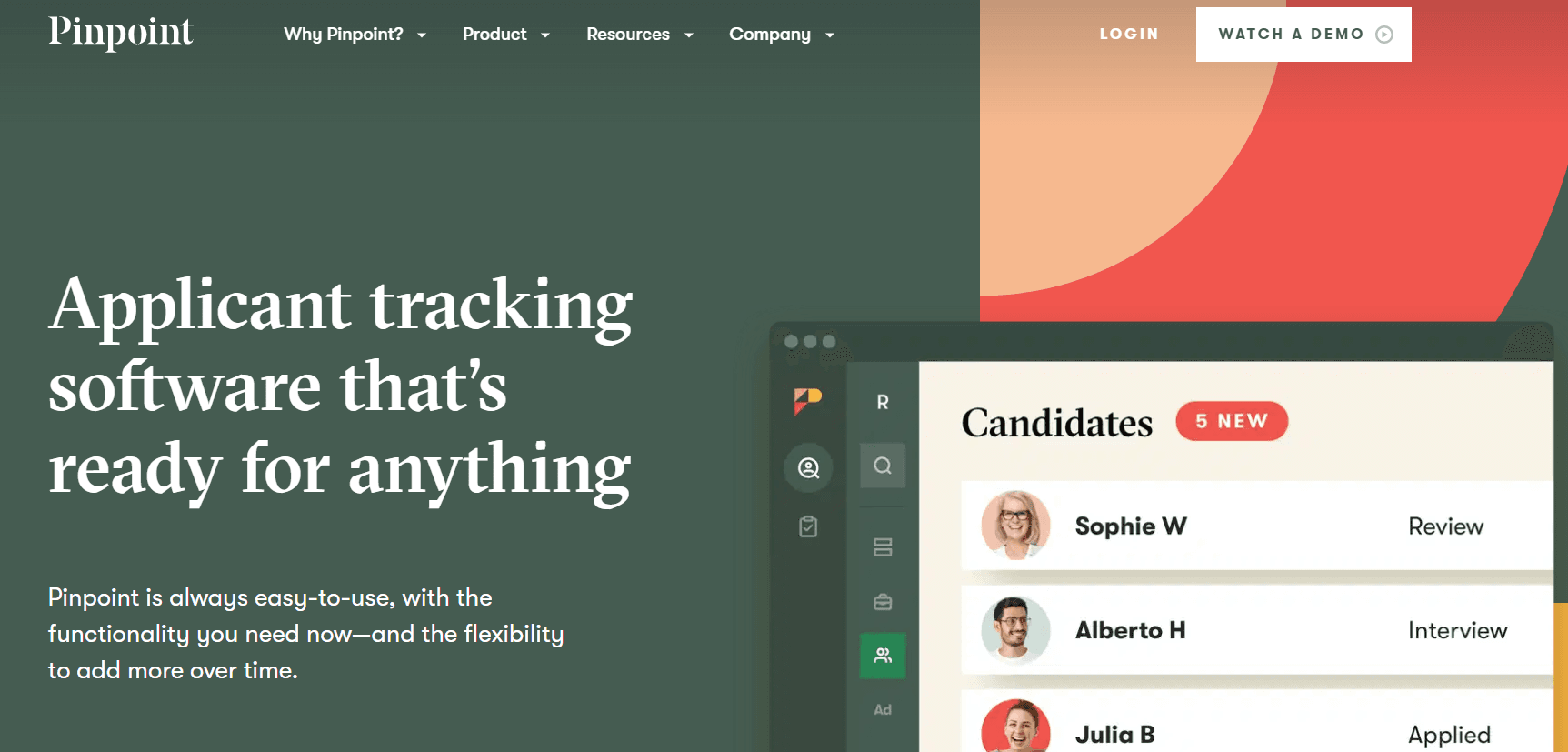
Pinpoint is an in-house recruitment platform with strong candidate experience, employer branding, structured workflows, DEI reporting, and compliance controls. It is a good fit for regulated organizations and teams that need audit-ready hiring processes.
Pinpoint’s value is not only AI. Its strength is organized, compliant, brand-friendly hiring for companies that want control over every step.
Best for: in-house teams, regulated industries, multi-brand companies, and organizations that care about candidate experience.
Key AI features: candidate filters, match scoring, hiring intake support, structured workflow assistance, and reporting.
Pros: Pinpoint is strong on compliance, branded careers pages, candidate experience, and team collaboration.
Cons: Pricing is quote-based, and smaller teams may find it more process-heavy than they need.
Verdict: Pinpoint is a good fit for companies that want structure, compliance, and candidate experience more than the fastest SMB AI ATS setup.
Pin is built more like an AI recruiter than a traditional ATS. It focuses on sourcing, outreach, candidate matching, and scheduling. For lean teams that need to reach passive candidates fast, that can be valuable.
Best for: startups, agencies, and teams that need outbound recruiting help.
Key AI features: autonomous sourcing, AI outreach, candidate matching, scheduling, and pipeline movement.
Pros: Pin can reduce manual sourcing and follow-up work. It is useful when recruiters need more candidate flow but lack time for outbound campaigns.
Cons: It is newer than established ATS platforms, and integrations may not be as mature.
Verdict: Pin is a strong choice if your hiring bottleneck is sourcing, not applicant tracking.
hireEZ is best understood as an AI sourcing and outbound recruiting platform. It helps teams find passive candidates, enrich contact data, run outreach, and send prospects into an ATS.
Best for: sourcing teams, executive search, technical recruiting, and passive candidate pipelines.
Key AI features: AI candidate search, profile matching, contact finding, outreach sequences, and talent insights.
Pros: hireEZ is strong when the right candidates are not applying. It can help recruiters build better top-of-funnel pipelines.
Cons: It is not a full system of record. Most teams still need an ATS alongside it.
Verdict: hireEZ is one of the best AI recruiting tools for passive sourcing, but pair it with an ATS for full hiring management.
Juicebox, known for PeopleGPT, lets recruiters search for candidates with natural language instead of complex Boolean strings. That makes sourcing more accessible to founders, hiring managers, and recruiters who do not want to build advanced search queries.
Best for: sourcing teams, founders, and recruiters who want fast talent search.
Key AI features: natural-language search, AI-assisted sourcing, outreach drafting, talent projects, and profile discovery.
Pros: Juicebox is easy to learn. A user can describe the candidate they want and start reviewing profiles quickly.
Cons: It is sourcing-first. Teams still need ATS software for applicant tracking, stages, and collaboration.
Verdict: Juicebox is a strong AI sourcing companion, especially for teams that dislike Boolean search.
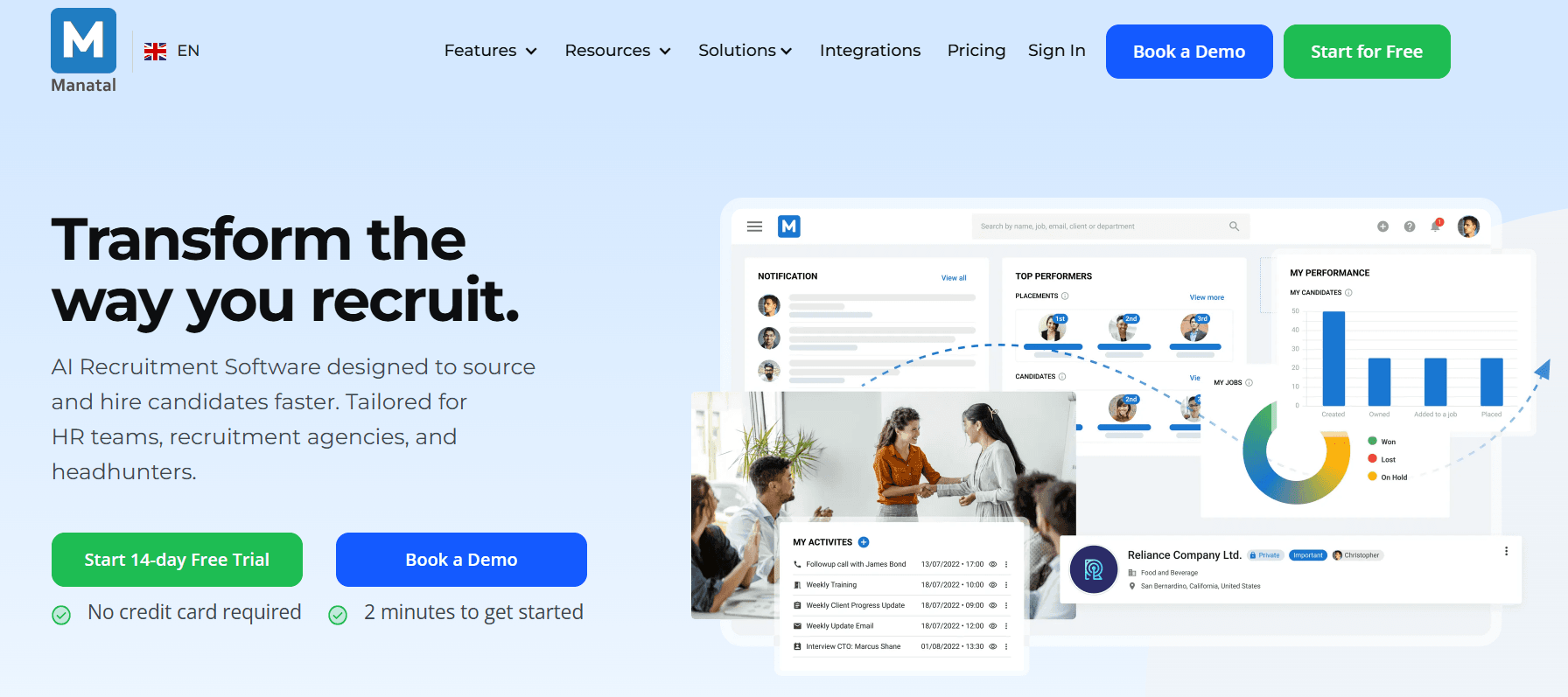
Manatal combines ATS, recruitment CRM, candidate recommendations, resume parsing, social media enrichment, job posting, and hiring pipelines. It is affordable and useful for smaller teams that want basic AI support.
Best for: small teams, budget-conscious recruiters, and agencies with straightforward workflows.
Key AI features: AI candidate recommendations, resume parsing, candidate enrichment, job matching, and workflow automation.
Pros: Manatal is affordable and easy to use. It gives smaller teams access to AI matching and CRM features without enterprise pricing.
Cons: Advanced AI, reporting, and complex workflow needs may outgrow it. Teams that outgrow it can look at these Manatal alternatives.
Verdict: Manatal is a good entry-level AI ATS for small teams, especially when budget is the main constraint.
BambooHR is primarily an HR platform with applicant tracking included. It works best when hiring, onboarding, employee records, time off, and HR operations need to live together.
Best for: HR teams that want ATS and HRIS in one platform.
Key AI features: HR assistant features, survey summaries, and workflow support, depending on setup.
Pros: BambooHR is friendly for HR teams and strong after the offer stage. Onboarding and employee record handoff are key strengths.
Cons: It is not the strongest choice if your main need is AI resume screening, candidate ranking, or AI recruiting automation.
Verdict: BambooHR makes sense if HR operations matter more than advanced AI ATS features.

Deel Hire fits companies hiring across countries and moving candidates into contracts, payroll, employer of record workflows, or compliance-heavy onboarding.
Best for: global teams, remote companies, and businesses already using Deel.
Key AI features: hiring workflow support, candidate management, global compliance workflows, and handoff into Deel’s broader platform.
Pros: Deel Hire is useful when recruiting and global employment operations need to connect.
Cons: It is not primarily a deep AI candidate ranking platform.
Verdict: Deel Hire is best when global hiring operations matter as much as applicant tracking.
SmartRecruiters is built for large organizations that need global workflows, integrations, approvals, offer management, recruitment CRM, analytics, and compliance.
Best for: global enterprises, multinational hiring teams, and organizations with complex recruiting operations.
Key AI features: AI-assisted matching, recruiting automation, candidate engagement, analytics, and enterprise workflow support.
Pros: SmartRecruiters has breadth, integrations, and enterprise controls. It is a serious platform for large teams.
Cons: It can be too expensive and complex for SMBs.
Verdict: SmartRecruiters is a strong enterprise AI recruitment platform, but not the fastest choice for lean teams.
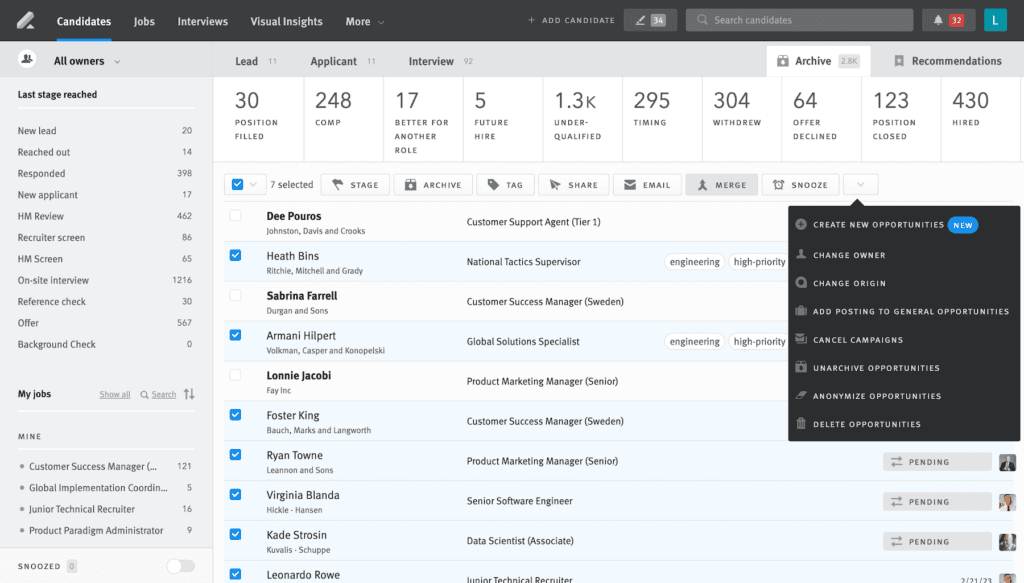
Lever combines applicant tracking with talent CRM. It is strong for companies that nurture passive candidates, manage long-term pipelines, and run relationship-based recruiting.
Best for: mid-market and enterprise teams with sourcing programs.
Key AI features: candidate engagement support, fraud signals, fit scoring, interview support, and nurture workflows.
Pros: Lever is strong for relationship-driven hiring and passive candidate management.
Cons: It can be more CRM than a lean SMB team needs. Those teams should also weigh these Lever alternatives.
Verdict: Lever is a strong choice if candidate relationships and nurture campaigns are part of your hiring strategy.
Breezy HR is known for its visual hiring pipeline, job posting, candidate messaging, scheduling, scorecards, and team collaboration. It is easy for small teams to adopt.
Best for: small businesses, agencies, and visual hiring workflows.
Key AI features: AI-assisted screening on some plans, workflow automation, candidate messaging, and scheduling support.
Pros: Breezy HR is clean, visual, and easy for hiring managers to understand.
Cons: Teams that need deeper AI candidate ranking software or advanced analytics may need more and can compare Breezy HR alternatives.
Verdict: Breezy HR is a good small-business ATS with some AI support, especially if visual workflows matter.
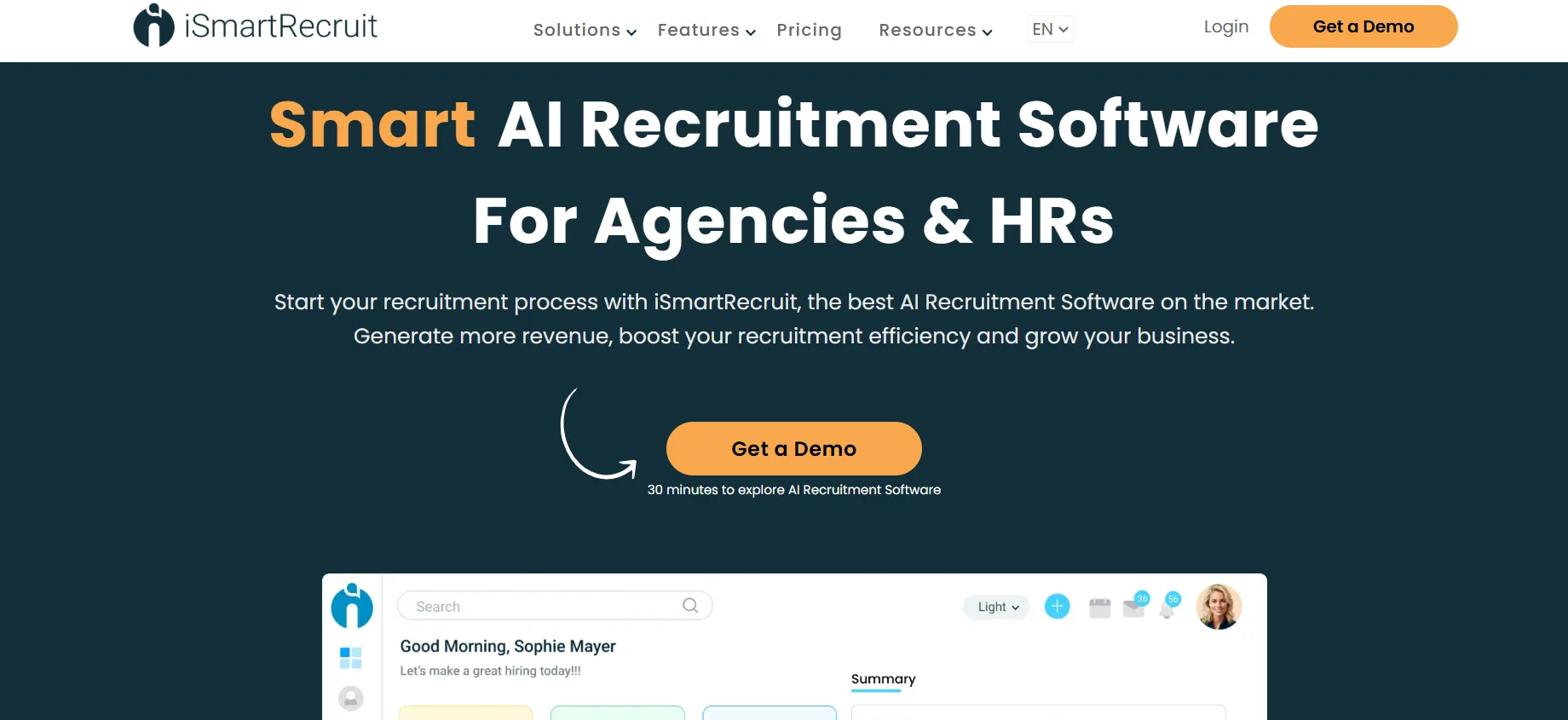
iSmartRecruit offers applicant tracking, recruitment CRM, resume parsing, candidate matching, job posting, workflow automation, and agency-focused features.
Best for: recruitment agencies, staffing firms, and high-volume hiring teams.
Key AI features: AI candidate matching, resume parsing, JD support, chatbot features, automation, and analytics.
Pros: iSmartRecruit balances ATS and CRM needs for agencies and staffing firms.
Cons: Some advanced AI or enterprise features may require higher-tier plans.
Verdict: iSmartRecruit is a solid AI applicant tracking software option for agencies that want CRM depth.
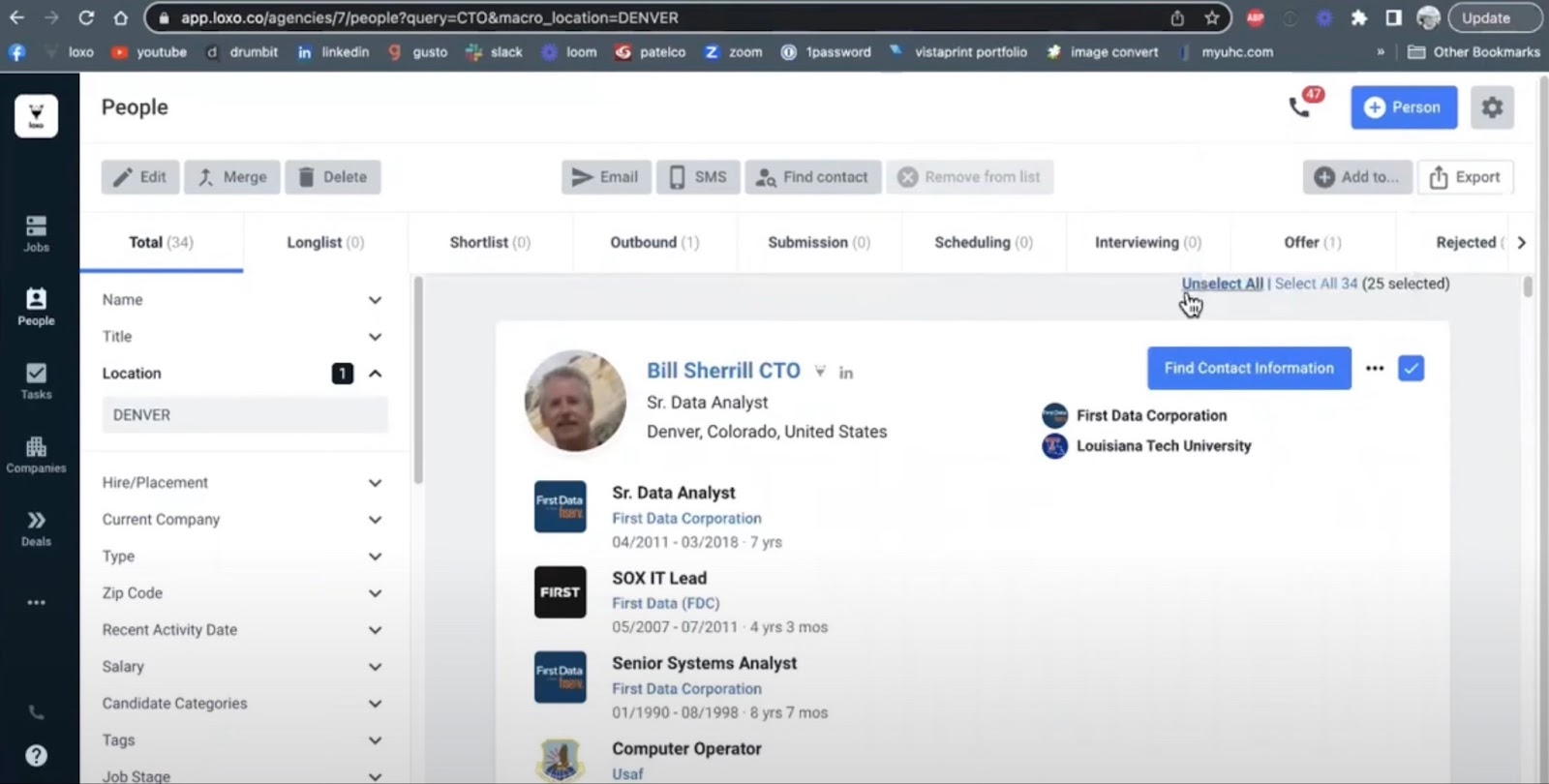
Loxo brings together sourcing, ATS, recruiting CRM, outreach, contact data, and agency workflows. It is built for recruiting firms that manage clients and candidates together.
Best for: executive search, staffing agencies, and outbound recruiting teams.
Key AI features: AI sourcing, candidate matching, data enrichment, outreach, and CRM workflows.
Pros: Loxo reduces the need for separate sourcing, CRM, and outreach tools.
Cons: In-house HR teams may not need its agency-focused depth.
Verdict: Loxo is a good AI ATS software choice for agencies that source heavily.
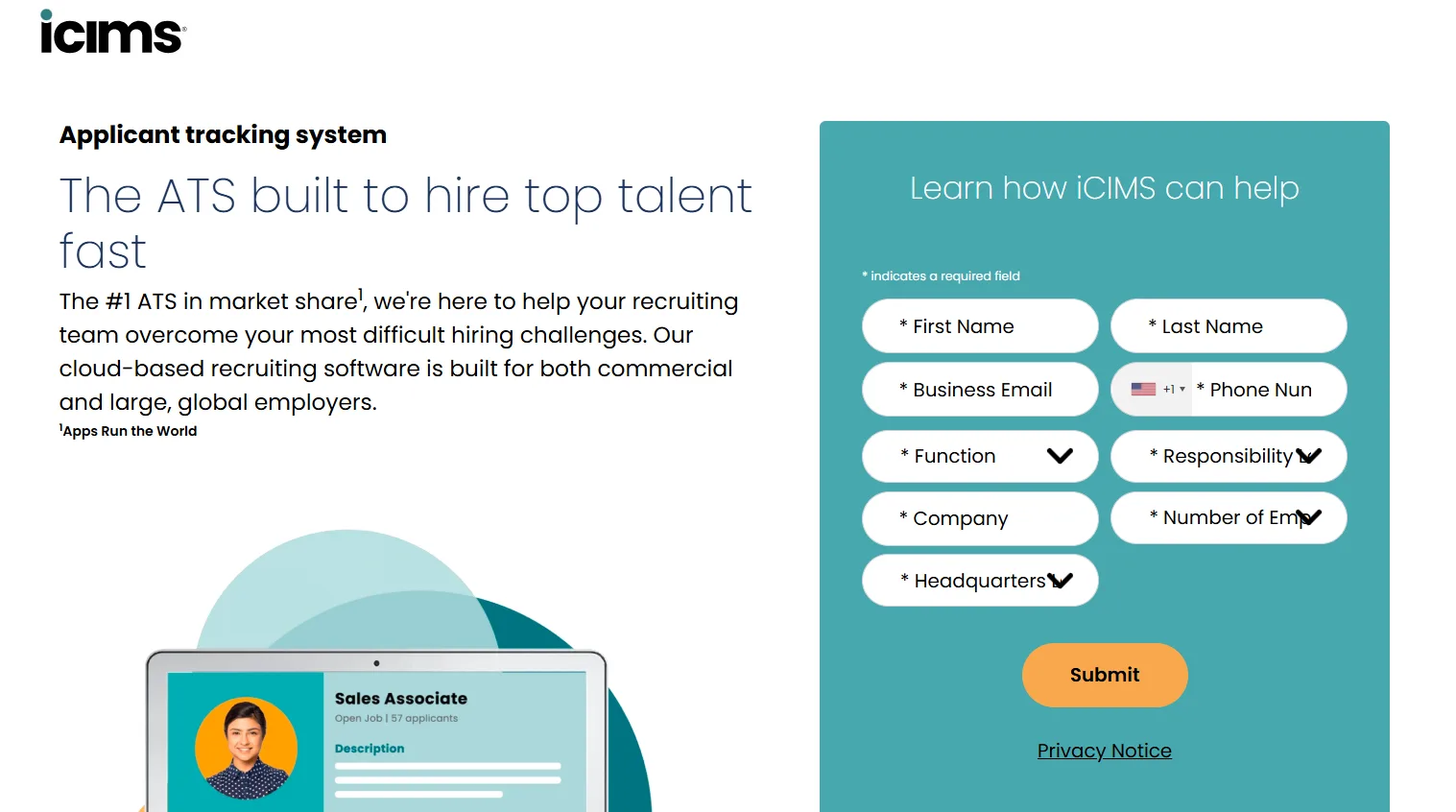
iCIMS is an enterprise talent acquisition platform with ATS, CRM, career sites, candidate engagement, integrations, analytics, and high-volume hiring workflows.
Best for: large enterprises, high-volume employers, and mature TA teams.
Key AI features: AI matching, candidate engagement, talent CRM, automation, and enterprise analytics.
Pros: iCIMS supports complex enterprise recruiting across regions and business units.
Cons: Cost, implementation, and administration can be heavy for smaller teams.
Verdict: iCIMS is a strong enterprise platform when scale matters more than simplicity.
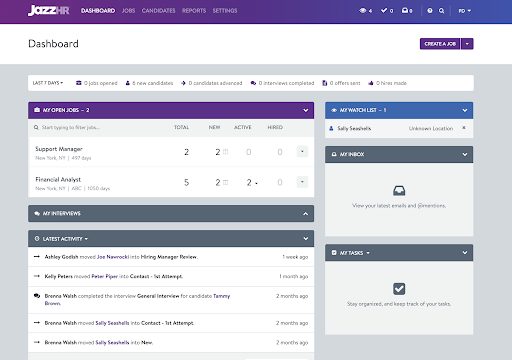
JazzHR is a small-business ATS focused on job posting, pipelines, interview scheduling, candidate messaging, offer workflows, and simple collaboration.
Best for: startups and small businesses that need basic applicant tracking.
Key AI features: limited AI compared with AI-first tools; useful automation and workflow features vary by plan.
Pros: JazzHR is approachable and affordable for teams moving away from spreadsheets.
Cons: It is not the best fit if you need strong AI resume parsing, candidate ranking, or automated resume screening software. For that, look at these JazzHR alternatives.
Verdict: JazzHR is a good starter ATS, but not the strongest AI ATS.
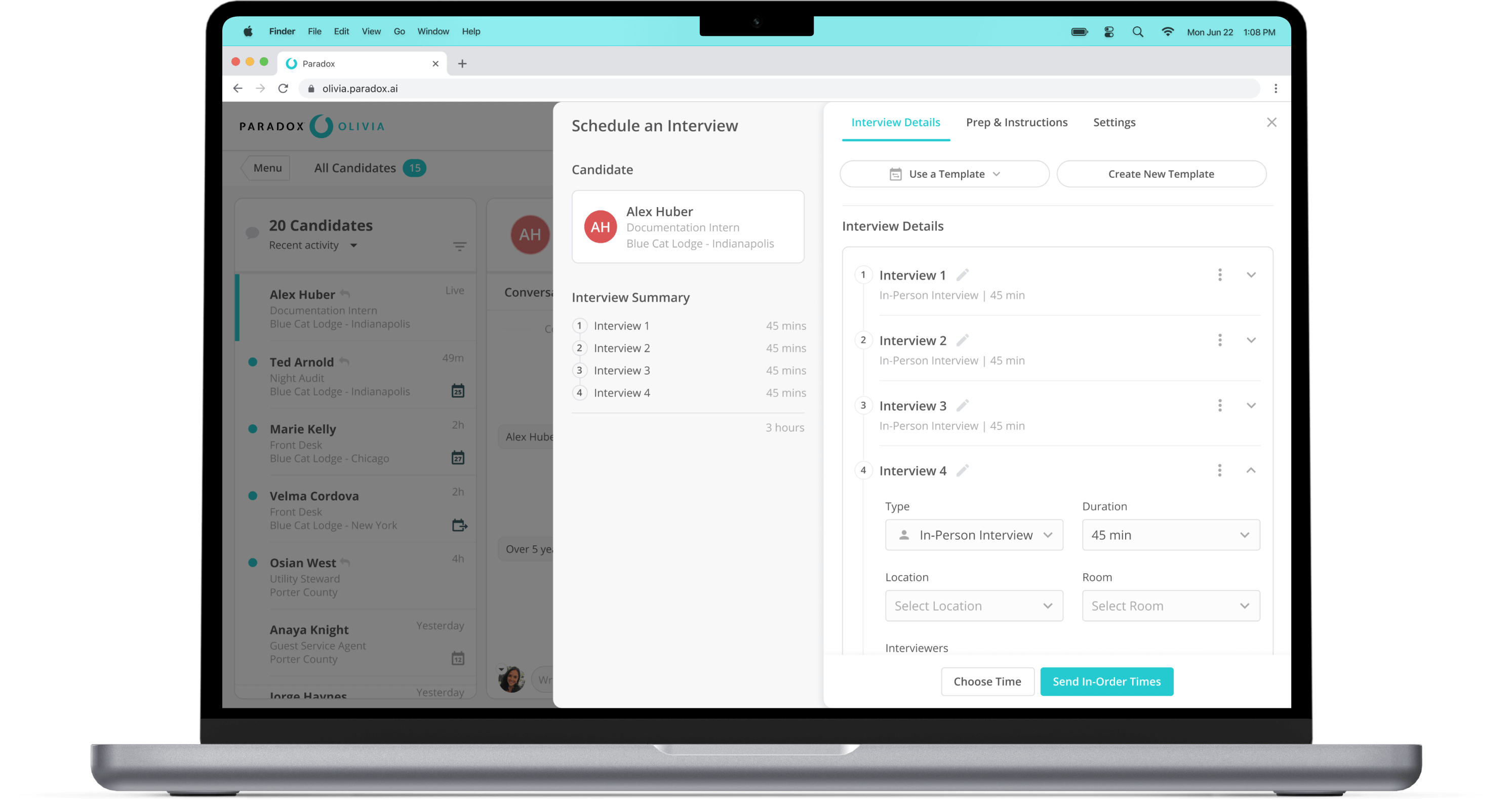
Paradox is built around Olivia, a conversational AI assistant that can answer candidate questions, screen applicants, and schedule interviews through chat and text.
Best for: high-volume, hourly, retail, hospitality, logistics, and frontline hiring.
Key AI features: conversational AI, automated screening, interview scheduling, candidate Q&A, and mobile-first engagement.
Pros: Paradox is excellent for reducing repetitive candidate communication and scheduling work at scale.
Cons: It is enterprise-focused and overbuilt for small teams.
Verdict: Paradox is the best choice when conversational hiring automation is the main need.
Eightfold AI focuses on skills-based matching, talent intelligence, internal mobility, workforce planning, and large-scale enterprise hiring.
Best for: large enterprises, internal mobility programs, and skills-based workforce planning.
Key AI features: deep-learning matching, skills intelligence, internal candidate recommendations, diversity insights, and workforce planning.
Pros: Eightfold’s AI is strong for matching people to roles based on skills and potential.
Cons: It is not a lightweight ATS for SMBs.
Verdict: Eightfold is best for enterprises that want talent intelligence, not just applicant tracking.
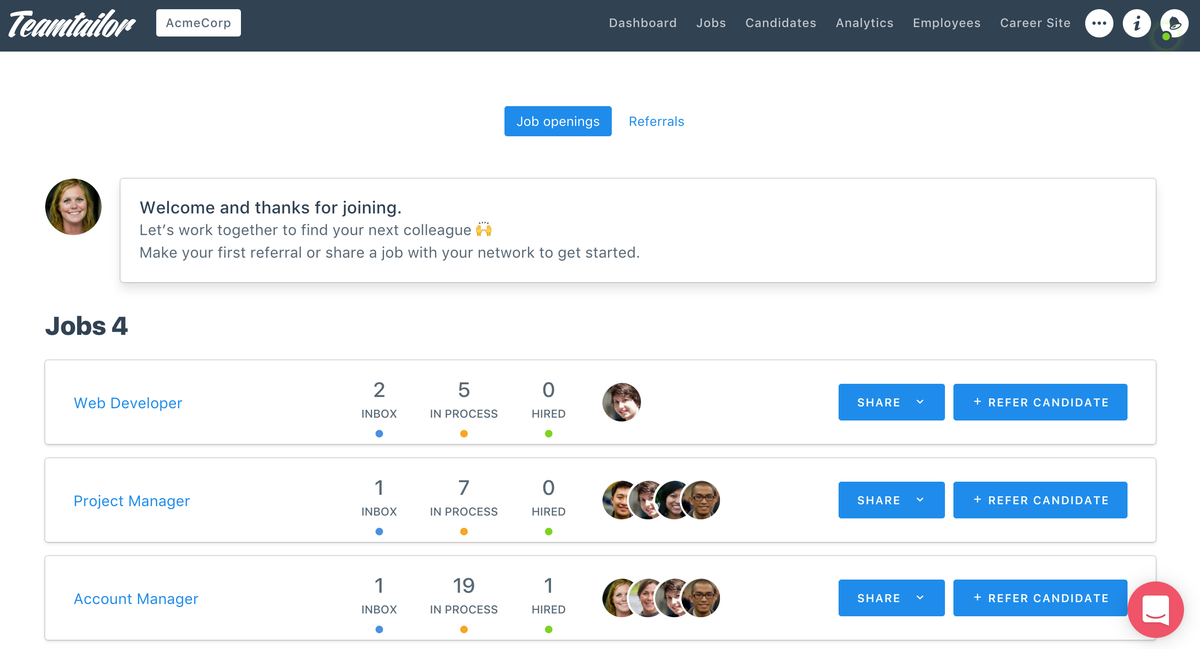
Teamtailor is a recruiting platform with strong career site design, employer branding, candidate engagement, automation, and ATS workflows.
Best for: companies that treat hiring as an employer-brand channel.
Key AI features: AI-assisted candidate summaries, screening support, translations, suggested questions, and workflow help.
Pros: Teamtailor helps companies create polished career experiences and hiring campaigns.
Cons: Teams focused mainly on AI screening and ranking may want a more automation-first tool.
Verdict: Teamtailor is strong for brand-led recruiting and candidate experience.
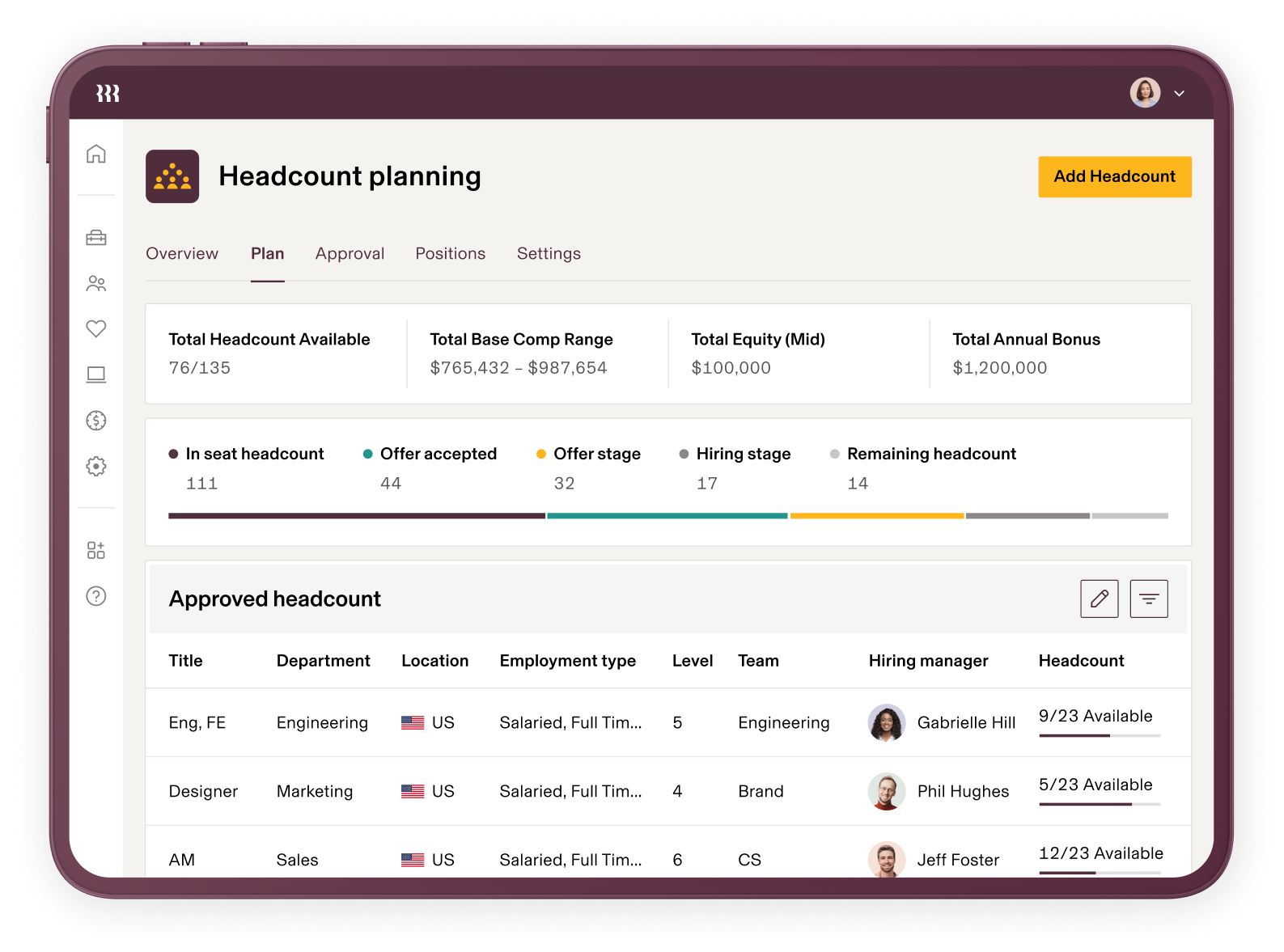
Rippling Recruiting connects hiring with HR, payroll, onboarding, device management, permissions, and employee lifecycle workflows.
Best for: companies already using Rippling for HR and IT.
Key AI features: workflow automation and hiring support tied to the broader Rippling system.
Pros: The handoff from candidate to employee can be smooth when Rippling is already the company’s operating system.
Cons: As a standalone AI ATS, it may not be enough for teams that need deep sourcing, AI ranking, or recruiting CRM features.
Verdict: Rippling Recruiting is best when recruiting needs to plug into HR, payroll, and IT operations.

Recruit CRM combines applicant tracking, recruitment CRM, client management, candidate matching, sourcing, outreach, and deal tracking for agencies.
Best for: staffing firms, recruitment agencies, and executive search teams.
Key AI features: AI resume matching, GPT-assisted writing, candidate summaries, outreach support, and sourcing workflows.
Pros: Recruit CRM has public pricing and strong agency workflow coverage.
Cons: Corporate HR teams may not need client CRM and sales pipeline features.
Verdict: Recruit CRM is a strong AI ATS plus CRM for agencies.
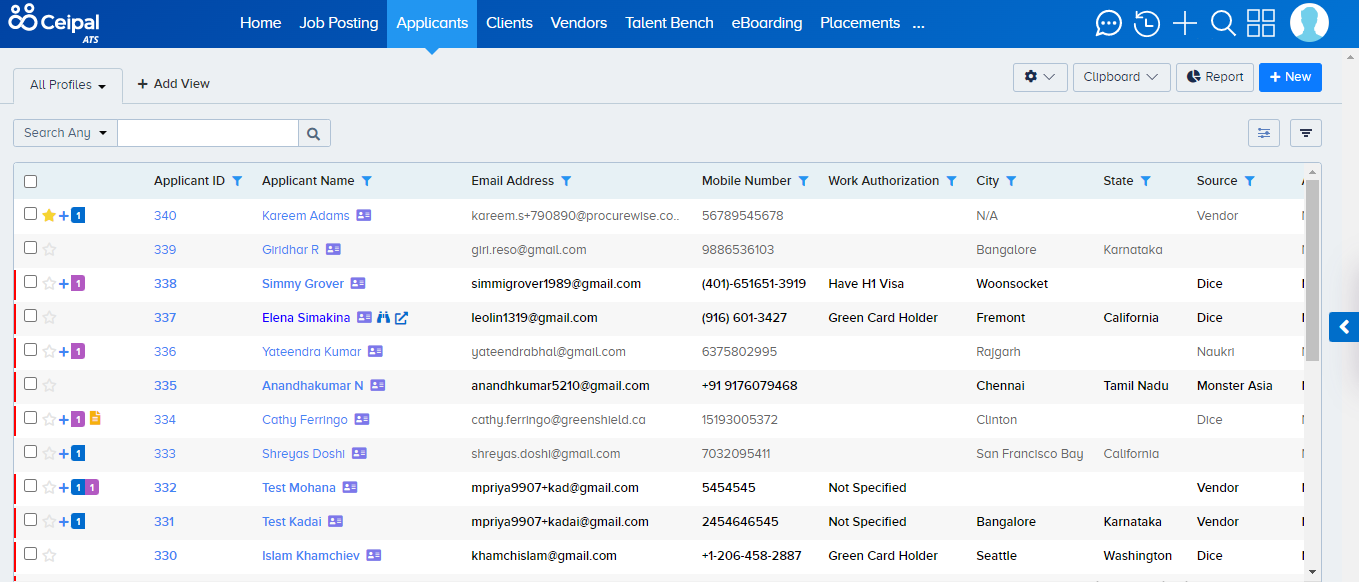
Ceipal ATS is built for staffing firms that need applicant tracking, CRM, vendor management, job board connections, onboarding, compliance, and reporting.
Best for: staffing firms, contract recruiting, and vendor-heavy hiring.
Key AI features: AI matching, resume parsing, CRM automation, onboarding workflows, and reporting.
Pros: Ceipal has deep staffing-firm functionality, including VMS and compliance workflows.
Cons: It can feel heavy for internal HR teams and small businesses.
Verdict: Ceipal is best for staffing firms that need operational depth more than a lightweight AI ATS.
Start with your hiring model. A small business hiring five to ten roles a month needs a different AI ATS than an enterprise hiring across countries. SMBs should prioritize easy setup, AI resume parsing, candidate ranking, job posting, email templates, interview scheduling, and public pricing. Enterprises should prioritize governance, security, reporting, workflow depth, integrations, and compliance.
If your team needs a simple applicant tracking system with AI, Recooty, Manatal, Breezy HR, JazzHR, and Zoho Recruit are the most practical starting points. If your team needs enterprise control, compare Greenhouse, Ashby, SmartRecruiters, iCIMS, Lever, Pinpoint, and Eightfold. If sourcing is the bottleneck, evaluate Gem, hireEZ, Juicebox, Pin, Loxo, and Recruit CRM.
Also separate true ATS needs from sourcing needs. A sourcing tool helps you find candidates. An ATS helps you manage applicants through the hiring process. Some platforms do both, but many are stronger in one area than the other.
The most useful AI ATS features are the ones that save recruiter time without hiding the decision-making process. AI resume parsing turns resumes into searchable candidate profiles. AI candidate ranking compares applicants against the role and highlights stronger matches. AI job description tools help recruiters create clearer job posts faster. AI interview question generators help hiring teams evaluate candidates more consistently. Automated emails and scheduling reduce back-and-forth with candidates.
For growing teams, the best AI ATS should also include job board posting, branded career pages, collaboration tools, candidate notes, talent pools, reporting, and privacy controls. For global or enterprise teams, add approval flows, role-based permissions, audit logs, DEI reporting, HRIS integrations, and compliance support.
AI ATS pricing varies widely. Small-business tools often publish monthly plans and may charge by job, user, or feature tier. Mid-market and enterprise platforms usually use quote-based pricing, with costs based on employee count, seats, hiring volume, modules, integrations, and support.
When comparing tools, do not look only at the headline price. Check whether AI resume parsing, AI candidate matching, job board posting, career pages, email automation, analytics, onboarding, and integrations are included or locked behind higher plans. A lower monthly price can become expensive if the features you need require add-ons.
For startups and founder-led hiring, Recooty is the strongest fit because it is fast to set up and covers the hiring basics with AI support. For SMB HR teams, Recooty, Zoho Recruit, Manatal, and Breezy HR are practical options, with Recooty leading when AI job descriptions, candidate ranking, and job board reach matter most.
For enterprise structured hiring, Greenhouse, SmartRecruiters, iCIMS, Pinpoint, and Lever are stronger. For analytics-heavy tech hiring, Ashby is the standout. For passive candidate sourcing, Gem, hireEZ, Juicebox, Pin, and Loxo are stronger than general ATS tools. For staffing agencies, Recruit CRM, Ceipal, iSmartRecruit, and Loxo deserve a close look.
The best AI ATS is the one that matches your hiring stage. If you are a startup, SMB, or lean HR team, Recooty gives you the most practical mix of AI resume parsing, candidate ranking, AI job descriptions, interview question generation, job board posting, and simple hiring workflows. It is built for teams that want to move quickly without learning an enterprise recruiting system.
If you are an enterprise team with complex workflows, choose based on your operating model. Greenhouse is best for structured hiring, Ashby for analytics, SmartRecruiters and iCIMS for global enterprise operations, Eightfold for talent intelligence, and Paradox for high-volume conversational hiring.
For most small and mid-sized businesses comparing the best AI ATS solutions, Recooty is the best place to start.
Recooty is the best AI ATS for small and mid-sized businesses that want AI resume parsing, candidate ranking, AI job descriptions, interview question generation, job board posting, and easy setup. Greenhouse is stronger for structured enterprise hiring, Ashby is stronger for analytics-heavy teams, and hireEZ is stronger for passive candidate sourcing.
An AI applicant tracking system is recruiting software that uses artificial intelligence to help manage applicants, screen resumes, rank candidates, write job descriptions, schedule interviews, and automate hiring tasks. It helps recruiters spend less time on manual admin and more time evaluating qualified candidates.
Look for AI resume parsing, candidate ranking, AI job description generation, automated emails, interview scheduling, job board posting, branded career pages, team collaboration, talent pools, reporting, and privacy controls. Enterprise teams should also look for approval workflows, audit logs, integrations, DEI reporting, and compliance support.
Yes. AI ATS software is especially useful for small businesses because it reduces manual hiring work. A small team can use AI to write job posts, post to job boards, parse resumes, rank applicants, send updates, and schedule interviews without hiring a dedicated recruiting operations team.
Greenhouse, Ashby, SmartRecruiters, iCIMS, Lever, Pinpoint, and Eightfold are stronger fits for enterprise hiring. The right choice depends on whether the company prioritizes structured hiring, analytics, global workflows, talent CRM, compliance, or skills-based workforce planning.
A traditional ATS stores candidates and tracks hiring stages. An AI ATS adds features such as resume parsing, candidate matching, candidate ranking, job description generation, interview question suggestions, automated communication, and predictive hiring insights.
AI ATS tools can support fairer hiring when they use structured criteria, consistent scorecards, anonymized profiles, and clear workflows. They do not remove bias automatically. Recruiters still need to review criteria, monitor outcomes, and make final hiring decisions responsibly.
Small-business AI applicant tracking systems may start with public monthly plans, while enterprise platforms usually require custom quotes. Pricing can depend on users, jobs, employees, hiring volume, modules, integrations, and support. Always check whether AI features are included or sold as add-ons.
Recruit CRM, Loxo, Ceipal, iSmartRecruit, and Zoho Recruit are strong options for recruitment agencies because they combine ATS and CRM features. Recooty can also work for smaller agencies that want simple job posting, candidate management, AI resume parsing, and interview preparation.
No. An AI ATS helps recruiters work faster by handling repetitive tasks such as resume parsing, candidate ranking, job post writing, scheduling, and candidate updates. Recruiters still make judgment calls, run interviews, build relationships, and make final recommendations.

Shubham Joshi is a dynamic HR Business Partner with over 8 years of experience in aligning people strategy with business goals, driving high-performance cultures, and...
View Full Profile →