All Recooty Articles, HR Tutorials and Tips, Trending Topics
Best ATS for Healthcare Businesses in the UK 2026


 All Recooty Articles, HR Tutorials and Tips, Trending Topics


For a UK healthcare employer, the best ATS is the one that keeps recruitment moving without hiding check status, candidate evidence, accessibility needs, or decision ownership. Test the system on a real safety-critical workflow before buying it.

This article compares healthcare ATS options by workflow fit, not by a feature checklist alone. In practice, the strongest system is the one that helps your team fill safety-critical roles quickly while keeping every important check visible and proportionate.
Healthcare hiring needs more than a CV pipeline. A useful ATS should show which check applies, who owns it, what evidence is missing, when a document expires, what the candidate has been told, and whether the final decision is supported by job-related evidence. The system should make a safe process easier to follow, not make an automatic decision on the employer’s behalf.
Run this test with every shortlisted vendor:
Score each step from 0 to 2 for workflow visibility, check ownership, accessibility, auditability, candidate communication, data minimisation, and exception handling. A high feature count cannot compensate for a missing audit trail or unclear responsibility. Recooty’s recruitment process guide and candidate experience guide can help define the operating workflow before the demo.
Healthcare employers need an ATS that records the evidence behind a hiring decision and keeps checks visible to the people who own them. This guide compares five options and explains how to test them with clinical, care, and non-clinical roles before purchase.
An applicant tracking system (ATS) is a recruitment tool that helps recruiters and HR professionals automate and optimize the different stages of their hiring process. By using ATS software, they can filter and manage all the job applications they receive for their open job roles, rank and filter them based on the job requirements, and track the applications.
Some ATS software can also provide you with features like managing interview schedules, building a talent pool, generating assessments, integrating with job boards, and providing onboarding support as well.
So, ATS software can effectively process vast volumes of applications and make it easy to choose the most suitable ones.
The shortlist should be based on evidence that the ATS can manage the whole hiring record, not just rank CVs. UK employers must check an applicant’s right to work before employment, and some healthcare roles may qualify for more detailed DBS checks. GOV.UK also says employers must follow data protection rules when handling applicant information. See the official guidance on checks employers can make on job applicants before configuring your workflow.
| Healthcare hiring requirement | What the ATS should help you record | What your team must still decide |
|---|---|---|
| Right to work | Check type, date, evidence location, expiry date and follow-up reminder | Whether the evidence is valid and whether the role and worker arrangement require a check |
| DBS screening | Role, workforce, check level, consent, status and completion date | Whether the role is eligible for the requested check. Do not request more information than the role allows |
| Registration and qualifications | Professional body, registration number, evidence, expiry and verification owner | Whether the qualification and registration meet the role’s requirements |
| References and employment history | Requests, responses, gaps, notes and escalation status | Whether the evidence is sufficient and relevant to the role |
| Candidate data | Notice, access permissions, retention date, deletion request and export | The lawful basis, retention period and who should have access |
| Fair selection | Structured questions, scorecard criteria, panel feedback and adjustments | The job-related criteria, reasonable adjustments and final hiring decision |
The DBS position matters because eligibility depends on the role and its responsibilities.
A job description generator can turn responsibilities and requirements into a clear first draft. Updated GOV.UK guidance says healthcare roles involving patient contact can be eligible for at least a Standard DBS check, while some regulated healthcare roles can qualify for Enhanced checks. An ATS should make the status clear, but it should not automatically choose a check level without a trained reviewer.
For candidate information, the ICO’s recruitment and selection guidance says organisations should not keep recruitment data longer than needed and should set clear retention periods. That makes retention controls, access permissions, deletion workflows and an audit trail practical buying requirements, not optional extras.
Use the same test scenario for every vendor. Ask each provider to show the workflow live, including what happens when a candidate has an expiring right-to-work document, a missing reference, a registration number that needs review, or an accessibility request.
| Test scenario | Strong evidence | Warning sign |
|---|---|---|
| Urgent vacancy | One dashboard shows stage, owner, next action and time in stage | Recruiters need separate spreadsheets to find blockers |
| High-volume care role | Filters are explainable and recruiters can audit why a candidate progressed or was rejected | The vendor describes opaque AI ranking as the main screening control |
| Expiring check | The system sends a clear reminder and keeps the original verification record | Expiry dates live only in personal calendars |
| Candidate requests an adjustment | The request is restricted to the right people and the process is documented | Sensitive information is visible to the full hiring team |
| Audit or dispute | The organisation can export the timeline, messages, scores and decisions | The vendor cannot show a complete history of changes |
This workflow-first test is more useful than comparing the number of integrations on a pricing page. A small healthcare employer may need fewer features, but it still needs reliable ownership, secure records and a clear route from application to verified hire.
The healthcare sector is facing a large shortage of qualified staff to fulfill patients’ care needs. The World Health Organization reports an expected global shortage of 11 million health workers by 2030.
The UK health sector is naturally no different and is facing these challenges related to the workforce shortage. The General Medical Council reported that just under one in five UK doctors plan to leave the profession in the next 12 months, and the NHS Long Term Workforce Plan projects a shortfall of over 260,000 health workers in the UK by 2036.
As demand is increasing and supply is decreasing with workers entering and remaining in the sector, healthcare organizations also need to change their recruitment approach to attract and retain talent.
So, healthcare businesses need to see a high-performing ATS as a necessity rather than an investment. An ATS is key to an organization’s staffing capacity and ability to deliver good-quality care.
With a good ATS, a healthcare business can take out many of the time-consuming administrative aspects, such as advertising jobs, screening and filtering resumes, and tracking candidates, therefore saving a lot of time and manual efforts.
Your ATS could also help you to bridge the gap between top talent and your open job roles, within appropriate timelines! ATS platforms also give vital analytics for data-driven recruitment strategies while maintaining compliance with industry standards and rules. Implementing an ATS enables healthcare organizations to streamline their hiring efforts, hire the best workers, and maintain patient care standards despite the rising workforce issues.
The following features are a must-have for any ATS to manage and optimize the recruiting process and take it to the next level. These features can make a difference in your hiring process and help you build a team to drive your business to success.
To have great talent onboard, you should have the right candidates in your hiring pipeline. So, you need to have an ATS that has powerful candidate sourcing capabilities and can connect the right talent with the right jobs. An ATS should help you with storing the resumes of candidates and create a talent pool while also creating a dynamic talent pipeline for all the open roles. You can effectively organize candidates based on skills, location, and experience, while also supporting advanced search capabilities like keyword, tag, and Boolean search.
An Applicant Tracking System, as the name itself suggests, can help you customize and optimize your entire hiring process for different open roles and give you a bird’s-eye view of all your hiring pipelines. You can effectively sort and filter out candidates based on the role requirements, move the applications along different stages of your hiring pipeline and track the updates automatically, and take the required action on candidates, all within a matter of a couple of clicks.
Every organization has different hiring needs and has its own hiring system in place, which might involve multiple HR tools and technologies. Additionally, a recruiter spends a massive amount of time posting the job openings on multiple job boards and social media channels, which they could have spent on improving hiring efficiency instead. A good ATS should provide you with the ability to smoothly integrate with different hiring tools, job boards, social media channels, CRM systems, calendars, emails, and multiple tools based on the business’s hiring requirements.
In any HR department, a lot of effort goes into writing and posting job openings, so an ATS should support job-description templates and a mobile-friendly application process. Those features reduce repeated work and make it easier for candidates to apply.
Scheduling multiple interviews for multiple roles can be a hectic task for any recruiting team. It can take a lot of time and effort to match the schedule of candidates and interviewers (who might be across different time zones) while also taking care of any unforeseen rescheduling that might need to be done. An ATS should integrate with calendars that can help you check the schedules of both parties involved in an interview and send invites, all within a matter of a few clicks. This helps in reducing the time required to send emails back and forth and makes the interview scheduling process seamless.
As with every other thing, data plays a major role in the hiring process as well. An ATS can empower your HR department to make data-driven hiring decisions. It can easily help you report and analyze important recruitment metrics like time to hire, cost to hire, diversity and inclusion percentages, candidate conversion rates, offer acceptance rate, and much more. Using these metrics, you can effectively improve aspects of your hiring strategy and achieve your hiring goals.
Here is a list of the top 5 Applicant Tracking System for healthcare businesses in the UK. We have carefully curated this list, keeping in mind that they are pocket-friendly and include all the above features and additional features as well.

Recooty is recruiting software used by small and medium-sized businesses. Recooty offers job-board and social-media integrations, AI Candidate Matching, Resume Summaries, and custom-branded career pages, along with interview scheduling, team collaboration, email templates, and hiring analytics.
Recooty has an extremely easy-to-use interface that makes it accessible for small HR teams or even companies without a dedicated recruitment person to improve their hiring efficiency. To add to its credibility, Recooty has been recognized by G2, time and time again, for its simplicity, impact, and outstanding customer service. Recooty is priced so that it sits squarely in the affordable range, and the feature-rich software replaces the need for expensive and complex products, enabling healthcare businesses to build great teams without great cost.
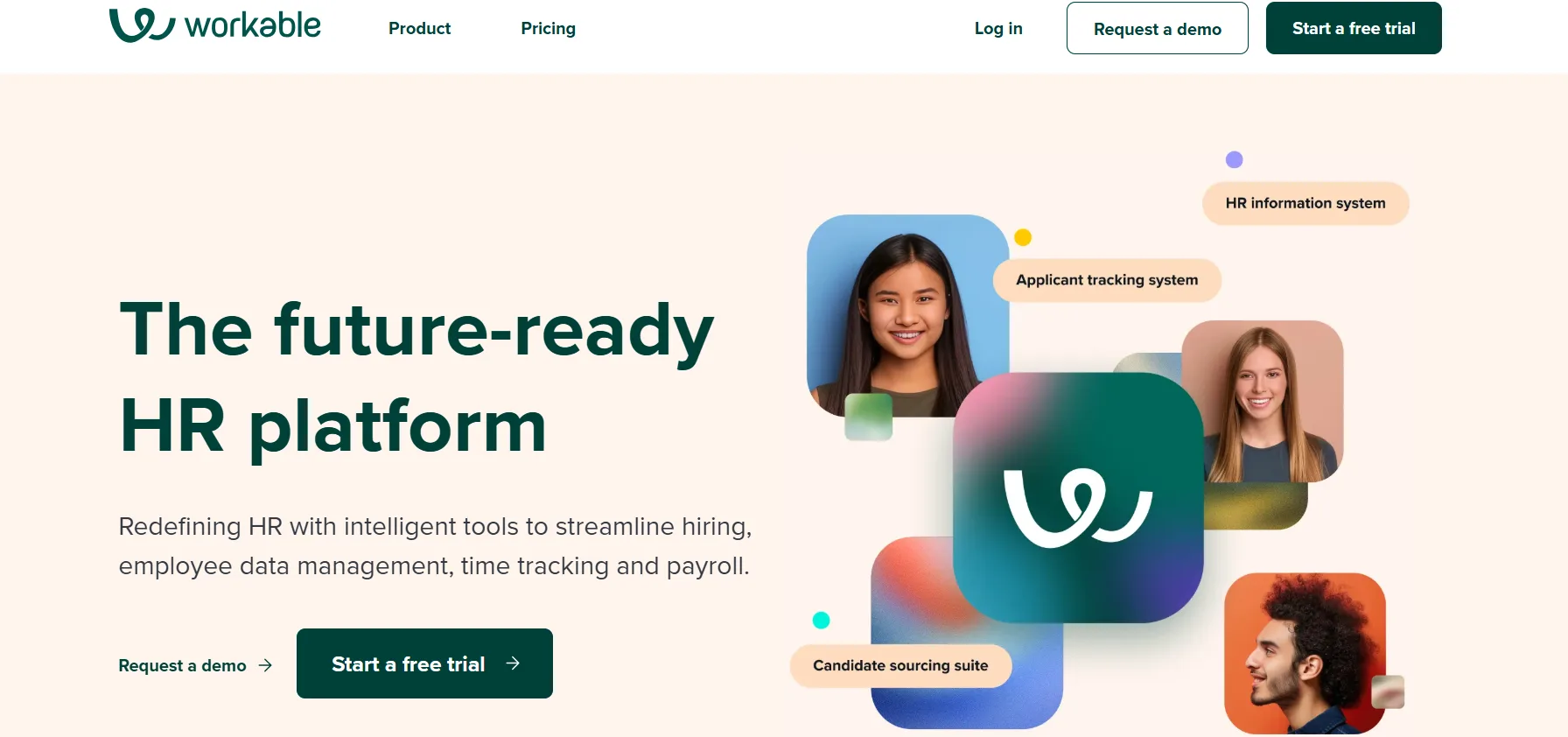
Workable is a flexible and adaptable ATS that stands out for its wide range of tools to simplify the hiring process. With over 27k companies already using it, Workable is designed to streamline the hiring process of healthcare businesses of all sizes. Workable has a range of very user-friendly and intuitive tools that make sourcing candidates, posting jobs, and setting up a collaborative hiring environment very easy, streamlining the end-to-end hiring process.
Workable has strong candidate sourcing capabilities, allowing recruiters to post jobs across 200+ free and paid job boards, making it stand out among other ATSs. In addition to this, it automatically parses resumes, provides editable job templates, and interfaces well with other recruitment tools, which makes managing huge volumes of applicants simple. Workable allows anyone in the hiring team to use advanced people search by candidates’ prior job title, location, company, and much more. Workable also allows businesses to engage in collaborative hiring by allowing multiple team members to leave ratings, feedback, and review the candidate, all in the same place.
BambooHR is recognized as one of the best applicant tracking systems and helps manage the complete employee lifecycle from sourcing through onboarding and everything that occurs after that. BambooHR has also become known as a simple and easy-to-use ATS and is gaining a lot of popularity with small and medium-sized organizations, making it a good option for all kinds of healthcare businesses.
BambooHR has good capabilities in managing many of the hiring functions, for example, tracking candidate profiles, resume parsing, managing multiple hiring workflows, employee payroll and benefits, and performance tracking. BambooHR is one of the few ATSs to offer an offboarding feature that enables hiring teams to collect back company assets and deactivate all system access. One of the best features for BambooHR is its focus on creating an engaging candidate experience, which has become essential in an increasingly competitive labor market.
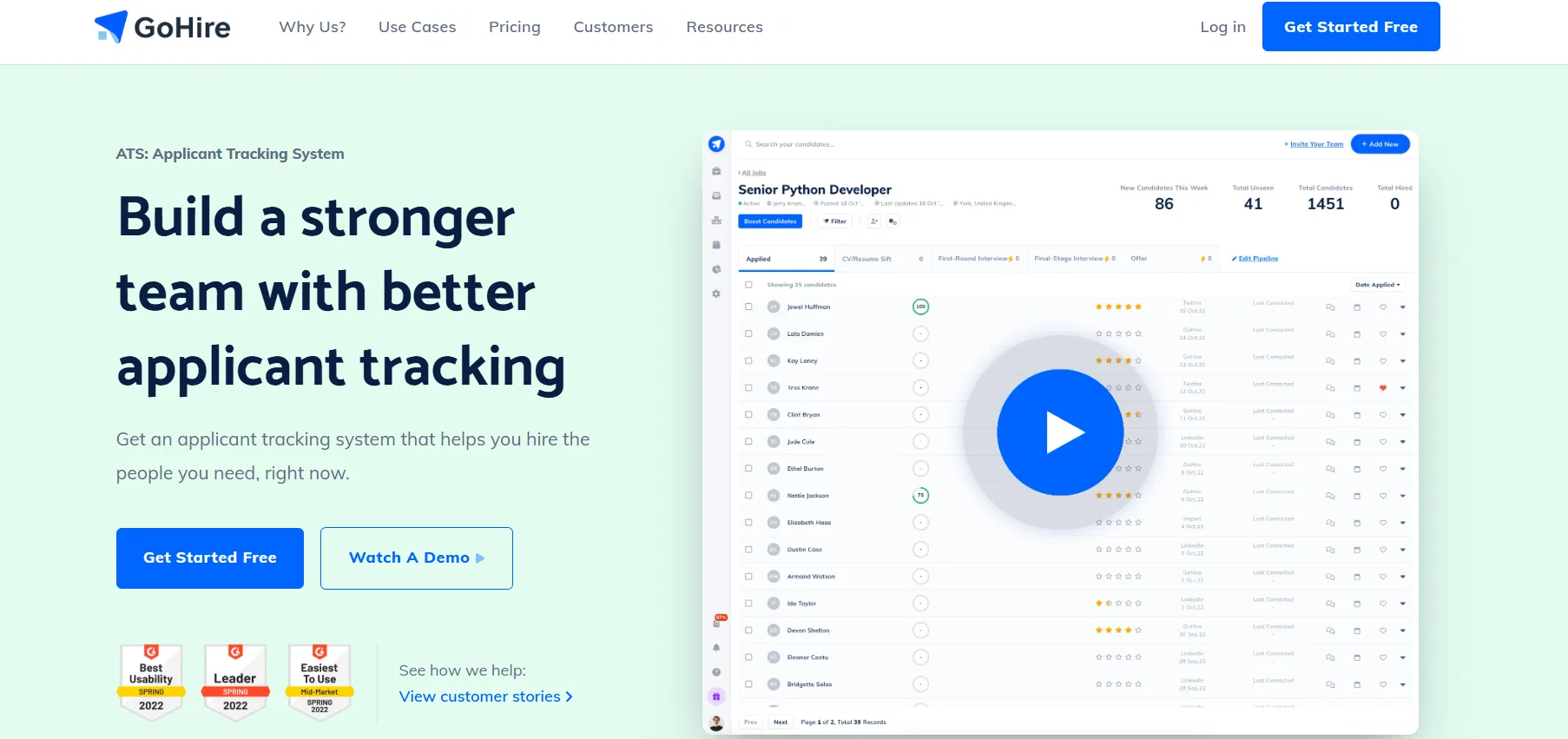
GoHire is an easy-to-use and straightforward applicant tracking system designed to help growing teams hire more easily. GoHire includes several useful features, including customizable career pages, applicant tracking, interview scheduling, and collaboration with your team, all in one place. GoHire aims to reduce hiring time and help businesses find the right person without all the hardships that they typically have to endure.
GoHire has recently released a lot of great new features, including the text recruiting feature that comes with “Apply by Text”, which gives candidates the ability to apply and schedule an interview directly from their cellphone, via SMS. The whole process is faster, more engaging, and even more convenient for candidates. This could help improve the candidate experience and push candidates through the hiring process.
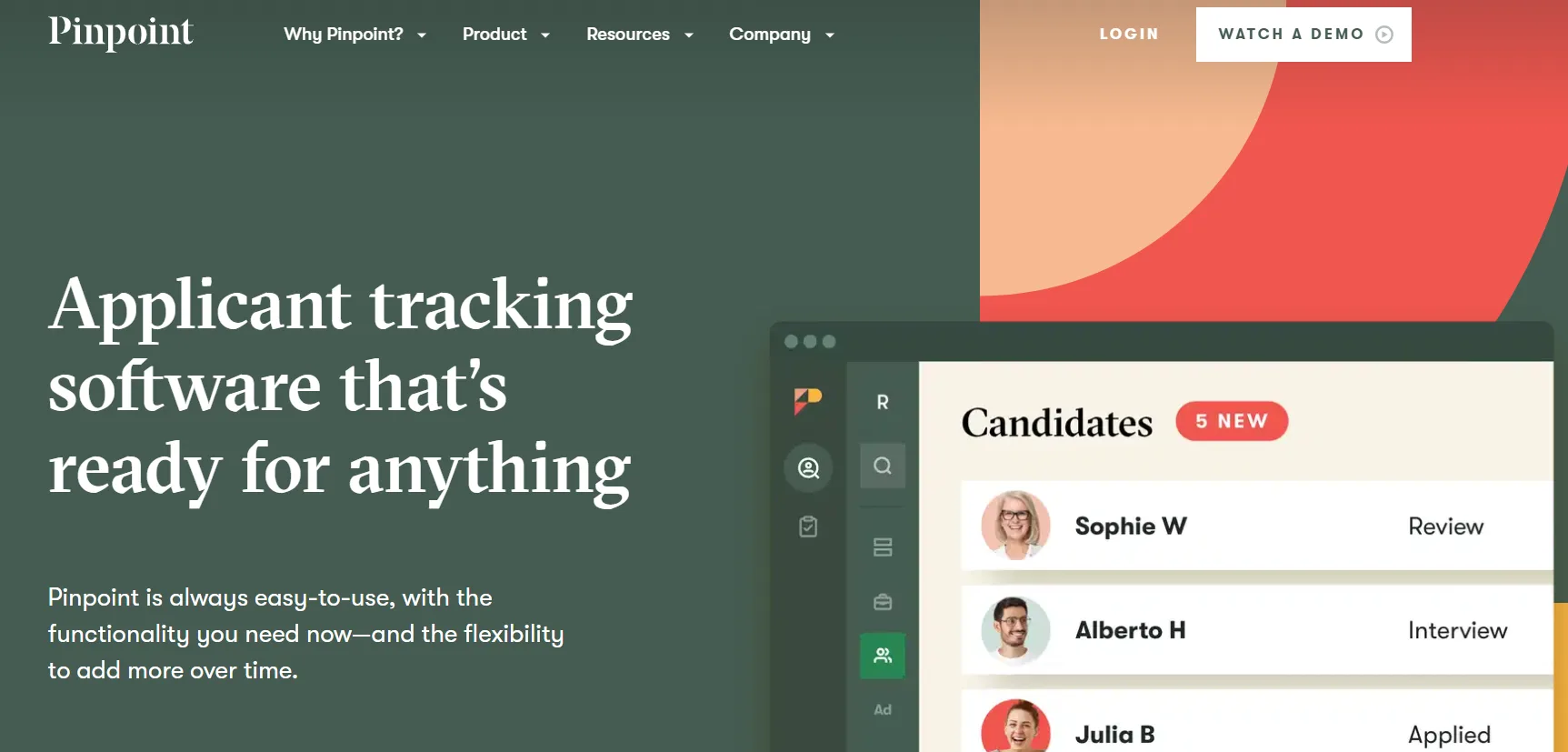
Pinpoint is one of the newer ATS platforms that has started to gain popularity within the recruitment tech space. It is a feature-rich all-in-one solution that can support the recruitment needs of SMBs, startups, or multinational enterprise organizations. Pinpoint features a clean, modern user interface, which is easy to use, and is a great fit for in-house recruitment teams who want a robust platform that is also simple to use.
Pinpoint includes complete recruitment features, end-to-end hiring workflows, candidate profile management, a single place where all talent can be pooled, an easy-to-use career site builder, and support for posting jobs to multiple job boards to maximize exposure and find quality candidates. Finally, Pinpoint pricing is flexible and will vary according to the features, level of bundling, and level of customization each health business’s needs.
Healthcare ATS comparisons commonly emphasise high-volume hiring, mobile applications, compliance tracking, and multi-site visibility. These are useful buying criteria, but each claim needs a live demonstration with the roles and checks your organisation actually uses.
| Common competitor promise | What buyers still need to know | Demo question |
|---|---|---|
| “Built for healthcare” | Which roles, checks, and professional registers are supported? | Show a nurse, care assistant, and non-clinical administrator workflow. |
| “Compliance-ready” | Whether the system records evidence and preserves the decision trail | What happens when a mandatory check is incomplete before an offer? |
| “AI screening” | Whether ranking is explainable and reviewable | Can a recruiter see the factors, correct an error, and retain the reason? |
| “Multi-site recruitment” | Whether permissions and reporting work across locations | Can a regional manager see one site without unrelated candidate data? |
| “Faster hiring” | Which bottleneck is reduced and whether quality suffers | Show time in stage, unresolved checks, source quality, and offer acceptance. |
| “Affordable pricing” | Whether implementation, checks, users, sites, and renewals cost extra | Provide a written total-cost estimate for the expected hiring volume. |
The right choice differs by setting. A hospital may need detailed credentialing and multi-site controls, while a small clinic may value transparent pricing and fast setup. In either case, automation should reduce chasing and data entry while recruiters and hiring managers remain responsible for job-related selection and final approval.
The comparison sources reviewed include Care Tech Guide’s UK care ATS buyer’s guide, engage|ats’s healthcare recruitment overview, CarePoint365’s care recruitment workflow, and FirstHR’s healthcare ATS comparison. Check compliance requirements against official UK guidance for your organisation.
Run the same clinical and non-clinical workflows through each shortlisted system. Choose the tool that shows who owns each check, preserves the evidence and decision history, supports candidates who need adjustments, and gives your team a complete export.
Healthcare hiring decisions affect patient care and service quality. An ATS supports that work by keeping applications, checks, communication, and approvals visible while the employer remains responsible for selection. With demand for qualified people rising, a suitable workflow can also reduce avoidable delays when teams recruit and retain staff.
Platforms such as Recooty, Workable, BambooHR, GoHire, and Pinpoint each support different workflows. Choose according to your healthcare business’s hiring needs, checks, permissions, and candidate volume.
Run the same clinical and non-clinical role through each system, then test checks, references, accessibility, candidate communication, approvals, audit history, export, and deletion. Score exception handling as carefully as the normal path.
It should show the role criteria, application history, check status, evidence location, owners, messages, scorecards, approvals, access changes, corrections, retention actions, and the final decision record.
It should separate agency access from internal access, record the source and consent, prevent duplicate records, preserve ownership and communication history, and allow the employer to export the complete recruitment record.
Track time in stage, qualified-candidate conversion, check completion, unresolved exceptions, offer acceptance, candidate response time, source quality, agency contribution, early retention, and hiring-manager satisfaction.
Use accessible applications, clear instructions, alternative contact routes, reasonable adjustments, privacy-restricted accommodation notes, and human support when a candidate cannot use the standard process.
An ATS (Applicant Tracking System) is a software application that helps manage the hiring process. For the healthcare business, it is important because it helps streamline the recruiting process, saves managers time on administrative tasks, and it leads to the more timely hiring of skilled professionals.
An ATS will help healthcare companies with automated candidate screening, allow broader reach of job ads, and help speed up the recruitment process, enabling your company to have critical roles filled quickly and with less mistakes.
Healthcare companies should be looking for candidate screening, customizable career pages, integration with job boards, and collaboration tools that meet the compliance needs of the healthcare sector.
Recooty is an excellent choice for healthcare companies because of its user experience, cost options, and tools it offers to help manage applicants, job boards to which you can post ads, and an easy-to-use ATS to keep track of potential applicants so you can streamline your recruitment.
Yes, many ATS systems include internal compliance offerings to enable adherence to regulations, such as data privacy legislation and equal opportunity employment practices.
What pre-employment checks should a UK healthcare ATS support?
It should help your team track the checks that apply to each role, such as right to work, DBS eligibility, professional registration, qualifications, references and occupational health steps where relevant. The employer remains responsible for deciding which checks are lawful and necessary.
Does an ATS replace a DBS or right-to-work check?
No. An ATS can store evidence, assign owners and send reminders, but it does not replace the official check or the employer’s responsibility to verify the result. GOV.UK guidance explains that right-to-work evidence must be checked before employment and that healthcare roles may be eligible for different DBS levels.
How should a healthcare business protect applicant data in an ATS?
Limit access by role, explain how candidate data will be used, define retention periods, record consent where needed, review supplier security, and delete or anonymise information when there is no longer a clear reason to keep it. The ICO advises organisations not to retain recruitment information longer than necessary.
What is the most important ATS demonstration for a healthcare employer?
Ask the vendor to demonstrate one complete candidate record from application through interview, checks, decision, offer and deletion. Include an expiring document, a missing reference and a reasonable-adjustment request. This quickly reveals whether the system supports real healthcare hiring rather than only basic CV tracking.
For related guidance, see Recooty’s applicant tracking system guide, recruitment process guide, and recruiting metrics guide.
Source: https://recooty.com/blog/best-ats-for-healthcare-businesses-in-the-uk/

Hardik Vishwakarma – AI Recruitment Strategist | HR Automation Expert | Applicant Tracking Software Specialist Hardik Vishwakarma is a recognized leader in HR automation and...
View Full Profile →