


Use this list to find HR-tech voices that match a hiring or workforce decision. The profiles were written for a 2026 edition, so verify current roles, recent work, and commercial relationships before relying on an older description or recommendation.
The names below cover recruiting, people analytics, leadership, AI, employee experience, and HR transformation. Use their ideas to form questions and a shortlist, then test software or process changes against your team’s workflow, data, and candidates.

Key takeaways
- This article is a historical 2026 discovery list, not a current ranking. Verify each person’s role, company, activity, topic focus, and profile links before relying on an old description.
An applicant tracking system gives a hiring team one place to follow candidates and hiring stages. – Follow HR-tech voices by the decision you need to make: recruiting software, talent acquisition strategy, people analytics, AI governance, employee experience, workforce design, or implementation. – A strong influencer is not automatically a strong software reviewer. Separate operator experience, analyst research, vendor commentary, sponsored content, and personal opinion. – The best recruiting software depends on your hiring workflow, scale, data controls, integrations, candidate experience, reporting definitions, and total cost. Influencer recommendations should create a shortlist, not replace a product evaluation. – For AI talent acquisition software, ask about data inputs, ranking logic, human review, bias testing, candidate notice, security, and rollback controls before accepting a performance claim. – A useful HR-tech list shows its selection method, review date, source links, topic labels, commercial disclosures, and a way to report outdated information.
The Best HR Tech Influencers- An Overview
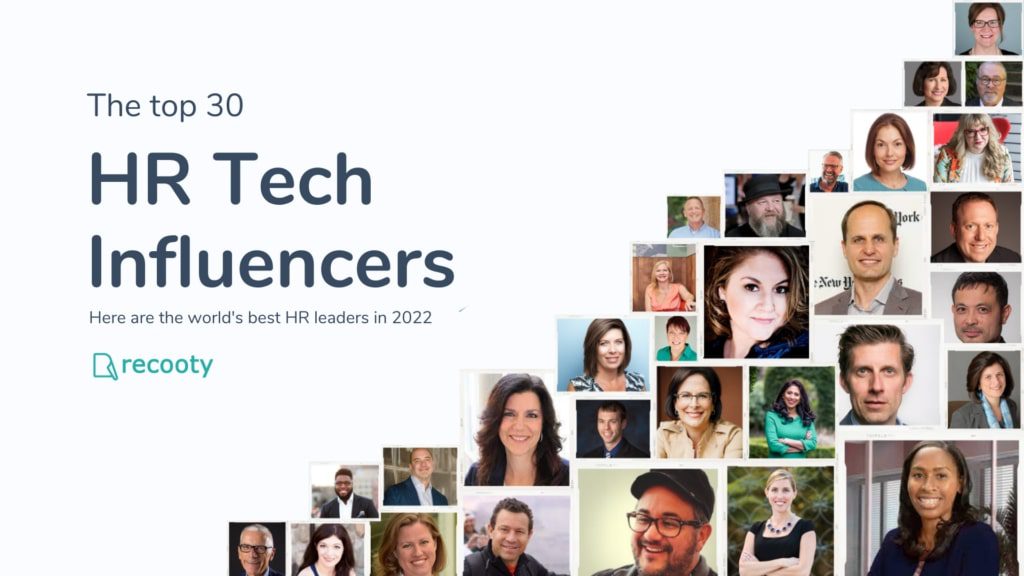
This list is a starting point for finding people who discuss HR technology, recruiting, leadership, workplace systems, and the impact of automation. The 30 profiles were written for a 2026 edition, so check each person’s current role, recent work, and profile links before treating an older description as current.
Use the list according to the question you need to answer. A recruiter may want practical sourcing advice, while a software buyer may need implementation experience, evidence about AI controls, or a clear discussion of trade-offs. Following several kinds of voices gives your team better context than relying on one popular account.

The Top 30 Best HR Tech Influencers to Follow in 2026:
1. Brigette Hyacinth

Brigette Tasha Hyacinth is the best-selling author, and an international keynote speaker on HR, management, leadership, AI, and digital transformation.
She founded MBA Caribbean Organization which conducts workshops & seminars in leadership, management, and education, and provides motivational speech services as well.
In addition, Brigette is the author of 5 books and her latest work is “The Future of Leadership: Rise of Automation, Robotics and Artificial Intelligence” which has been ranked among the top 100 AI books of all time.
Follow Brigette Hyacinth
2. Laszlo Bock

He is the Co-founder of Humu & Gretal.ai and has previously worked with Google as CHRO and Executive Committee Member. When he was serving at Google, the company was named the Best Company to Work more than 30 times around the world and received over 100 awards as an employer of choice.
Laszlo and his co-founding members, Wayne Crosby and Dr. Jessie Wisdom,
started Humu to make work better through science, machine learning, and “a little bit of love” (as mentioned in his LinkedIn bio).
In 2010, he received the title of “Human Resources Executive of the Year”. With all of these things, he’s also the most followed HR tech influencer of all time. Surely you can put trust in him and rely on the valuable insights he provides.
Follow Laszlo Bock
3. Stacy Donovan Zapar

Stacy is a recruiting professional for the fortune 500 tech companies, and the founder of The Talent Agency which is a talent search, training & consulting firm established in 2012. Also, she’s a member of different technology advisory boards.
She has led global talent attraction, search initiatives, sourcing, and training for big organizations like Amazon, TripAdvisor, Walmart, and various other companies.
Major publications like The Washington Post, Forbes, and HBR have featured her, plus SHRM’s HR Magazine named her as Trendsetter of the Year in Talent Acquisition. Her name was mentioned as number 6 on Huffington Post’s 100 Most Social HR Experts & number 5 on LinkedIn’s 50 Most Popular HR Influencers.
Follow Stacy Donovan Zapar
4. Leena Nair

Leena Nair is the Global CEO of Chanel, which is the world’s leading manufacturing and distribution company of luxury items.
Previously, she worked for Unilever, which is again a massive company, in the position of Chief HR Officer & Member of the Unilever Leadership Executive for the past 30 years.
Also, she has received many awards & recognitions including her name on LinkedIn’s Top Voices: UK in the year 2026, 2026 & 2026 list.
Follow Leena Nair
5. Jennifer McClure

Jennifer McClure is the CEO of Unbridled Talent plus Founder & CEO of DisruptHR. She is also an entrepreneur, and keynote speaker and is among the most popular HR tech influencers in the world.
Also, she is a true and firm believer in the importance of building and maintaining professional relationships.
Every week she hosts a podcast named “Impact Makers with Jennifer McClure”, where she shares conversations with various entrepreneurs, practitioners, speakers & authors.
Jennifer has gained years of leadership and executive experience from working in & with startups, and private plus fortune 500 companies belonging to several industries.
Follow Jennifer McClure
6. Ellyn Shook

Ellyn is the chief leadership & human resources officer, who is helping more than 69000 people of Accenture achieve success both personally & professionally.
Additionally, she advises Accenture’s clients on the topics of future of work, inclusion & diversity, and responsible leadership as she’s an author of these topics.
Ellyn is active in Ellevates Women’s Network, and Women in America along with being active as a member of the HR 50 division of World50.
Follow Ellyn Shook
7. David Green

He is the founder & CEO of Zandel and his company provides speaking advisory & consulting services on people analytics, the future of work, and data-driven HR.
His main role is at Insight222 as an Executive director, which is a company that helps member organizations, through ‘The People Analytics Program’, to build more value & better employee experience through the wise and ethical use of people analytics.
David is quite active on LinkedIn where he shares articles & useful content related to the HR industry. So because of that, you can count on him for the latest updates on HR-related stuff.
Follow David Green
8. Kathleen Hogan

Kathleen always focuses on empowering more than 175K employees of Microsoft to achieve their organization’s goals. She and the employees are collectively creating a culture that attracts and inspires the world’s most passionate talent.
She is also a board member of the National Center for Women & Information Technology (NCWIT).
Kathleen loves to work with the employees to transform Microsoft’s culture into a more inclusive, diverse one, where everyone can learn and grow.
Follow Kathleen Hogan
9. Hung Lee

He runs an immensely popular weekly newsletter Recruiting Brainfood. Recruiting Brainfood is for the talent industry in which topics like future of work, employer branding, sourcing, tech hiring, AI, etc., are discussed.
He founded and is the CEO of workshape.io which is a talent matching platform specifically for software engineers and companies.
Surely follow him to get important information regarding the field of HR & other unrelated but interesting stuff occasionally.
Follow Hung Lee
10. Meghan M. Biro

Meghan is a Talent Management and HR Tech brand strategist, speaker, author, and digital catalyst, and is recognized globally.
Talent culture, an HR marketing company, is founded by her and she is the CEO of the same. Along with that, she is the founder of the WorkTrends community.
She has been voted one of the top 100 Social Media Power influencers in 2015 by Forbes & StatSocial. Meghan contributes regularly to magazines like Huffington Post, Forbes, Entrepreneur, and many others.
Follow Meghan M. Biro
11. William Tincup

William is the President & Editor of RecruitingDaily which is a leading website covering everything in the recruiting industry. He is a writer, speaker, consultant, advisor, teacher, and storyteller.
In addition, he serves on the Board of Advisors for many companies including Cauldron, Skillset, Geescore, SturdyAI, Clovers, MojoRank, Diversely, Cliquify, Wells, and others.
William has written 250+ articles on HR, spoken at more than 375 recruiting & HR conferences, plus conducted over 1650 HR podcasts & webinars.
Due to his expertise, he is among the most reliable HR tech influencers to follow in 2026.
Follow William Tincup
12. Ben Eubanks

He’s currently helping companies and vendors with content, strategy, etc., as a human capital management industry analyst.
Ben co-founded the HRevolution movement, an event where attendees from across the world come together to work and explore the future of work, HR, and business.
Also, he speaks at different events like HR Technology Conference and the ASD TechKnowledge along with writing for upstartHR.com. Surely check out his HR podcast named We’re Only Human.
Follow Ben Eubanks
13. Juan Luis Betancourt

Juan is acknowledged as a speaker, thought leader, and business executive in the HR software, human capital management(HCM), recruiting, and culture areas.
The CEO of Humantelligence, a CaaS (Culture-as-a-Service) b2b enterprise software company, which is reshaping organizations via measuring, managing, and hiring for culture, is Juan Luis Betancourt.
His platform provides access to powerful EQ insights to employees so they can perform their job better, get more engaged, and collaborate better.
Follow Juan Luis Betancourt
14. Frida Polli

She is one of the most valued HR tech influencers globally and is also the CEO & Co-Founder of Pymetrics.
Pymetrics is a recruitment tech company that applies neuroscience games and elements of AI plus machine learning to democratize career search and hiring.
Frida is an enthusiastic technophile who believes firmly that audited AI can help retain all the wisdom of humans while removing ineradicable bias. She is among the best HR Tech Influencers who have an honest and genuine personality.
Follow Frida Polli
15. Philippa Penfold

She is the CEO and CO-Founder of People Collider, who is also a lecturer (at the Kaplan Business School), speaker, and a start-up mentor/advisor.
People Collider designs and delivers experiential learning for HR professionals concerning new and emerging technologies including AI, IoT, Virtual Reality, etc.
Follow Philippa Penfold
16. Jason Averbook

Jason Averbook is a thought leader, analyst, entrepreneur, futurist, and investor in the human resources domain. He co-founded Leapgen and he’s currently the CEO of this company.
His goal is to assist organizations to realize how valuable their workforce is, and its impact on the end business results.
So far he has written two books, HR from Now to Next (1st), and The Ultimate Guide to Digital Workforce Experience (2nd). The first one was released in 2014 and the latter in 2026.
Follow Jason Averbook
17. Jess Miller-Merrell

Jess is one of the most active HR professionals on the internet today. She is an HR & workplace trainer & speaker, who began her blog named Workology in 2005.
She’s been interviewed and quoted by renowned publications including Fast Company, HR Magazine, The Economist, and many others.
Surely, you can count on her to get a lot of helpful updates, resources, and information concerning the HR & talent acquisition space.
Follow Jess Miller-Merrell
18. Bill Boorman

You might be already familiar with Bill Boorman. If not, he’s the founder of #tru, a not-for-profit and open-source series of unconference events.
He wants to make recruitment better for every single person and his passion helps him to move forward in this direction. Particularly, Bill works with tech start-ups on products, market fit, and being investor ready.
Bill speaks on everything ranging from talent acquisition to data tipping points in HR. He has spoken at most of the HR & Recruiting events worldwide.
Follow Bill Boorman
19. Katrina Collier

She is on a mission to put an end to collaboration chaos which is ruining the overall recruitment and candidate experience through the workshops she runs with hiring managers, HR & talent acquisition teams.
Katrina is also a well-known global keynote speaker and the host of The Hiring Partner Perspective podcast.
Furthermore, she has written a book named “The Robot-Proof Recruiter“. It offers standard best practices and recognizes the key elements of the skills needed by a recruiter of the 21st century.
As a courtesy:
- Link the book to https://katrinacollier.com/the-robot-proof-recruiter/
- Link workshops to: https://katrinacollier.com/workshops/
Follow Katrina Collier
20. Volker Jacobs

Volker is the CEO and Founder of Fount & TI People, who is also a globally recognized leader in the human-centered future of work.
He delivers data-driven insights regarding business performance driven by a superior human experience of work (also called employee experience).
Organizations can use the strategies, that he comes up with, to provide their people with a superior experience.
His company, TI People, builds solutions from deep human resources expertise combined with a human-centered design approach and actionable data to make a meaningful impact on individuals and businesses.
Follow Volker Jacobs
21. Tim Sackett

You can trust him on subjects like Talent Acquisition, Performance Management, Employment Branding, and Succession Planning because he specializes in these.
Tim has 20+ years of experience in recruiting and selection, mixed with his good and upstanding experience within the HR generalist world.
He’s an HR tech analyst, influencer, recruiting executive, and backup point guard on his over 40 people’s team. We recommend you to follow him as certainly he is one of the most reliable HR Tech Leaders who are sharing valuable information.
Follow Tim Sackett
22. Tom Haak

Tom is the Founder and Director of HR Trend Institute(Founded in 2014) and has ample experience in HR Management in multinational companies.
Because of his expertise in HR, people from the HR profession hugely rely on him on topics like HR strategy, HR trends, people analytics, and so on. That’s the reason why he is among the top HR Tech Influencers for sure.
Follow Tom Haak
23. Kristen A. Pressner

She is a global business leader and People & Culture executive. Kristen has a passion for releasing the potential of all people and catalyzing high-ROI organizational change.
Kristen is a highly inspirational and impactful international speaker, who has shared her ideas on big stages like TEDx Talks.
Follow Kristen A. Pressner
24. Steve Boese

Steve is the co-chair of the HR Technology Conference with H3 HR Advisors, Inc, and a Tech Editor and writer for Human Resource Executive Magazine.
He is also the creator and co-host of the weekly HR Happy Hour Show and Podcast. It is the longest-running and most downloaded podcast about HR, Recruiting and workplace technology, and all things HR.
Steve Boese has 20+ years of experience in implementing enterprise technologies for Recruiting, HR, Finance, and Distribution. So this makes him among the top HR tech influencers to count on.
Follow Steve Boese
25. Alexis Fink

Alexis is the Vice President, of People Analytics and Workforce Strategy at Meta. She is a Fellow of SIOP and was the recipient of SIOP’s Distinguished Service Award in 2026.
She was the Chair of the IT Survey Group which is an industry consortium dedicated to employee surveys. Plus, Alexis has led People Analytics teams at several major tech companies.
In addition to that, she has extensive work in organizational culture, organizational transformation, leadership assessment, and the application of advanced analytical methods to human capital problems.
Follow Alexis Fink
26. Trish McFarlane Steed

Trish is an HR Technology Analyst & Consultant, Podcaster, and Keynote Speaker. She founded H3 HR Advisors and is a Principal Analyst & Consultant in that company.
She co-hosts on HR Happy Hour Show with Steve Boese, a weekly HR industry podcast that is focused on human resources, workforce technology, management, and leadership.
In the same way, she hosts the HR Happy Hour Show on Alexa, and is the creator of the HR Happy Hour WORK BREAK! daily vlog.
Follow Trish McFarlane Steed
27. John Sumser

John is the Principal Analyst in an independent analyst firm named HRExaminer. The analyst firm covers HR technology and the intersection of people, tech, and work.
Among many other works, John has done some deep research into the nooks and crannies of HR Technology so as to identify and explain rapidly evolving trends.
He covers emerging ideas, the state of the industry, and the executives who operate it with three weekly podcasts and written commentary. So, following him on social media is a must.
Follow John Sumser
28. Sarah White

Sarah White is the Founder & CEO of Aspect43 which is a boutique advisory & strategy firm, focused on HR & Work Tech.
Since 2007, she has been a regular speaker at events in HR, Tech, and Business. Sarah has also been featured in various big publications like Fast Company, HR Executive, SXSW, NBC News, Huffington Post, and Wall Street Journal to name a few.
She has been named one of the most influential people in HR Tech by various outlets for more than 10 years and was recently named one of the 7 most inspiring women in tech and top 100 most influential in HR Tech. She is one of the top HR Influencers out there.
Follow Sarah White
29. Tyrone Smith Jr.

Tyrone Smith Jr. is a strategic leader in human capital management (HCM), workforce planning, people analytics, people operations, and more. He is currently working on the position of Global Head of People Analytics & Insights at Udemy.
Also, Dr. Smith collaborates with various business leaders and employees to identify, analyze, and solve complex business problems in line with short and long team business goals.
He has been named among the Top 100 HR Tech Influencers, so you can surely count on him on anything related to HR Tech
Follow Tyrone Smith Jr.
30. Jeanne Achille
Throughout her career, she helped to launch and promote thousands of new tech products, services, and companies. Jeanne has founded her own company, which proved to be profitable and 100% client-funded within a year of its launch.
As CEO of Devon, she has supported various successful exists from initial public offerings (IPO) to strategic mergers and acquisitions.
In addition, she is a frequently quoted speaker, spokesperson, and content contributor. Because of all of these, she is among the best hr tech influencers to follow at the current time.
Follow Jeanne Achille
2026 update: how to use this HR-tech influencer list
The original profiles above were written for a 2026 audience. HR technology changes quickly, and people change companies, roles, products, and areas of public activity. Use the list as a starting point for discovery. Before quoting a claim, booking a speaker, or choosing a vendor, check the person’s current profile, recent work, and primary source.
The current conversation is also broader than the original list. LinkedIn’s 2026 research reports that 66% of recruiters say finding qualified talent has become harder, 93% plan to increase AI use, and 59% say AI is helping them find skills they would not have discovered before. SHRM’s 2026 Talent Trends reports that AI adoption in HR tasks reached 43% and that 69% of organizations still struggle to fill roles. These figures explain why HR-tech creators now discuss sourcing, skills, AI governance, candidate experience, analytics, and workforce transformation together.
Follow HR-tech voices by the decision you need to make
| Decision | Useful voice profile | Evidence to look for |
|---|---|---|
| Choose recruiting software | Recruiter, operator, implementation lead, analyst, or independent reviewer | Workflow demos, comparison criteria, limitations, pricing context, and user fit |
| Evaluate AI talent acquisition software | Responsible-AI practitioner, people-analytics leader, or product expert who discusses controls | Data inputs, ranking logic, bias checks, human review, and candidate impact |
| Improve sourcing and hiring | Talent-acquisition practitioner or sourcing educator | Role-specific examples, funnel metrics, outreach quality, and candidate response |
| Build people analytics | Analytics leader or researcher | Metric definitions, data quality, privacy, and decision context |
| Improve employee experience | People leader, researcher, or practitioner with implementation examples | Employee feedback, adoption evidence, accessibility, and outcome measures |
| Plan HR transformation | CHRO, transformation leader, or change practitioner | Operating model, capability building, sequencing, and business alignment |
| Understand the market | Analyst, journalist, event curator, or researcher | Methods, primary sources, conflicts, and clear separation of fact and opinion |
The same person can be valuable in one category and less useful in another. Do not use a popular leadership account as the only source for a technical security decision, or a vendor executive as the only source for an independent product comparison.
Best recruiting software and HR-tech influencers: turn opinions into tests
When a creator recommends recruiting software, convert the recommendation into a testable buying question. Ask:
- Which hiring problem does the product solve first: sourcing, job publishing, screening, scheduling, communication, analytics, or onboarding?
- Was the claim based on direct use, implementation experience, a customer case study, a vendor briefing, a paid partnership, or a personal opinion?
- What type of hiring team does the product fit: startup, agency, mid-market, enterprise, high-volume, technical, hourly, global, or specialist?
- What happens when the candidate replies, asks for an accommodation, withdraws, requests data removal, or appears in multiple requisitions?
- Can hiring managers see the evidence behind a recommendation, correct it, and record a structured decision?
- Are source quality, qualified applicants, time-to-hire, candidate experience, and cost defined clearly, or is the proof limited to clicks and applications?
- What will implementation, migration, training, integrations, support, add-ons, renewal, and exit cost?
Use how to choose the right recruitment software as the baseline evaluation framework. A recommendation is valuable when it helps you ask better questions. It is not a substitute for a workflow test with your people, data, candidates, and budget.
Best talent acquisition software: separate analyst commentary from vendor marketing
Current software comparison pages often combine product education, affiliate economics, vendor input, and editorial judgment. Greenhouse’s 2026 comparison compares platforms across workflows, AI controls, governance, analytics, and buyer segments. TechRadar’s 2026 recruitment-platform guide compares job distribution, career pages, AI matching, integrations, assessment, and reporting. Both are useful for market discovery, but the reader should still ask who tested the product, how the ranking was formed, and whether pricing or commercial relationships influence the recommendation.
AI talent acquisition software: questions to ask influencers and vendors
AI talent acquisition software needs a higher evidence bar because it can influence who is found, ranked, screened, or advanced. Before trusting a claim, request answers to these questions:
- What data does the model use, and what data does it exclude?
- Is the output a draft, recommendation, score, ranking, message, or automated decision?
- Can recruiters inspect the evidence and override the result?
- Has the vendor tested for error, drift, accessibility, and adverse impact across relevant groups?
- How are candidates told that AI is used, and what alternative or support route exists?
- What logs, audit records, retention controls, security measures, and incident process are available?
- What happens when the model is wrong, unavailable, or changed by the vendor?
For background, compare how AI is used in applicant tracking systems with how to use AI in recruitment. The GOV.UK Responsible AI in Recruitment guidance highlights bias, digital exclusion, discriminatory job advertising, impact assessment, data protection, transparency, fairness, and accountability.
A job description generator can turn responsibilities and requirements into a clear first draft. Those are useful questions for evaluating both influencer claims and vendor claims.
Recruiting software comparison: a credibility checklist for HR-tech content
Use this checklist when reading a post, newsletter, podcast, webinar, or product ranking:
| Check | Strong signal | Warning sign |
|---|---|---|
| Identity | Current role and relevant operating or research experience are clear | Old job title presented as current |
| Recency | Content includes a date and reflects current product or market conditions | A 2026 feature list is presented as 2026 reality |
| Method | Selection criteria, sample, testing process, or source links are visible | “Top” or “best” appears without a method |
| Product relationship | Sponsorship, employment, investment, affiliate, or advisory relationship is disclosed | Commercial relationship is hidden |
| Evidence | Claims link to primary research, documentation, customer evidence, or observed tests | Statistics have no source or context |
| Trade-offs | The content explains limitations, alternatives, and who should not buy | Every recommendation sounds universal |
| Audience fit | The advice states company size, region, role type, and hiring model | Enterprise advice is presented as suitable for a small team |
The MagicPost 2026 HR creator analysis is a useful example of a transparent engagement methodology. It says it analyzed 13,452 HR-themed LinkedIn posts and retained 208 creators with at least 10 HR posts and 5,000 followers, then used median likes on HR posts. That can help identify active conversations. It cannot prove factual accuracy, implementation skill, product quality, or suitability for your organization.
From influencer insight to a safe HR-tech experiment
Use a short learning loop before changing a live hiring process:
- Save the original post or episode with its date and source.
- Write the claim in one sentence and mark it as fact, opinion, prediction, or product marketing.
- Define the workflow and baseline the claim would affect.
- Check the claim against primary research, official guidance, internal data, and candidate or employee feedback.
- Run the smallest safe test with an owner, success metric, and stop rule.
- Review efficiency, quality, fairness, accessibility, adoption, and experience together.
- Record what changed and what did not before expanding the tool or practice.
This process keeps a social-media recommendation from becoming an untested policy. It also creates original information that a hiring team can use internally, even when the public claim turns out to be too broad.
How to evaluate an HR-tech influencer list
Current list pages and influencer directories are useful for discovery. They provide names, titles, profile links, follower or engagement signals, and broad topics. A buyer still needs to know which voice fits a question, how current the profile is, whether the content is commercial, and how to turn an opinion into an evidence-based experiment.
| Common list coverage | Useful decision detail |
|---|---|
| List of famous HR-tech names | Decision-stage and topic mapping |
| Follower or engagement counts | Reach versus expertise, accuracy, and fit |
| Tool rankings | Disclosure, method, workflow test, and total-cost questions |
| AI predictions | Data, oversight, accessibility, and rollback questions |
| Social links | Current-role, date, and source-verification checks |
| Inspirational commentary | A small experiment with baseline and stop rule |
For related hiring systems, review recruitment software comparison, how AI can help in an HR journey, reducing time to hire with an ATS, and improving candidate experience with AI.
The most useful HR-tech voice makes trade-offs visible, shows the evidence, states the limits, and helps an HR team make a safer decision.
A practical way to use this HR-tech influencer list
Choose two or three voices that match the decision in front of you, then verify their claims against primary sources, your hiring data, and a small workflow test. That approach turns a list of profiles into useful research without treating popularity as proof.
For more hiring guidance, visit our blog for practical recruiting resources.
Frequently Asked Questions
Is this list of HR-tech influencers still current?
The profiles were written for an earlier edition of the article, so treat them as historical discovery entries. Verify each person’s current role, activity, topic focus, and profile links before relying on the description.
Who should I follow for recruiting software advice?
Follow a mix of recruiters who operate the workflow, independent analysts or journalists who explain the market, implementation leaders who understand change, and researchers who discuss evidence and risk. No single category is enough for a buying decision.
What is the best recruiting software?
There is no universal winner. The right system depends on hiring volume, role types, team structure, integrations, candidate experience, reporting, AI controls, geography, budget, and implementation capacity. Compare products against your real workflow.
How do I evaluate AI talent acquisition software claims?
Ask what data the system uses, what output it produces, how humans review it, how errors and bias are monitored, how candidates are informed, and what audit and rollback controls exist. Request evidence for the specific use case rather than accepting a general AI claim.
How can I tell whether an HR-tech influencer is sponsored?
Look for a disclosure, affiliate link, employer or advisory relationship, sponsored-event context, or product partnership. If the relationship is unclear, ask directly and treat an undisclosed commercial recommendation cautiously.
How often should an HR-tech influencer list be updated?
Review it at least every six months and after major changes in roles, companies, products, laws, or platforms. Add a visible review date and a way for readers to report outdated or incorrect information.
Jump To Section
Author's Profile

Hardik Vishwakarma


Hardik Vishwakarma – AI Recruitment Strategist | HR Automation Expert | Applicant Tracking Software Specialist Hardik Vishwakarma is a recognized leader in HR automation and...
View Full Profile →