All Recooty Articles, HR Tutorials and Tips, Trending Topics
15 Reasons Your Website Needs a Career Page in 2026

 All Recooty Articles, HR Tutorials and Tips, Trending Topics


A career page gives candidates one clear place to find open roles, learn what it is like to work with you, and apply without unnecessary friction. It also helps your hiring team present accurate job information, explain the process, and build trust before the first conversation.
For a growing business, this page often does more than list vacancies. It creates a consistent first impression for candidates who find your company through a job board, social post, referral, or search result.
A career page earns its place when it helps the right candidate find a credible role, understand the work, apply accessibly, and receive a clear next step. Measure that full journey, not traffic alone, and keep the visible job content, ATS record, structured data, and employer claims aligned.

A career page is the section of a company’s website that presents open jobs and the information candidates need before applying. It may include the employee value proposition, workplace practices, benefits, locations, hiring stages, accessibility support, employee stories, and job alerts.
An ATS-integrated career page can send applications into one hiring workflow while keeping job status and candidate communication current.

A career page centralizes job listings, employer information, and applications. Recruiters spend less time correcting inconsistent adverts or directing candidates between disconnected systems.
An owned careers channel can produce direct applicants without paying for every click or placement. It also lets candidates self-select through clear requirements, location, pay information, and hiring steps.
Track direct applications, qualified-candidate rate, completion, time to hire, and source quality through recruiting metrics.
A current career page helps a growing company communicate which skills it needs and where work is expanding. Job families, talent communities, and future-opportunity forms can support recurring hiring.
A career page turns company values into candidate evidence. Show how teams work, how managers support growth, how decisions are made, and what employees can expect after joining.
LinkedIn’s 2026 Future of Recruiting report found that companies known for offering innovative projects were 11% more likely to make a quality hire under its methodology. (LinkedIn) Show real work and learning opportunities instead of unsupported culture claims.

Candidates need a specific employee value proposition: meaningful work, pay, benefits, flexibility, growth, management, and team context. The page should explain which benefits apply by role or location.
Recooty’s guide to career pages that convert explains how clear information supports applications.
A career page gives the employer control over its identity, language, visuals, and employee stories. Consistent claims across the company site, job adverts, interviews, and onboarding strengthen trust. A job description generator can turn responsibilities and requirements into a clear first draft.
Publish realistic role outcomes, hiring criteria, work arrangements, and interview stages. Candidates should understand what good performance looks like and how the company evaluates it.
A connected page can automate job publishing, application acknowledgments, interview updates, and job closure. Automation should keep information current while providing a human contact for exceptions and accommodations.
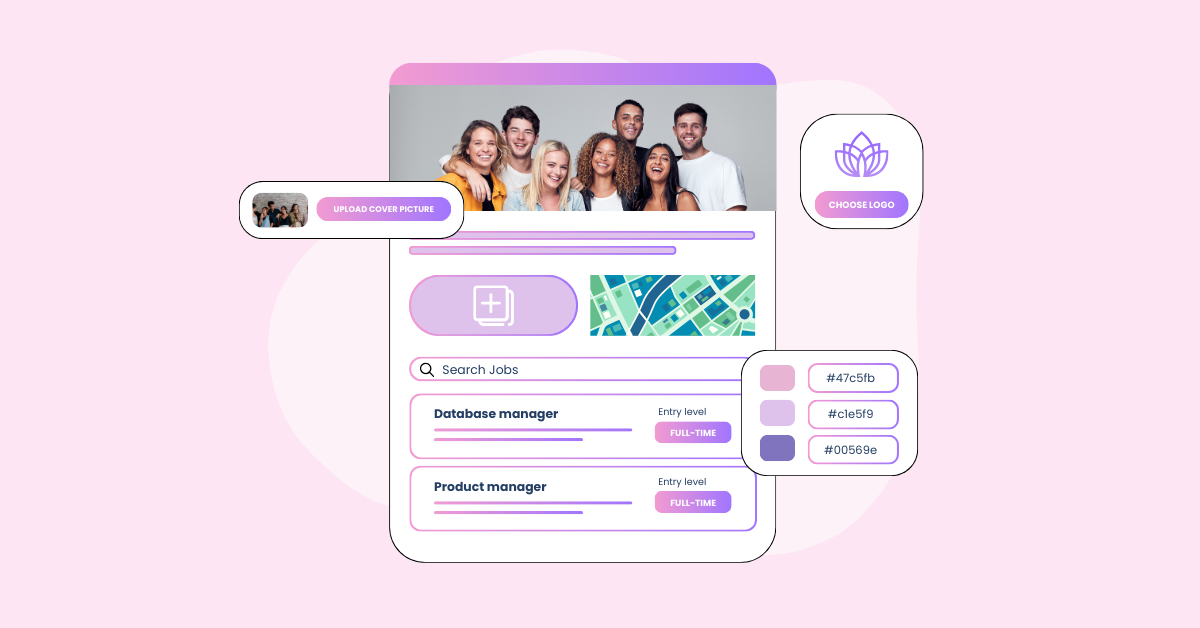
Recooty lets teams create a branded career page without building the complete workflow from scratch.
Visitors may be interested before the right vacancy exists. Job alerts and talent communities can preserve that interest when the employer states the communication purpose, frequency, consent choices, and data-retention practice.
Searchable job pages can help candidates find roles by title, skill, and location. Use descriptive titles, one permanent URL per live role where practical, valid structured job data, accurate dates, and prompt removal or expiry for closed jobs.
The page should work on mobile devices, support keyboard navigation, use readable contrast, and offer a clear accommodation route. A short, accessible application supports a stronger candidate experience.
A career page can explain application stages, expected timing, interview formats, assessment methods, decision contacts, and likely next steps. Candidates can prepare properly and decide whether the process fits their circumstances before investing more time.
Keep this information consistent with recruiter messages and the ATS workflow. A polished page creates frustration when the actual process is longer or different.
An accessible career page gives more qualified people a fair way to learn about roles and apply. Use keyboard-friendly navigation, clear labels, readable contrast, captions, descriptive links, mobile support, and an accommodation contact.
Test the full path from job search to application confirmation, not only the landing page. A barrier inside the form can undo the accessible design that came before it.
Treat the career page as a funnel with several handoffs. A page can look polished and still lose candidates because a job is stale, a filter hides the role, a form rejects an accessible input, or the confirmation gives no next step.
| Stage | Test | Useful measure |
|---|---|---|
| Discovery | Search by job title, skill, location, and a broad category | Impressions, click-through rate, and search queries |
| Job detail | Confirm location, work arrangement, pay context, requirements, date posted, and closing status | Job-page engagement and qualified-application rate |
| Application | Complete the form on mobile with keyboard navigation and an assistive-technology check | Start-to-completion rate and abandonment point |
| Confirmation | Check the receipt, expected timeline, contact route, privacy notice, and accommodation option | Confirmation delivery and candidate questions |
| Handoff | Follow the application into the ATS and test a recruiter response | Duplicate rate, routing errors, and time to first response |
Radancy reports that 44% of searches across the employer career sites it studied contained no search terms. That finding is vendor-reported, not a universal benchmark, but it points to a practical test: a career page should make the first list of jobs useful even when a visitor arrives without a precise title or skill. Add filters for location, department, work arrangement, and job family where those choices reflect your real vacancies. See Radancy’s 2026 career-site research for the study context.
Google says JobPosting structured data belongs on the specific page for one job, must match the visible job information, and should be removed or expired when the job is no longer open. See the Google Search Central job posting documentation before implementing or auditing the markup.
The W3C forms tutorial covers labels, instructions, grouping, and feedback that help people complete forms. Use it with a real keyboard and assistive-technology test. Automated checks can find markup problems, but they cannot prove that the application flow is understandable.
Editor’s view: Judge a career page by the least informed qualified applicant who reaches the form. If that person cannot tell where the job is, what happens next, or how to request help, the page is doing employer branding work while failing the hiring task.
Candidates should understand how their information enters the hiring process and where consequential technology assists screening or assessment. A career page can link to clear privacy information, retention details, accommodation support, and a contact for questions or corrections.
Describe the real use case in plain language. Generic claims about “AI-powered hiring” do not tell candidates what the system does or where people review its output.
Localized career content can explain language, location, work authorization, time zone, benefits, pay context, and hiring steps for a specific market. This prevents candidates from applying through information written for another country or employment model.
Give each local page an owner and review date. Translation should include forms, confirmation messages, accessibility instructions, and recruiter communication, not only the headline copy.
Specific employee stories show what the work, manager relationship, learning, and progression look like in practice. Include different roles and work locations while avoiding testimonials that sound scripted or promise the same experience to everyone.
Pair stories with concrete job information and workplace policies. Candidates should be able to compare the human example with the role they are considering.
Competitor guidance increasingly treats a career site as a conversion path rather than a static list of vacancies. LinkedIn reports that 75% of job seekers consider employer brand before applying and gives career-site conversion as applications divided by unique visitors, while its cited research says 39% of companies were optimising career websites for mobile devices (LinkedIn candidate-experience metrics). These are published benchmarks, not a universal target, so use them to define what your own measurement should include.
| Checkpoint | Minimum evidence | Failure signal | Fix to test |
|---|---|---|---|
| Findability | A candidate can reach the relevant role from search, the homepage, and a job-family page | Job is live but hidden behind an empty filter or unclear title | Improve taxonomy, links, and visible job labels |
| Trust | Role, location, work arrangement, pay context, process, and employer claims agree | Job advert and career page contradict each other | Assign one content owner and one source of truth |
| Application | Mobile and keyboard users can complete the form and see useful errors | Completion drops at a required field or account step | Remove unnecessary fields and test with representative users |
| AI and data transparency | Candidates can understand material automated steps and find privacy or accommodation help | “AI-powered” is stated without explaining the task or human review | Describe the use case, review point, contact, and alternatives |
| Search eligibility | One job has accurate JobPosting data, canonical handling, and status dates | Markup describes a different job or remains live after closure | Align visible content, schema, canonical URL, and expiry workflow |
| Follow-through | Confirmation includes timing, contact route, and the next stage | Candidate applies but receives no expectation or status | Add confirmation copy and an owner for updates |
Practical benchmark: record the visitor-to-application rate, application start-to-completion rate, qualified-application rate, source, mobile share, accessibility issues, and time to first response. A career page is improving only when the additional traffic produces a healthier downstream hiring signal.
Start with accurate live roles, a clear application path, and an owner who keeps the page current. Once those basics work, add the details that help candidates decide whether the role is right for them.
Most companies that hire repeatedly benefit from a career page. Very small employers can begin with a simple branded page containing current roles and a clear application route.
Include current jobs, realistic role information, pay context where appropriate, benefits, work arrangements, hiring stages, accessibility support, culture evidence, and contact details.
A career page creates crawlable, topic-specific job URLs with structured information about role, skill, and location. Accurate updates and internal links help search engines understand them.
Employers should explain material AI-assisted screening or assessment where law, policy, or candidate trust requires it. Keep human review and an accommodation route clear.
Track qualified applications, completion rate, time to apply, source quality, candidate feedback, search visibility, and downstream hiring outcomes.
Yes. Many applicant tracking systems include hosted career pages, job widgets, application forms, and automated job-status updates.
JobPosting structured data helps Google understand a specific open role and can make it eligible for the job search experience. It does not replace visible job details, an accessible application, or prompt removal of closed roles. Keep the markup, canonical URL, and application destination aligned.
Make the job search, job detail, and application form usable with a keyboard and assistive technology. Use clear labels, readable contrast, descriptive links, captions for meaningful video, useful error messages, and an easy-to-find accommodation contact. Test the complete path instead of checking only the page template.
Show a salary range or other compensation context when local law requires it and whenever the employer can give candidates a meaningful expectation. Explain whether the range changes by location, level, experience, or employment type. A vague benefits statement cannot substitute for required pay information.
Source: https://recooty.com/blog/10-reasons-why-a-career-page-is-a-must-for-your-website/

Recooty is one of the fastest-growing Applicant Tracking Systems, helping businesses of all sizes streamline their hiring process. Through its content, Recooty shares expert insights...
View Full Profile →